Horyu-ji Temple
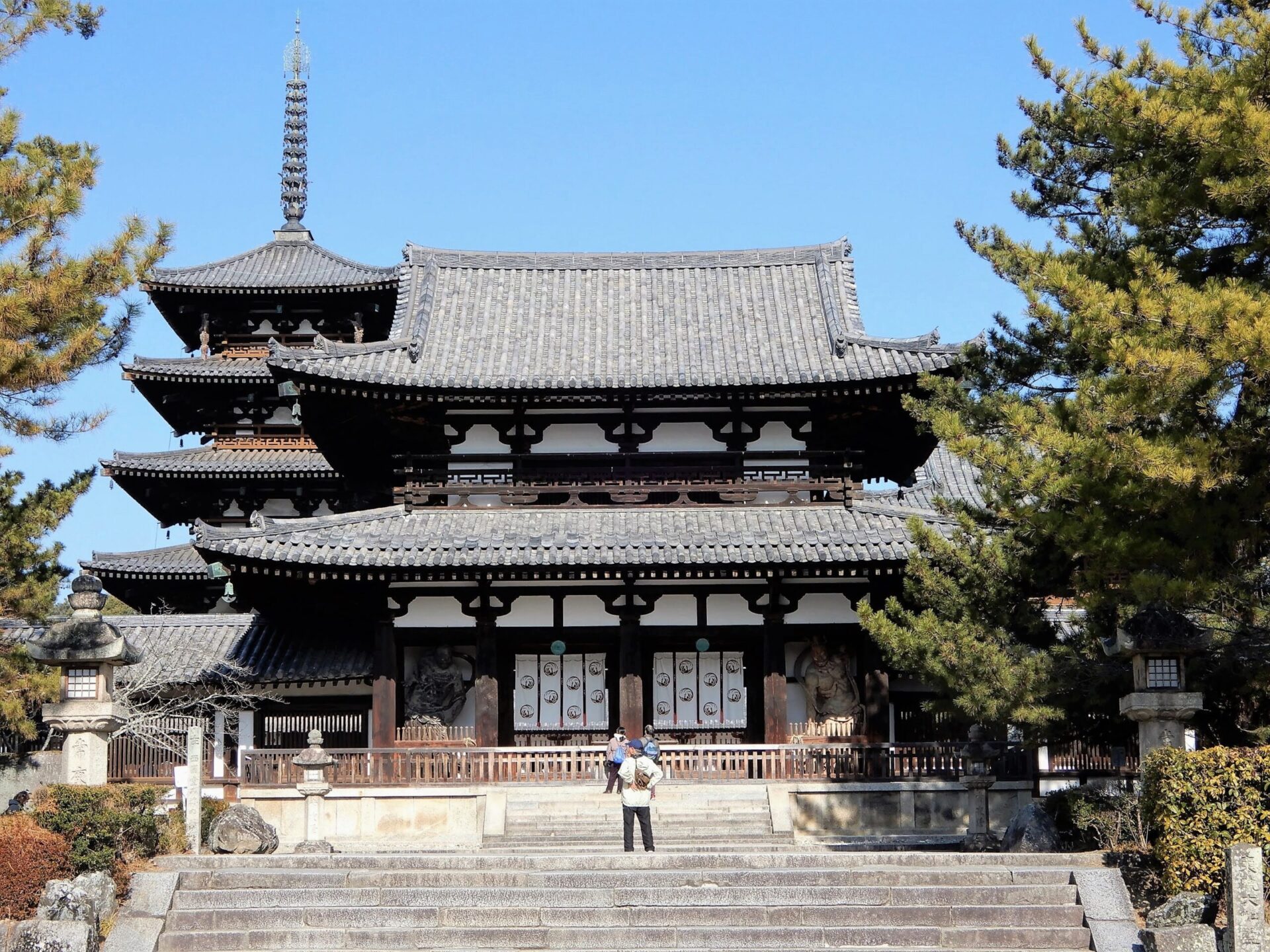
Nara is home to the largest wooden building in the world. So where is the oldest wooden building in the world? It is also in Nara, more precisely, at the Horyu-ji temple founded by Prince Shotoku in the town of Ikaruga, located 12 km southwest of Nara. Having a long history of 1,400 years, Horyu-ji Temple is the first UNESCO World Heritage Site in Japan. Take advantage of its majestic atmosphere to contemplate its varied ancient treasures. It’s a shame that many tourists leave Nara by making do with a short visit to the surroundings of Nara Park. Visiting Horyu-ji will surely impress you so how about taking a look?
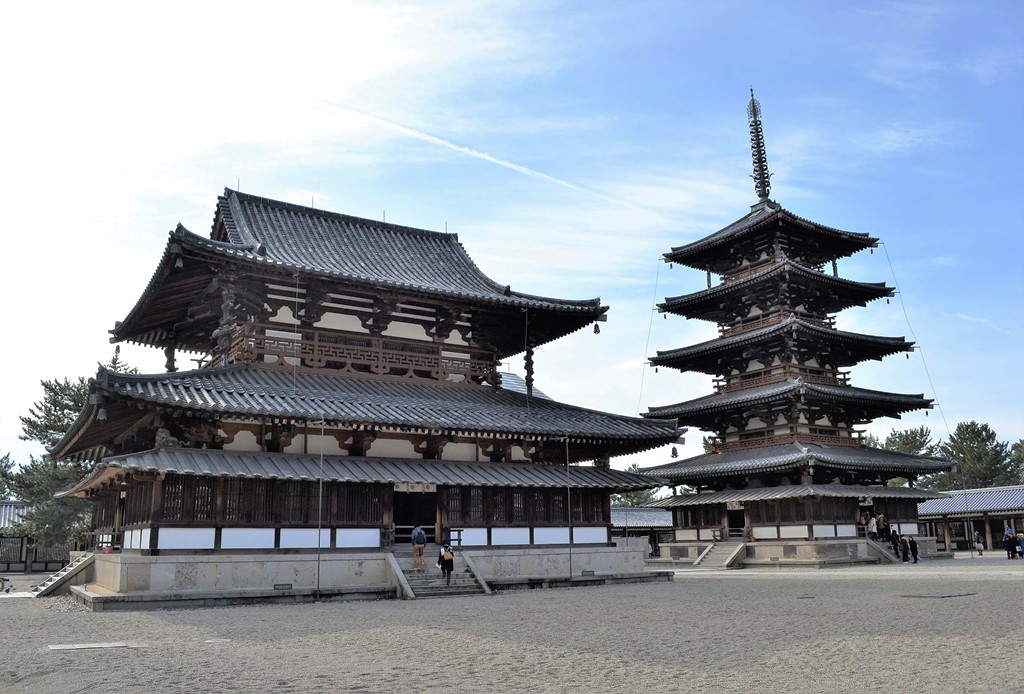
Beyond the first and second gate, the two oldest buildings of this temple sit side by side in the middle of the central courtyard. Their history dates back to the last years of the 7th century. The left wooden building is Kon-do, an imposing building for worshiping the main Buddha statue. You can admire the statues of the Buddha from the 7th century which reflect the Chinese influence and others through the metal trellis. Its dark space further highlights the mysterious atmosphere of these masterpieces. The building on the right is the five-story wooden pagoda for worshiping the relics of the Buddha. Remarkable are the clay statues enclosed in all sides of its base which depict the life of the Buddha.
By the way, don’t you find it strange that this ancient pagoda has survived repeated earthquakes? I will tell you about its earthquake-resistant structure. The ingenuity of the ancients who knew a lot about the climate of the country and the nature of the trees is admirable.
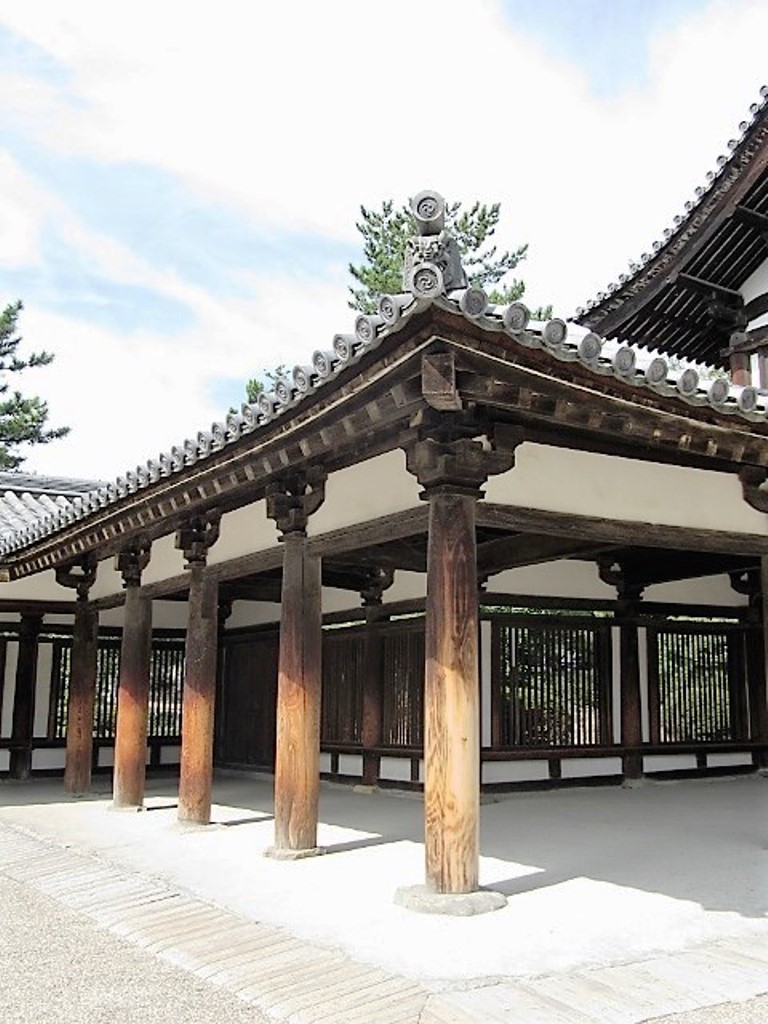
The central courtyard is surrounded by corridors with bulging pillars in the styleentasis. The European technique used in Greek, Roman and Renaissance architecture is therefore visible in this ancient temple in Japan. This demonstrates the cultural exchange between Asia and Europe via the Silk Road. Nara, the terminus of the Silk Road, was once an international city.
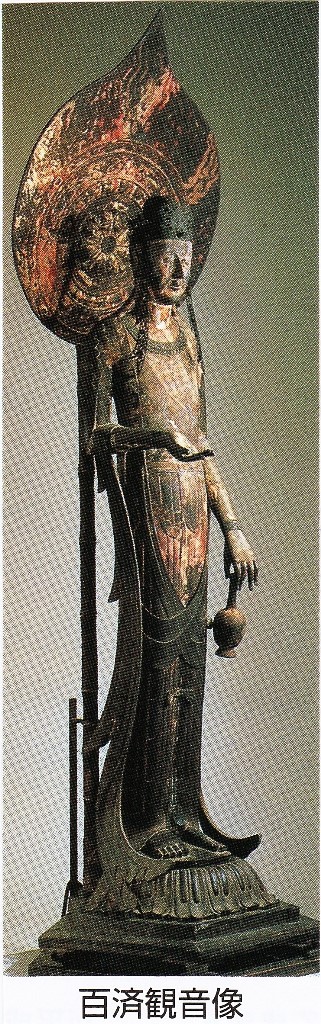
The treasure room is also worth a visit. The art objects of this temple come together there. Among them, the statue of kudara kannon, divinity of compassion is a must see. Her slim, well-proportioned figure is full of inexpressible beauty. She went to France, to the Louvre Museum in 1997. The graceful beauty of this statue, nicknamed the Venus of Japan, won praise from Europeans.
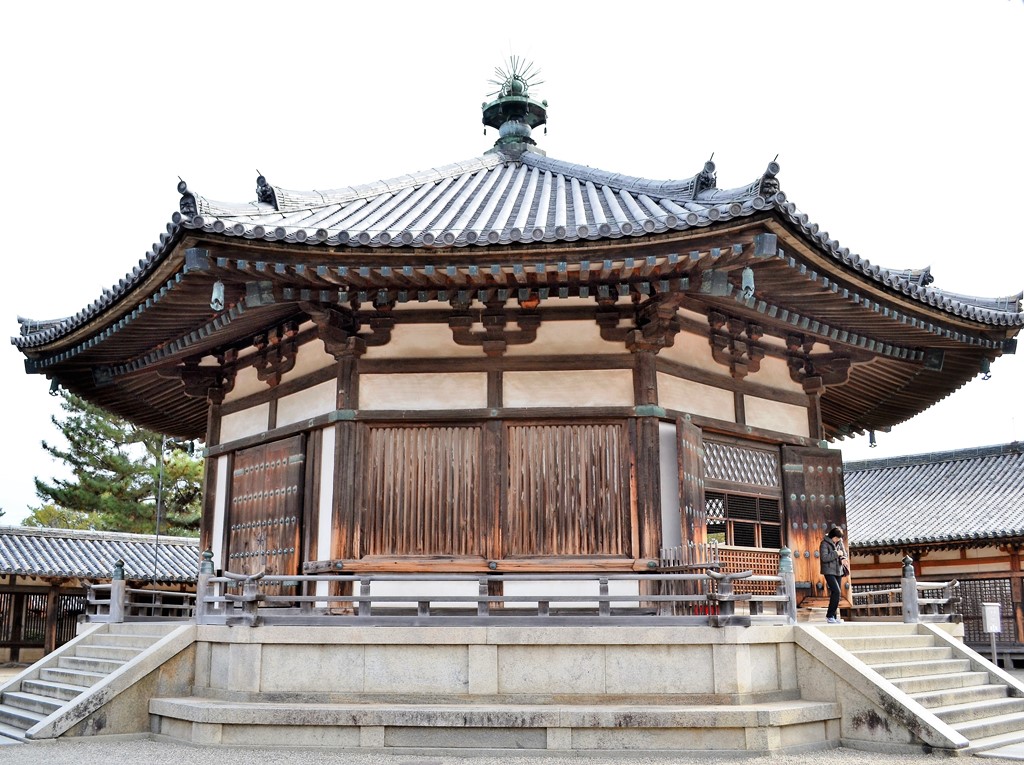
This octagonal building called Yumedono is a construction from the 8th century. It houses a statue of the Buddha in gilded woodkuse kannon. It is said to be the life-size statue of Prince Shotoku, founder of this temple. Sealed until the last years of the 19th century, this mysterious statue still excites our curiosity. Now it is shown to the public for a month in spring and autumn every year. Take this opportunity to go see her. What does her mysterious smile inspire you?
- The entrance ticket price to Horyu-ji Temple is 2,000 yen.
- Horyu-ji Temple is made up of three enclosures, the Western Enclosure which includes the Kon-do and the five-story pagoda, the Treasure Hall and the Eastern Enclosure which includes the Yumedono. The entrance ticket is a combined ticket. As it must be shown at the entrance to each enclosure, be careful not to lose it.
- Map
The Imai District
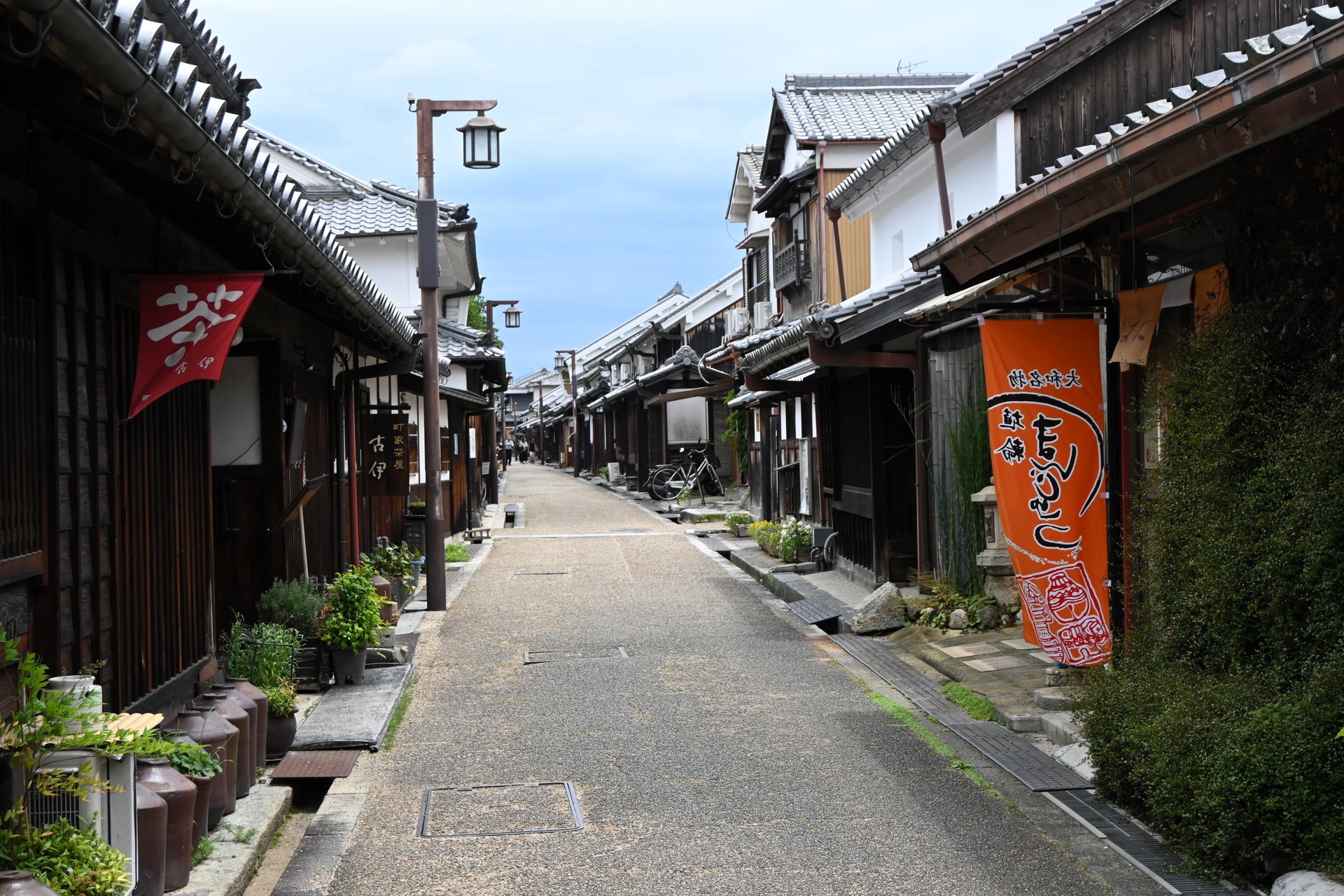
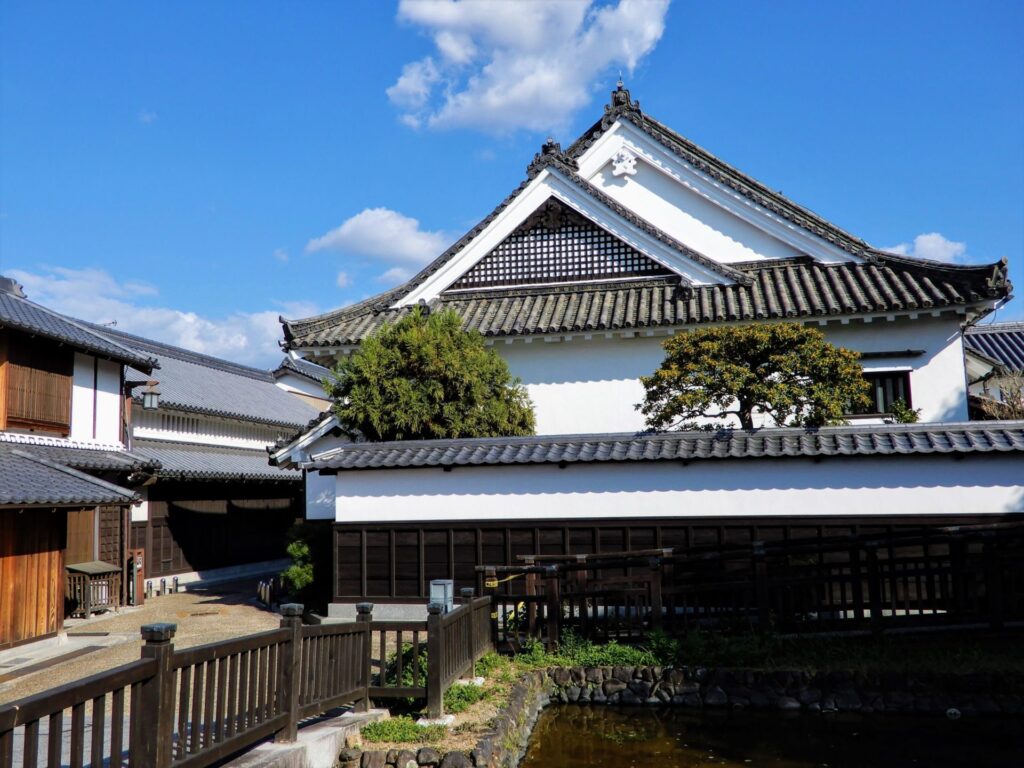
The Imai district, an ancient trading and autonomous town, is a little-known site. Why do I suggest you visit it? This is because the alignment of traditional houses from the Edo period is well preserved there. Only in this district of Imai can we find the row of houses as it was in the Edo period. It was also a fortress town surrounded by a moat during the time of internecine wars in the 16th century. The landscape beyond the bridge which spans a river will give you the illusion of time jumping. Slow down to sample the row of historic houses that bear witness to the lifestyle of yesteryear.
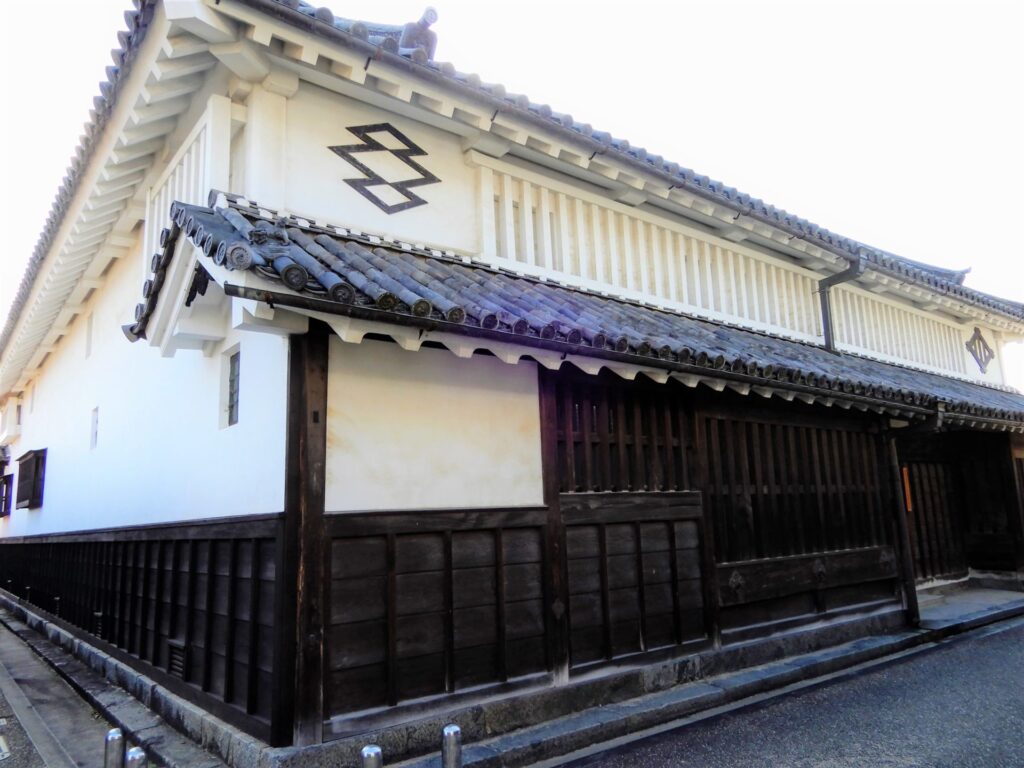
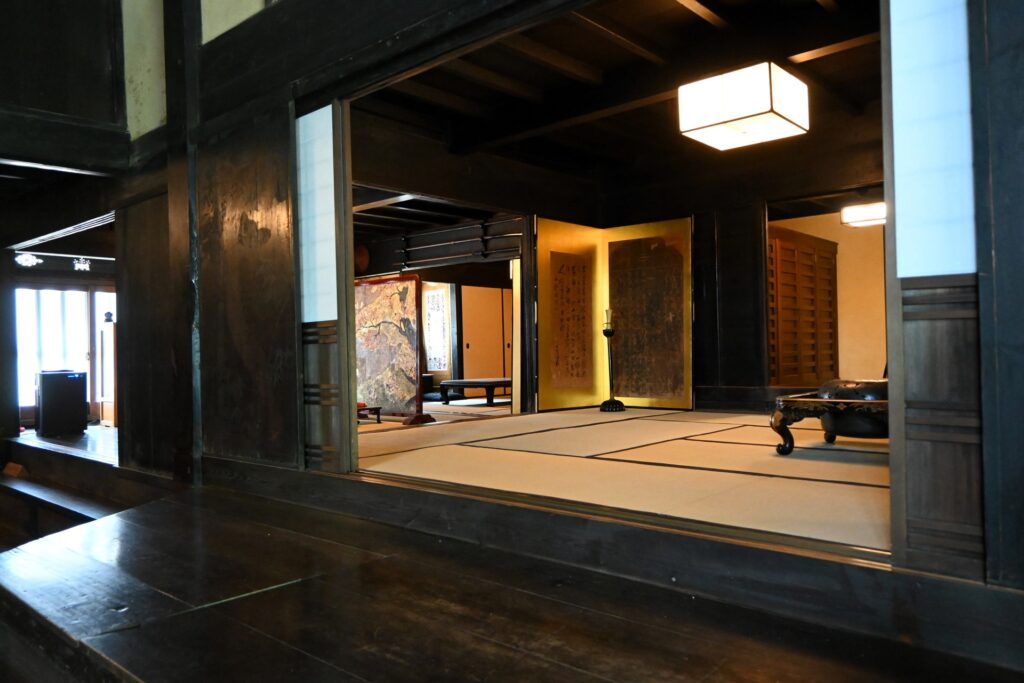
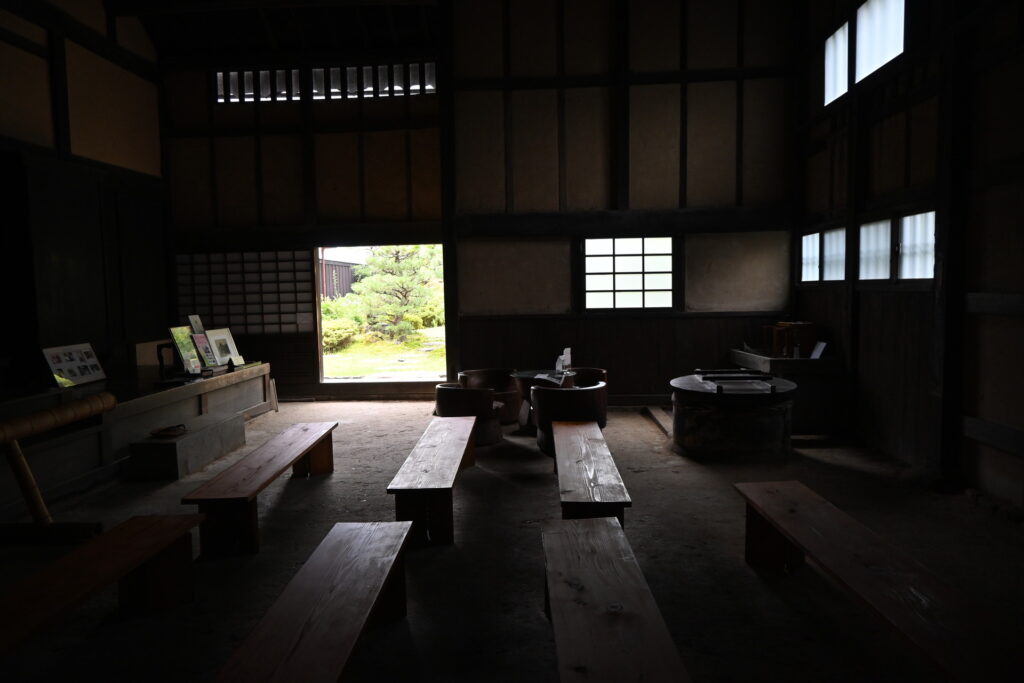
This is the residence of the Imanishi family dating from 1650. This family served as the head of administration of the Imai district. Its exterior walls are completely covered with plaster. Certainly, its northern entrance has the appearance of a traditional merchant’s house, but the appearance of its western side with majestic tiles has the appearance of a castle. Inside there is a spacious clay floor called doma. What was this space used for?
- The Imai district is located west of the city of Kashihara, 20 km south of Nara. We can go there by train. There are two means of transportation.
(The Kintetsu Line)
About 45 minutes from Kintetsu Nara Station. The Imai area is a 5-minute walk from Yagi-nishiguchi Station.
(The JR line)
About 40 minutes from JR Nara Station. The Imai district is a 10-minute walk from Unebi station. Not much service from JR. - Eight residences designated as state cultural property (starting with that of the Imanishi family) are open to the public, however it is possible that the visit may be refused by the owner of the residence depending on the circumstances, because these residences are private. Advance reservation is recommended. There is a fee to visit some of them (e. g. the price of visiting the Imanishi family home is 500 yen).
- Map
Asuka Village
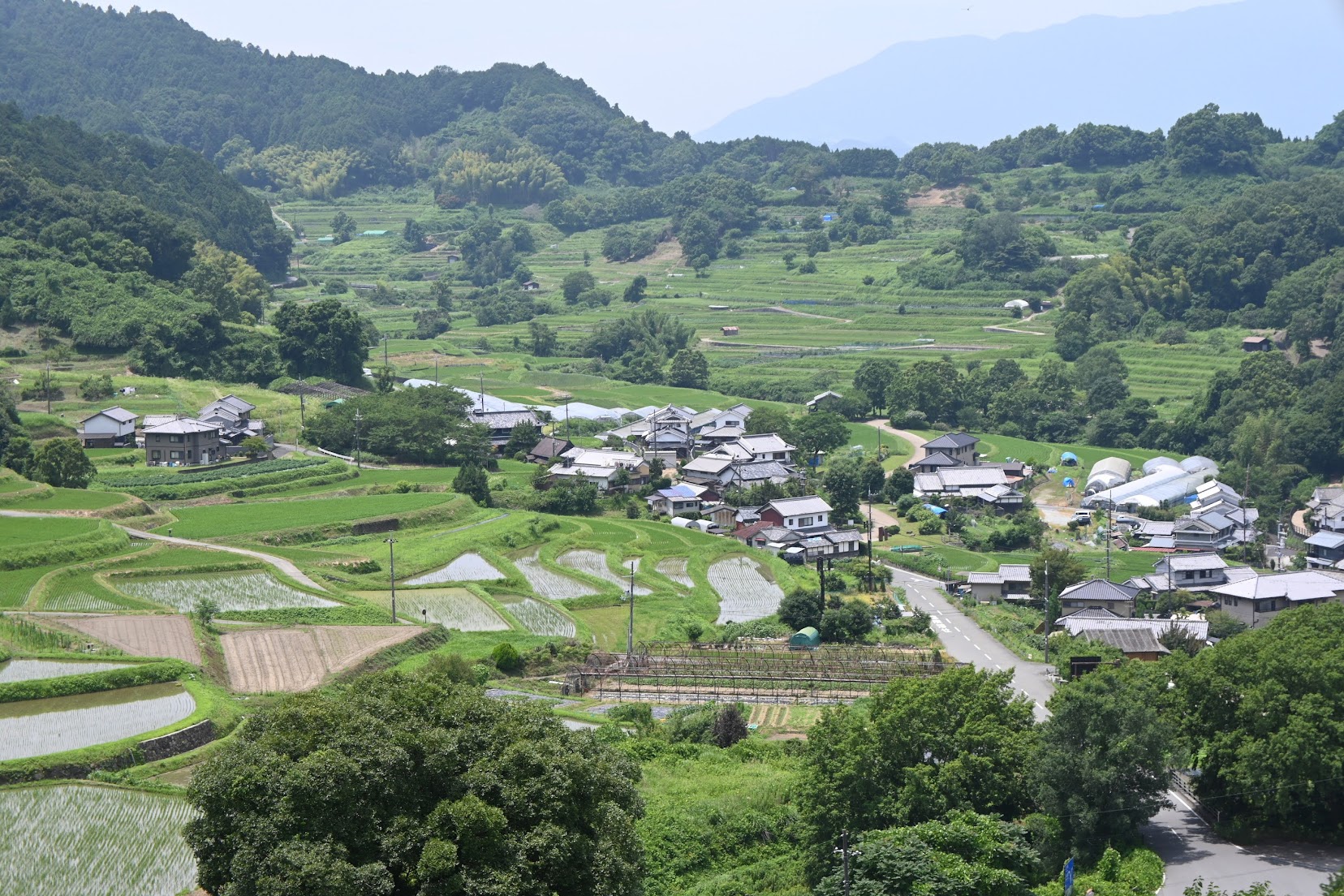
If you want to admire the rural landscape representative of Japan, I suggest you go to the village of Asuka, otherwise called the native land of the heart of the Japanese. Its picturesque landscape is attractive. There you can find peace of mind and experience something nostalgic. Another notable fact in Asuka is that this village was the political and cultural center of the country before Nara. There remain many mysterious stone monuments and historical remains. By whom were they made, when and for what purposes? Asuka will excite your curiosity even more as it is full of enigmas.
- Asuka Village is located in the center of Nara Prefecture. We can go there by train. It takes about 50 minutes from Kintetsu Nara Station. I advise you to rent a bike at Asuka station to visit the sights that dot Asuka village.
You will find mounds made by piling up earth in the village of Asuka. These are funerary monuments of important people from ancient times called kofun. The kofun of Takamatsuduka from the beginning of the 8th century is renowned for the frescoes which decorated its burial chamber. Now it is possible to see the reproduction of the frescoes in the nearby museum.
- The price of the fresco museum entrance ticket is 300 yen.
- Map
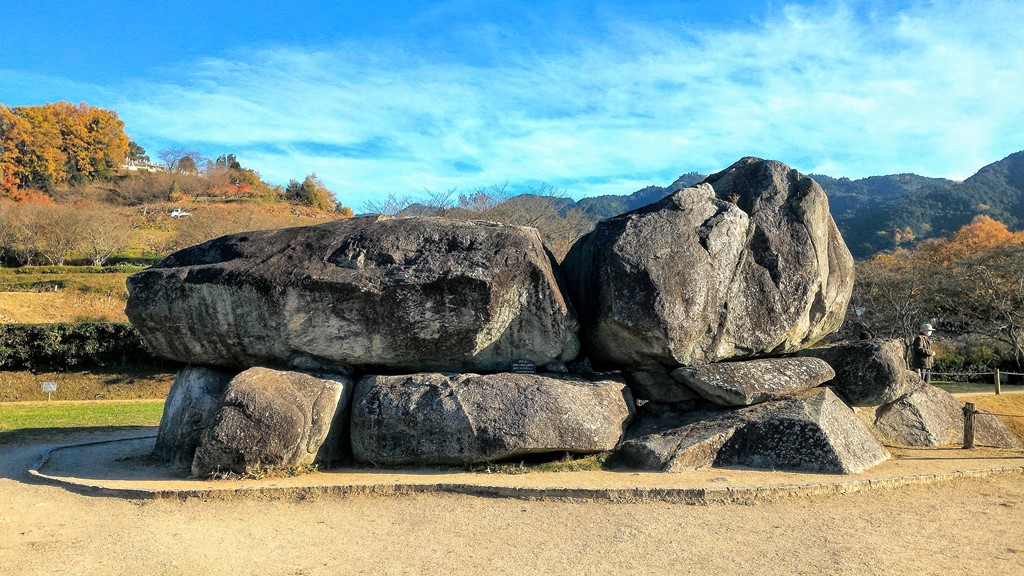
This assembly of around thirty granite rocks is also a funerary monument, kofun. We attribute this kofun from Ishibutai dating from the 7th century to a person who took power at that time. The gross weight of these massive rocks is approximately 2,300 tons. How were they transported?
- The entrance ticket price for Ishibutai kofun is 300 yen.
- Map
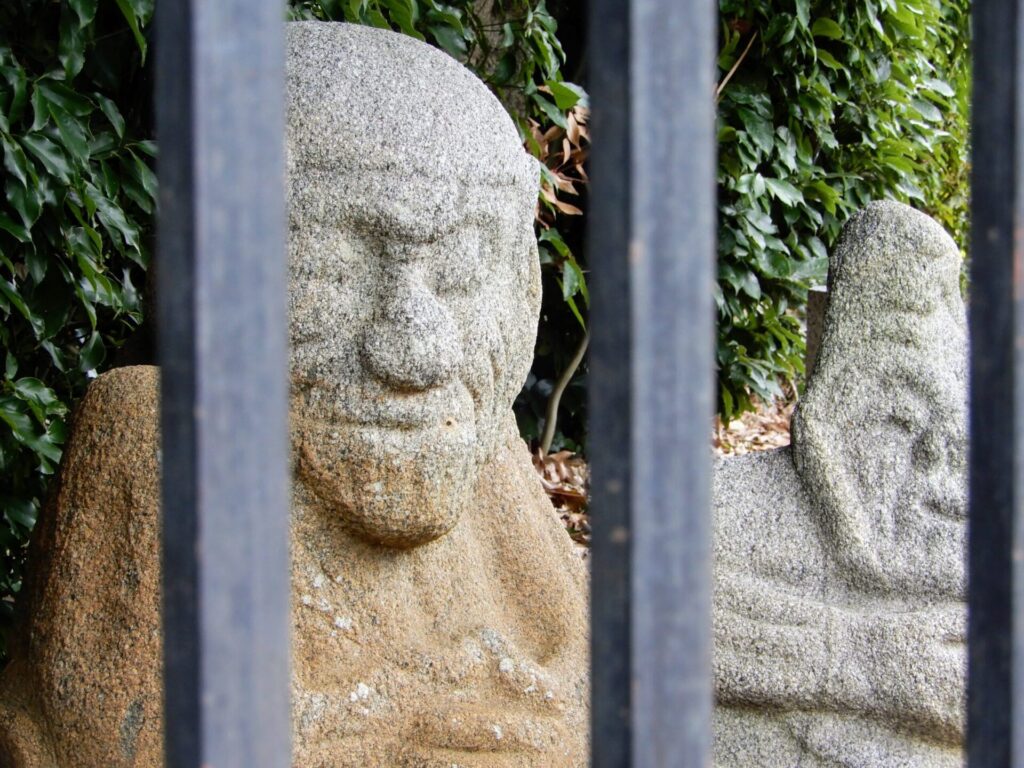
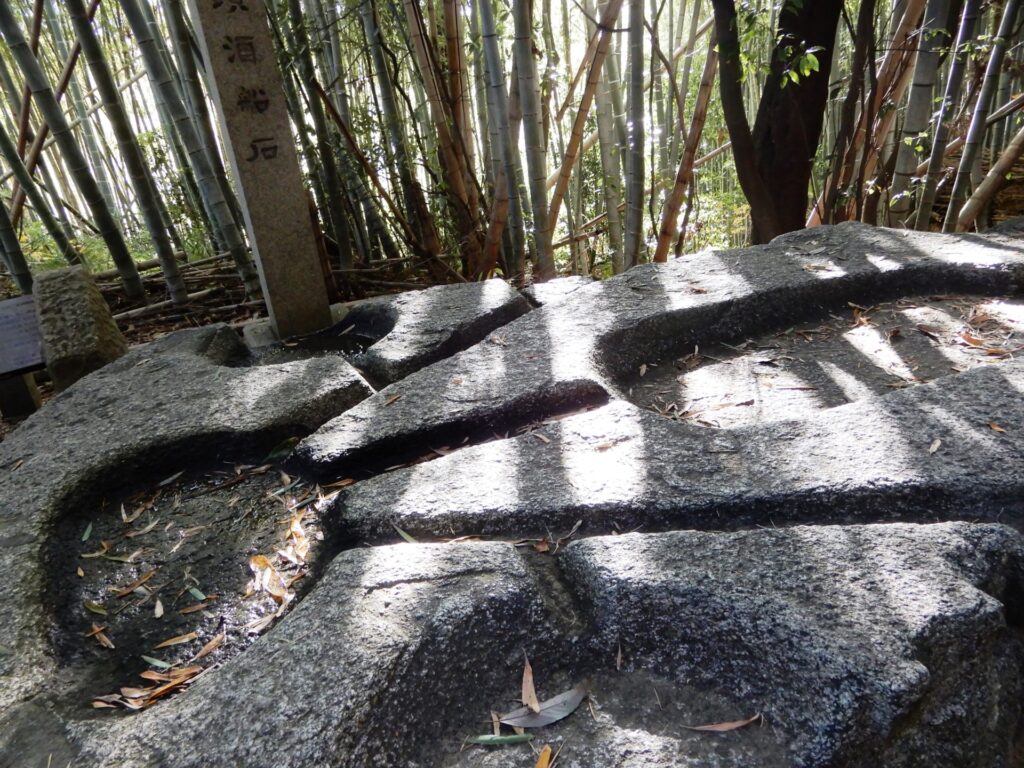
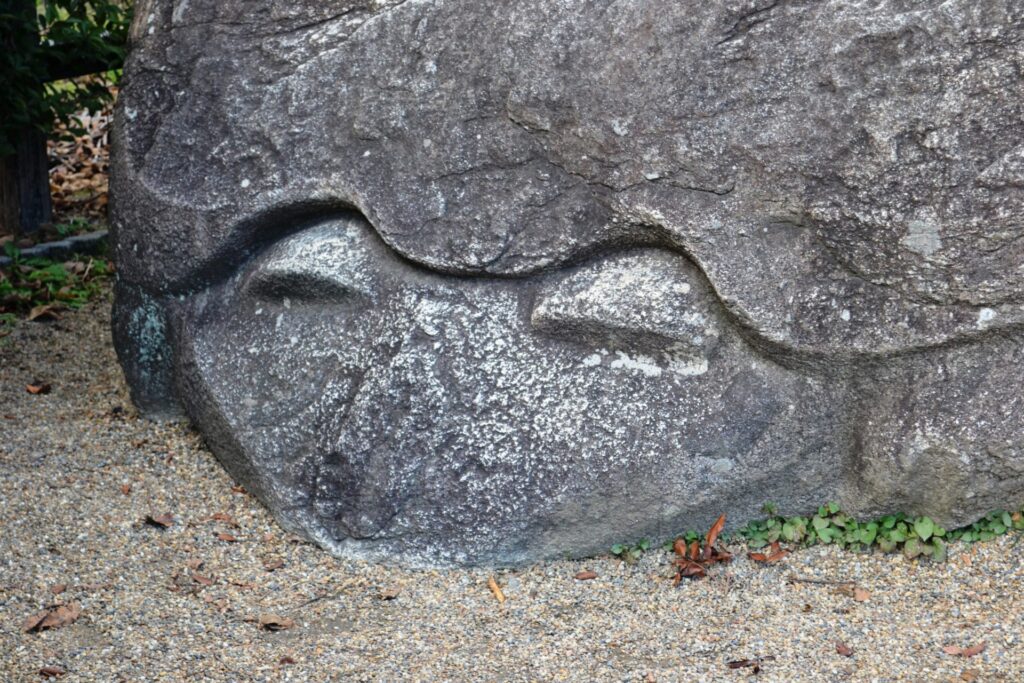
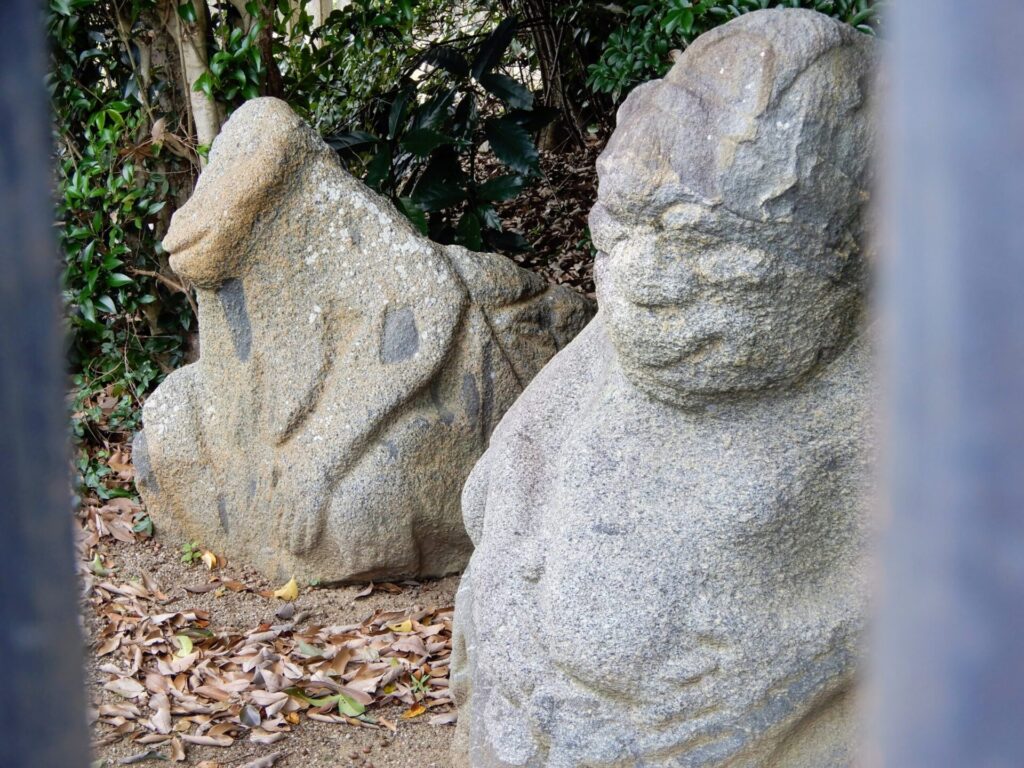
These are stone monuments that you will come across in Asuka. Some have frightening legends, others have several uses, others have humorous expressions. The enigma concerning these monuments has not yet been elucidated. Let your imagination run wild.

Take advantage of Asuka’s visit to taste her specialty. From January to the end of May, you can pick strawberries grown in greenhouses. The nickname of these strawberries, ‘Asuka Rubis’ comes from the lustrous red color reminiscent of ruby. ‘Asuka Rubis’ are often used in Western pastries as well as Japanese pastries.
Muroji Temple
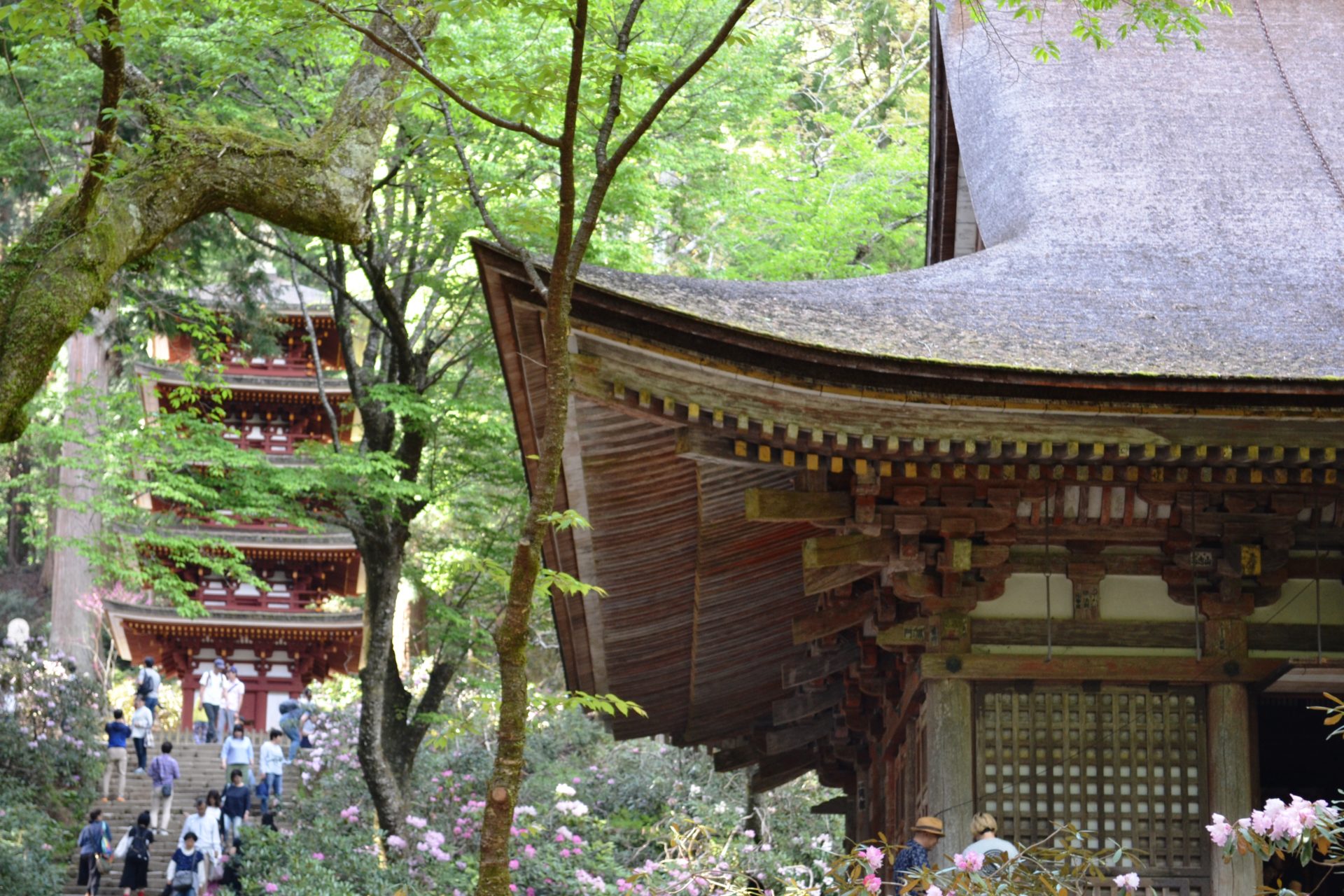
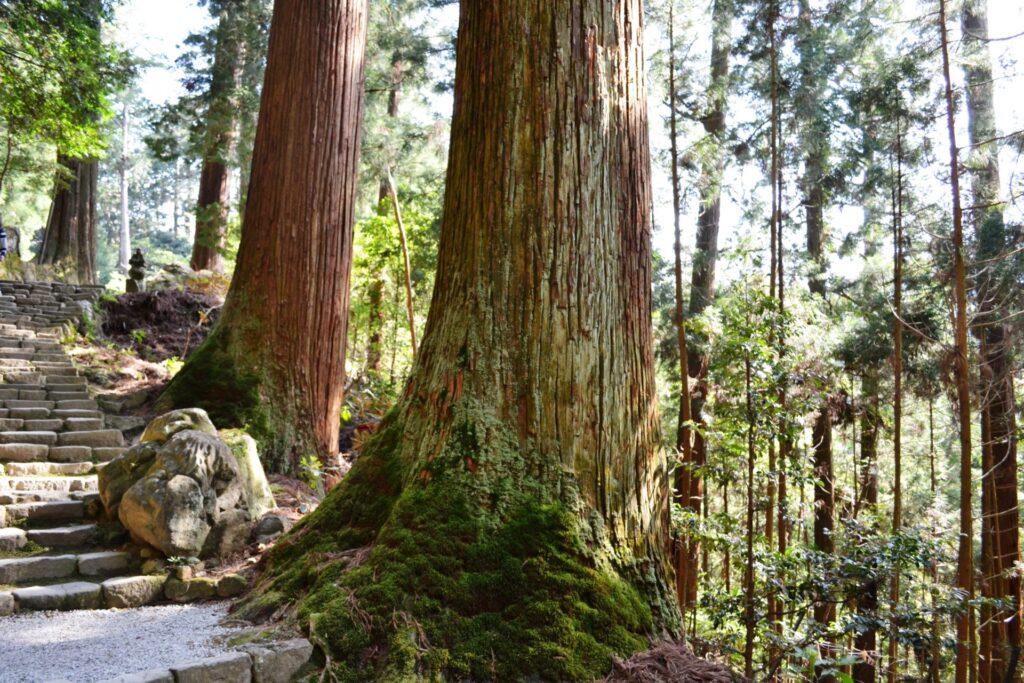
Do you know that there is the temple known as Mount Koya for women in the east of Nara Basin? It is Muro-ji temple located in the village surrounded by deep mountain and valleys. It belongs to the school of esoteric Buddhism. In contrast to Mount Koya, the largest monastic city in Japan, which refused women to visit for prayer until the beginning of the 20th century, Muro-ji temple still welcomes pilgrims regardless of gender and has long had the support of women. This is why its enclosure creates a soft and graceful ambiance rather than a majestic ambiance. What if we went for a slow walk in this relaxing space? The enclosure embellished by spring rhododendron flowers or the red leaves of autumn maples is particularly worth a visit.
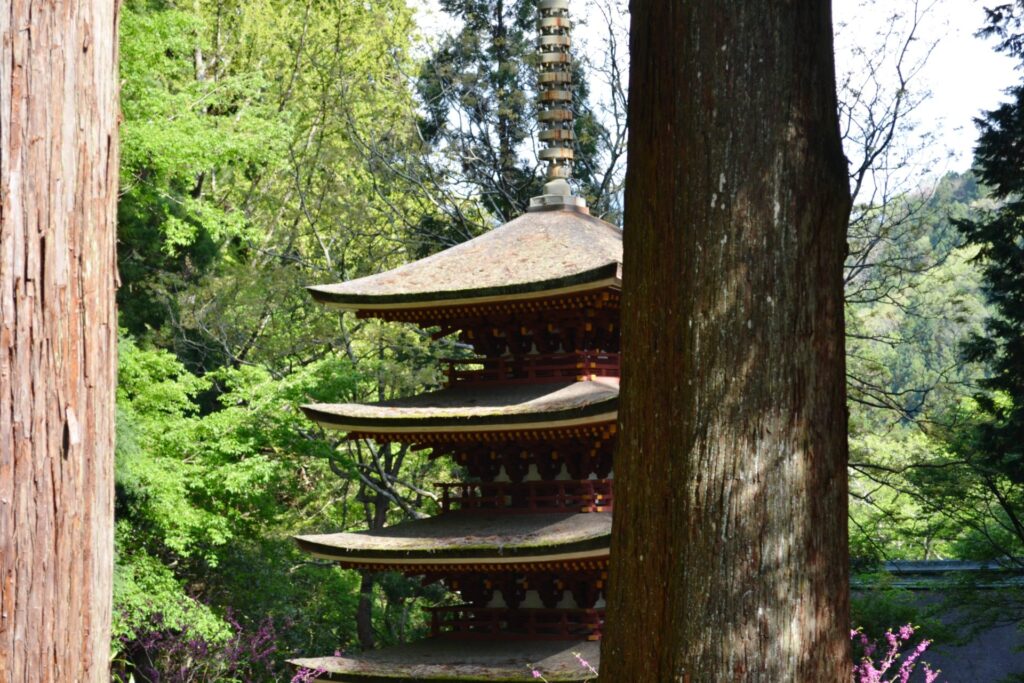
Beyond the stone stairs, the symbol of Muro-ji Temple, the five-story pagoda awaits you. It is the smallest and second oldest pagoda in Japan. Its elegant appearance will be impressive.
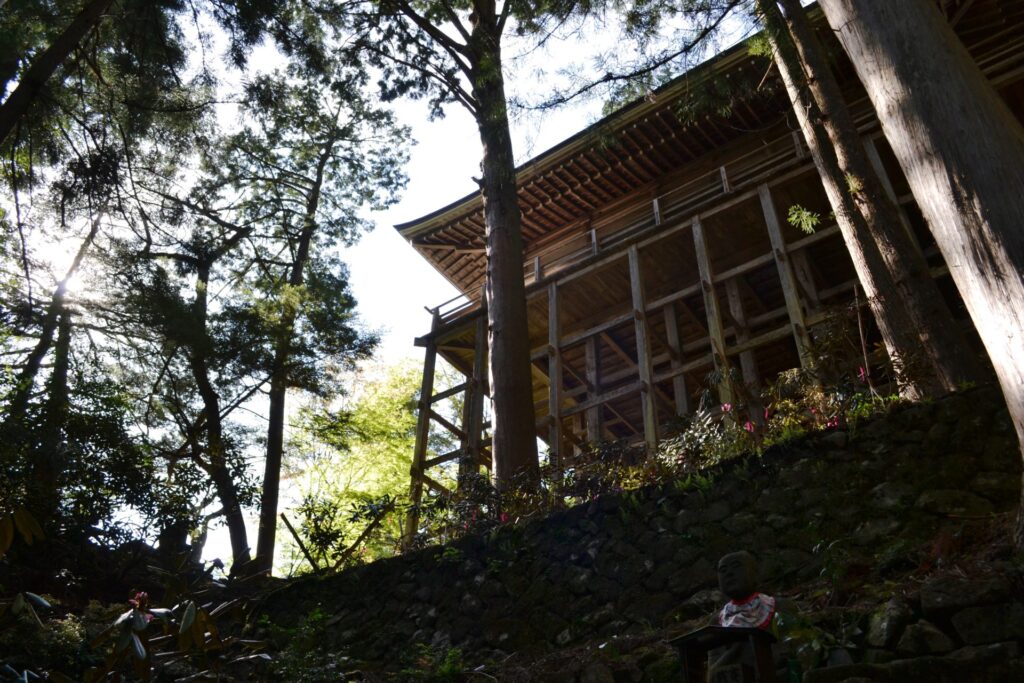
If you have good legs, I advise you to go to the mystical enclosure, Oku-no-in by climbing the long steep slopes next to it.
- The entrance ticket price to Muro-ji Temple is 600 yen. If you visit its museum, you have to pay an extra 400 yen.
- It takes about an hour to get there from JR Nara Station. We first take the JR train, get off at Sakurai Station to change to the Kintetsu line train and get off at Muroguchi-Ono Station (Kintetsu). You can go from this station to Muro-ji Temple by bus in 15 minutes. There is only one bus per hour. It is better to confirm the return bus schedule.
- Muro-ji temple is located in the mountain. As there are steep stone stairs to climb, hiking shoes are recommended. There is also a loan of walking sticks.
- The time required for the temple visit is between 1.5 hours and 2 hours.
- Map
Hase-dera Temple
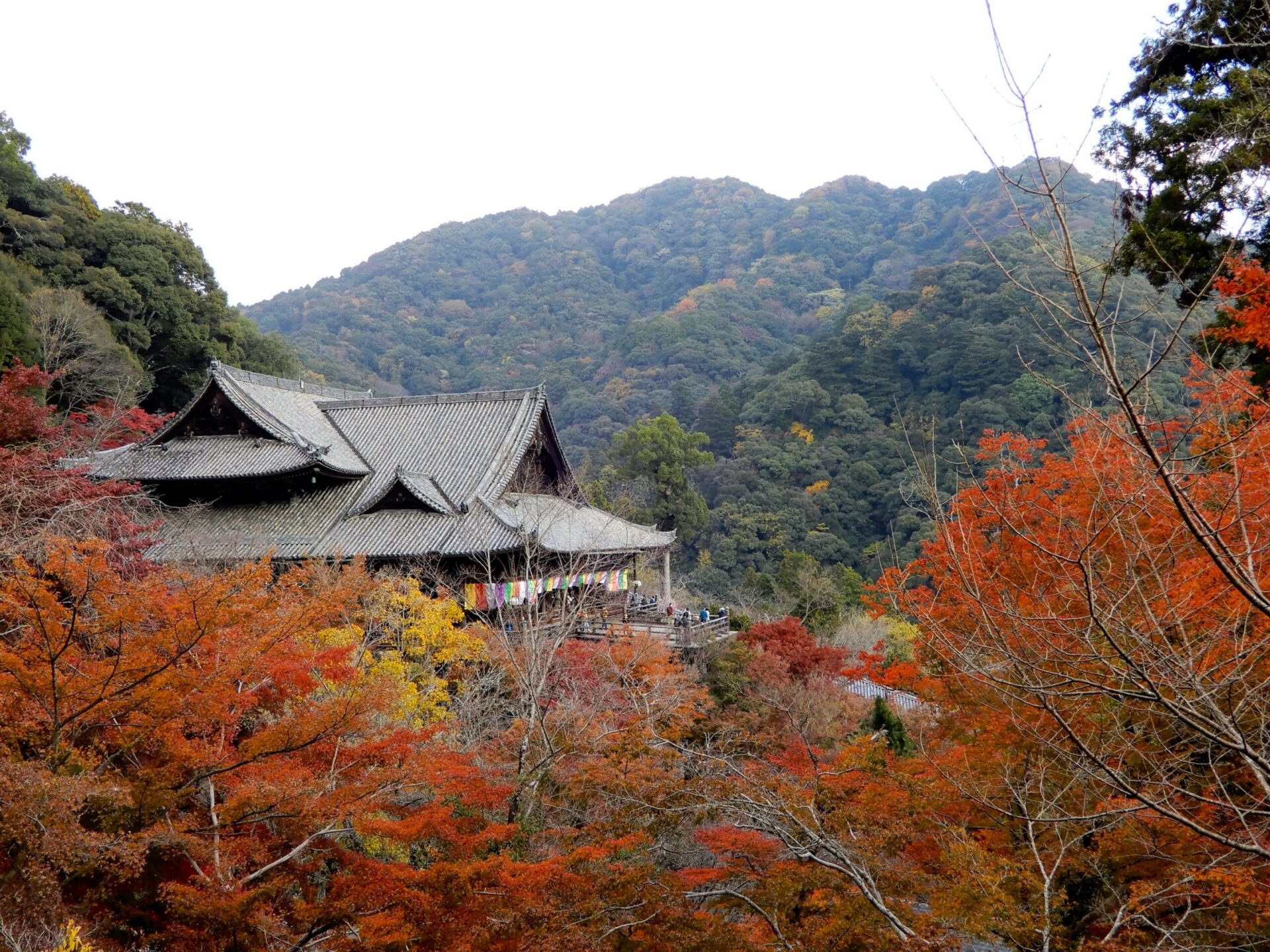
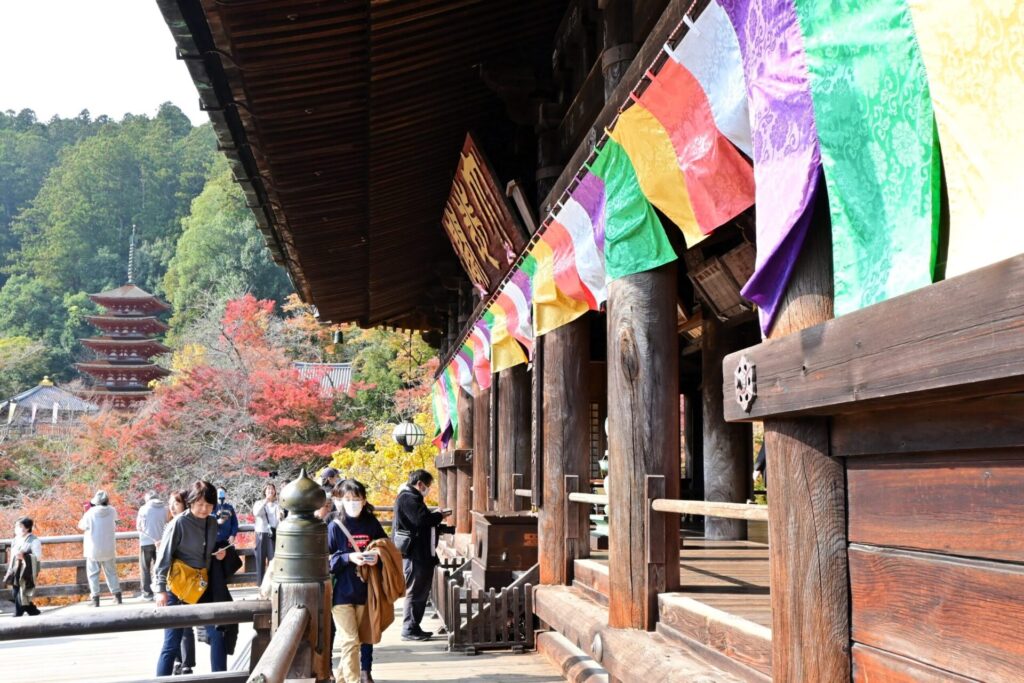
Hase-dera Temple is one of the greatest pilgrimages of the deity of compassion, kannon from Japan. Although this temple is located in an underserved village, it is worth the detour. You have to climb the staircase of around 400 steps to go to its main building where the statue of kannon with eleven faces, but your fatigue will be compensated by the grandiose landscape and the serene atmosphere. The flowers here flatter the eyes in all seasons and you will be able to realize why this temple is otherwise called “flower temple”. Above all, the cherry trees and peonies of spring and the blushing of autumn leaves are a must-see.
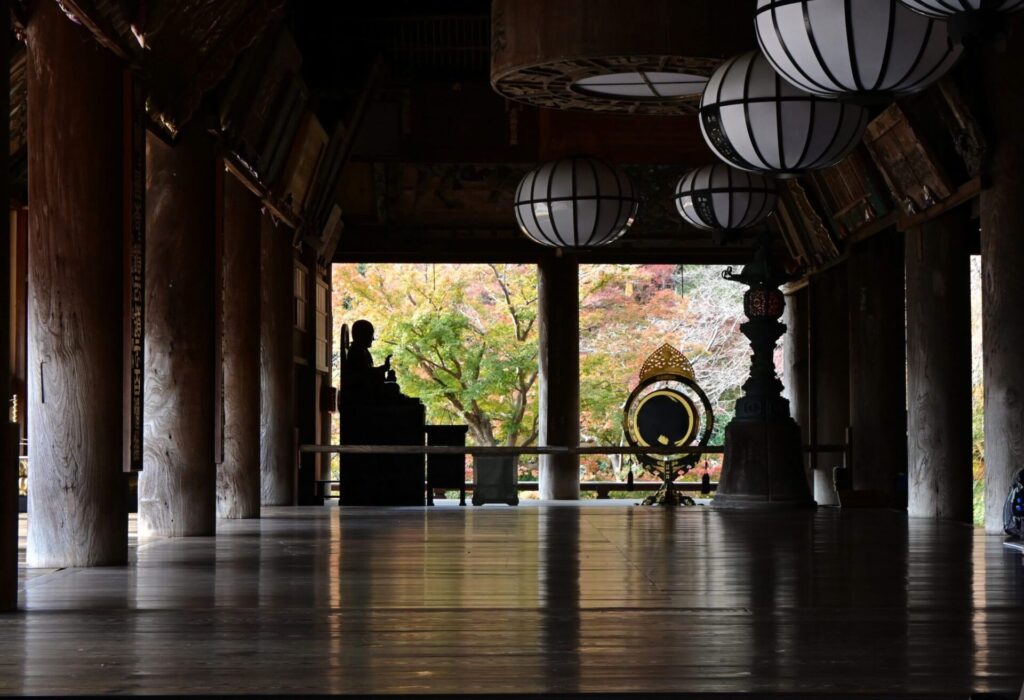
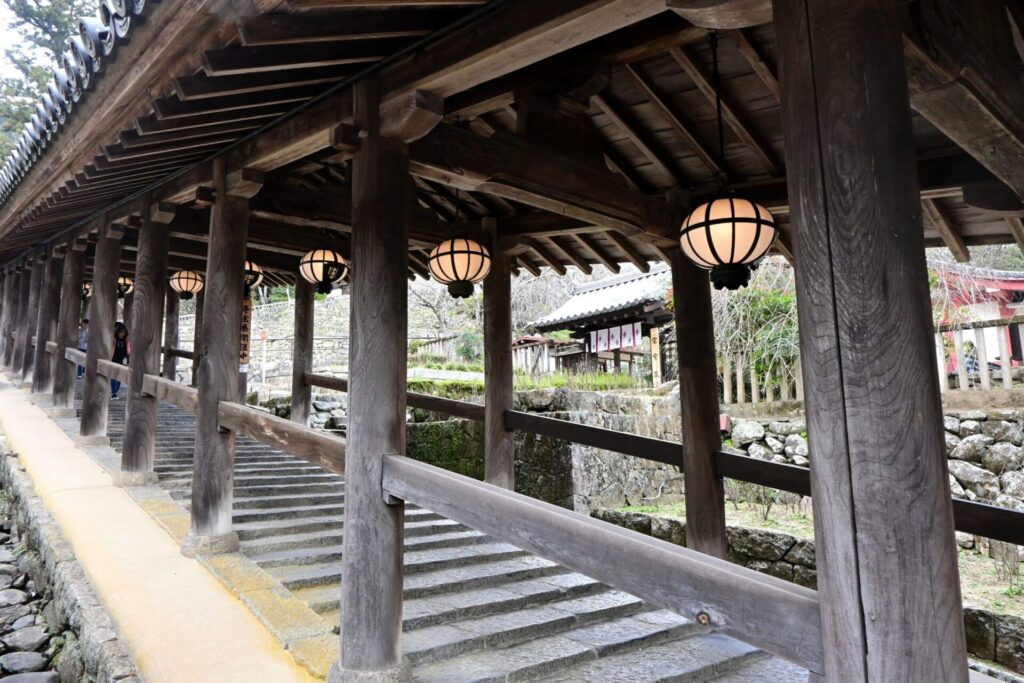
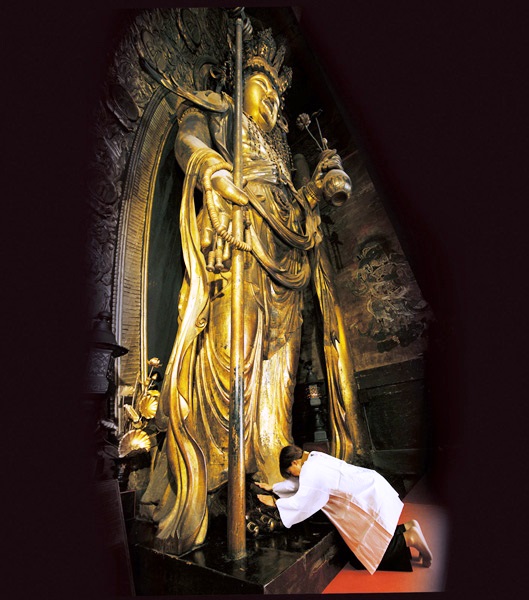
Here is the statue of kannon with eleven faces located in the main building. She stands on a pedestal wearing a Buddhist rosary and carries a cane in her right hand and a water pot in her left hand. At 10 meters high, it would be the largest wooden statue in the country. In spring and autumn, one can pray by directly touching the feet of kannon to beg for mercy.
- The entrance ticket price to Hase-dera Temple is 500 yen.
- During the special prayer where one can touch the feet of kannon, one must pay an additional fee of
1,000 yen. - It takes about an hour to get there from JR Nara Station. We first take the JR train, get off at Sakurai Station to change to the Kintetsu line train and get off at Hasedera Station (Kintetsu). It’s a 15 minute walk from the station. It is possible to visit Hase-dera Temple and Muro-ji Temple or Tanzan-jinja Shinto Shrine in one day. In any case, it’s like a hike and walking shoes are therefore recommended.
- You can participate in the morning prayer which is held at the main building. Listen to the prayers of the monks resounding in a serene atmosphere. This solemn ceremony will calm your mind. However, it starts at 6:30 a. m. from April to September and at 7 a. m. from October to March. It is better to stay overnight in an inn near this temple the day before your visit.
- Map
The Tanzan-jinja Shinto Shrine
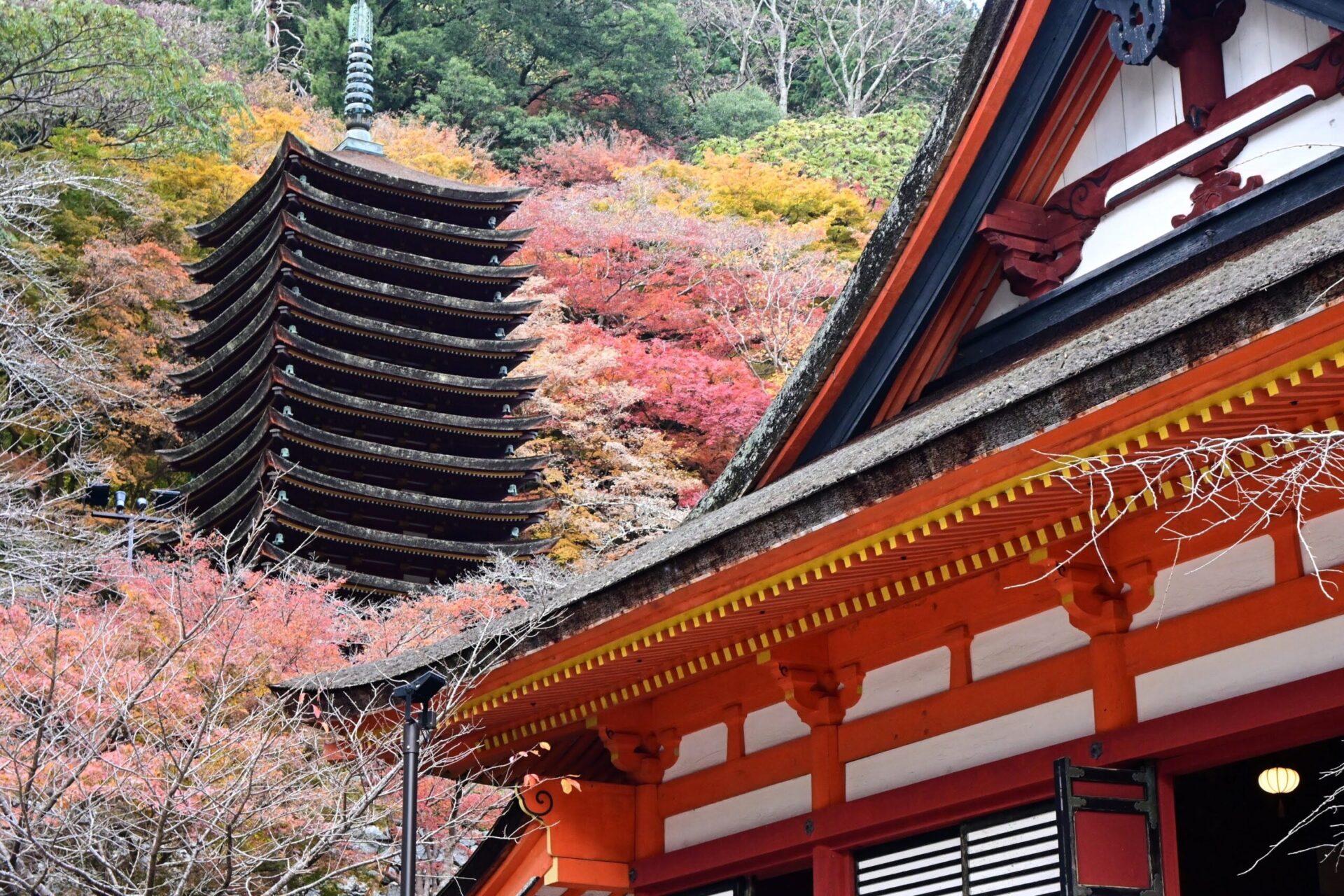
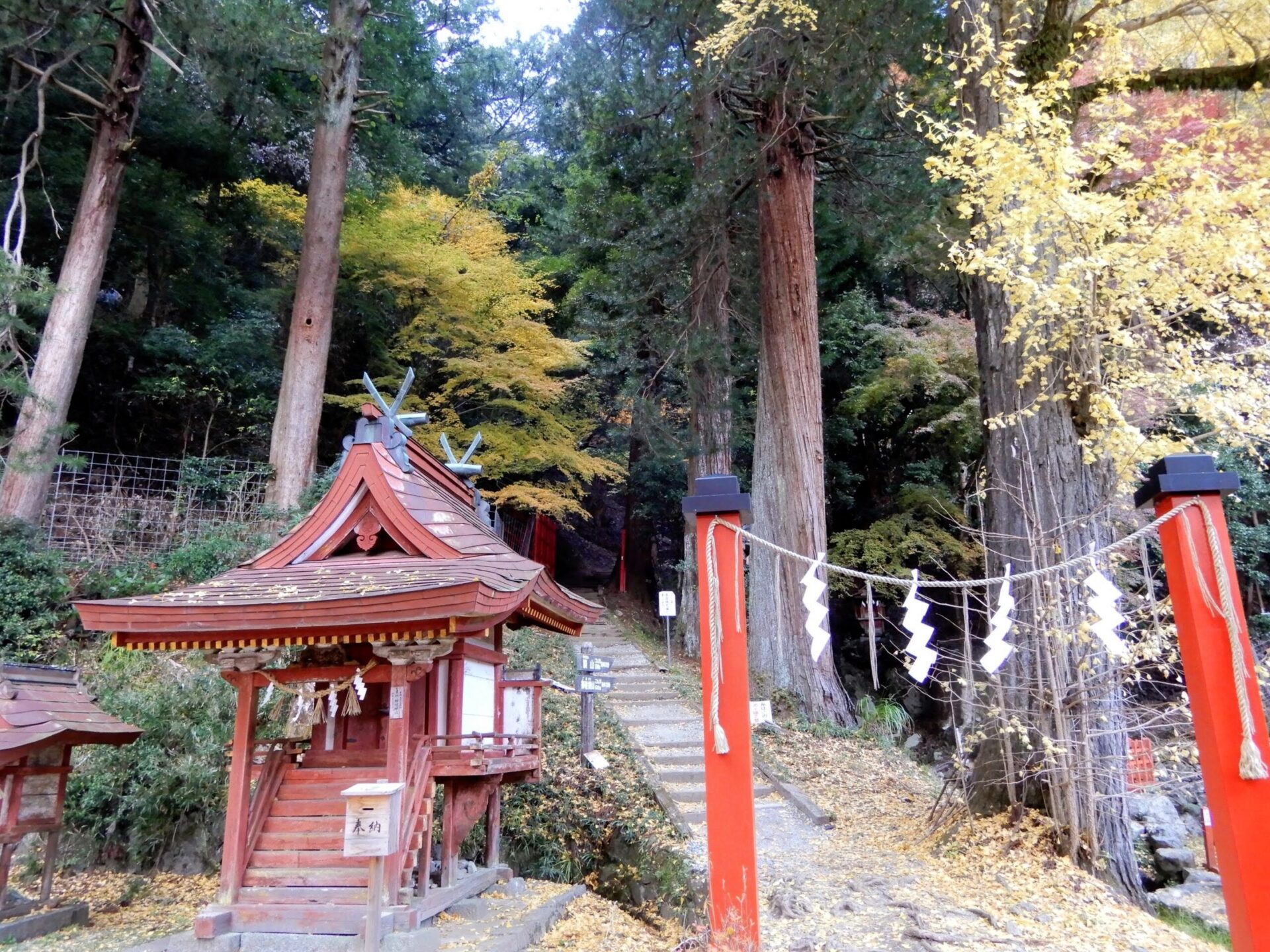
After the collapse of shogunate Led by the Tokugawa family, a new system of state management based on the emperor emerged in Japan at the end of the 19th century. This led to a great change in the religious policy of the country. Until then, the Japanese believed in an amalgamation of Shintoism and Buddhism, but the new government decided that only Shintoism, Japan’s own religion, would henceforth be the national religion. This religious history is reflected in the Tanzan-jinja Shinto shrine which was originally a Buddhist temple. The majestic Buddhist architecture, spared from destruction and wonderfully integrated into nature, is felt by the mystical atmosphere of the syncretism of yesteryear.
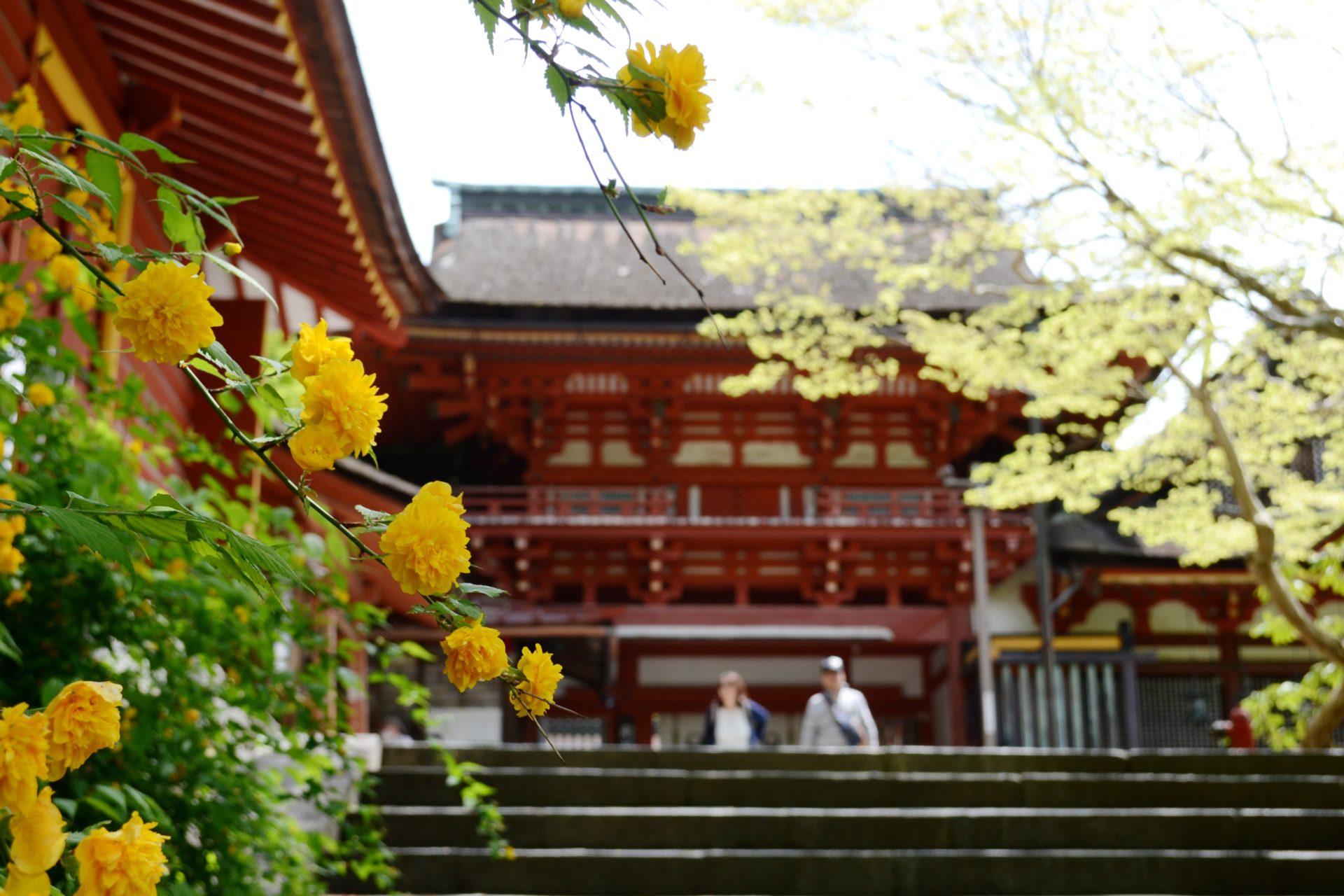
Today, this place is well known for its red autumn leaves. Its new spring greenery is also worth the detour.
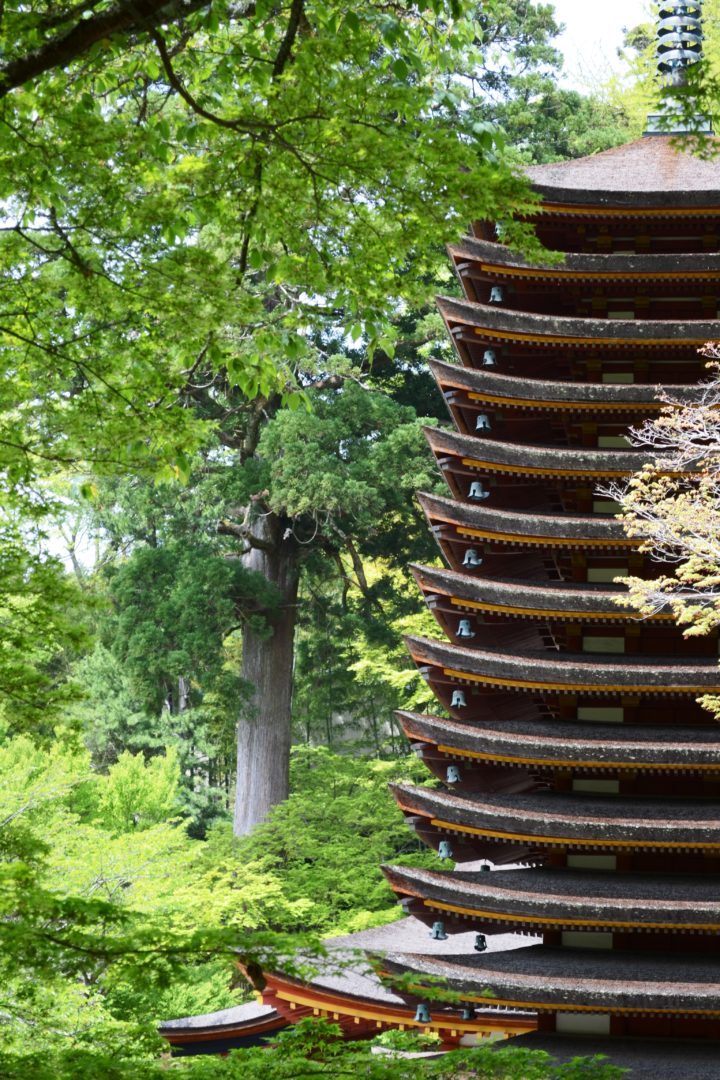
Here is the approximately 17 meter high pagoda built in the 16th century which is a symbolic building of Tanzan-jinja. It is the only thirteen-story wooden pagoda in the world. Each roof is covered with Japanese cypress bark. It is characterized by its straight shape with little curvature.
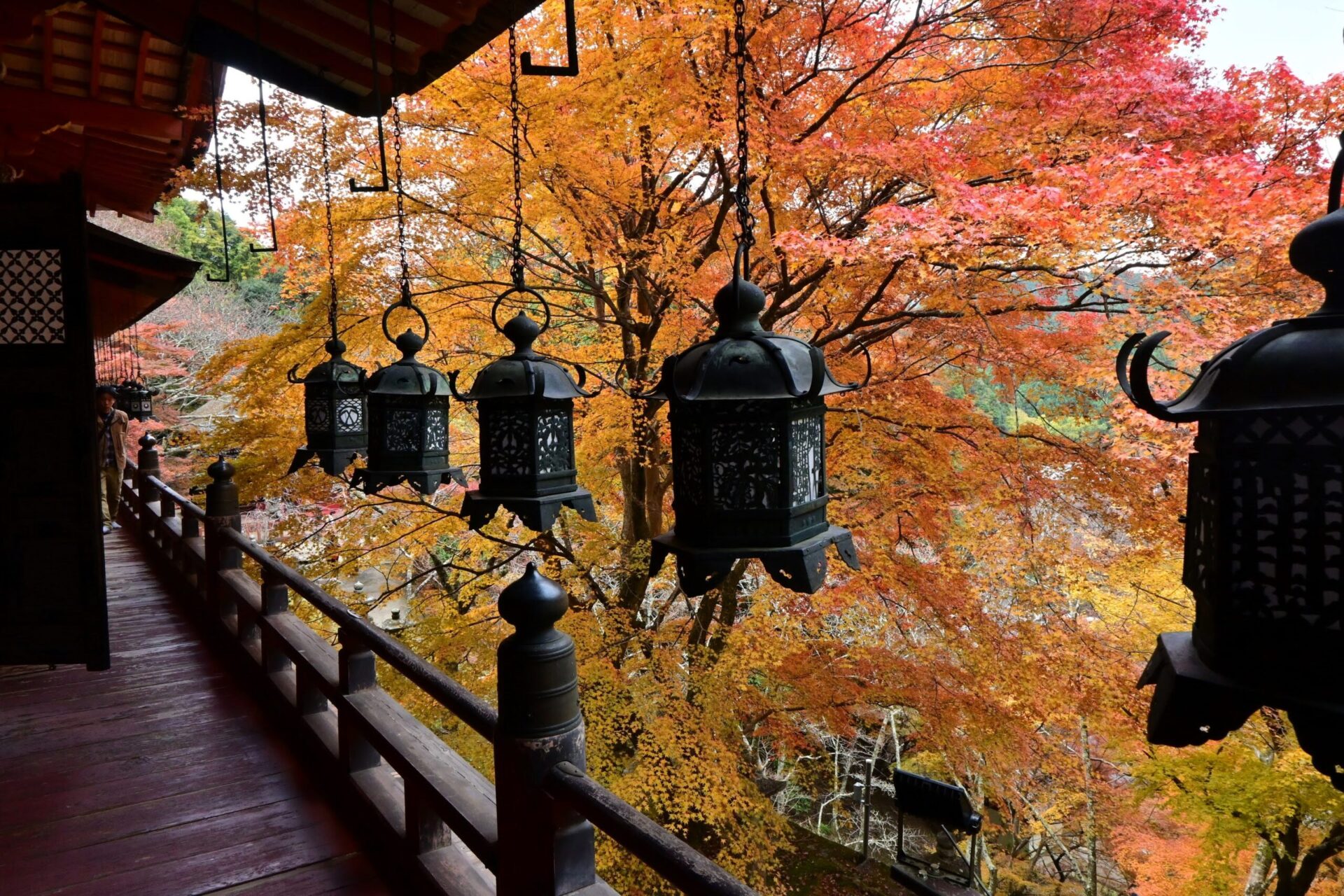
Lanterns with the wisteria motif (the coat of arms of this shrine) hang in the corridor of the prayer building, haiden located below the main sanctuary, honden. You can admire the beautiful nature in perspective.
- The price of the entrance ticket to the Tanzan-jinja Shinto shrine is 600 yen.
- To access its enclosure, you climb 140 stone steps.
- It takes about an hour to get there from JR Nara Station. We take the JR train and get off at Sakurai station (30 min journey). You can go from this station to the Tanzan-jinja Shinto shrine by bus in 30 minutes (500 yen). There is only one bus per hour. It is better to confirm the return bus schedule. It is possible to visit the Tanzan-jinja Shinto shrine and the Hase-dera temple in one day.
- Map
The Path to Yamanobe-no-Michi
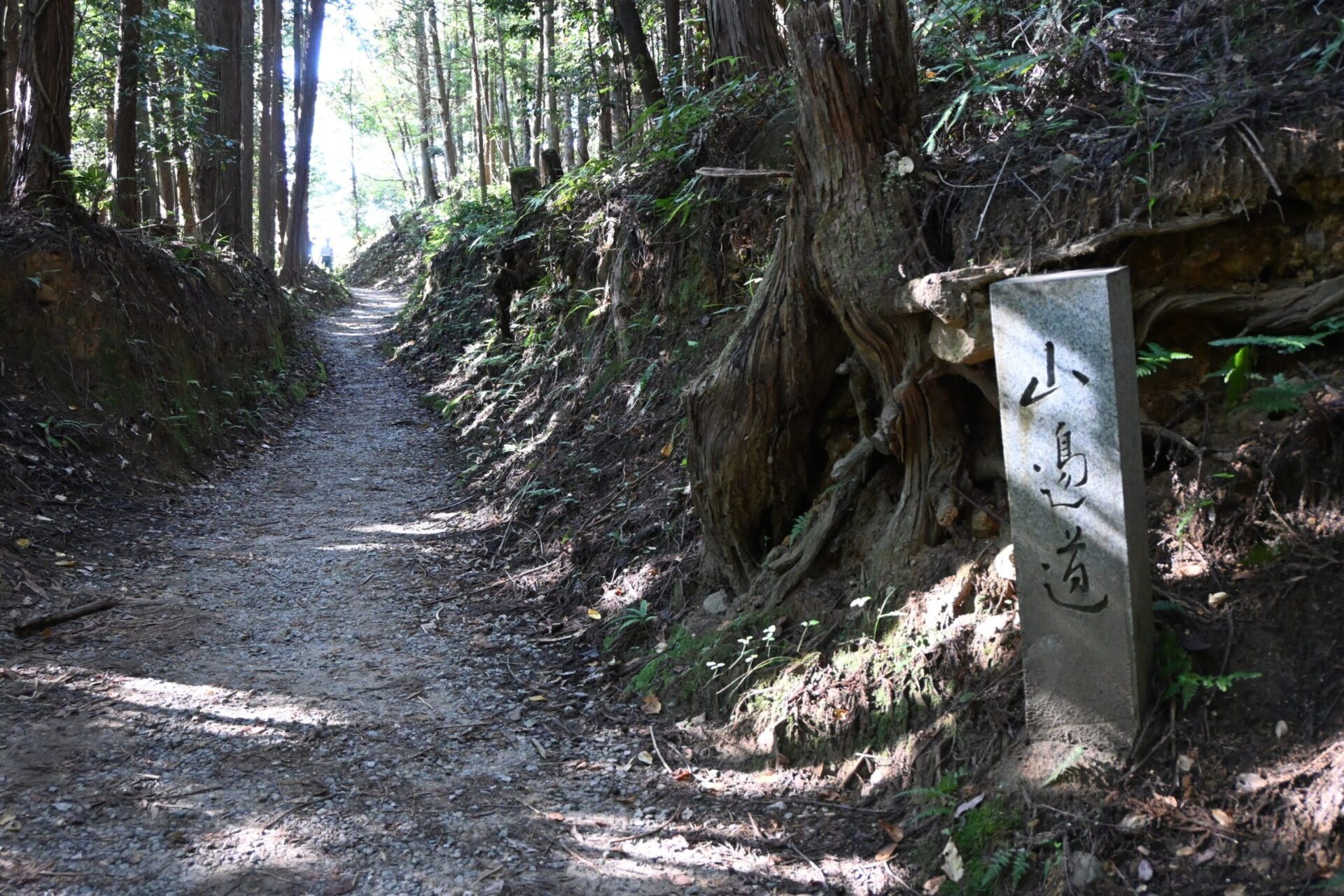
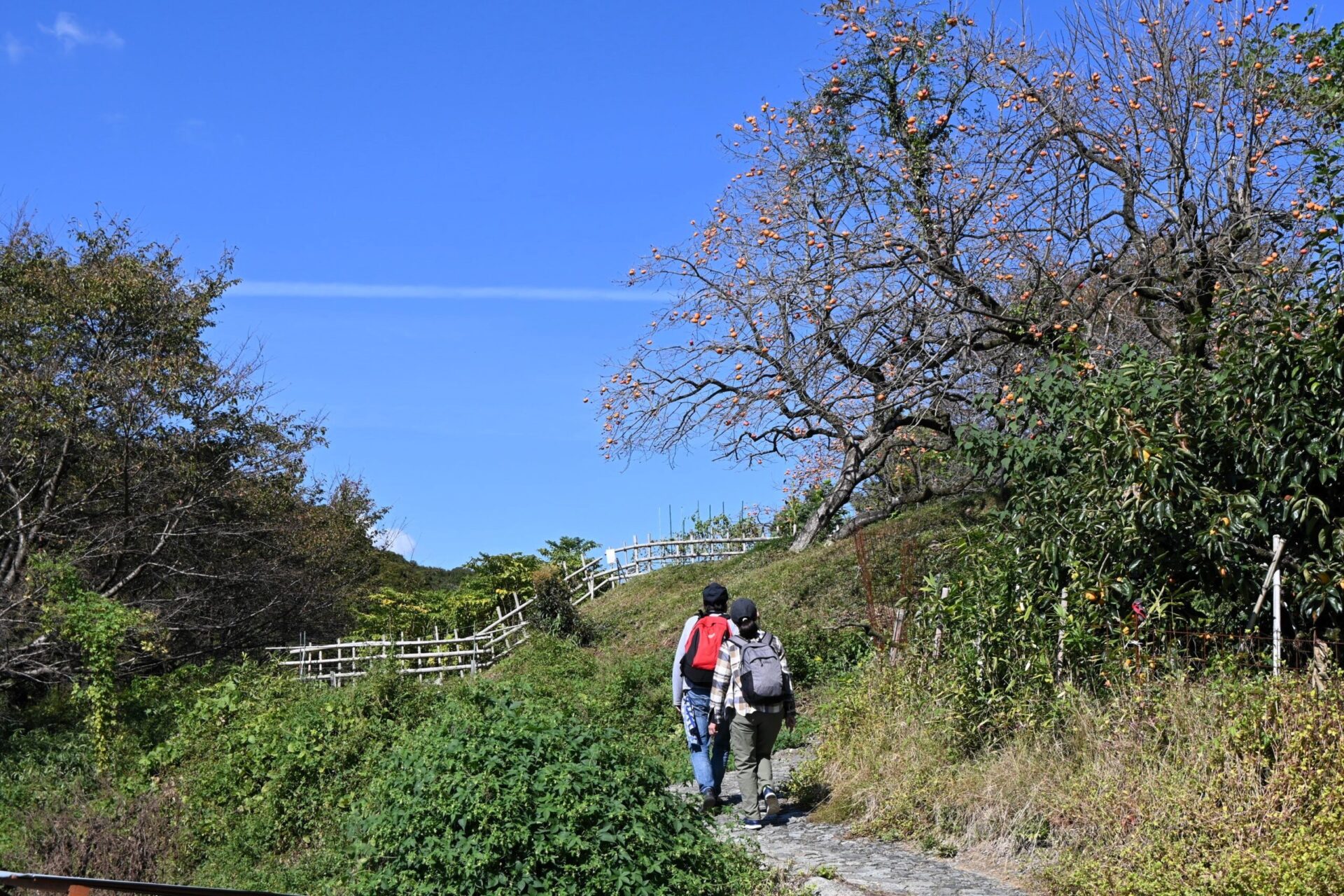
The Yamanobe-no-Michi Path which runs along the foot of the mountains on the eastern side of the Nara Basin connects Sakurai and Nara. It is said to be the oldest path in Japan. It is not possible to trace exactly the remains of this path today, but the portion of around twelve kilometers which goes from the Oomiwa-jinja Shinto shrine of Sakurai to the Isonokami-jingu Shinto shrine of Tenri still retains an ancient appearance. Funerary mounds of emperors, as well as old temples and sanctuaries parade along this quiet and poetic path which winds between woods, rice fields and hamlets, inviting us into the mystery of ancient Japan. Hiking along this path will be pleasant.
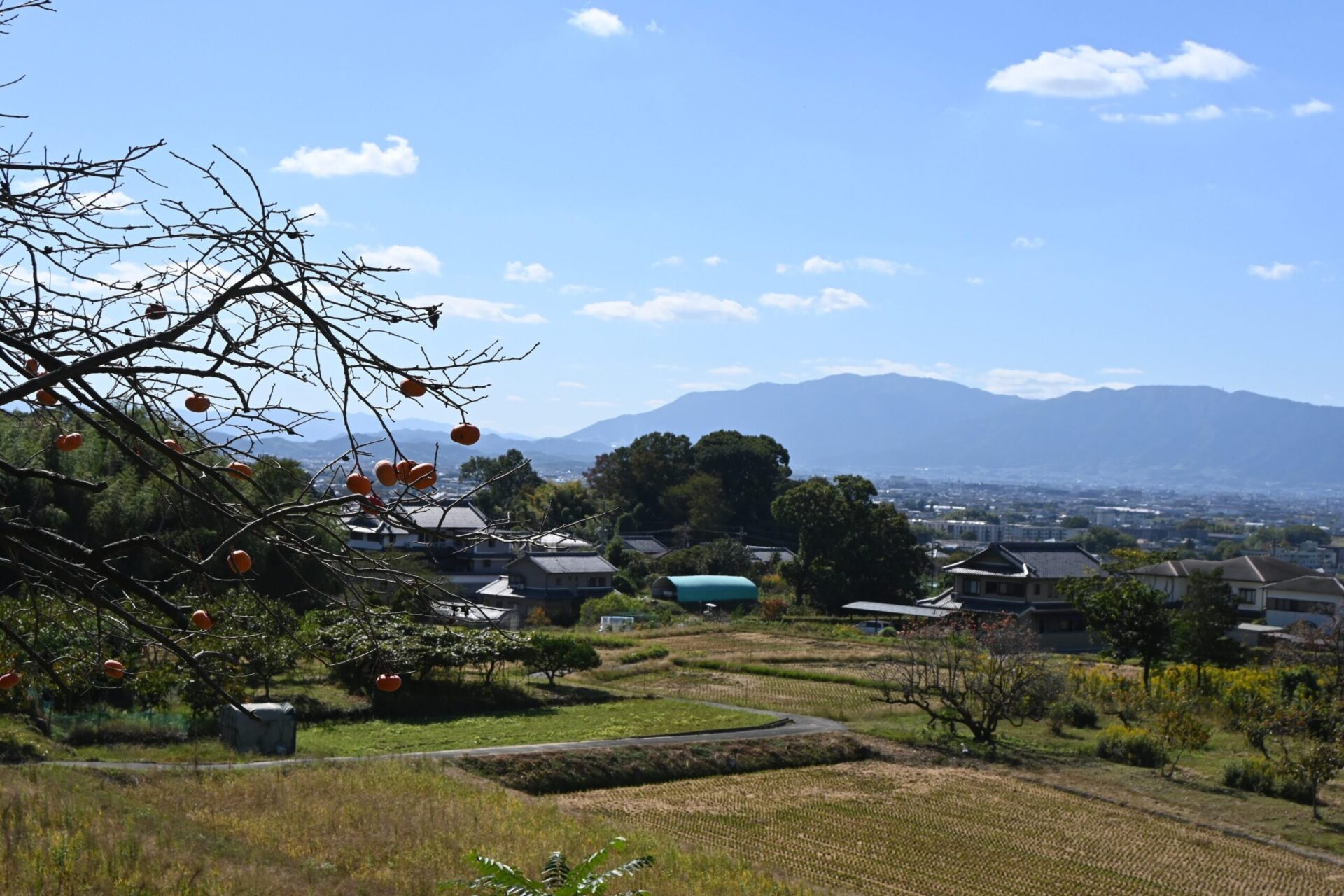
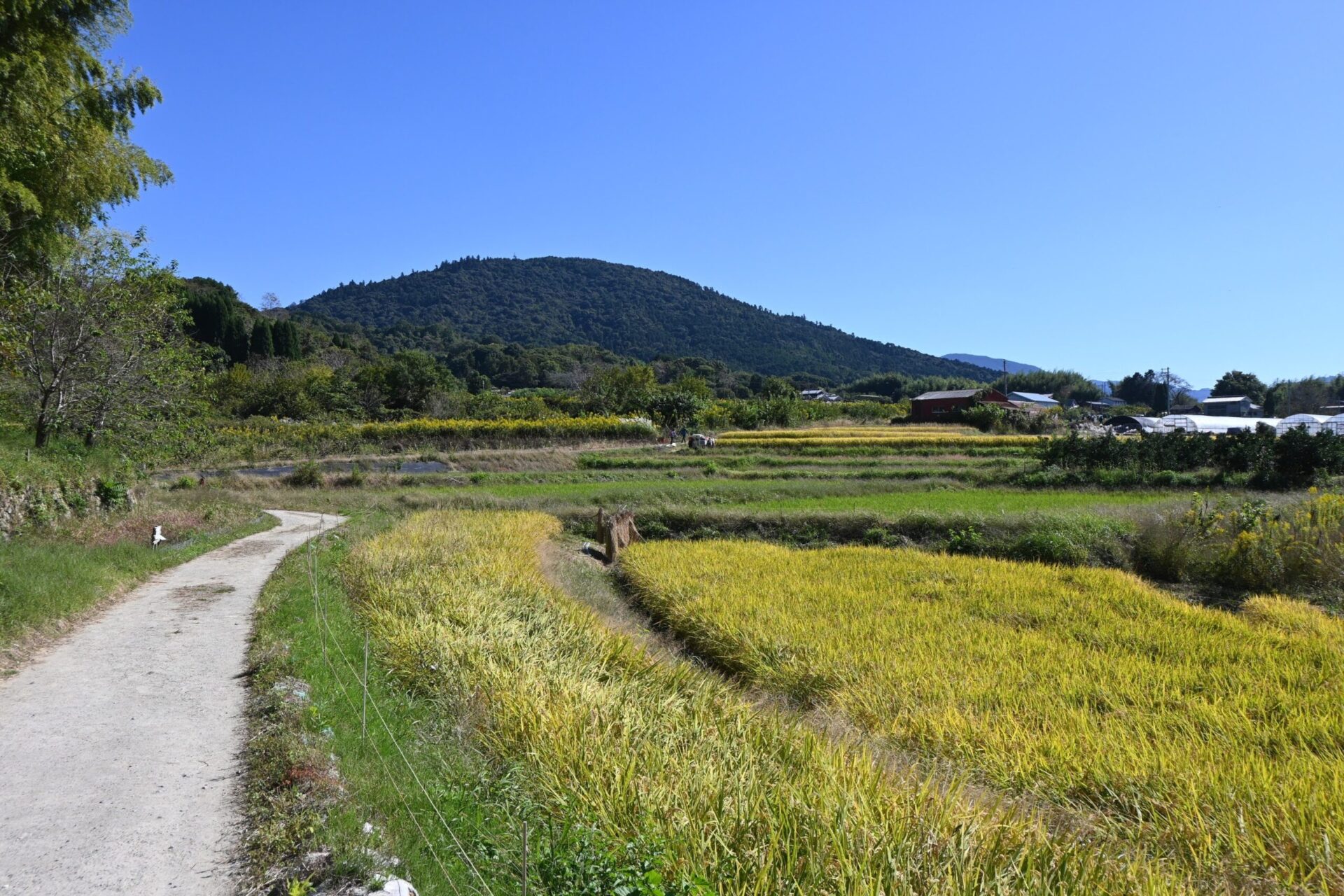
- The hike takes a whole day if you want to see everything. You can do it in the direction from Sakurai to Tenri (south to north) or in the opposite direction. I recommend that you do it from south to north, starting from the Oomiwa-jinja Shinto shrine located a 5-minute walk from Miwa station and taking the Yamanobe-no-Michi path towards the north. This path runs parallel to the JR railway and bus line. If you want to shorten your hike (it will be for half a day), you can return, for example, via Yanagimoto station located a 15-minute walk from the Tenri information center for hikers.
The Oomiwa-jinja Shinto Shrine
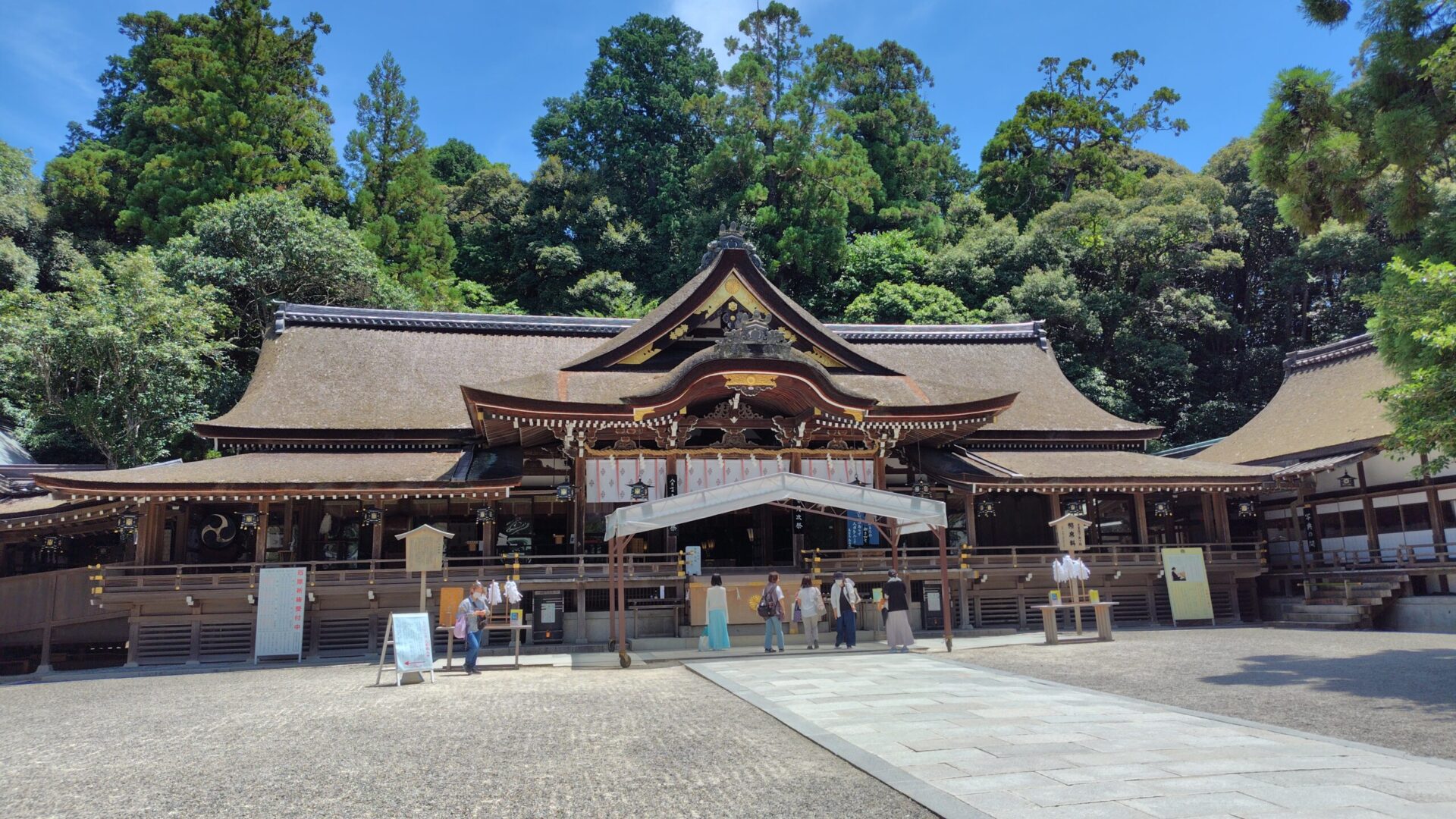
In a Shinto shrine, there is the most sacred building of the shrine, honden where the go-shintai, the object of worship in which the spirit of the Shinto divinity remains. We pray in the direction ofhondenfrom the worship building, haiden placed in front of the honden. But the Oomiwa-jinja Shinto shrine does not have honden. For what ? This is because Mount Miwa located behind this shrine is considered to be go-shintai, the object of worship. In other words, the entire Mount Miwa is revered as a sacred mountain where the god of this shrine dwells. This style bears witness to original Shintoism. It is said to be one of the oldest Shinto shrines in Japan. The three porticos, mitsu-torii is located between the sacred mountain Miwa and the haiden.
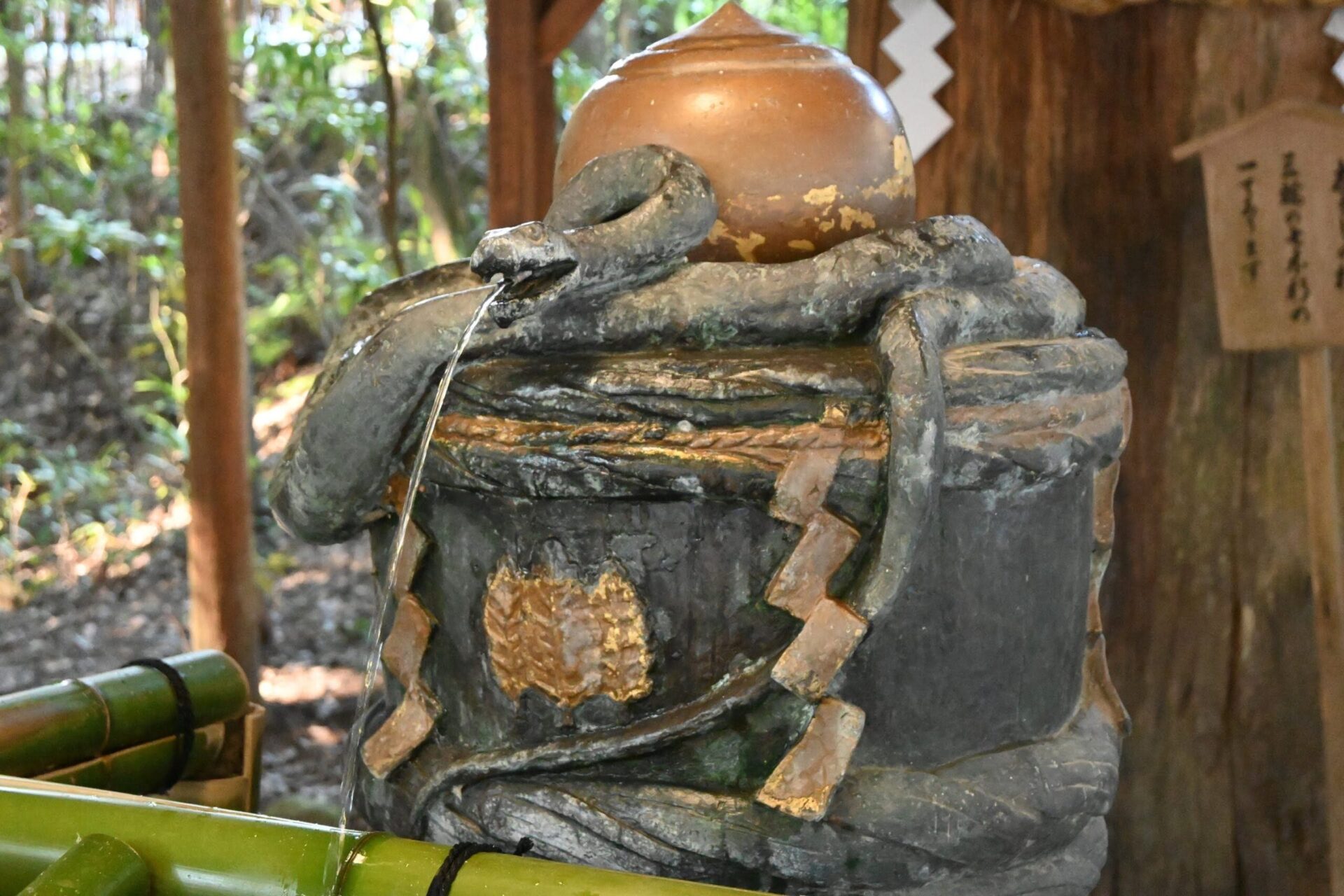
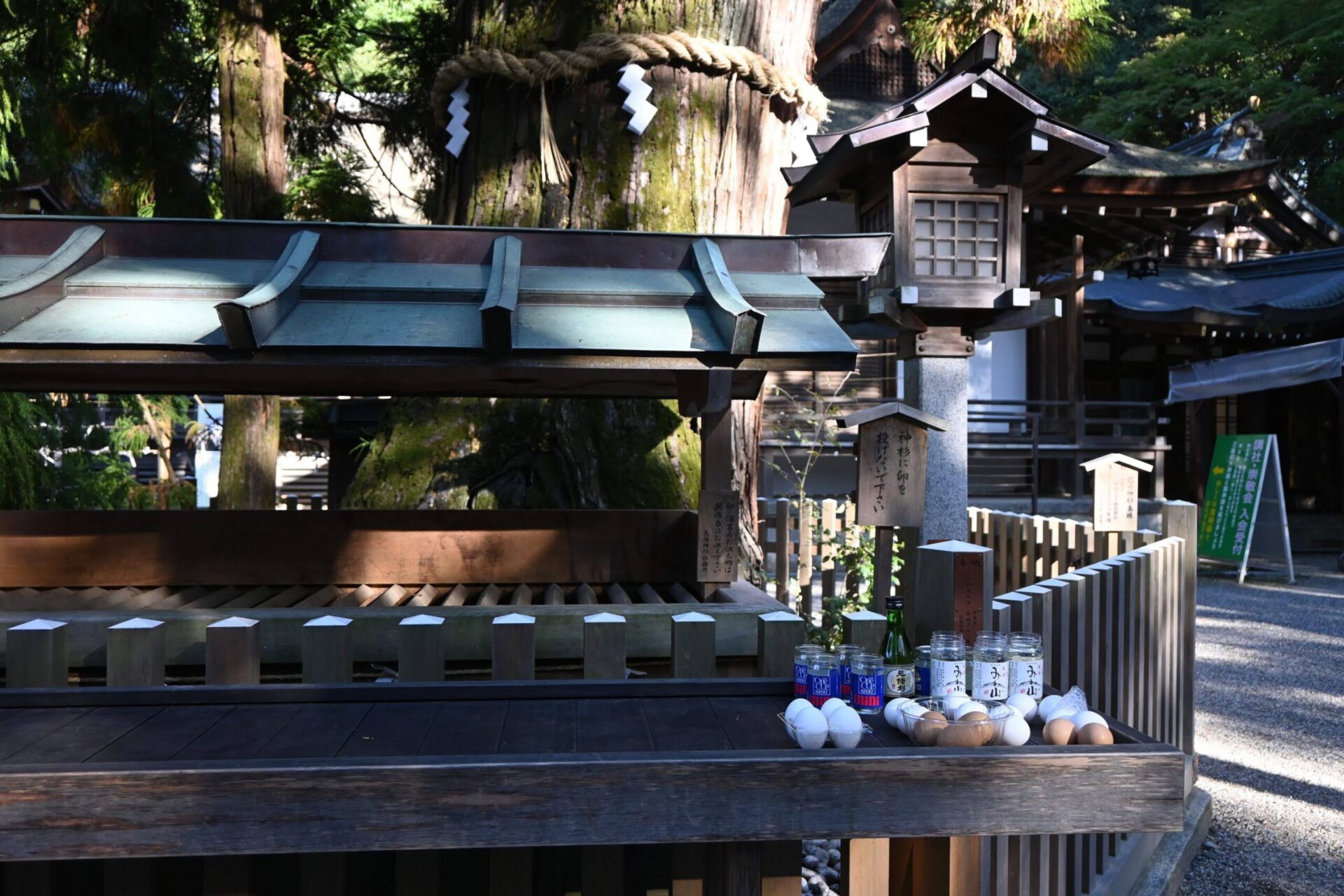
According to Japanese mythology, the god of this shrine Oomononushi helped found the country. He is also worshiped as the god of medicine and sake, rice wine. The brewery owners of sake place above the entrance a ball of cedar needles to announce a new drawing of sake. This ball called sugidama is made with cedar needles from the sacred Mount Miwa. The god Oomononushi appears in the form of a serpent in Japanese myths. A coiling snake welcomes you to the ablution pavilion. Water flows from the snake’s mouth. I find it interesting. In the Chinese character used in Japan, tap is written 蛇口. The first character 蛇 means snake and the second 口 means mouth or mouth in French. The tap is literally represented by the mouth of the snake. You will also find eggs, the snakes’ favorite food, within the sanctuary grounds. Eggs are therefore offerings.
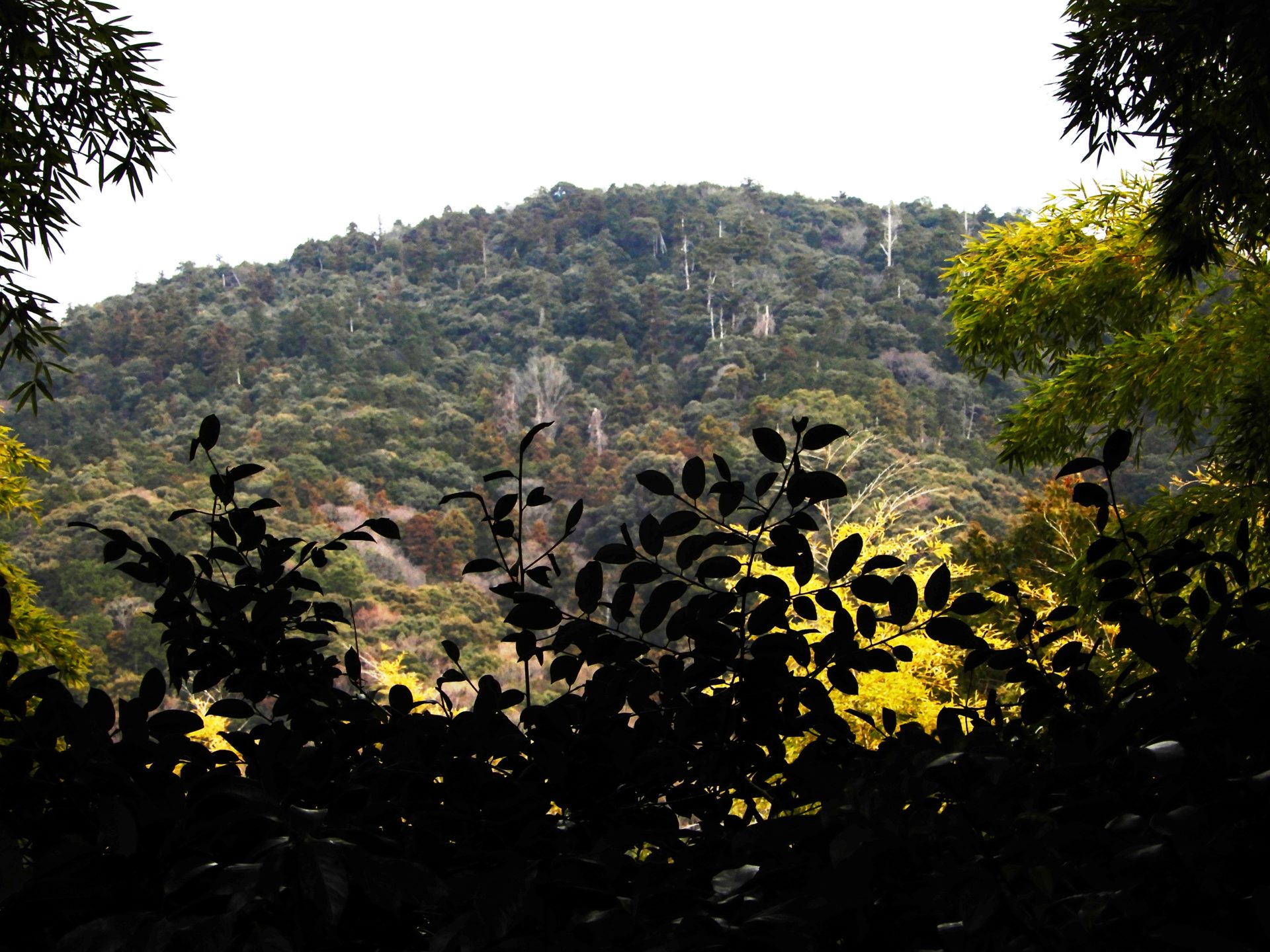
Mount Miwa which has an altitude of 467 meters has been revered as a sacred mountain since ancient times. A primary forest of cedars, pines and cypresses remains intact. There are also rocks everywhere in which the spirits of Shinto deities dwell. It was a forbidden place until the Meiji era. Today it is possible to enter, but an entry permit is required. It’s not a simple climb. As it is a sacred mountain, people enter it to pray. Eating, drinking and taking photos are strictly prohibited. Permission to enter Sai-jinja Shrine, an auxiliary shrine of Oomiwa-jinja, is requested.
- Registration for the climb is open from 9 a. m. to noon. The time required for the round trip is two hours to three hours. You must return to the place of departure before 3 p. m. at the latest.
- The entrance fee for prayer is 300 yen.
- Foreign tourists can access it if they are accompanied by a Japanese guide, or they speak Japanese fluently and have a cell phone usable for domestic calls.
- Map
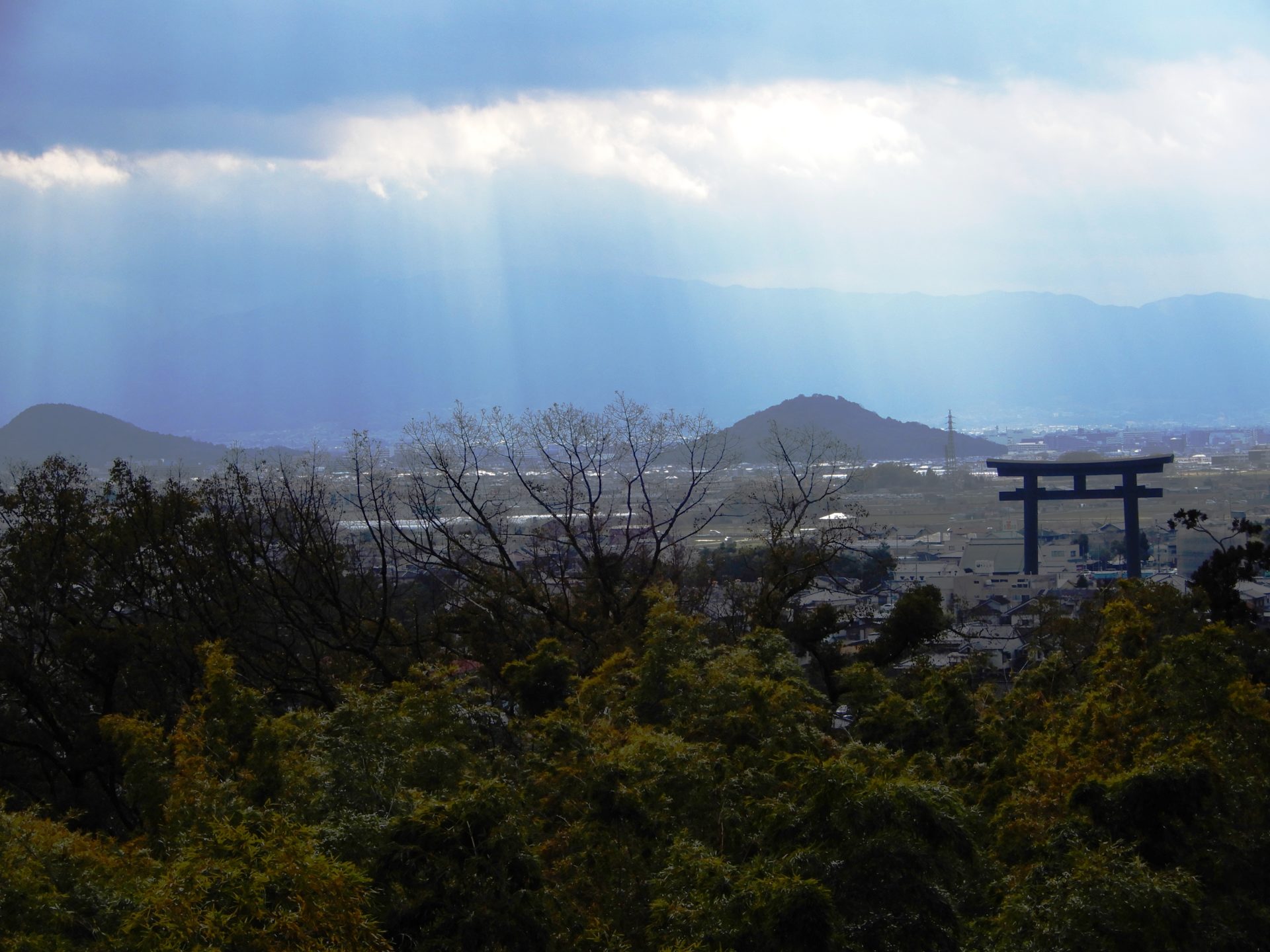
From the observation deck, you will have a beautiful view of the large portico of the Oomiwa-jinja Shinto shrine and the mountain range. On your left there are three small mountains, Mount Miminashi, Mount Unebi and Mount Kagu. These mountains were taken several times as a theme in the first anthology of Japanese poetry, manyoshu.
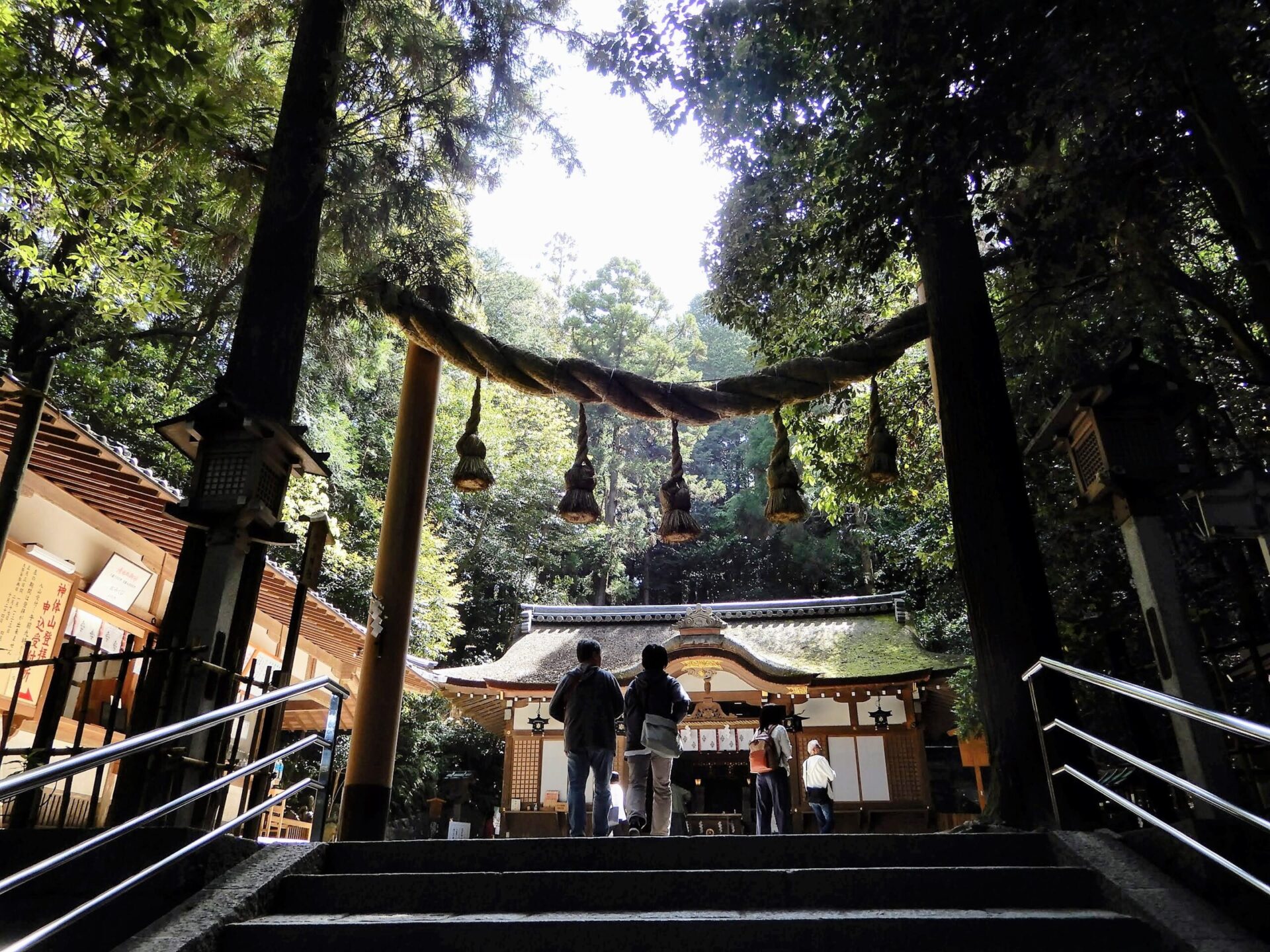
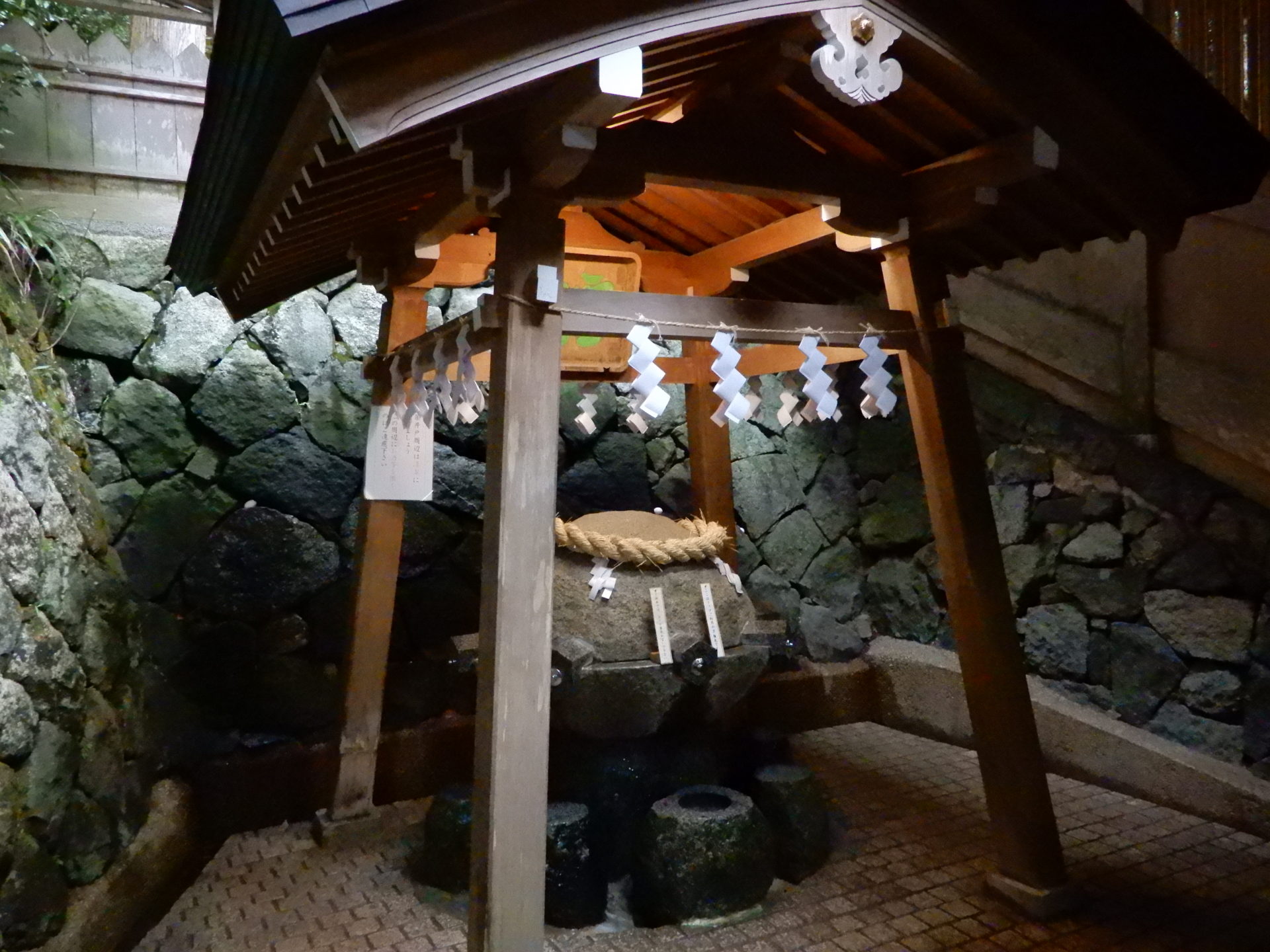
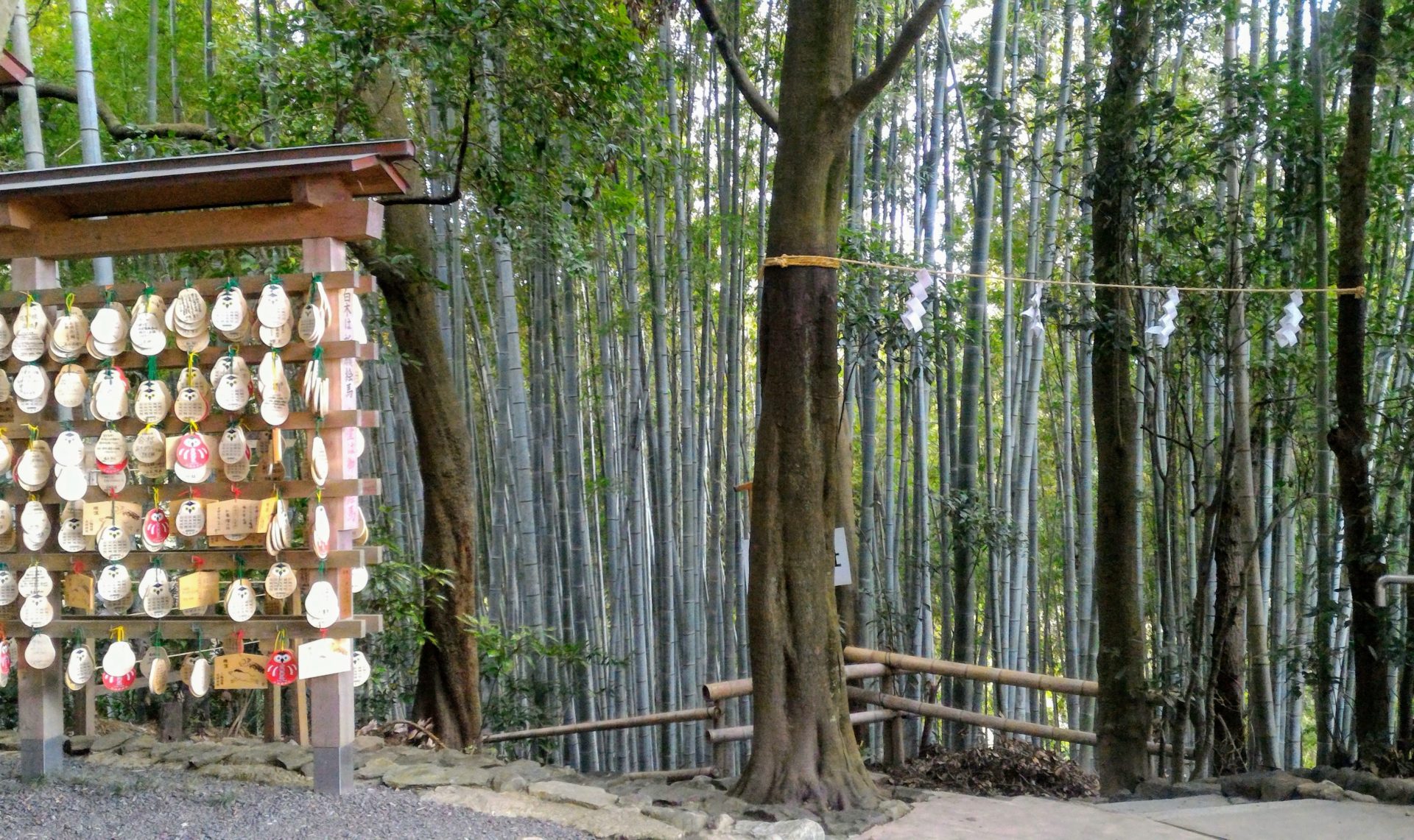
There are many auxiliary shrines within the Oomiwa-jinja compound. At the Sai-jinja shrine, the god of medicine is worshiped. Behind the worship building, there is a well where medical water flows. People pray for healing from illnesses by drawing water from it. At the Kuehiko-jinja shrine, the god of wisdom is worshiped. You will find many hanging votive tablets, ema. They are shaped like an owl, symbol of wisdom and happiness. In the surrounding area, you can admire lily flowers from the end of May to the beginning of June.
- To go to Oomiwa-jinja Shinto Shrine, take the JR train from JR Nara Station and get off at Miwa Station (about half an hour). You can walk there in 5 minutes from this station.
- If you have time, it will be possible to combine a visit to the Hase-dera temple located in Sakurai. It’s a three-minute ride between Sakurai Station and Miwa Station.
- Map,Map
The Japanese Sword Museum of the Gassan School
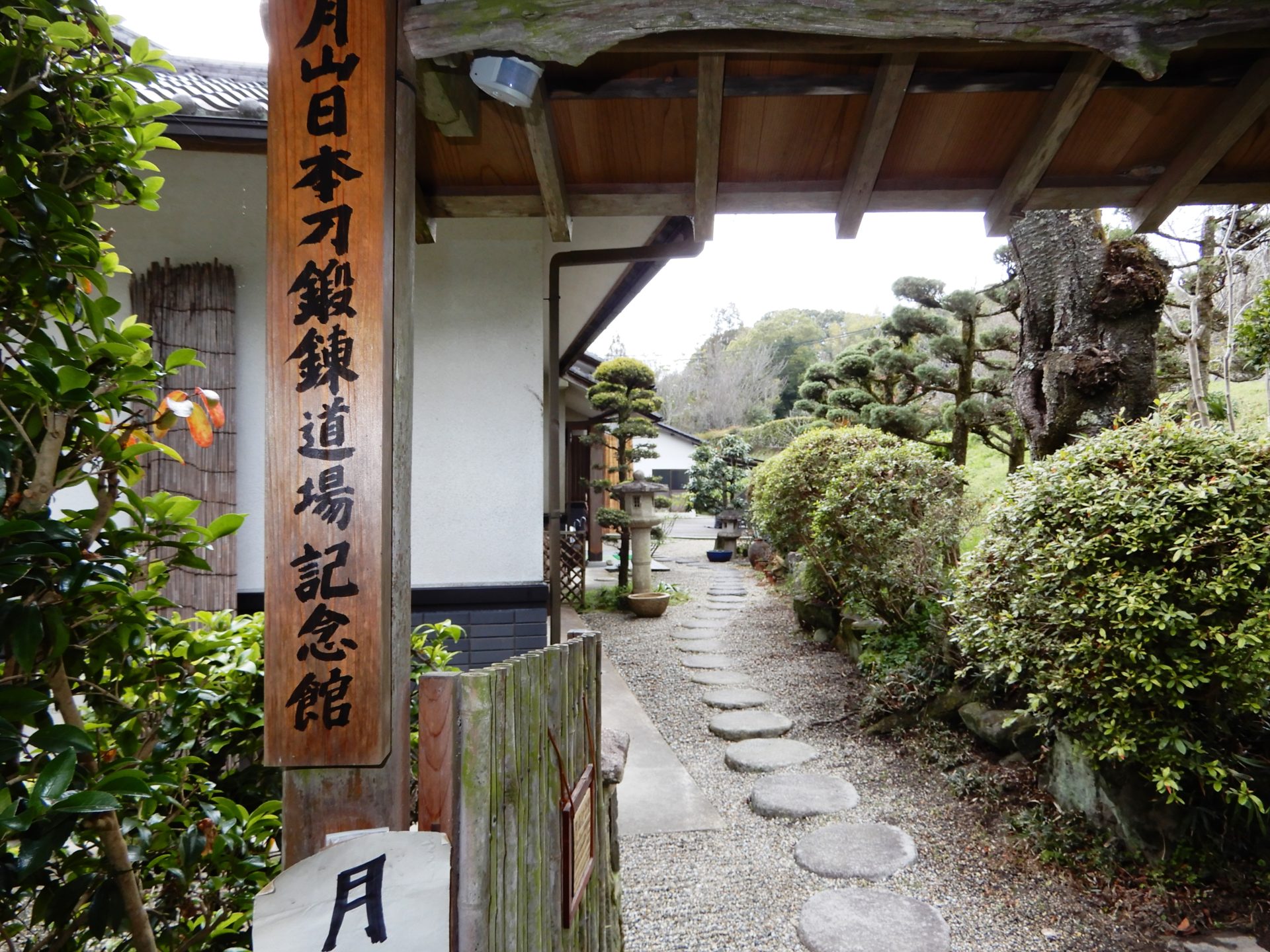
Gassan is one of the schools of Japanese swordsmiths, which has a history of more than 800 years. The name Gassan comes from Mount Gassan located in Yamagata Prefecture. The Gassan school mainly forged personal defense swords for practitioners of shugendo. The members of the Gassan family continue to produce swords by perpetuating the traditional technique. The Gassan Museum is located along Yamanobe-no-Michi Road. It is only open on Saturdays (closed in January, February, August and December).
The beautiful swords are presented there. I was impressed by the dragon pattern carved into the blades. The Japanese sword is both a weapon and an object of art representing the sublime spirit of samurai. If you are interested in Japanese swordsmanship, this is a great place.
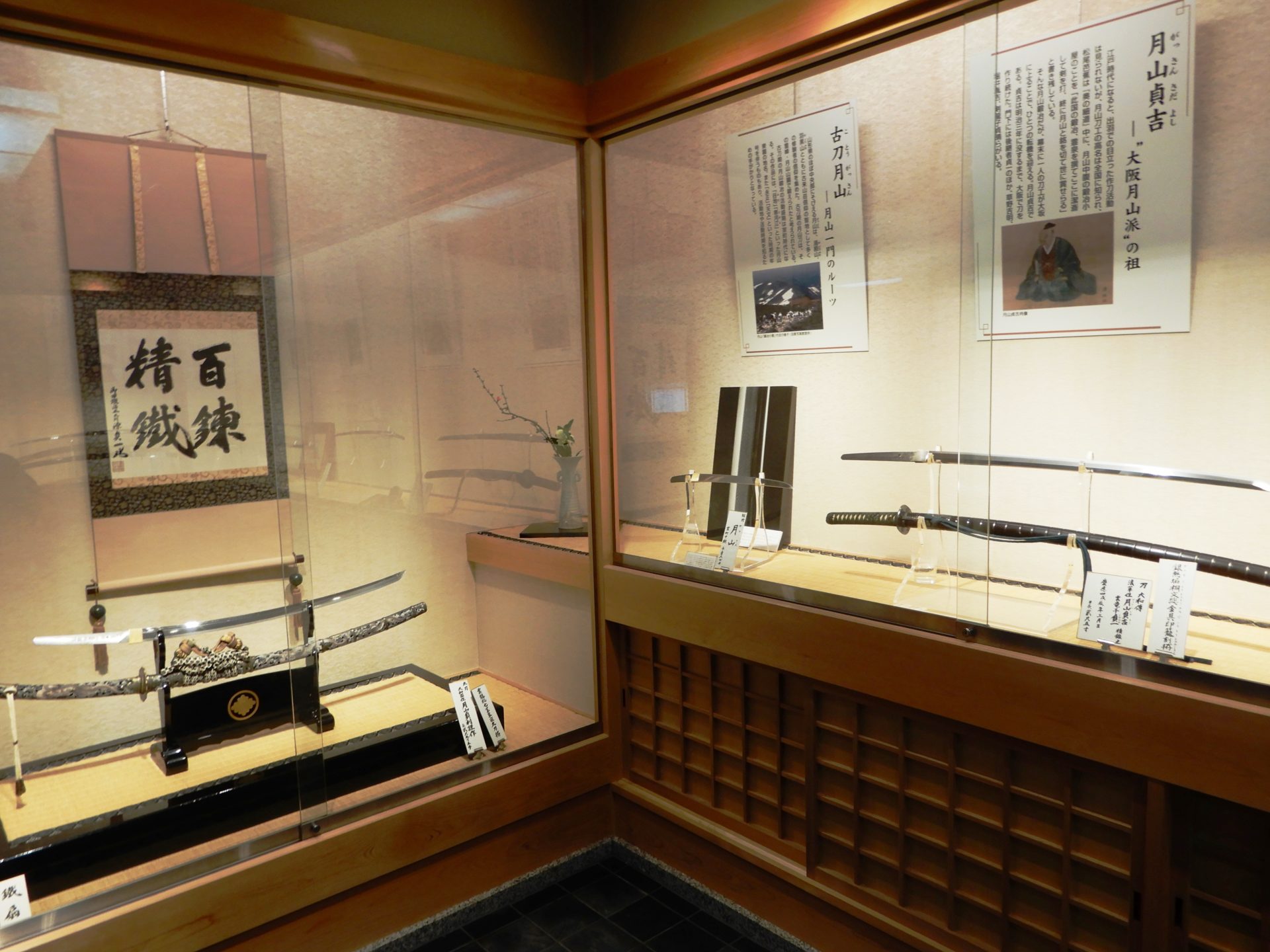
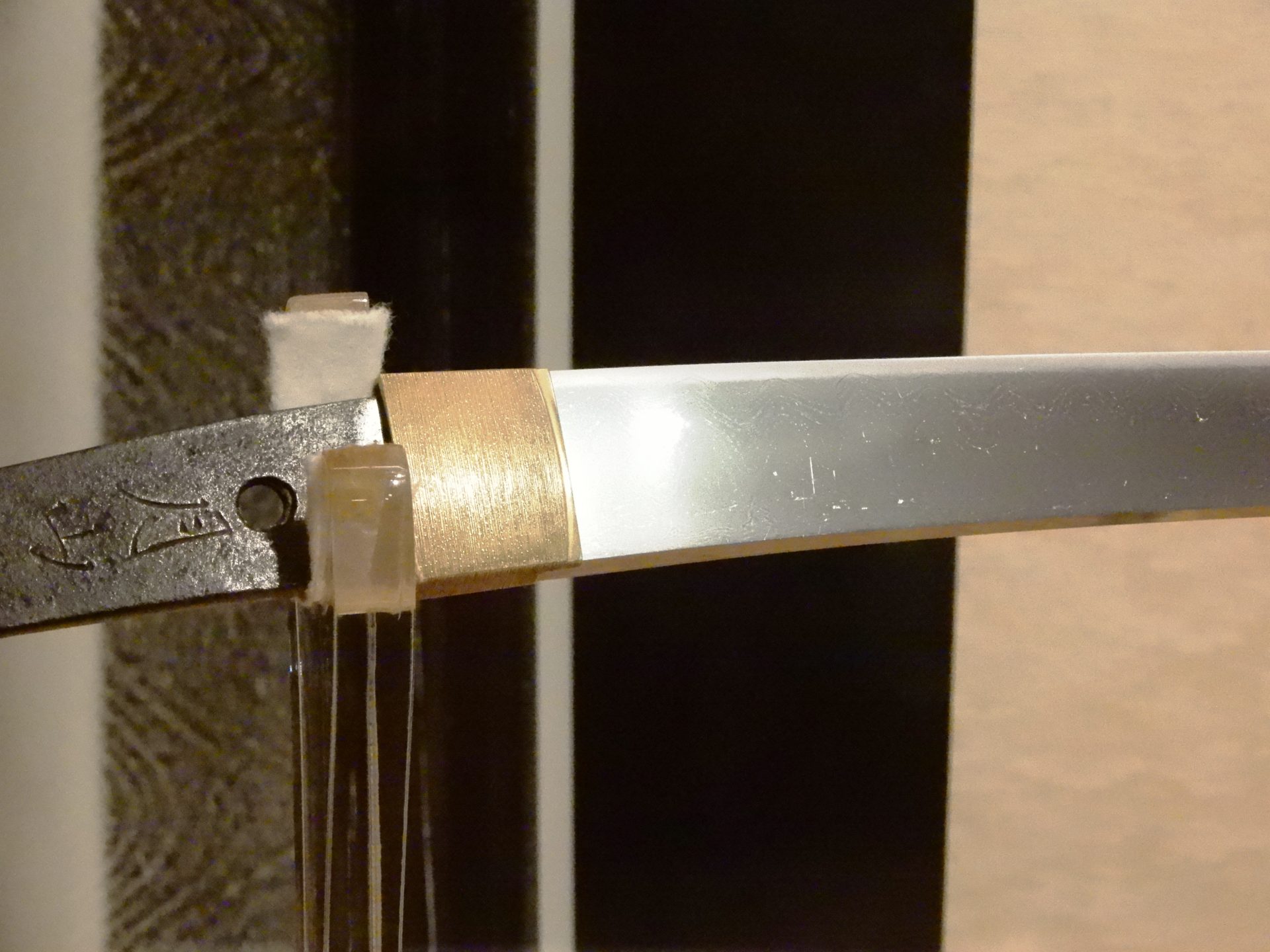
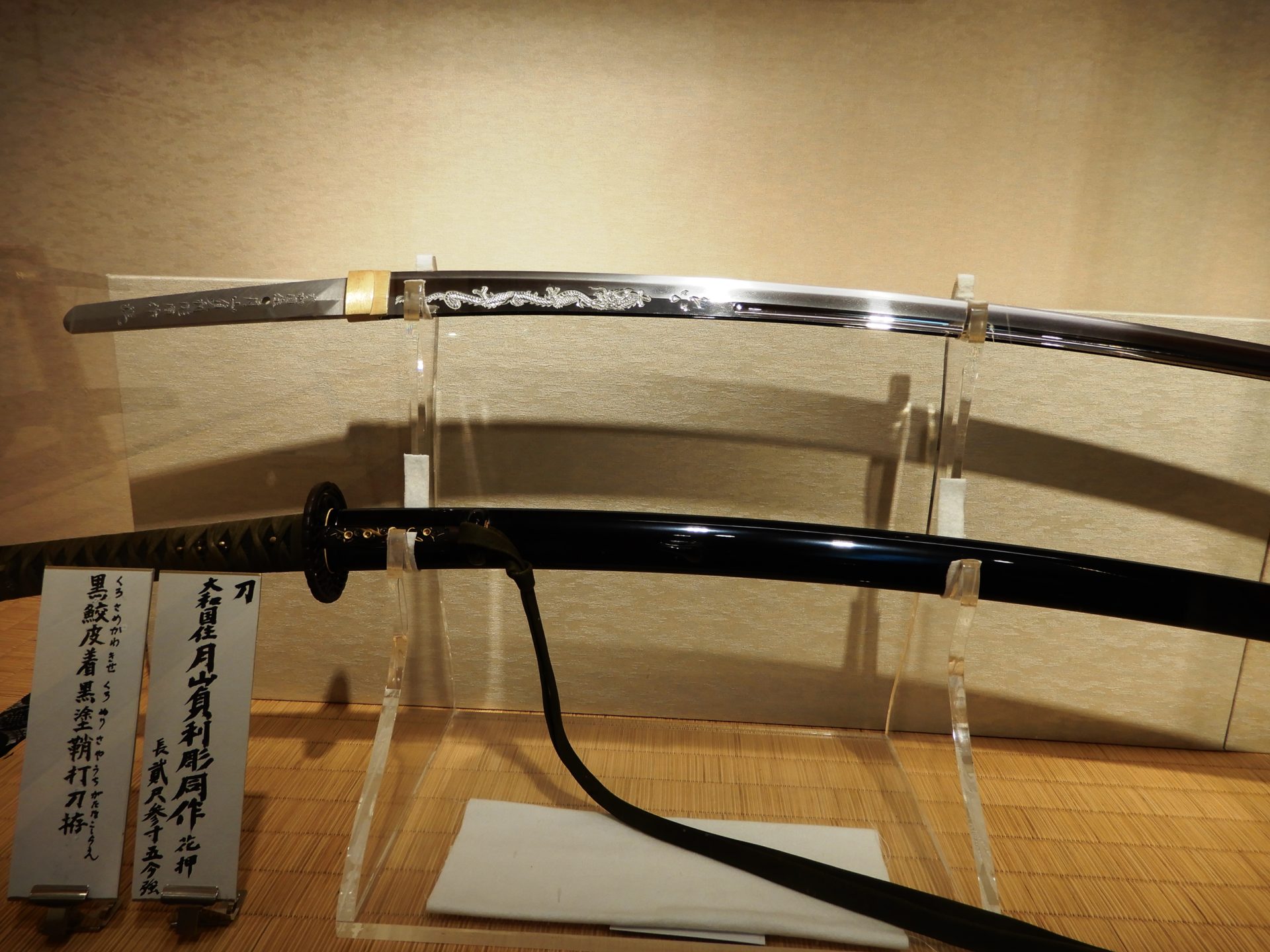
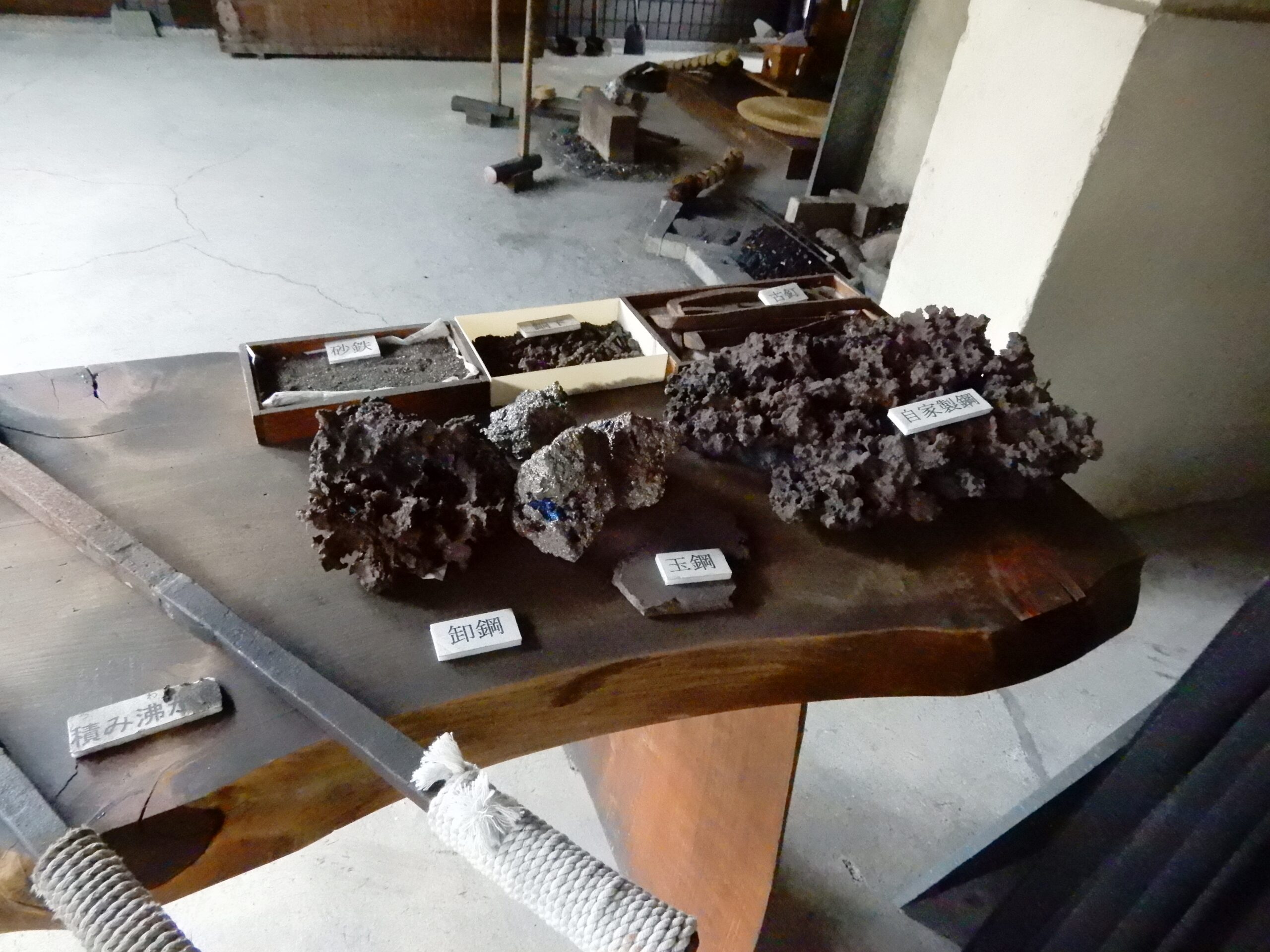
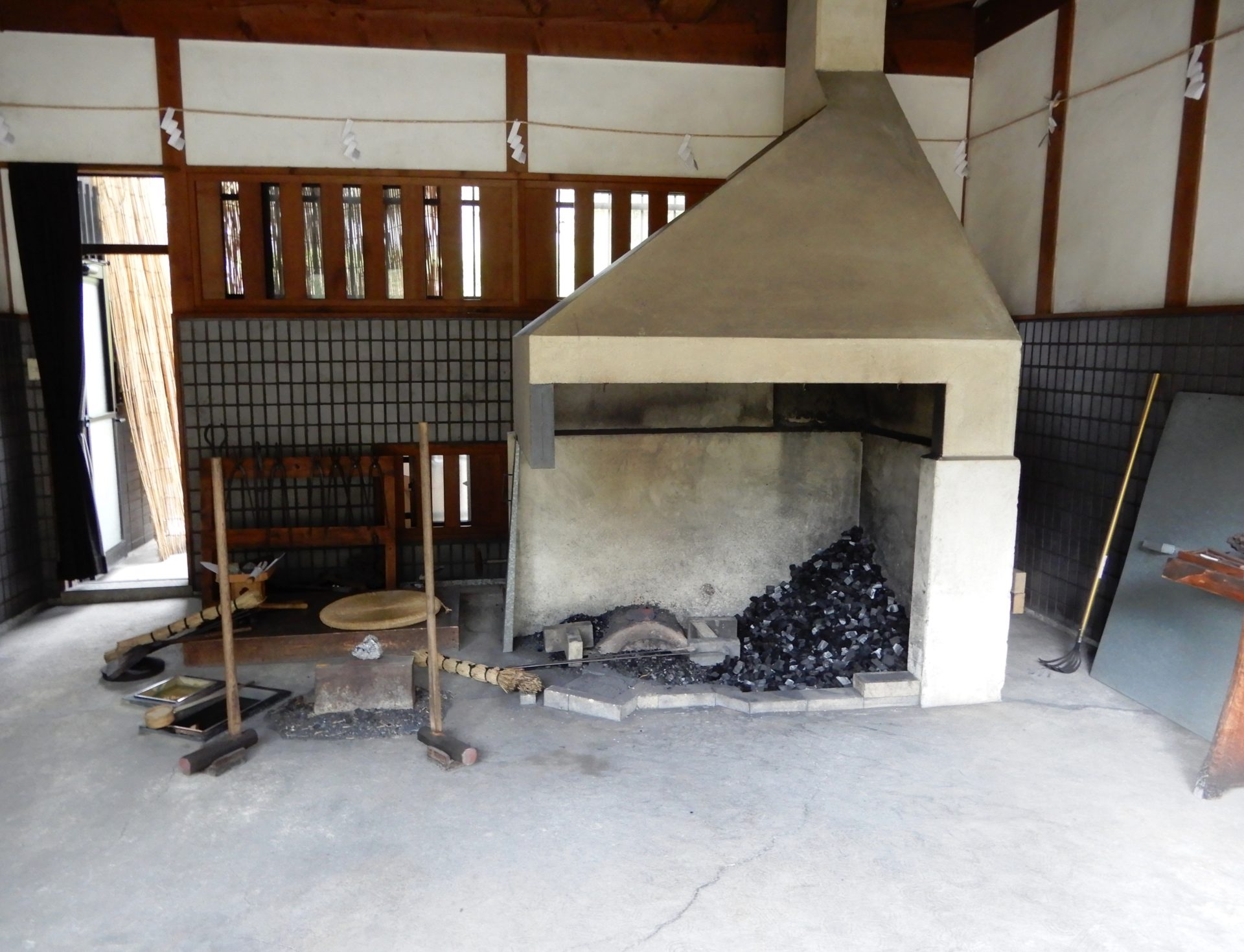
The forge is next to the museum. We cannot see the manufacture of the blades, but the steel tamahagane, the tools used and the manufacturing process are shown to the public.
Tenri Information Center for Hikers
Follow the Yamanobe-no-Michi path north and there is the Hiker Information Center. It is equipped with a pleasant restaurant and showers. You can also buy local specialties there. From its terrace, the burial mound of Emperor Sujin is visible.