The western area is further divided into districts: Arashiyama, Sagano, Around Kinukake Road and Nishijin.
Arashiyama
Today, Arashiyama, a popular tourist destination, boasts natural beauty and continues to fascinate us, just as it fascinated aristocrats during the Heian period.
Tenryu-ji Temple
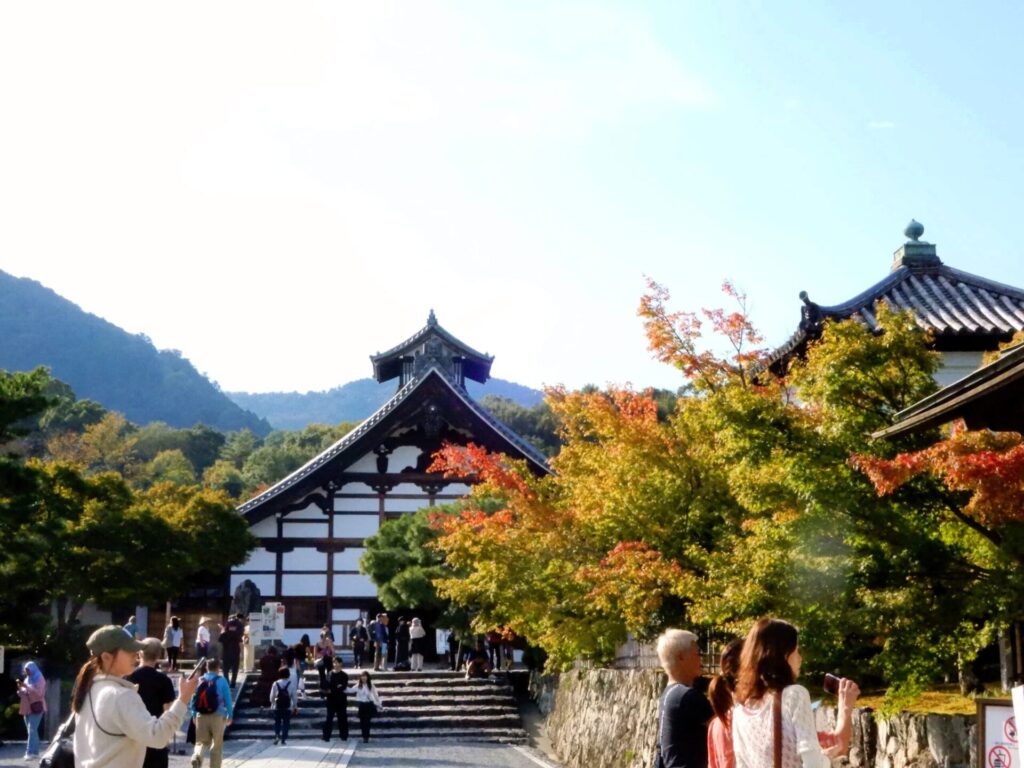
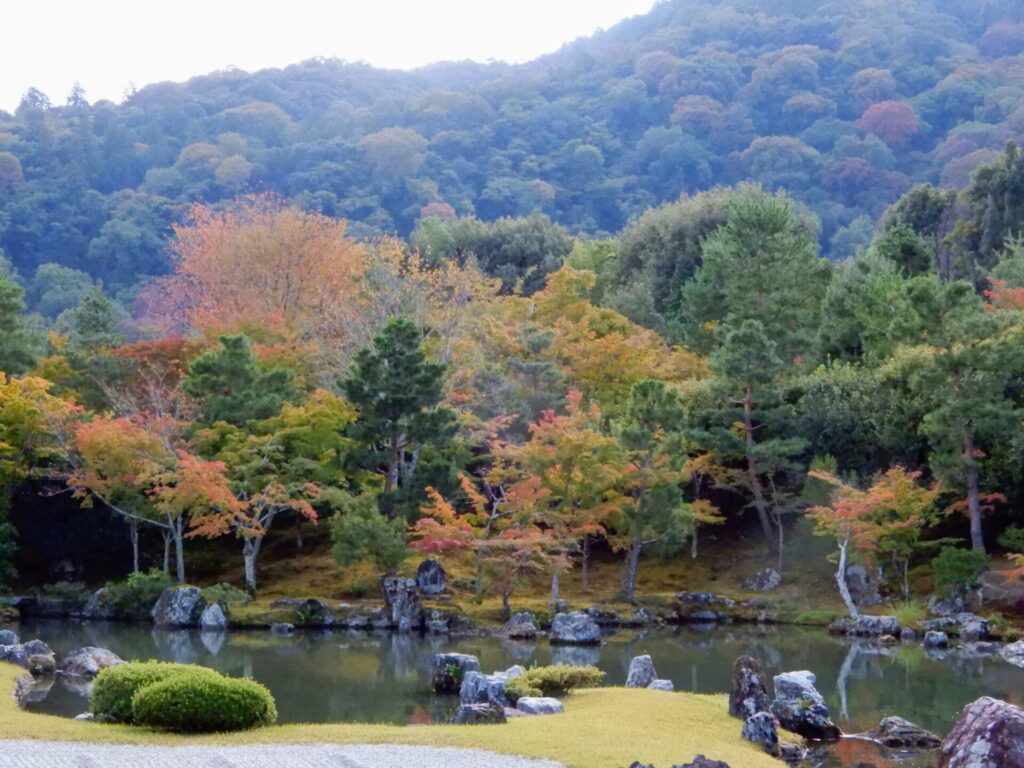
A grand Zen temple in Kyoto whose history dates back to the 14th century, it is best known for its magnificent garden. The surrounding mountain landscapes are beautifully integrated into this garden. If you view the garden from inside the building, you will be impressed by its landscape, framed like a picture in a frame.
- The entrance fee to the Tenryu-ji temple garden is 500 yen. If you wish to visit the buildings, there is an additional charge of 300 yen.
- Map
The Bamboo Forest
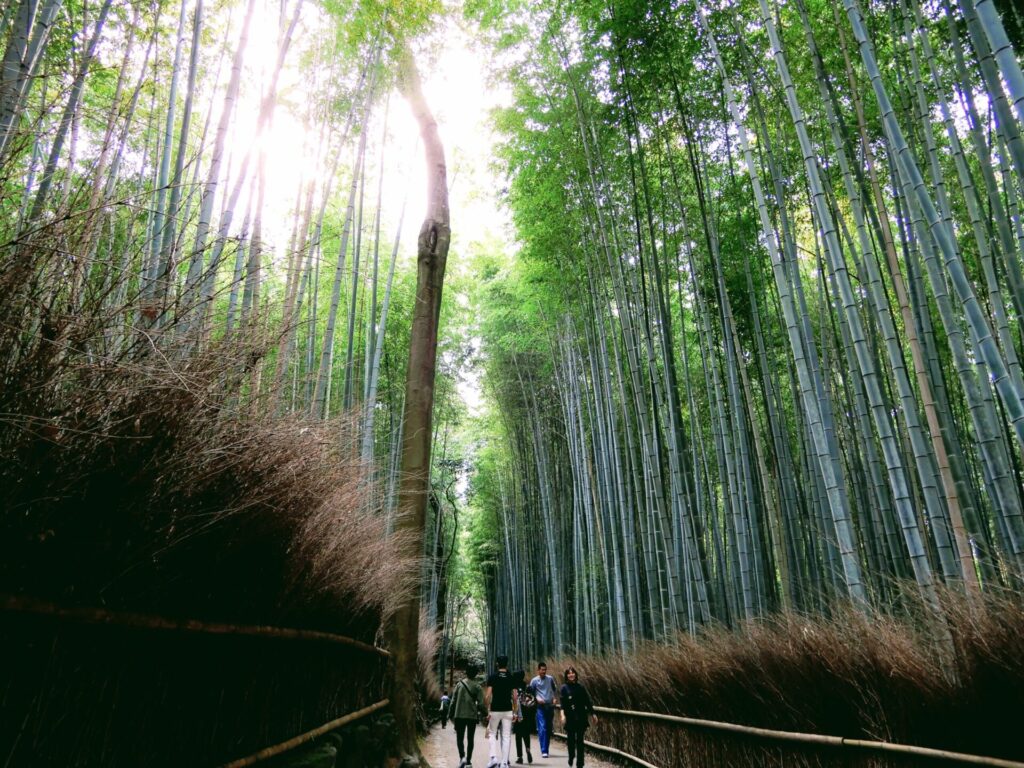
The bamboo forest is a very impressive place for tourists. It’s located at the back of the Tenryu-ji Temple garden. You can feel a bit of coolness there even when it’s hot. Because it grows so quickly, bamboo is a symbol of vitality. Is bamboo a tree? Actually, from a botanical point of view, bamboo isn’t a tree. Some say it’s somewhere between a tree and a tall grass. It’s full of mysteries. I’d also like to talk to you about the relationship between bamboo and the Japanese.
- Lately, the bamboo forest has been attracting a large number of tourists, making it difficult to enjoy its serene atmosphere. It’s best to visit early in the morning. For a quieter walk among the bamboo, I recommend another spot in Sagano.
- Map
Togetsukyo Bridge
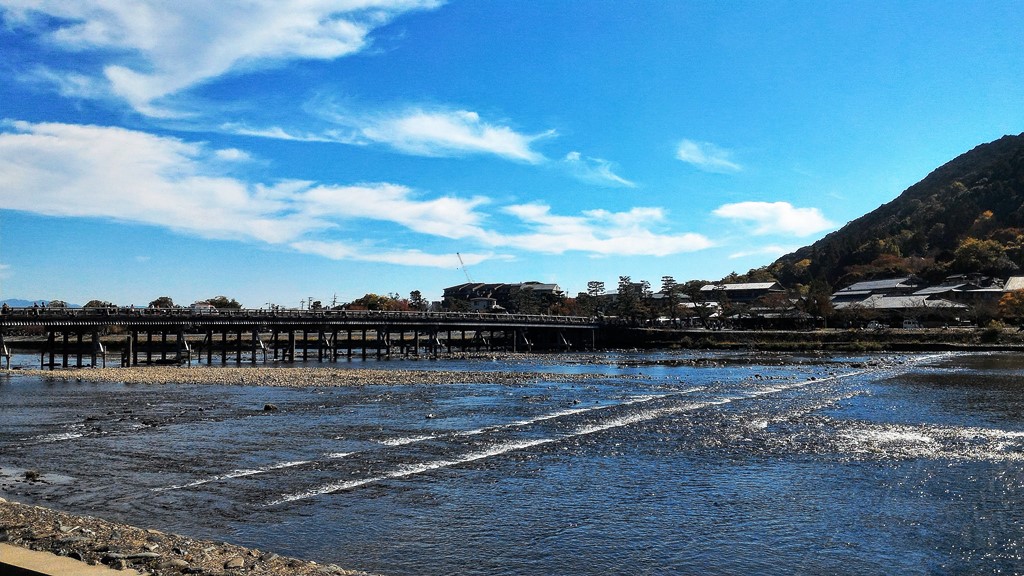
Its name literally means “the bridge the moon crosses.” It was given to this bridge because of a poem written by an emperor. It spans the river where cormorant fishing takes place in the summer. The sound of the water is soothing to the ears. Mount Arashiyama rises beyond this bridge. In the monkey park located on the mountainside, approximately 130 wild monkeys live. You can observe them up close.
Saiho-ji Temple
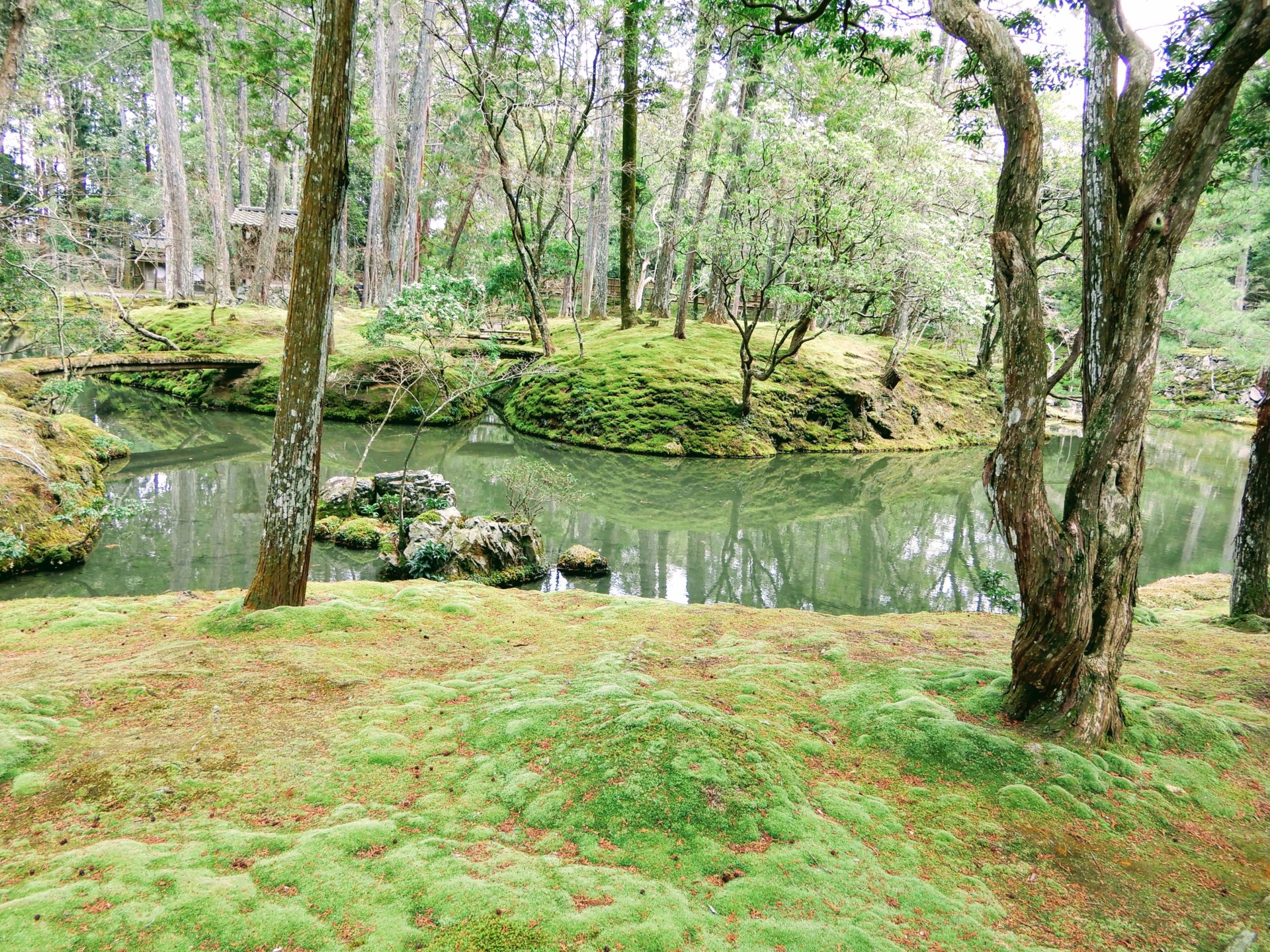
Saiho-ji, home to a beautiful garden covered in over 120 different species of moss, is also known as the Moss Temple. Although advance booking by mail is required and the entrance fee is high, its garden, representing the Buddhist Pure Land (the Buddhist Elysium), is well worth a visit.
It truly is a haven of peace surrounded by nature. Experience its unique atmosphere.
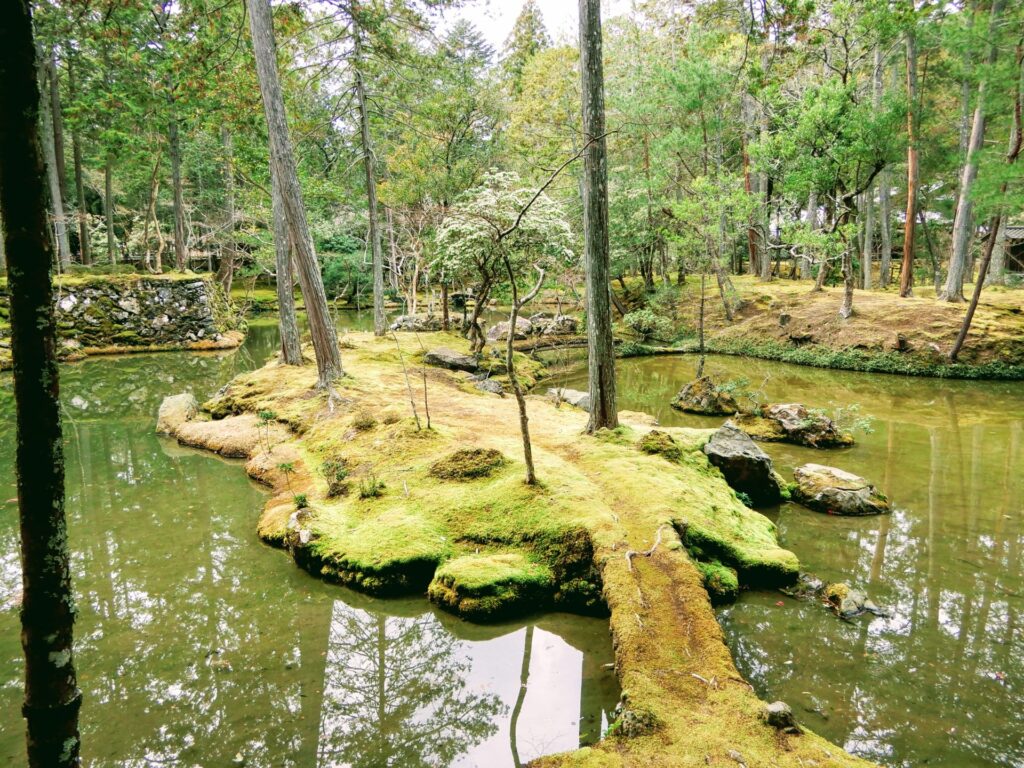
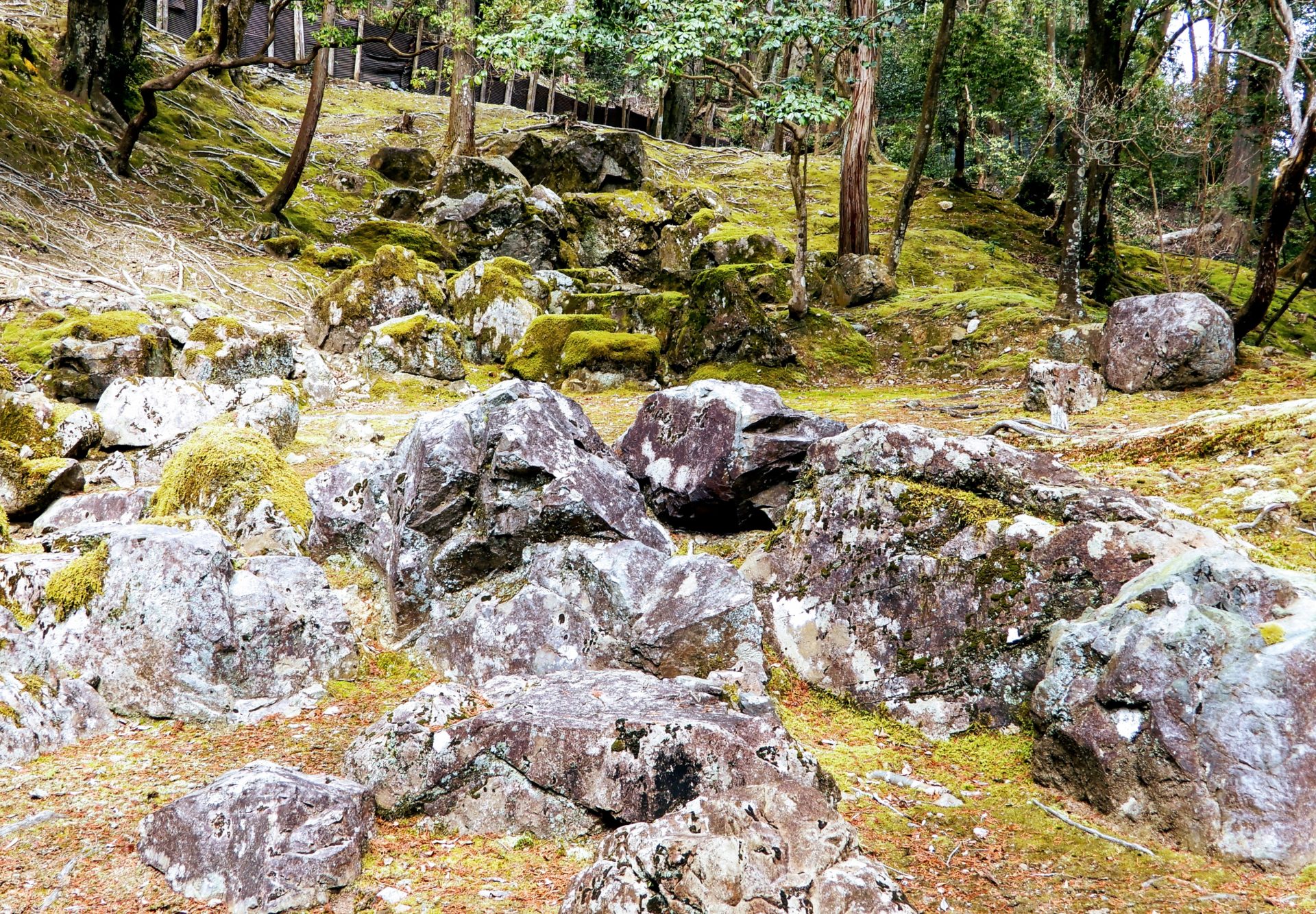
The garden, designed by Muso Soseki, a 14th-century Zen Buddhist monk and landscape architect, is laid out on two levels. The lower garden is arranged around a pond. Soft, velvety mosses spread at the base of the trees. Originally, this lower garden was not covered in moss as it is today. Centuries of neglect and lack of maintenance have drastically altered the garden’s appearance. The upper garden, clinging to the hillside, is in the dry garden style. A rock formation representing a waterfall is its centerpiece. There is no water, but it appears as if a cascade is tumbling down the mountain.
- The entrance fee for Saiho-ji temple is 4,000 yen.
- To visit, advance booking by mail or online is required. Please refer to their website.
- Visitors are asked to copy the calligraphy of a sutra, shakyo, before enjoying a very pleasant walk.
- Map
Sagano
Sagano, located west of Arashiyama, has long been renowned as a beautiful place. It boasts numerous temples and shrines, and you can also enjoy a historic district where traditional buildings are preserved amidst a bucolic landscape.
Otagi Nenbutsu-ji Temple
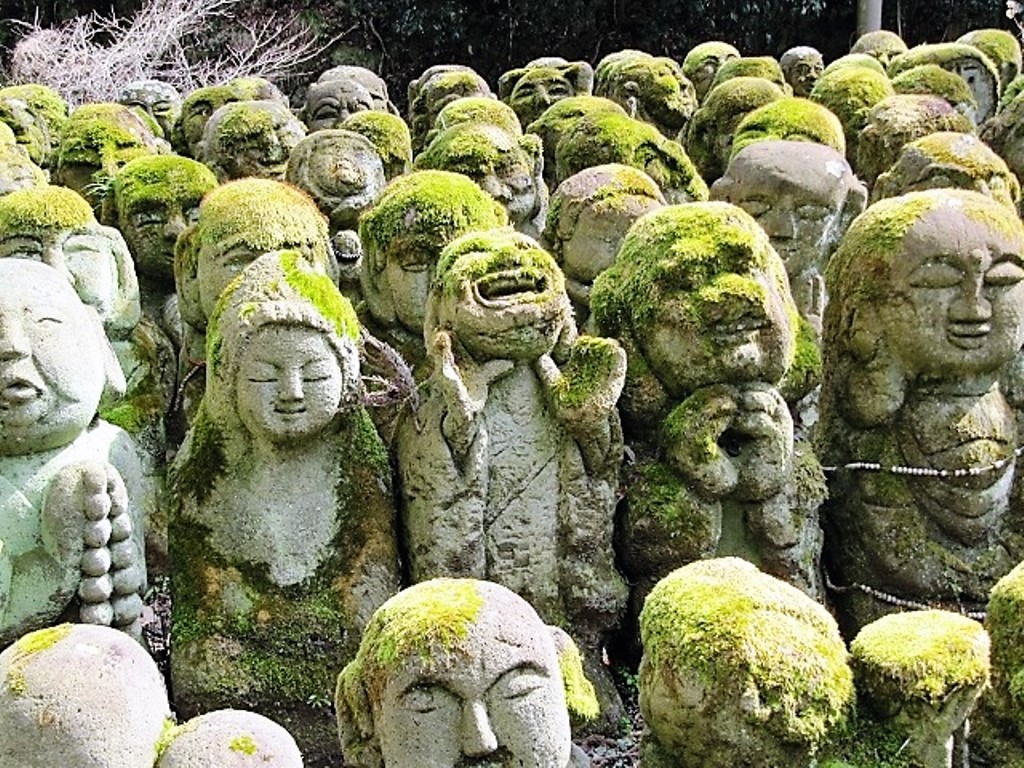
It’s a rather unusual temple, but interesting to visit. Even if you’re interested in Buddha statues, you’ll undoubtedly be surprised by its 1,200 moss-covered stone statues, known as rakan, representing Buddha’s disciples. Since each statue was carved by amateurs, every face is different. You’ll even find some humorous ones. But why is the grounds of this small temple filled with so many statues like this?
- The entrance fee for Otagi Nenbutsu-ji temple is 500 yen.
- It is closed on Wednesdays.
- Map
Saga Toriimoto District
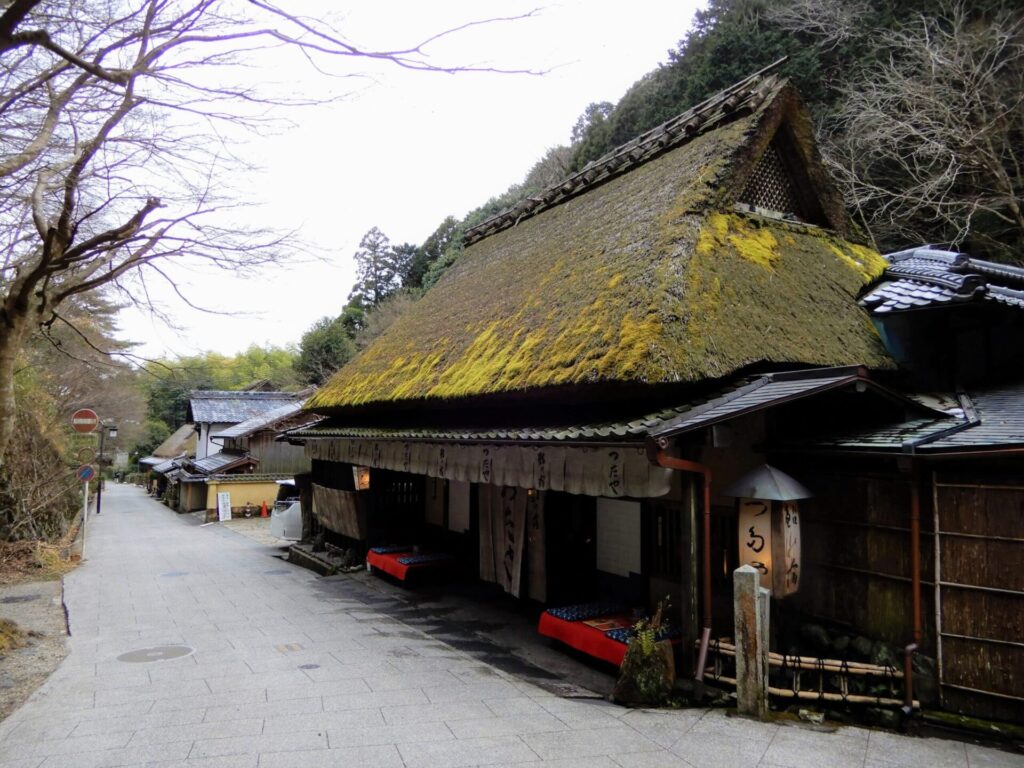
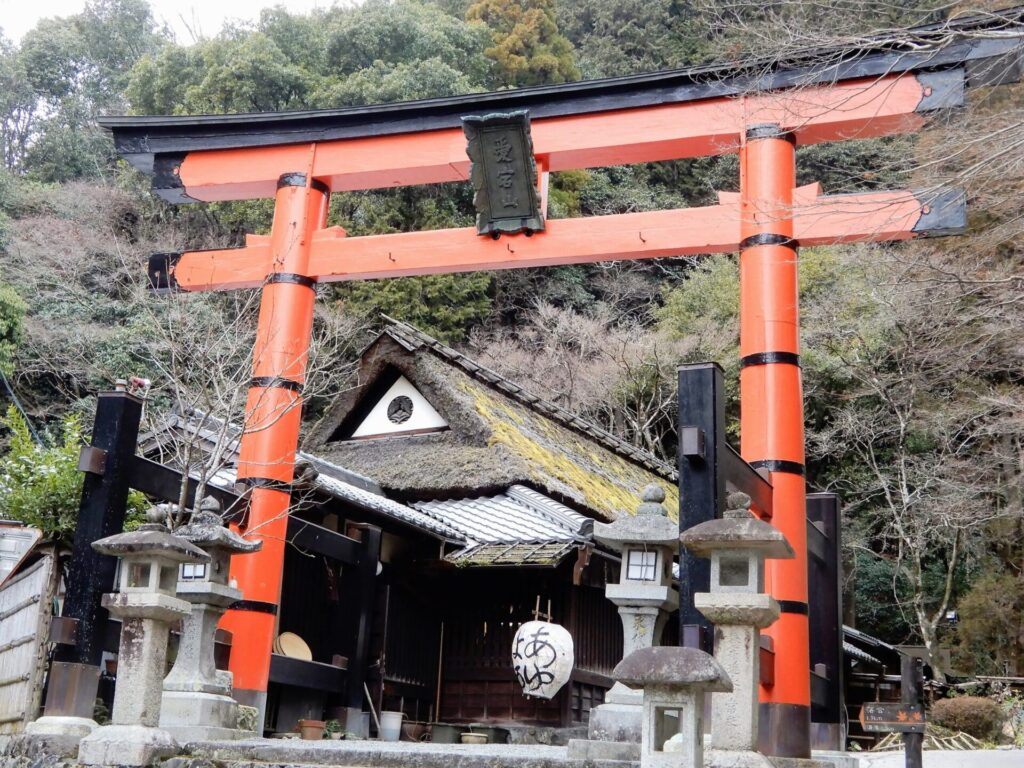
When you walk down from Otagi Nenbutsu-ji Temple and continue straight ahead, you’ll see an orange gate on your right. This is the entrance to the Saga Toriimoto district. It’s located at the foot of Mount Atago and is lined with thatched-roof houses and machiya, the traditional townhouses of merchants and artisans. I can tell you more about the detailed structure of the machiya at a museum open to the public as an example of a traditional house.
Adashino Nenbutsu-ji Temple
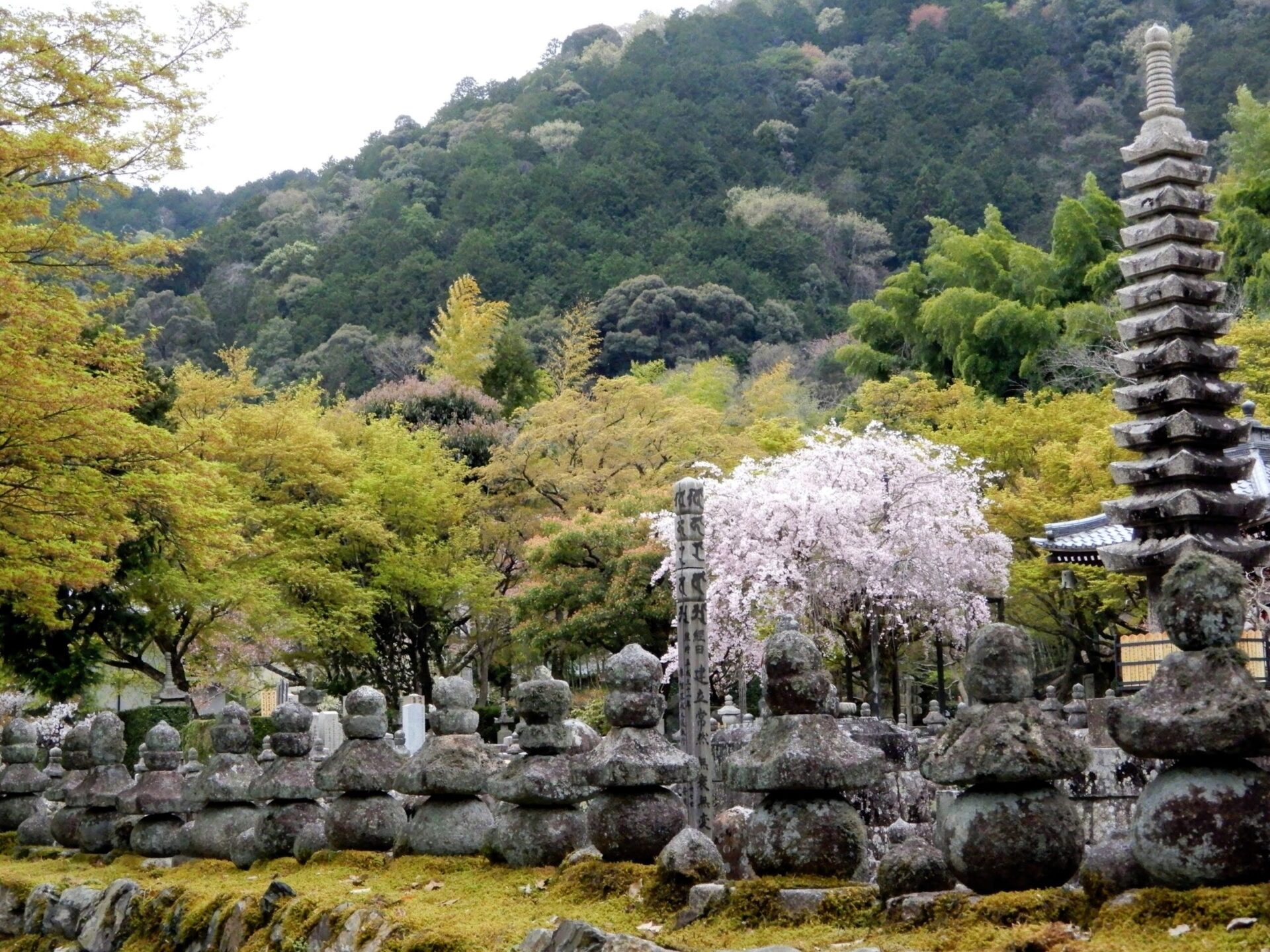
The word adashi means “ephemeral and fleeting” in Old Japanese. For a long time, the Adashino district was known as a place where the bodies of the dead were left in the open air. Today, the temple grounds are filled with approximately 8,000 Buddhist statues or pagodas, which are the gravestones of the dead scattered around Adashino. You will be struck by the ephemeral nature of human existence.
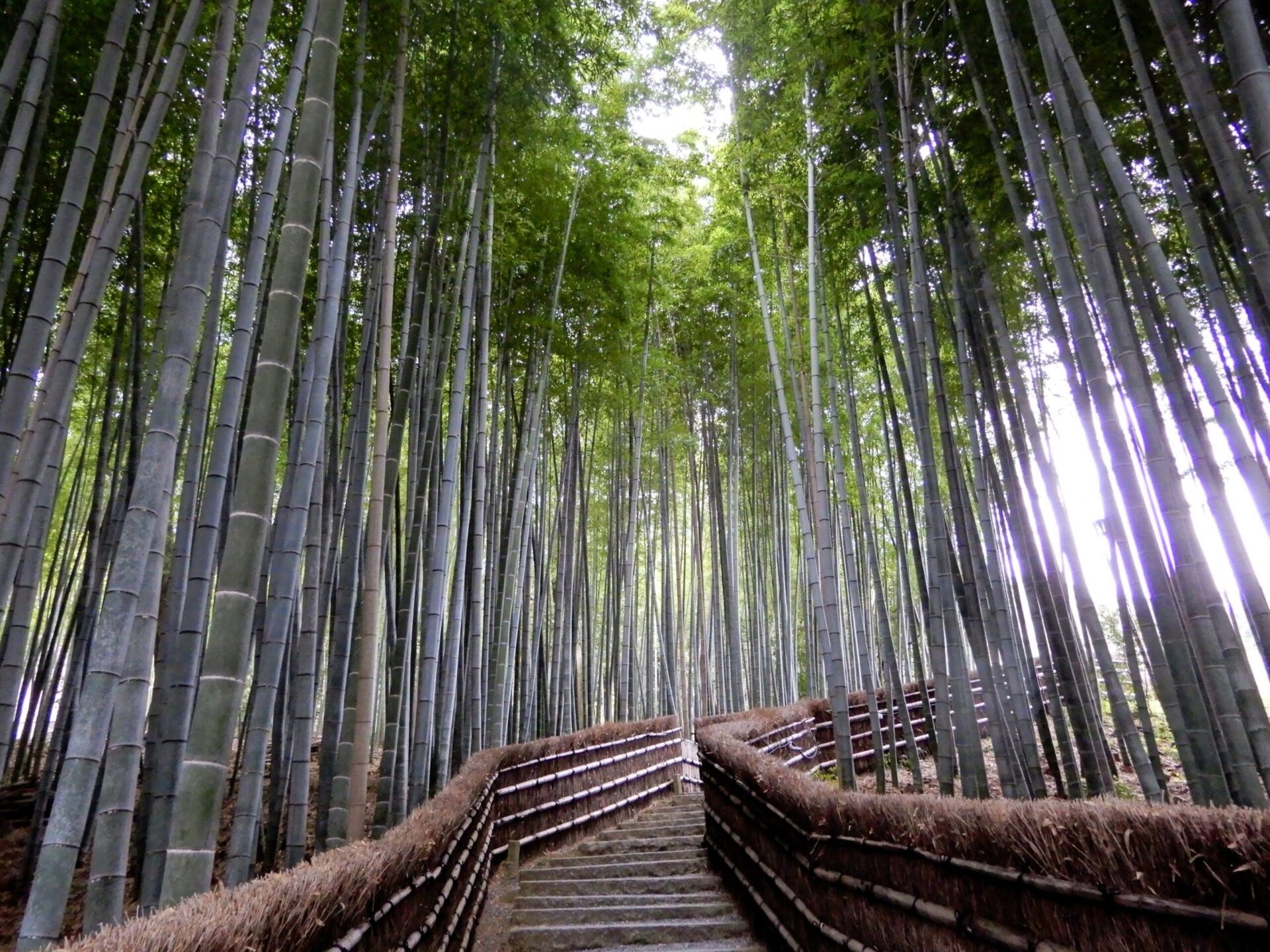
It’s not always pleasant to walk around the grounds because of the countless statues, but this bamboo-lined path is peaceful and ideal for a short stroll. But be warned, at the top, there’s only the cemetery.
- The entrance fee for Adashino Nenbutsu-ji temple is 500 yen.
- Map
Gio-ji Temple
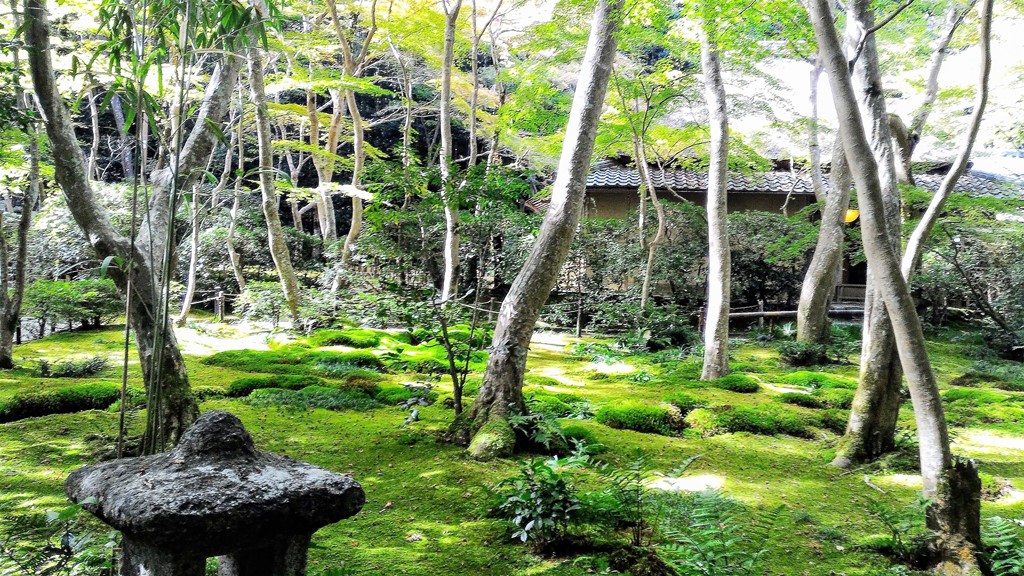
Known for its moss-covered garden surrounded by bamboo, this site is more of a hermitage than a temple. Its name comes from a 12th-century dancer. If I were to tell you her love story, you would feel a pang of sadness. The contrast between the red leaves and the green mosses is striking in autumn.
- The entrance fee for Gio-ji Temple is 300 yen.
- Map
Around the Kinukake path
Along the Kinukake path, there are three temples listed as UNESCO World Heritage Sites. It is pleasant to stroll there during the spring foliage season.
The Golden Temple, Kinkaku-ji
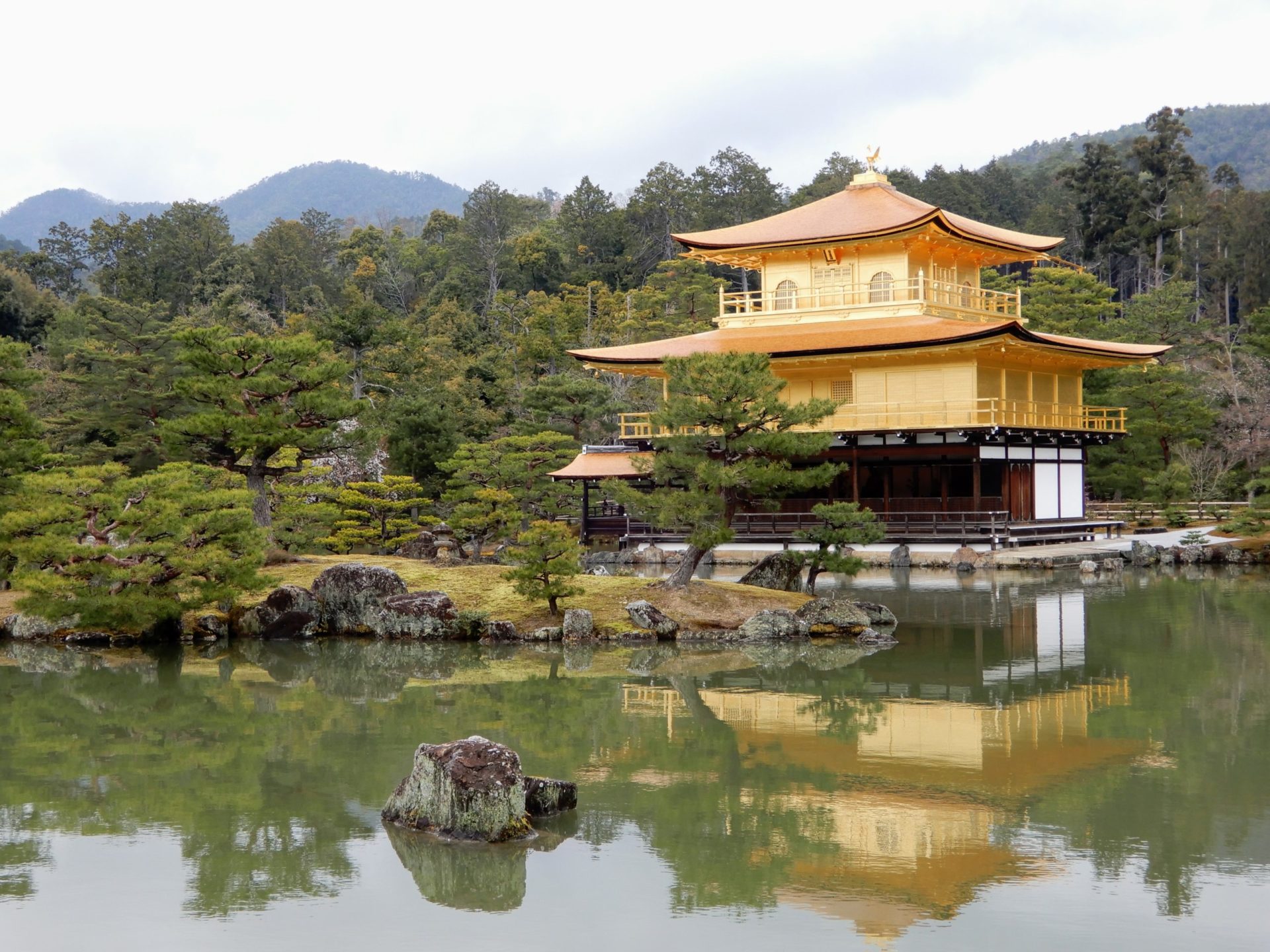
The Golden Pavilion, Kinkaku-ji, is one of Kyoto’s most iconic and visited sites. Originally, this temple was the villa of the shogun, built in the late 14th century. This shogun, from the Ashikaga family, is compared to Louis XIV, the Sun King of Japan. The villa, containing the Golden Pavilion, represented paradise on earth. What makes this temple famous is the Golden Pavilion itself. It shines with beauty on the mirror-like pond in the garden. The ashes of the Buddha, Shari, are venerated there. It is a two-story building covered in gold leaf, but not entirely; in fact, its ground floor is not. Why?
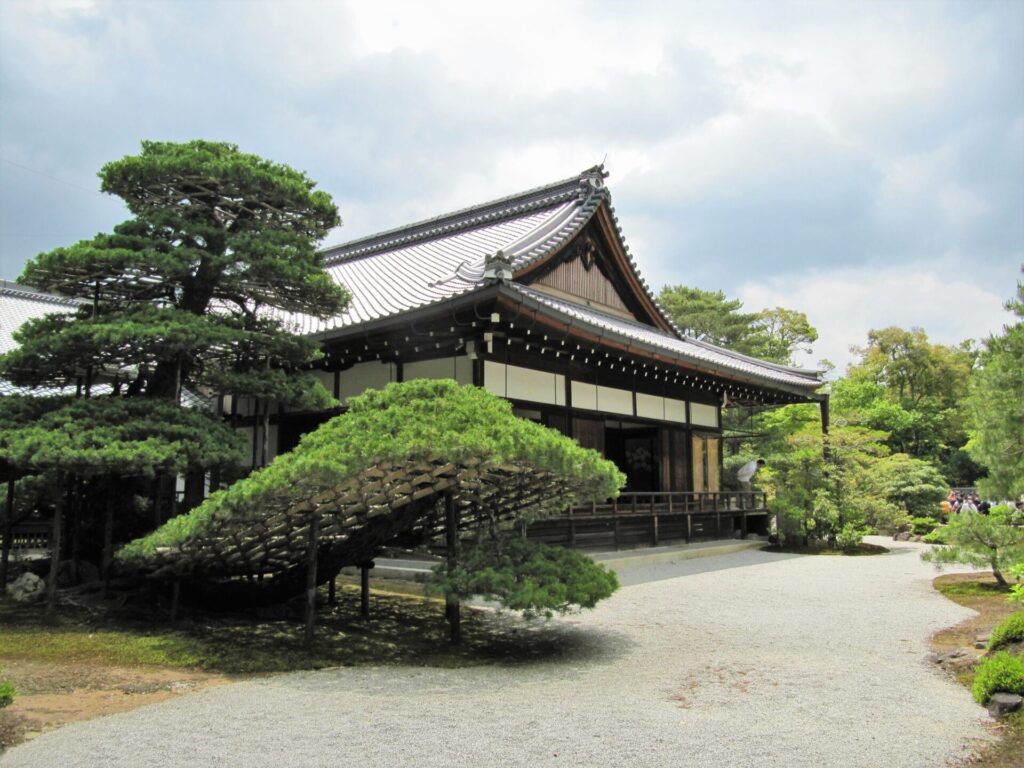
A large, ancient pine tree stands in the garden. Planted by the shogun, it is over 600 years old. What shape does it appear to have?
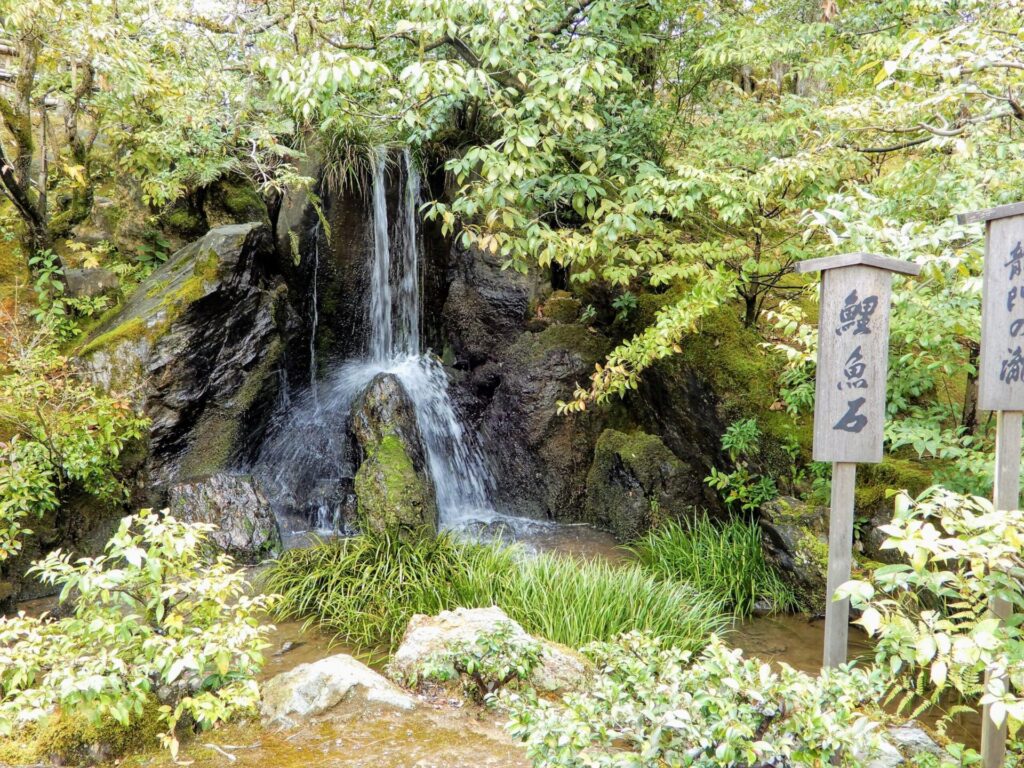
A stone is placed below this waterfall. It represents a carp swimming upstream. Do you know the Chinese legend about this carp?
- The entrance fee for the Golden Temple, Kinkaku-ji, is 500 yen.
- The path to the Golden Pavilion is signposted. The Golden Pavilion is undoubtedly magnificent in any season, but I also recommend enjoying the garden along the pond.
- Map
Ryoan-ji Temple
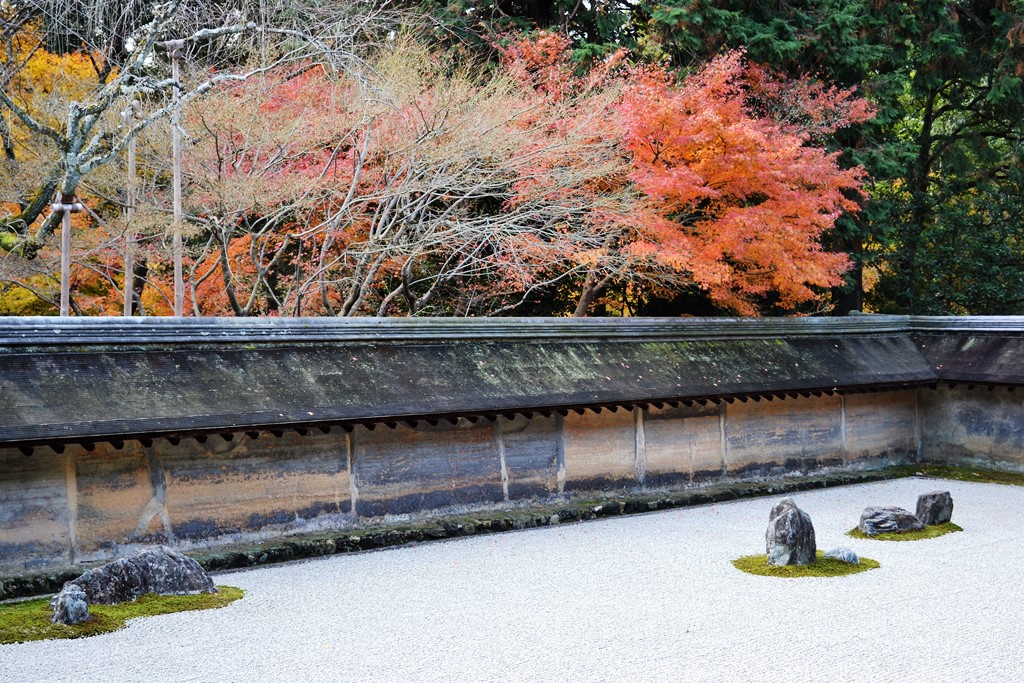
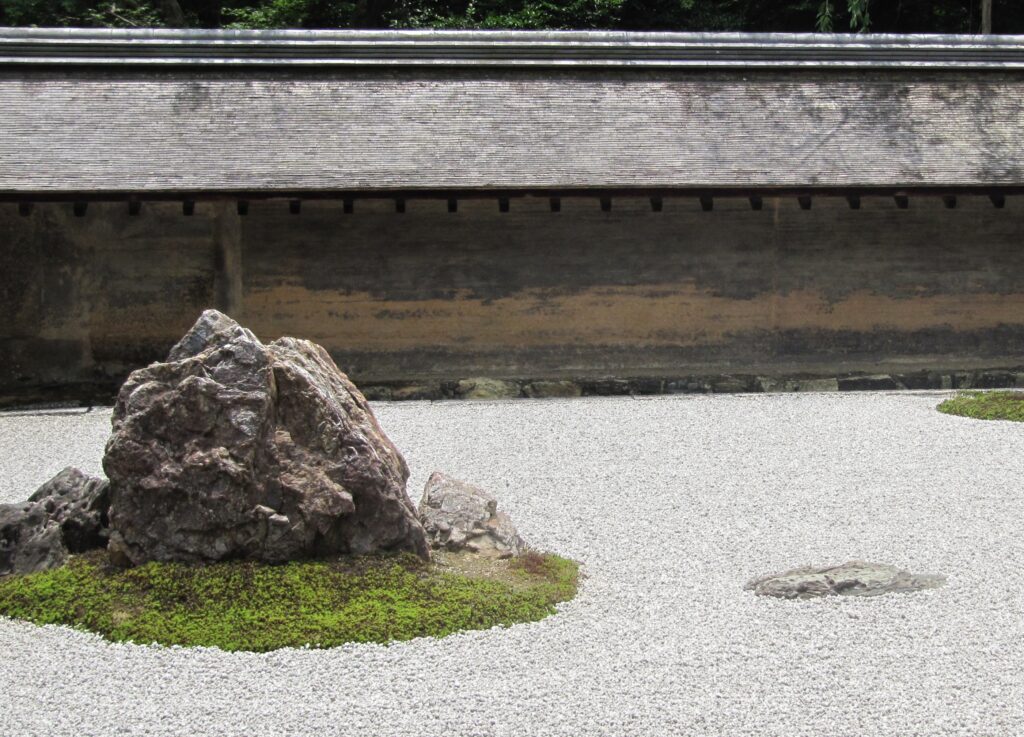
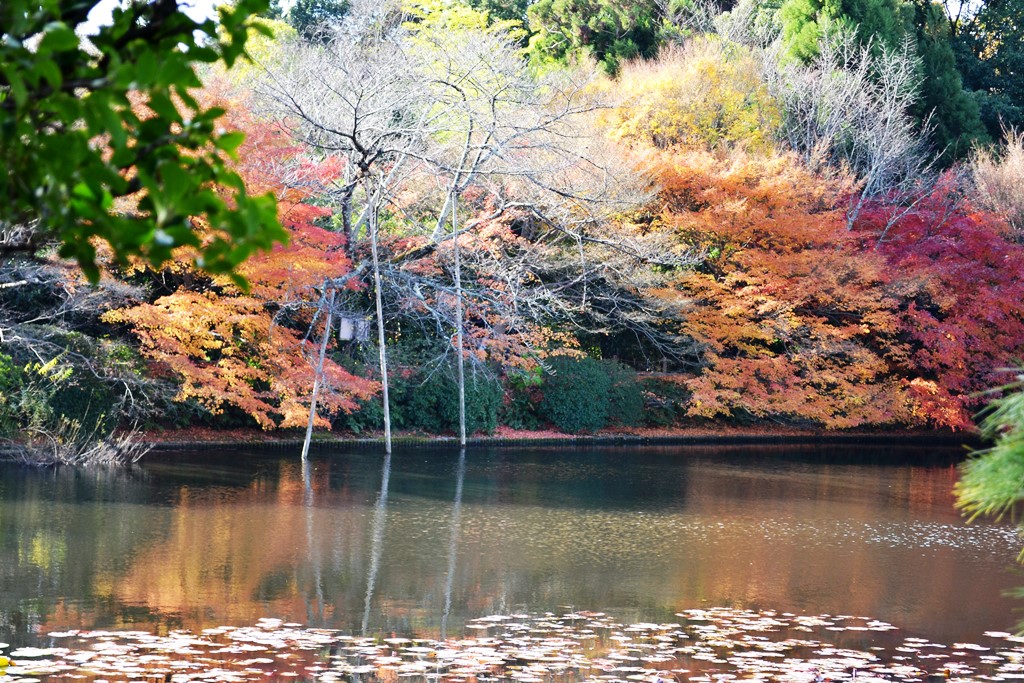
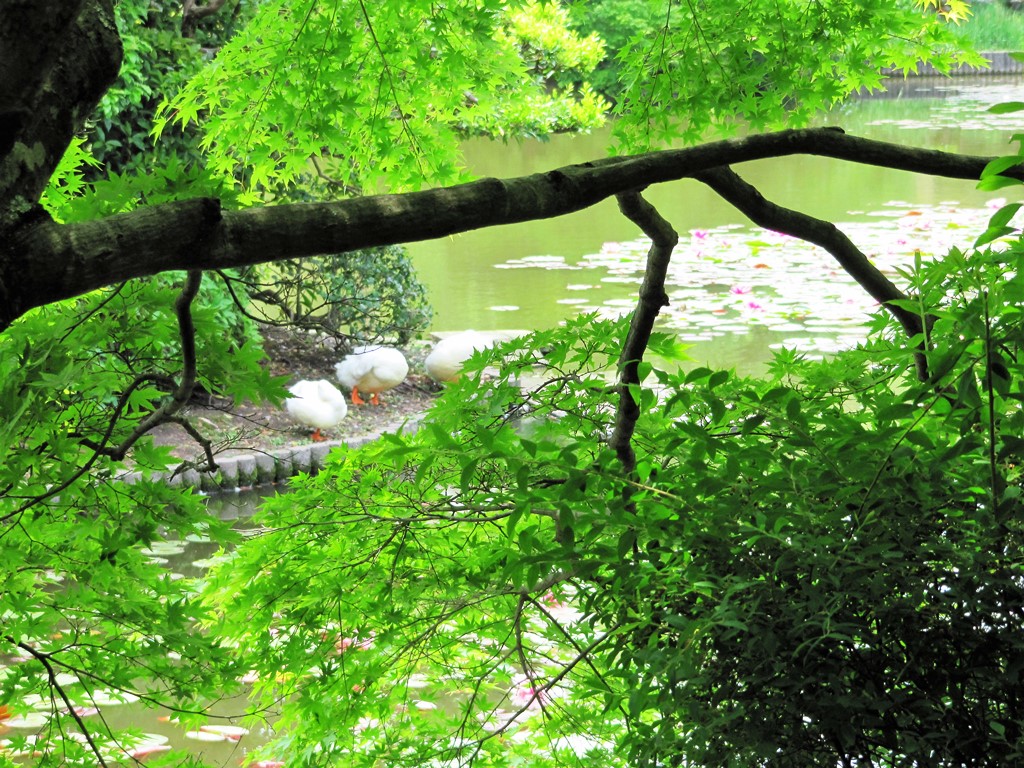
Ryoan-ji Temple is a Zen temple. Its most striking feature is its rock garden. It consists simply of raked white sand and 15 moss-covered stones.
It is said that no matter where you stand, it is impossible to see all 15 stones at once, but why is that? What do you think this garden represents? You are free to let your imagination wander as you contemplate it.
But to each their own. For those who aren’t interested in the rock garden, I recommend a stroll around the pond. You can admire the carpet of moss or the flowers of each season.
- The entrance fee for Ryoan-ji temple is 600 yen.
- It’s best to visit early in the morning to avoid the crowds and meditate. This temple opens at 8:00 AM from March to November and at 8:30 AM from December to February.
- Map
The Ninna-ji Temple
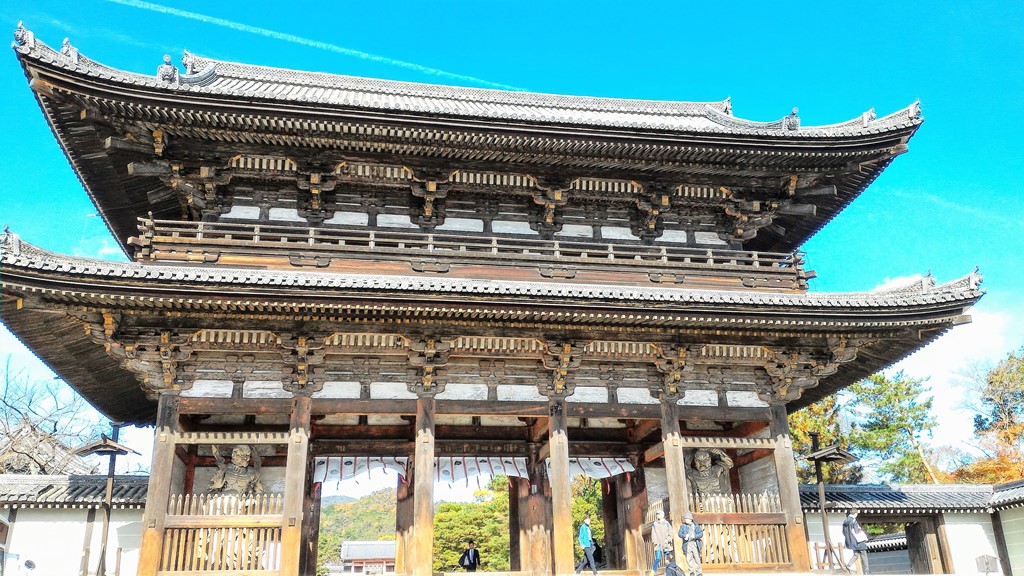
A pair of large guardian statues greet you at the entrance. Founded by an emperor in the late 9th century, this temple had a close relationship with the imperial family. In fact, emperors would send one of their sons to serve as head monk until the Meiji Restoration. This is why the style of the palace’s architecture is preserved within its walls.
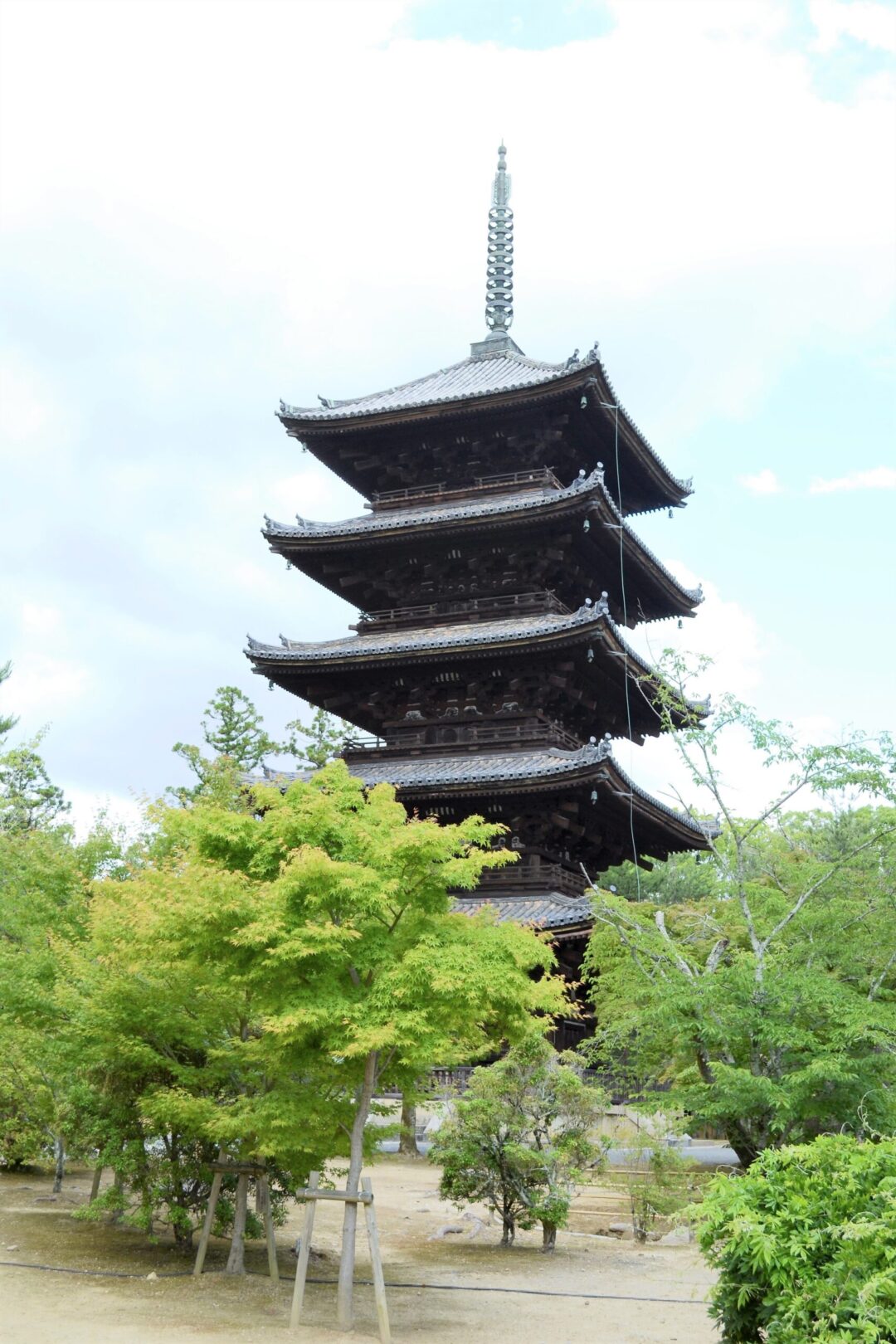
The five-story pagoda is characterized by its straight shape with little curvature.
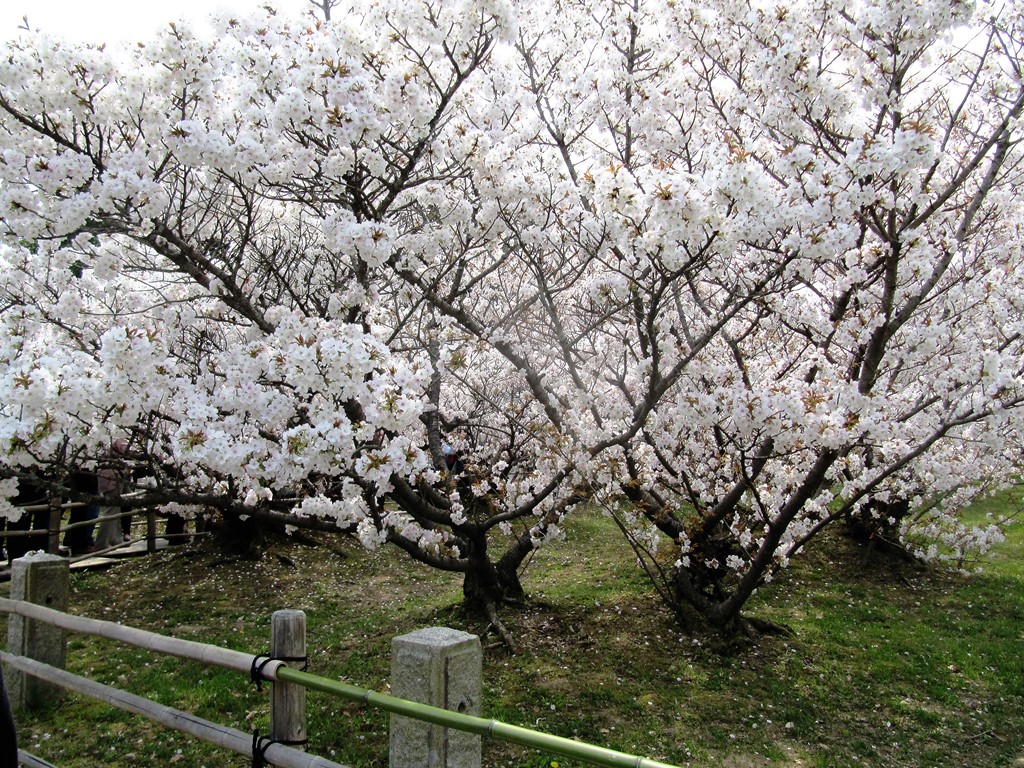
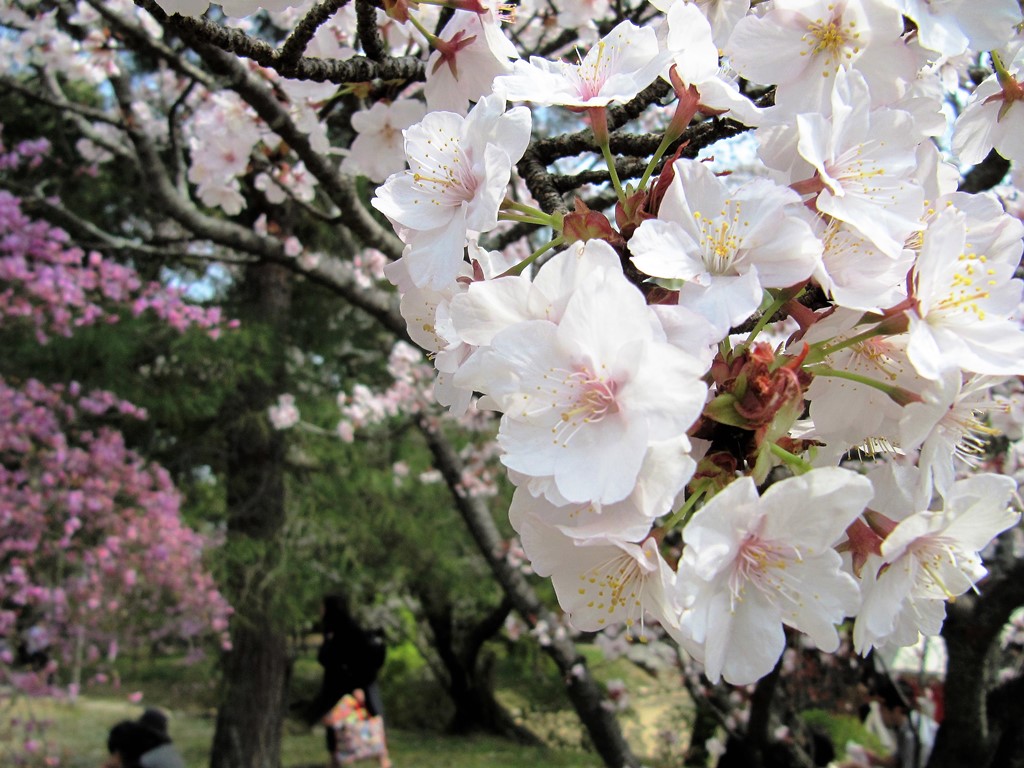
In spring, the cherry trees known as Omuro-zakura attract visitors. It’s a good spot for those who missed Kyoto’s cherry blossom season. Omuro-zakura is a late-blooming cherry tree. Can you tell the difference between Omuro-zakura and other cherry trees?
- The entrance fee for Ninna-ji temple is 800 yen.
- During the cherry blossom season, additional fees (500 yen) are required.
- Map
The Taizo-in Temple
Along the Kinukake path, I also recommend visiting Taizo-in Temple, one of the 46 sub-temples of the great Myoshin-ji Zen temple complex. It’s one of my favorite temples in Kyoto. While not a UNESCO World Heritage Site, it boasts two beautiful gardens.
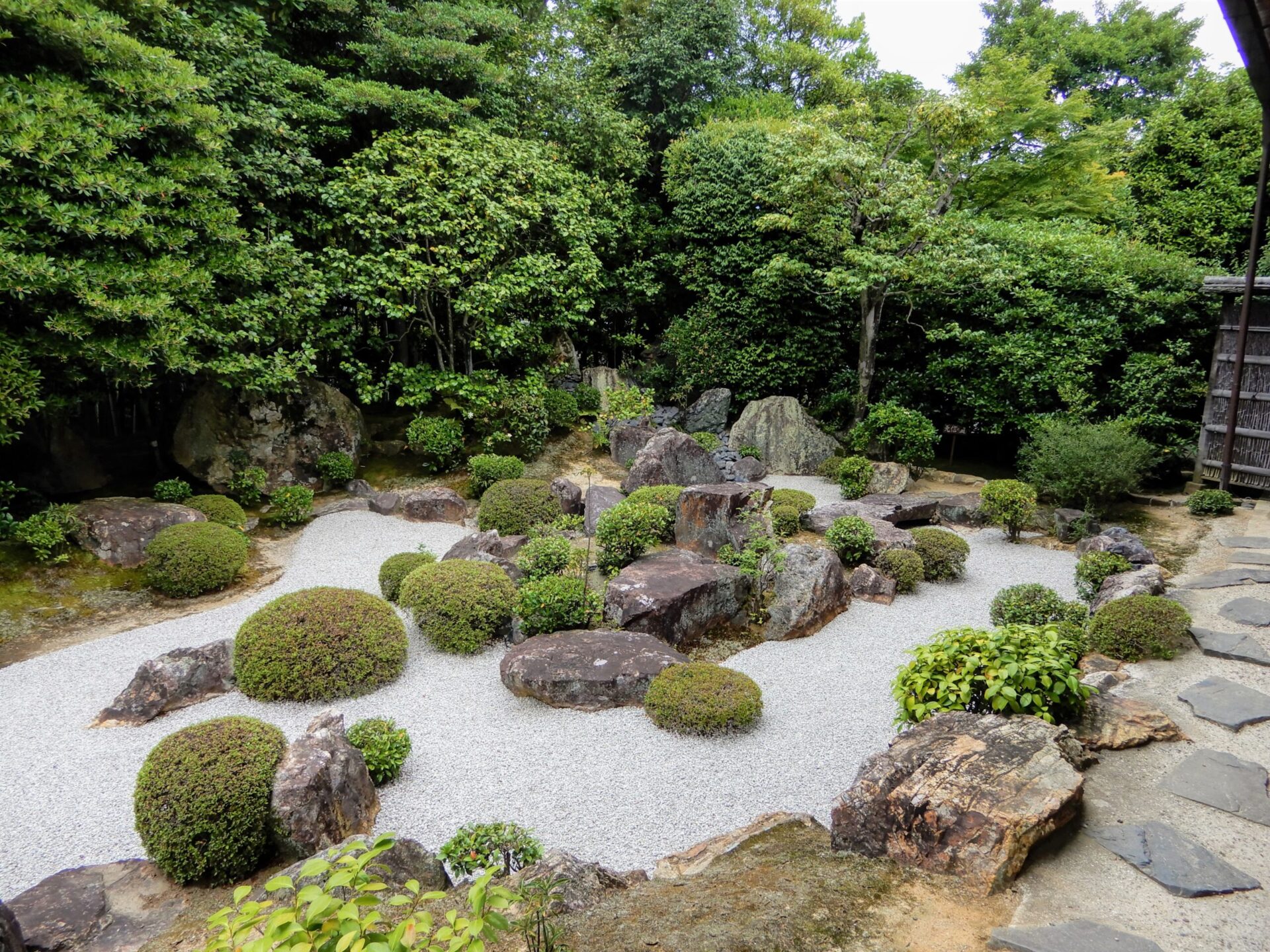
One is a dry garden dating back to the 16th century. There is no water, but the white gravel and stones represent the trickle of water from the waterfall to the sea. It was created by Kano Motonobu, a famous painter, not by a landscape architect or a Zen monk. With evergreen trees in the background, this garden also embodies a timeless and unchanging beauty. The other is a strolling garden laid out around a pond, created in 1965 by Nakane Kinsaku, one of Japan’s master landscape architects. You can appreciate its beauty as it changes with the seasons.
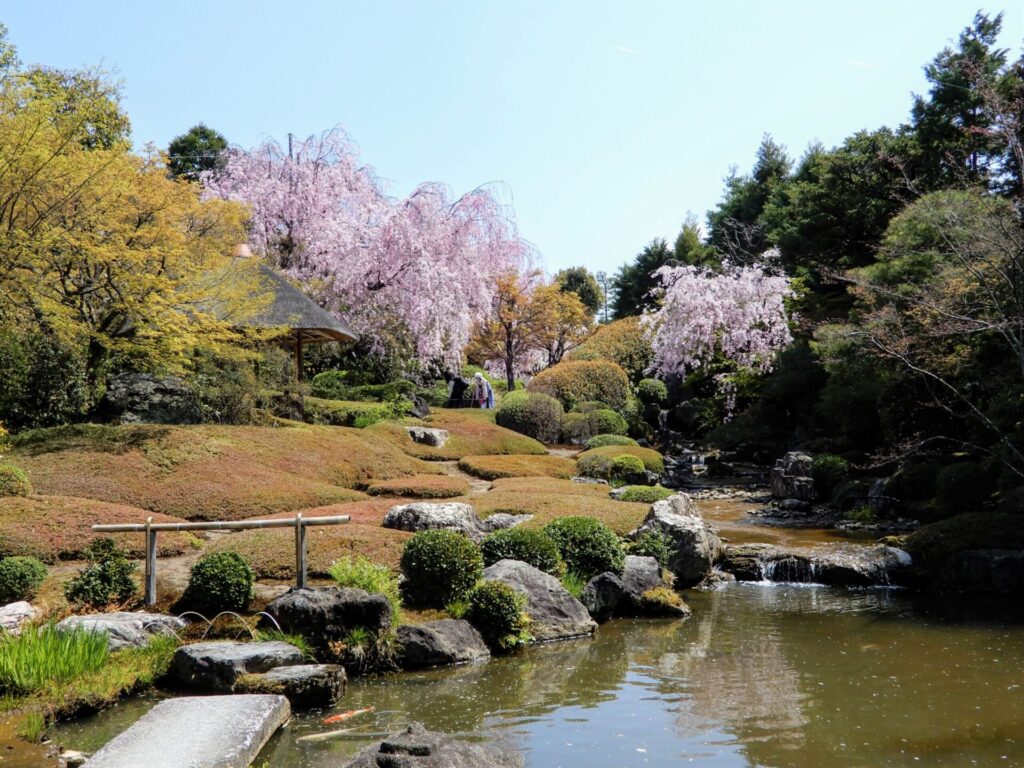
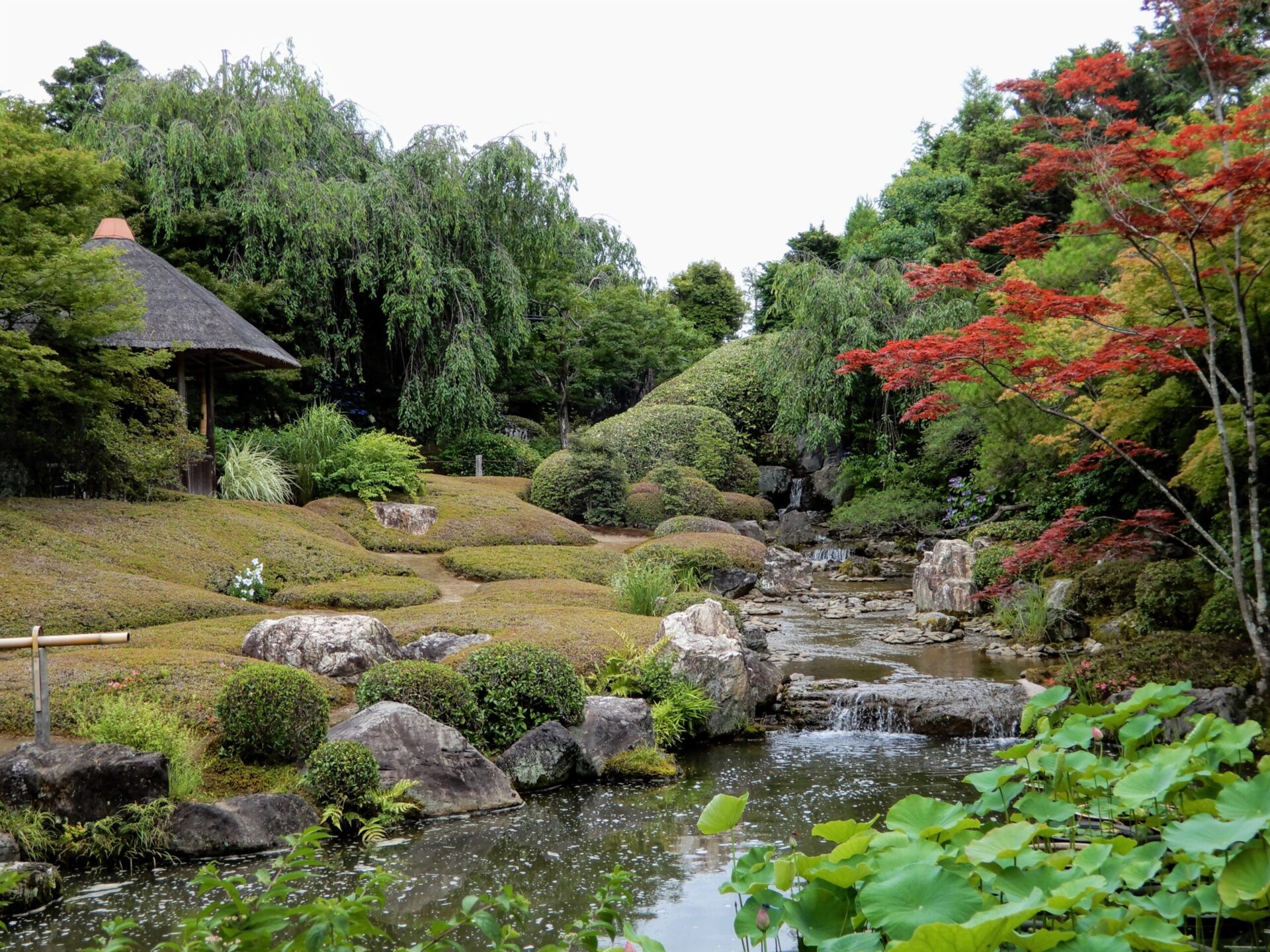
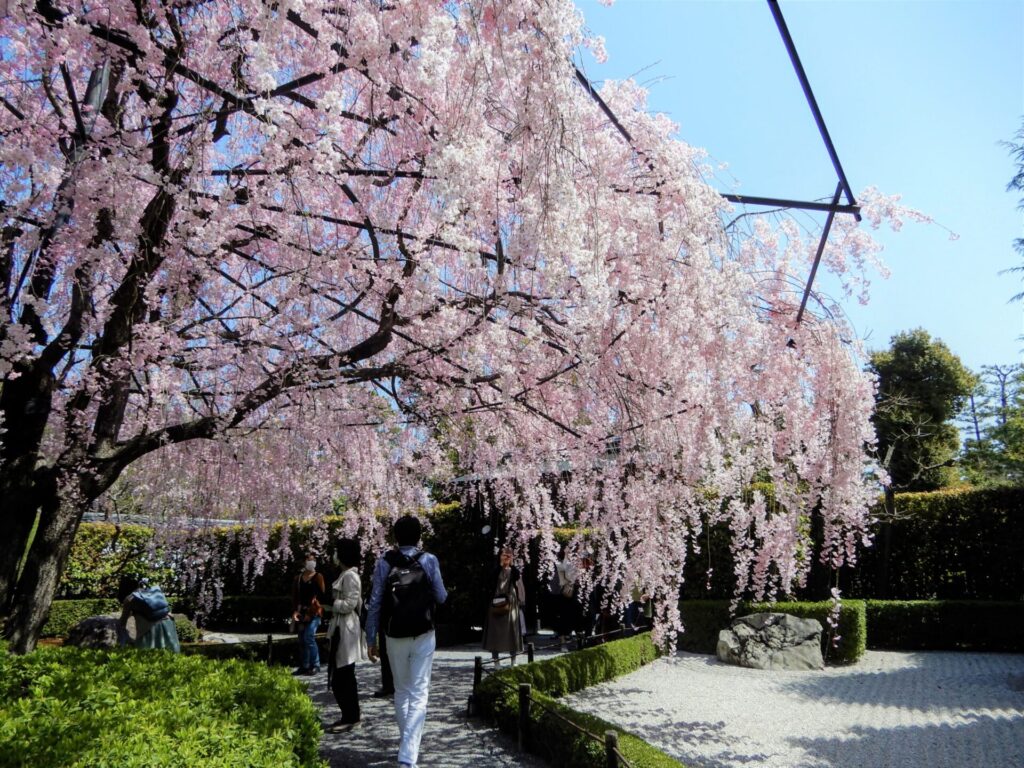
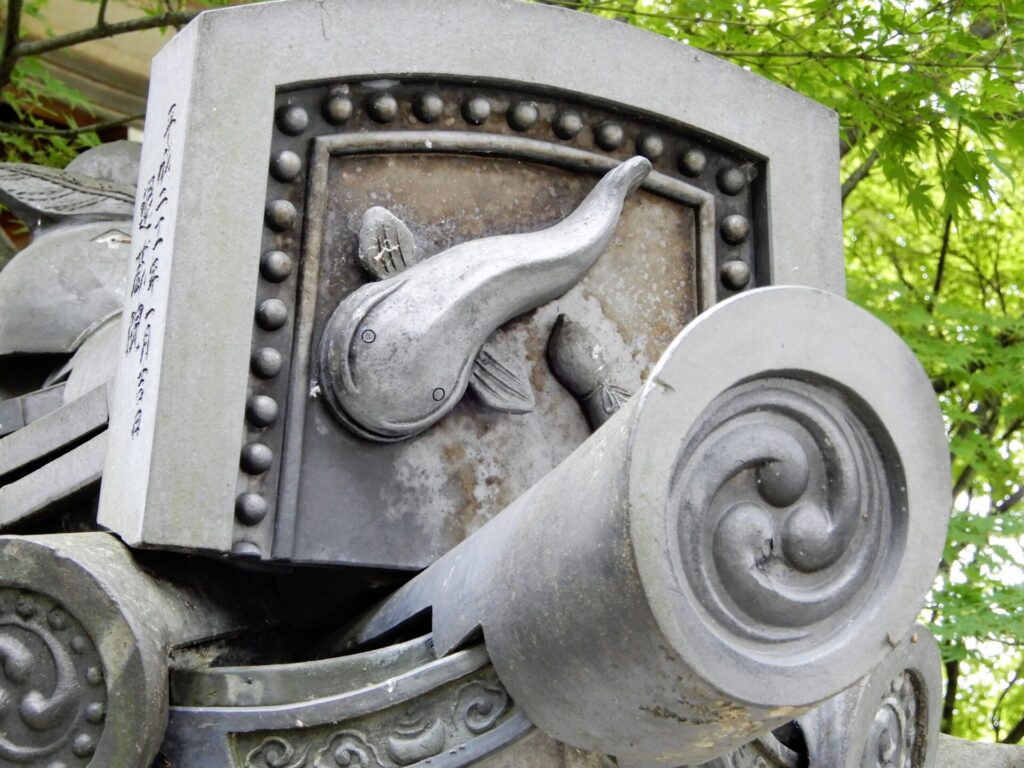
In spring, this temple is crowded with tourists who come to admire its beautiful weeping cherry tree, but in other seasons you can enjoy these two gardens in peace and quiet. There are also catfish and gourd motifs scattered throughout, linked to the temple’s ink wash paintings.
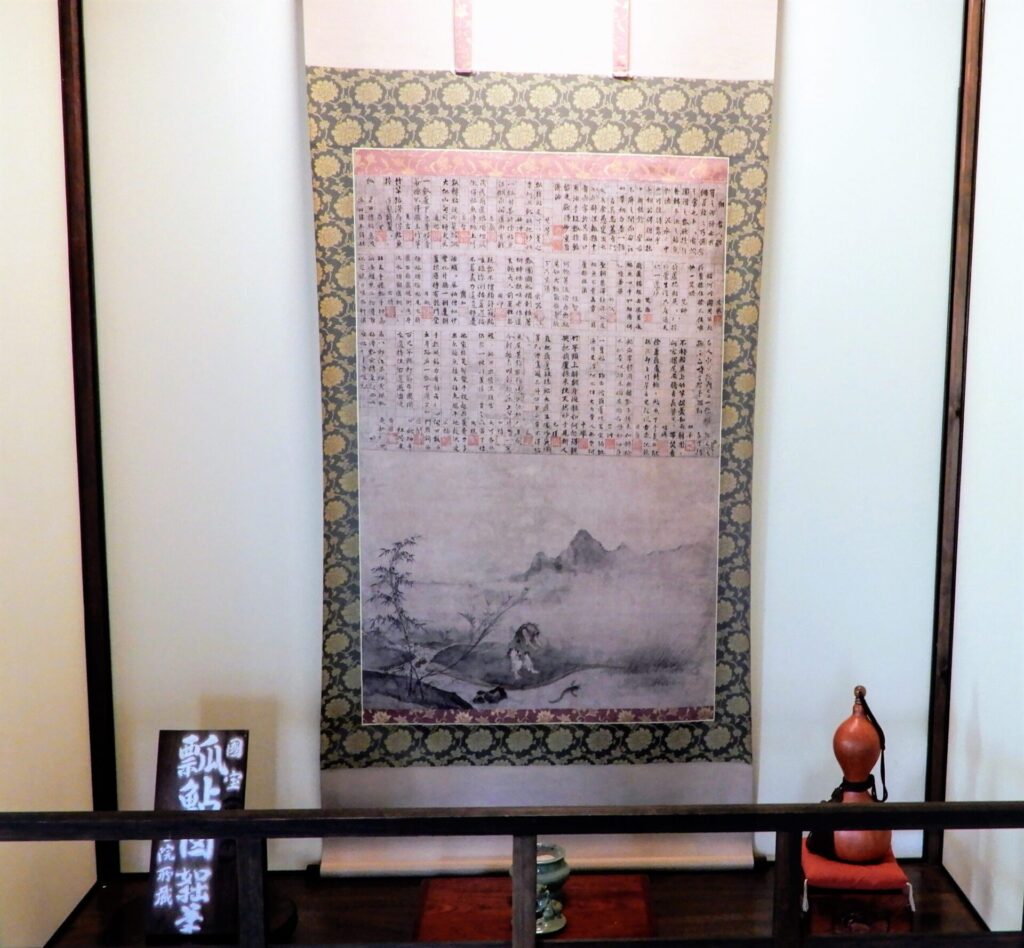
- The entrance fee for Taizo-in temple is 600 yen.
- To get there, from JR Kyoto Station, take the Sagano Line to Hanazono Station and walk for about 5 minutes to the south gate of Myoshin-ji Temple. Taizo-in is on the west side of its grounds.
- Upon exiting the north gate of Myoshin-ji, you can reach Ryoan-ji (a sub-temple somewhat detached from Myoshin-ji) in 12 minutes on foot.
- Map
Nishijin District and its Surroundings
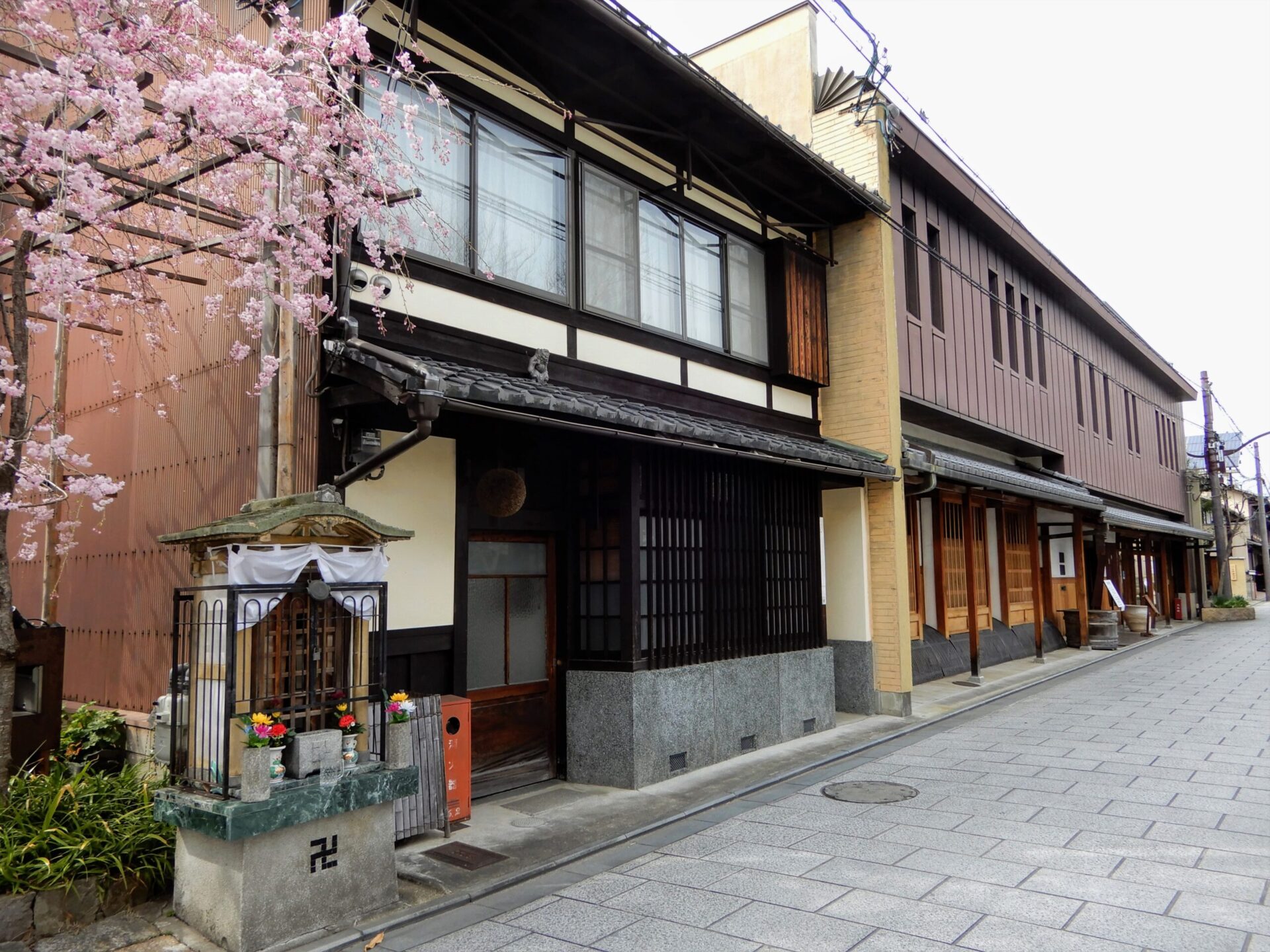
Nishijin is a weaving district where the sounds of looms fill the air.
In Kyoto, you can find the exquisite fabric for the kimono sash, called an obi. This is known as Nishijin-ori. Nishijin-ori ties, bags, and pouches are popular souvenirs of Kyoto. The history of this fabric dates back to the 5th century, before the capital of Japan was moved to Kyoto. Many weaving techniques, such as design, yarn twisting, and yarn dyeing, are practiced in Nishijin.
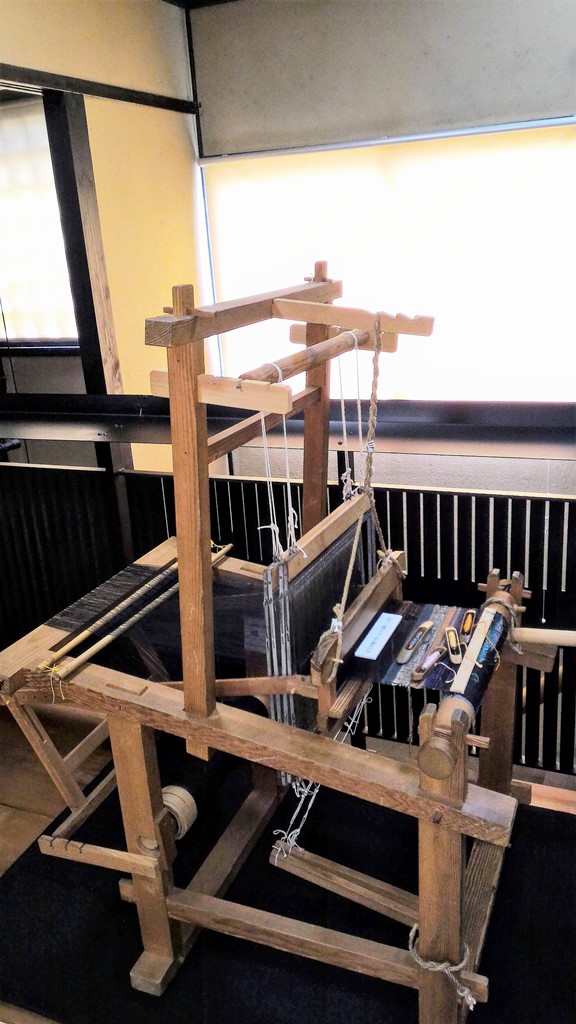
Orinasu-kan is a museum in Nishijin-ori that was once the residence of the founder of the belt-making company. Visitors can see belts, costumes for Noh (a form of classical Japanese theater), workshops, and looms.
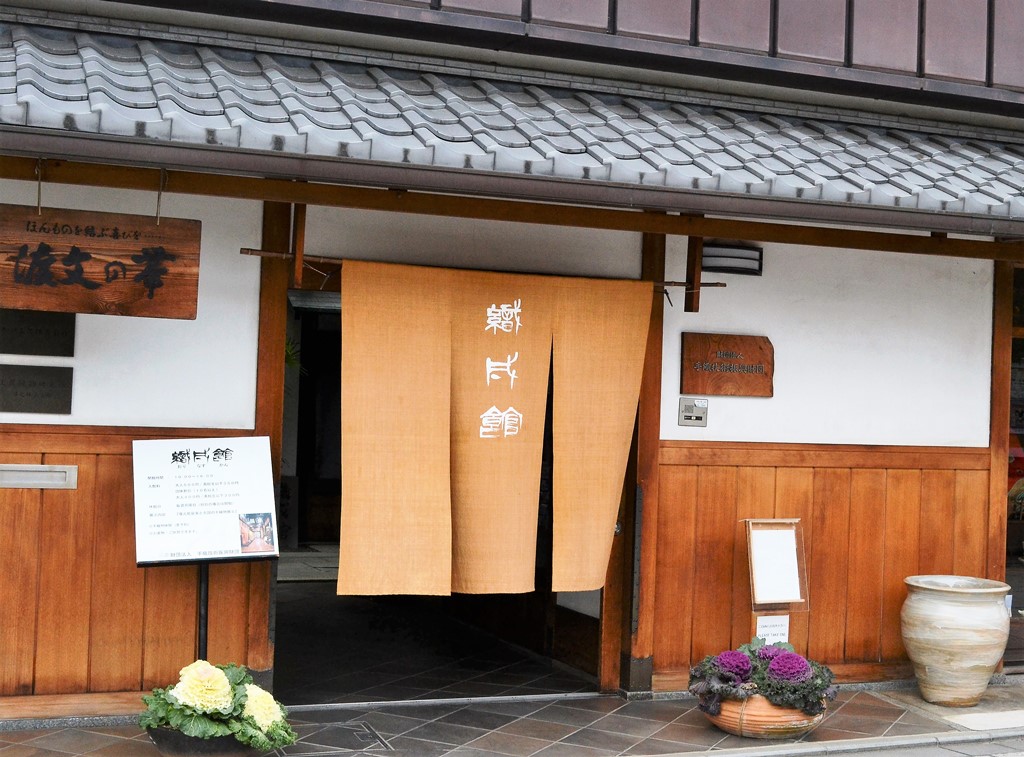
- The entrance fee for the Orinasu-kan museum is 1,000 yen.
- It is closed every Monday.
- Map
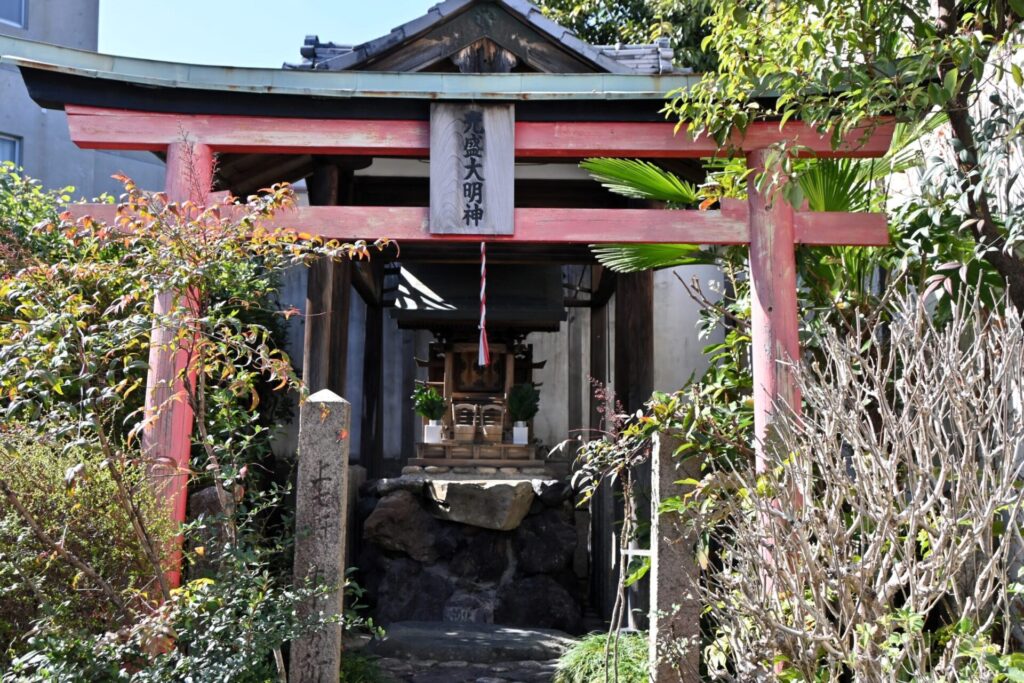
In the Nishijin district, you can also find a shrine where a rock is venerated, or the long wall of a temple where mud and tiles are layered.
How about a little stroll through this peaceful neighborhood? I’ll also tell you about Kyoto’s charming alleyways, the zushi and roji.
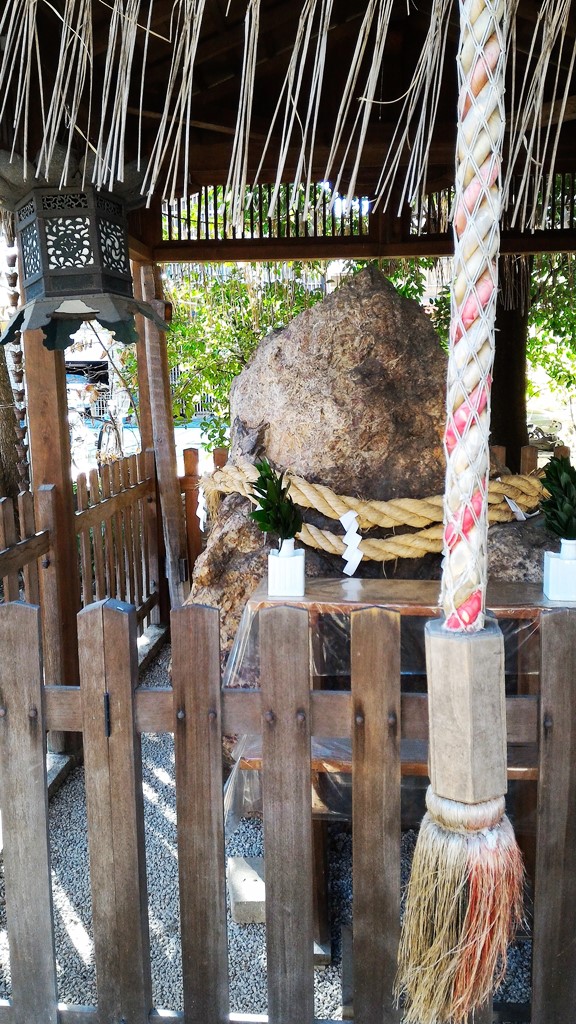
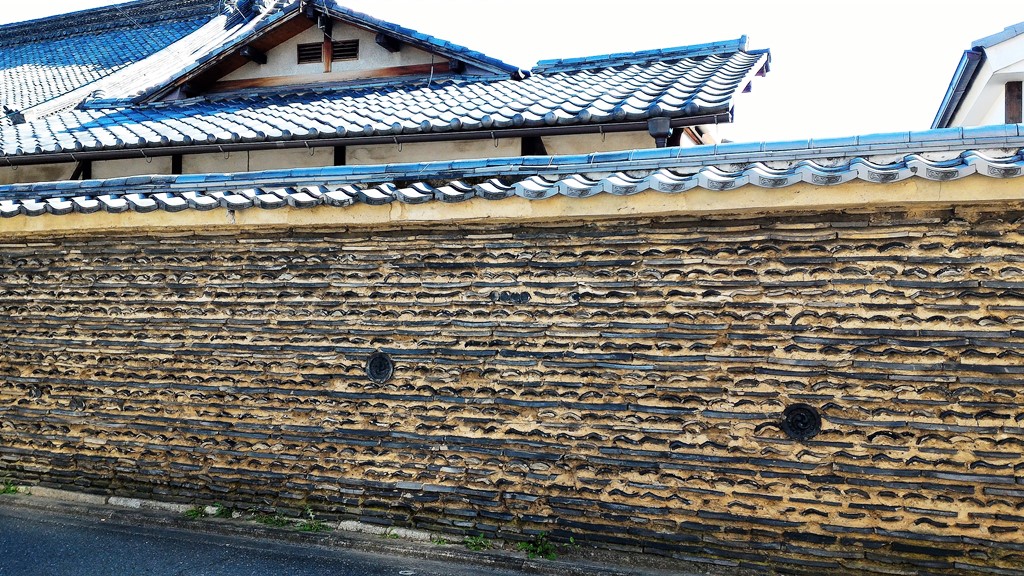
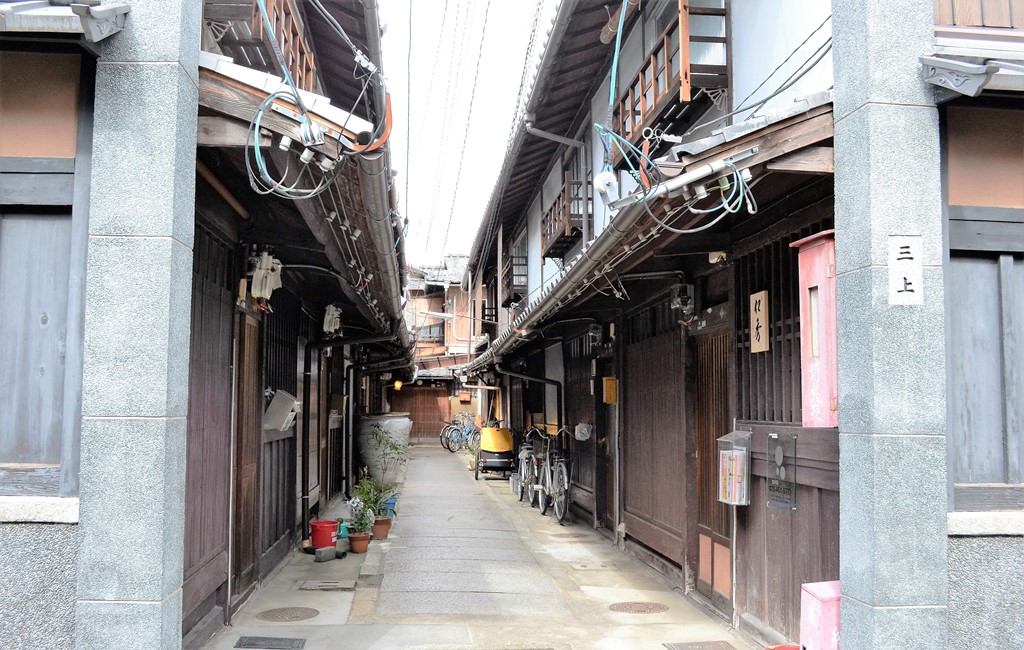
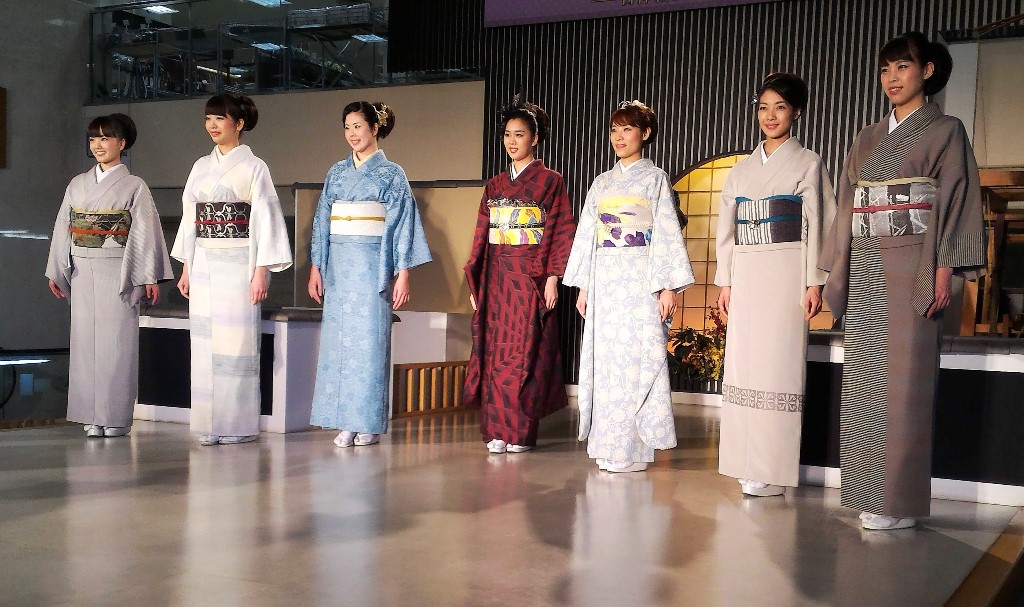
At the Nishijin textile center, you can watch a kimono fashion show seven times a day. A model of a weaver’s house illustrates the structure and characteristics of this type of dwelling. The handloom, with its Jacquard loom, testifies to the deep connection between Nishijin and Lyon.
The Kitano Tenman-gu Shinto Shrine
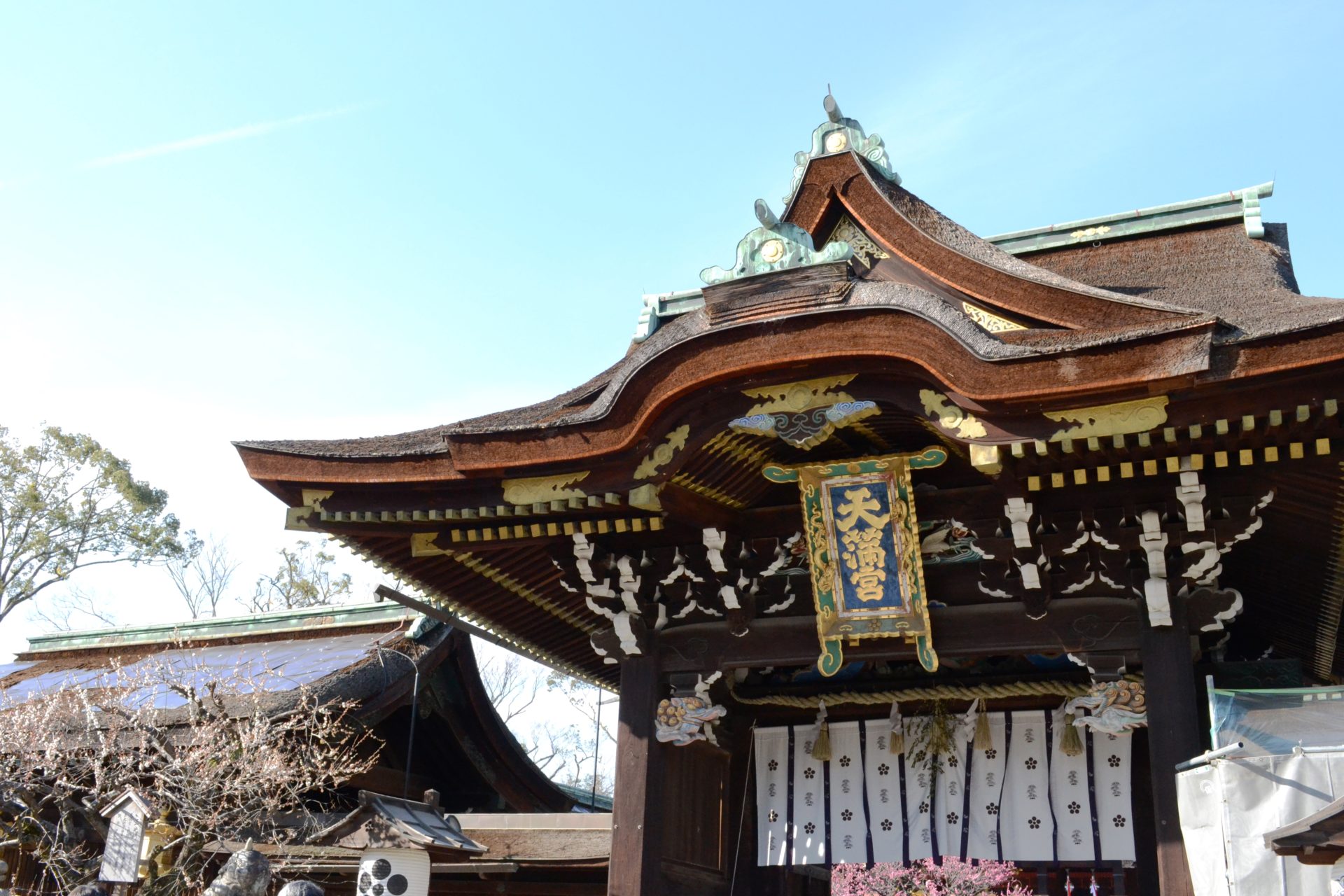
This Shinto shrine, whose origins date back to the 10th century, is located about a 15-minute walk west of the Nishijin district. Sugawara no Michizane, a scholar, poet, and high-ranking official of 9th-century Japan, is venerated here as a deity. Sugawara no Michizane played a significant role in the politics of his time, but caught in a conspiracy by his rivals, he was forced into exile on the island of Kyushu. After his tragic death, a series of natural disasters struck Kyoto, the ancient capital of Japan. It was said that these disasters stemmed from his vengeful spirit, and he built a Shinto shrine to appease it. But Michizane, the former ghost who haunted the people of Kyoto, is now venerated here as the god of literature and learning. This is because he was a man of exceptional erudition. During the entrance exam period (January to March), many junior high and high school students pray here for success in their exams. There are approximately 12,000 Tenman-gu or Tenjin-sha Shinto shrines where Michizane is worshipped as a god throughout the country, and Kitano Tenman-gu is their seat.
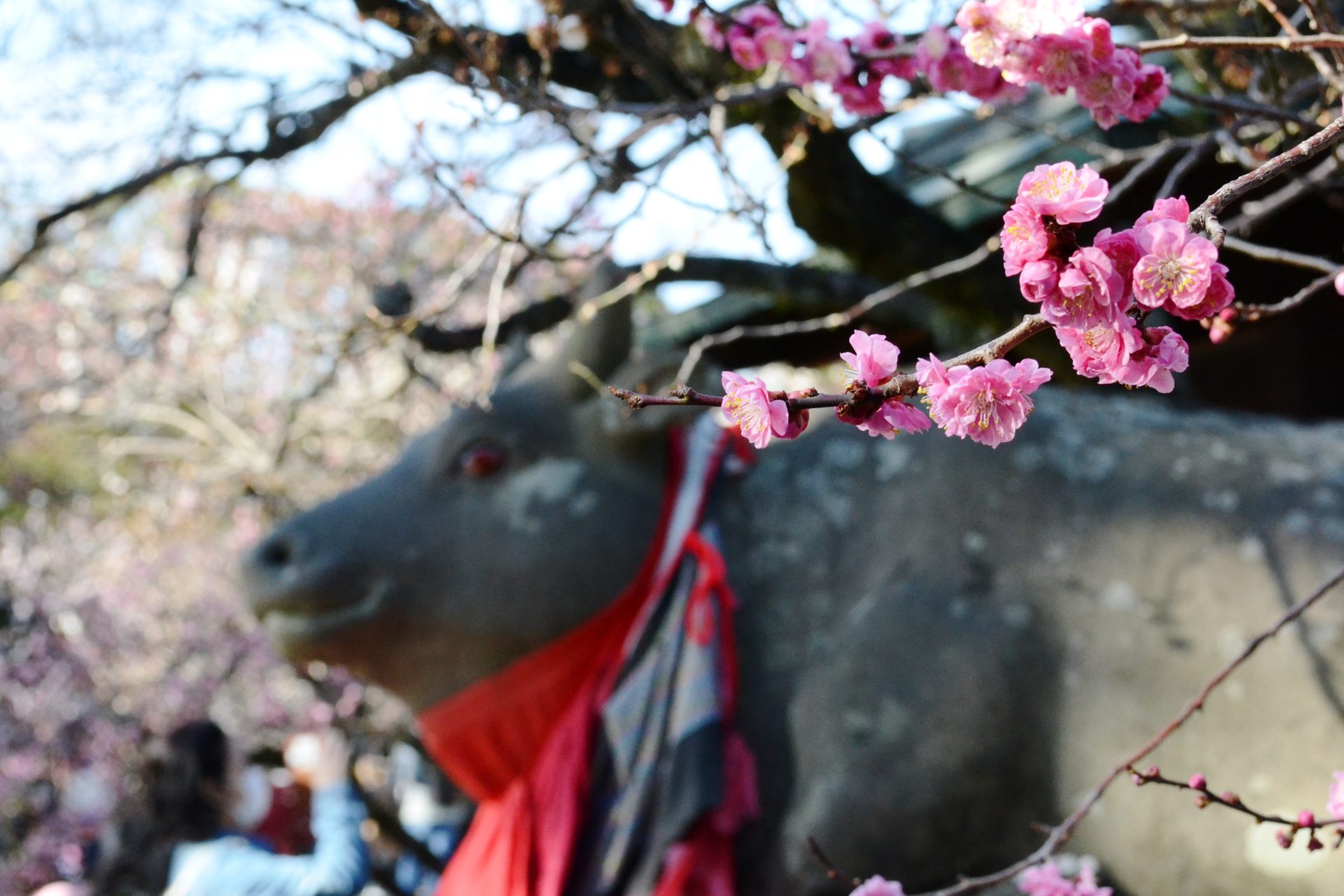
Kitano Tenman-gu is famous for its plum blossoms. The plum tree was a favorite of Michizane. Before leaving Kyoto, he left a short poem to bid farewell to the plum tree planted in his garden: “When the spring breeze blows, you let yourself be carried by the breeze and deliver your fresh fragrance to me. My dear plum blossom, do not forget spring even if your master is not with you.” You will find cow statues here. According to the Chinese zodiac, Michizane was born in the Year of the Cow. This animal is considered a divine messenger. Stroking the cow’s head is for intelligence. The cows are depicted in a seated pose, a reference to a legend in which the cow pulling a cart to carry Michizane’s remains suddenly froze. But the only standing cow is hidden inside the main building. Can you find it?
Kamishichiken District
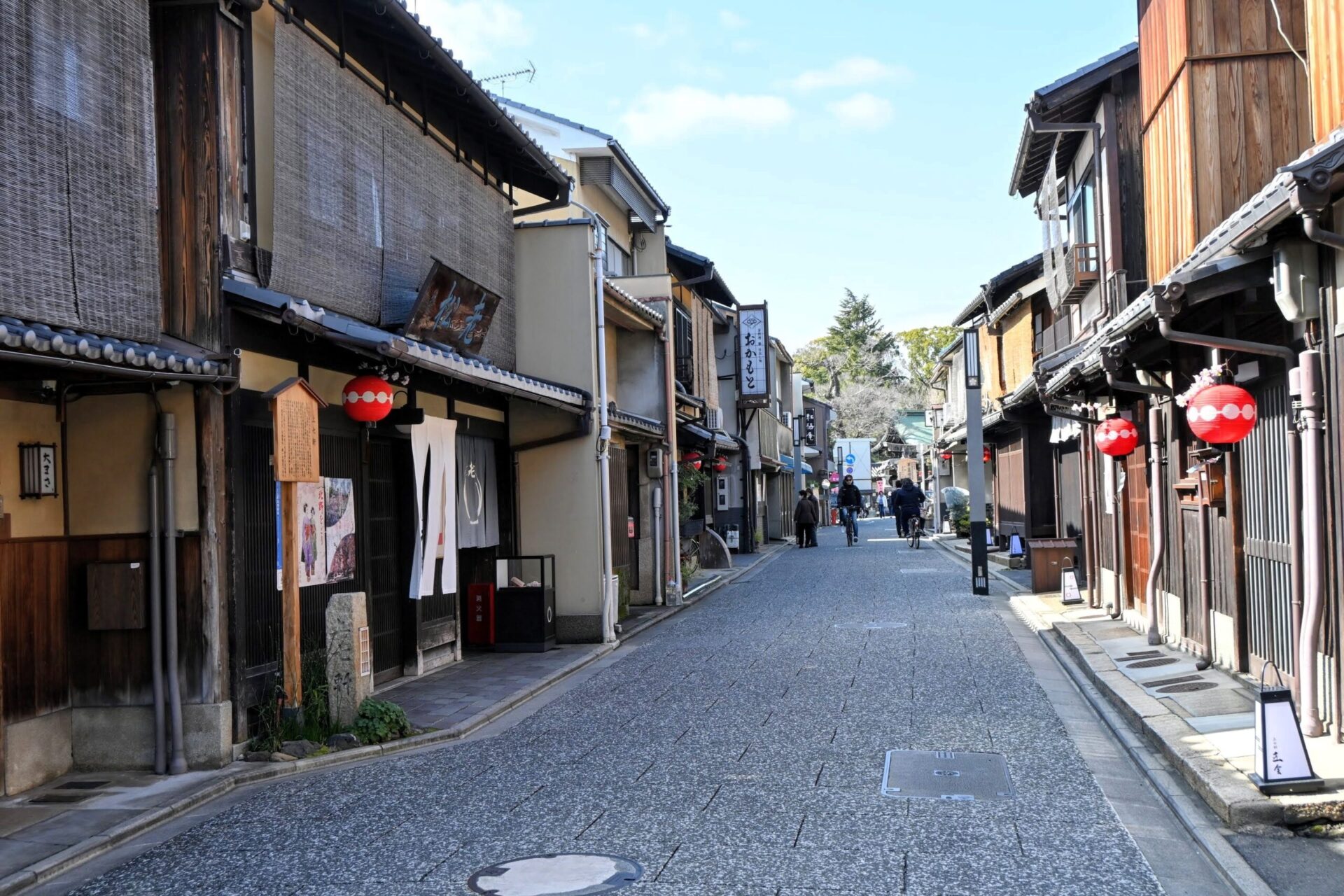
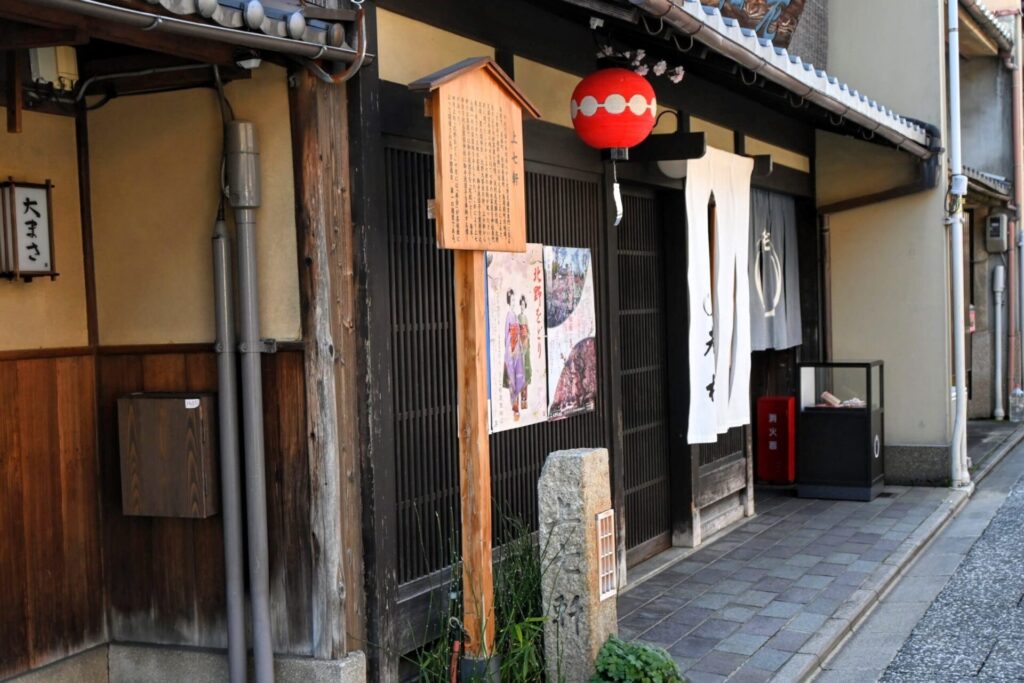
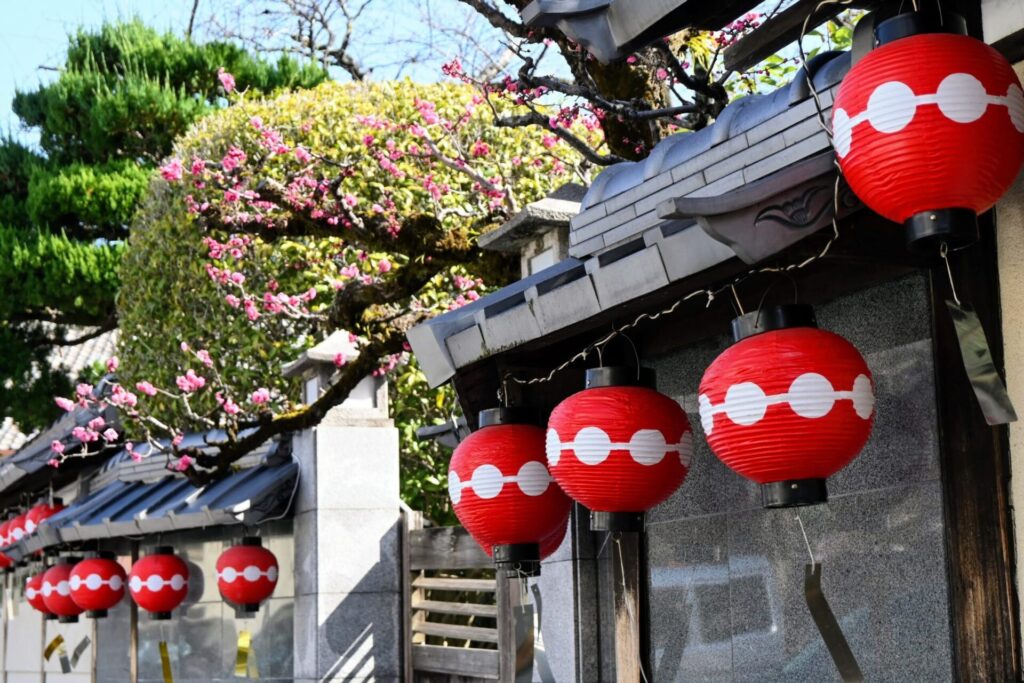
Located east of the Kitano Tenman-gu Shrine, this is Kyoto’s oldest geisha district. The name Kamishichiken comes from the seven teahouses built from pieces of the Kitano Tenman-gu Shrine during its reconstruction in the 15th century. The motif of the glutinous rice dumplings called dango is drawn on the lanterns. There are many traditional wooden buildings. Some of them serve as banquet halls for performances (ochaya) or as residences for maiko (okiya). How about strolling through this district, which exudes a peaceful and refined atmosphere?