

Nijo Castle
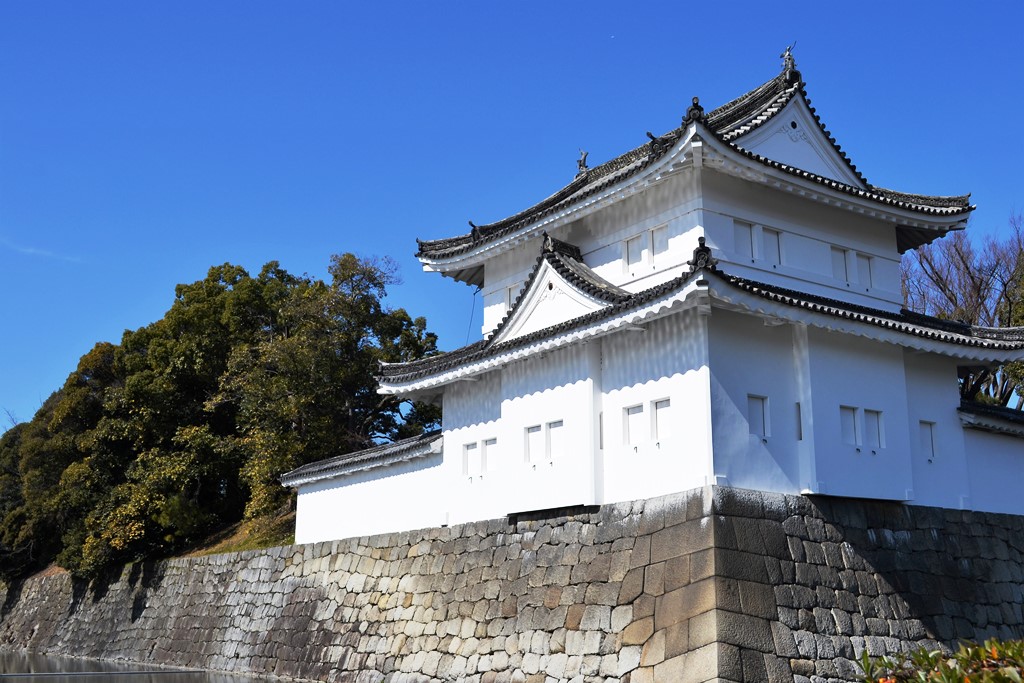
At first glance, you may have the impression that Nijo Castle is more of a grand residence than a castle. You are right. There are no walls or deep moats as defenses. Nijo Castle was built in 1603 by Tokugawa Ieyasu, founder of the shogunate of Tokugawa established in Tokyo. Before this castle was built, there were battles for the hegemony of Japan and the Tokugawa family eventually took power. It was therefore not for military purposes that this castle was built. Rather, it served as a temporary residence for shoguns (the head of shogunate) during their visit to Kyoto and also garrisoned the imperial palace.
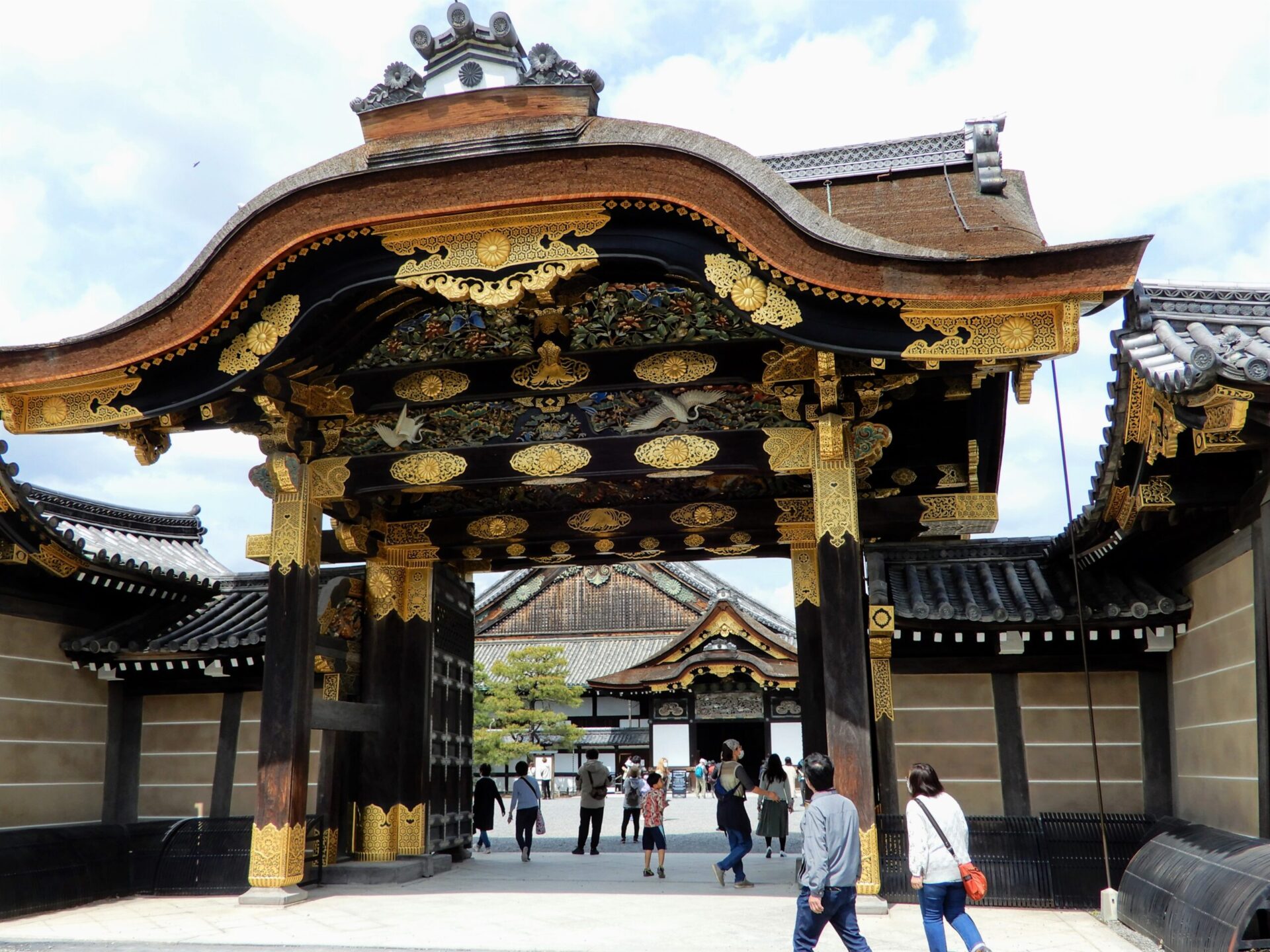
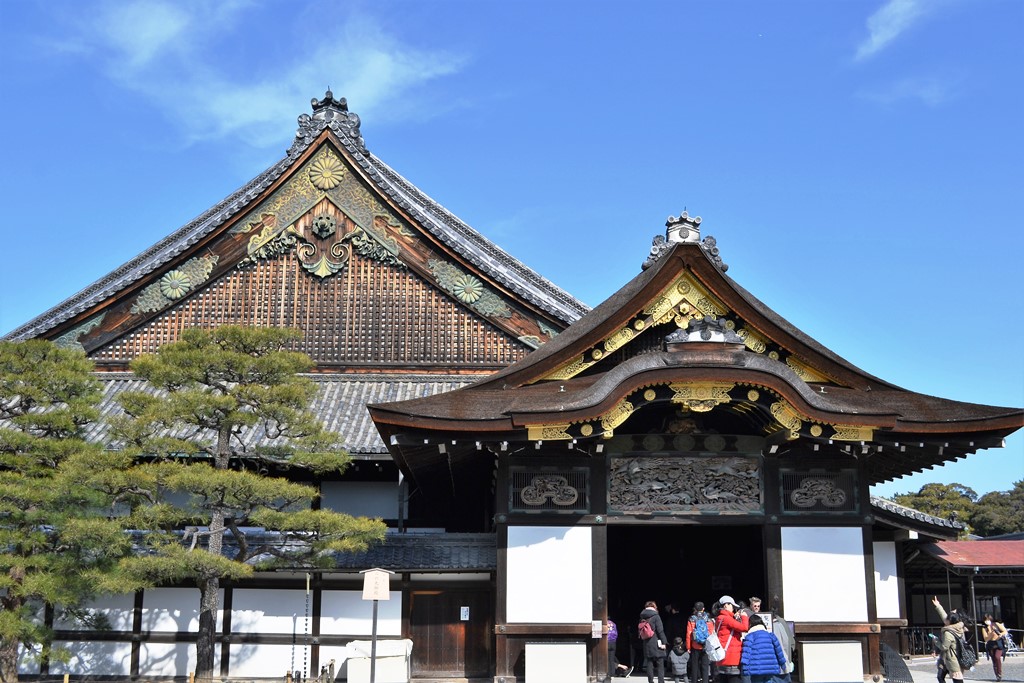
Within the castle walls, the imposing gate called karamon will first catch your attention. It is characterized by its sculptures and magnificent metal fittings. Look at it carefully. You can find animal designs such as crane, turtle, dragon, tiger, etc. They are not simple decorations. So, what do these animals represent?
We enter the Ninomaru Palace through the gate karamon. This palace made up of six buildings is in the shape of flying wild geese and one could appreciate the garden from its interiors. Around thirty pieces follow one another. The showy paintings on its sliding doors and the gold decorations will strike you. But your first impression may be the bizarre creaking of the floorboards made when you walk through the palace corridors. I will tell you about this floor, called the nightingale floor. It is a practical childcare system.
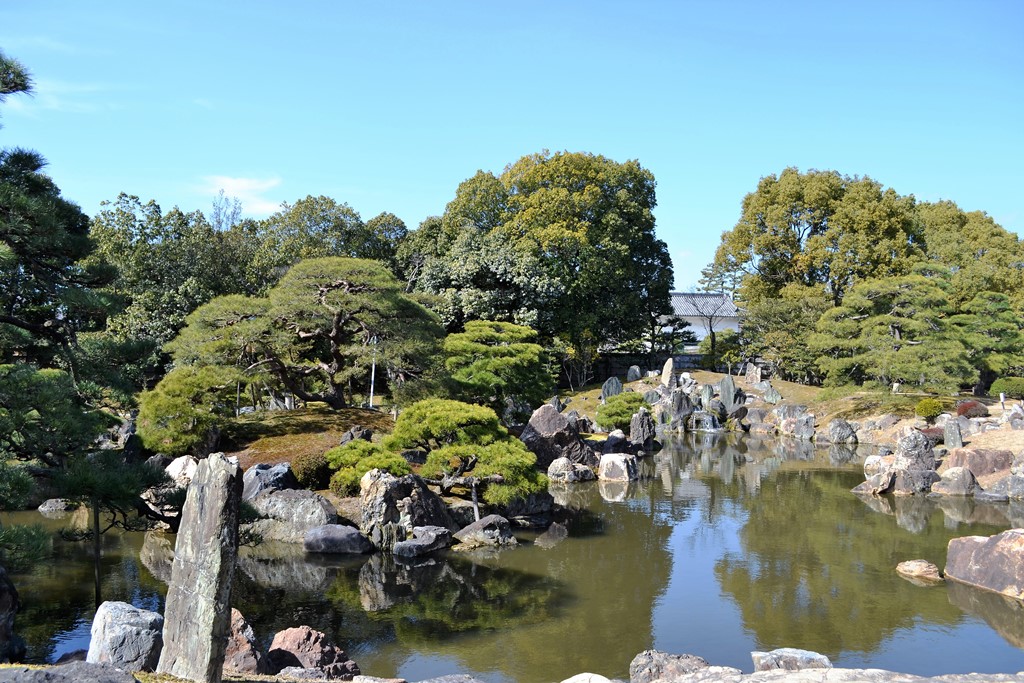
After visiting Ninomaru Palace, you will then go to its garden. The islet of eternal happiness flanked by two islets is located in the middle of the pond. It is this garden that we enjoyed from inside the palace in time. Many rocks stand out in this garden, however, you can experience a sense of expanse there. Within the grounds of Nijo Castle there are also two other gardens built at different times. It will be interesting to find the differences.
- The Nijo Castle entrance ticket price is 800 yen. If you visit Ninomaru Palace, you have to pay an extra 500 yen.
- At the entrance to Ninomaru Palace, you take off your shoes. It is neither permitted to take photos nor film videos in this palace. Proceed following the indicated route.
- Map
Shijo Avenue
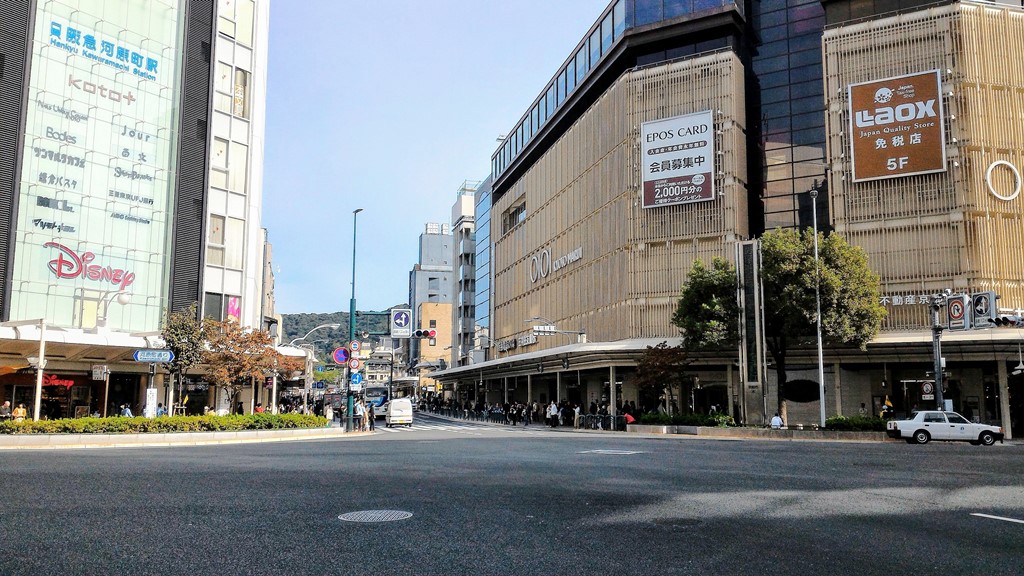
Shijo Avenue crosses downtown Kyoto from east to west. The Shinto shrine, Yasaka-jinja with a large orange portico is located at its eastern end. The center of this district is the intersection with Kawaramachi Street. If you want to go shopping, you will be happy there despite the crowds. Shijo Avenue literally means “4th Street”. Did you know that the Kyoto city area is laid out in a checkerboard pattern? The streets that cross the city from east to west are numbered from 1 to 10. Today, there are also streets between these numbered streets. I will show you a song to remember the names of each street.
Nishiki Market
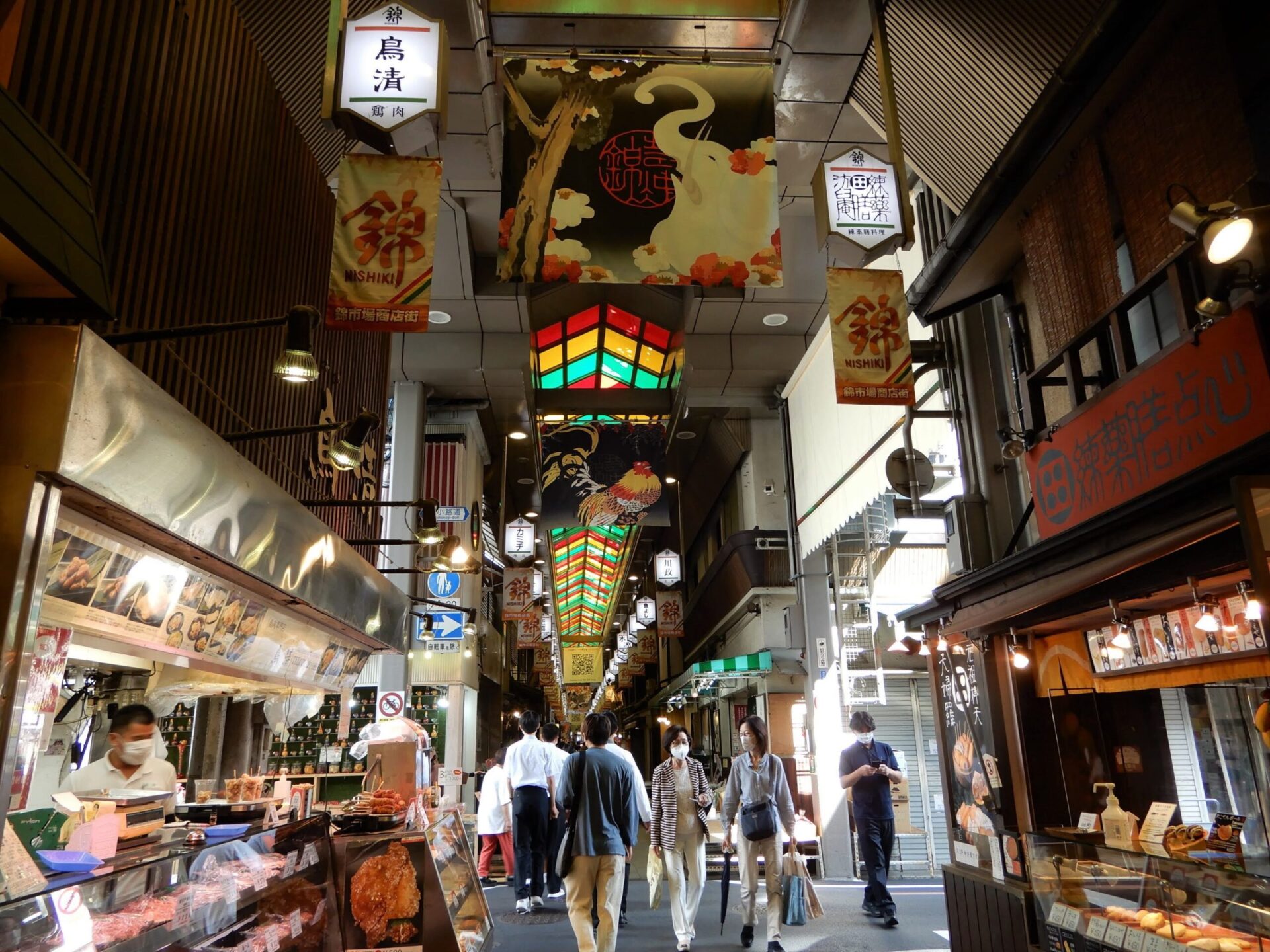
Nishiki Market is located on the first street north of Shijo Avenue. It originally developed as a fish market. Around 130 stores selling a variety of foods such as fish, vegetables, sushi, Japanese tea and many other things like Japanese knives, line up under the arcade. You will discover the rich culinary culture of Kyoto while browsing this market.
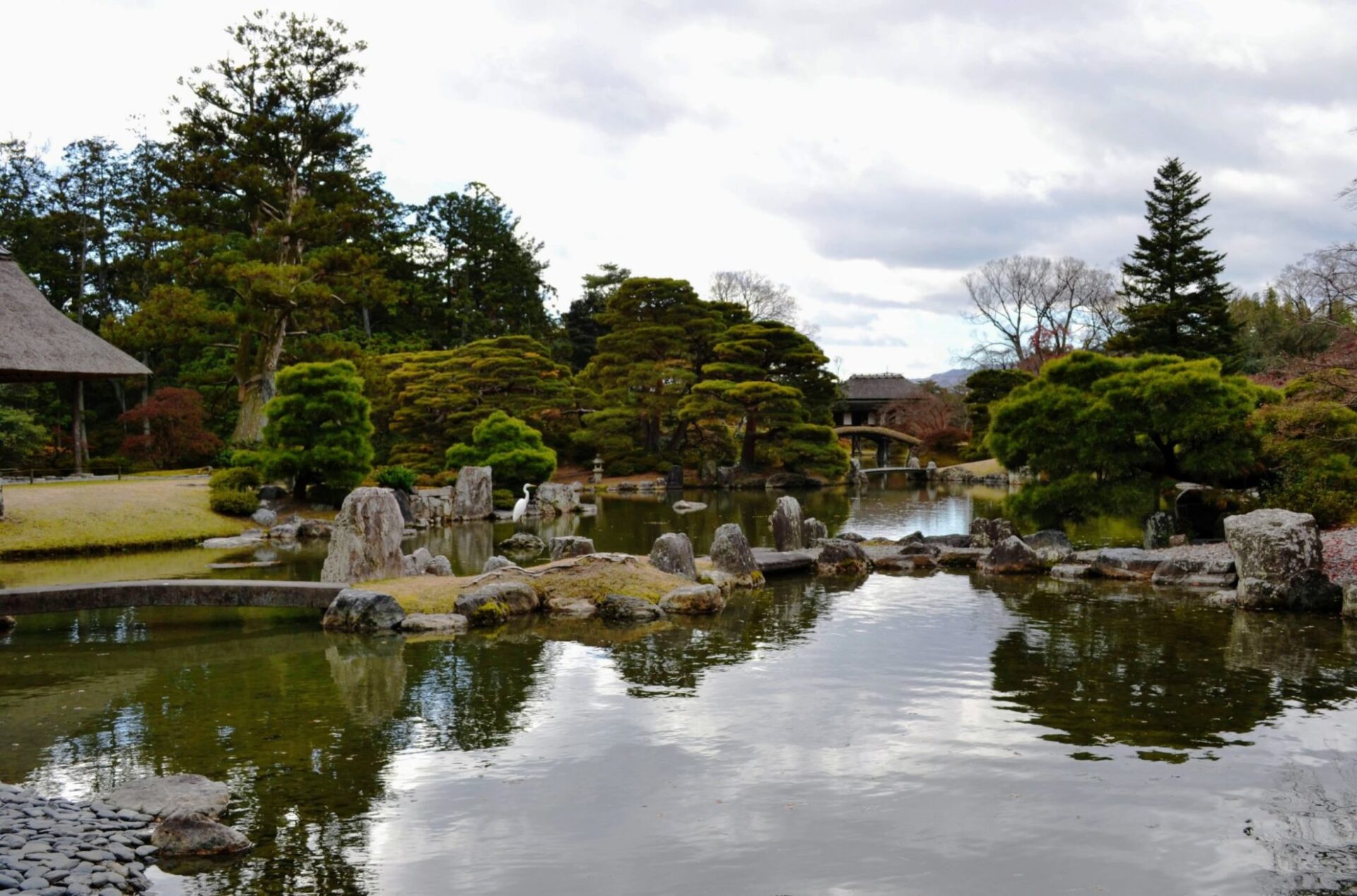
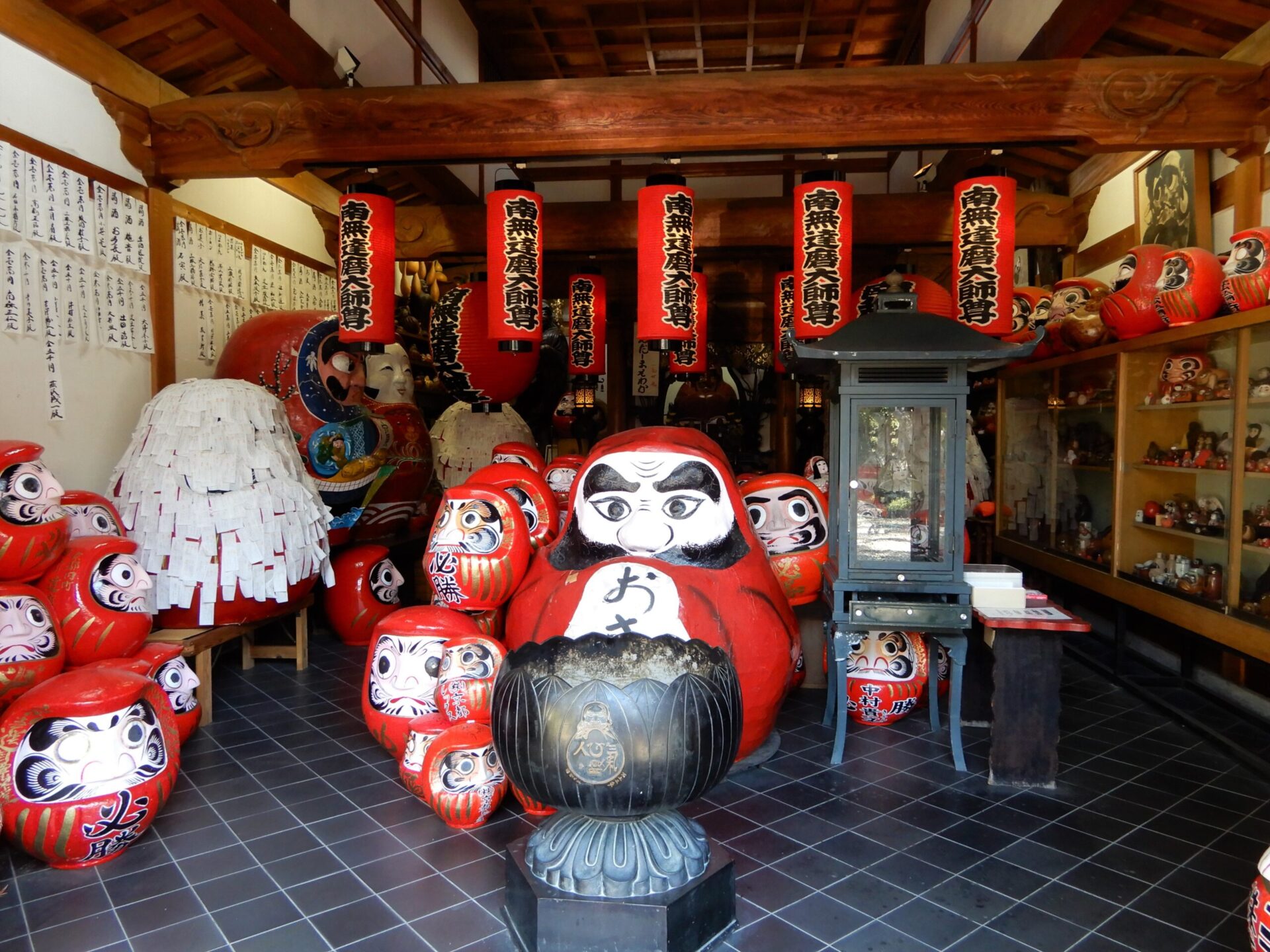
- Today, this market is very famous among tourists. It is sometimes difficult to get through the crowds. If you want to taste its atmosphere and chat with the sellers, it is better to go there in the morning.
- Map
Pontocho Street and Its Surroundings
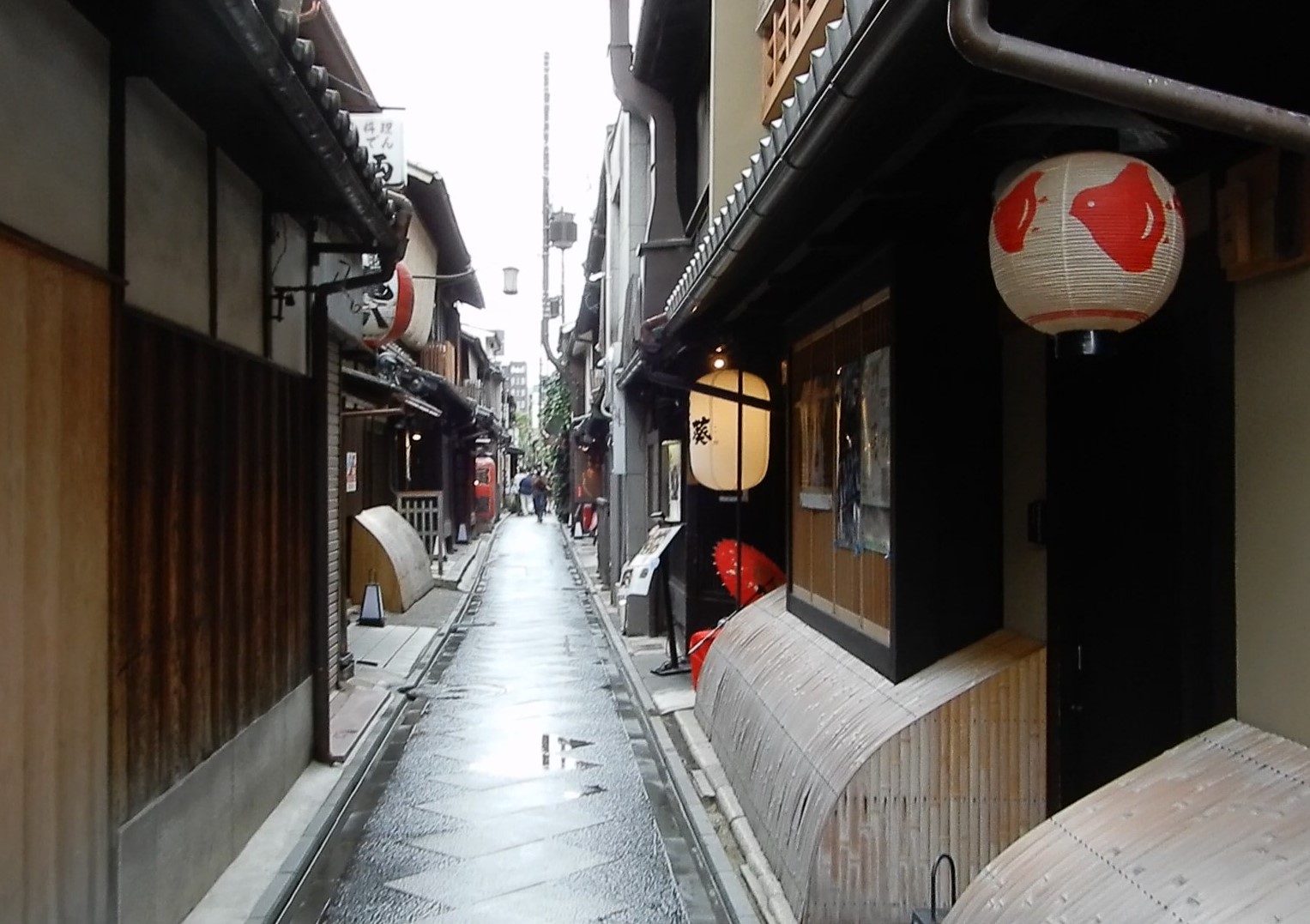
Small narrow street, you may not notice it. Pontocho Street is located next to the Kamo River. The lanterns on which birds are drawn, more precisely plovers, will serve as a point of reference. Pontocho is one of the neighborhoods of geishas from Kyoto. Its name Ponto is said to come from the Portuguese word bridge which means “dot. ”If you are looking for a restaurant, Pontocho will offer you plenty of choices. It will also be interesting to look for a special restaurant for you in the alleys and dead ends perpendicular to this street.
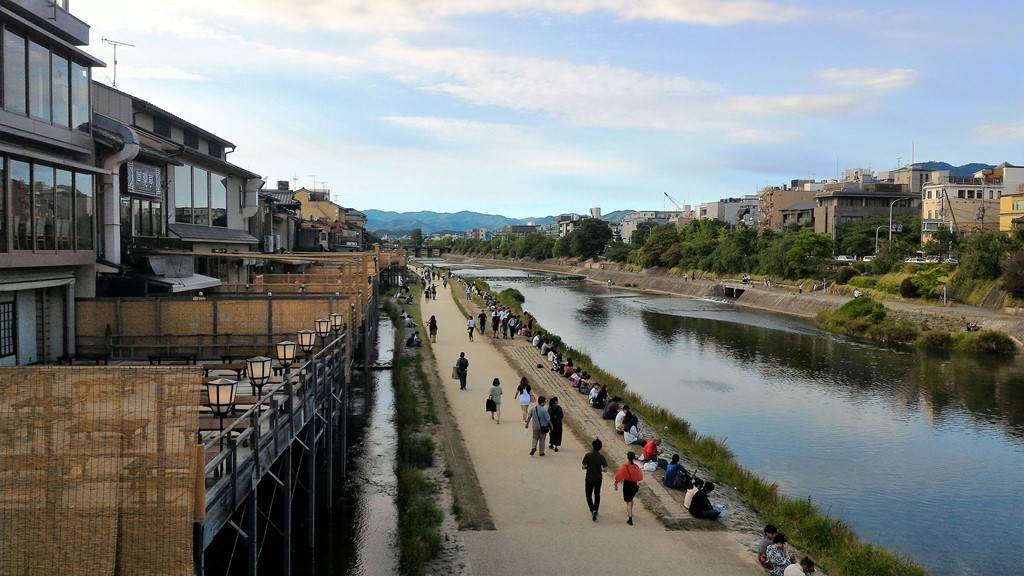
What is in this photo? It is noryoyuka, elevated terrace on the bed of the Kamo River. You can taste dishes there while hearing the rustling of the river and taking in the fresh air. On the river, you will be able to notice a fact: the couples sit there leaving a regular space with their neighbors. I find that this scene is representative of the orderly character of the Japanese, who love alignment and harmony.
- Noryoyuka, an elevated terrace on the bed of the Kamo River, is open at night from May 1st to September 30th. It is only in May and September that Noryoyuka is open during the day. In any case, opening days and hours depend on each restaurant so check before your visit if you intend to eat out.
- Map
Teramachi Street
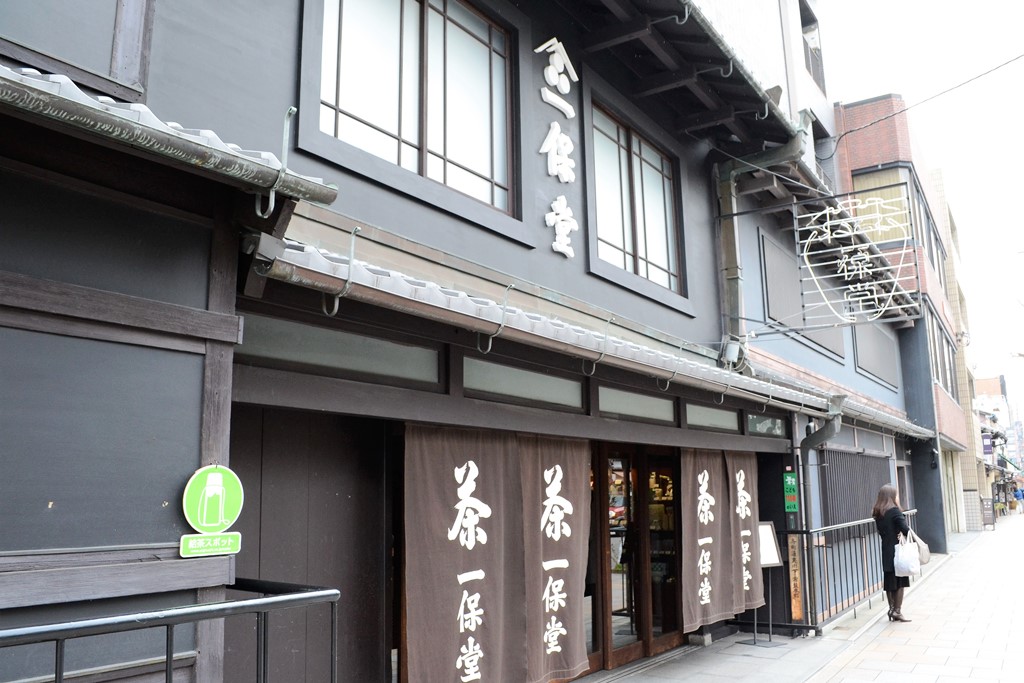
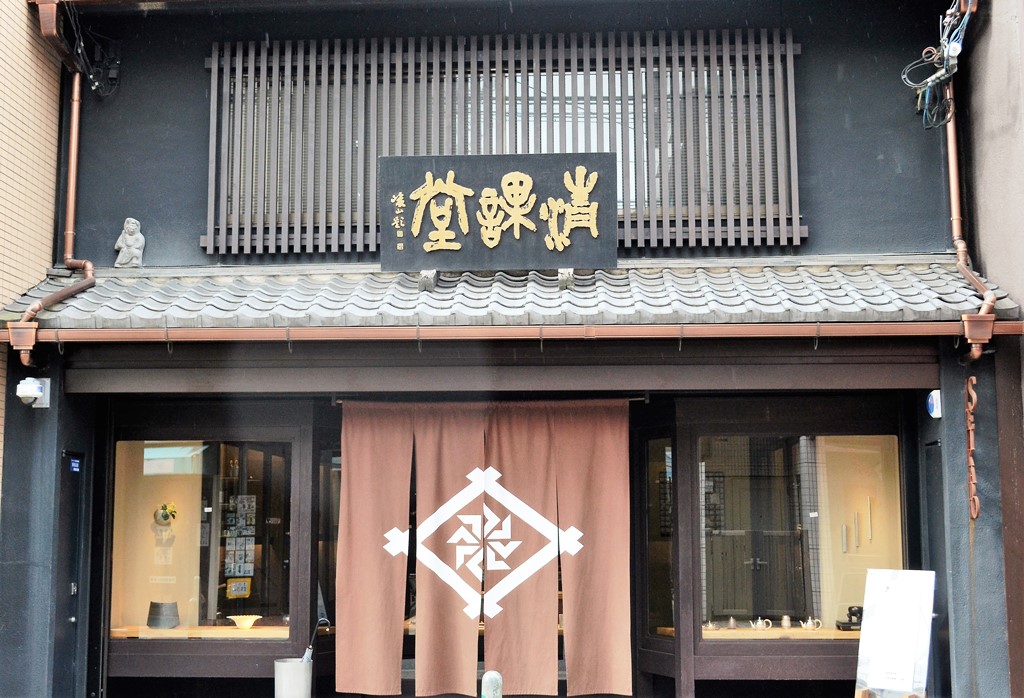
Teramachi Street is a historic street that runs north to south through the city center. The name of this street, Teramachi literally means “temple district”. In the 16th century, many temples were moved due to the city redevelopment policy practiced by the then governor. Among the neighborhoods along this street, the covered area stretching from Shijo Avenue to Sanjo Street (these two streets cross the city center from east to west) attracts tourists with a variety of traditional and modern stores. But I would rather show you the district which extends from the town hall to the imperial palace park. There is something calm in the hustle and bustle of the city. You will be able to notice the signs and noren, short curtains torn lengthwise where the names of old Japanese tea shops, paper shops, art objects, etc. are written. You may find something at an antique dealer. In any case, I strongly advise you to take a look.
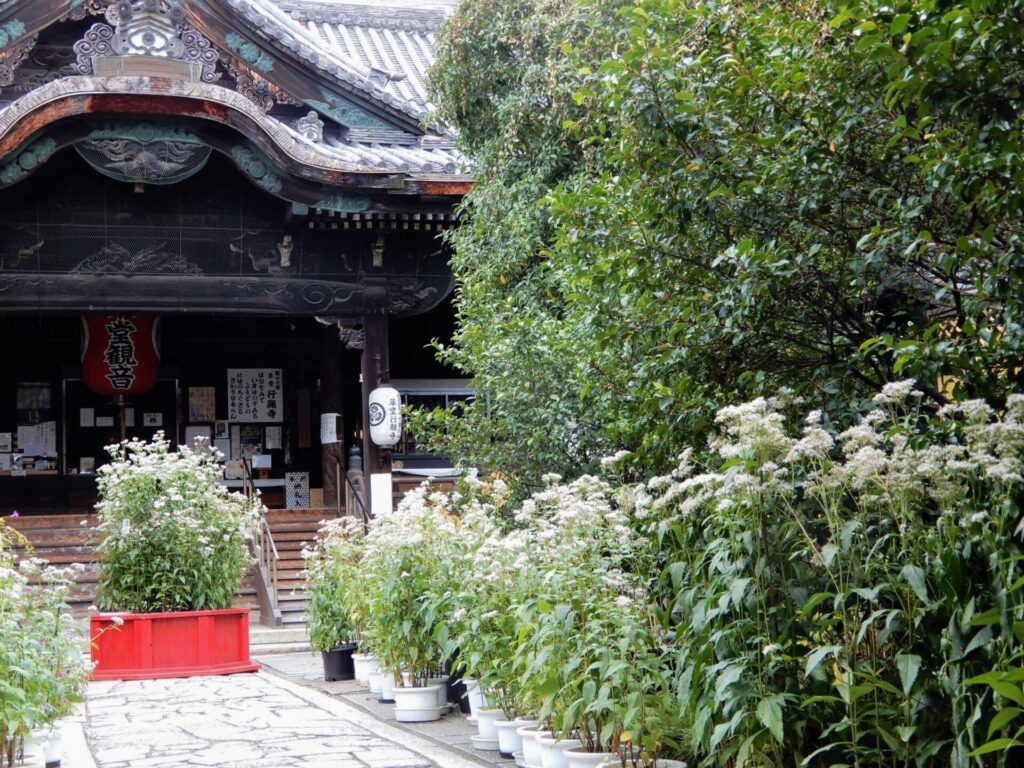
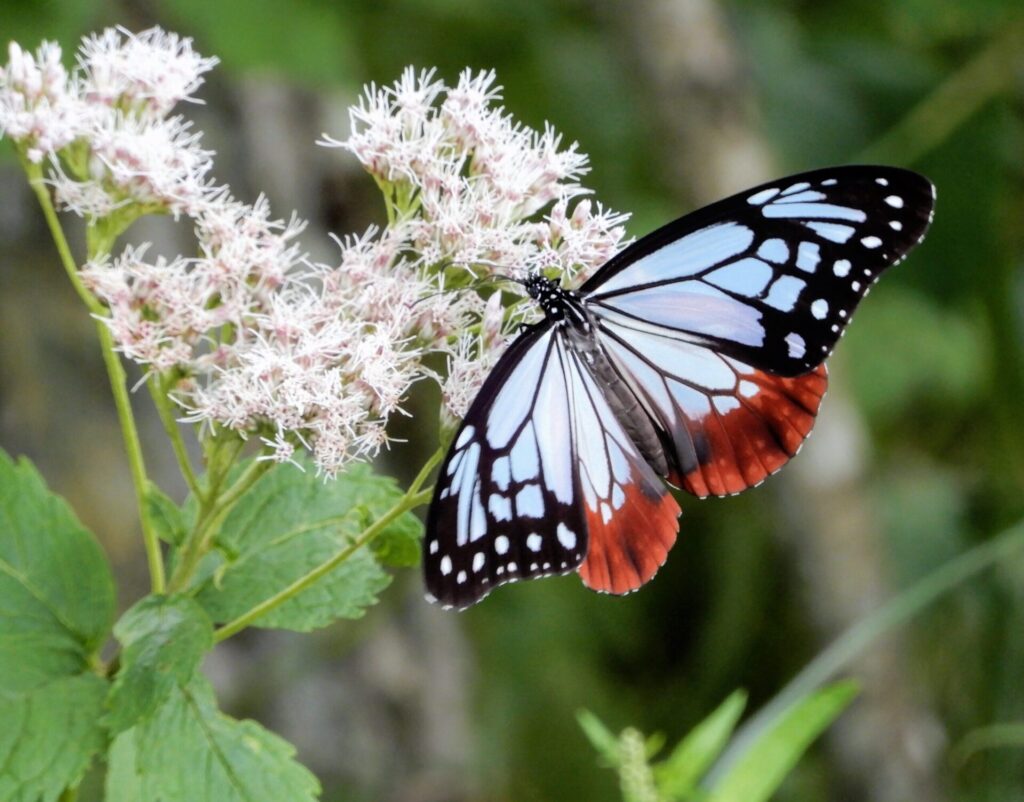
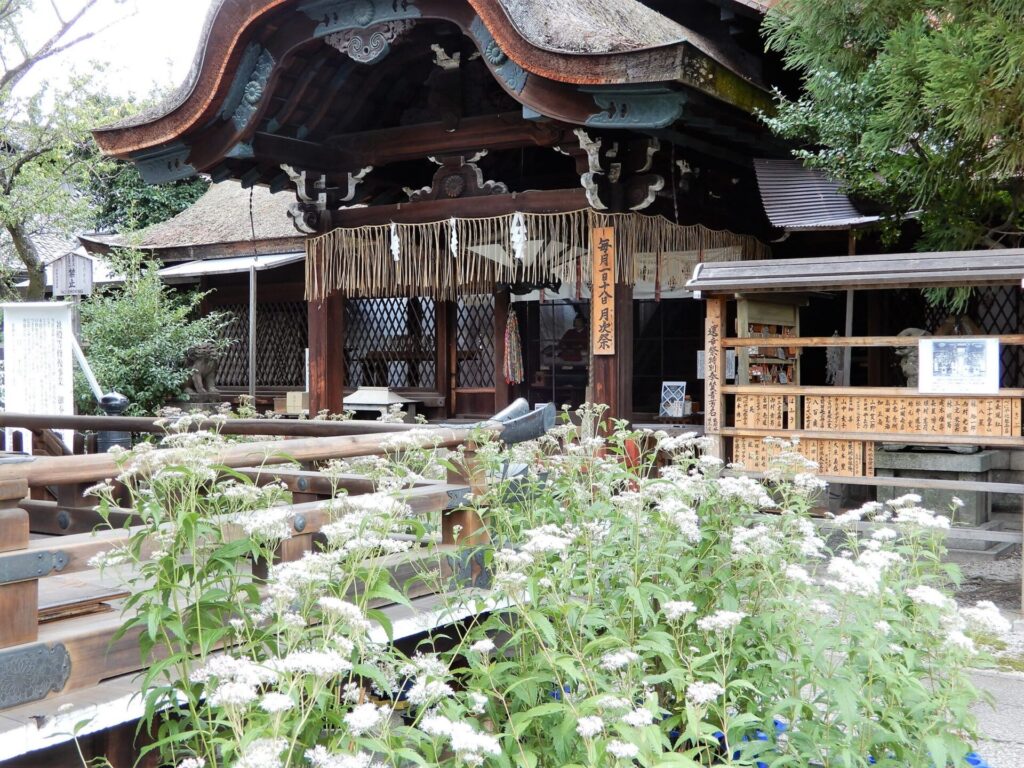
In October, this area is decorated with flowers fujibakama in a pot. The fujibakama is one of the seven autumn flowering plants in Japan. In Kyoto, actions to preserve this flowering plant threatened with extinction continue by locals. It is recommended to visit Gyogan-ji Temple (commonly known as Ko-do Pavilion) and the nearby Shinto shrine, Shimogoryo-jinja to admire the fujibakama in peace. If you’re lucky, you’ll be able to see there too asagimadara, a migratory butterfly that travels long distances (around 2,000 kilometers). They come to suck the nectar from the flowers of fujibakama.
Mumei-sha
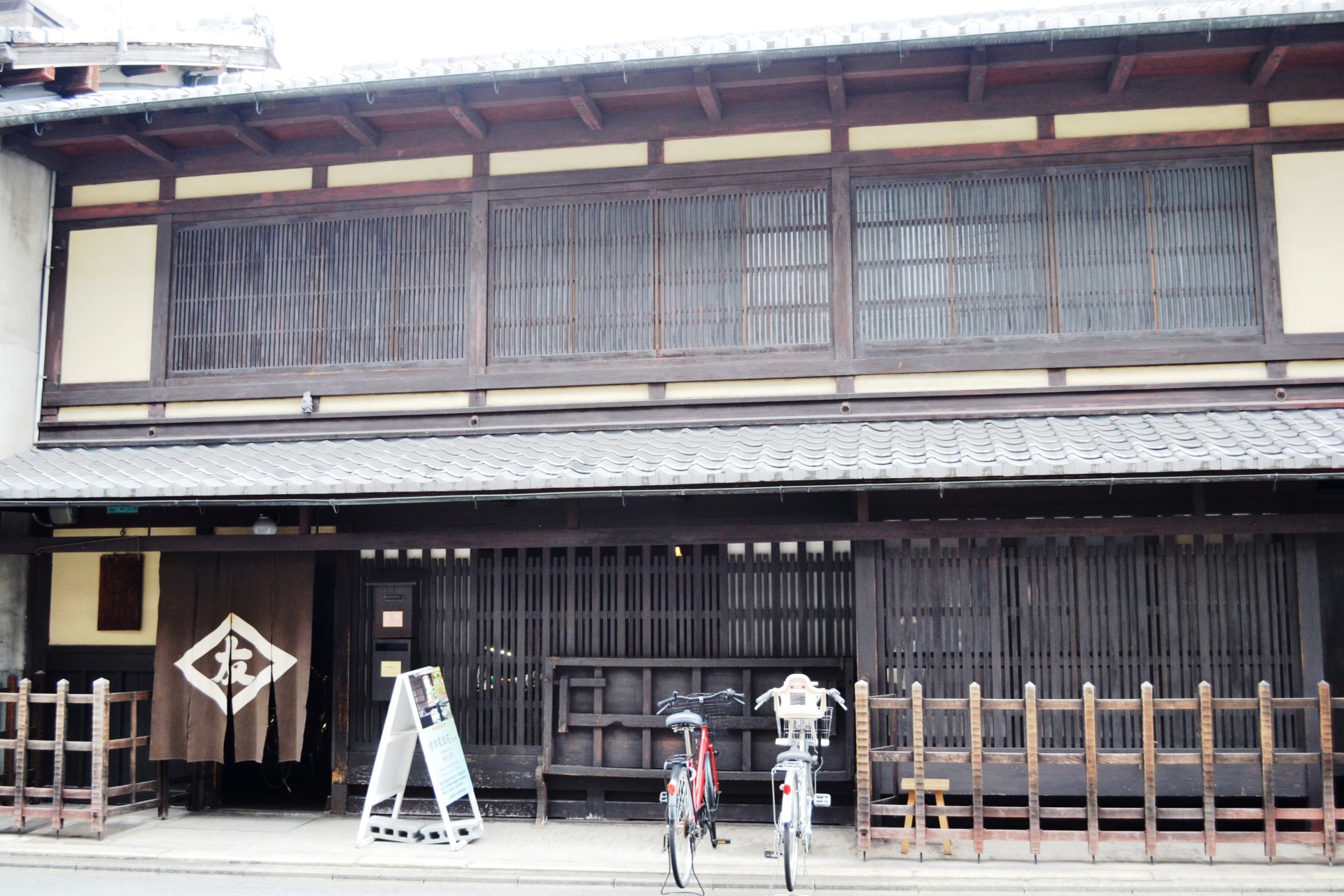
If you are interested in the traditional Japanese house called machiya, how about visiting this “Mumei-sha” house built in 1909? It is located on Shinmachi Street, long known for many wholesale houses and merchants. kimono, traditional Japanese clothing. It belongs to the Yoshida family, a white fabric wholesaler family.
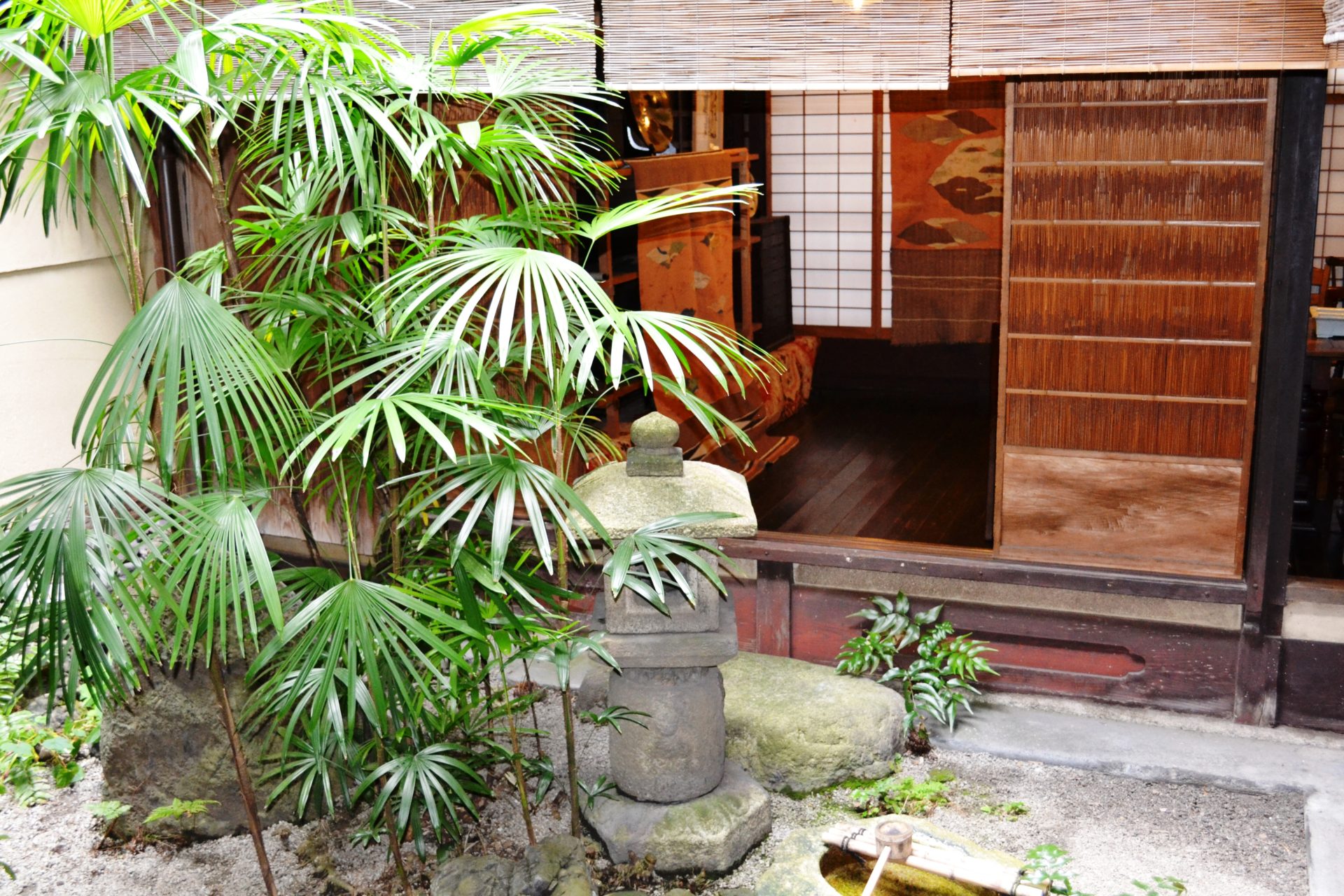
This courtyard with a stone lantern and small palm trees is surrounded by three rooms. It is slightly dark and called a “shady garden”.
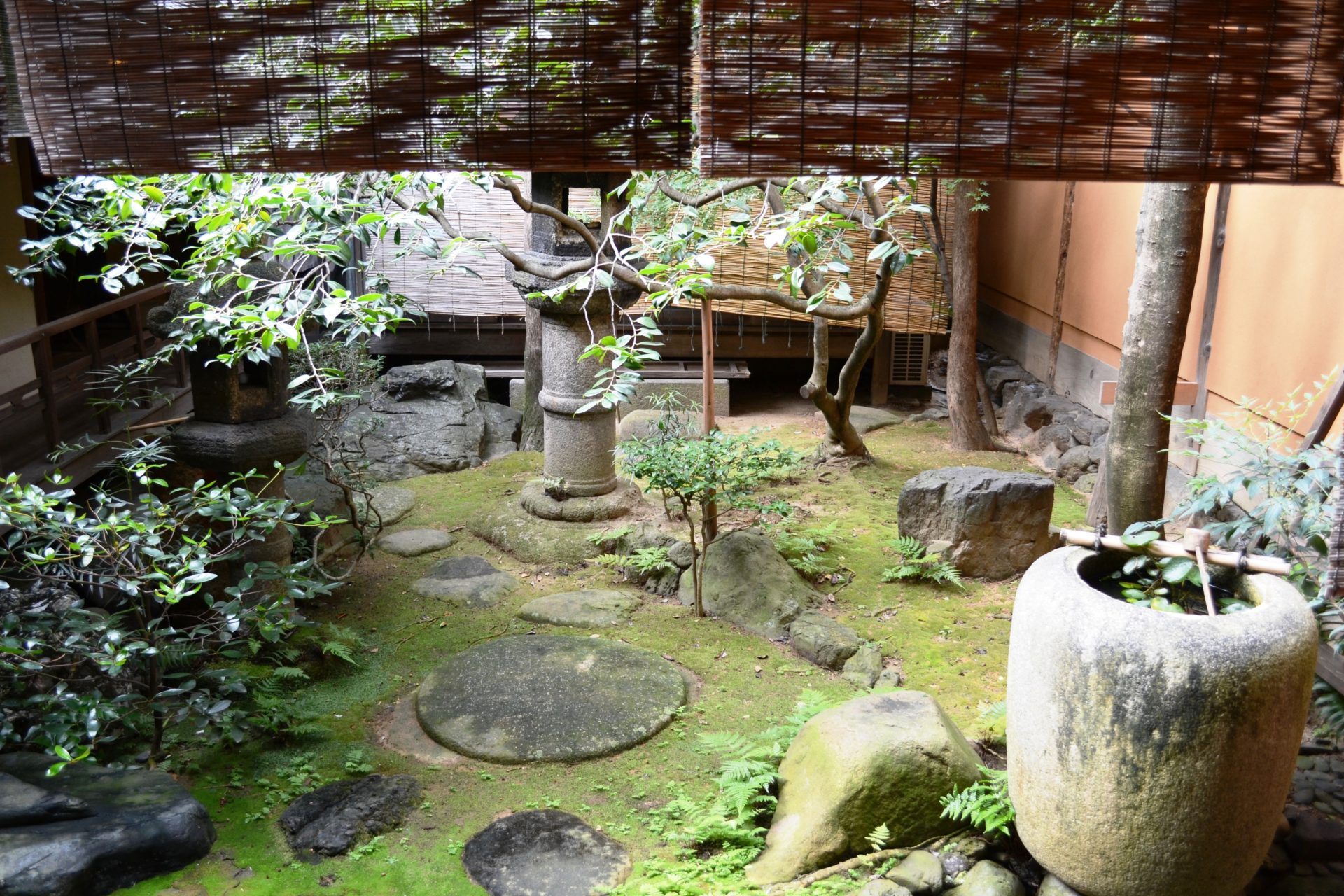
At the back, there is a room into which guests are introduced. It overlooks the “sunny garden”.
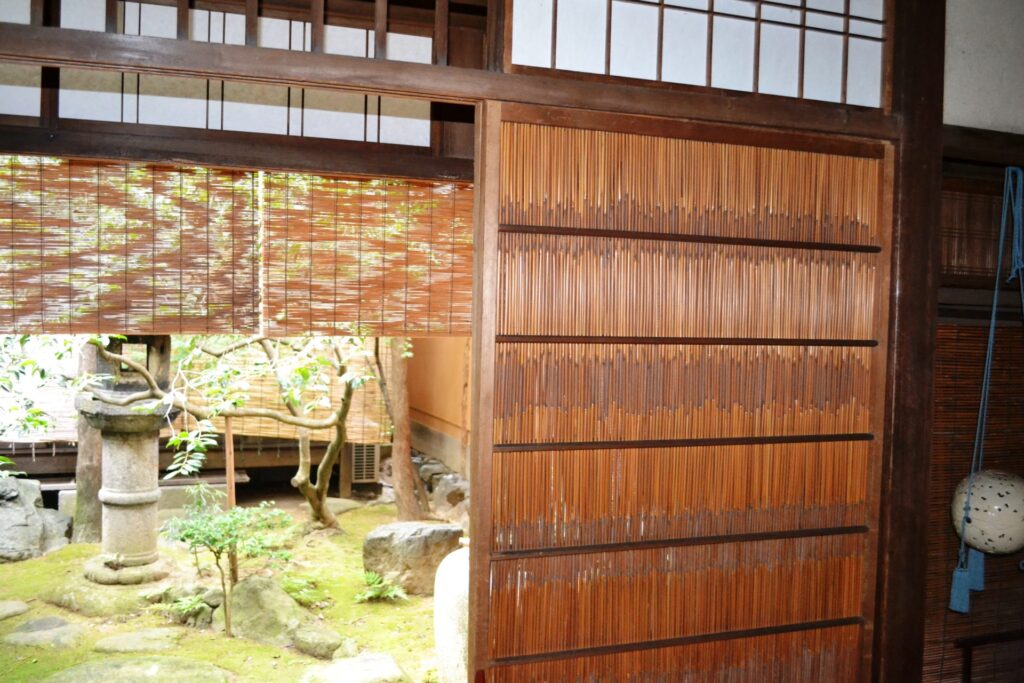
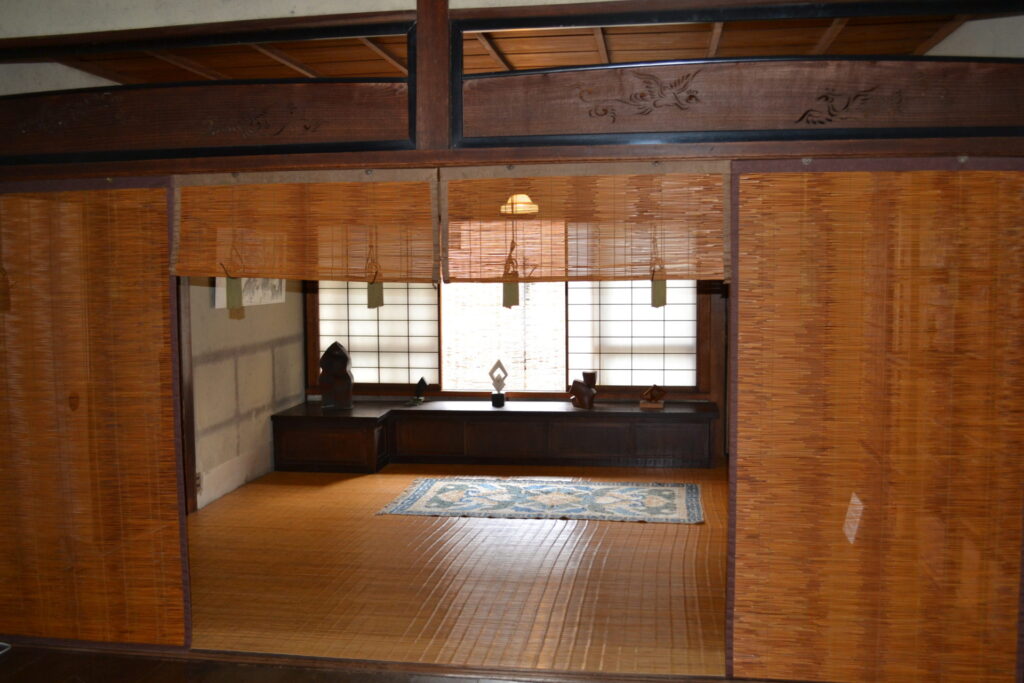
In traditional Japanese houses, movable partitions are changed during the change of season twice a year in summer and winter. For summer, this is done around June before the rainy season. There’s a trick to making the Kyoto summer heat a little more bearable. Can you find this tip passed down from generation to generation?
- The entrance ticket price for Mumei-sha is 2,000 yen. Payment is made in cash only.
- This establishment is only open on Thursday, Friday and Saturday. Visits are possible three times: from 10 a. m. to 11 a. m. , from 1 p. m. to 2 p. m. and from 3 p. m. to 4 p. m. However, closures for renovation work are frequent, so it is best to check the calendar on the website beforehand.
- Photos are allowed with cell phones.
- In order to preserve cultural property, socks are required for the visit.
- Map
Hachiku-an
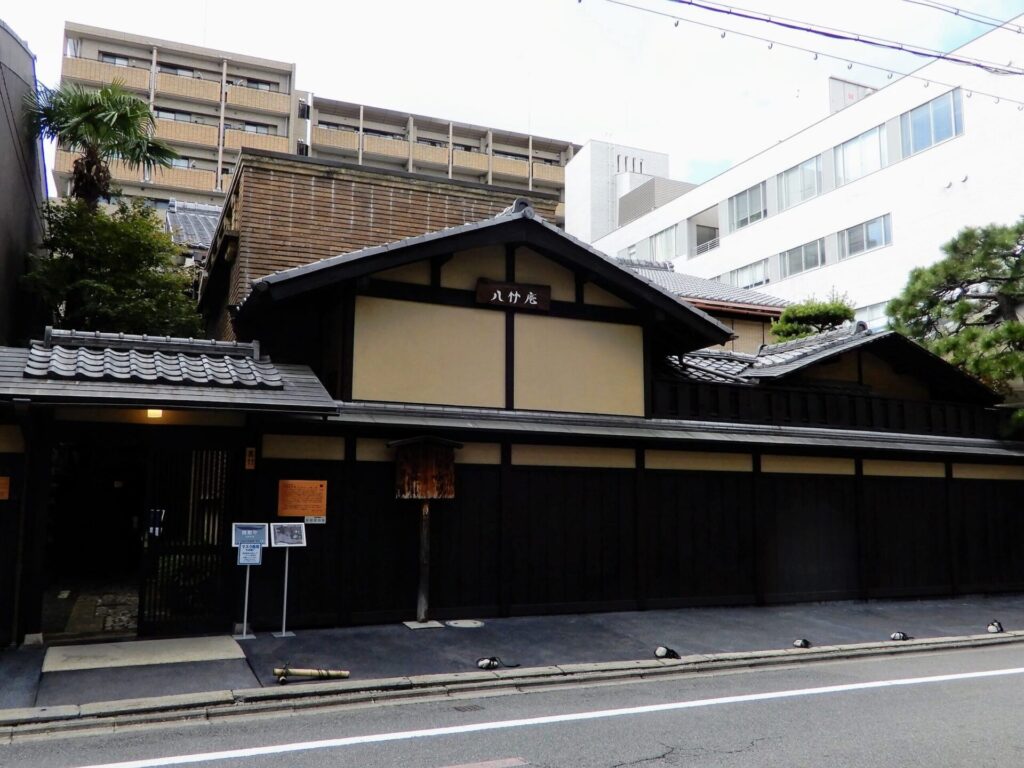
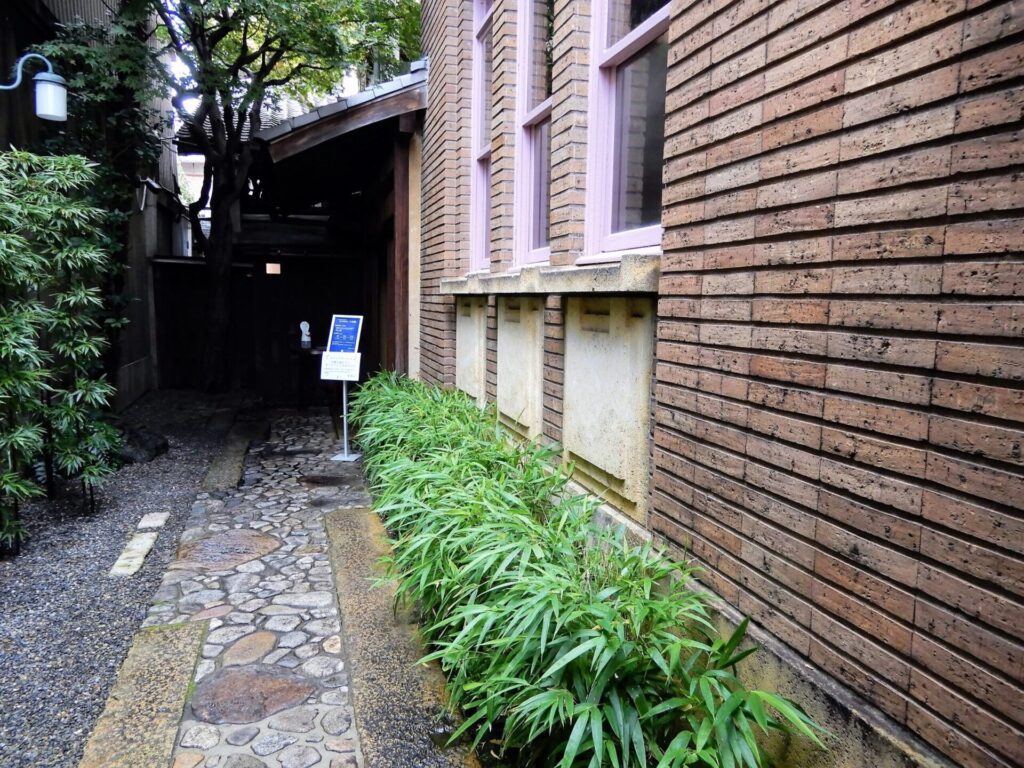
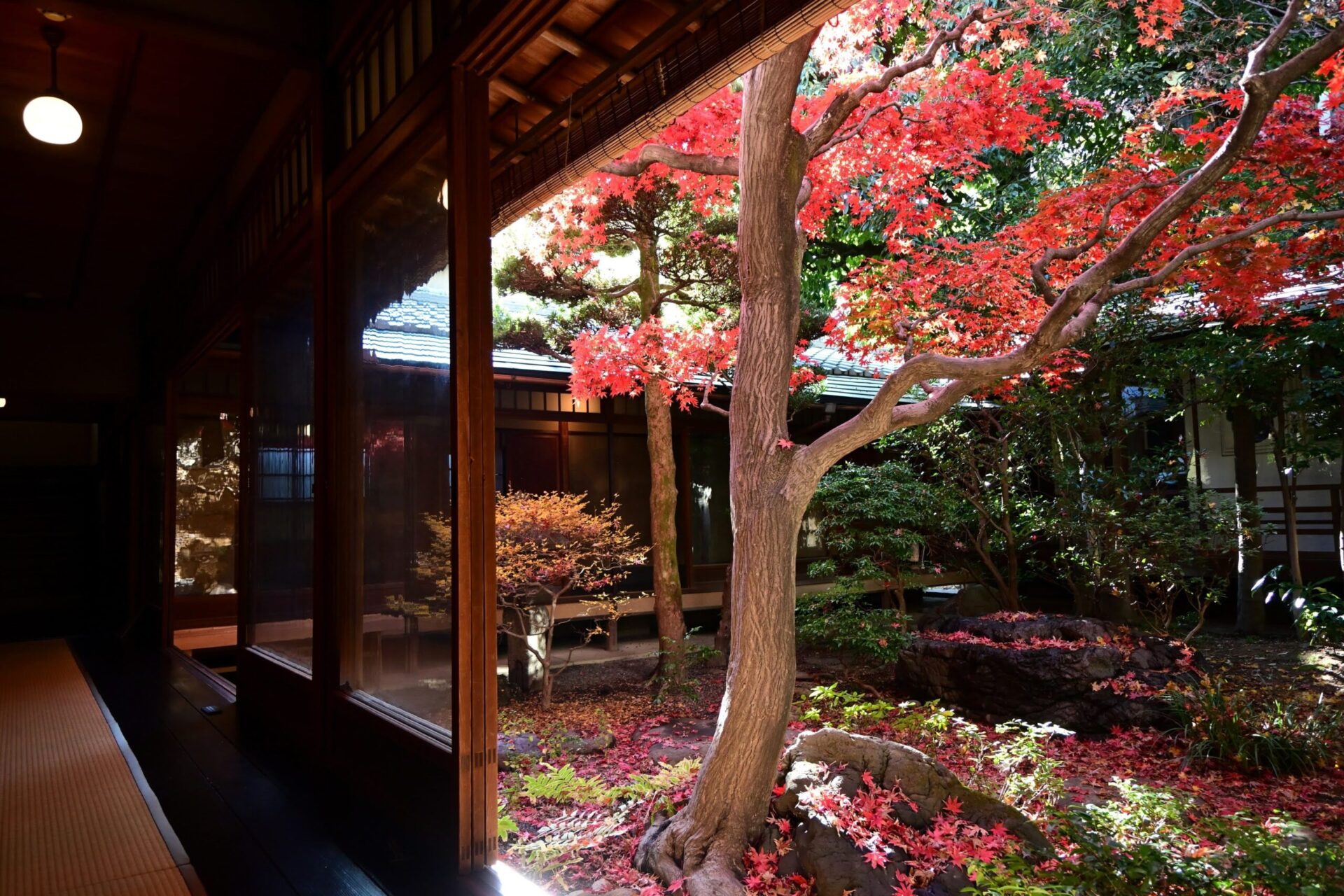
Built in 1926, Hachiku-an (former residence of the Kawasaki family, merchants of kimono) is a machiya located in the heart of the city. She risked being demolished like others machiya, but now efforts are being made to preserve it to pass on its historical value to future generations. What differentiates it from others machiya traditional, it is its half-Japanese, half-Western style. We find a retro-modern atmosphere from the beginning of the 20th century in the Western-style rooms.
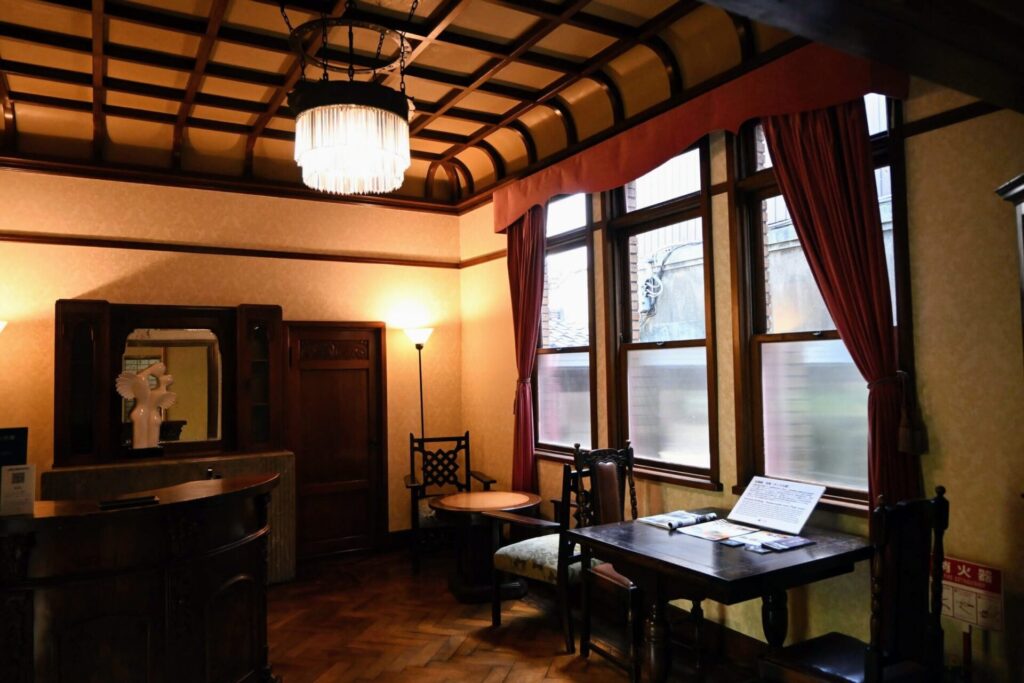
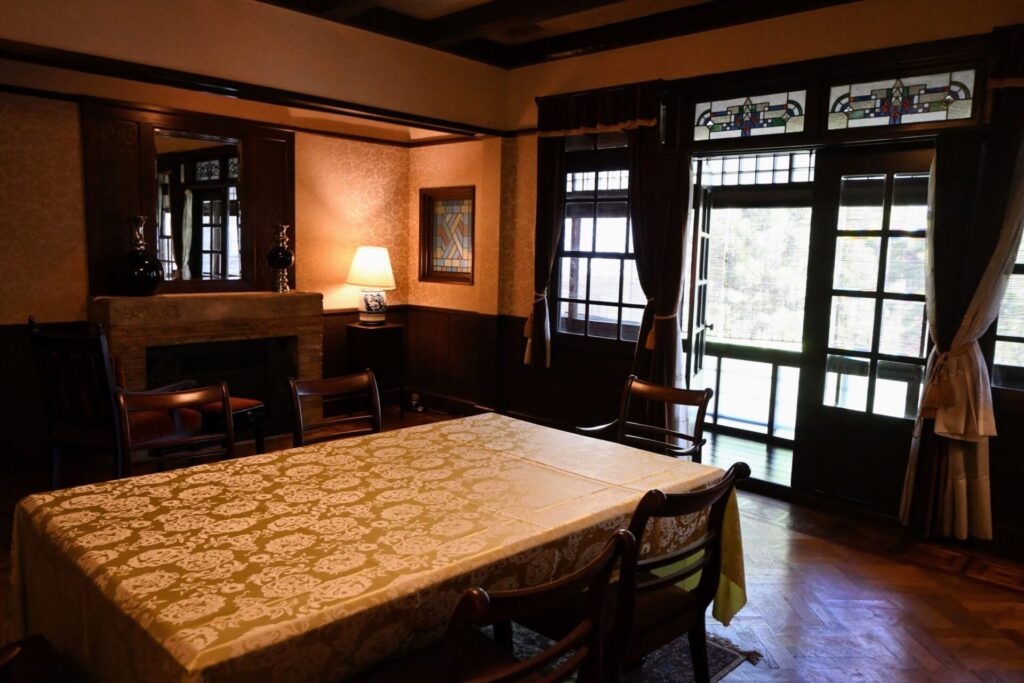
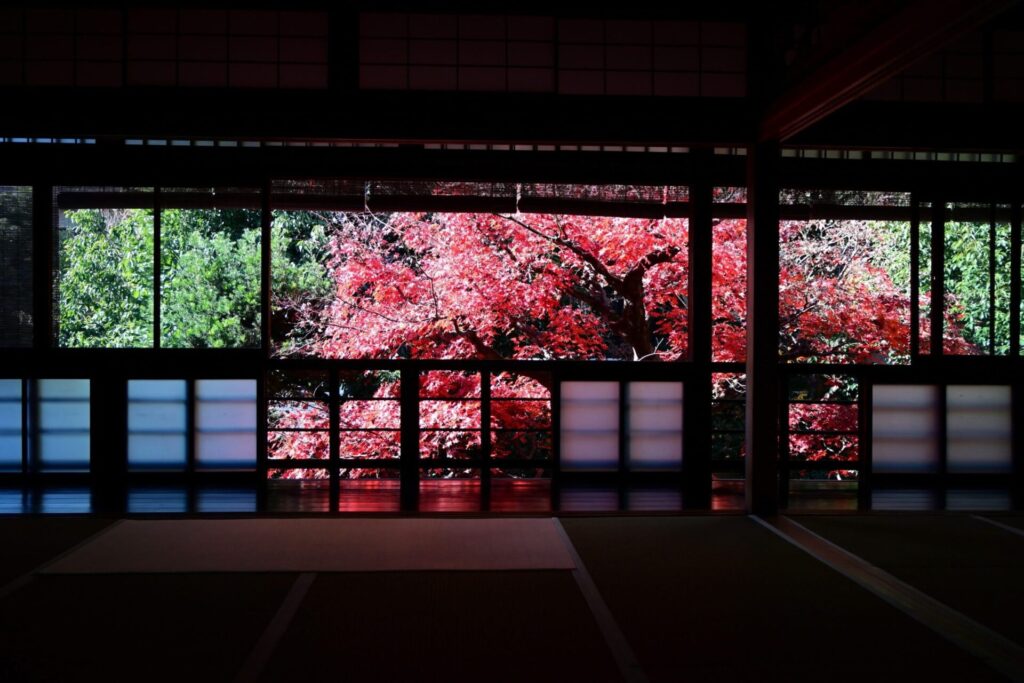
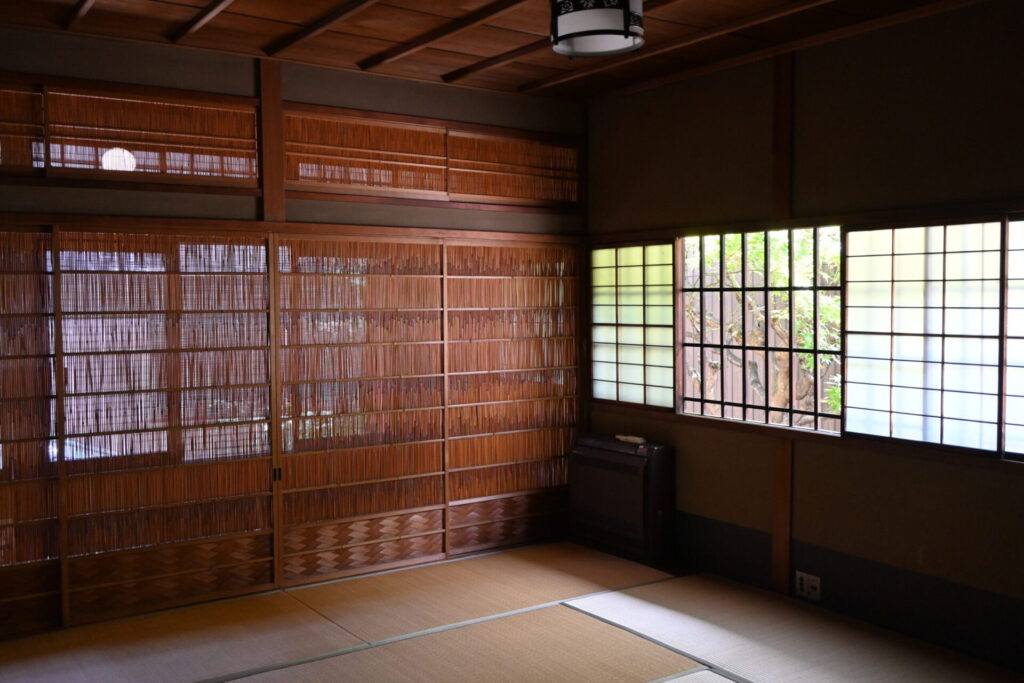
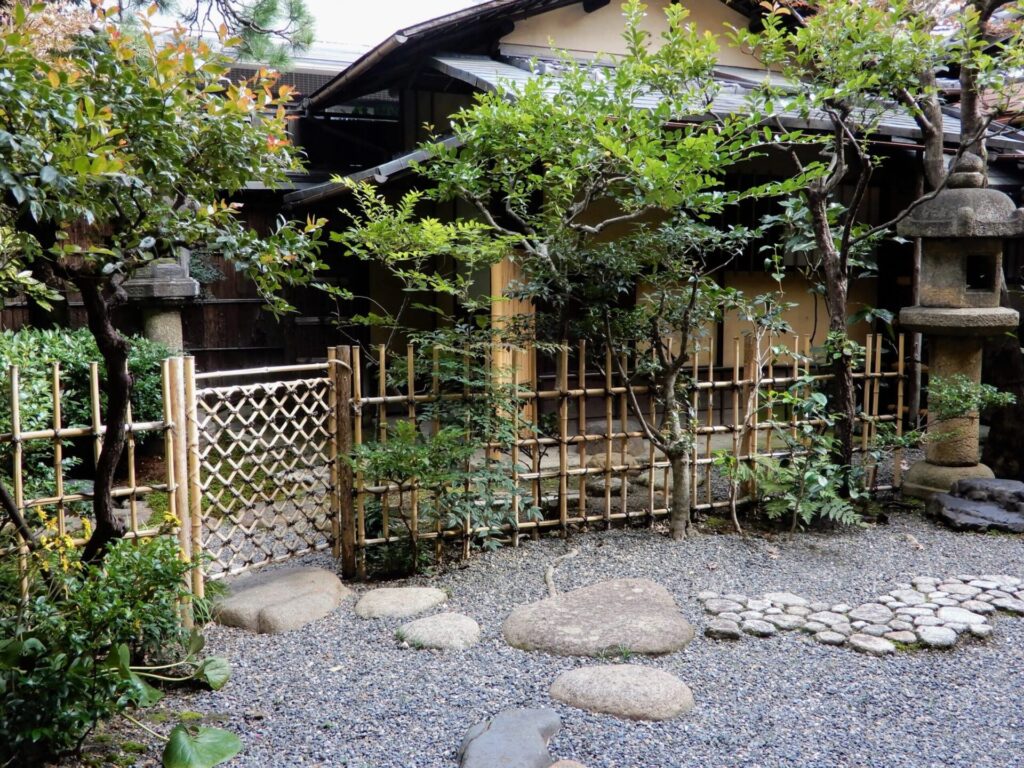
The court of machiya creates an atmosphere of calm. Here, maple trees are planted near the eaves so you can admire scenery through the branches. Stones of various sizes and colors are ingeniously arranged on the ground and give an aesthetic touch to the courtyard. Another small garden is set up in front of the tea pavilion. It’s also beautiful.
- The entrance ticket price for Hachiku-an is 1,700 yen.
- It is closed on Thursday. There are also irregular closures.
Kyoto-gyoen Park
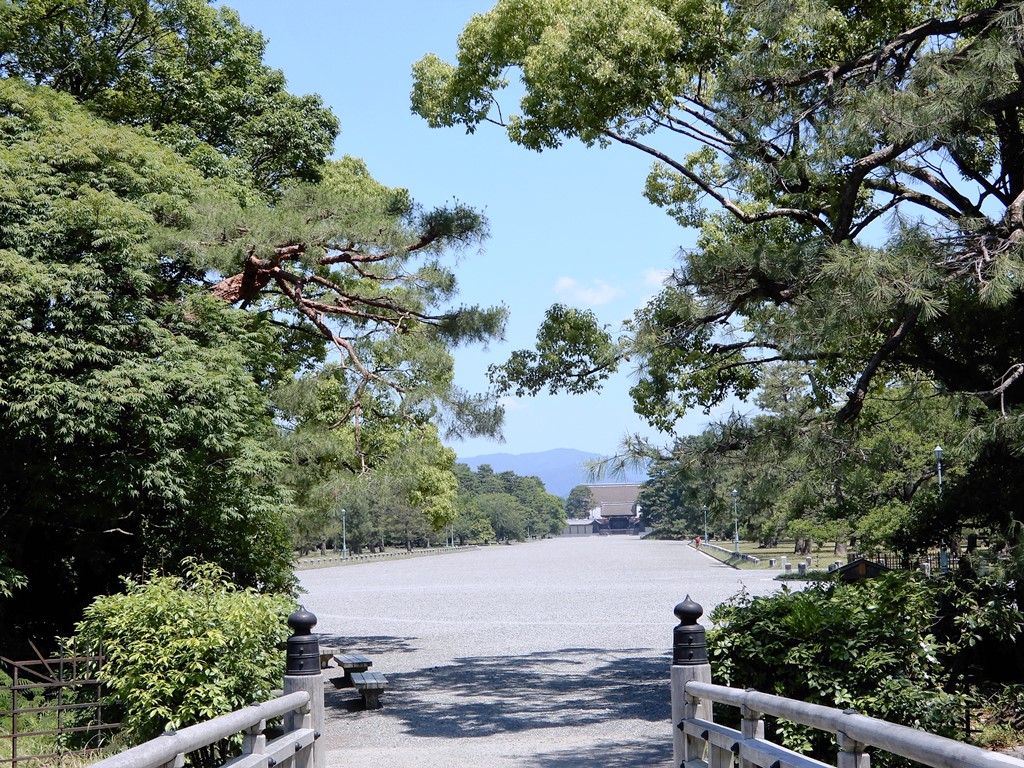
Kyoto-gyoen Park is an oasis for Kyoto residents. It is located in the city center, a 20-minute walk from Nijo Castle. It measures 700 meters from east to west and
1,300 meters from north to south. You will be surprised that there is such a large plot of land in the city center. During the Edo period, the residences of nobles were lined up there. There are still many historical buildings and remains such as the Kyoto Imperial Palace, noble residence gardens, outer gates, etc. The park also contains natural treasures, such as around 50,000 trees, wild birds, insects and mushrooms. How about taking a walk there and tasting the beauties of each season?
The Kyoto Imperial Palace served as the government and daily residence of emperors for over 500 years. It was here that historic meetings were held in the late Edo period and successive emperors were enthroned. By visiting its buildings in order, you can see the changes in style and architecture. And don’t miss out on admiring the Japanese gardens.
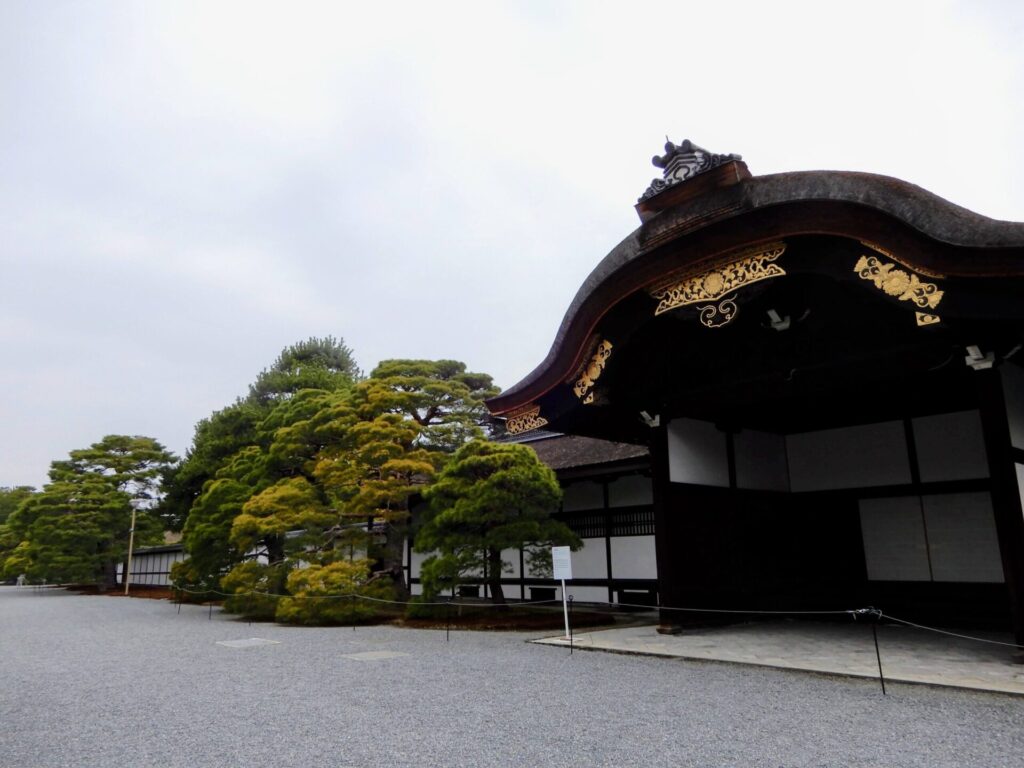
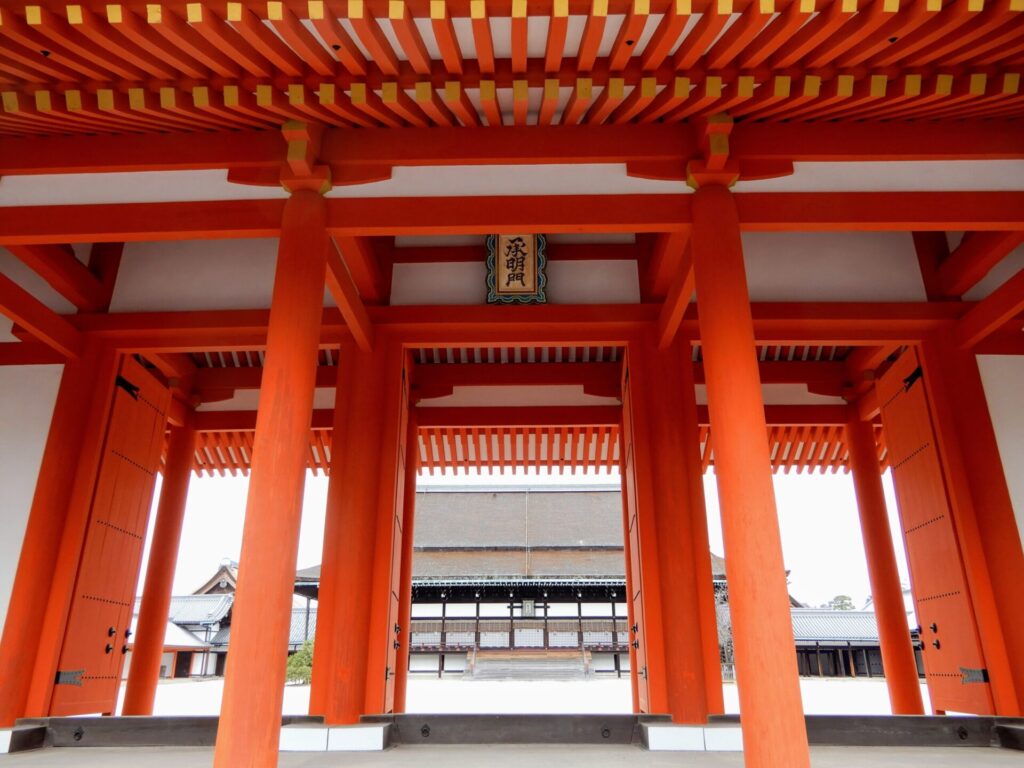
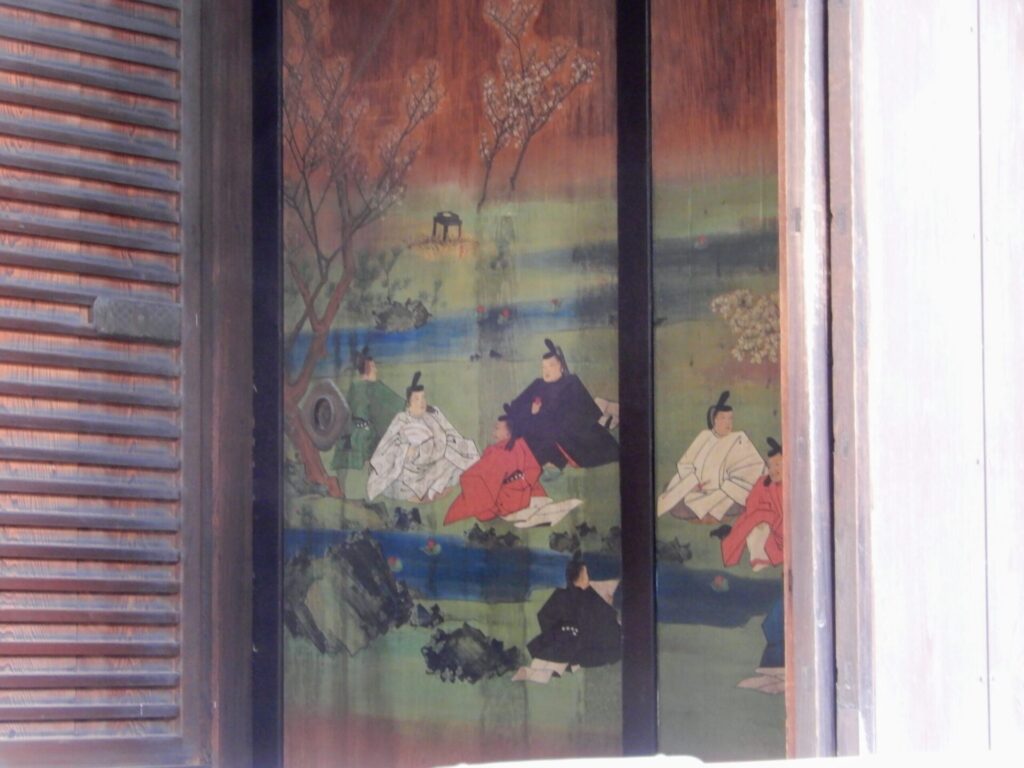
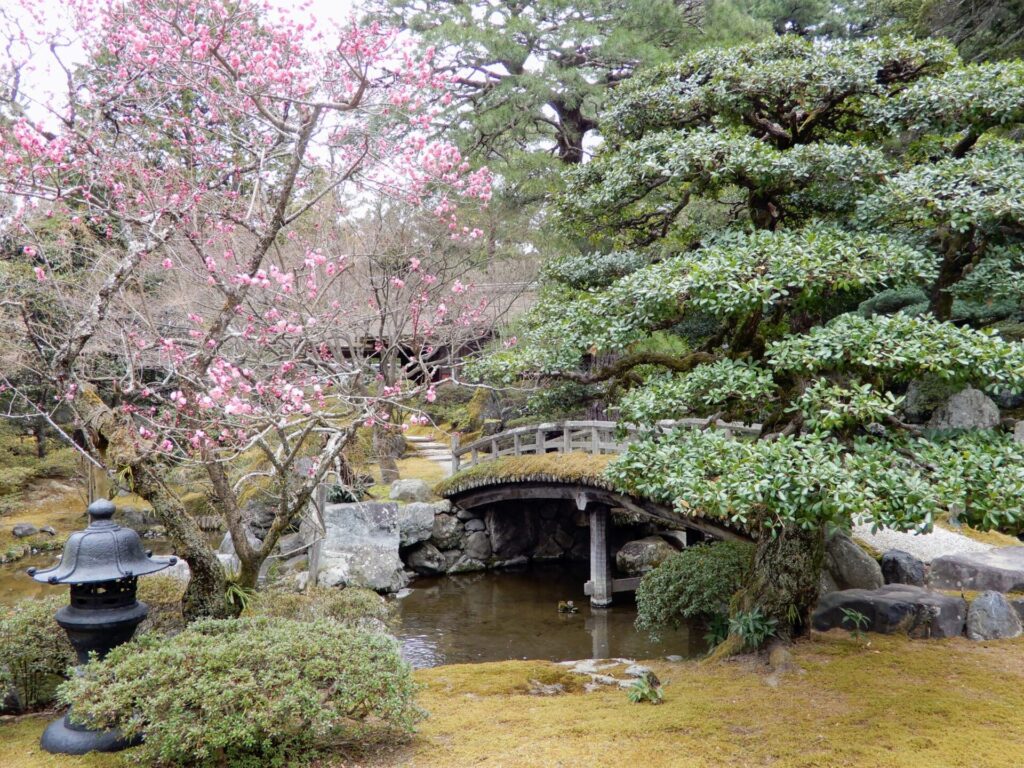
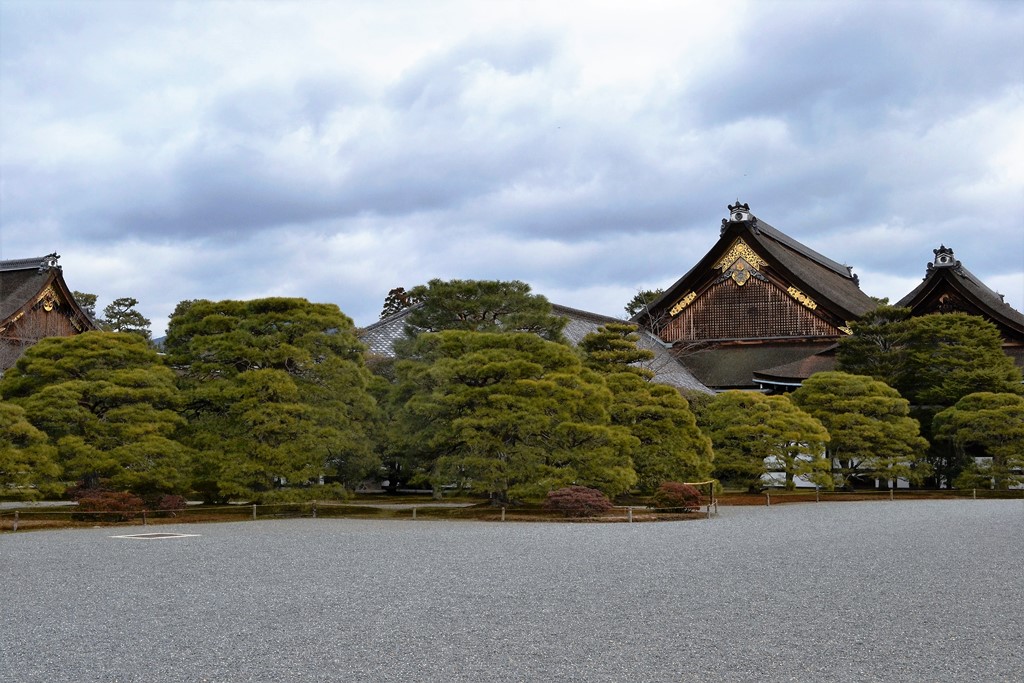
The beauty of well-tended pine trees can also be seen at the Imperial Palace in Kyoto. The pines are pruned moderately to blend in well with the landscape. The various spring and autumn works are essential to maintain these balanced forms. I have the impression that pruning pine trees is an art, which requires great mastery from gardeners.
- Entrance to the Kyoto Imperial Palace is free.
- Kyoto Imperial Palace tours are open to the public without reservation. You visit it by hanging a tag around your neck after checking your luggage at the entrance.
- It closes on Monday.
- Entry into each building is not permitted.
- Practical shoes for walking are recommended, because the access route is stony.
- Map
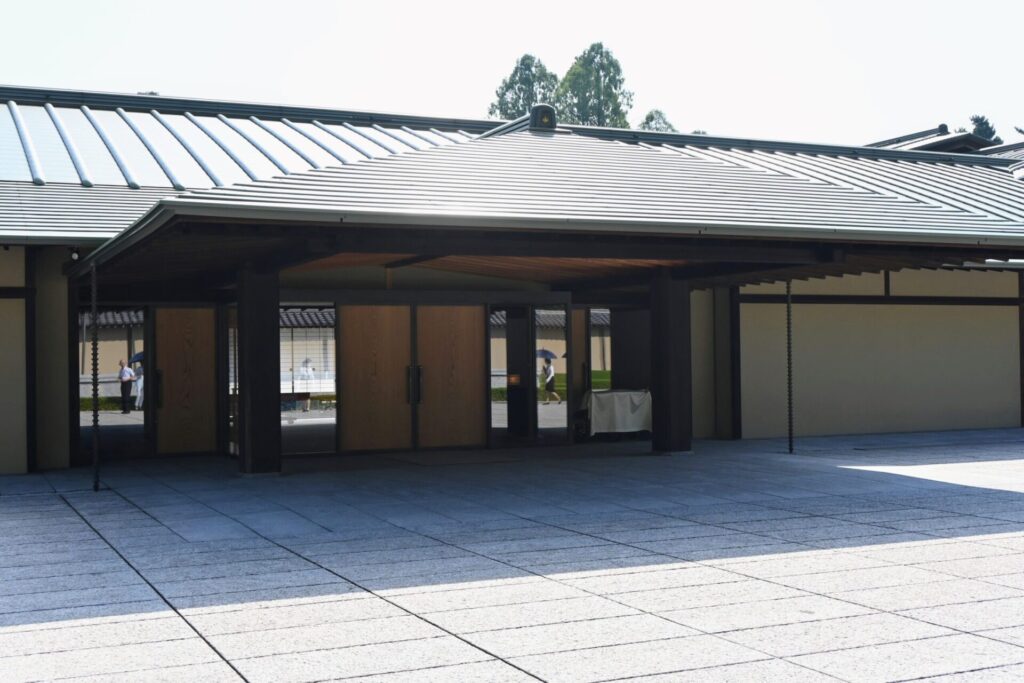
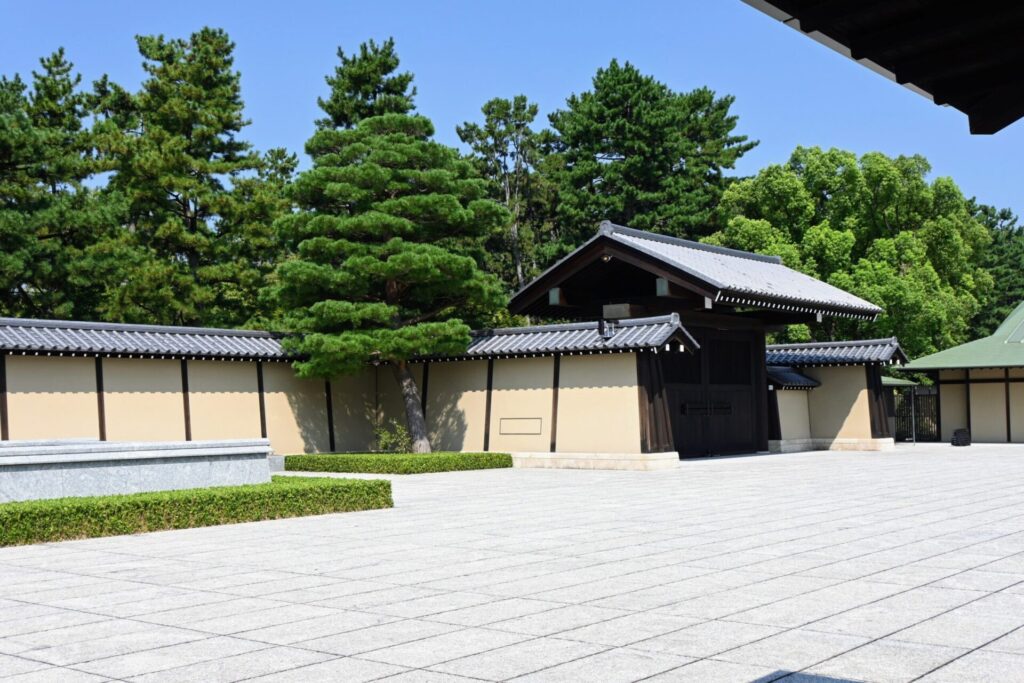
Next, let’s go east to the Kyoto Imperial Palace. In a corner surrounded by walls made of mud and earth, tsuijibei, is the Kyoto State Guest House. It serves as a reception for distinguished foreign guests, as does Akasaka in Tokyo. At first glance, it is Japanese-modern in style and rather simple. Is it really worth visiting? Of course! You will realize that it has benefited from traditional techniques and the ingenuity of first-class artisans, starting with living national treasures in fields such as carpentry, masonry, gardening, carpentry, bamboo works, etc. Take advantage of the visit to appreciate their masterpieces up close and deepen your knowledge of Japanese culture.
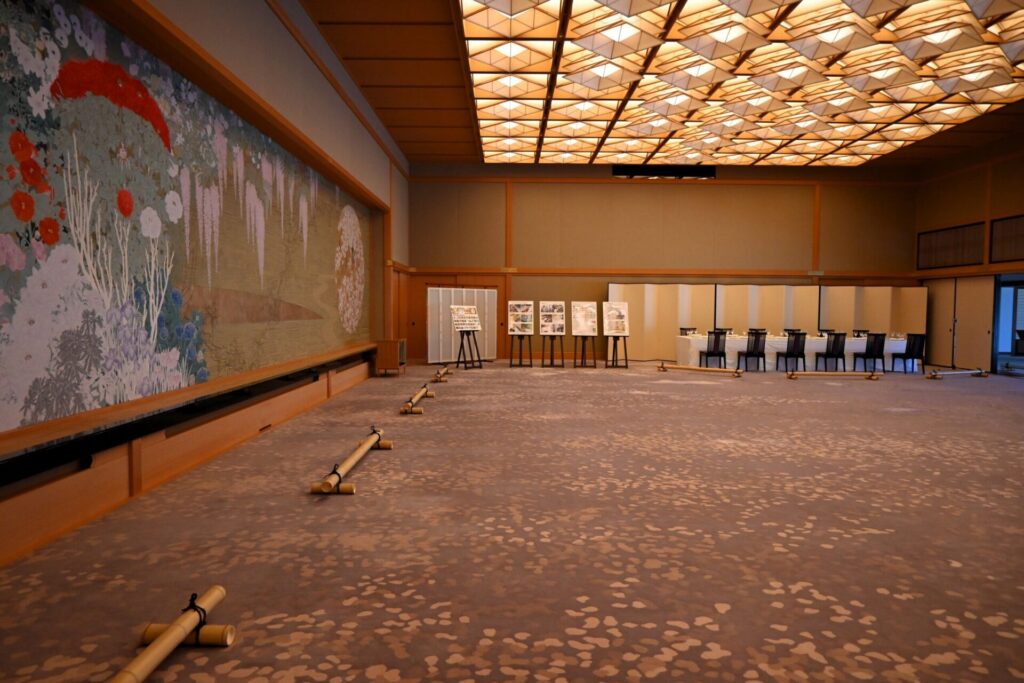
The wisteria room for the western style banquet. Note the tapestry representing 39 kinds of plants or the great carpentry work represented by the lighting on the ceiling.
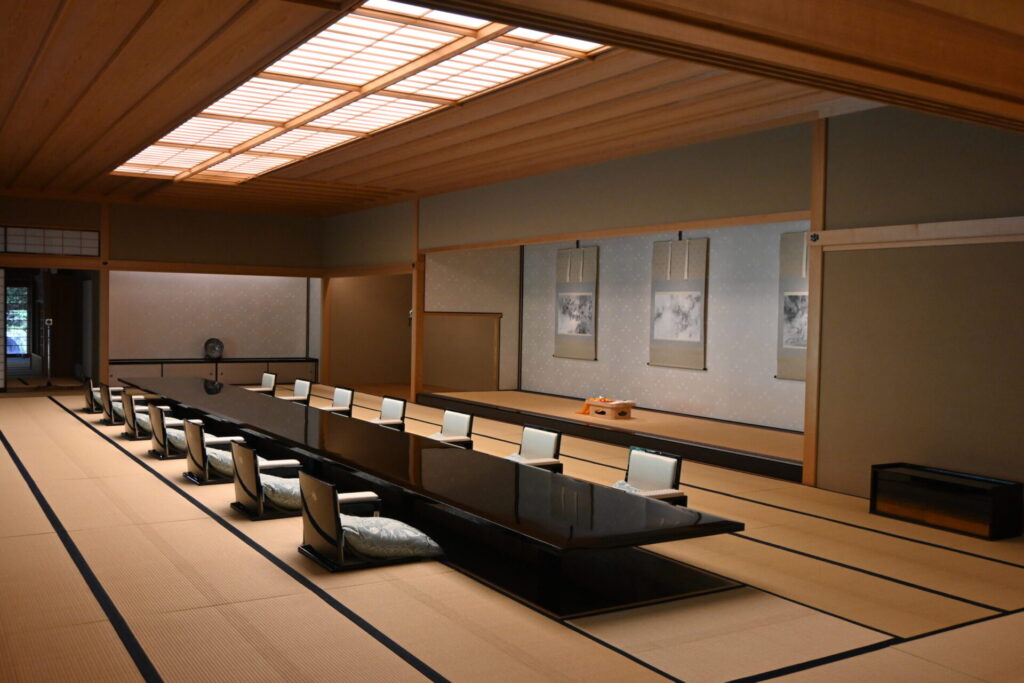
The paulownia room for the Japanese-style banquet. The 12 meter coffee table is made of lacquer and shines like a mirror. Can you find all the paulownia coats of arms dotting this room?
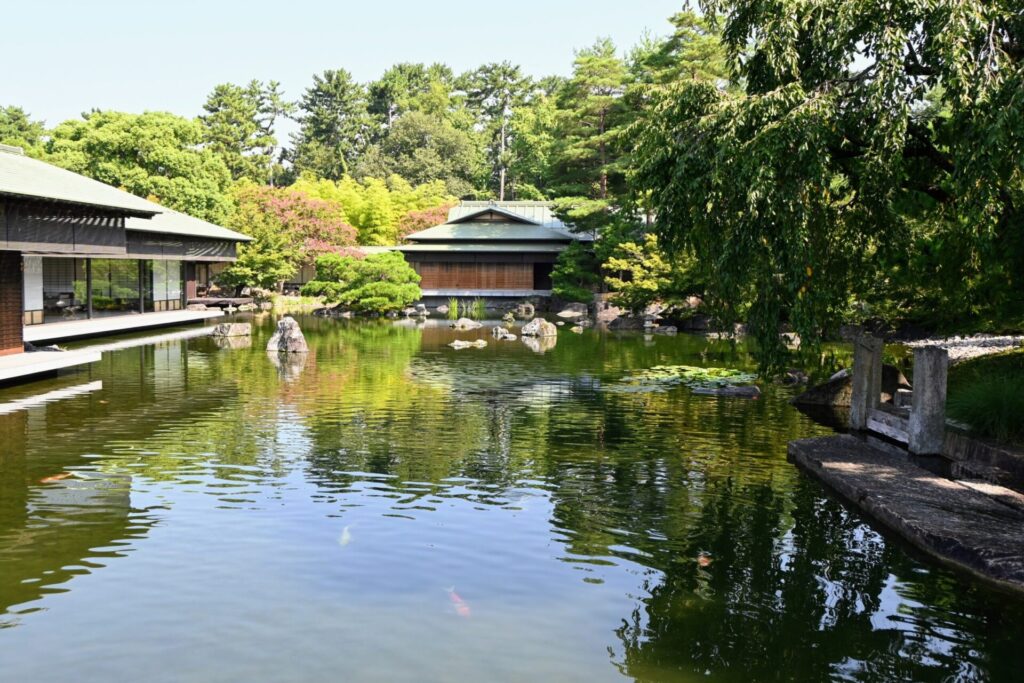
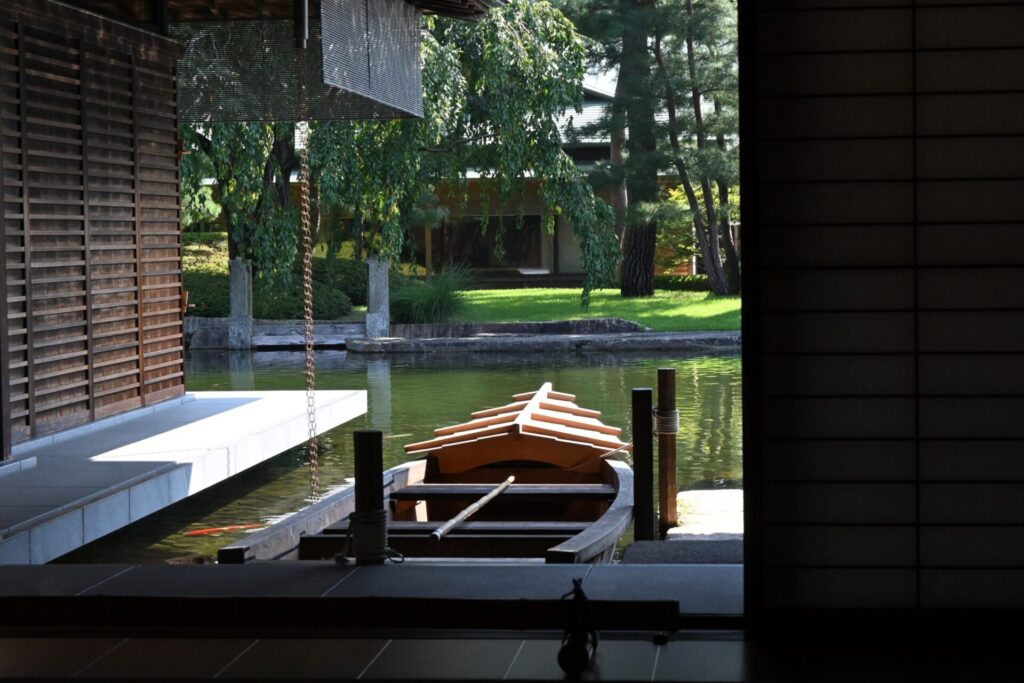
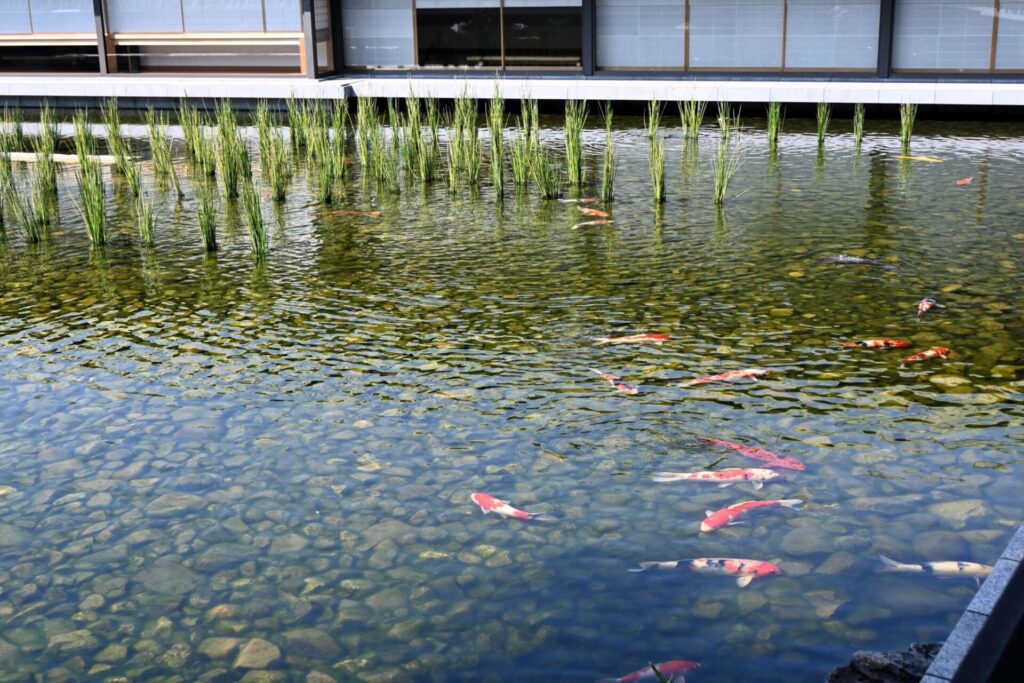
In the garden, the large pond harmonizes well with the surrounding buildings. Ornamental carp callednishikigoithat swim in the pond are very beautiful, like Japanese painting.
- Tours of the Kyoto State Guesthouse are open to the public, except during visits by foreign dignitaries. Children below primary school age cannot enter.
- It closes on Wednesday.
- Guided tours or self-guided tours are possible, but check the schedule on the Kyoto State Guest House website. To visit, you can book in advance on the site, or the same day on site at the west entrance gate. If you book on site for the guided tour, waiting tickets in which the visit time is written are distributed from 9:45 a. m. in order of arrival. Also refer to the following information.
- Map
| Style de visite | Visite guidée | Visite libre sans guide |
| Temps requis | Environ 90 minutes | De 30 à 60 minutes |
| Tarif | 2 000 yens (adulte) 1 500 yens (étudiant) | 1 500 yens (adulte) 1 000 yens (étudiant) |