

Around JR Kyoto Station
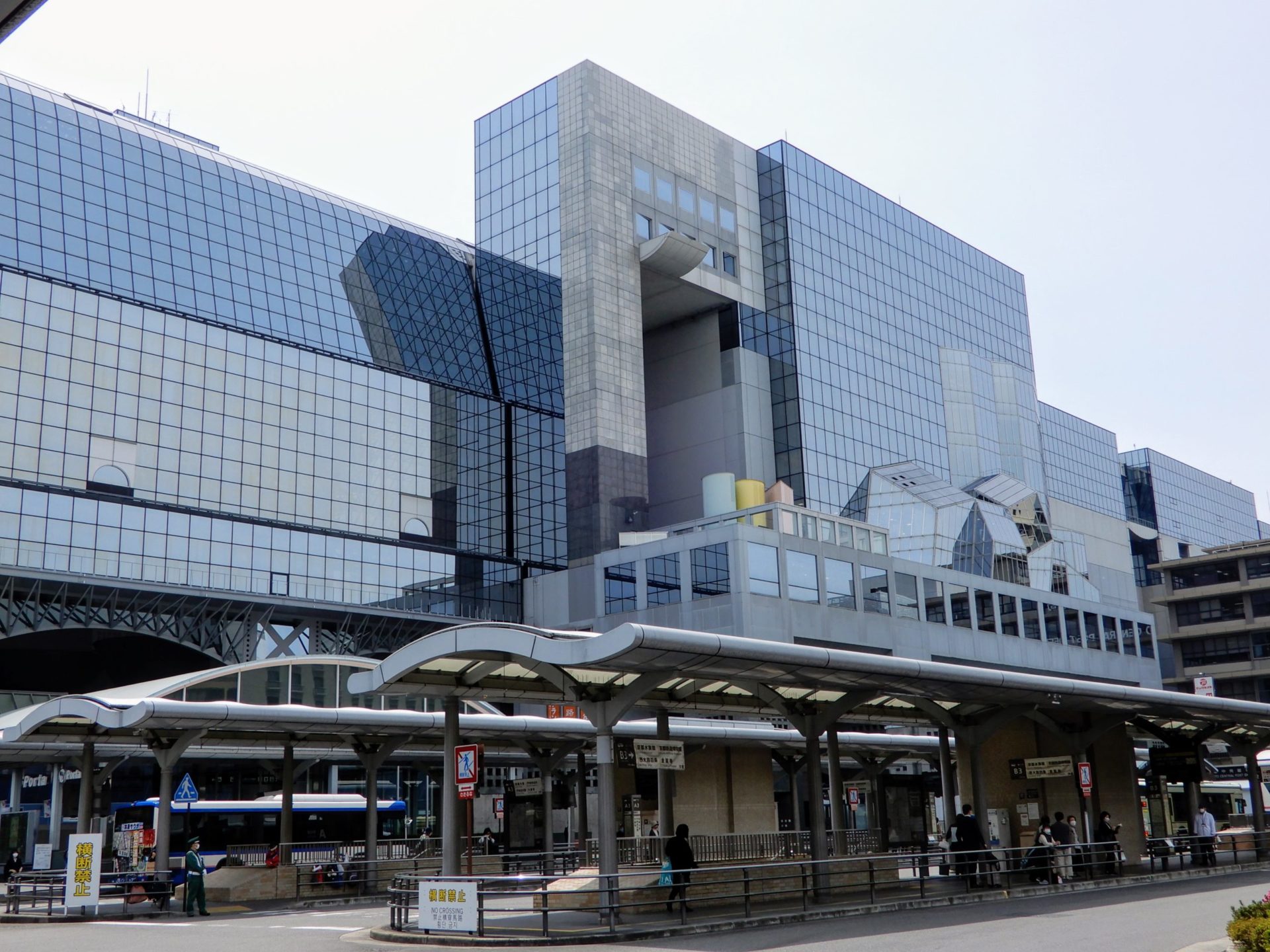
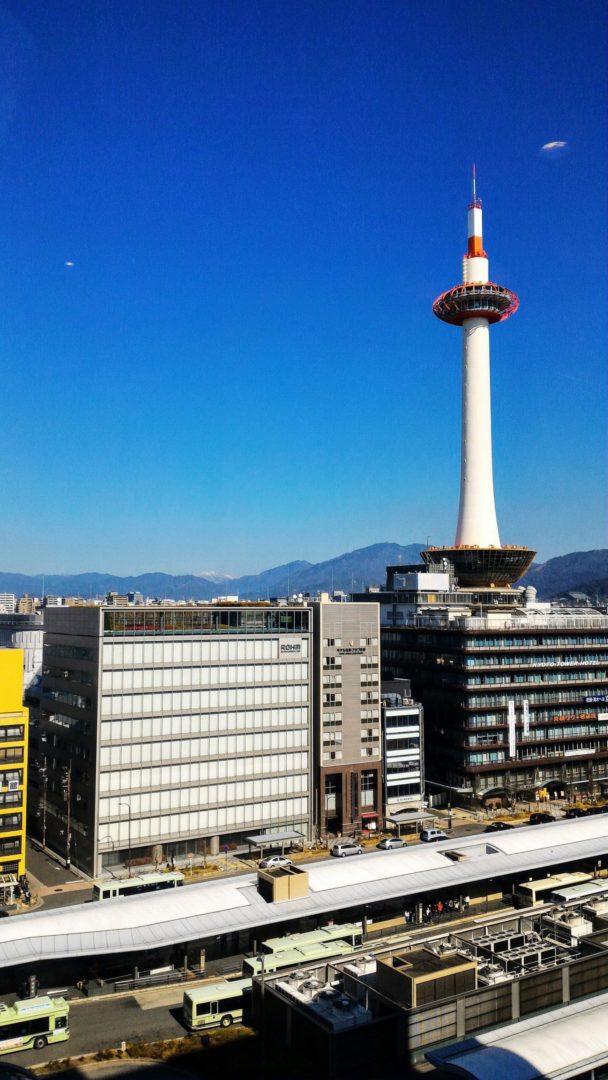
Kyoto Station served by the shinkansen, the lines of the JR and Kintetsu railway companies, and the subway is the gateway to the city. You will be amazed by its very modern style, which contrasts with the traditional atmosphere of the city. The current station, rebuilt in 1997, also serves as a shopping center. There is also a large hotel and a theater. A few steps from the Karasuma-guchi north exit stands an emblematic building of the city, the Kyoto Tower.
- Kyoto Tower has an observation deck 100 meters high offering panoramic views of the city.
- The entrance ticket price to the observation deck is 800 yen.
- Map
Toji Temple
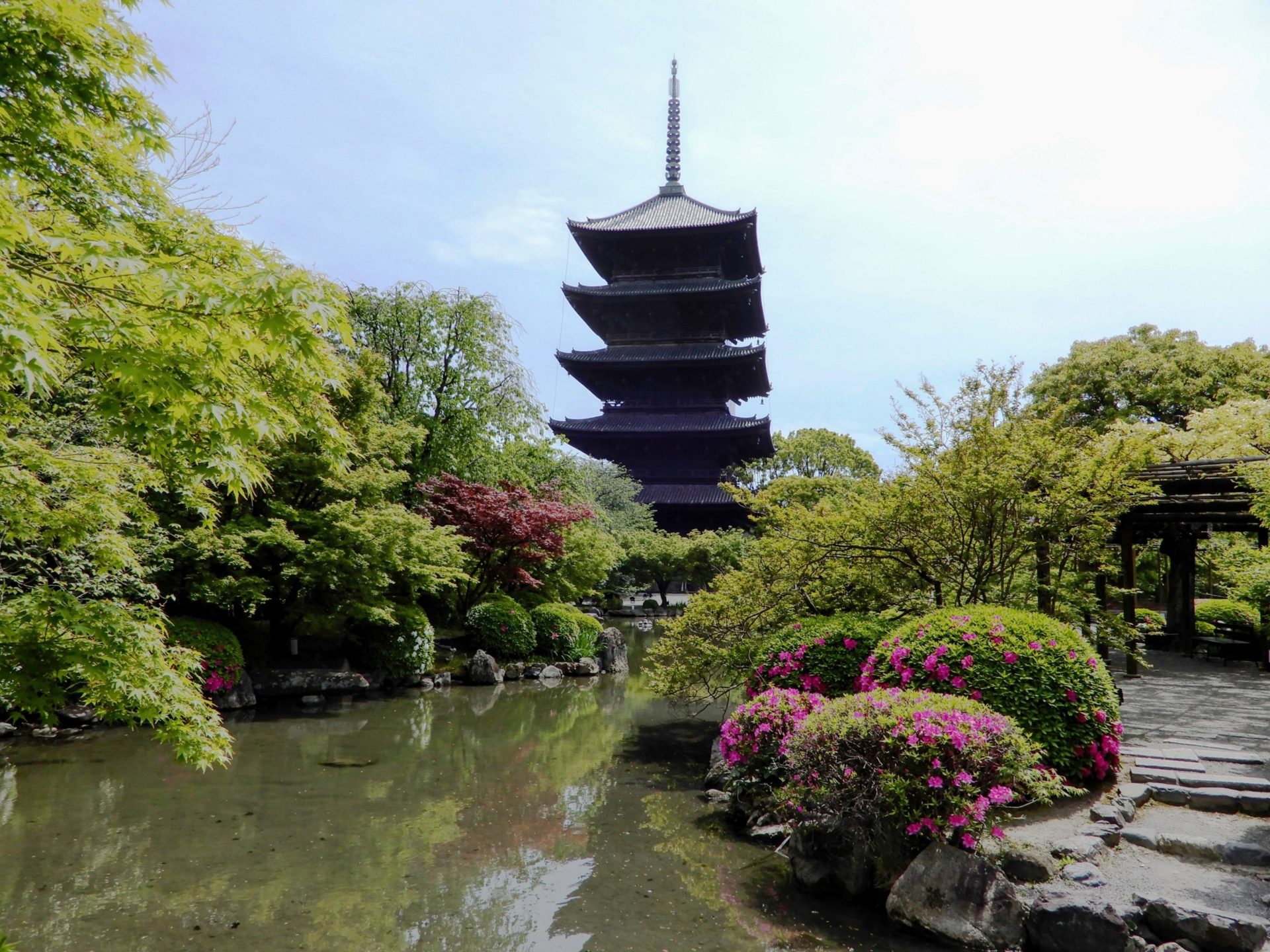
The five-story pagoda of To-ji Temple which can be seen from the window of the shinkansen on the way to Kyoto is another symbol of the city. It is the tallest wooden pagoda in Japan. Located a 15-minute walk southwest of Kyoto Station, To-ji Temple is one of the main places associated with the monk Kukai, founder of the school of esoteric Buddhism.shingon. If you go to Mount Koya founded by Kukai as a spiritual exercise center of the Shingon school, I recommend that you also visit this temple, a jewel of majestic Buddhist art.
To-ji was originally built as a temple for the defense of the nation shortly after the capital moved to Kyoto. However, at the beginning of the 9th century, the leadership of this temple was offered to Kukai, who made it the main center for the dissemination of esoteric Buddhism which was new to the people of the time.
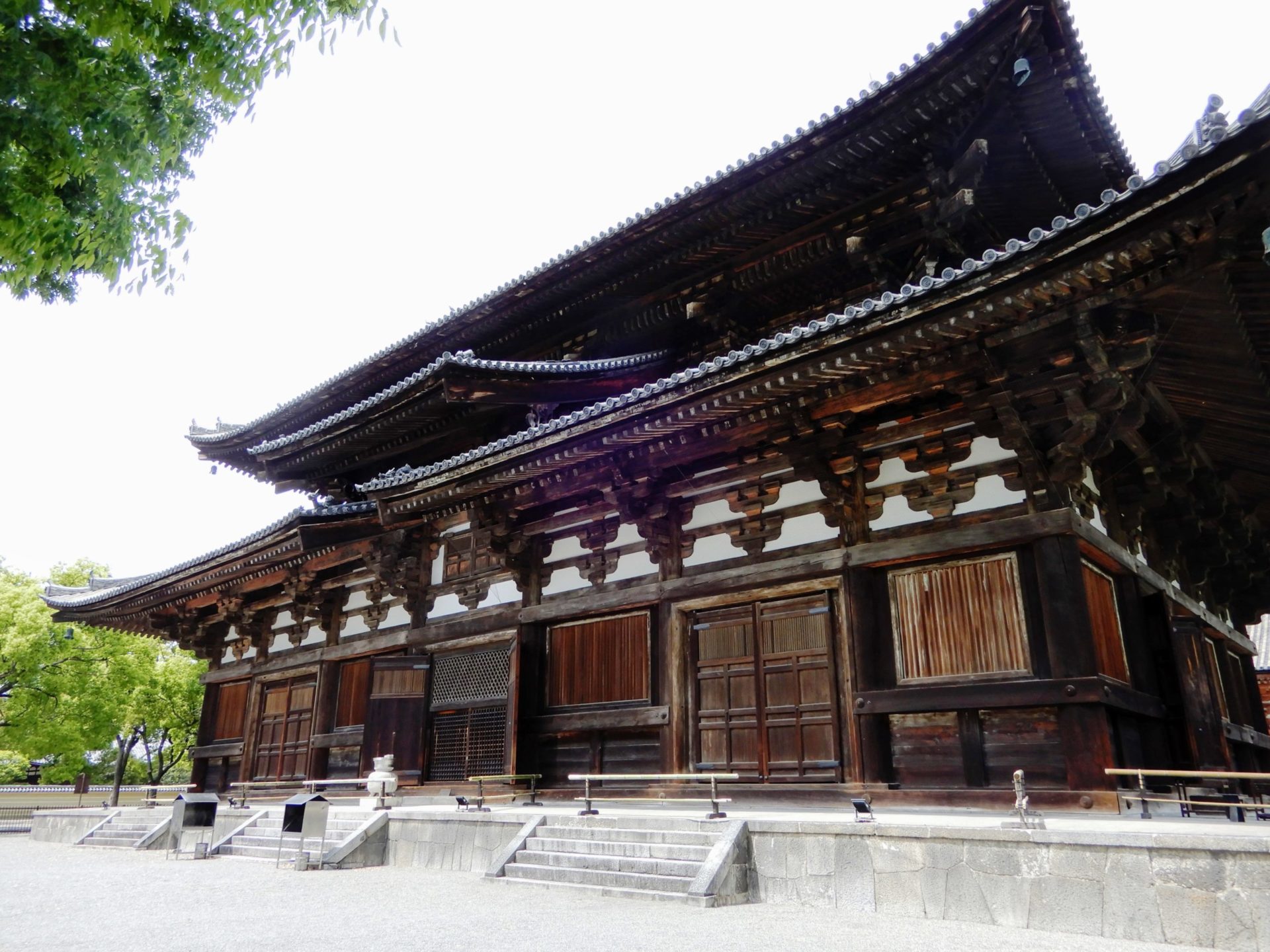
The Kon-do is the main building of the temple. It houses a statue of yakushi nyorai, the doctor Buddha and two statues of his assistants who work as nurses, the solar Bodhisattva nikko bosatsu and the Lunar Bodhisattva gakko bosatsu. Also notice a group of twelve divine generals in military tunics arranged around the pedestal where the yakushi nyorai.
Next to the Kon-do is the Ko-do, the building reserved for esoteric teachings. Divided by groups of Buddhist deities (Nyorai, Bodhisattva, Myo-o and Tenbu), 21 statues of Buddha are installed there. What do they represent? In Japanese esoteric Buddhism, the dainichi nyorai, the Great Sun Buddha sits at the center of the universe and is believed to be home to all beings in the universe. That is to say, all phenomena emanate from this primordial Buddha. Depending on the case, the Buddha dainichi nyorai metamorphoses into other Buddhist deities to help humans. For example, he guides people in the form of a Bodhisattva with a merciful expression. If they are disobedient, he catches them and leads them to the right path in the form of a Myo-o with a frightening expression. The mandala, the reduced image of esoteric Buddhism represents the world where the Buddha dainichi nyorai saves humans with his wisdom and mercy. To help people better understand the quintessence of esoteric Buddhism, Kukai designed a mandala three-dimensional composed of these 21 statues of Buddha, with the dainichi nyorai in the center. You will be impressed by its majestic ambiance.
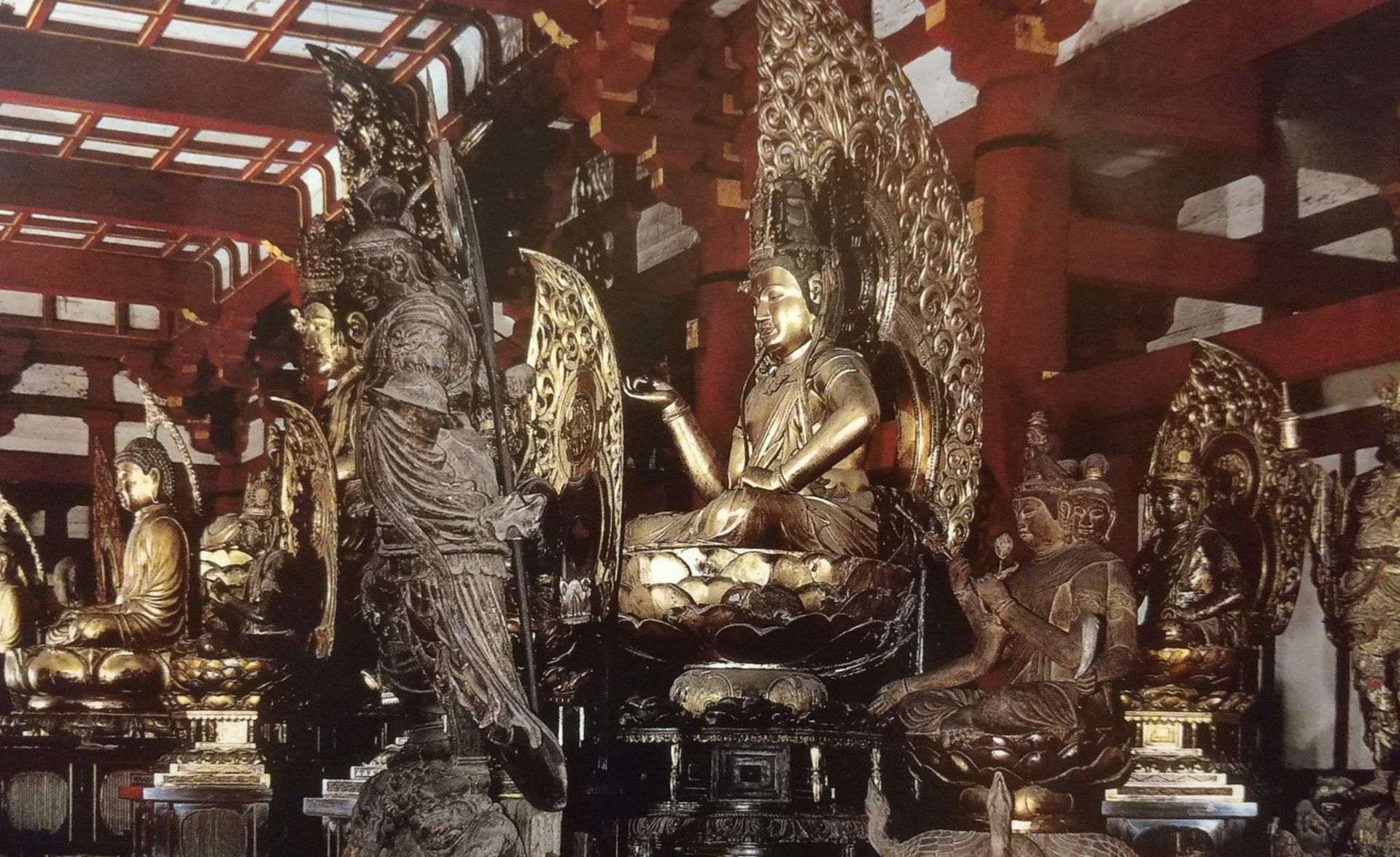
- The price of the To-ji Temple entrance ticket varies depending on the period.
- The five-story pagoda is generally not open to the public. During its exceptional openings, it is recommended to purchase combined tickets.
- On the 21st of each month, a flea market (antiques, kimono fabrics, pottery) is held within the temple grounds.
- Map
Tofuku-ji Temple
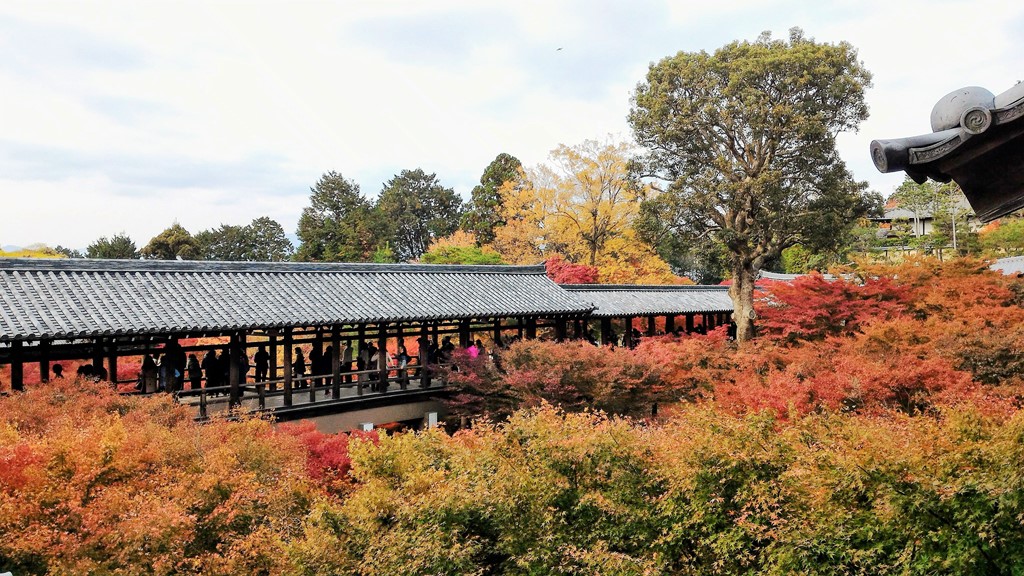
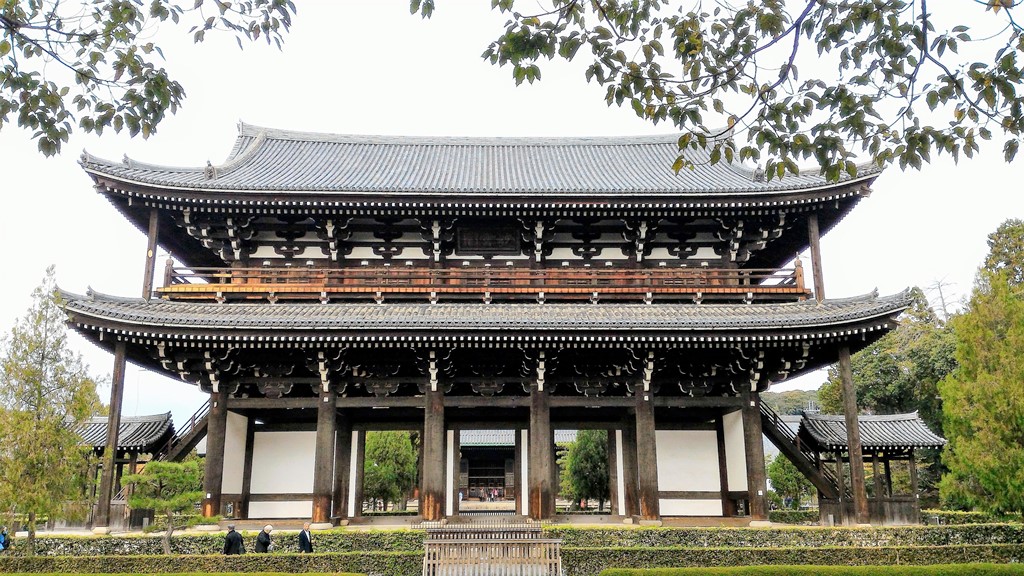
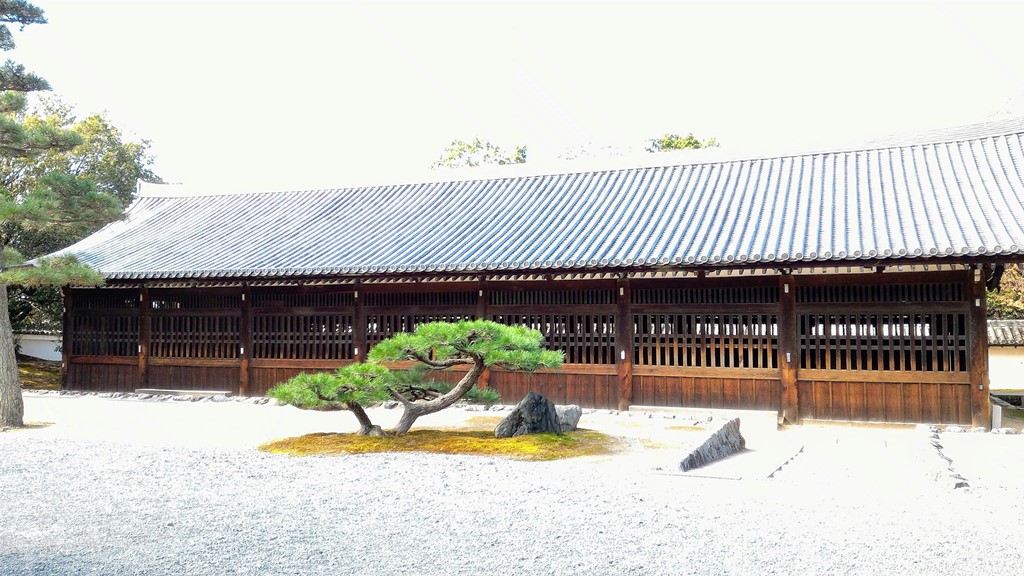
This temple Zen founded in the 13th century is known for its magnificent architecture and its thousands of Japanese maples. You will feel comfortable there. He took the two great temples of Nara, Todai-ji Temple and Kofuku-ji Temple, as a model, and was therefore given the name Tofuku-ji. The enclosure turns red in autumn and the view from Tsutenkyo Bridge which is over a valley is marvelous.
Here is the door to attaining enlightenment. Dating from the 15th century, it is one of the oldest temple doors Zen in Japan. Upstairs it houses statues of the Buddha. Usually closed, it is open to the public for three days in March.
What is this long building used for? You will be able to see a lot of hollows carved into it. These are the monks’ toilets. Do you know that natural needs as well as bathing are considered severe austerities?
The hojo, the monks’ district, is worth visiting because of the gardens designed by Shigemori Mirei, a famous 20th century landscape designer. Its gardens overlook each side of this building. It depends on everyone’s preference, but in any case, you will find the perfect fusion of the simplicity of Zen and the abstraction of modern art.
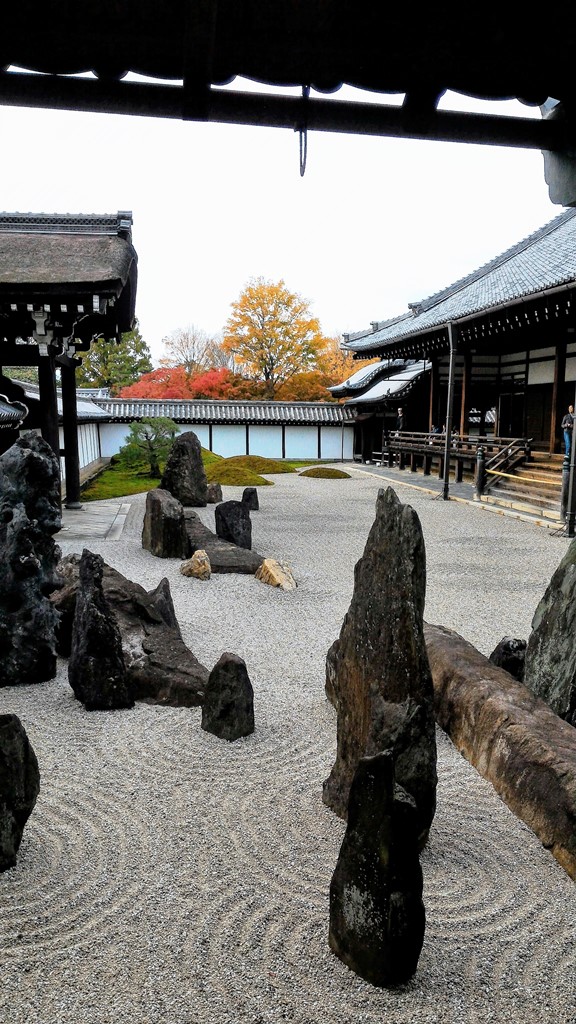
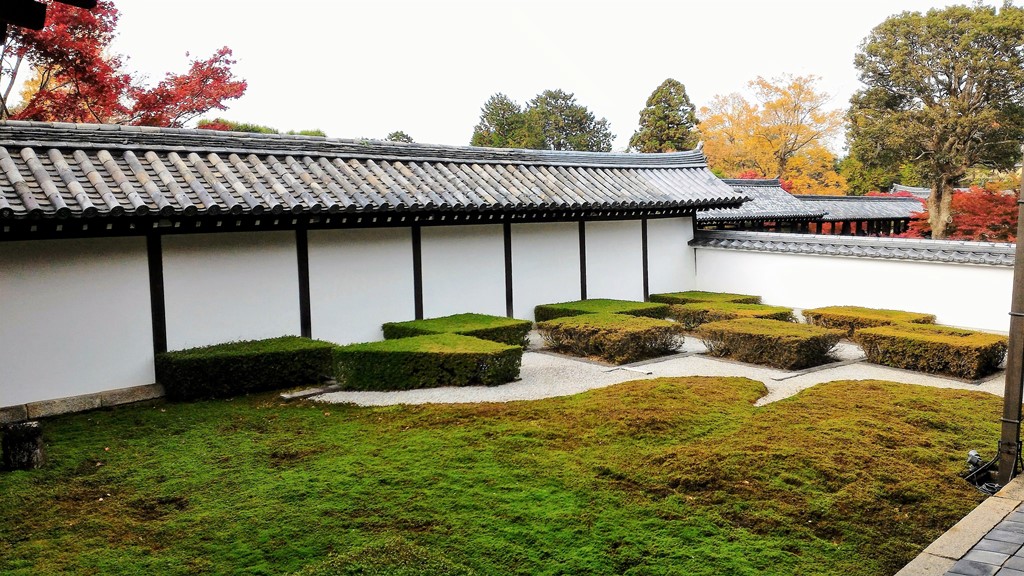
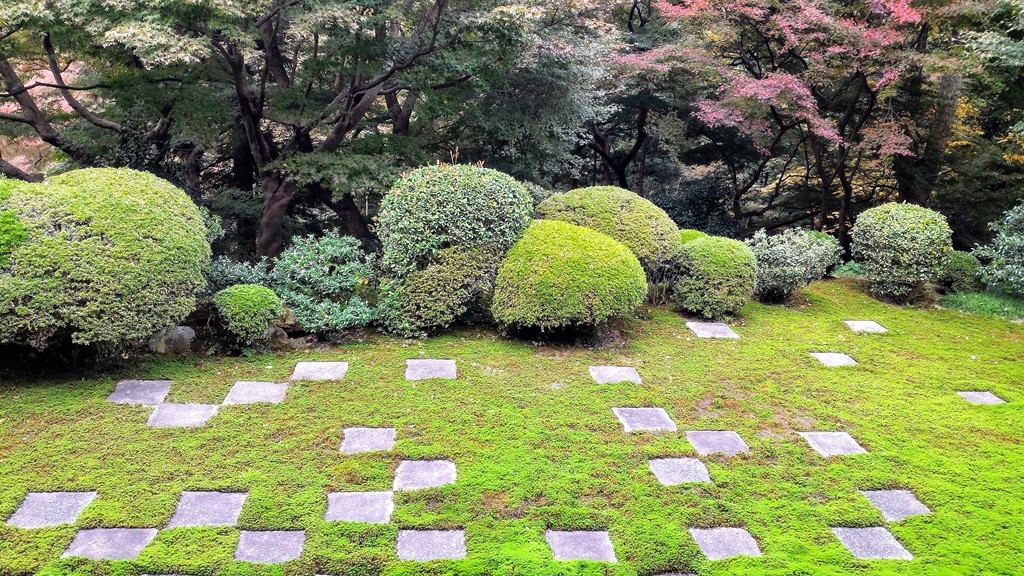
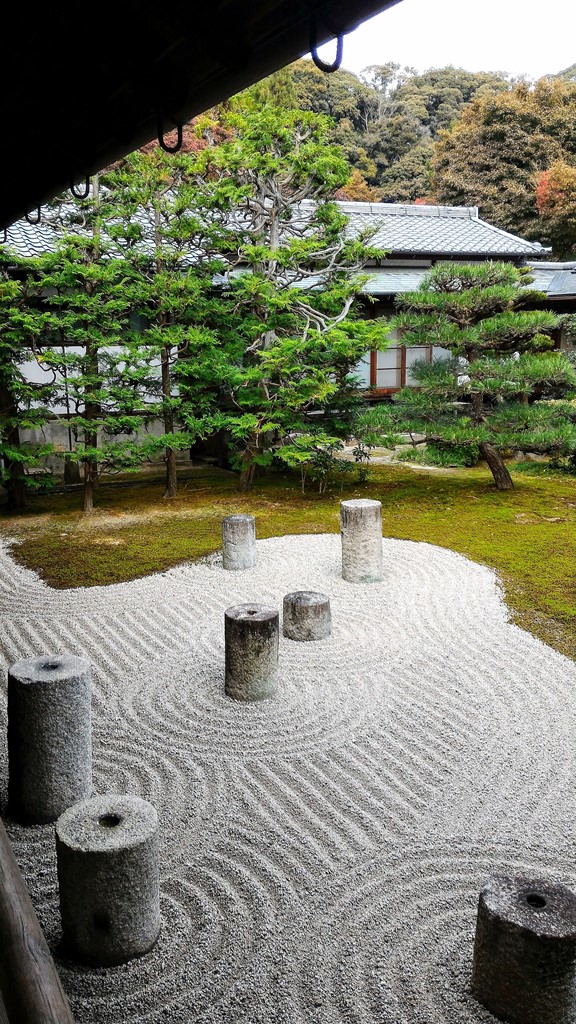
- To cross Tsutenkyo Bridge and visit the Founder’s Pavilion, the ticket costs 600 yen (from November 9 to December 1, the fare is 1,000 yen).
- Entrance to the hojo gardens of Tofuku-ji Temple is 500 yen.
- A combined ticket to Tsutenkyo Bridge, Founder’s Pavilion and Gardens is priced at 1,000 yen.
- Please note that combined tickets are not available from November 9 to December 9.
- Map
Komyo-in Temple
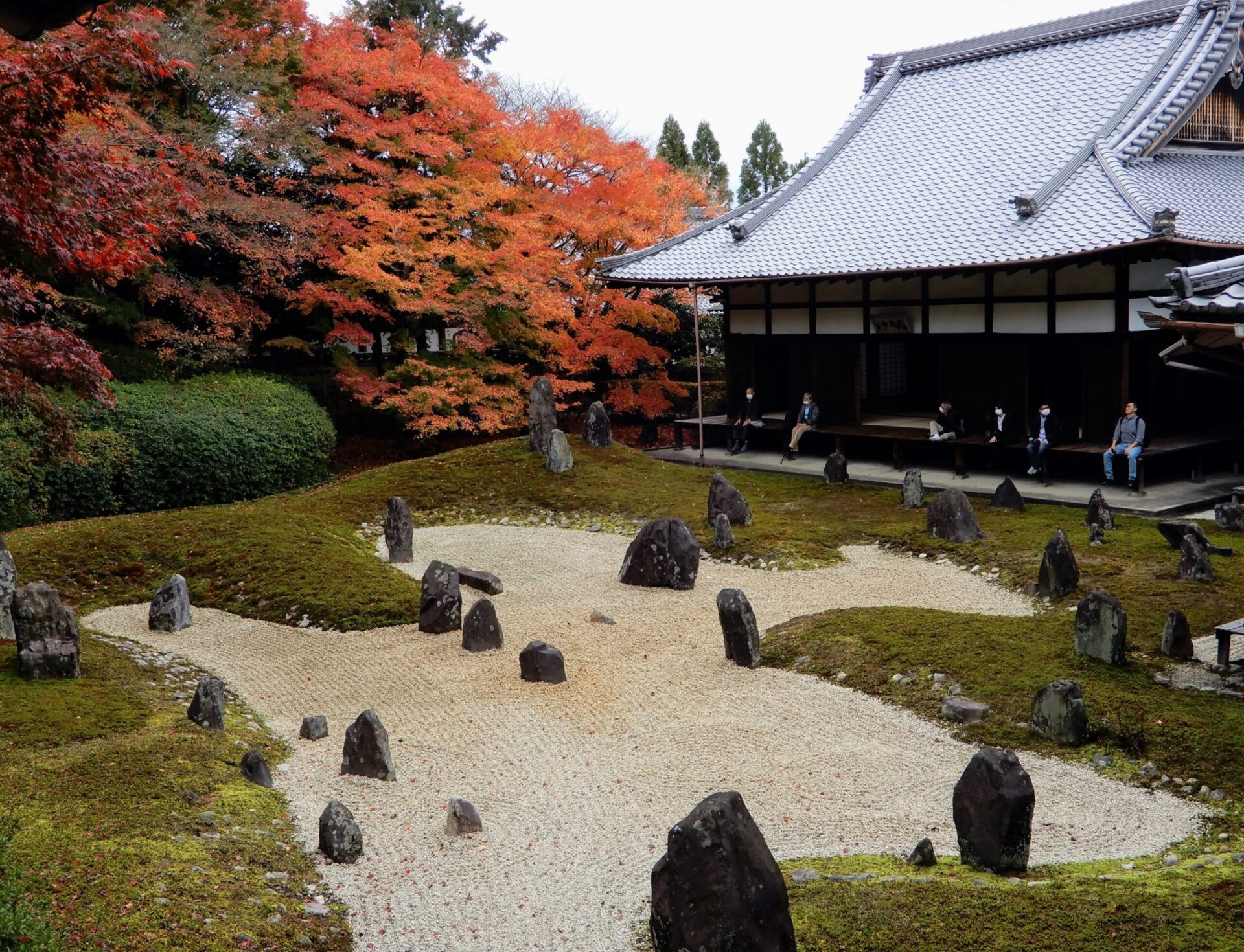
Komyo-in, one of the annex temples of Tofuku-ji temple, is also worth a visit. It is a little-known place and yet very pleasant for those who want to admire the Japanese garden quietly. Its name Komyo means the light emitted by the Buddha and the theme of the garden is therefore light. Many stones are arranged wonderfully on the gravels bordered by picturesque curves of moss to represent light. The atmosphere created by this bold garden is impressive.
- The entrance ticket price to Komyo-in Temple is 500 yen.
- Map
The Fushimi-Inari Taisha Shinto Shrine
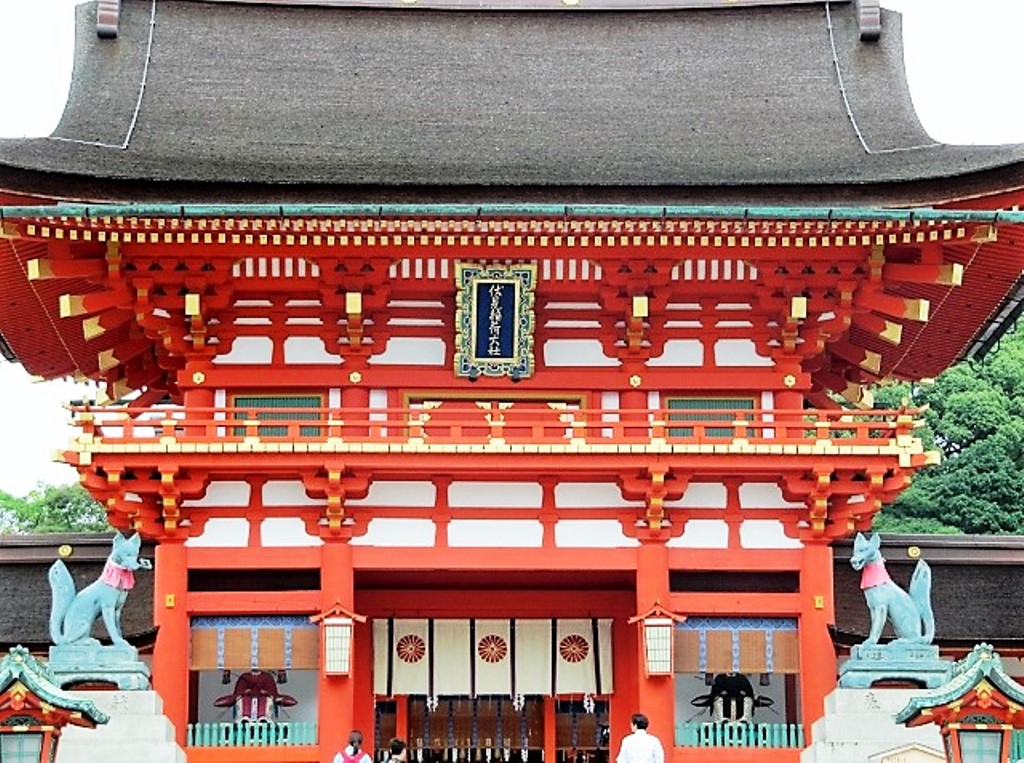
Known for its thousands of porticos, torii, Fushimi-Inari Taisha is one of the most unusual sites in Japan today. The torii countless which follow one another to the top of the mountain make this sanctuary famous throughout the world. Did you know that there are around 80,000 Shinto shrines in Japan? Shrines with the name “inari” account for 30% of them, and Fushimi-Inari Taisha is the seat of all Inari shrines.
What does this term “inari” mean? The term “inari” is written as 稲荷 in Chinese characters. The character 稲 means rice. The deity worshiped in the Inari sanctuary was therefore originally related to agriculture, to the rice harvest. Rice is the staple food of the Japanese. You will then be able to understand why there are many Inari shrines all over the country.
Do you know that various animals such as deer, rabbit, crow, snake, etc. serve as divine messengers in Shinto shrines? In the Inari sanctuaries, it is the fox, kitsune who works as a divine messenger. It will also be interesting to find statues representing the fox. On the way to Fushimi-Inari Taisha, I would like to show you various fox dishes.
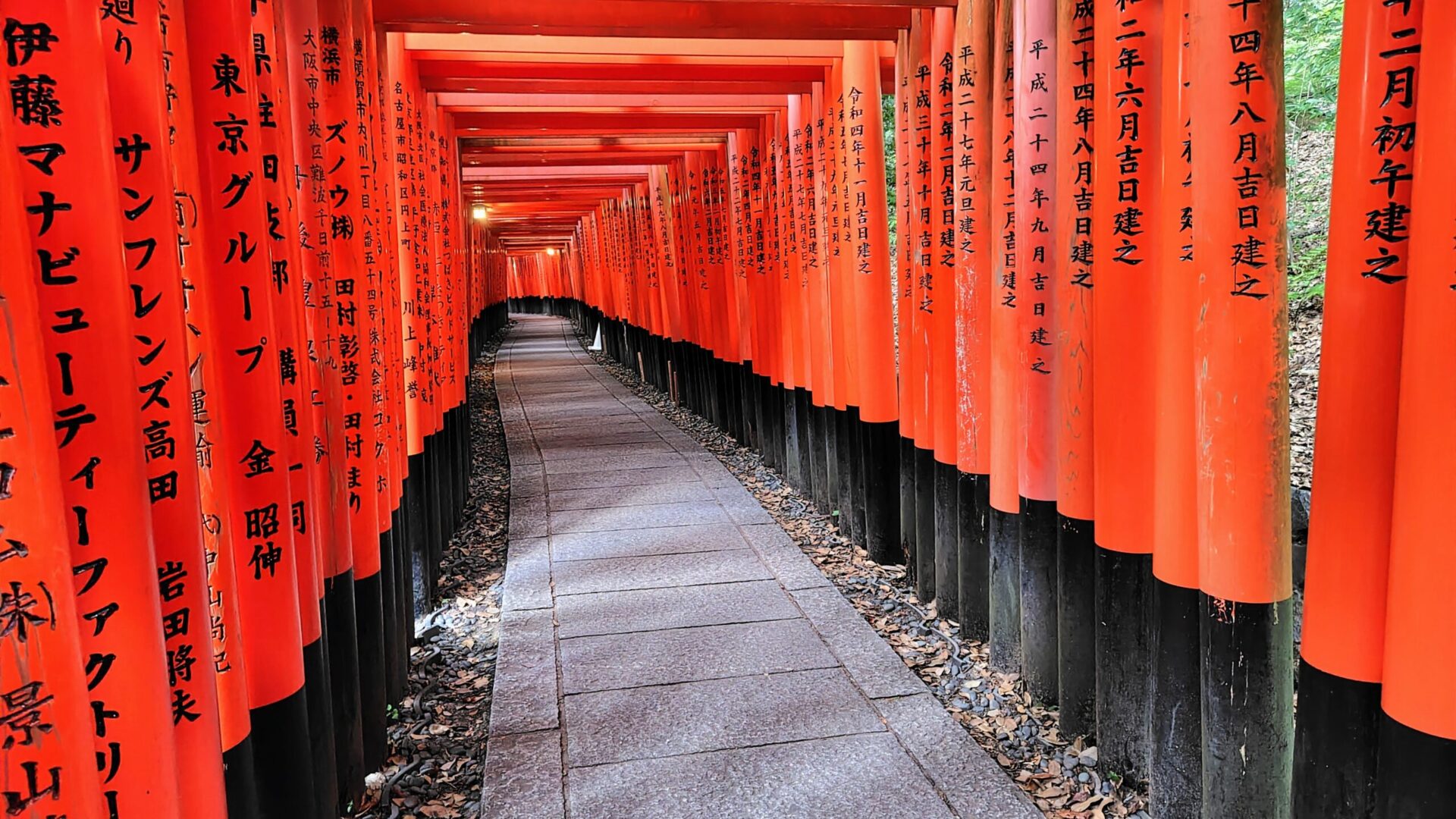
Today, this portico tunnel, senbon-torii is a must-see site. The torii, it is the portico that separates the ordinary world and the sacred world and originally, this term means “birds’ perch”. Senbon-torii literally means a thousand porticos, but in fact there are not really a thousand. If you want, count these porticos. In Japanese, the term thousand means “very numerous. ”These porticos that we see are offerings from traders or businesses, but the habit of building porticos dates back to the Edo period. Why have we continued to offer porticos for a long time? What is written on these porticos? I will tell you about it during your visit.
- This site is open permanently and entry is free. I recommend going there early in the morning if you want to take good photos. The morning sun streams into the porticos and it will be magnificent.
- This site is located at the foot of Inari Mountain. You can hike to the top. To go up and down it takes about 2 hours.
- Map
Fushimi and Its Surroundings
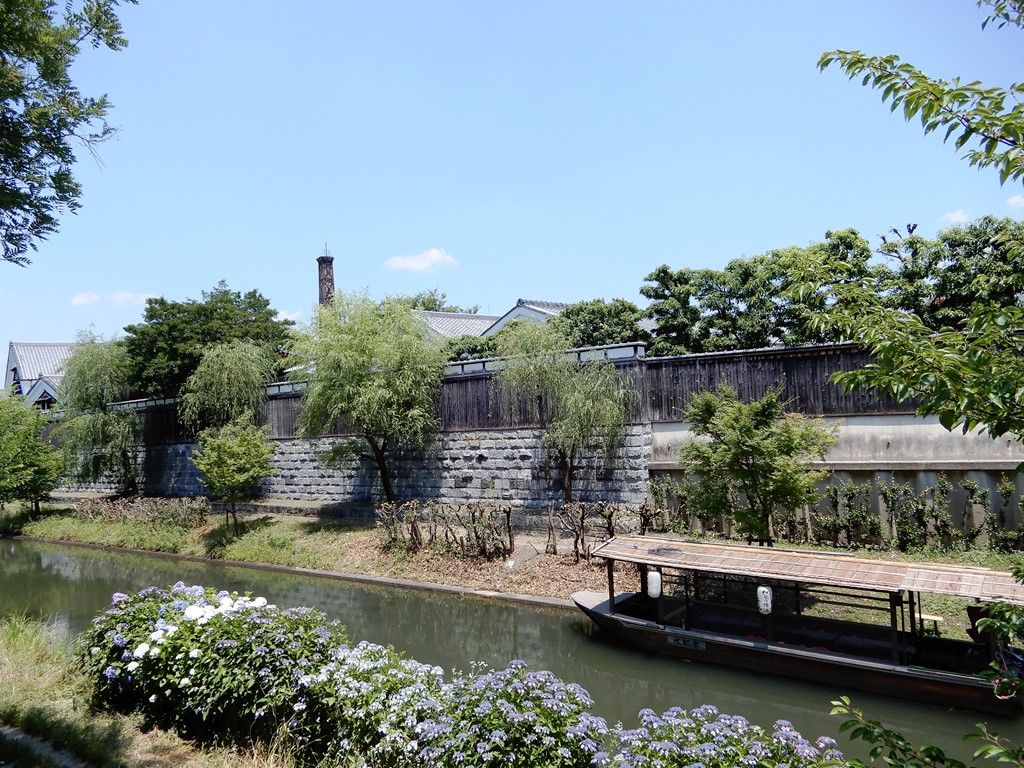
Fushimi, a district of Kyoto City, thrived as an important transportation point to Kyoto and Osaka in the past. Today, Fushimi talks about sake, rice wine for the Japanese. The sake soft Fushimi, otherwise called “the sake feminine” is produced using abundant groundwater that contains fewer minerals. In Fushimi you can see rows of old breweries, sakagura, which are located along the river. Some manufacturers offer you the tasting service of sake. It will also be good to taste chicken skewers, yakitori, with the sake. I can recommend good restaurants.
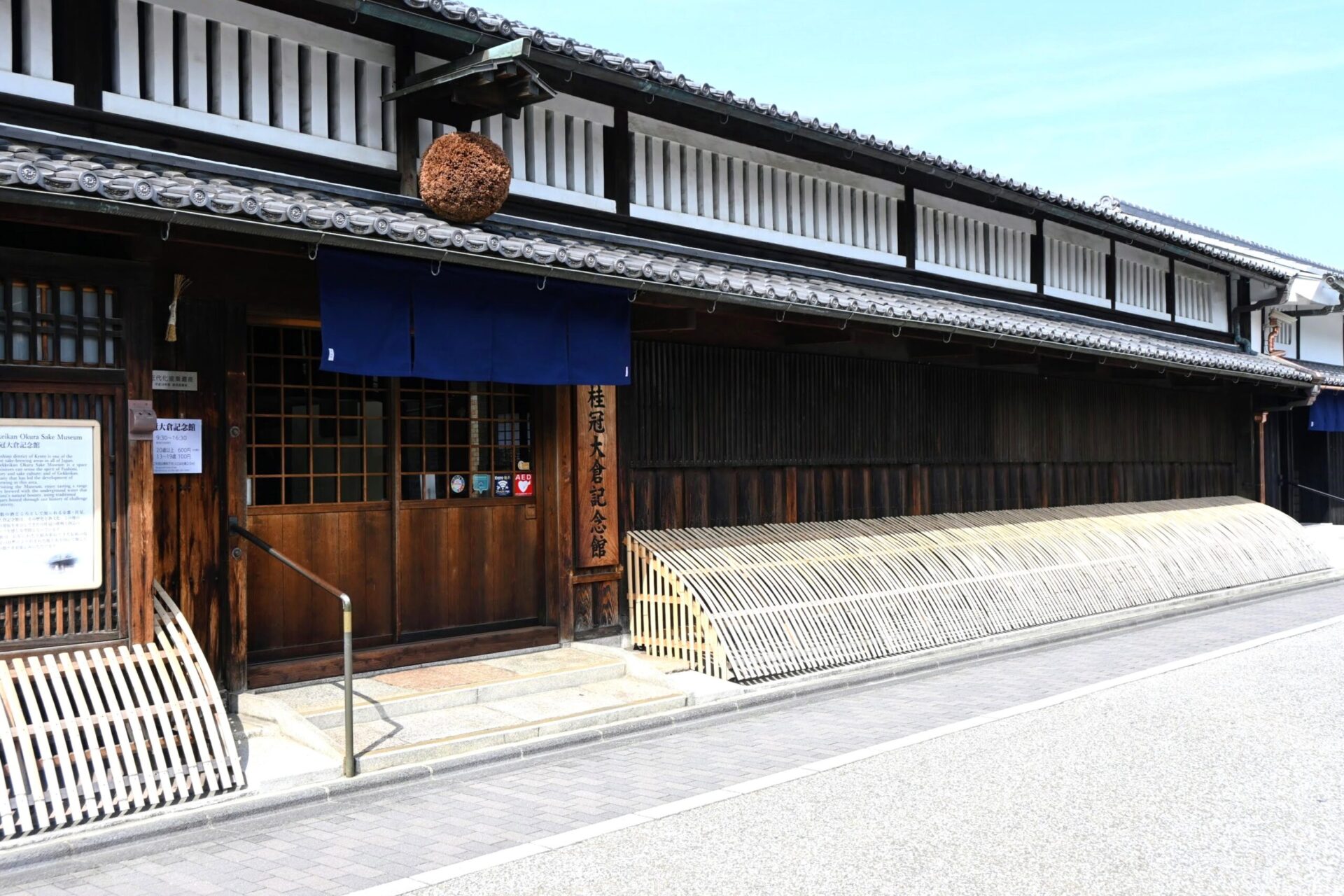
The museum of sake from Gekkeikan (manufacturer name) shows you how the sake in Fushimi and its history. There you can learn the ancient process of making sake and see the various utensils necessary for its manufacture. At the end of the visit, tasting sake awaits you. Additionally, the visit ends with a small gift.
- The entrance ticket price to Gekkeikan Sake Museum is 600 yen.
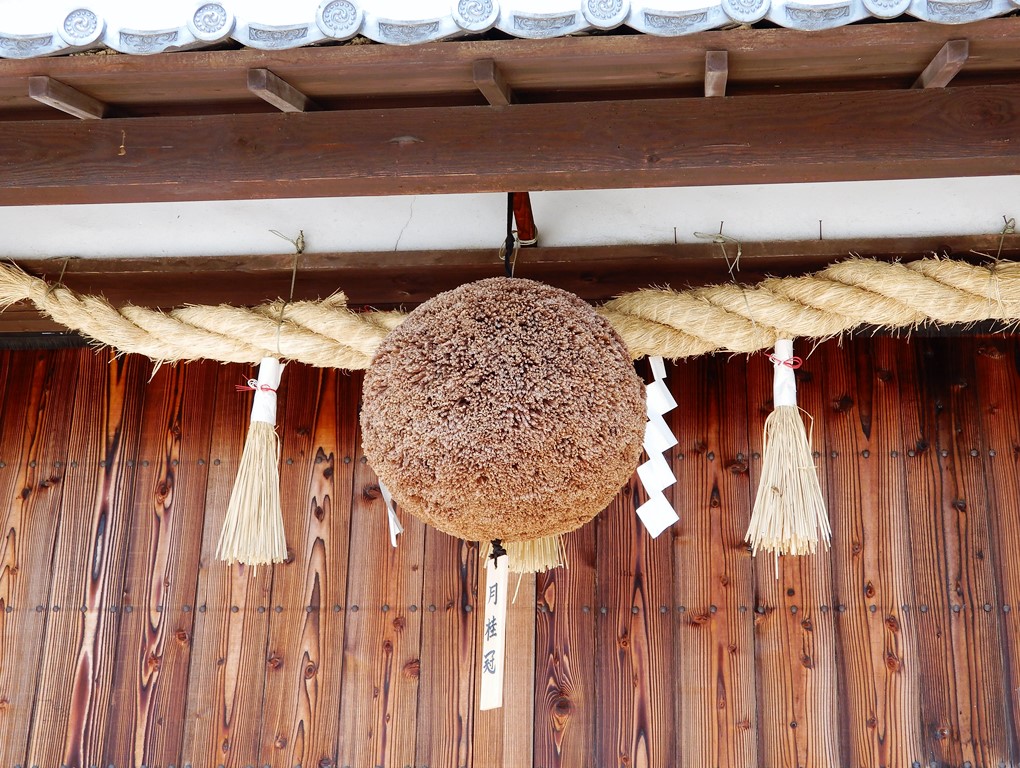
Do you know what it is? It’s a ball of cedar needles that brewery owners place above the entrance to announce a new draft of sake. At first this ball is green, but gradually it becomes faded and brown. This indicates the degree of fermentation of the sake new. We can therefore recognize the manufacturer of sake to this ball of cedar needles.
Daigoji Temple
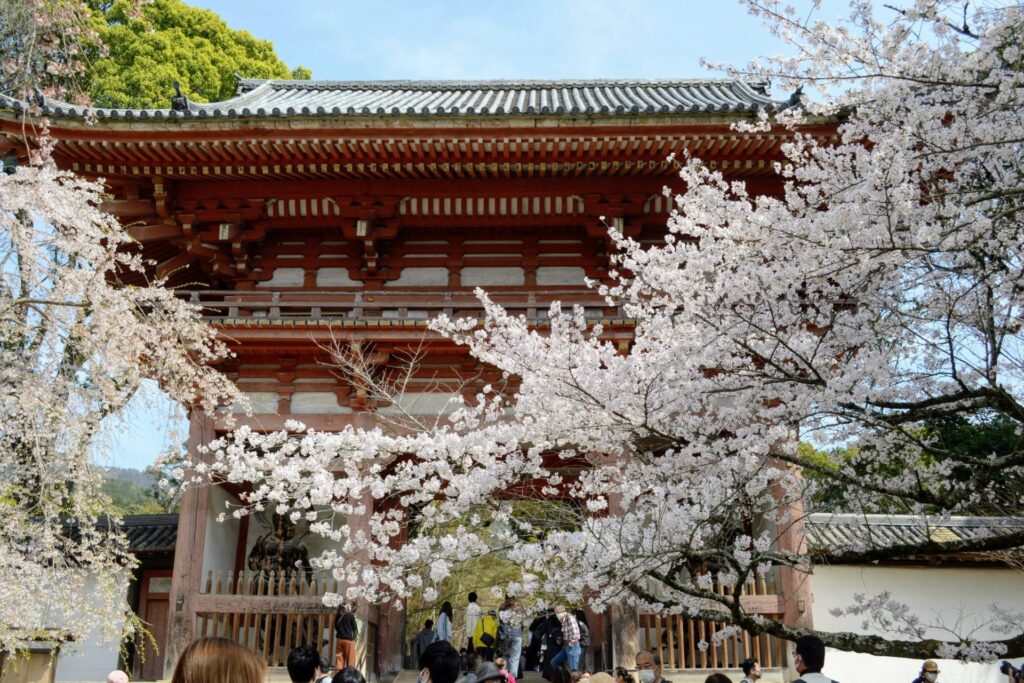
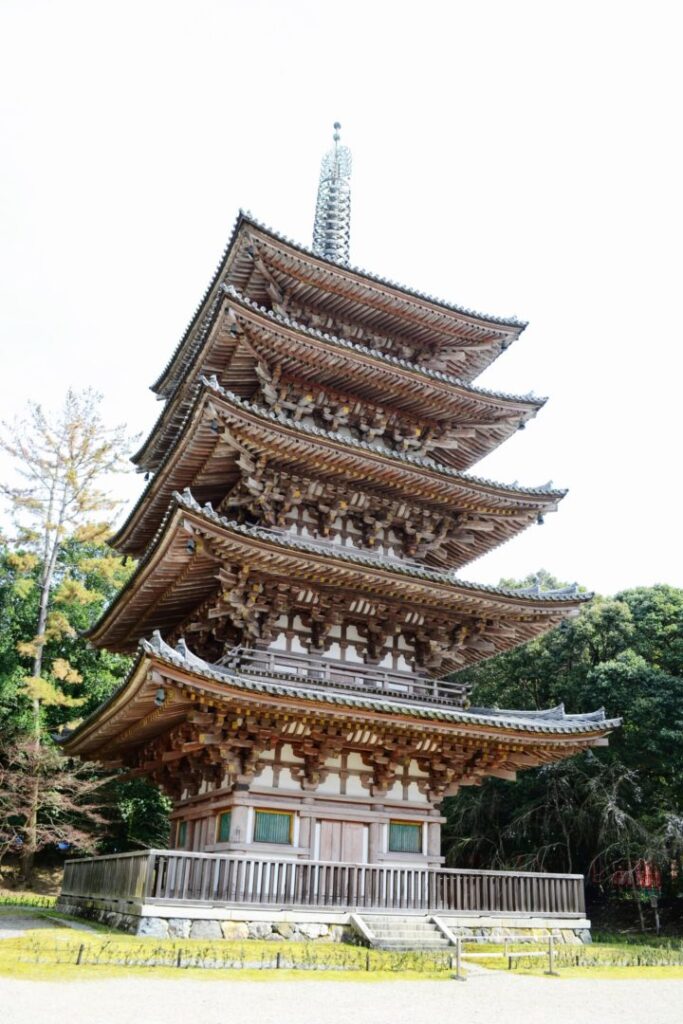
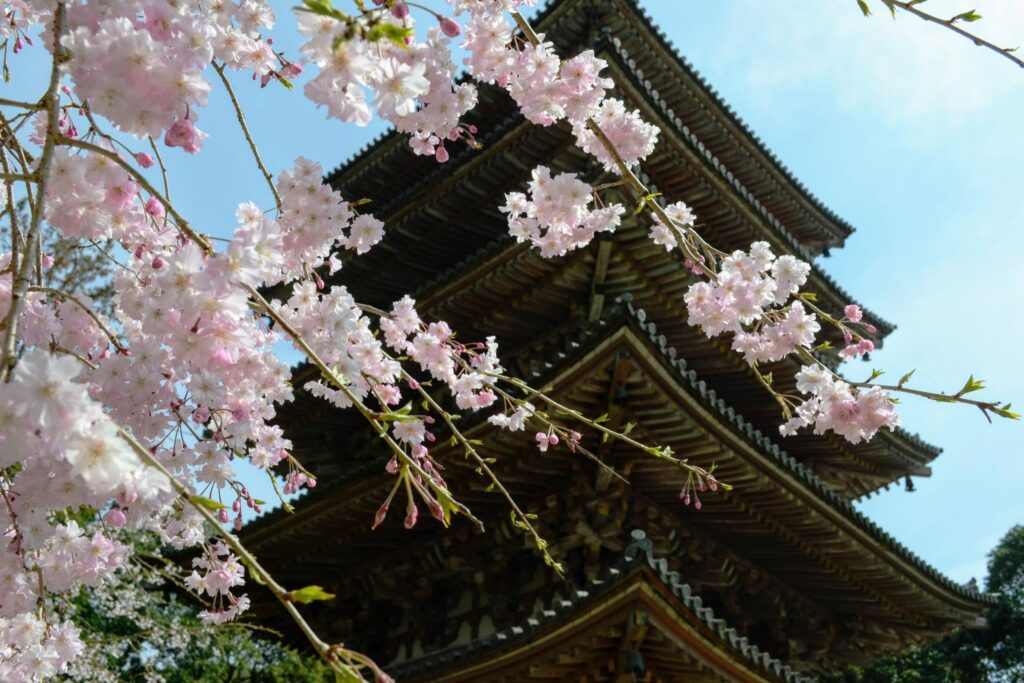
With more than 1,000 years of history, Daigo-ji Temple is one of the great representative temples of Kyoto.
It is a complex with many buildings and the five-story pagoda (38 meters high) is the main attraction of this temple. It is the oldest wooden building in Kyoto. I find it one of the most beautiful pagodas in Japan.
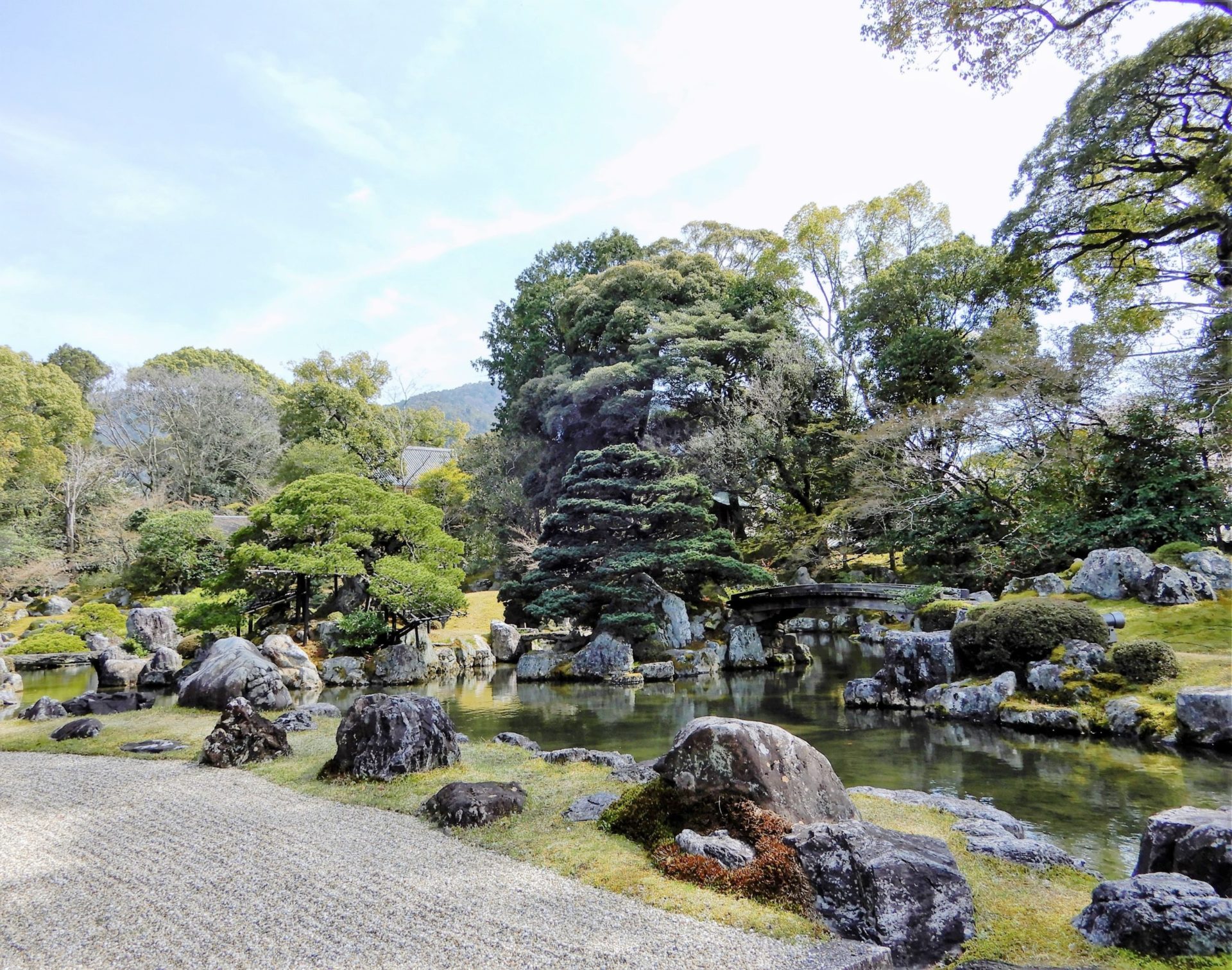
Daigo-ji is known as a beautiful place to view Kyoto’s cherry blossoms. And in autumn, I recommend that you also visit the Sanbo-in garden, place of residence of the chief monk of Daigo-ji.
- The combined ticket for visiting Sanbo-in and Daigo-ji grounds costs 1,000 yen. The individual visit to each of these places is 600 yen.
- From March 20 to the third Sunday in April, a special rate applies. The combined ticket for visiting Sanbo-in, Daigo-ji grounds and the museum is 1,800 yen. The individual visit to each of these three places costs 800 yen.
- Map