

January
Wakakusa Yamayaki (Mt. Wakakusa, Nara)
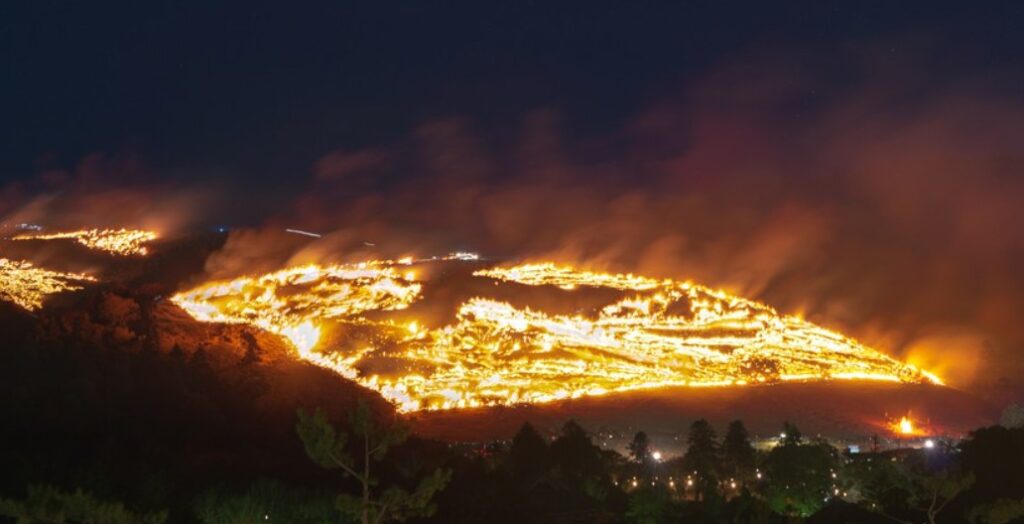
Held on the fourth Saturday of every January, the Wakakusa Yamayaki is a spectacular fire festival that sets the midwinter night sky ablaze with flames and fireworks. While it can be seen from across Nara City, the view from the foot of the mountain is truly overwhelming—the sight of the burning slopes is like a living tapestry of fire.
The festival’s origins are said to be a memorial service to appease the spirits resting in the Uguisuzuka Kofun (burial mound) at the summit. Another theory suggests it began as a boundary dispute between the Todai-ji and Kofuku-ji temples, giving the event a fascinating historical depth.
Today, it is a sacred ritual performed jointly by Kasuga Taisha Shrine, Todai-ji Temple, and Kofuku-ji Temple. They come together to pray for the repose of ancestors, and world peace. These roaring flames in the winter cold are a beloved local tradition, signaling the arrival of early spring to the ancient capital of Nara.
- Schedule
- 18:15 Fireworks launch (approximately 600 shots)
- 18:30 Mass ignition of Yamayaki (about 1 hour)
February
Setsubun Mantoro (Kasuga Taisha Shrine, Nara)
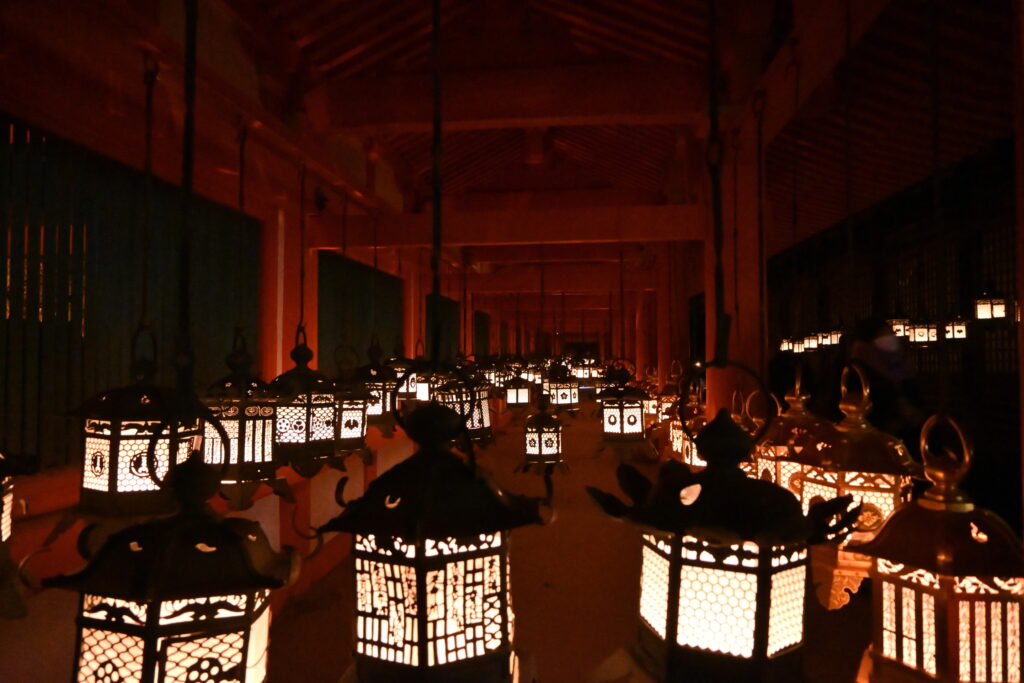
Setsubun Mantoro, held on the night of Setsubun, February 2nd or 3rd, is a fantastic light festival in which lanterns lined up in the precincts of Kasuga Taisha Shrine are lit. The stone lanterns lining the approach and the fishing lanterns hanging in the corridor are all lit up, creating a mystical atmosphere in the shrine grounds that is completely different from the daytime.
Approximately 3,000 lanterns are placed throughout the approach and grounds of Kasuga Taisha Shrine, and are lit all at once from dusk until night. On this day, you can visit the shrine at night, and you can pay a fee to visit the inside of the cloister.
The light of countless lanterns floating in the clear winter air is truly magical and beautiful. The lights flickering in the silence give visitors a warm and calm feeling. The festival of lights like this is held on Setsubun, a milestone day to ward off evil spirits and bring good fortune, symbolizing people’s wishes and prayers.
- Schedule
- From around 18:00 to around 20:30
Nara Ruri-e なら瑠璃絵 (Around Nara Park, Nara)
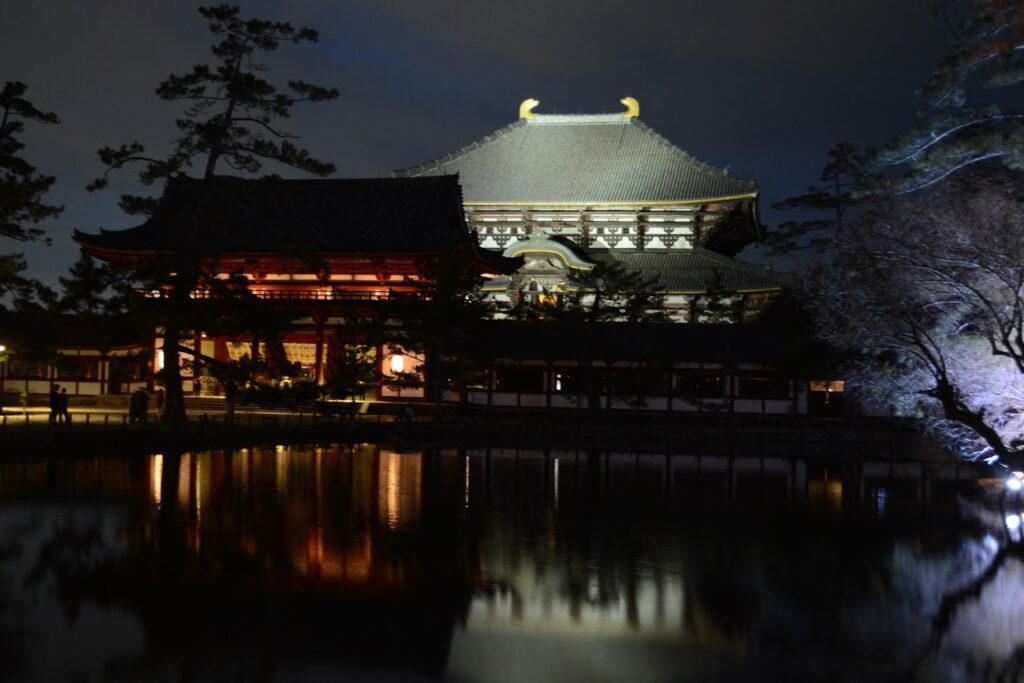
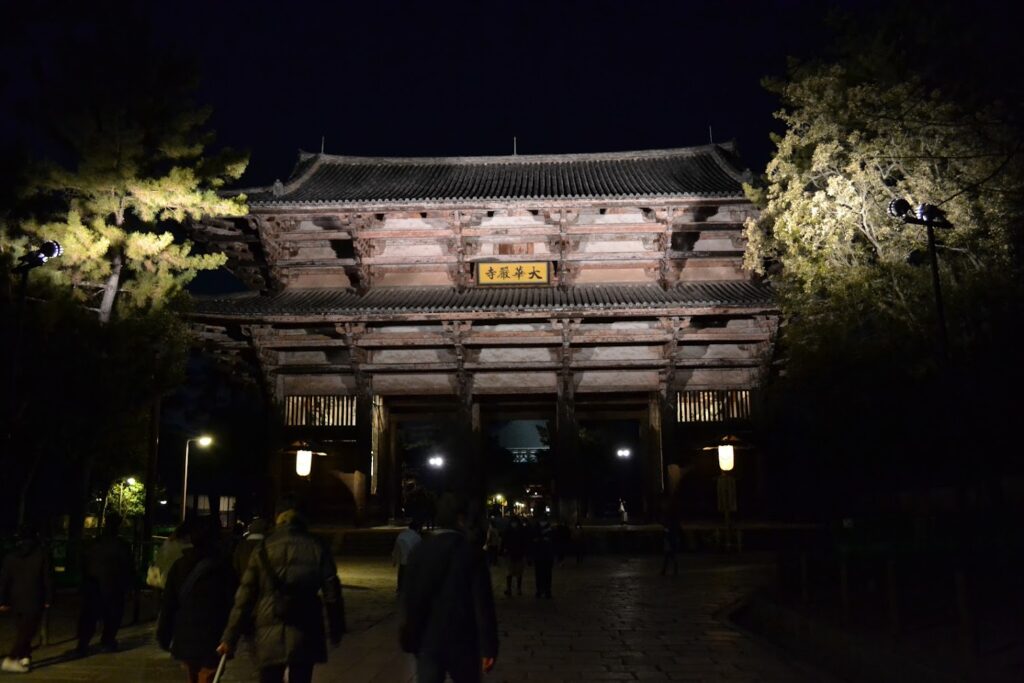
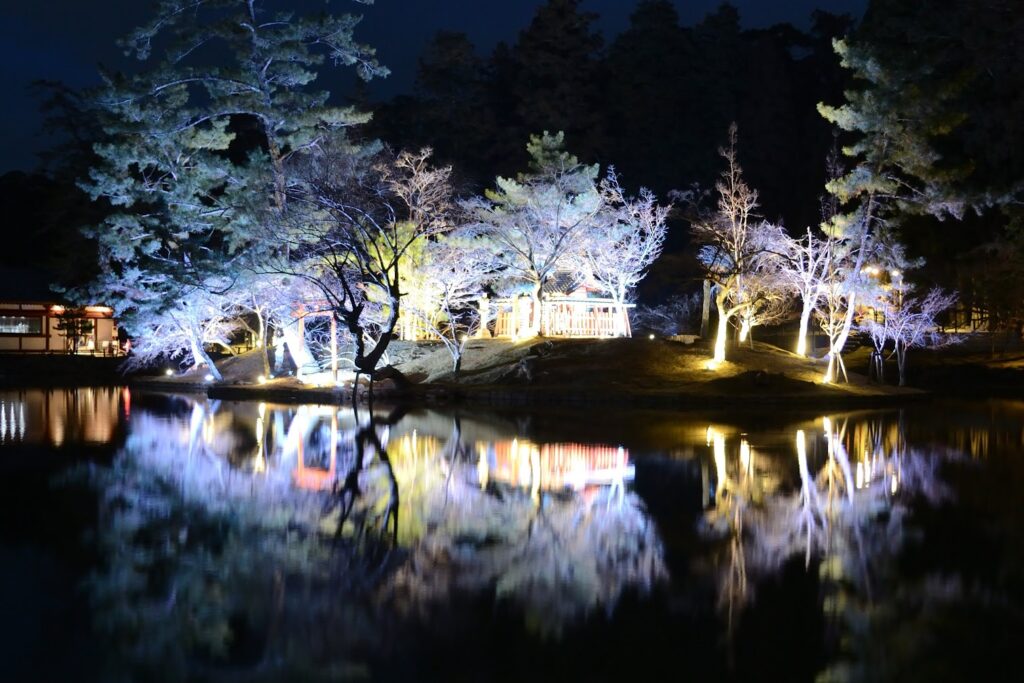
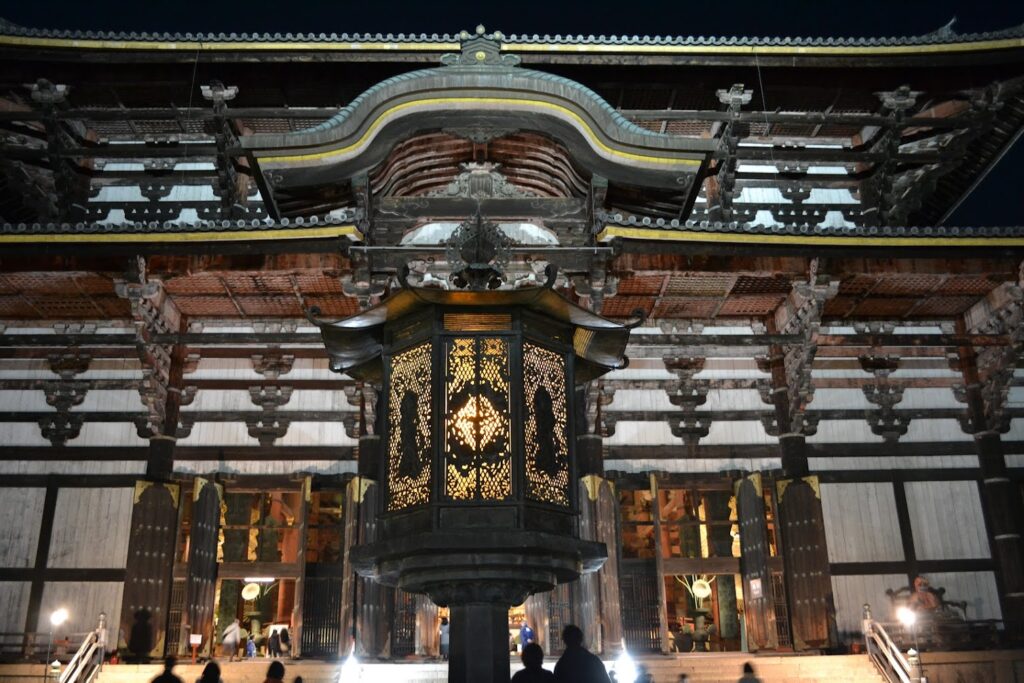
“Nara Ruri-e” is a winter nighttime event that connects Nara’s three most famous shrines and temples (Kasuga Taisha, Kofuku-ji, and Todai-ji) with a mystical lapis lazuli light. During the event, each shrine and temple will be open to the public at night, and the highlight will be the illuminations that decorate the gardens like a sea of blue light. The historical buildings that emerge in the silence of the cold night emit a solemn beauty that is different from that seen during the day. Each venue will be decorated with mystical blue illuminations, and special nighttime viewing will also be available.
- Schedule
- Mid of February 18:00〜21:00
March
Shuni-e (Todaiji Temple, Nara)
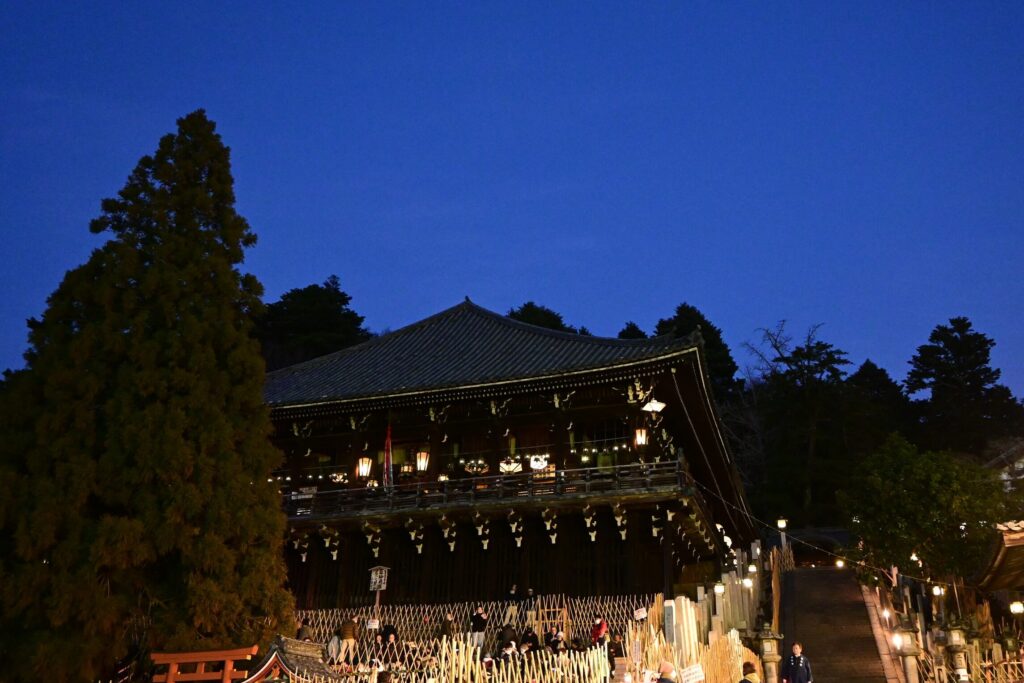
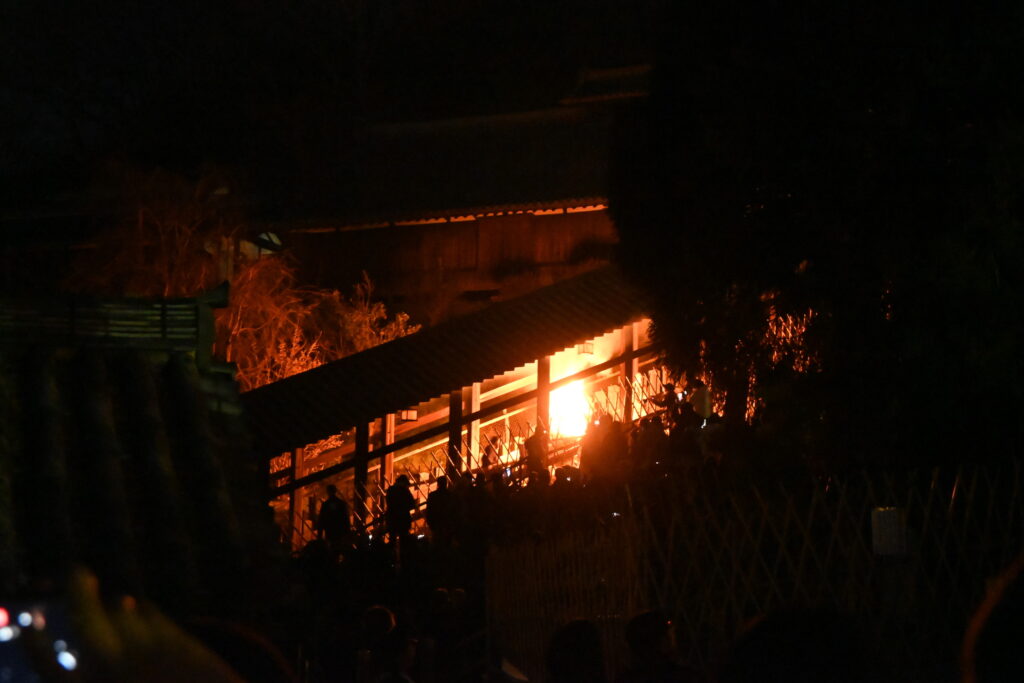
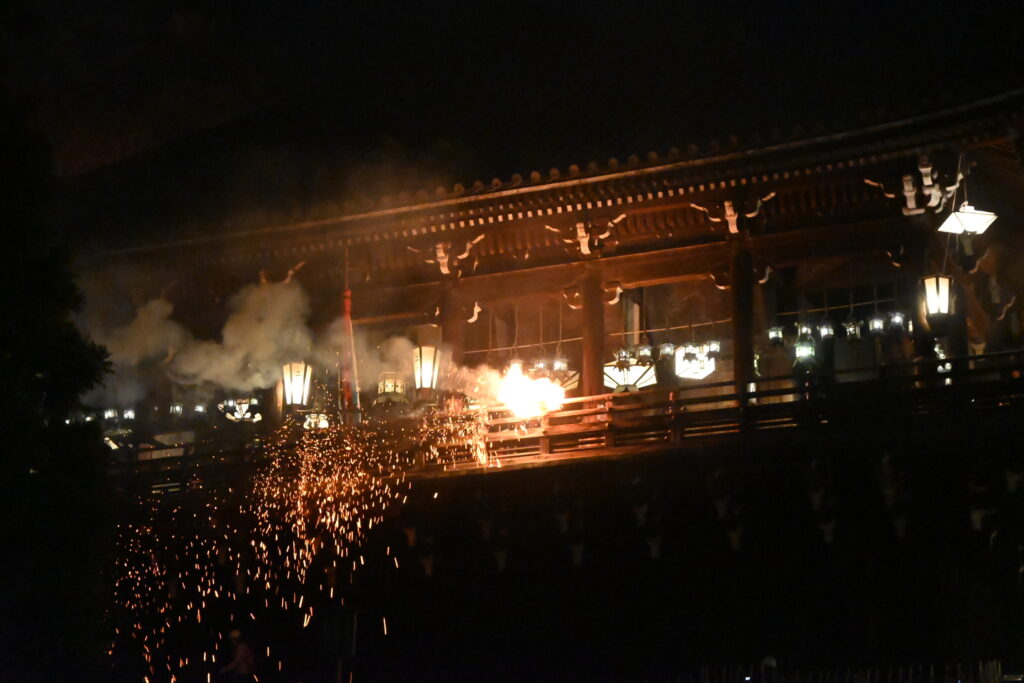
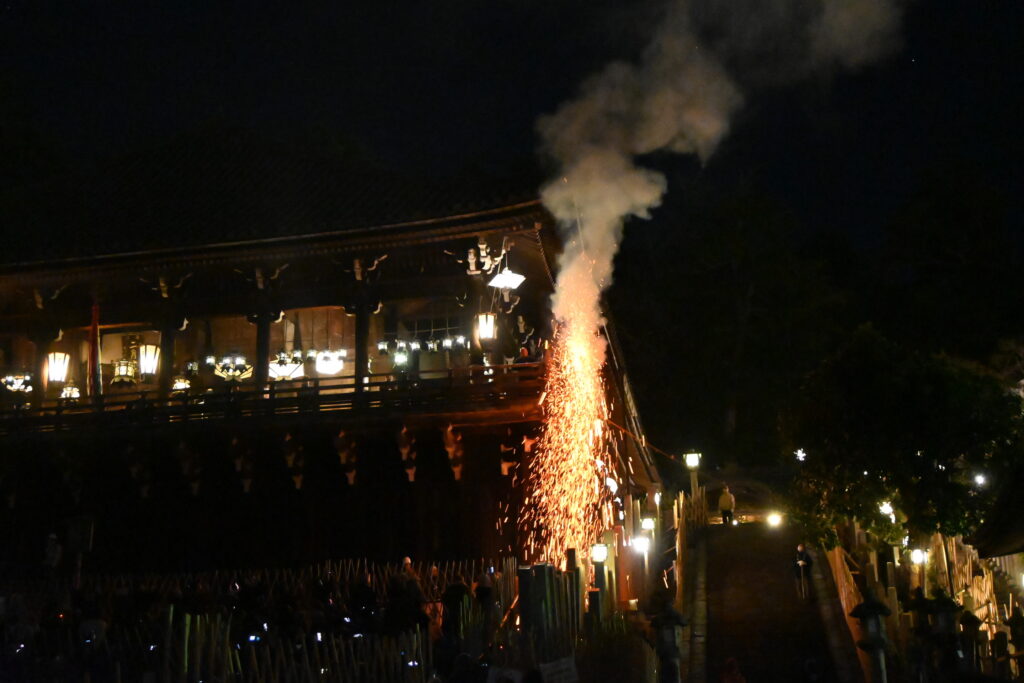
Todaiji Shuni-e, held every year from March 1st to March 14th at Nigatsu-do Hall of Todaiji Temple, is a large-scale Buddhist penance ceremony. It is commonly known as “Omizutori” or “Otaimatsu”. This tradition has continued for more than 1,200 years without ever ending, and 11 purified monks (Rengyoshu) participate in the ritual, performing various acts of repentance in front of the Eleven-faced Kannon Bodhisattva enshrined in Nigatsudo.
Otaimatsu: Every night during the festival, large torchs are lit on the Nigatsudo stage. It is said that if you are exposed to the flying sparks, you will be able to stay in good health for the year. The final day, March 14th, will see the most spectacular torchlight display. Especially on March 12th, larger “basket torches” are used.
Omizutori: From midnight on March 12th to early morning on March 13th, monks draw holy water (perfume) from the well called Wakasai under Nigatsu-do Hall and offer it to Kannon. This water comes from a legend with the god of Wakasa, and it is said that it only springs out at this time of year, and is said to be miraculously warm.
- Schedule
- March 1st to 11th: Starts at 19:00, Number of torches: 10, Torch size: 6m/40kg, Required time: 20 minutes
- March 12th: Starts at 19:30, number of torches: 11, torch size: 8m/70kg, time required: 45 minutes
- March 13th: Starts at 19:00, Number of torches: 10, Torch size: 6m/40kg, Time required: 20 minutes
- March 14th: Starts at 19:00, Number of torches: 19, Torch size: 6m/40kg, Time required: 5 minutes
Tsukigase Bairin -Plum grove- (Tsukigase, Nara)
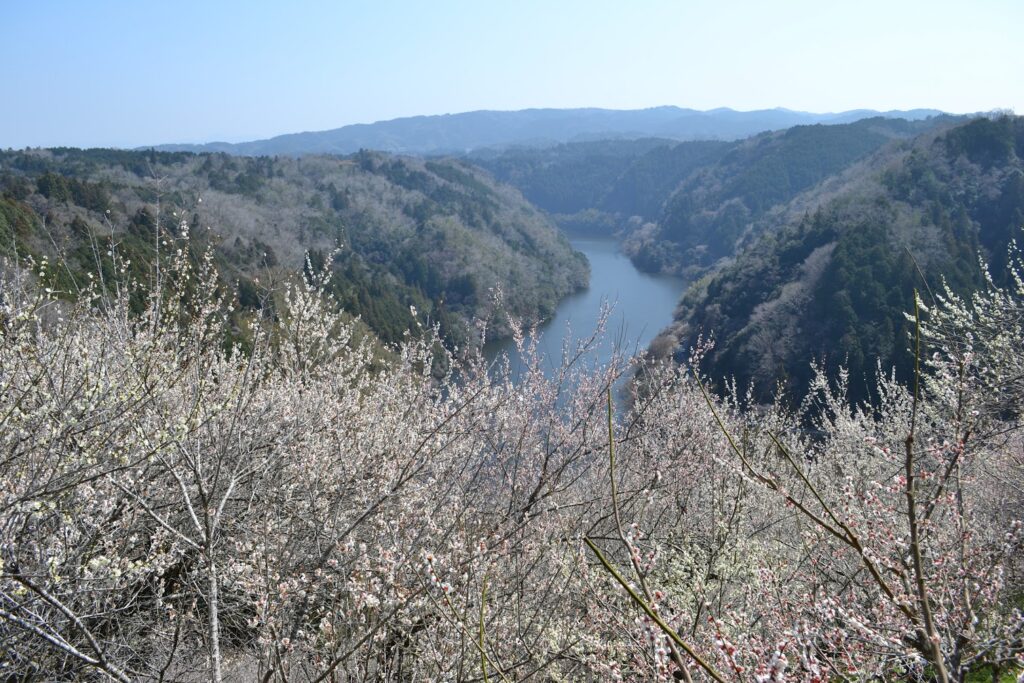
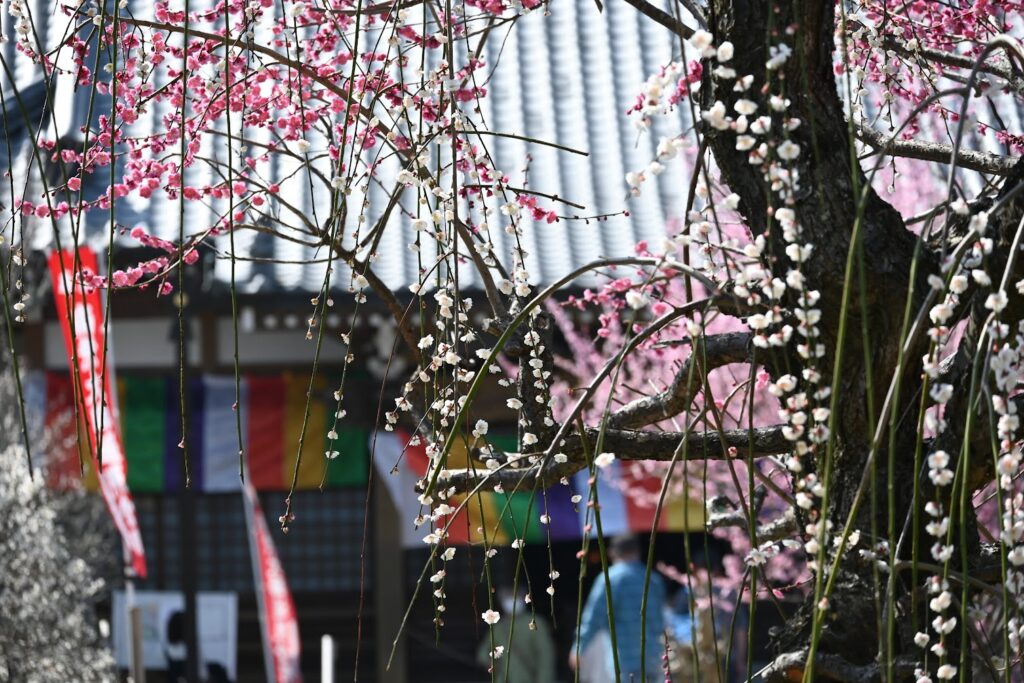
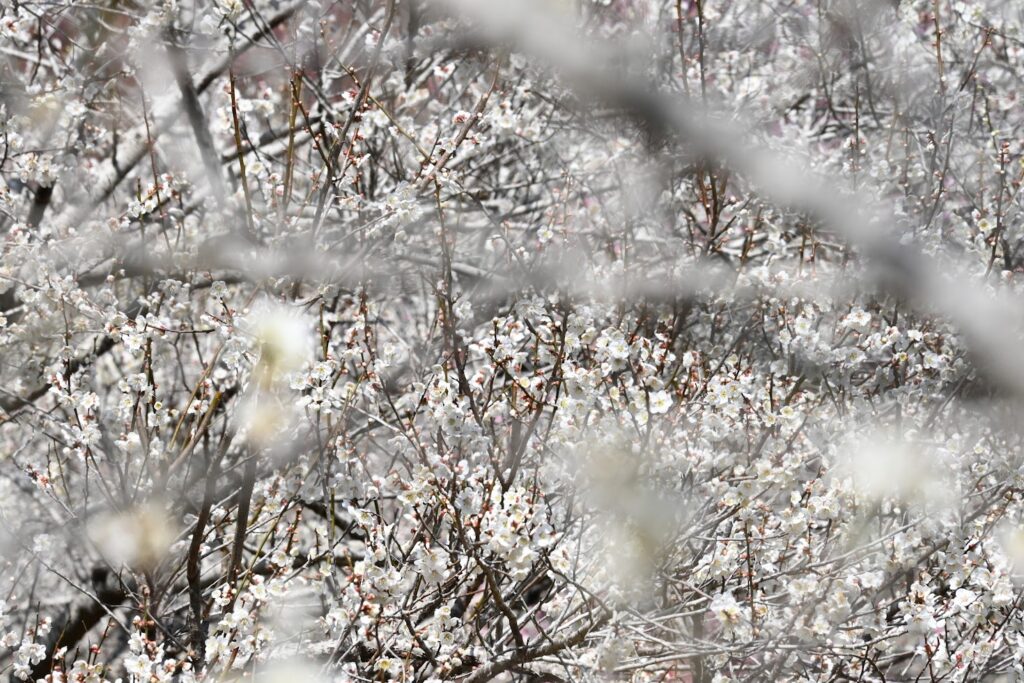
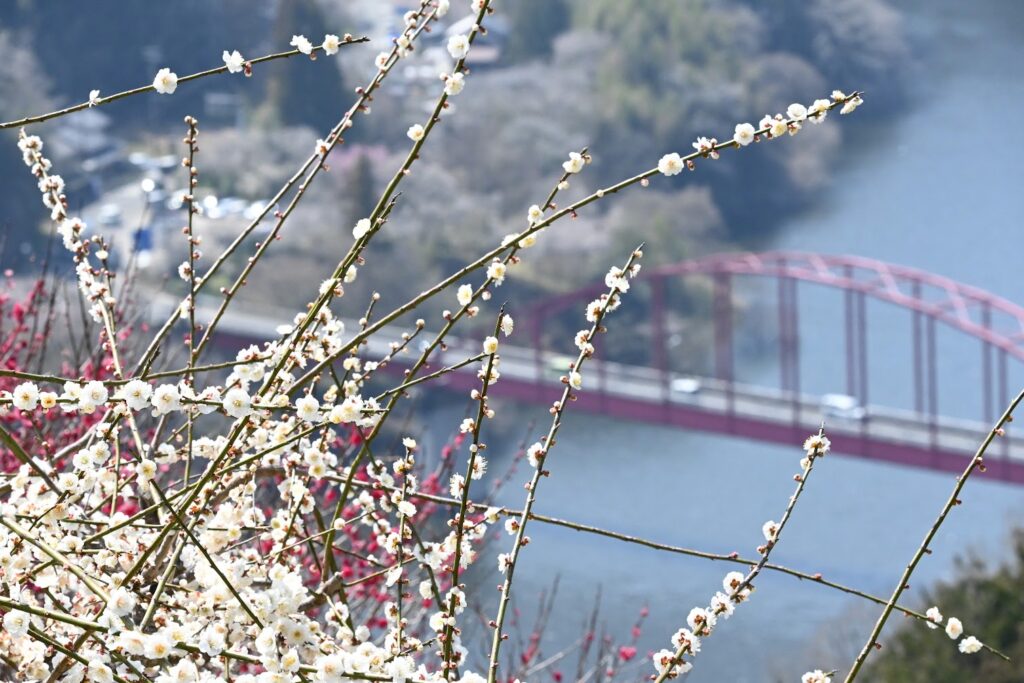
Tsukigase Plum Grove, located in the eastern part of Nara City, is known as one of Japan’s best spots for plum blossoms. Approximately 10,000 plum trees are in full bloom around the beginning of March, and the scale and beauty of the trees is overwhelming. The route that goes around the historic plum grove, which has been around since the early Edo period, is located on the mountainside overlooking the Satsuki River and resembles a short hiking course. You can take a walk while admiring the plum blossoms sparkling in the early spring sunlight with the majestic valley in the background.
April
Cherry blossoms (Yoshino, Nara)
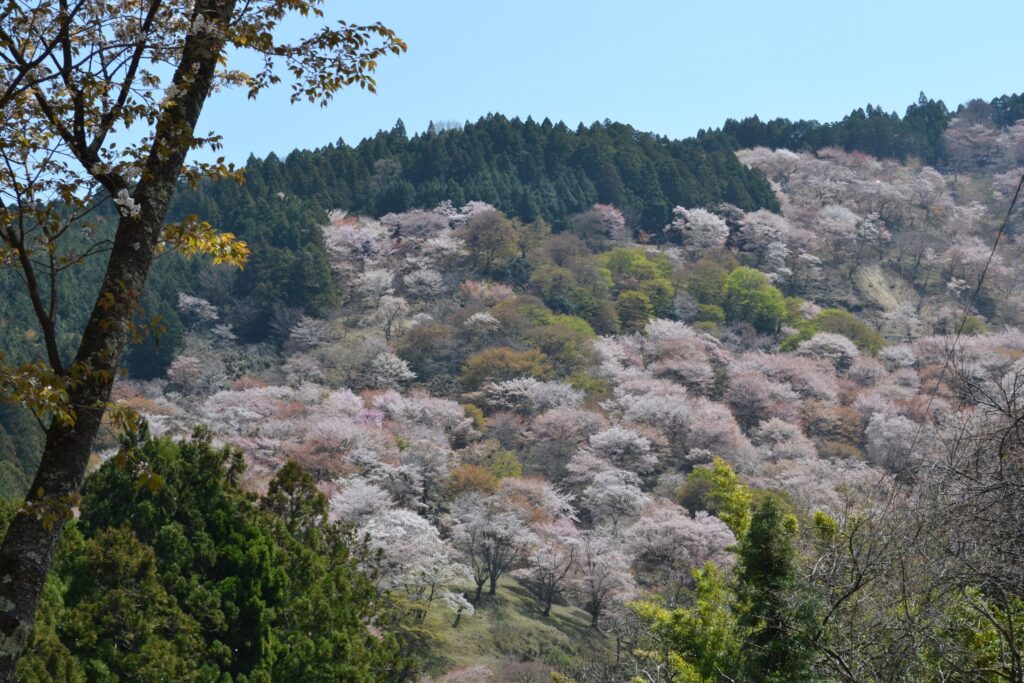
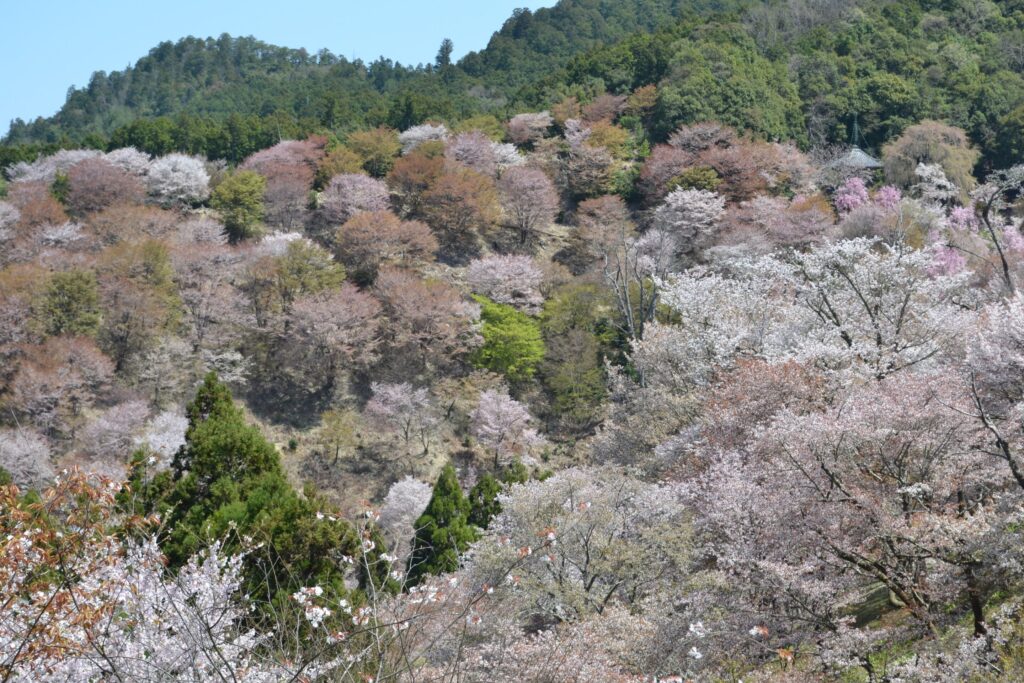
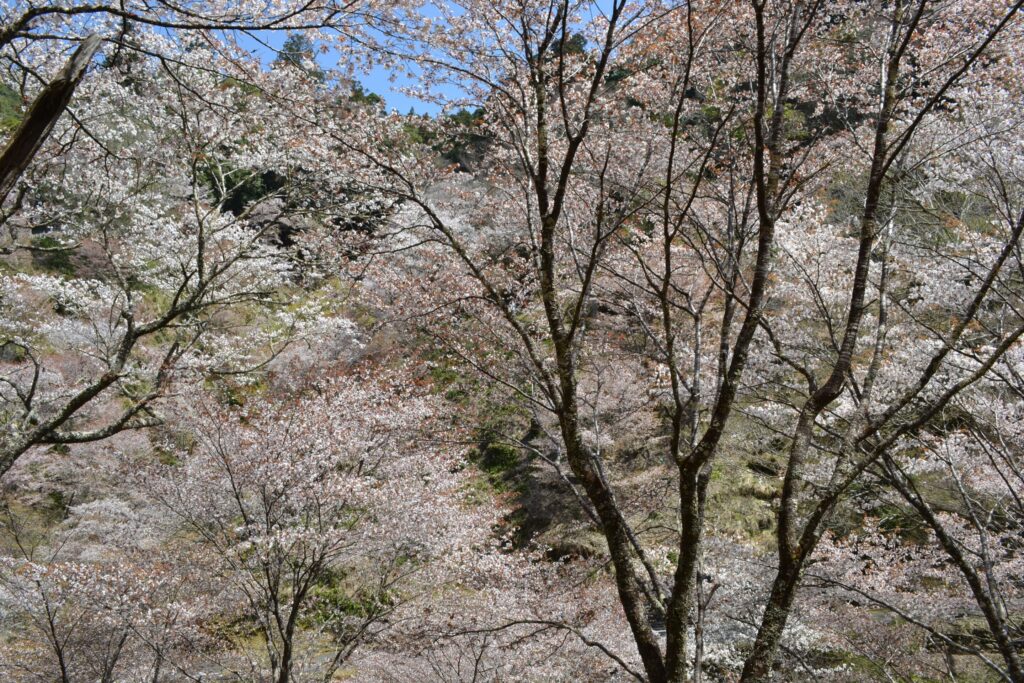
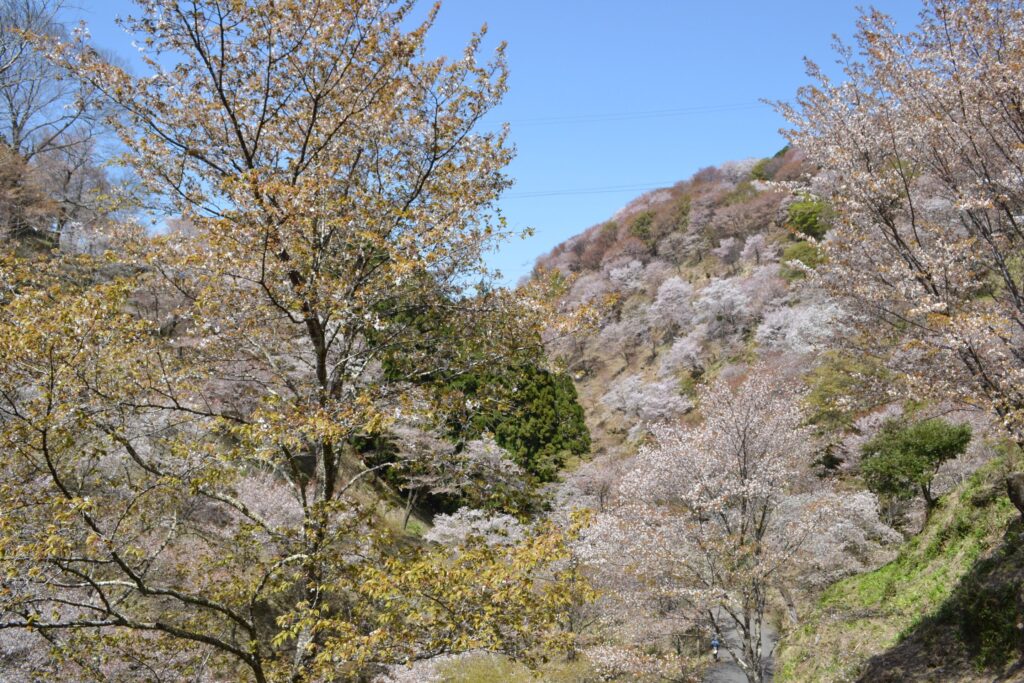
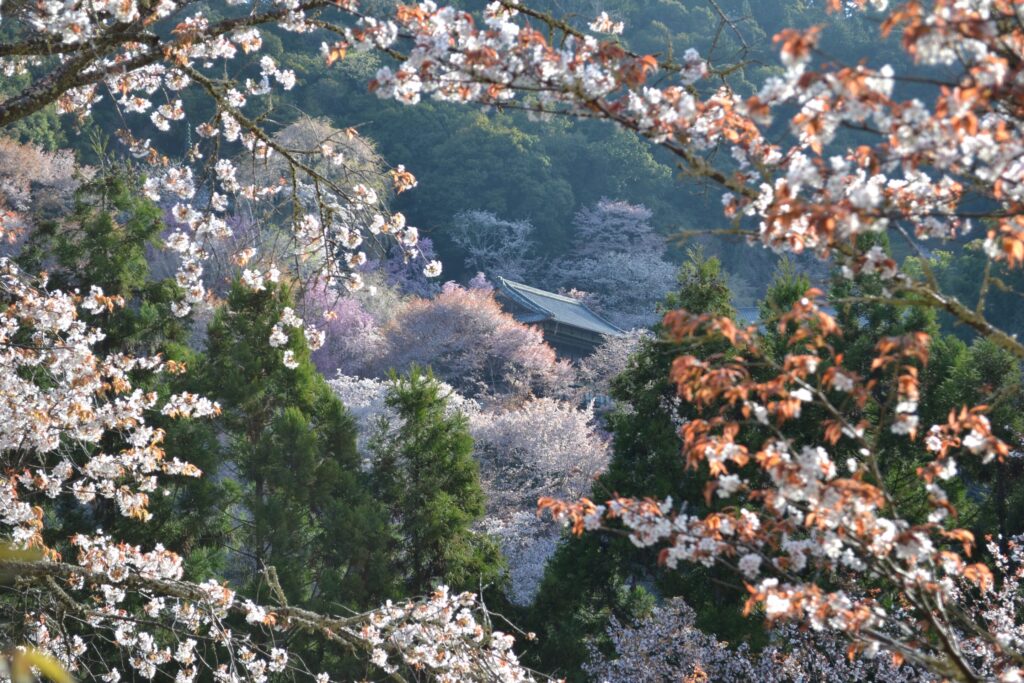
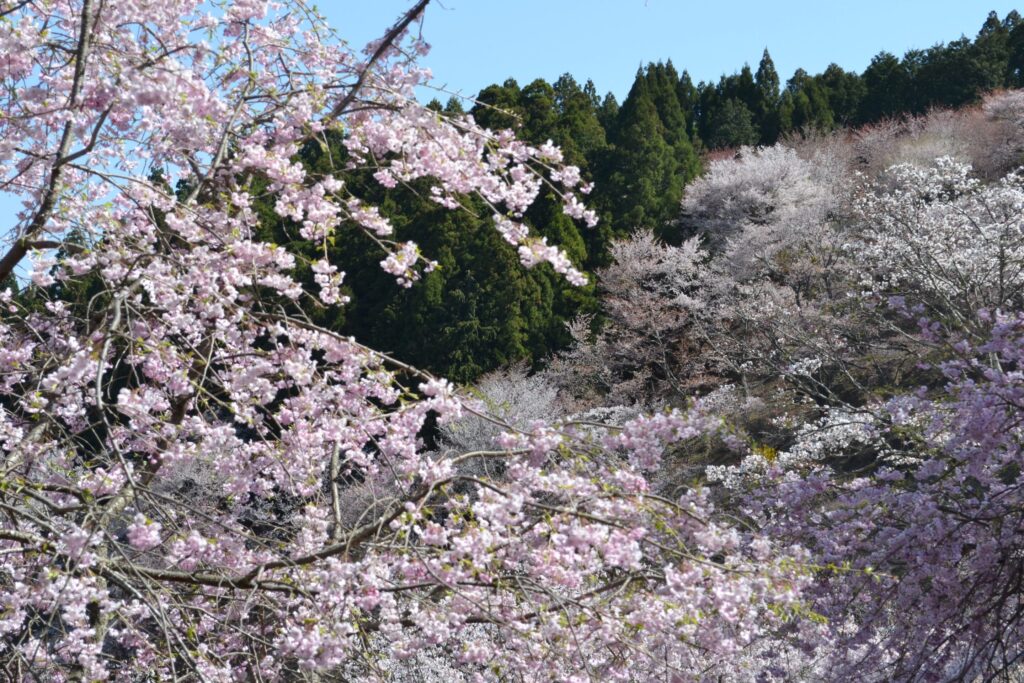
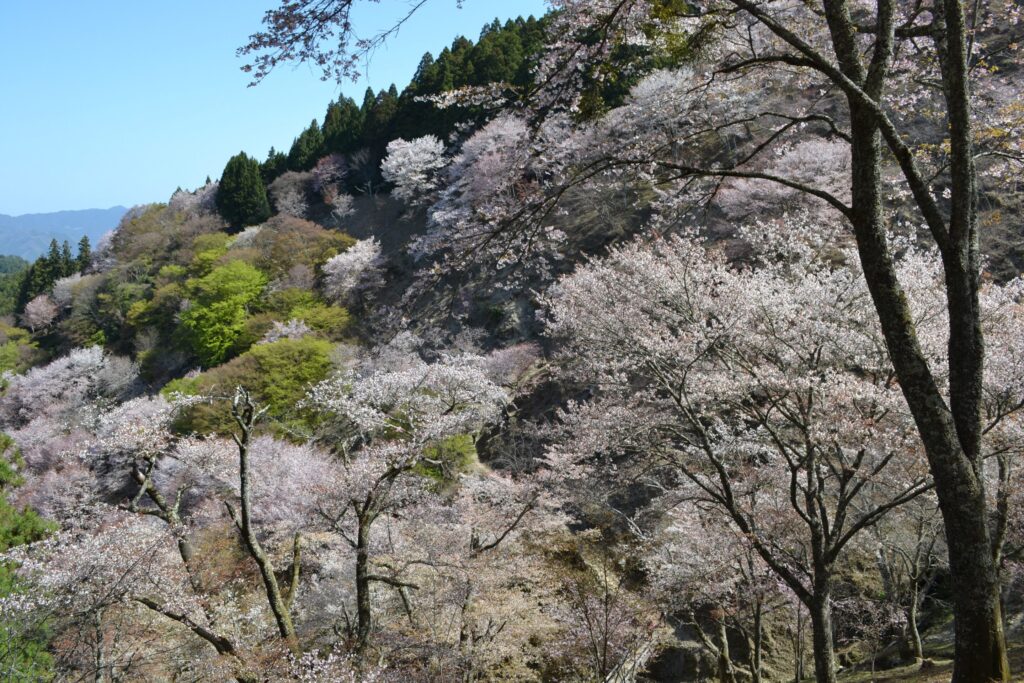
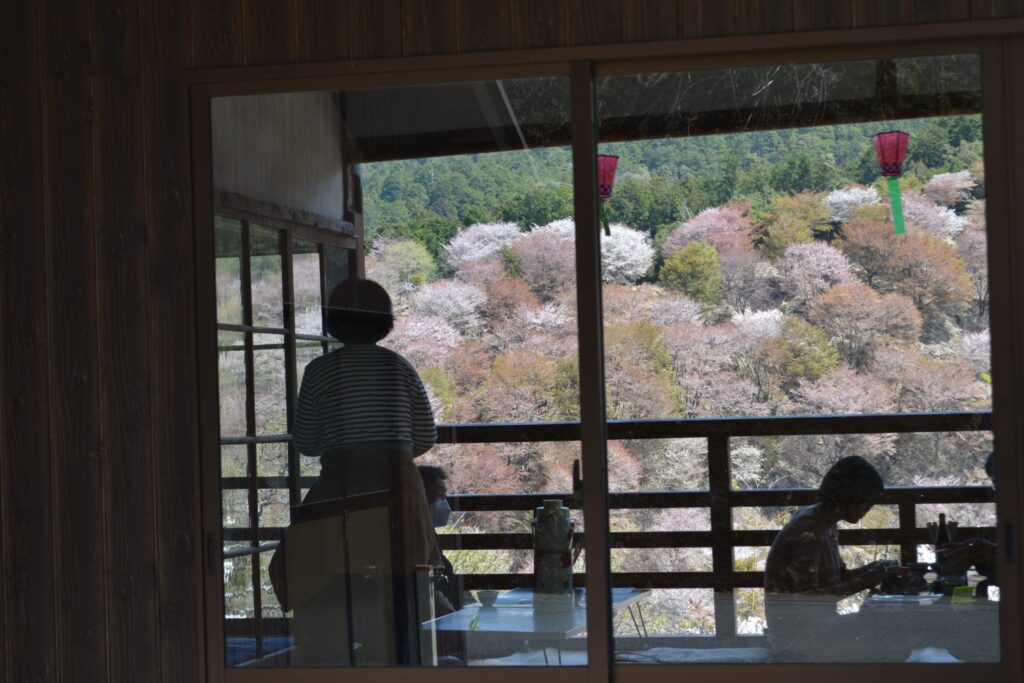
Yoshinoyama, a World Heritage Site, is Japan’s largest cherry blossom viewing spot, with approximately 30,000 white mountain cherry trees covering the entire mountain. It has been planted as a sacred tree since ancient times, and its 1,300-year history is still alive today. The cherry blossoms bloom in order from the foot of the mountain in the order of “Lower, Middle, Upper, and Okusenbon,” so you can enjoy the cherry blossoms for a relatively long period of time. The Nakasenbon and Kamisenbon are especially impressive.
May
Takigi Noh (Kofukuji Temple, Nara)
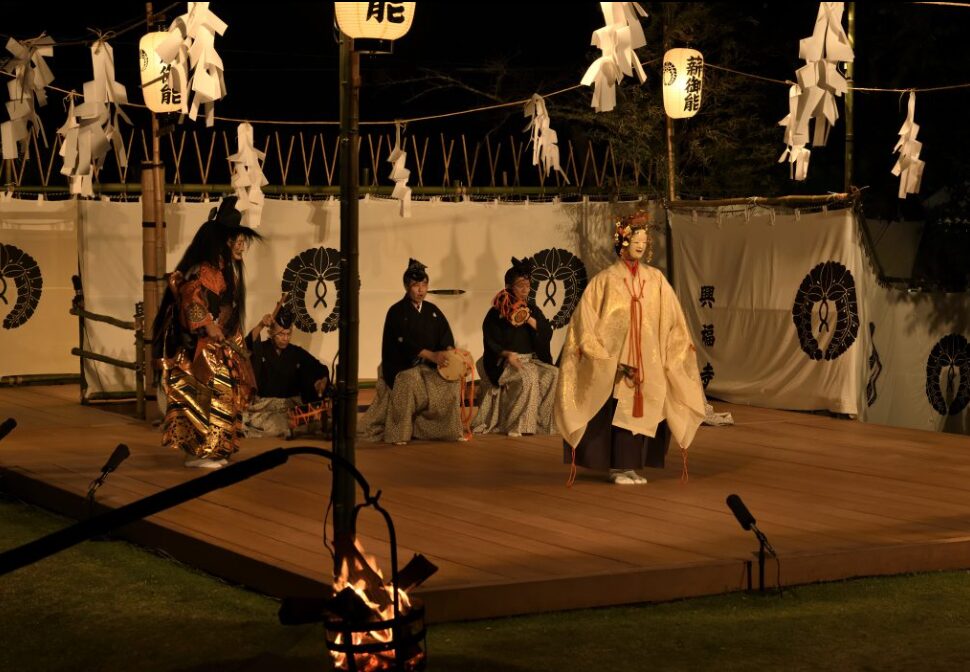
At Kofukuji Temple, Takigi Noh is held on the third Friday and Saturday of May, featuring Noh (traditional Japanese musical drama) and Kyogen (comedy). The world of Noh, performed under the light of burning pyres, has a fantastic and mysterious beauty.
It is said that Takigi Ono began in 869 during the Heian period, when Takigi Sarugaku was danced at the Shuni-e festival at Kofukuji Temple. It reached its peak during the Muromachi period, and played an important role in the development of Nohgaku. It is also said to be the root of Takigi Noh, which is performed all over the country.
August
Nara Toukae, Chugen Mantoro (Todaiji, Kasuga Taisha Shrine, Nara)
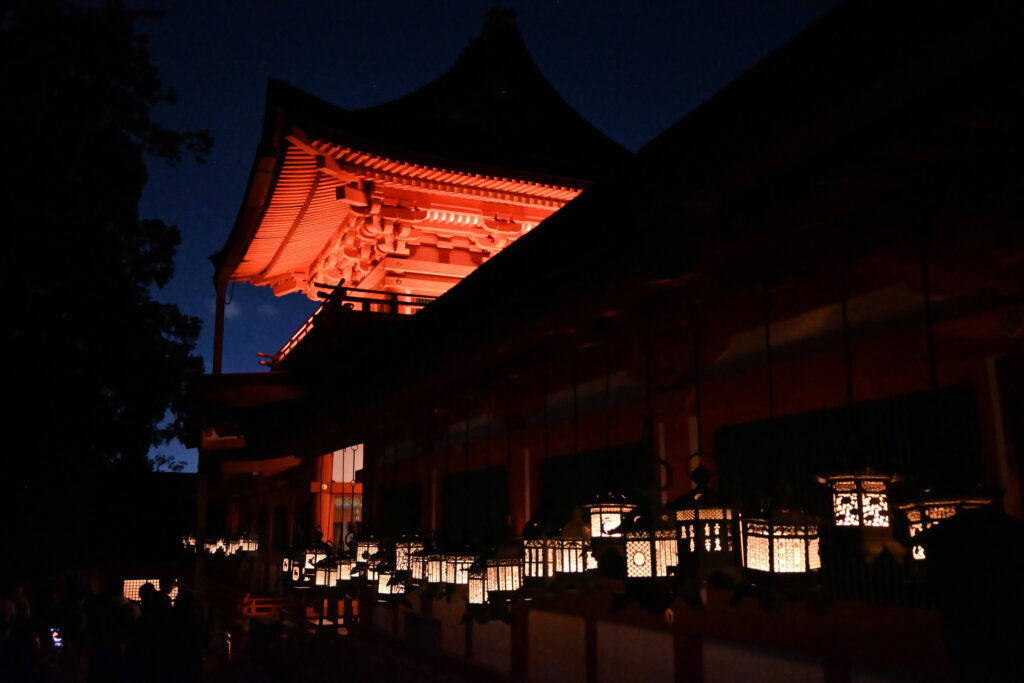
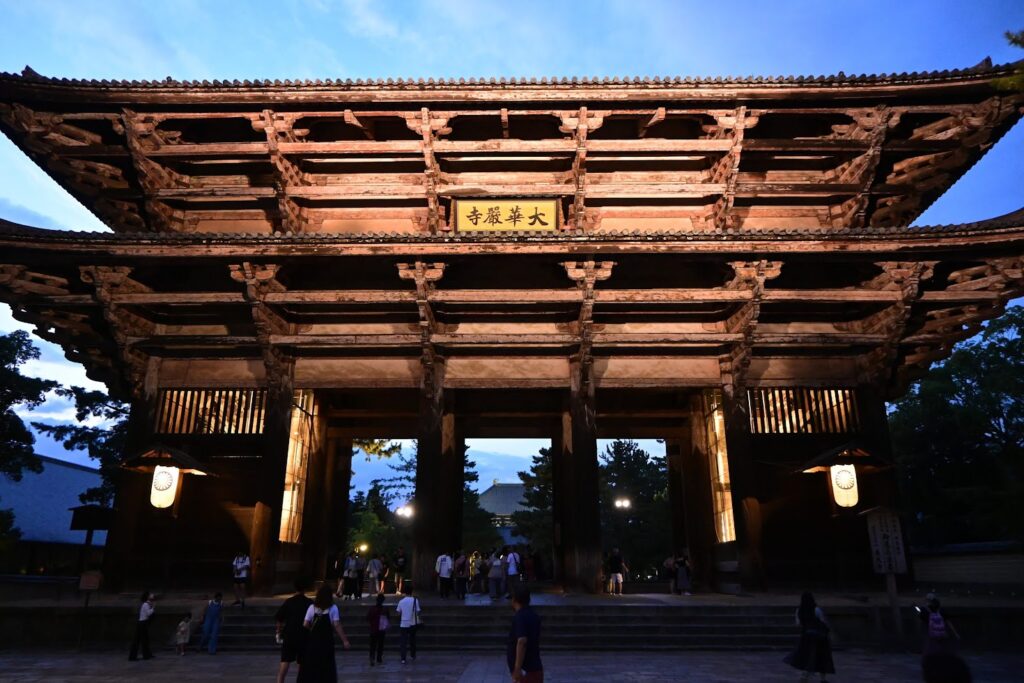
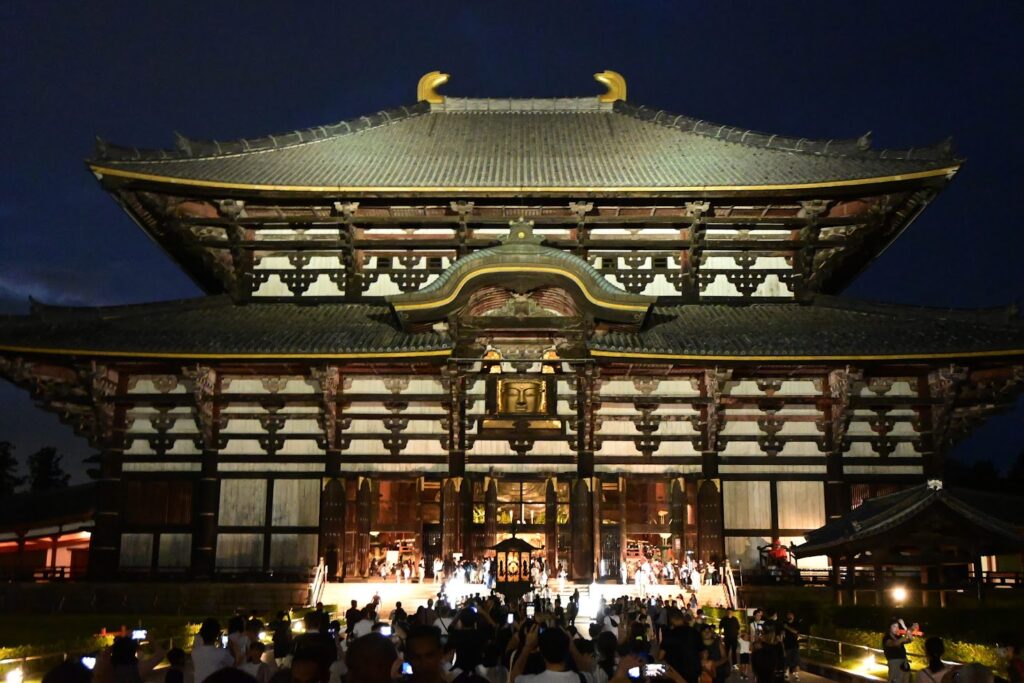
Nara Toukae is held at Nara Park over 10 days in early August. Approximately 20,000 candles are lined up throughout Nara Park, creating a fantastic view.
Chugen Mantoro is held at Kasuga Taisha Shrine on the nights of August 14th and 15th. Approximately 3,000 lanterns are lit on the grounds of Kasuga Taisha Shrine. Countless lanterns appear in the summer night sky, creating a beautiful and magical atmosphere. In the silence of a summer night, which is different from the winter, you can enjoy the mysterious world created by the light of the lanterns.
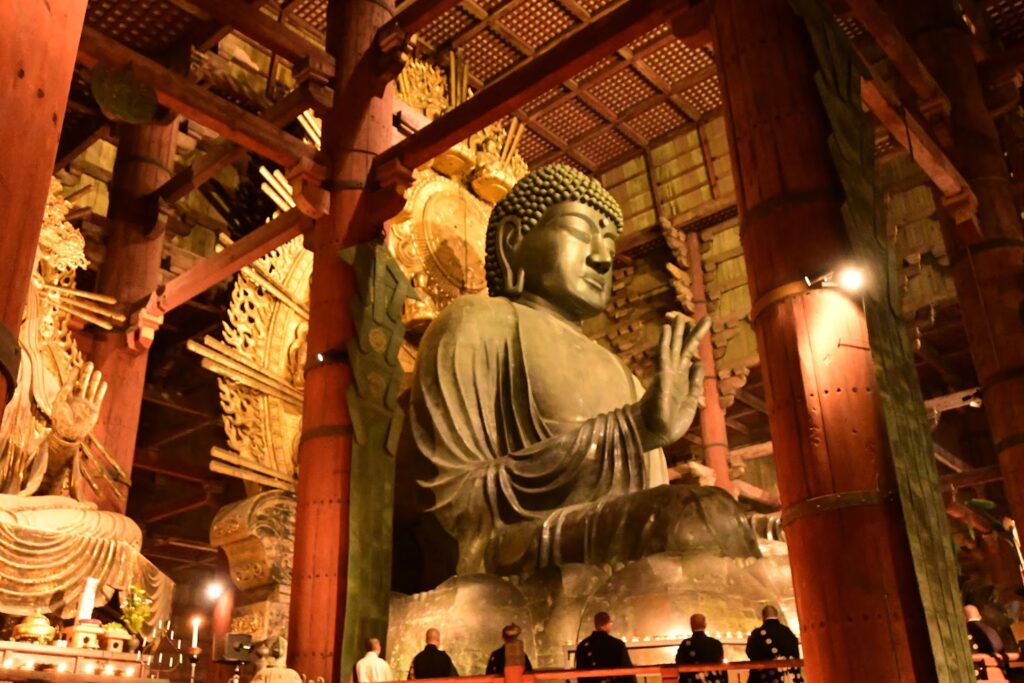
At the Great Buddha Hall of Todaiji Temple, a memorial service for the Great Buddha Hall will be held on August 15th. This is a Buddhist ritual during the Obon period in which lanterns are offered and prayers are made to pray for the spirits of all spirits.
Lanterns are placed in the Great Buddha Hall, and the face of the Great Buddha, which can usually only be seen from inside the Great Buddha Hall, can be seen from the approach. Approximately 2,500 lanterns are neatly lined up on the stone pavement leading to the Great Buddha Hall, creating a fantastic sight.
October
Moon-viewing sanbutsu-kai (Toshodai-ji Temple, Nara)
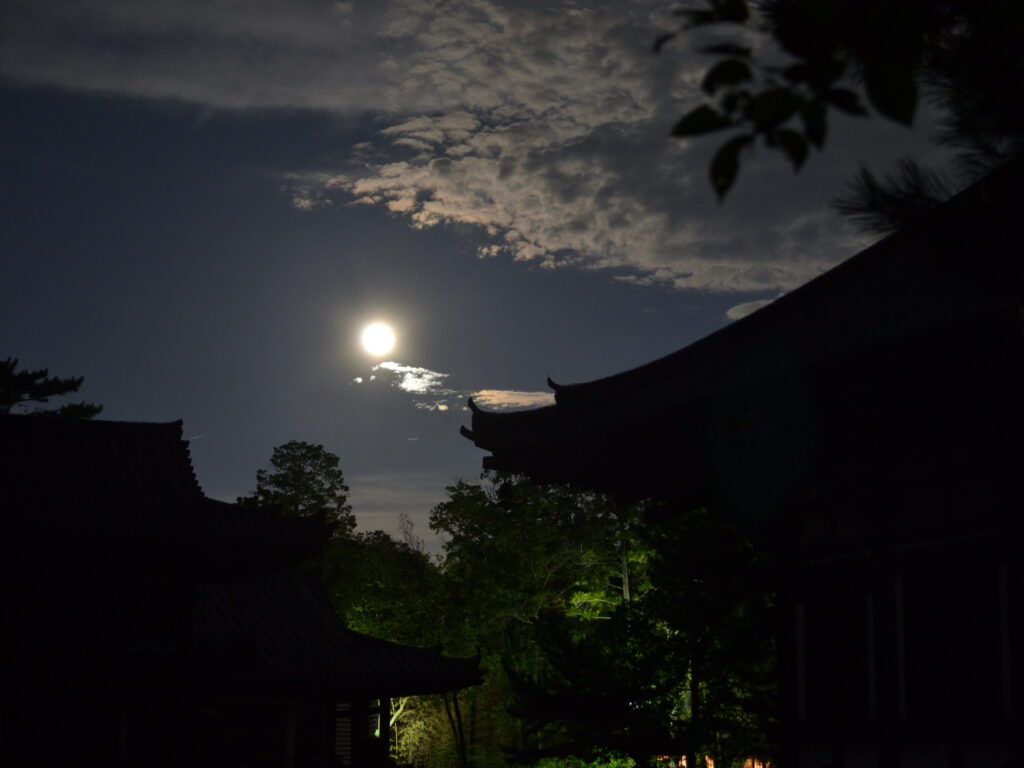
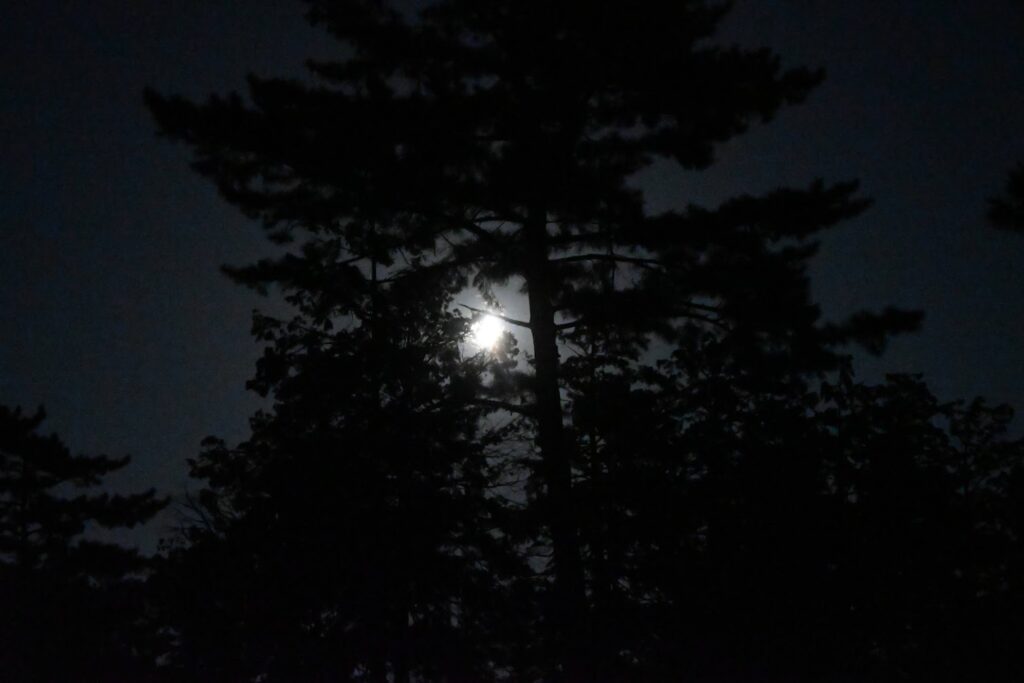
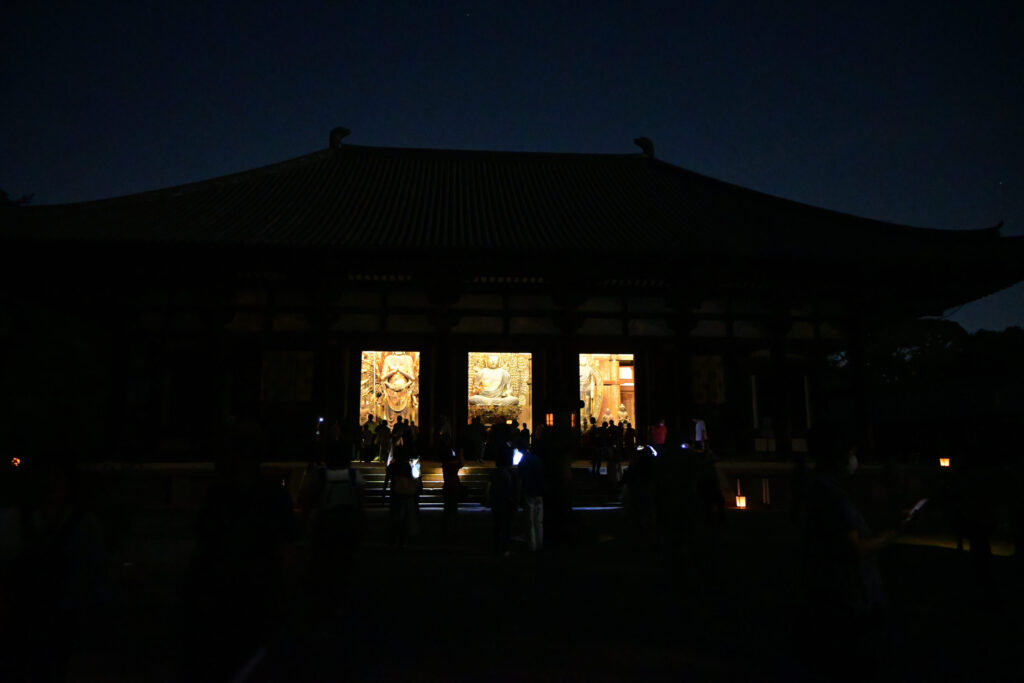
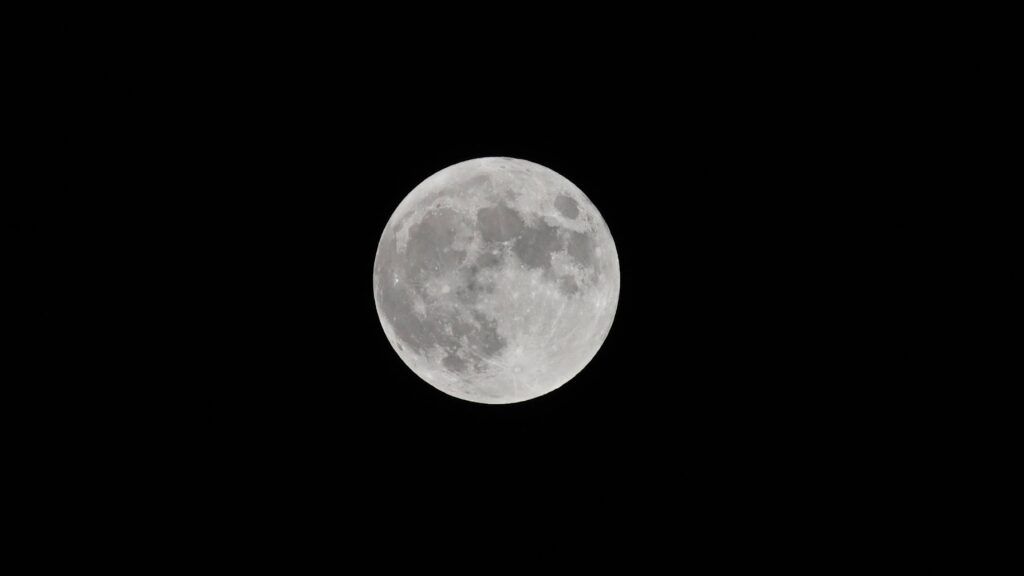
On the day of the harvest moon, a moon-viewing ceremony is held at Toshodai-ji Temple. At this solemn temple, you can enjoy Buddhist rituals and the autumn moon, and you can also see the beautifully illuminated main hall at night, which is normally not possible to see. The Buddha statue that appears in the dusk is very mysterious.
Furthermore, the garden of Mieido, where Ganjin’s statue is enshrined, will also be open to the public at night.
December
Kasuga Wakamiya On Festival (Kasuga Taisha Shrine, Nara)
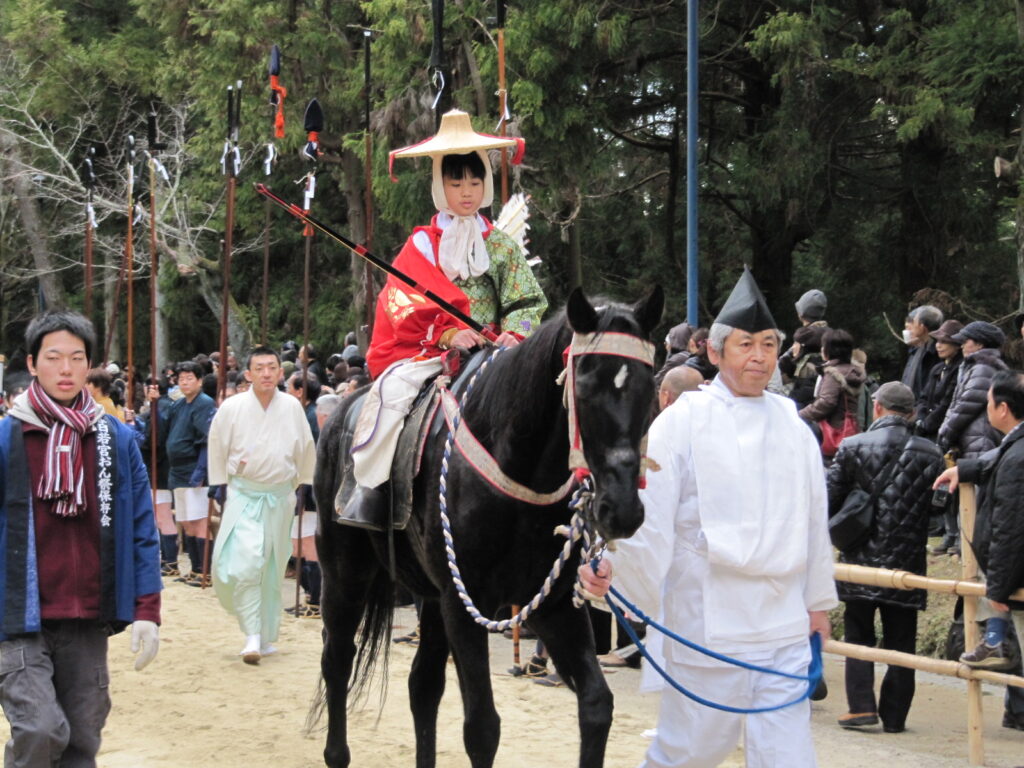
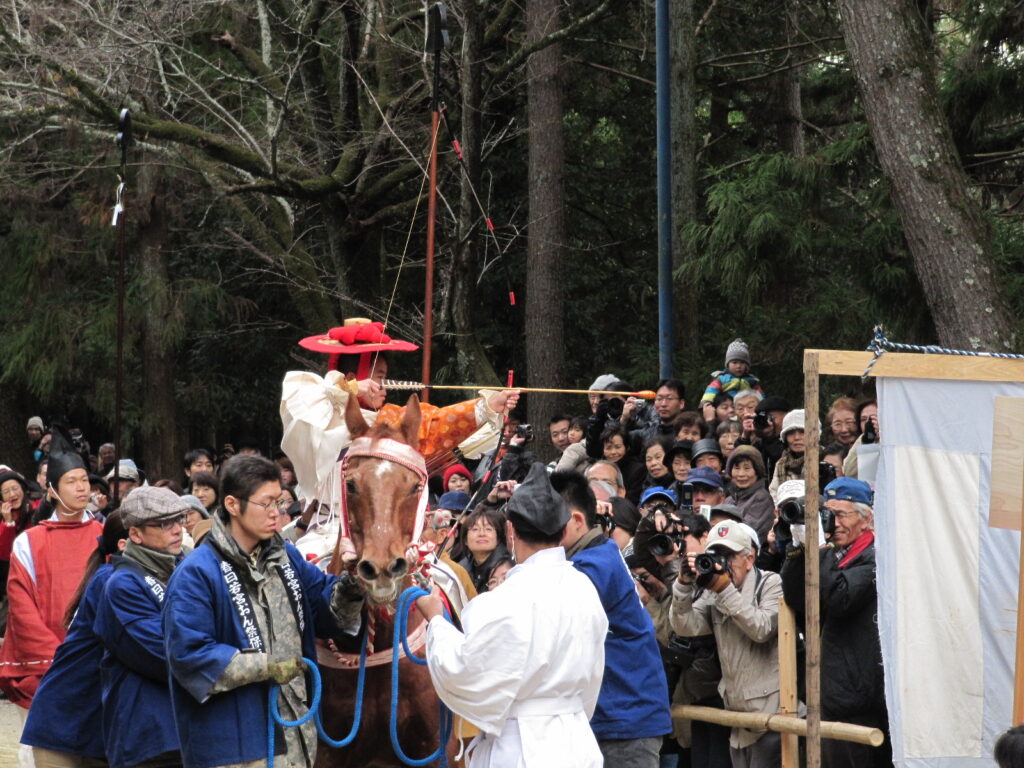
The Kasuga Wakamiya On Festival will be held from December 15th to 18th at Kasuga Wakamiya Shrine, which is a subsidiary shrine of Kasuga Taisha. This solemn festival has a tradition of about 900 years and has been designated as a national important intangible folk cultural property. A wide variety of performing arts such as dengaku, bugaku, sarugaku, and wabu are dedicated to Wakamiya. Major events include the Oshukudokoro Festival on the 15th, the Yoimiya Festival on the 16th, the Senko-no-gi and Akatsuki-sai on the 17th, the Owatari ceremony, the Otabisho-sai, the Kanko-no-gi, and the dedication sumo and after-banquet Noh on the 18th. The Owatari Ceremony on the 17th is the highlight of the festival, with a procession of about 1,000 people and about 50 horsebacks that recreates the glittering customs of the Heian period. The magnificent procession of people wearing historical costumes is truly a sight to behold.