

The northern area is further divided into districts: Murasakino/Takagamine, Ichijoji, Kamigamo/Shimogamo, Ohara and Kurama/Kibune.
Murasakino/Takagamine
Murasakino was originally the hunting grounds of the imperial court. Daitoku-ji temple, great temple Zen, is a building representative of this neighborhood today. Takagamine, surrounded by mountains, benefits from beautiful nature despite not being far from inside the city. Hon’ami Koetsu, a great Japanese artist from the early Edo period, launched an artistic community there. Sites famous for the red autumn leaves are scattered there.
Daitokuji Temple
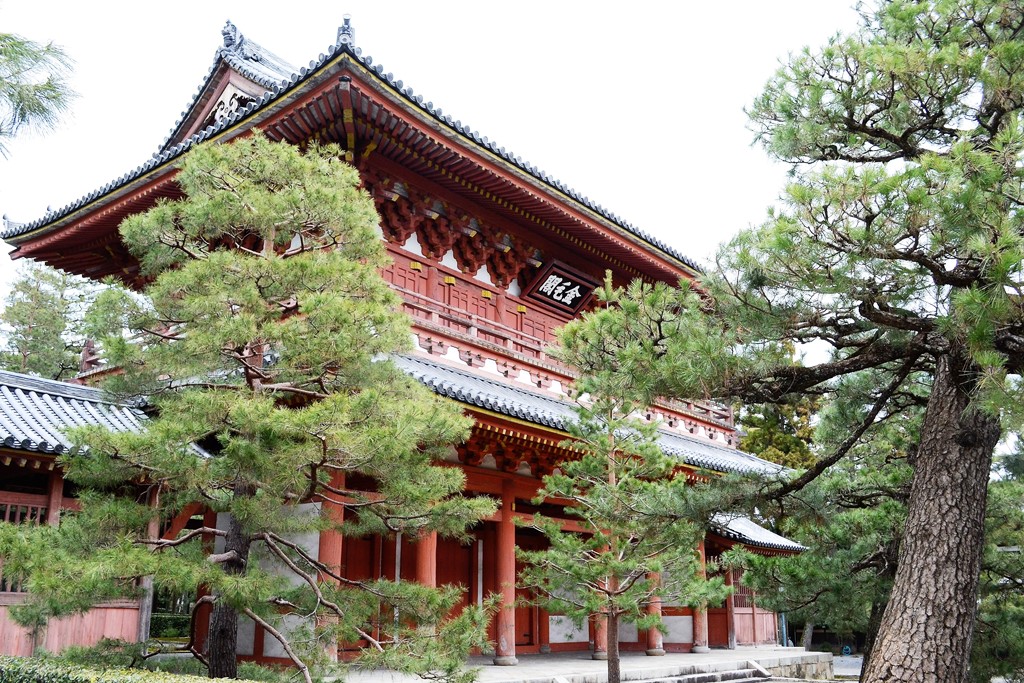
The immense enclosure of this temple Zen extends north of Kitaoji Street. There is a restful silence there, contrasting with the atmosphere of the golden pavilion which, not far away, is always full of people. I therefore recommend this temple if you want to relax a little in a calm and serene atmosphere. Daitoku-ji houses more than twenty sub-temples within its vast enclosure, of which only four (Ryogen-in, Zuiho-in, Daisen-in and Koto-in) are usually open to the public. The flavorful gardens of each of these temples are worth a visit (Koto-in is currently closed and its reopening remains uncertain). For several years, the garden of bonsai Hoshun-in and Oubai-in are also accessible to the public.
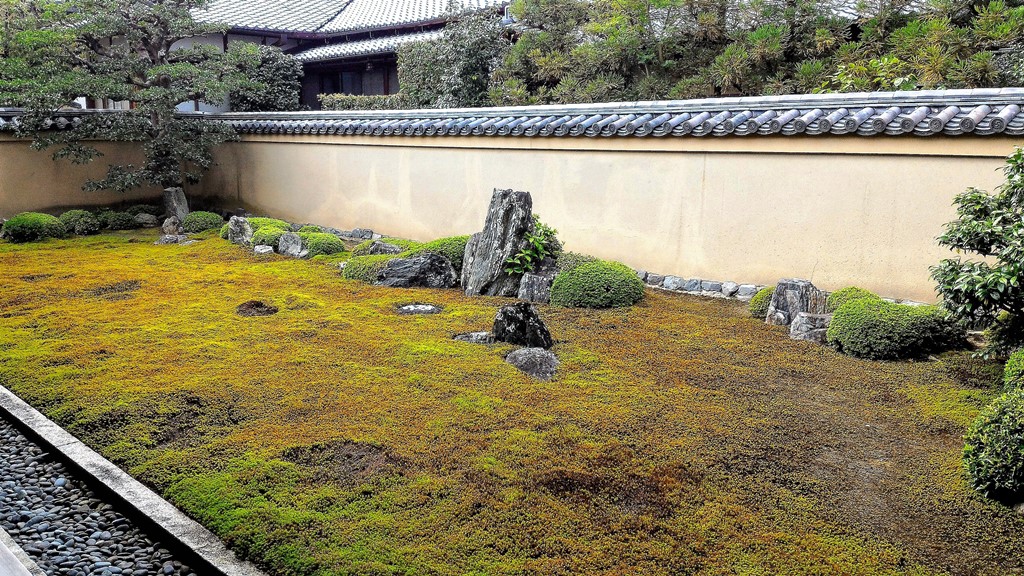
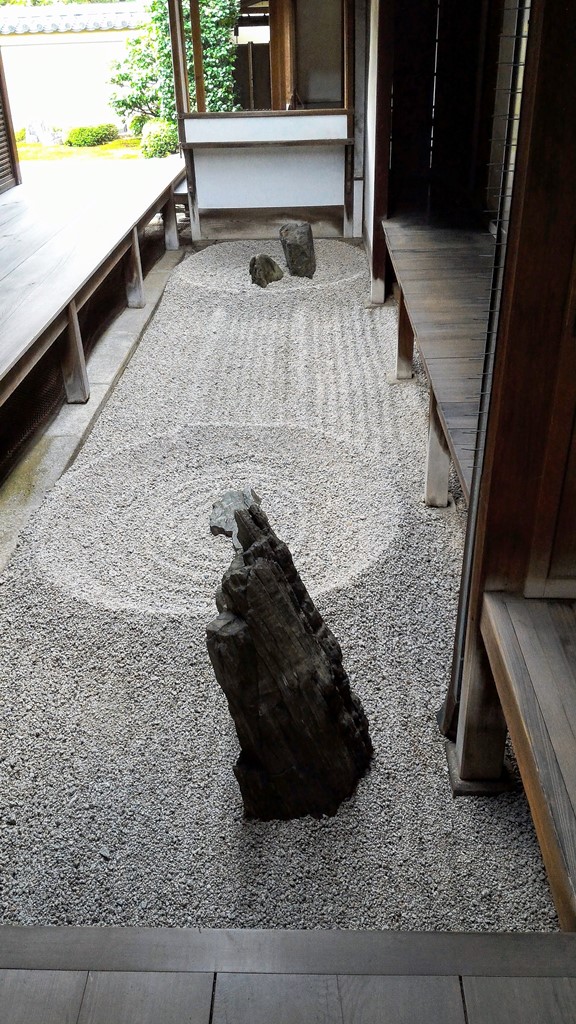
Ryogen-in is nicknamed the moss temple of the northern area of Kyoto. The hojo, dwelling of the monks of yesteryear, is surrounded by five marvelous gardens. The northern garden, the oldest of them, is made up of moss and stone composition. The East Garden is the smallest stone garden in Japan. How do you like this very simple garden?
- The entrance ticket price to Ryogen-in Temple is 350 yen.
- Map
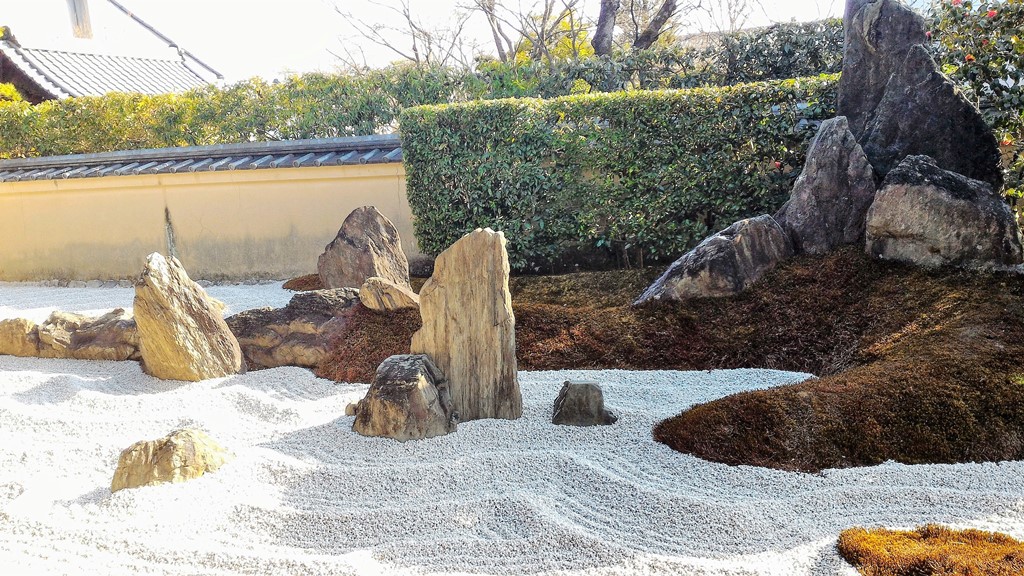
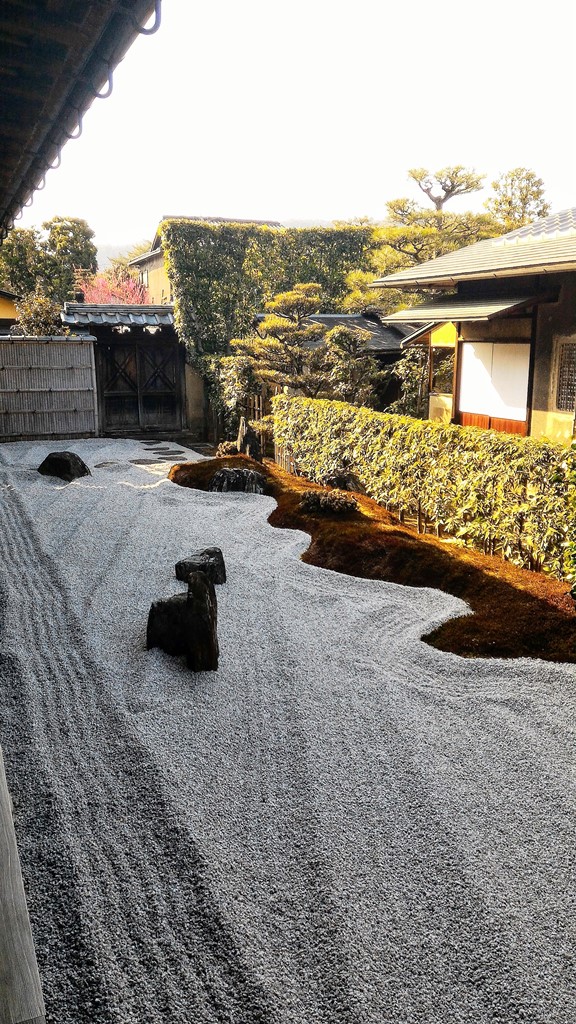
Zuiho-in has three gardens Zen. Its southern garden made up of moss, stones and white gravel will make you feel the grandeur of nature. Also note its north garden. It is nicknamed the garden of the cross, but why?
- The entrance ticket price to Zuiho-in Temple is 400 yen.
- Map
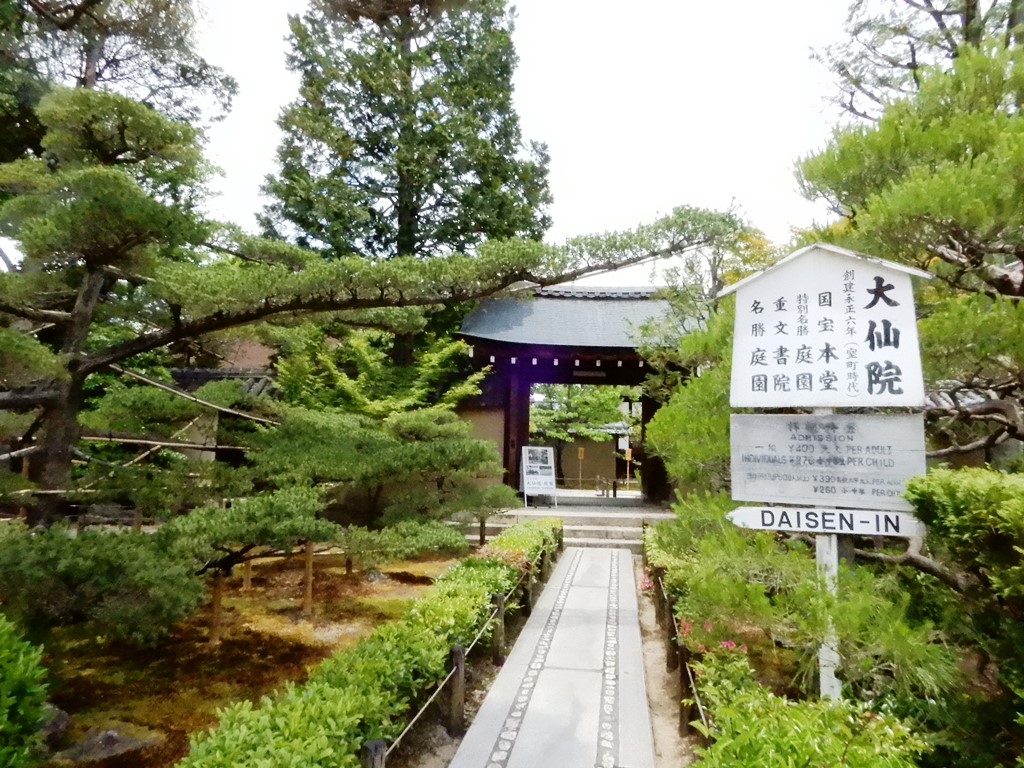
The garden Zen Daisen-in is often compared with the stone garden of Ryoan-ji Temple. With its varied stones and white gravel organized in a narrow space, it represents the movements of water flowing from the gorge towards the sea. Unlike most gardens Zen, it presents itself in a rather concrete aspect. This does not prevent it from being a garden Zen. It is at the same time the metaphor of human life.
- The entrance ticket price for Daisen-in Temple is 500 yen.
- Map
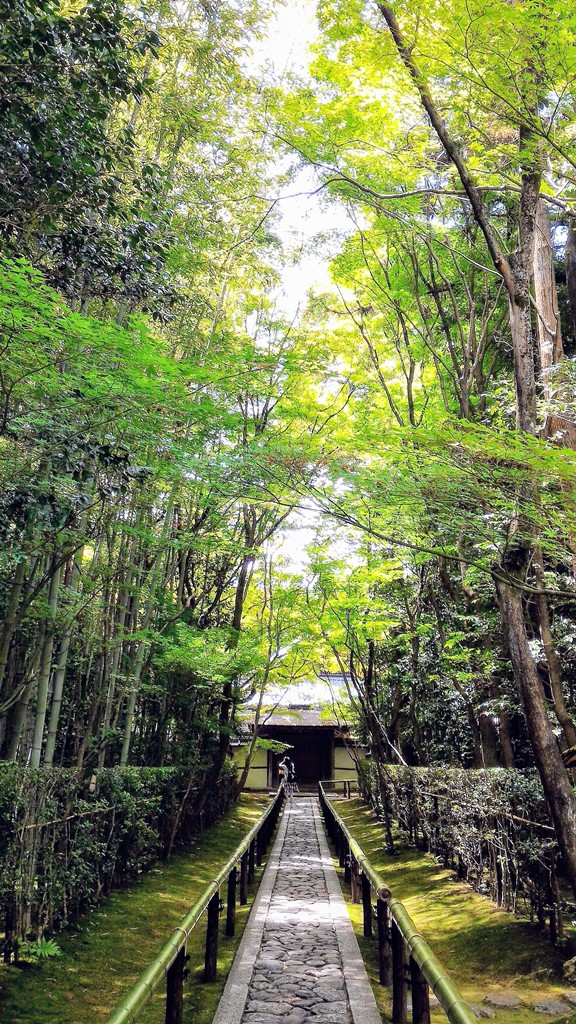
Koto-in is the serene site where I can completely relax every time I visit it. Its garden, nicknamed the maple garden, is magnificent, especially in autumn. Its new greenery is also not to be missed. It will be pleasant to stroll there, and you will never tire of contemplating this garden while tasting the powdered green tea. But what I advise you to absolutely see is the access road to the temple. Surrounded by maples and bamboo, it stretches straight to the door. You will feel a peaceful atmosphere, far from the hustle and bustle of the city.
- The Koto-in Temple entrance ticket price is 500 yen.
- Koto-in is currently closed and its reopening remains uncertain.
- Map
Opened in 2021 within Hoshun-in temple, one of the sub-temples of Daitoku-ji, this garden bonsai fits harmoniously into the Zen aesthetic. Still little known, it is nevertheless a charming place for lovers of bonsai.
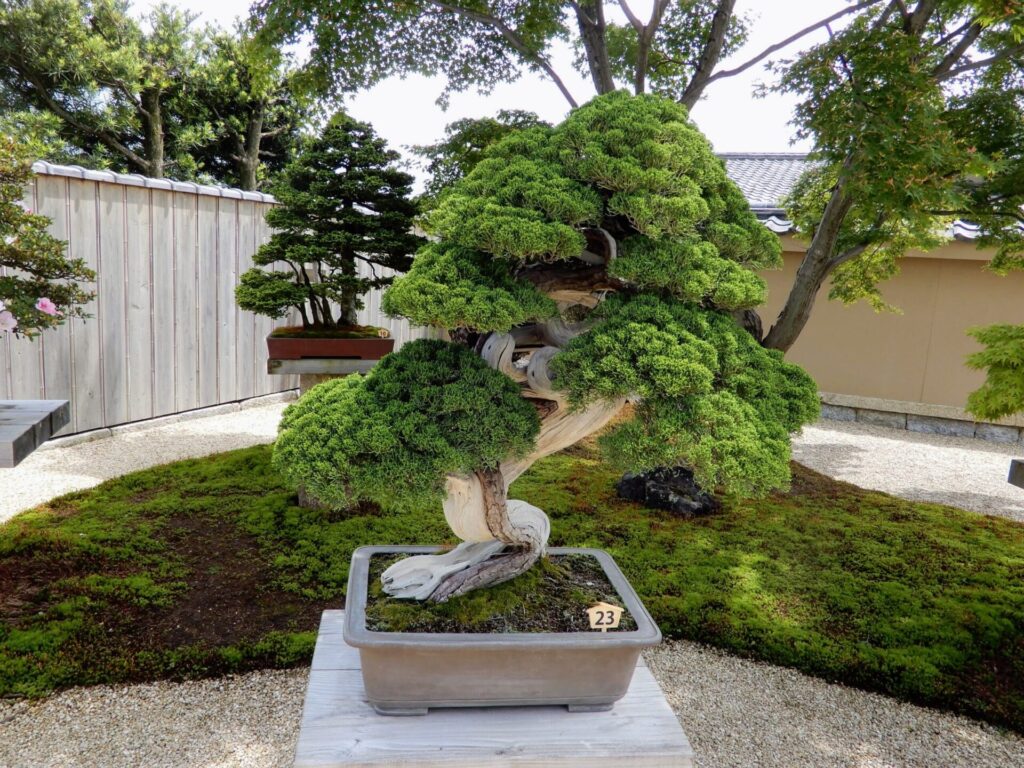
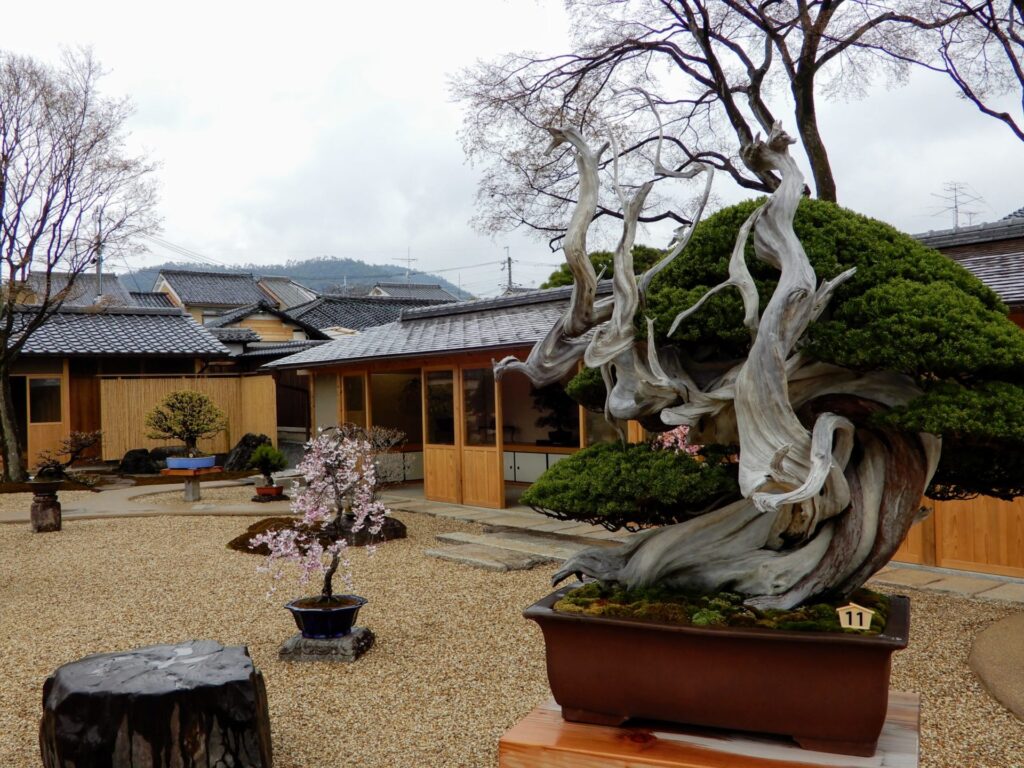
- The entrance ticket price to the bonsai garden at Hoshun-in Temple is 1,000 yen.
The Oubai-in temple grounds, much larger than one might imagine from the outside, are home to four gardens with distinct ambiances, offering a pleasant and peaceful view. And here and there, corners breathe a discreet Zen beauty. If you are tired of the hustle and bustle of famous tourist places, come and discover this place.
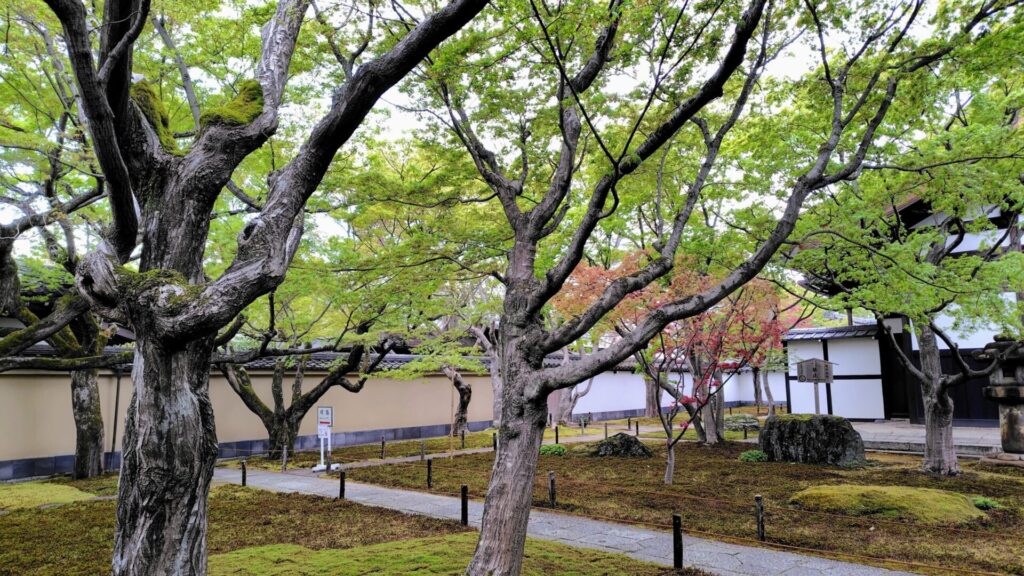
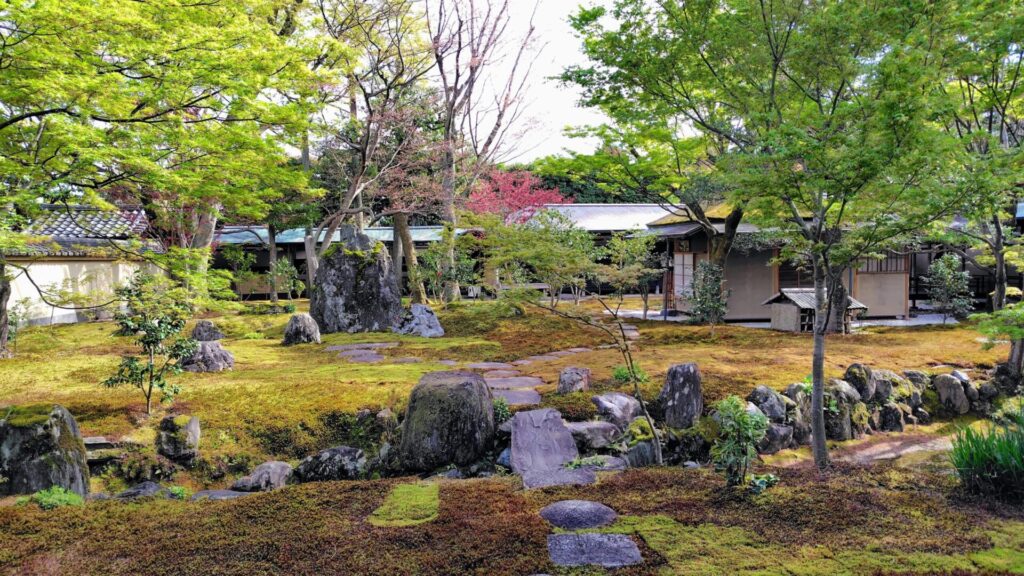
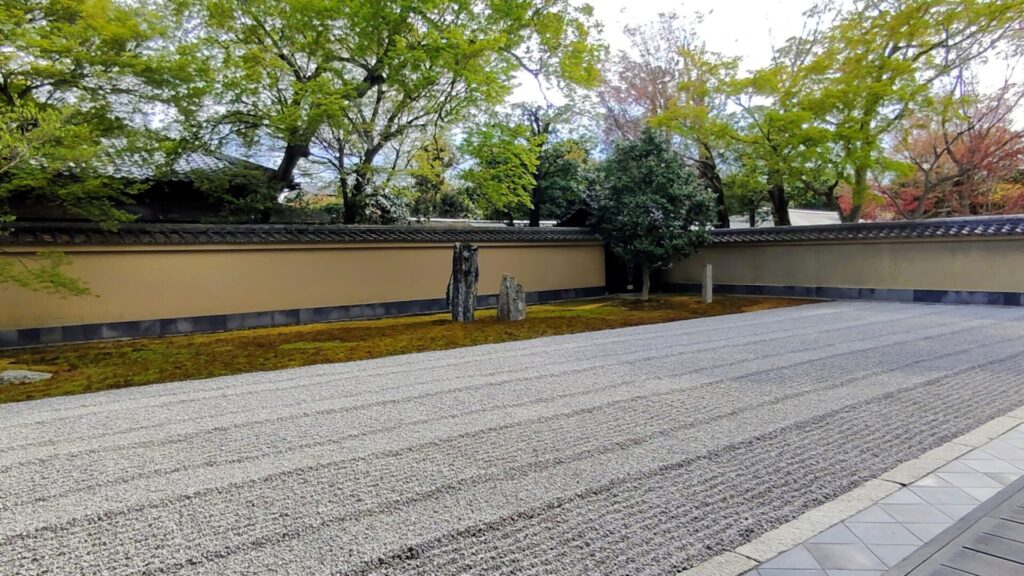
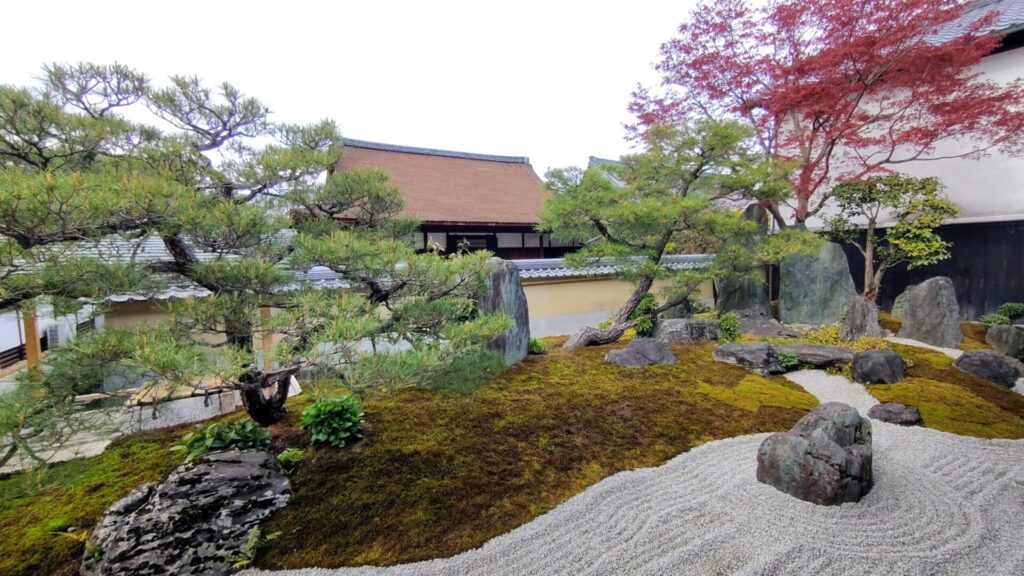
- The entrance ticket price to Oubai-in Temple is 800 yen.
Genko-an Temple
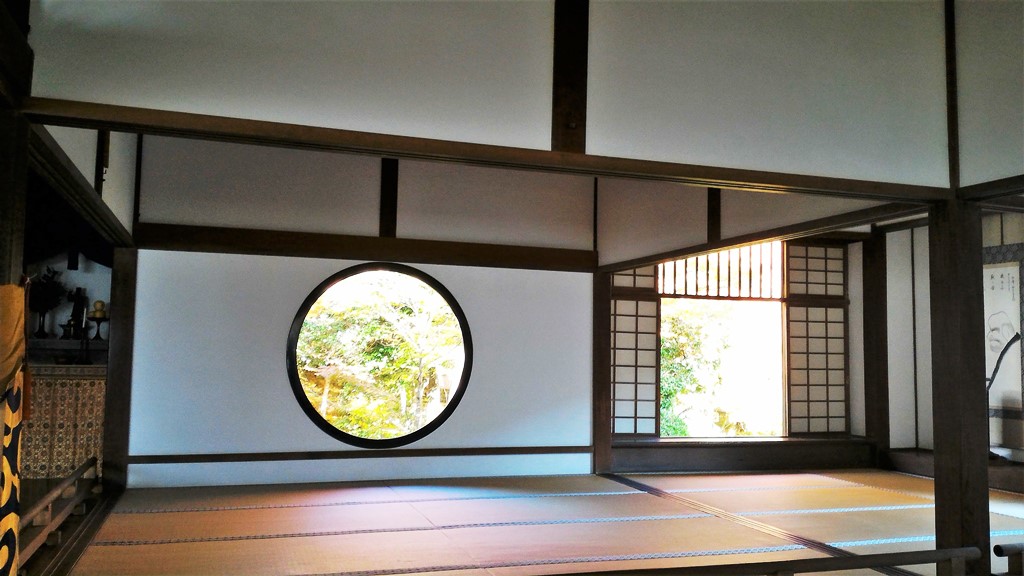
This temple Zen located in the Takagamine district is known for the red leaves of its maple trees. But what interests us is not limited to autumn leaves. It offers the opportunity to reflect on yourself when you cannot remain yourself or when you find yourself at a decisive turning point in your life. Note the two large windows in its main building. One is square in shape and called the “illusion window. ”The other is circular in shape and called the “window of illumination. ”What do they represent? The square-shaped window symbolizes the inevitable trials that one encounters throughout one’s life, while the circular-shaped one symbolizes the state of awakening. We first look back on ourselves in front of the window of illusion, only then can we find our natural being in front of the window of illumination.
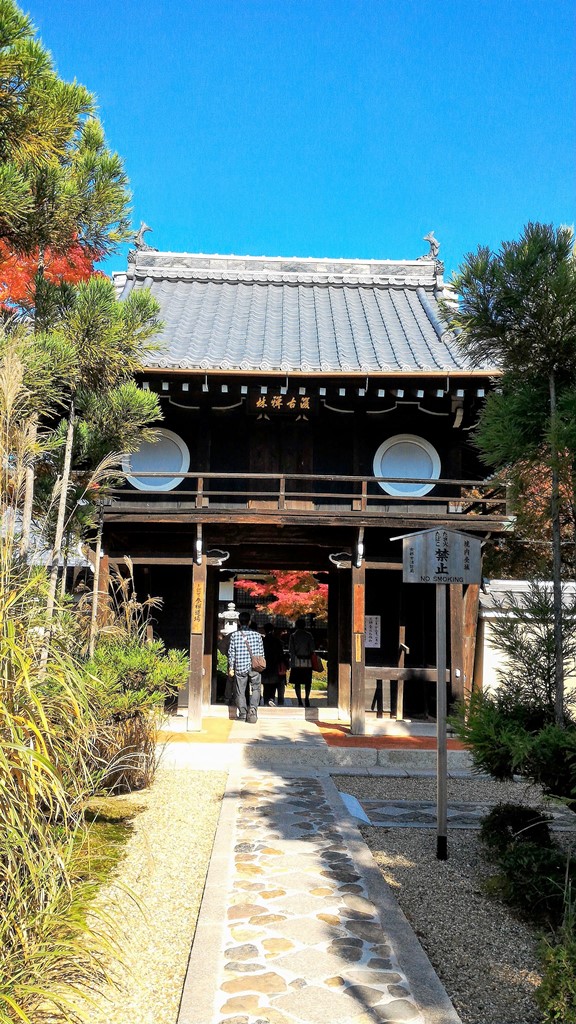
- The entrance ticket price to Genko-an Temple is 400 yen except November (500 yen).
- The beauty of this temple garden will take your breath away during the season of red autumn leaves, but it attracts a lot of tourists. If you want to reflect on yourself while quietly looking at the garden through the two windows, I advise you to visit it at other times. In any case, you can admire the garden landscape of each season.
- Map
Koetsu-ji Temple
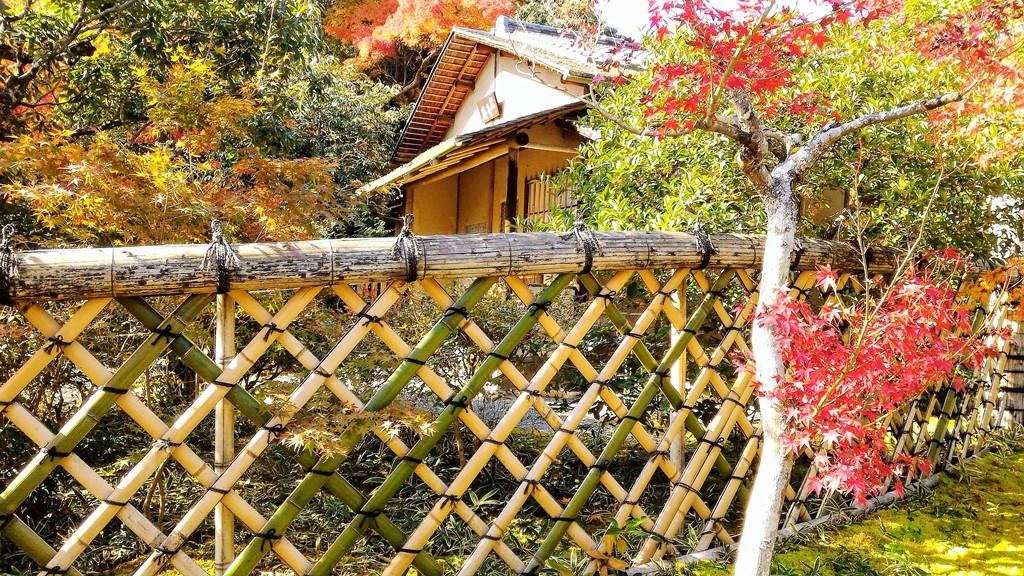
If you visit Genko-an Temple, how about stopping by the nearby Koetsu-ji Temple? This one is closer to a hermitage than a temple, and for good reason. It was originally the residence of Hon’ami Koetsu, a 17th century grandmaster, and was transformed into a temple to pray for the salvation of his soul after his death. Koetsu became famous as a swordsman, tea ceremony master, calligrapher, painter and ceramicist. The enclosure dotted with seven tea pavilions is like a strolling garden. Crossed bamboo hedges describing a gentle curve add to the charm of the enclosure. In the background, the grandiose landscape of three mountains of Takagamine will welcome you. You can immerse yourself there while contemplating nature.
- The entrance ticket price to Koetsu-ji Temple is 400 yen (500 yen during the red maple leaf season).
- It is closed from November 10 to 13.
- Map
The Shozan Garden
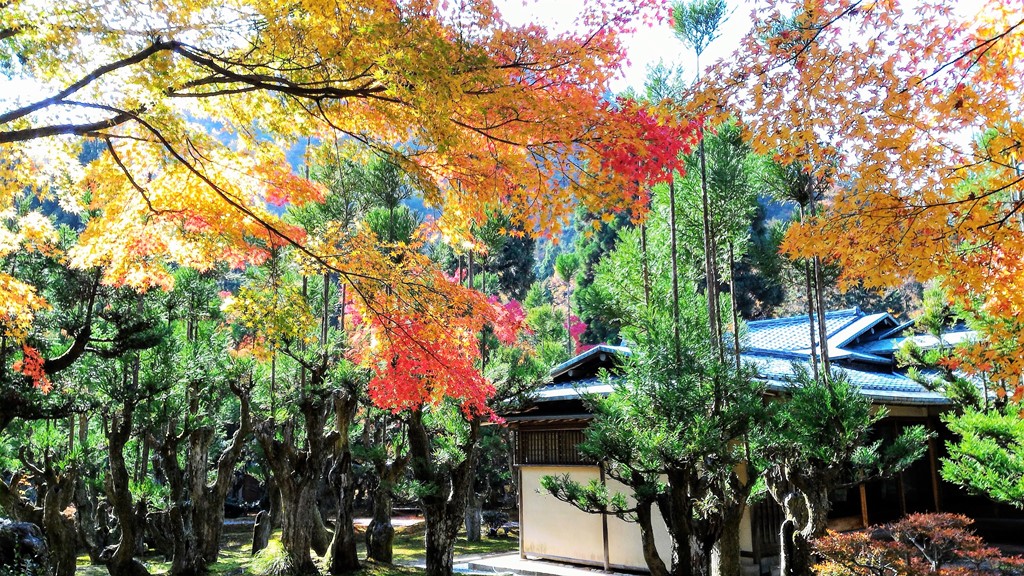
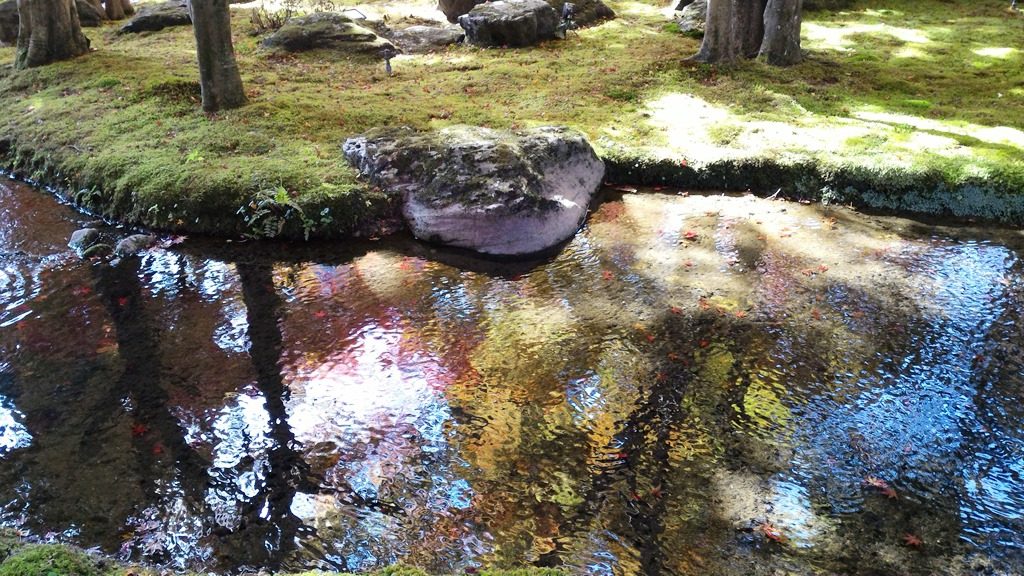
This garden is located in the Shozan Entertainment Complex, located 1 km southeast of Koetsu-ji Temple. To get there, take the path lined with maple trees along the river. Maple trees, moss, cherry trees, plum trees, etc. which color each season are well arranged there. But perhaps the most remarkable thing is the unique appearance of the cedars. Several branches extend vertically above the trunk. This style is called daisugi. Today, daisugi is often used for decorative purposes for Japanese gardens. About 3,000 daisugi, having a long history, create a special atmosphere in the Shozan Garden.
- The Shozan Garden entrance ticket price is 500 yen.
- If you go further south from this garden, you will arrive in about 20 minutes at the golden temple, Kinkaku-ji.
- Map
Ichijoji
This district owes its name to an ancient temple which has disappeared. This neighborhood is known for a pine tree called sagarimatsu under which Miyamoto Musashi, a fencer from the beginning of the 17th century, fought a duel with the Yoshioka clan. If you have read the manga “Vagabond”, you must know Musashi. It is interesting to visit the historic sites in the surrounding area, little known but very pleasant. It is also possible, in the same day, to visit the silver temple, not far from this district. And if you like the ramen, the numerous restaurants of the “The ramen street” will whet your appetite.
Shisen-do Temple
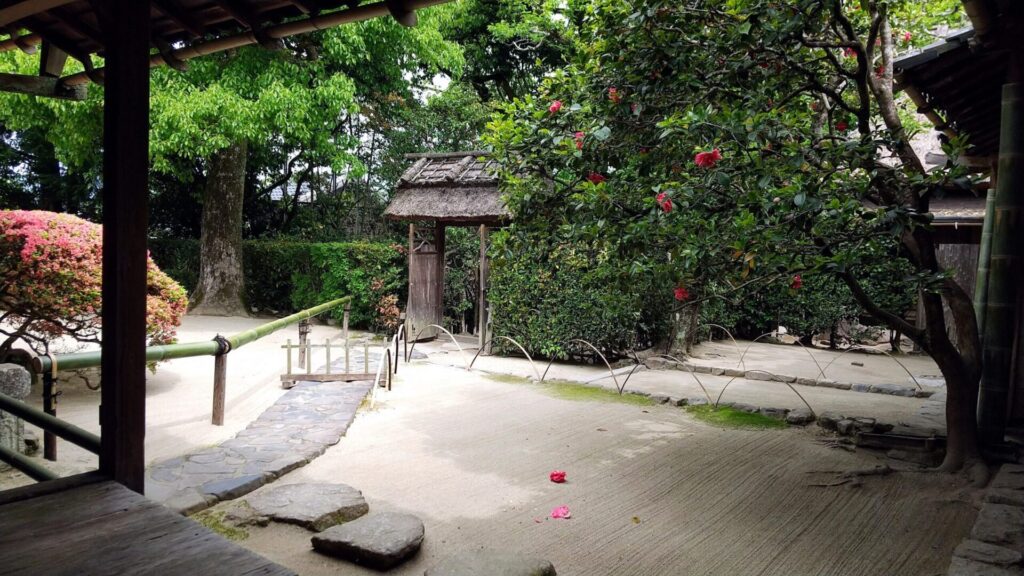
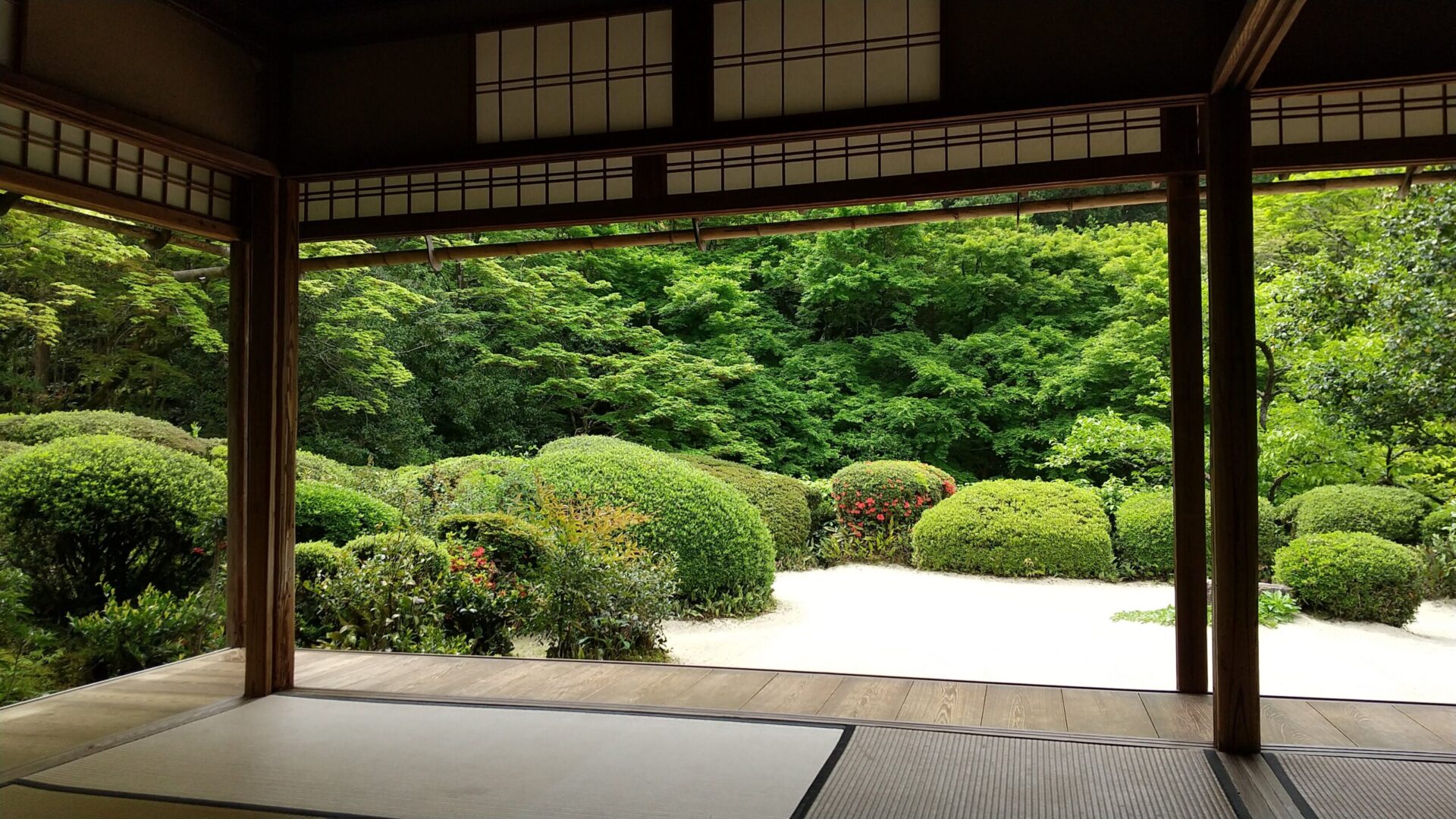
Shisen-do was originally the villa where Ishikawa Jozan, a 17th century warrior and intellectual, retired at the age of 59. The wonderful garden designed by Jozan himself and well maintained continues to fascinate us today. How about going to contemplate this haven of peace?
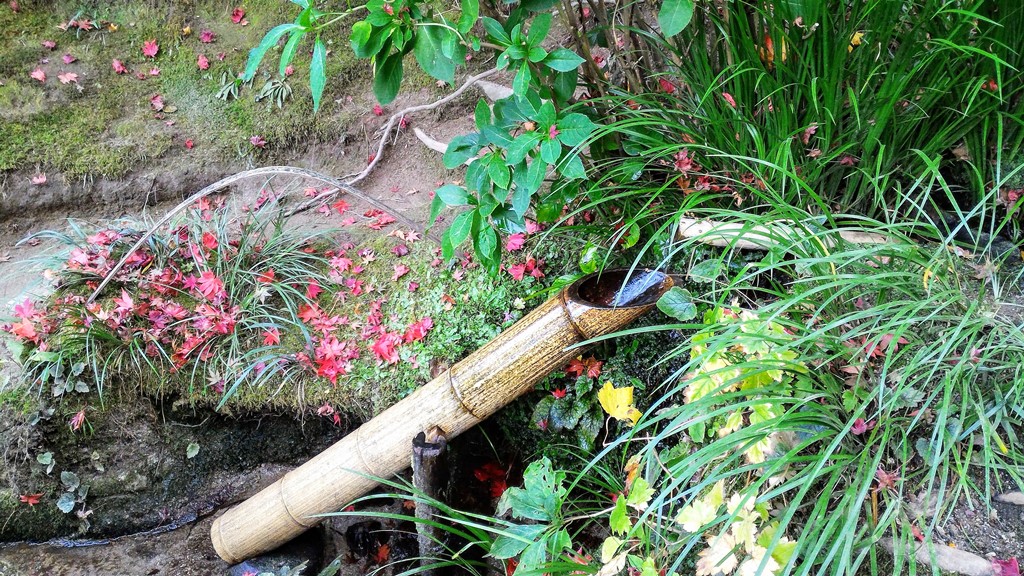
You would hear the rhythmic sound of the bamboo seesaw, calledshishiodoshi. It adds to the taste of the Japanese garden, but do you know what it is?
- The entrance ticket price to Shisen-do Temple is 700 yen.
- It is closed on May 23.
- Map
Enko-ji Temple
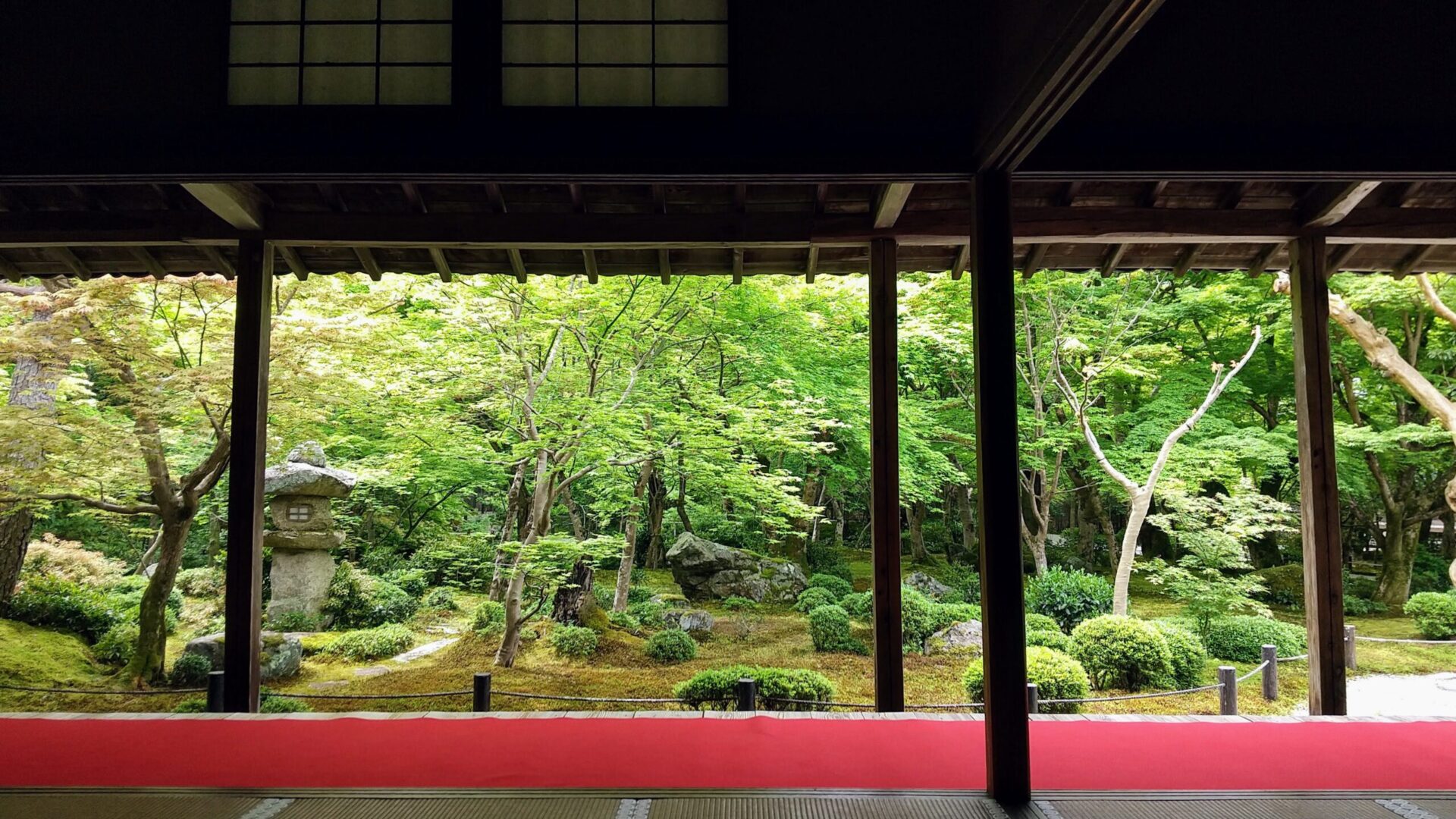
If you want to experience the diverse Japanese gardens and picturesque scenery of Kyoto without visiting temples here and there, I highly recommend this particular temple. The Zen garden depicting a dragon flying through a sea of clouds, the strolling garden offering beautiful views in every season, the bamboo forest, and finally, the splendid view of northern Kyoto from the heights… Despite its many charming features, it remains relatively unknown. How about spending some pleasant time there, enjoying the tranquility of these gardens?
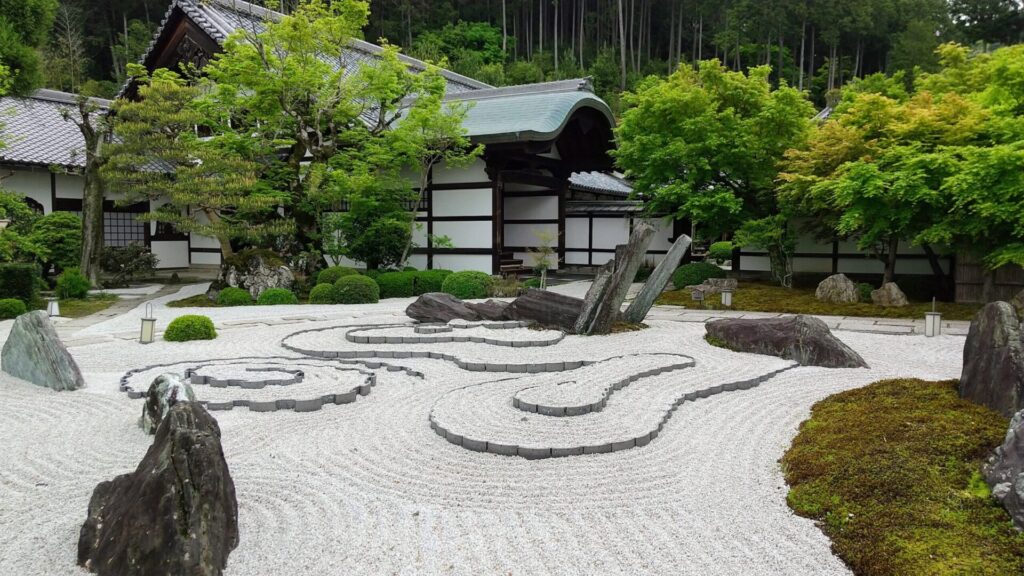
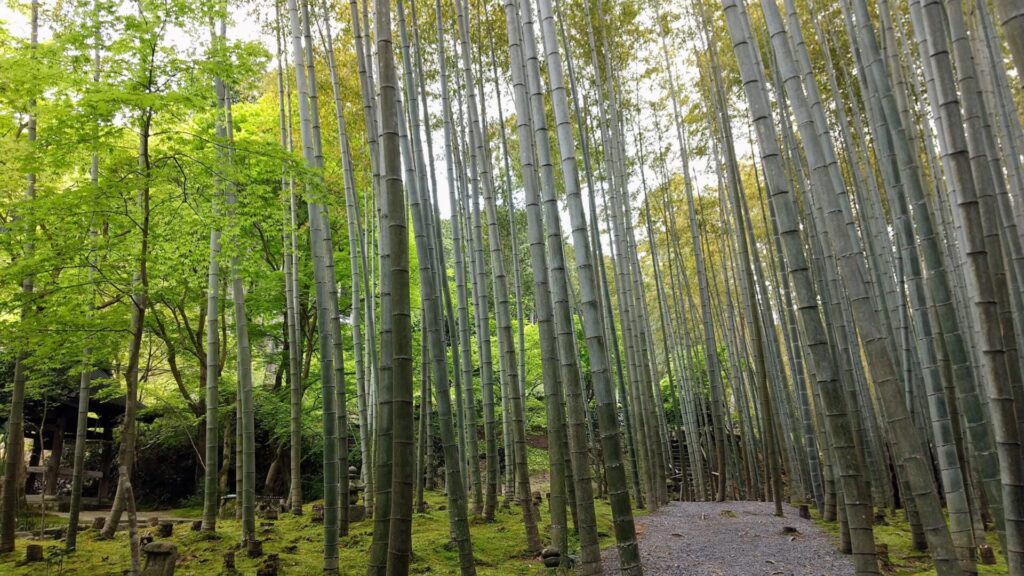
- The regular entrance ticket price to Enko-ji Temple is 600 yen. At the height of autumn and its flamboyant maples, entrance fees and visiting times may be modified.
- Map
Manshu-in Temple
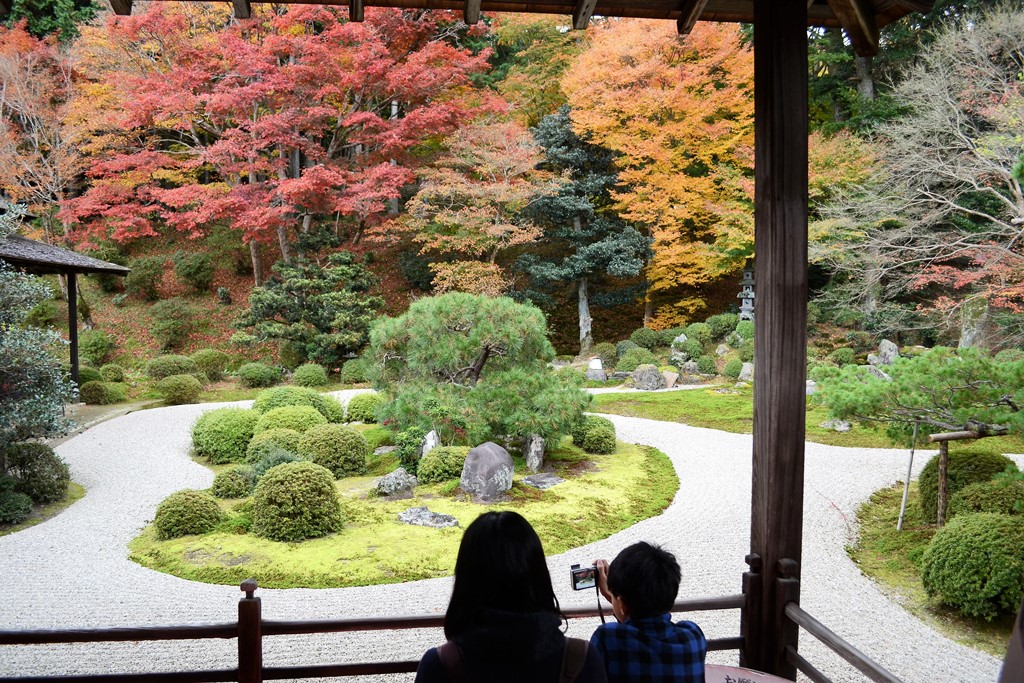
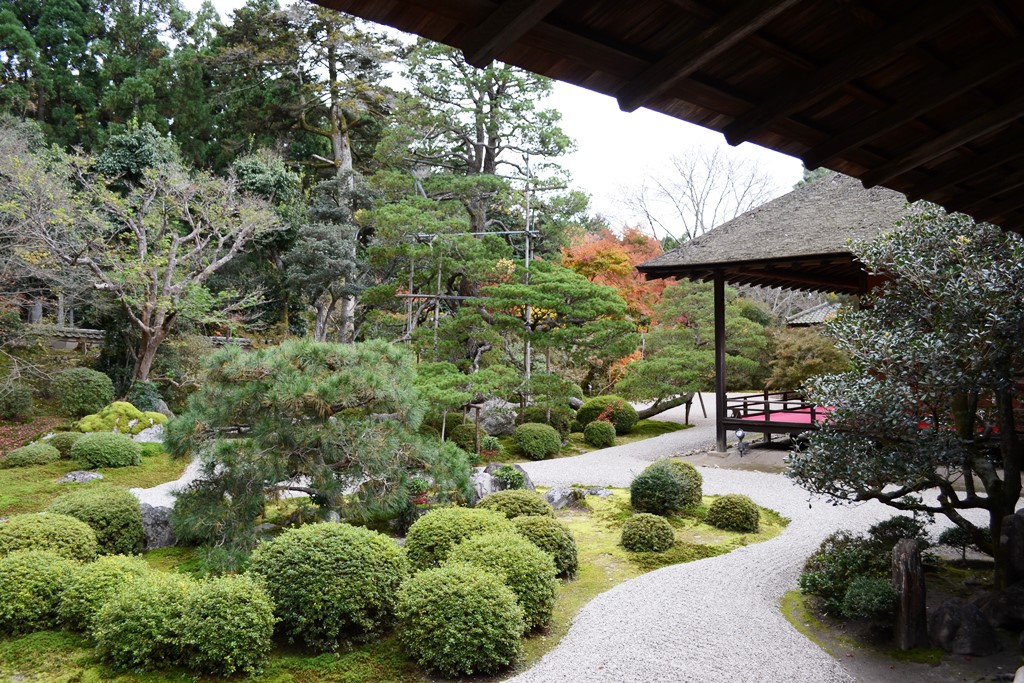
Manshu-in having a close relationship with the imperial family, it houses a beautiful garden which is worth contemplating. It’s the marriage of style Zen and the style of the imperial court. What is remarkable there is the five-needled pine, more than 400 years old, in the shape of a crane. But don’t just see the garden. Also note the interior of the two halls which overlook the garden. We recognize the influence of the designs of the Katsura imperial villa. The fan-shaped, gourd-shaped sliding door handles, the openwork transoms, the decorative objects in the shape of Mount Fuji that hide the nails. . . Can you find them?
- The Manshu-in Temple entrance ticket price is 800 yen.
- We take a somewhat steep slope to get to this temple, which is not well served. The temple being located off the beaten track, you can avoid the crowds.
- This temple is like a small museum. It is forbidden to take photos of the interior of the buildings, where you can appreciate paintings dating from the 17th century.
- Map
Kamigamo/Shimogamo
The oldest twin Shinto shrines inscribed on the UNESCO World Heritage List are located there. Both are known as one of the power spots, places where spiritual energy emanates. By feeling nature up close, you can refresh yourself.
The Kamigamo-jinja Shinto Shrine
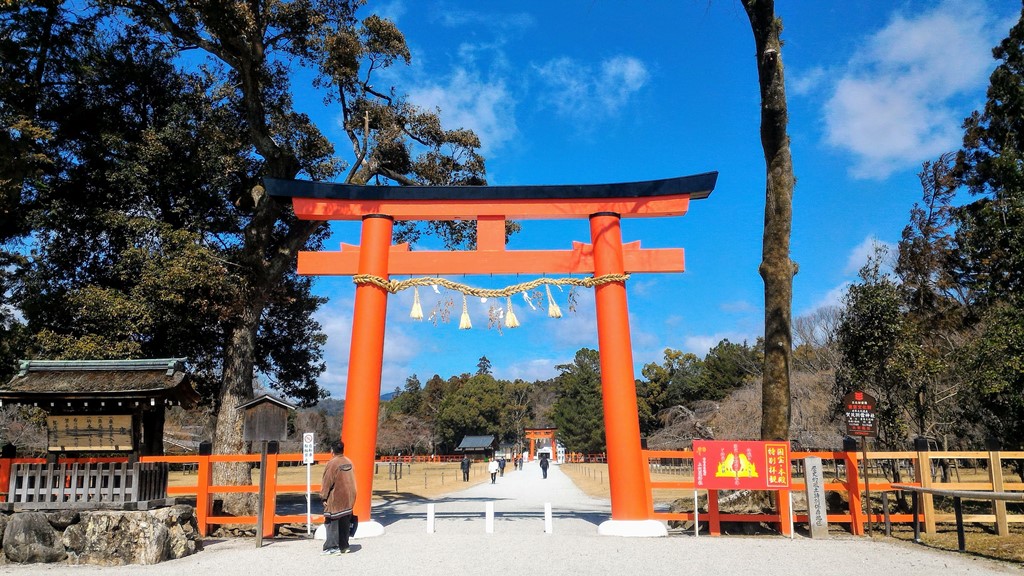
It is located on the banks of the Kamo River in the north of Kyoto, a little far from the city center. You can spend a quiet moment there far from the hustle and bustle of the city. The scenery of the serene river flowing through its enclosure will flatter the eyes. After the first portico, torii, a long access road to the sanctuary stretches out. Behind its immense terrain, there is the sacred mountain Ko at about 300 meters above sea level where the god worshiped at this sanctuary descended according to legend.
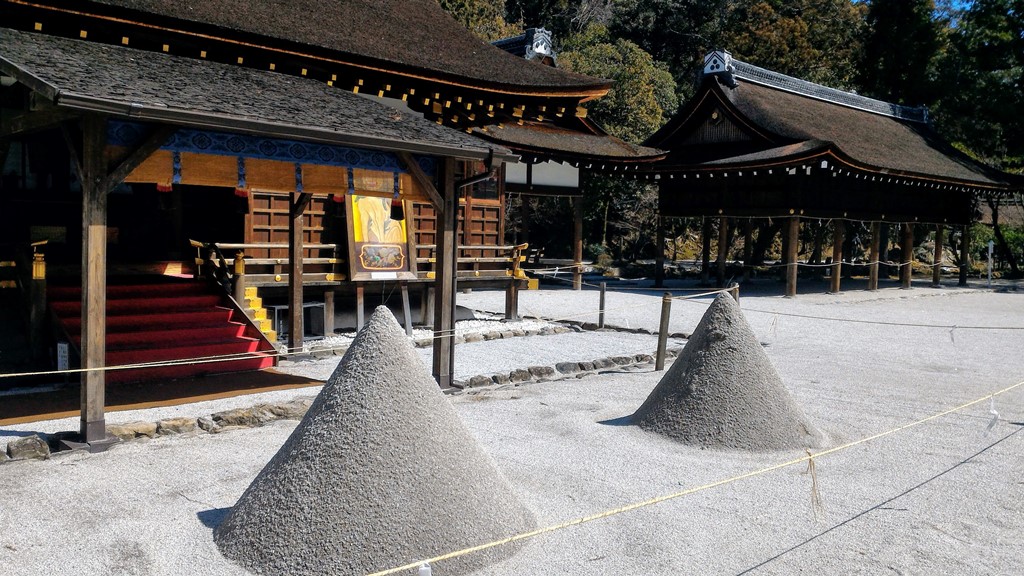
Past the second portico, torii, you will notice two sand cones called tatesuna made on the model of the sacred mountain Ko. They serve as a purifier. It is customary to chase away evil spirits by spreading salt or sand in Japan. It is said that the tatesuna of the Kamigamo-jinja Shinto shrine are at the origin of this habit. Will you also notice the pine needles at the top of each tatesuna?
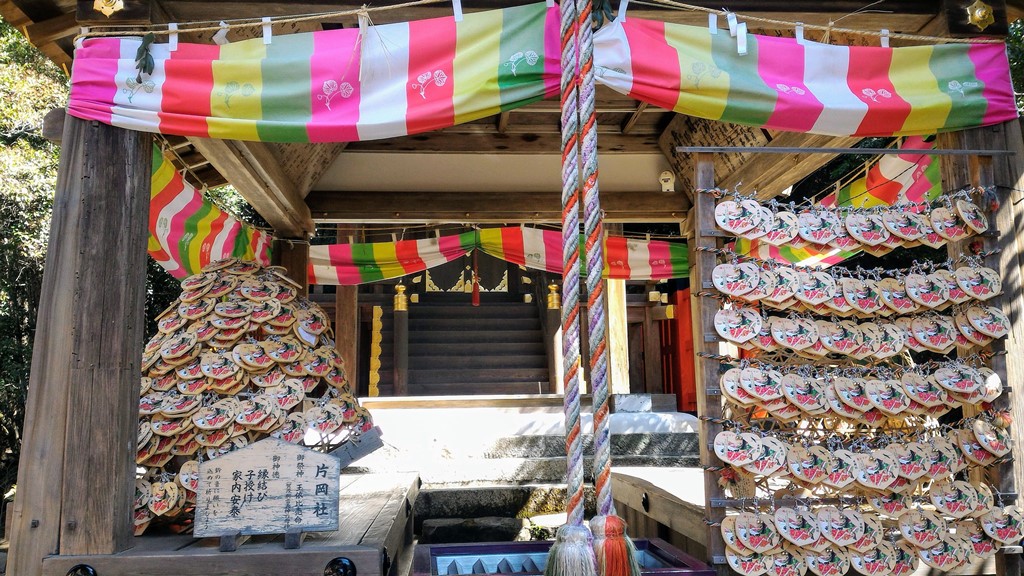
Among the annexed sanctuaries that dot its vast enclosure, the Kataoka sanctuary is the best known. There you will find many ex-votos hanging with the motif of Murasaki-Shikibu, a woman of letters and poet of the Heian period. It is said that she attended him to pray for a happy marriage. If you want to find a good match, how about visiting it and writing your wish on an ex-voto in the shape of a hollyhock?
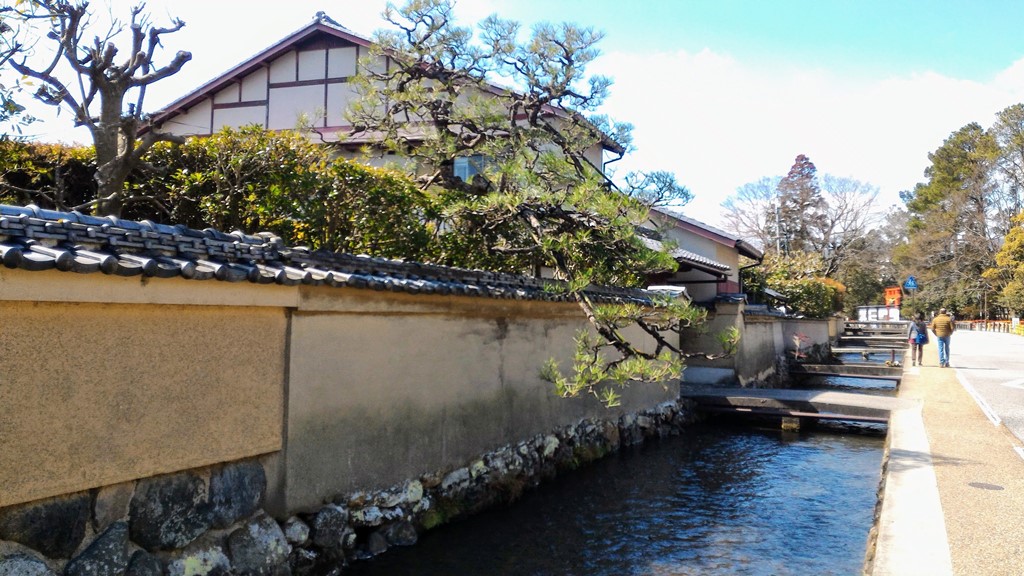
East of the first portico, torii, a charming area for a walk is located along a stream. This is the area called shakemachi where the priests of the shrine once lived. There are still around twenty houses retaining the atmosphere of the era.
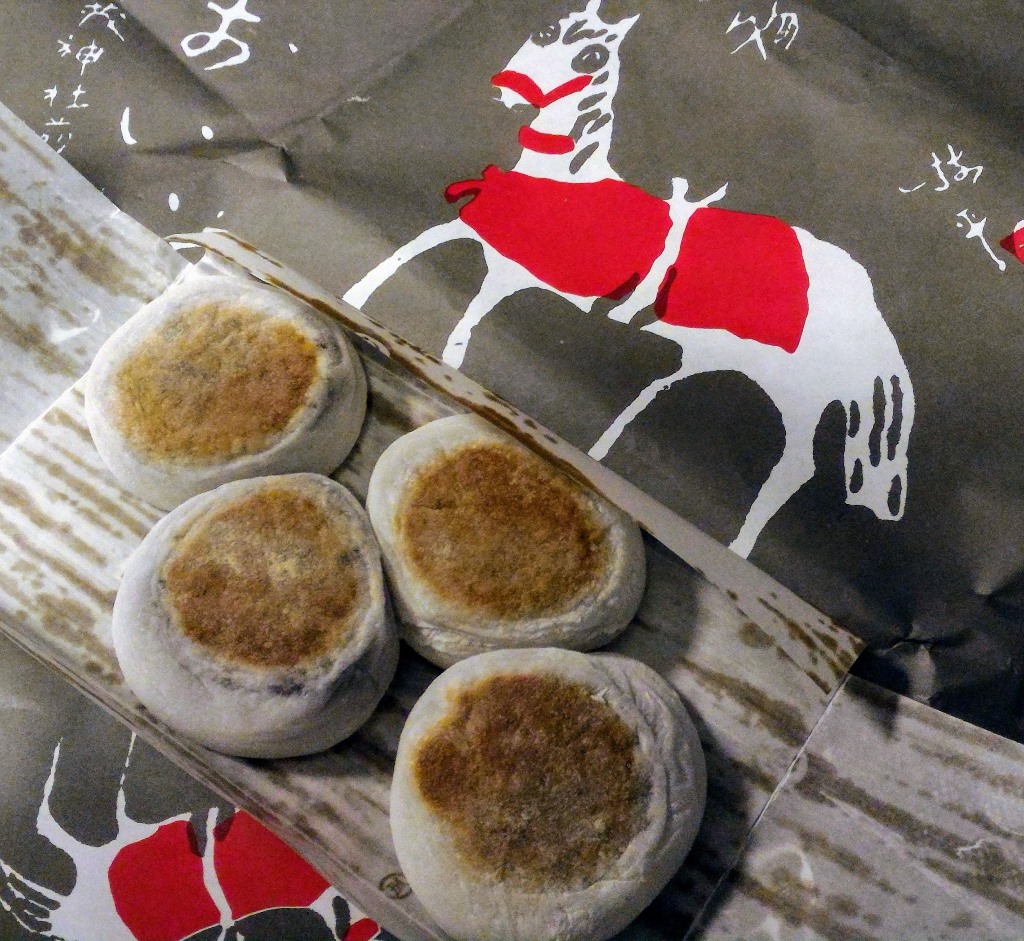
After visiting the shrine, how about taking a little rest and tasting some Japanese pastries yakimochi, lightly toasted rice cake containing sweet red bean paste? The yakimochi freshly cooked are delicious.
The Shimogamo-jinja Shinto Shrine
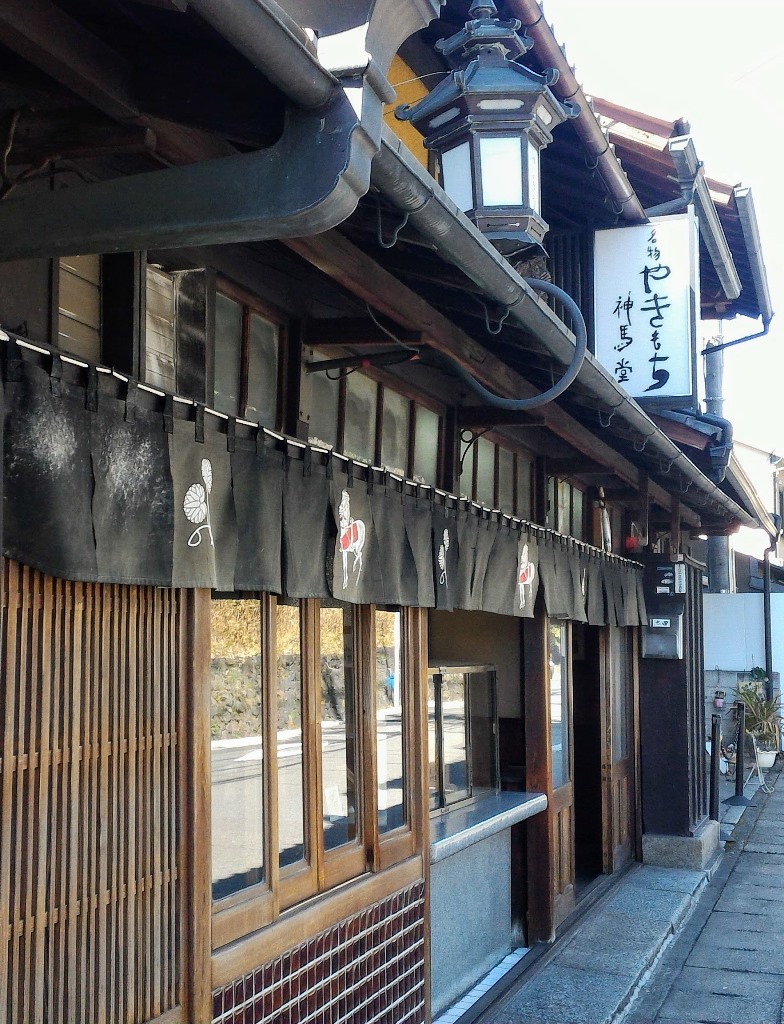
It is located at the confluence of the two rivers, Kamo and Takano. Most Shinto shrines are located in places that benefit from the beauty of nature, but the richness of nature surrounding this shrine is incomparable.
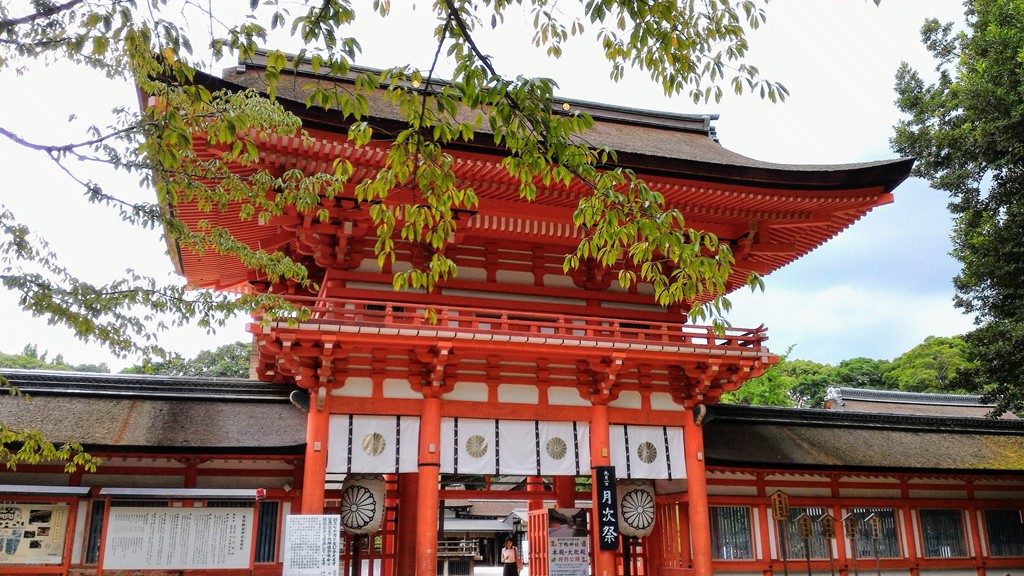
The sanctuary is located at the bottom of the Tadasu forest, a primary forest of approximately 12 hectares. This forest where large trees such as elms, camphor trees, etc. are lush covering the access road to the sanctuary like a green tunnel. There reigns tranquility and serenity. Also note the murmur of the four streams that cross it.
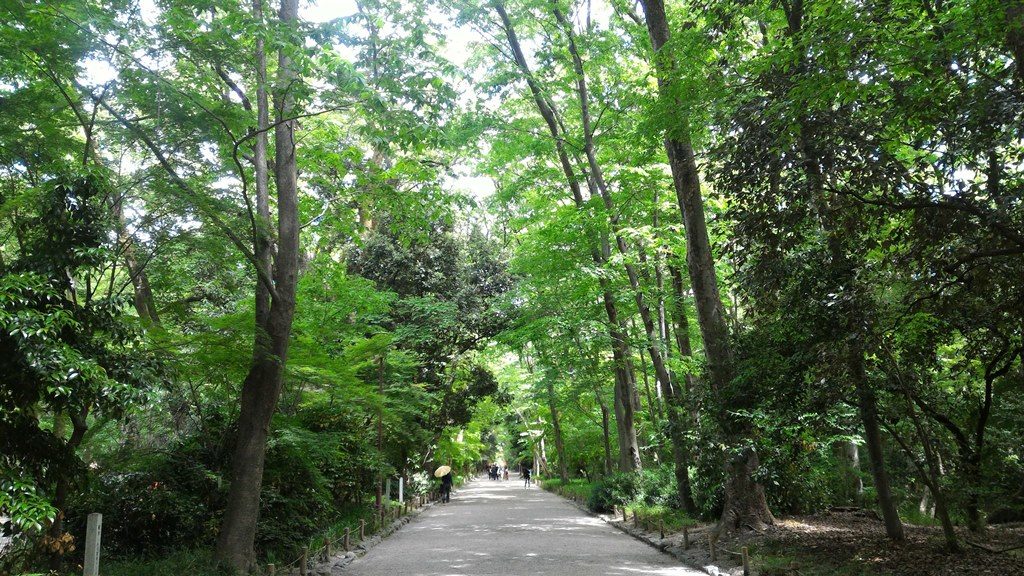
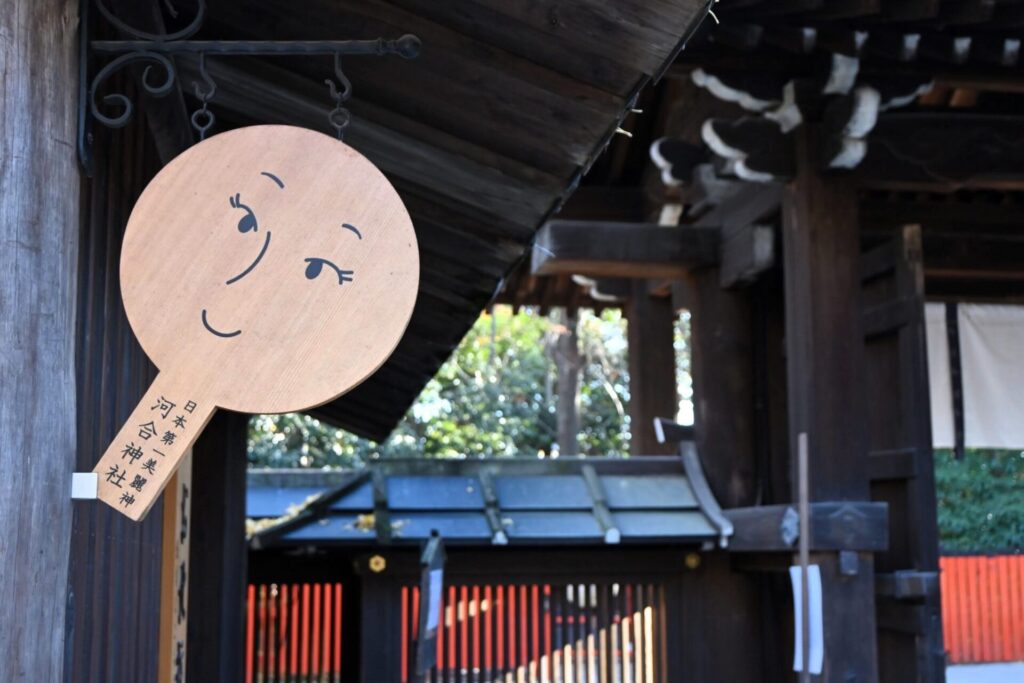
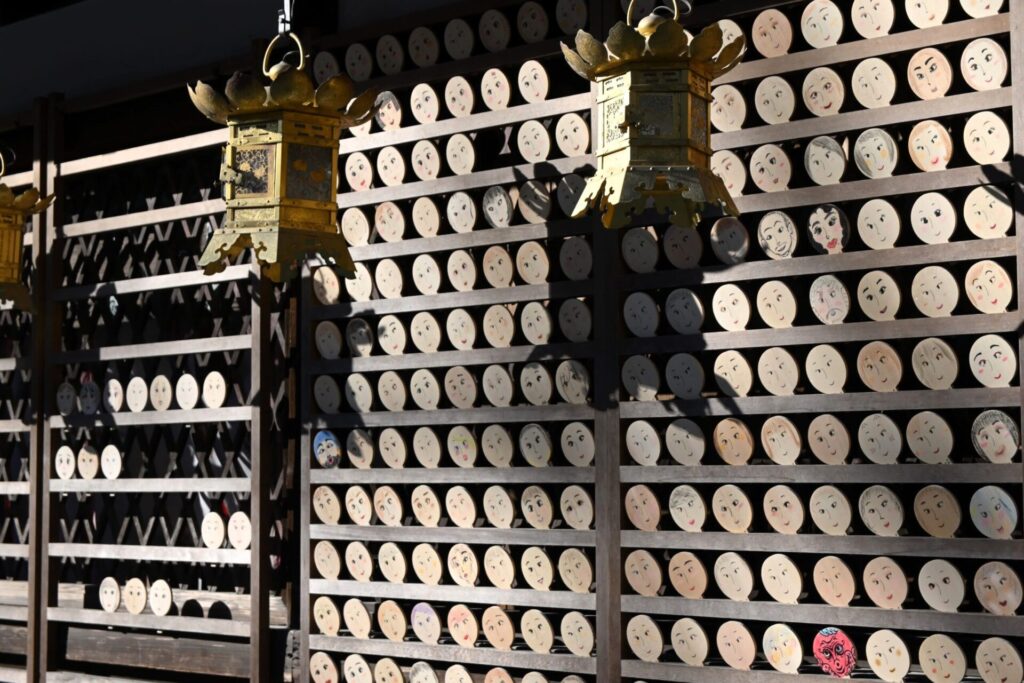
Here is one of its subsidiary shrines, the Kawai shrine where the protective goddess of women, the goddess of beauty, is worshiped. There you will find mirror-shaped ex-votos placed on shelves. Women always want to be naturally beautiful, right? You can make wishes for your beauty by drawing your face on an ex-voto and then making it up with your cosmetics.
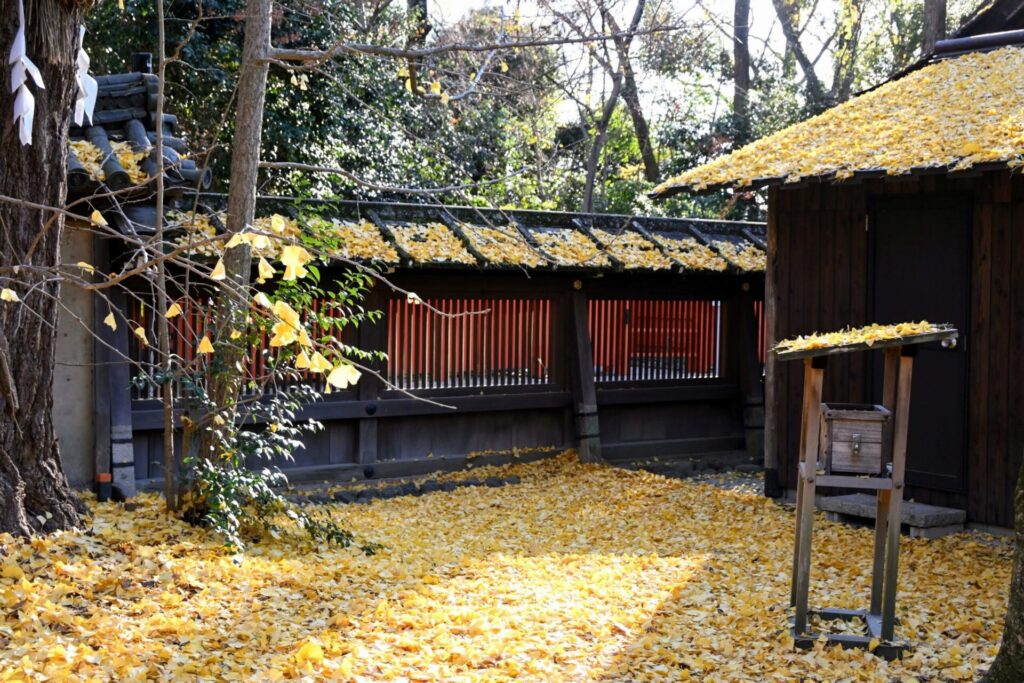
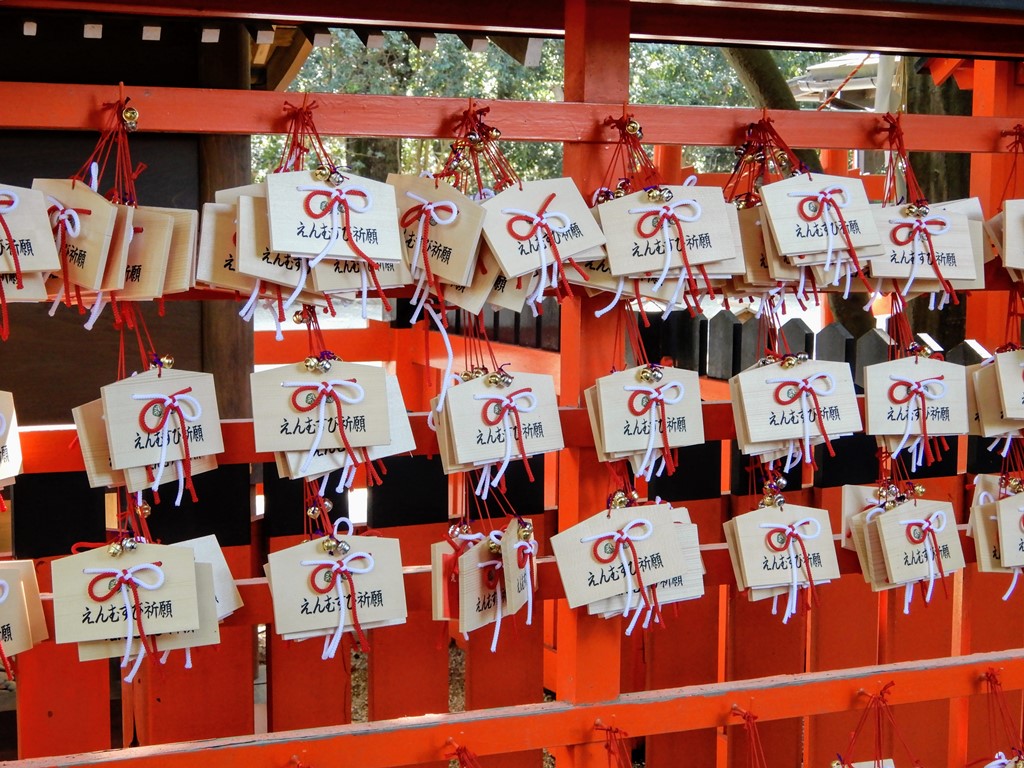
There is also an annex sanctuary to make beneficial connections, especially to find a good match. If you look at a lot of hanging votive offerings, you can understand that the Shimogamo-jinja Shinto shrine is popular among women.
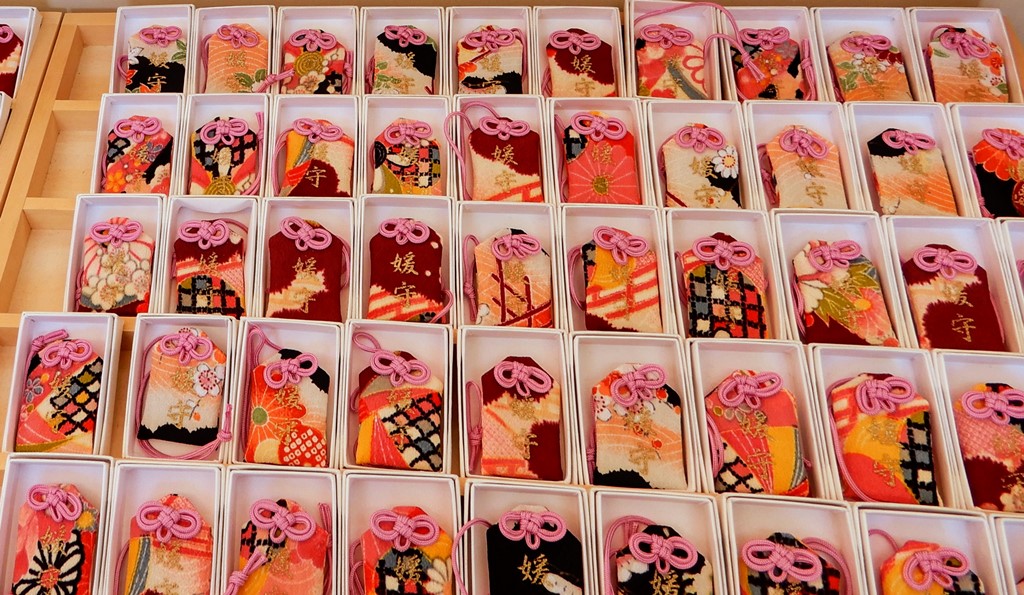
They are talismans for women to grant wishes. This might be good as a souvenir. Made of crepe fabrics, each pattern is different. There are too many choices. . .
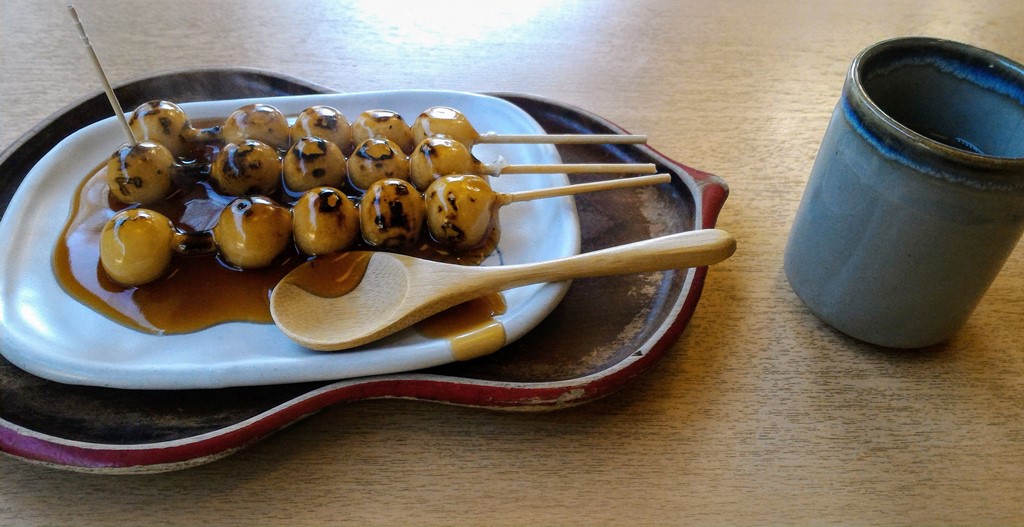
The Japanese pastry in the photo is mitarashi-dango, balls of glutinous rice dough wrapped around a skewer and covered in sweet soy sauce. The origin of this pastry sold today throughout Japan is dango, served at the time of the festival which takes place in July at this Shinto shrine. People pray for health and safety by putting their feet up to their knees in the Mitarashi Pond. Mitarashi-dango is supposed to represent the bubbles of this pond. Mitarashi-dango is not as well known as dorayaki called “Tokyo delight” in French, but it is very popular here.
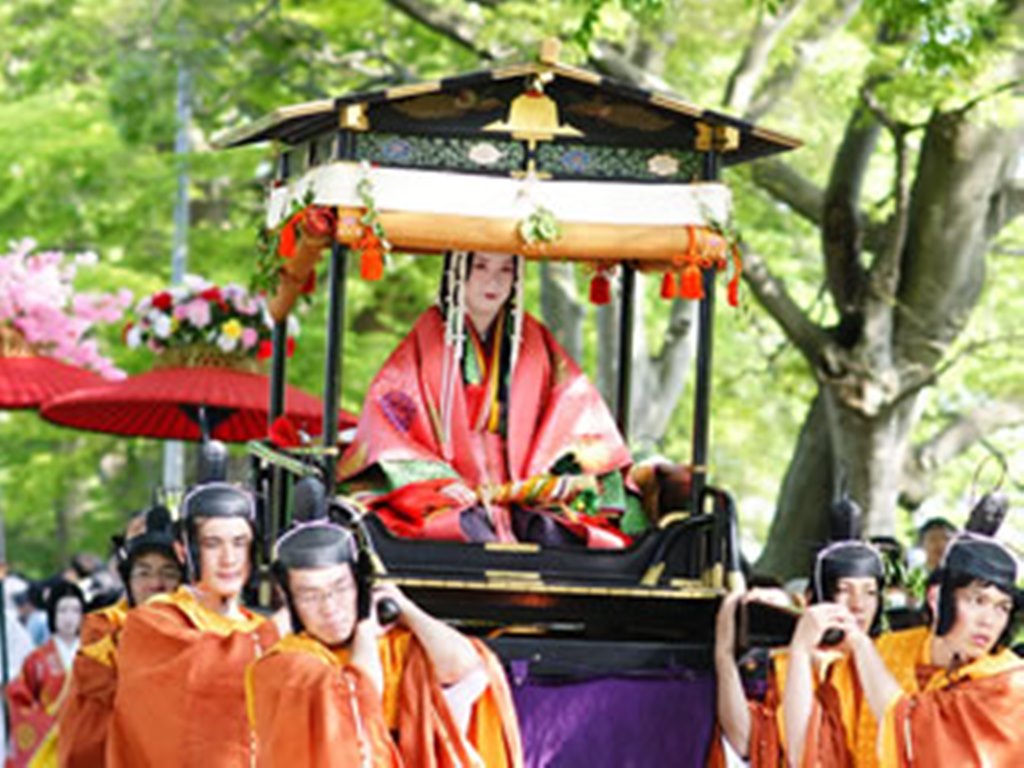
On May 15, one of Kyoto’s three important festivals takes place at the Kamigamo-jinja and Shimogamo-jinja Shinto shrines. It’s the hollyhock festival called Aoi Matsuri. The procession of more than 500 participants dressed as courtiers and ox carts decorated with hollyhock leaves parade slowly. You will be able to taste the graceful atmosphere of this festival which has around 1,400 years of history.
Ohara
Ohara is a nostalgic village located 12 kilometers north of Kyoto city, at the foot of Hiei Mountain. In the past, nobles and monks who wanted to escape the troubles of this world lived in hiding there. Ohara was their hermitage. Today, its rural landscape of each season flatters the eyes. How about going to Ohara which benefits from rich nature? It is a little far from the center of Kyoto, but worth a visit.
Sanzen-in Temple
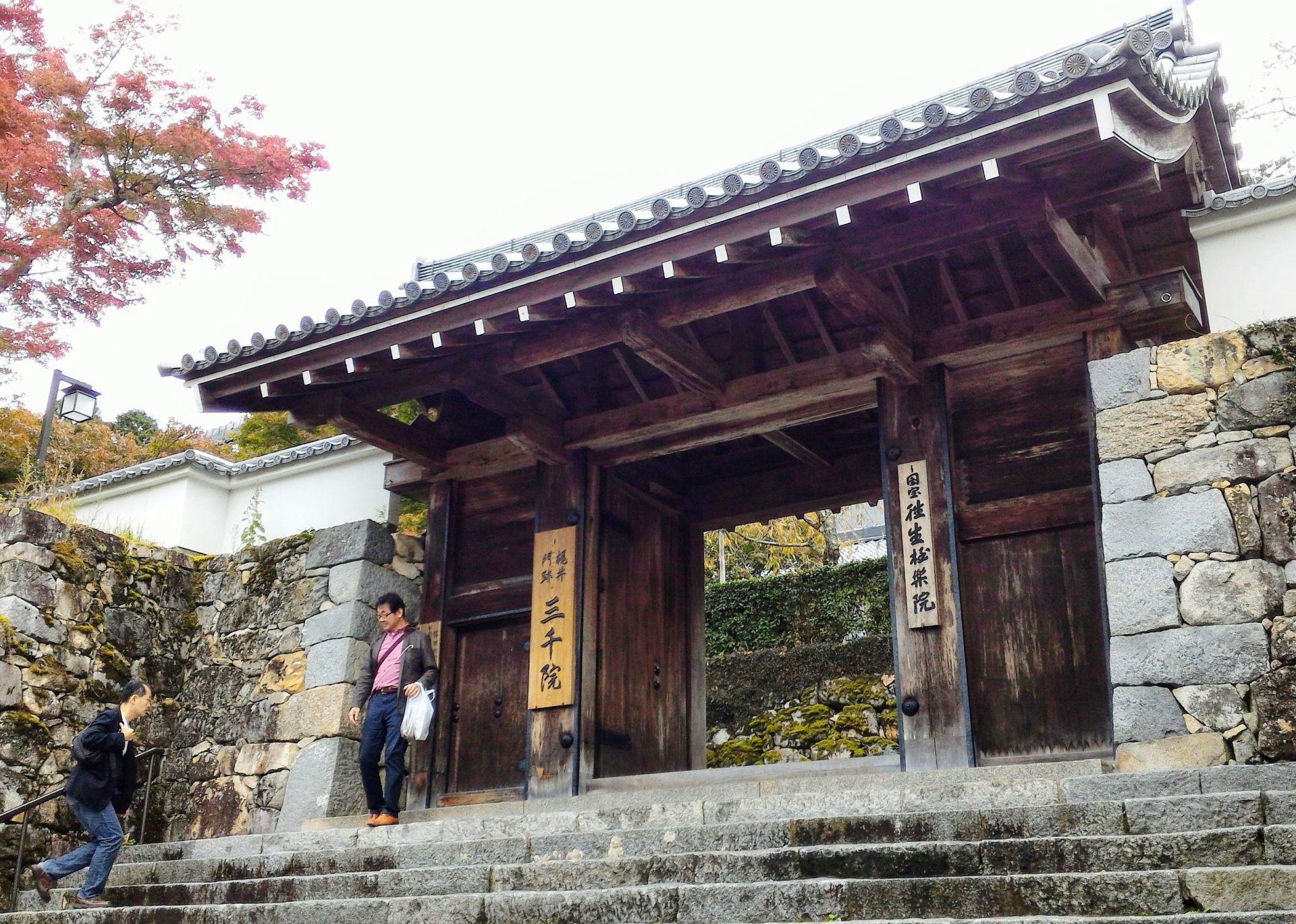
Sanzen-in Temple is one of the most beautiful temples in Kyoto. Its entrance door with its stone wall is majestic and resembles that of a fortress. Against all appearances, the interior creates a soft and charming atmosphere, and for good reason. It contains two magnificent gardens nicknamed “jewelry box of the Orient” by Inoue Yasushi (1907-1991), Japanese writer.
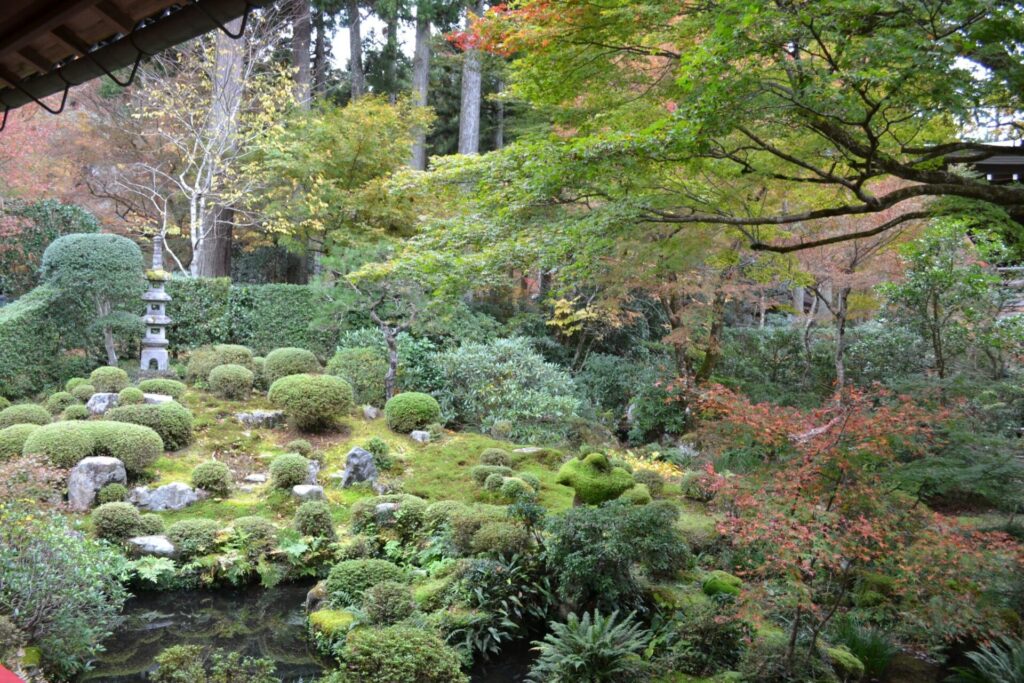
The first garden is laid out around a pond. It can be admired from inside the building from several angles. The murmur of the clear current is pleasant to the ear. You will never tire of contemplating this garden. The second garden is the strolling one. The carpet of moss spreads out at the foot of cedars which reach towards the sky. It looks like a huge ocean. I like the contrast between the straight line of cedars and the expanse of moss.
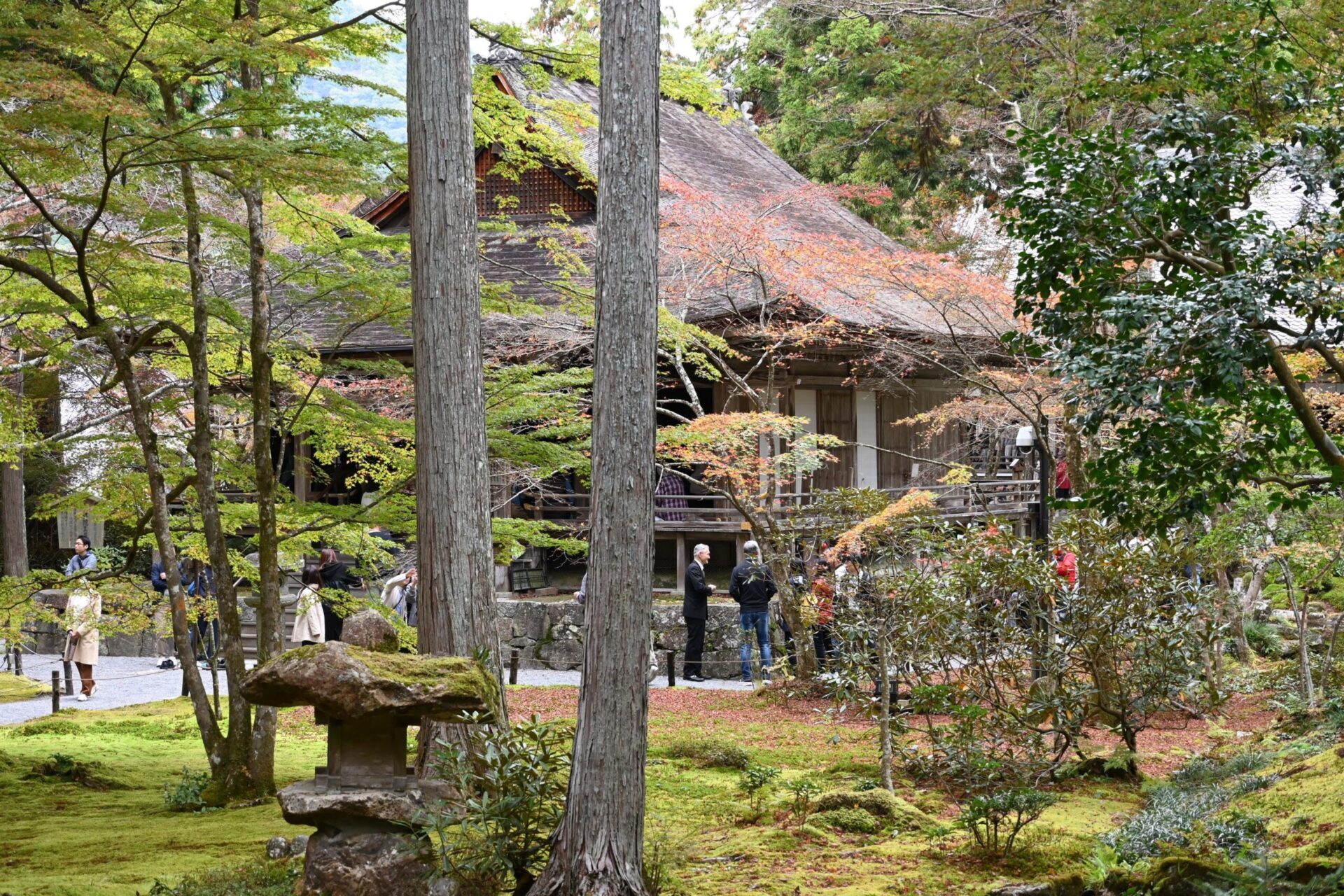
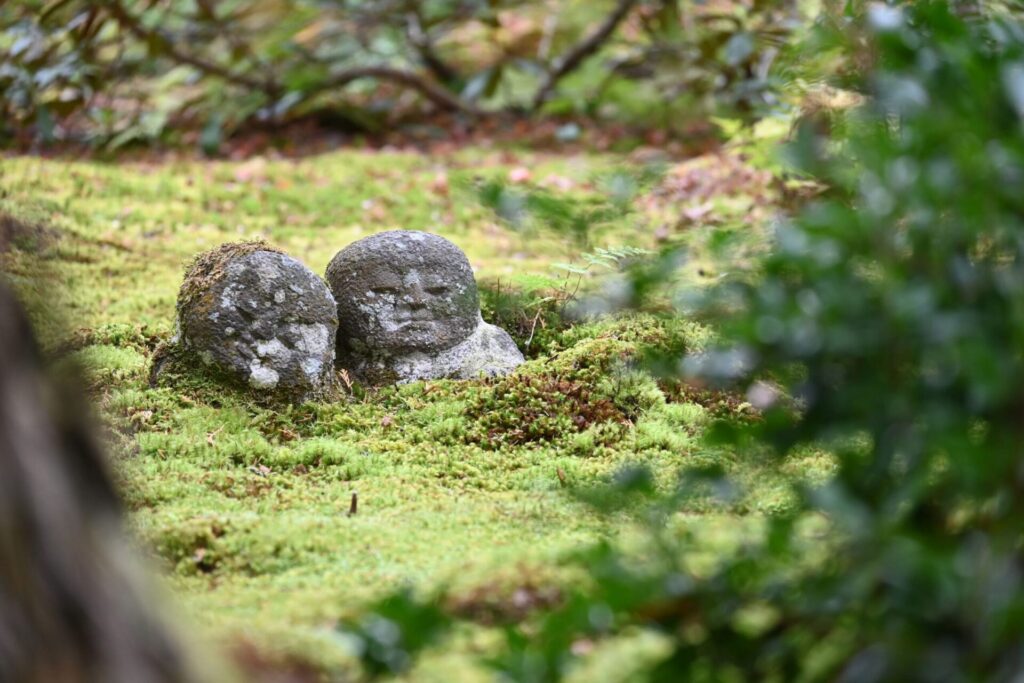
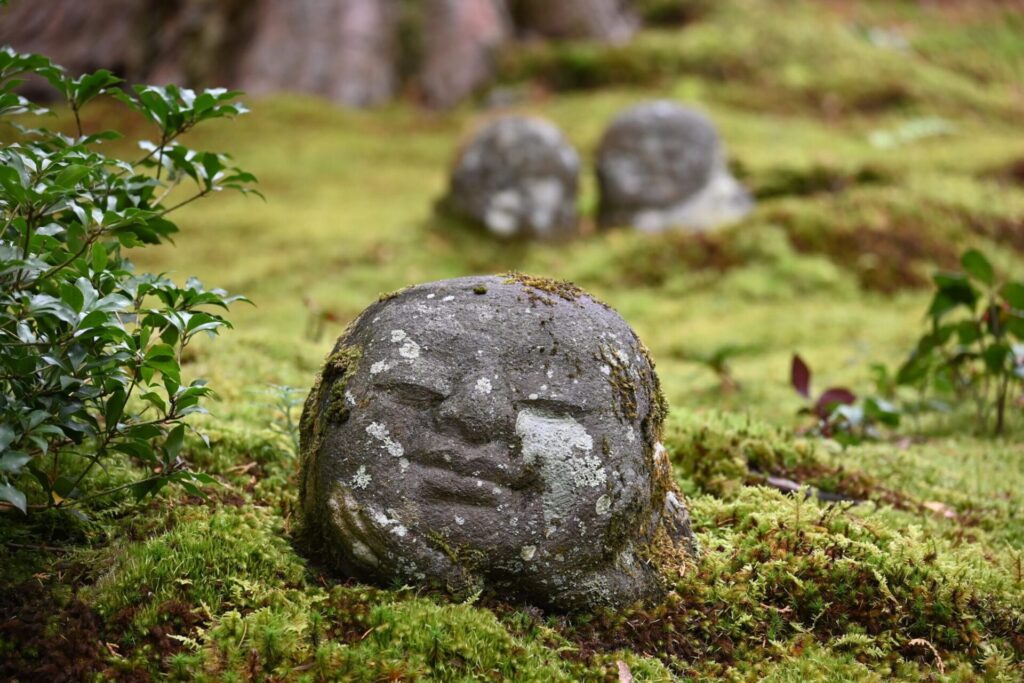
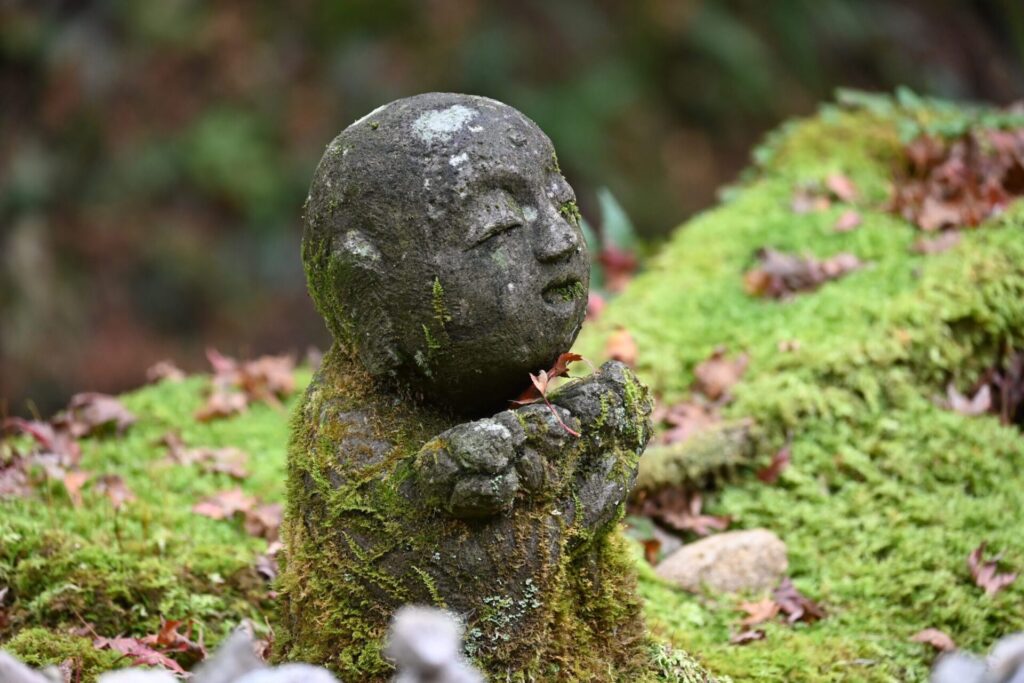
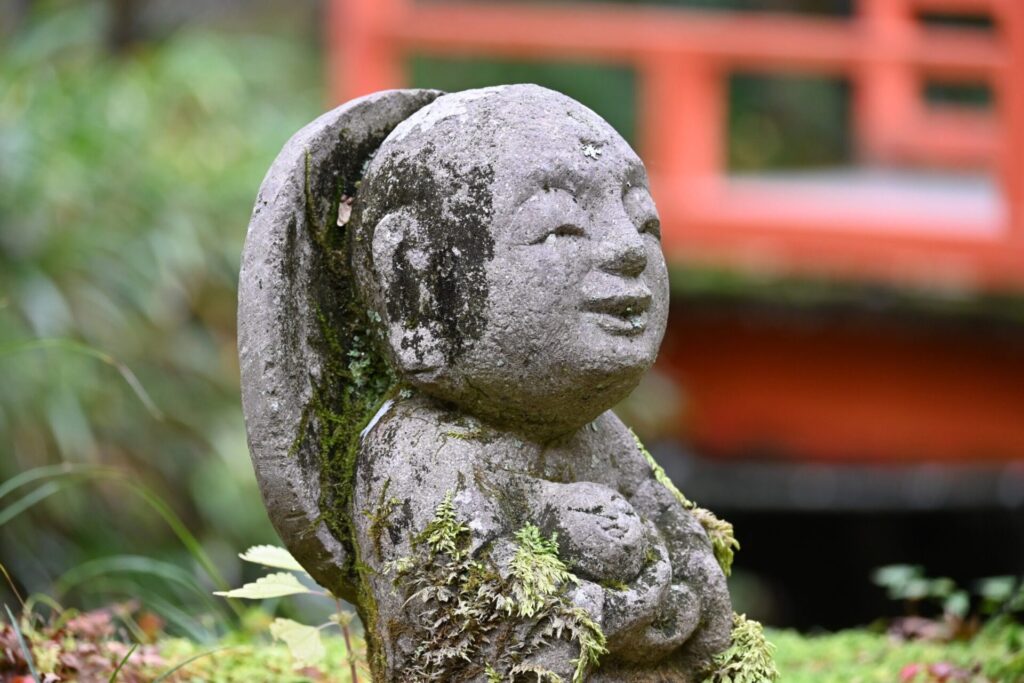
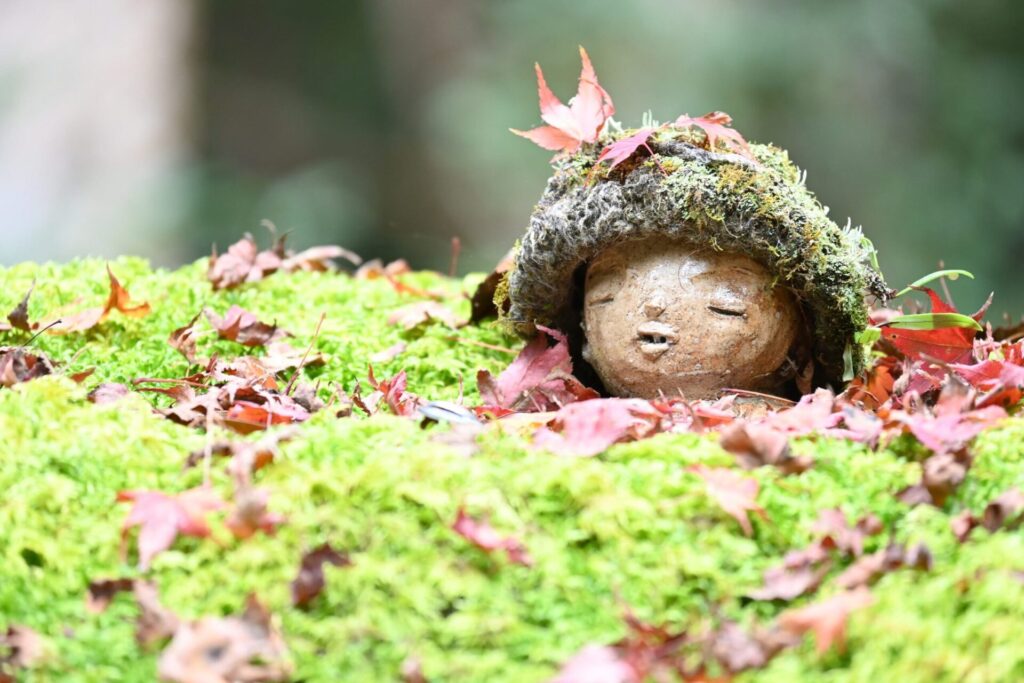
Will you be able to find statuettes of jizo who dot this garden? There are six in total. Their cute pose will be endearing to see.
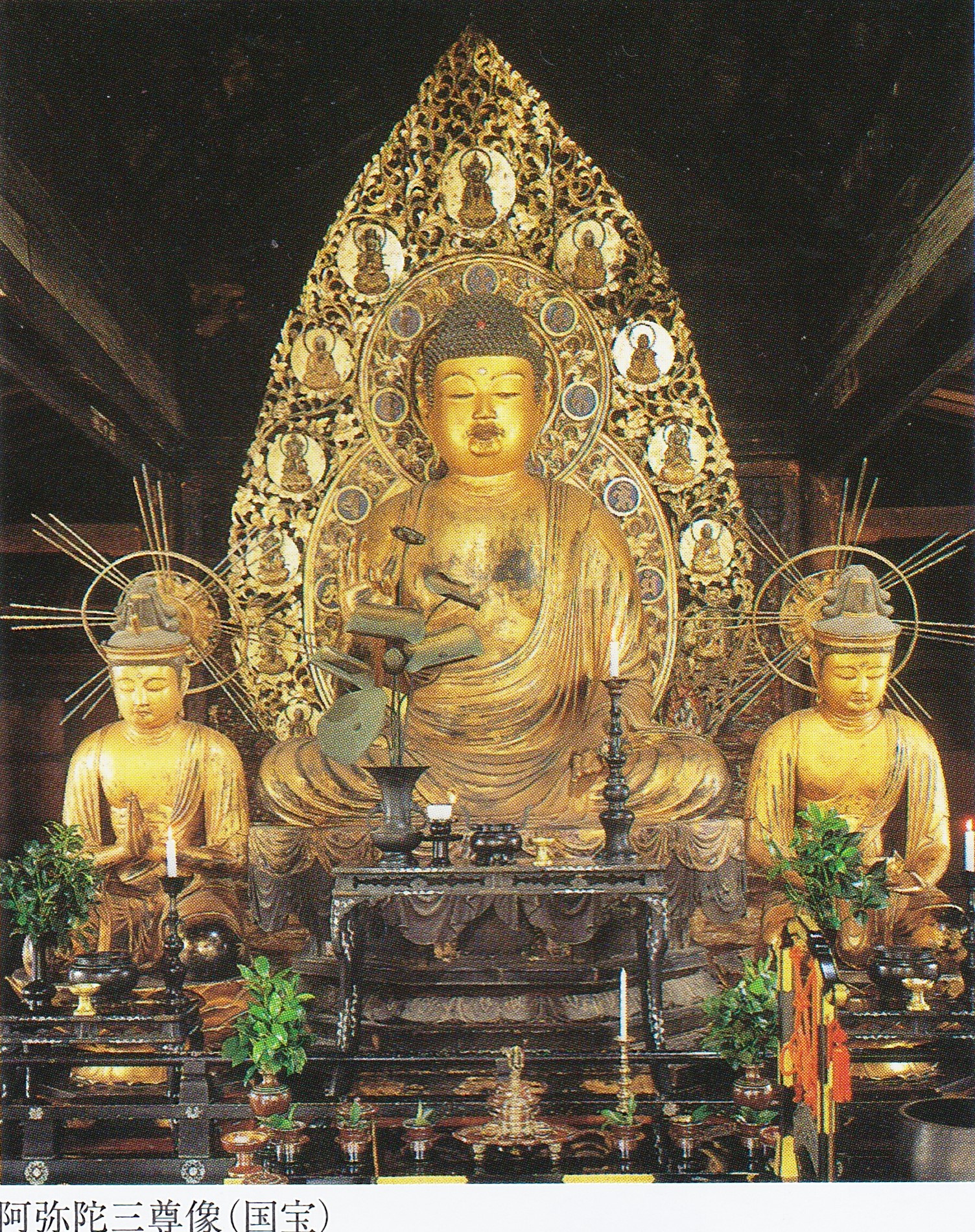
The Amida Buddha Pavilion fits well into this peaceful garden. The large statue of Amida Buddha welcomes visitors with a merciful face. The statue with its halo and the pavilion are almost the same size. The ceiling of the pavilion therefore has the shape of the hold in order to enclose it.
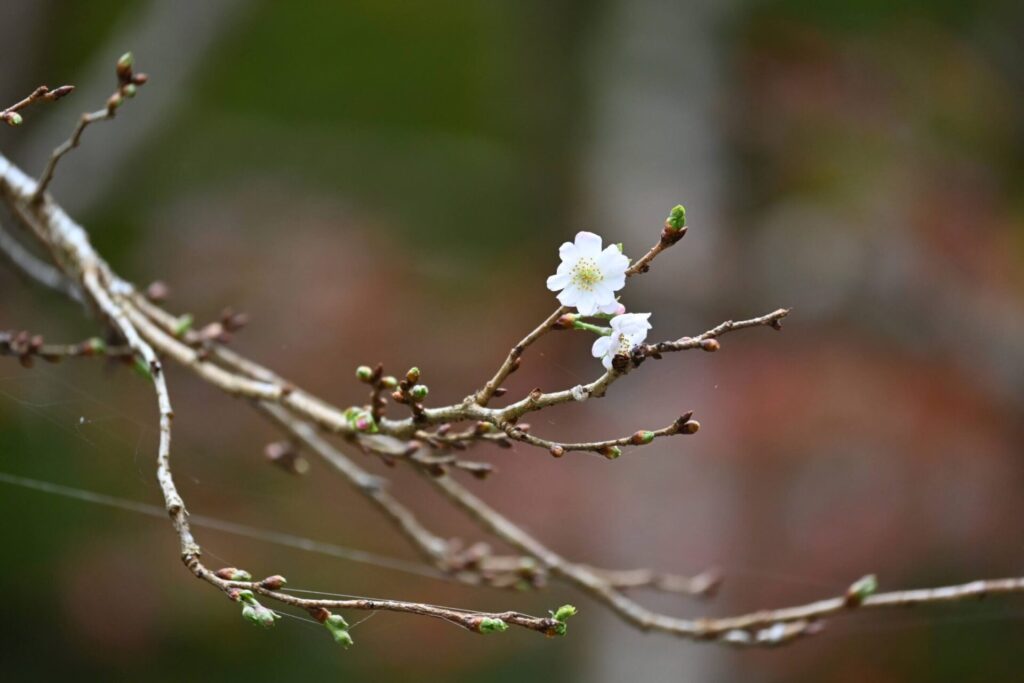
The Sanzen-in temple grounds are immense. I advise you to take the time to take a nice walk. There will be interesting encounters with other statues of jizo. Sanzen-in Temple is known for its combination of green moss and red autumn leaves. But the rhododendrons of spring, the hydrangeas of early summer, the small flowers of early winter that bloom discreetly, the snowy landscape. . . You will surely be able to have a pleasant time there in any season.
- The Sanzen-in Temple entrance ticket price is 700 yen.
- It will be crowded especially in autumn. To enjoy the landscape quietly, it is better to visit it early in the morning.
- Map
Shorin-in Temple
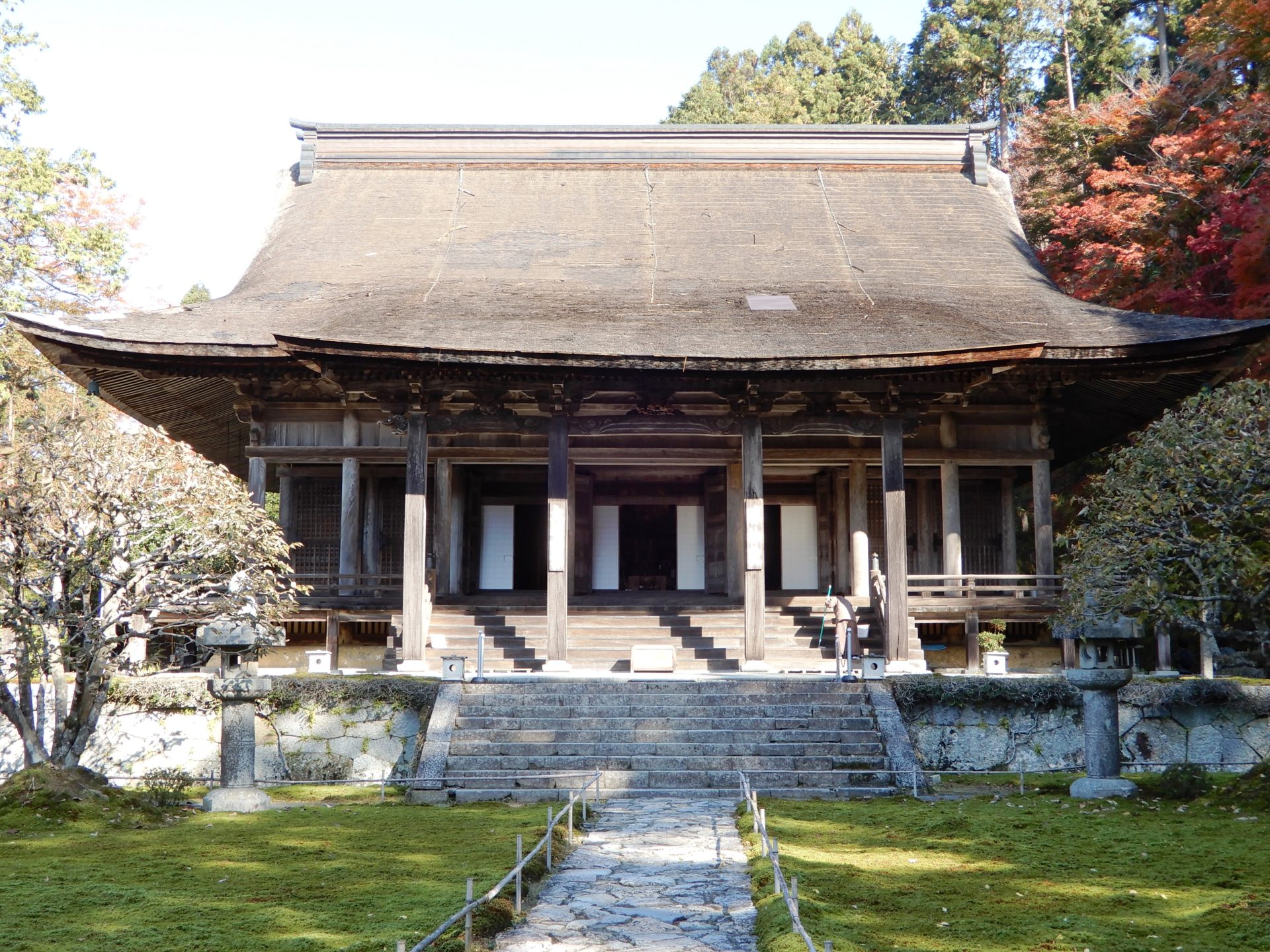
When leaving Sanzen-in Temple, turn right and continue straight to the end. The imposing main building of Shorin-in Temple will be seen. It was founded in the 11th century as a center for teaching shomyo, Buddhist liturgical music which corresponds to the hymn of Christianity.
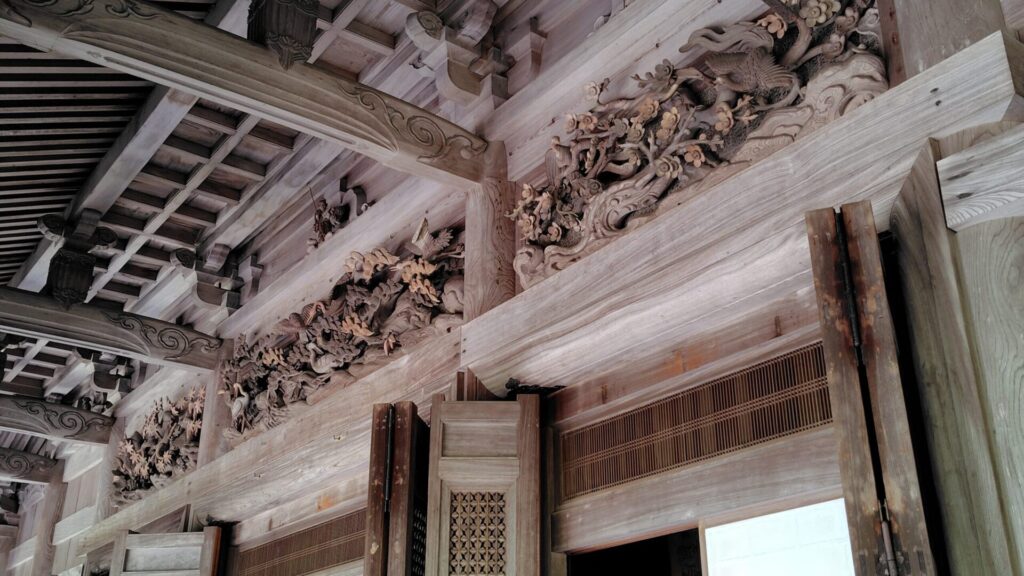
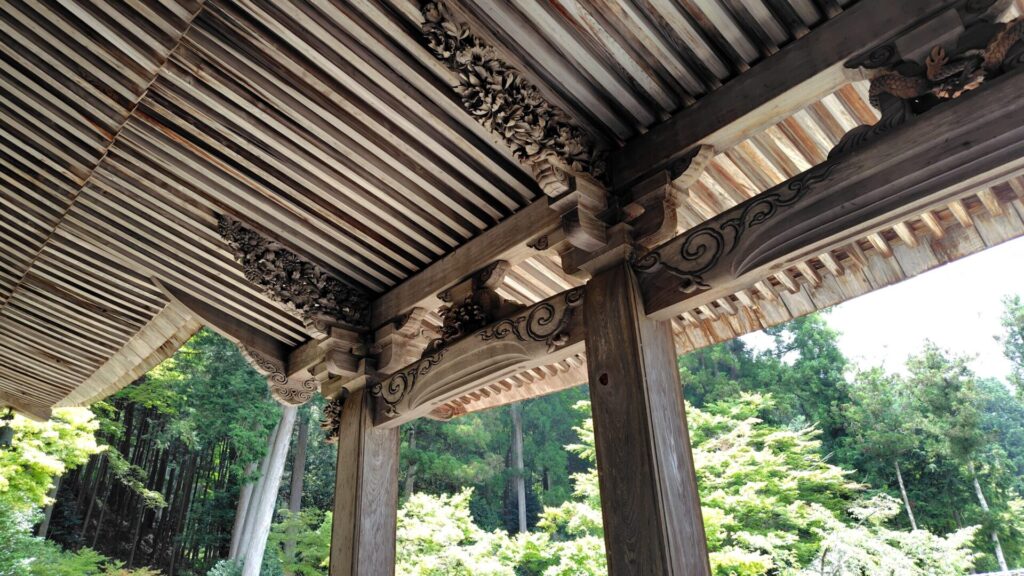
Its main building is the reconstruction of the 18th century. It is made with elm wood. The relief sculpture made under the eaves is magnificent. Inside, a large statue of Amida Buddha will welcome you with a tender look.
- The entrance ticket price to Shorin-in Temple is 300 yen.
- Map
Jikko-in Temple
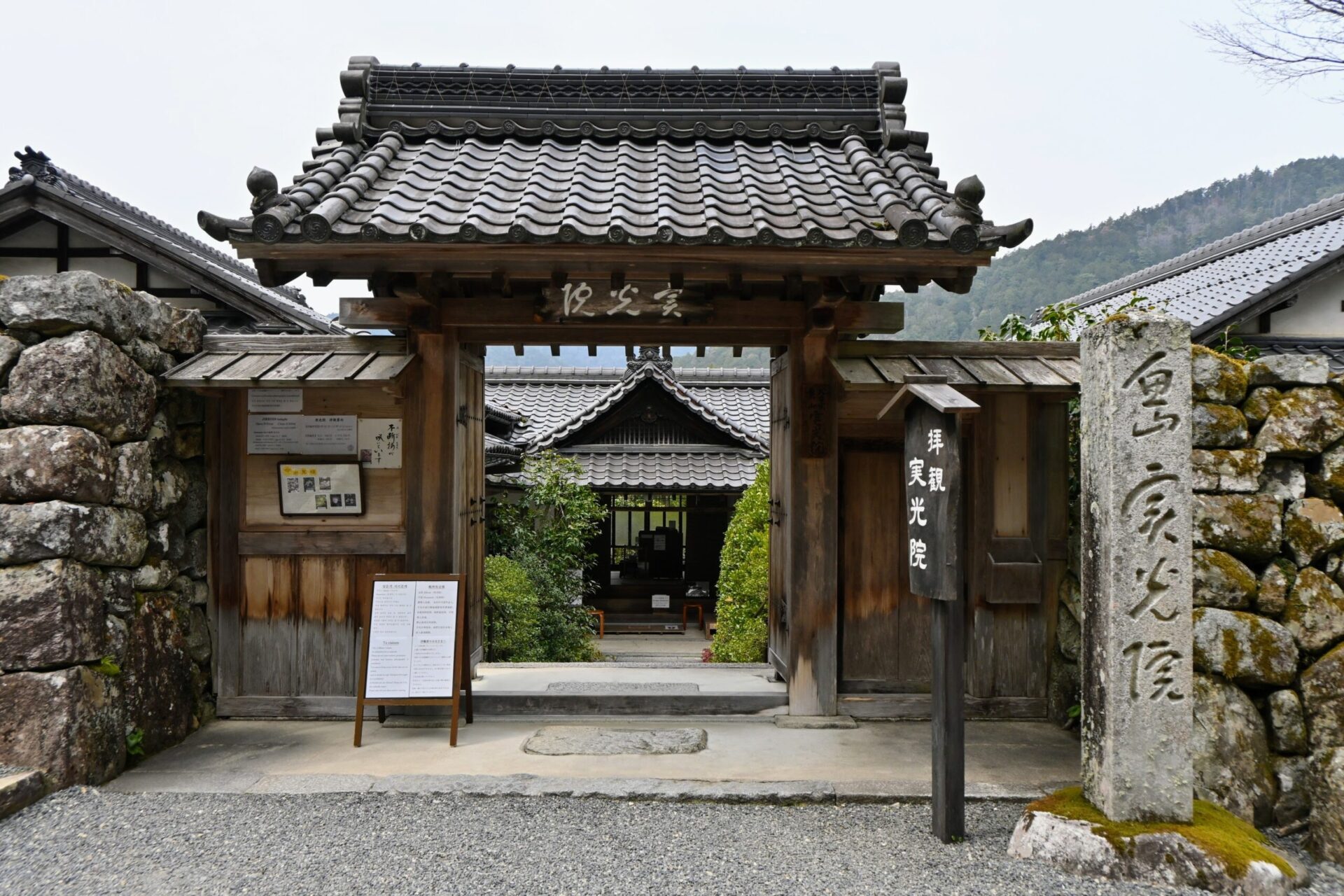
A small building located on this side of the Shorin-in temple is the Jikko-in temple, an annex temple. It was originally one of the dwellings of monks who learned the shomyo, Buddhist liturgical music. Its appearance is so modest that you pass by without noticing it, but it is an ideal place to rest.
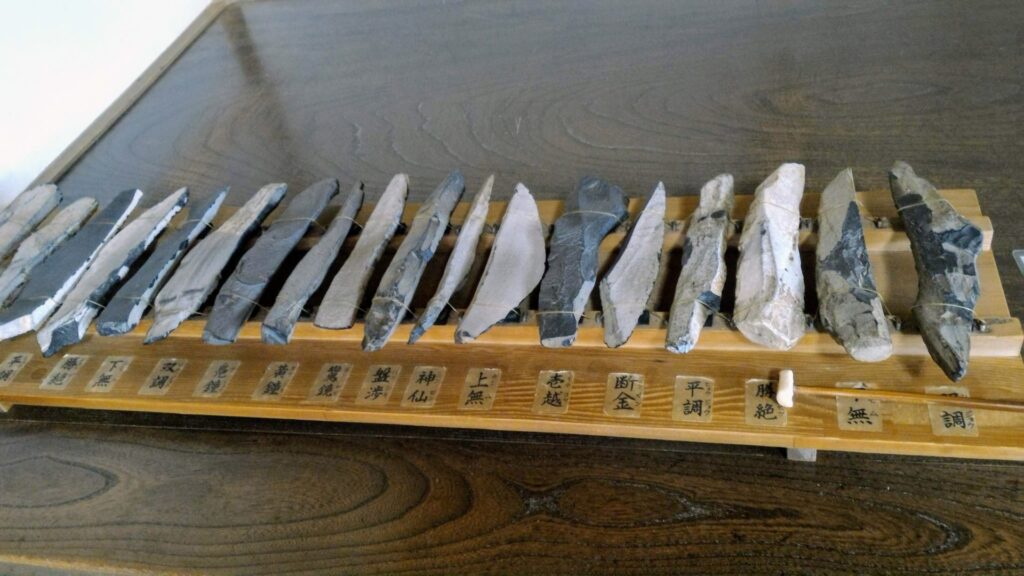
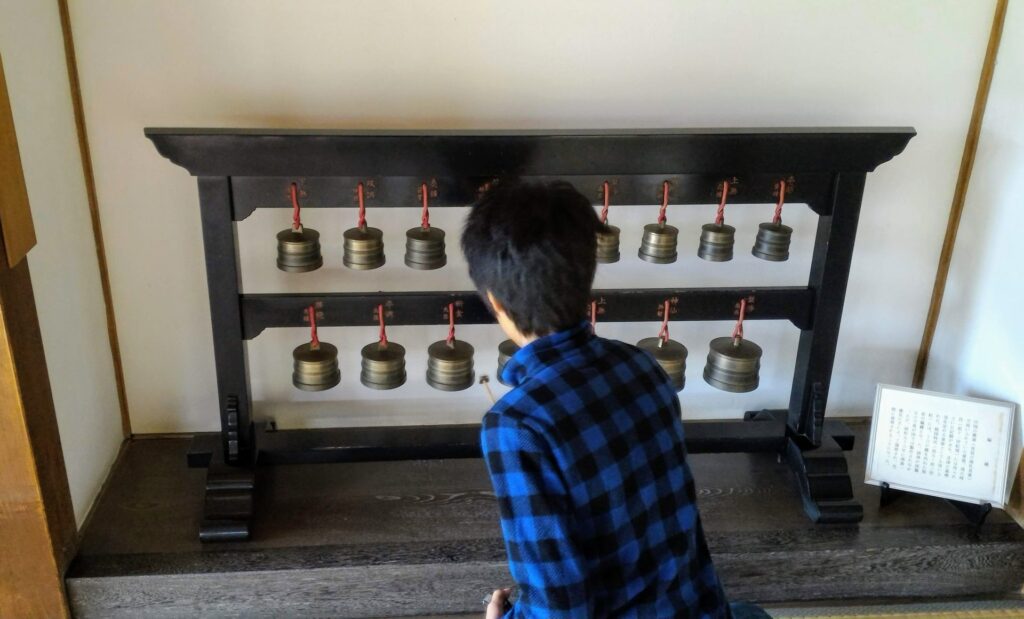
You will see the musical instruments for the shomyo collected by monks. For example, there is a kind of lithophone made with stones sanukite mined in Kagawa Prefecture. Taste the clear sound.
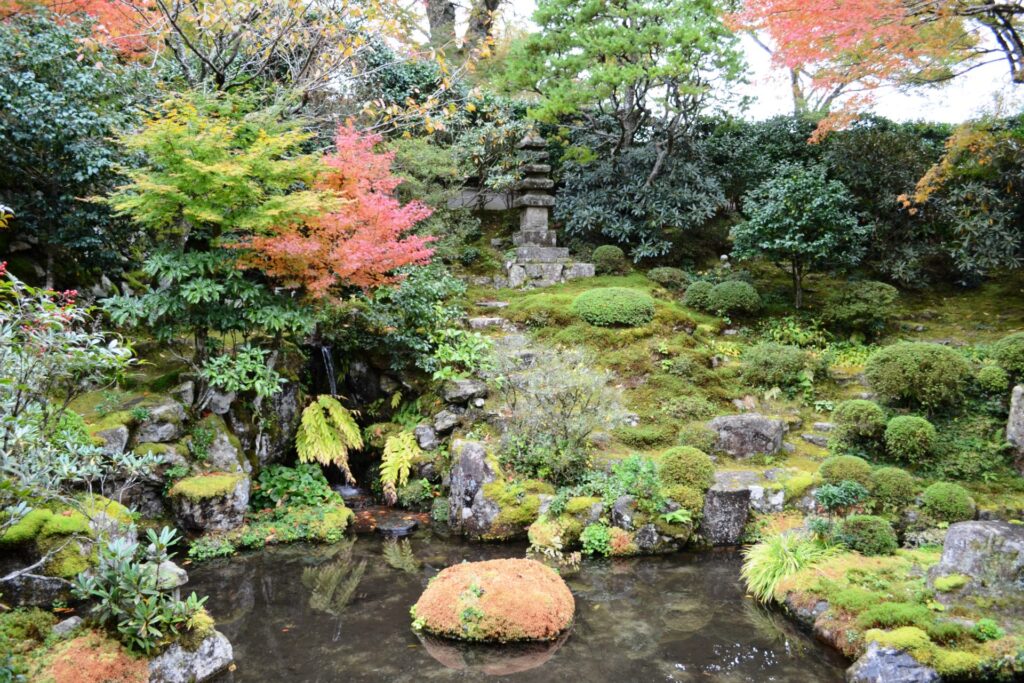
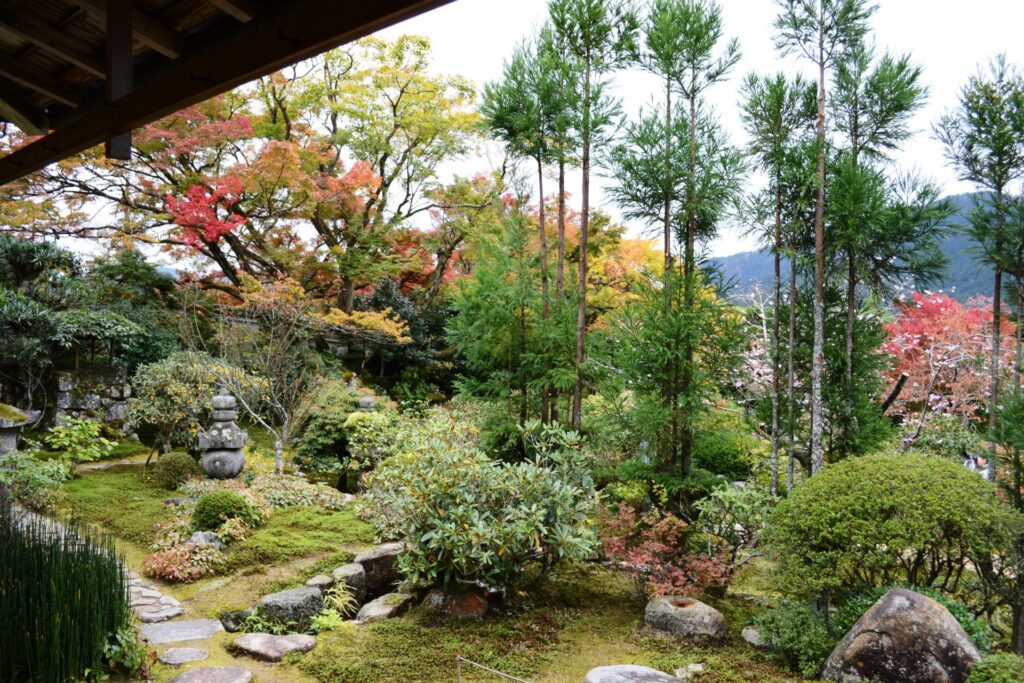
Jikko-in Temple is known for its two gardens created in different eras. The southern garden dating from the Edo period is classical and graceful in style. In the western one built at the beginning of the 20th century by the monks, the peaceful landscape of Ohara is wonderfully integrated. In autumn, you can enjoy the landscape rarely seen elsewhere.
- The entrance ticket price for Jikko-in Temple is 600 yen.
- A supplement applies for the tour with tea and pastries.
- Map
Hosen-in Temple
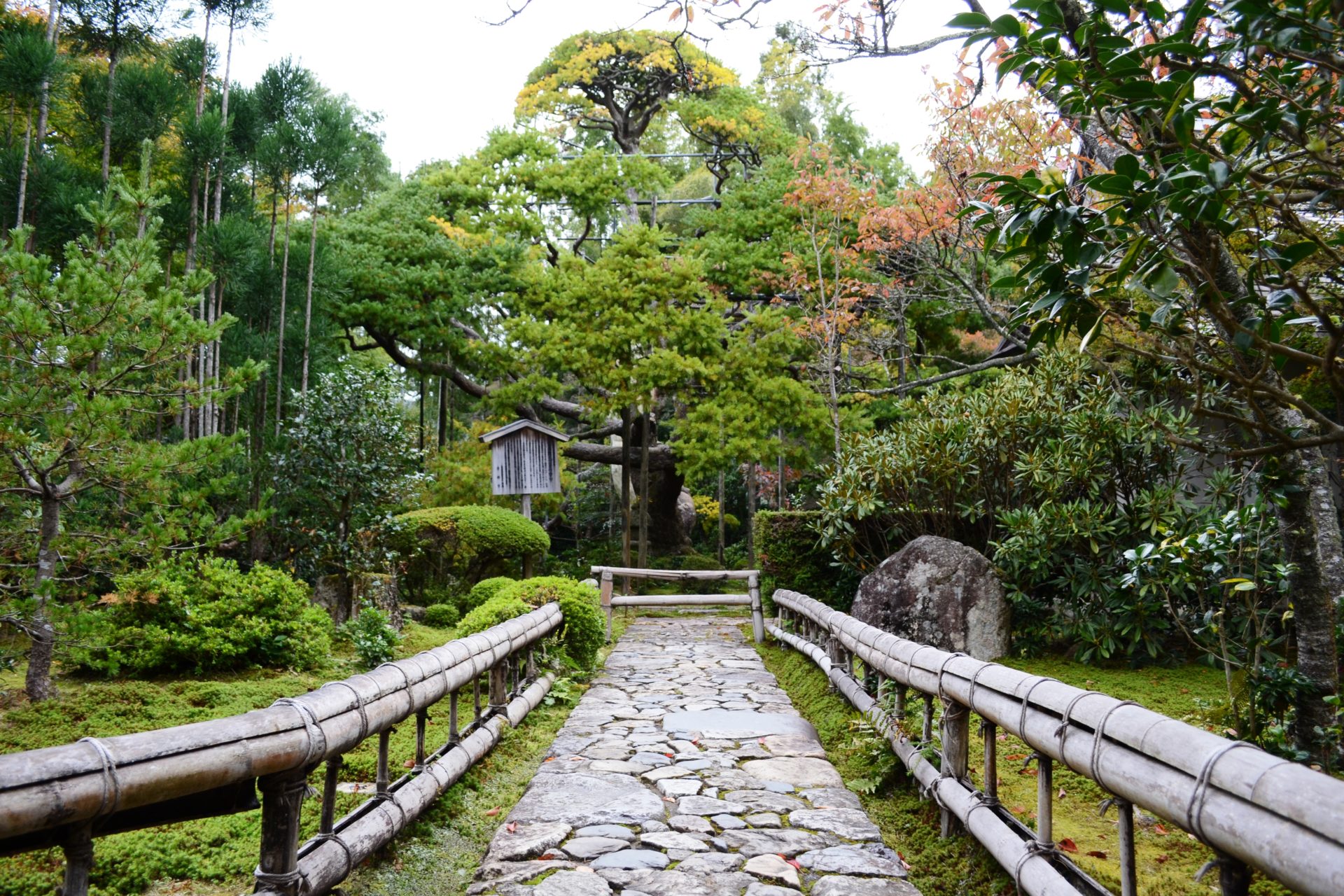
Hosen-in Temple, the other annex temple of Shorin-in Temple, is also worth a detour. This quiet little temple is full of beautiful scenery.
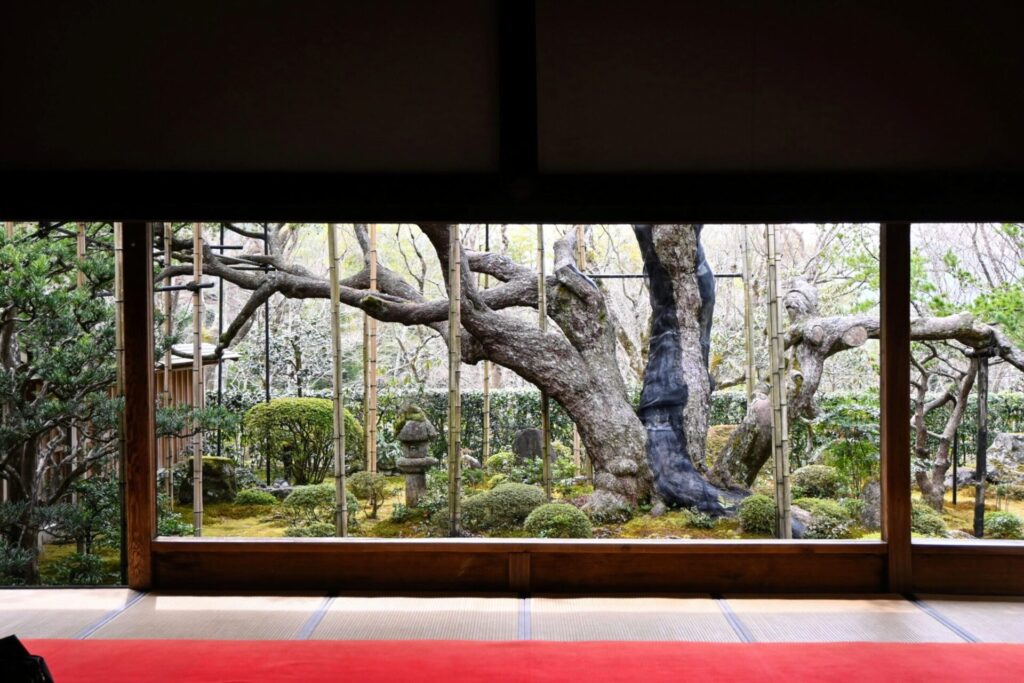
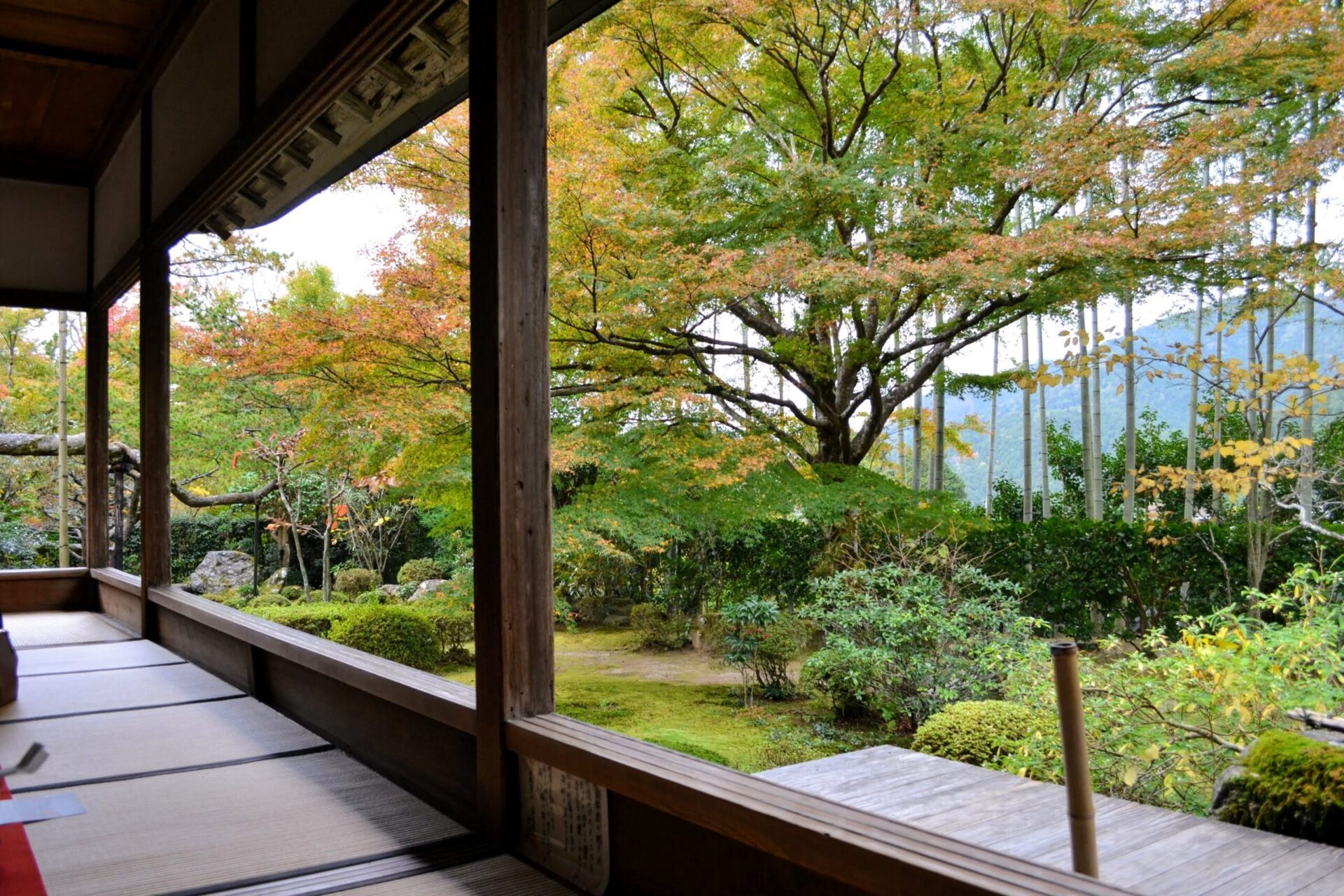
This temple contains three gardens. All are remarkable, especially the Bankan-en garden which means “difficult to leave”. It is a garden admired from inside the main building. His landscapes cut out as framed paintings will impress you. Depending on whether you sit on the south side or the west side, this garden offers you contrasting landscapes. To the south, a large 700-year-old pine spreads its branches. You will be amazed that this small temple contains such an impressive pine tree. This grandiose landscape will make you feel the perpetual beauty of the pine. To the west, you can notice the depth of the landscape thanks to the bamboo arranged behind. It is the graceful beauty of each season that is represented there. Bankan-en Garden, as its name suggests, makes us want to contemplate forever.
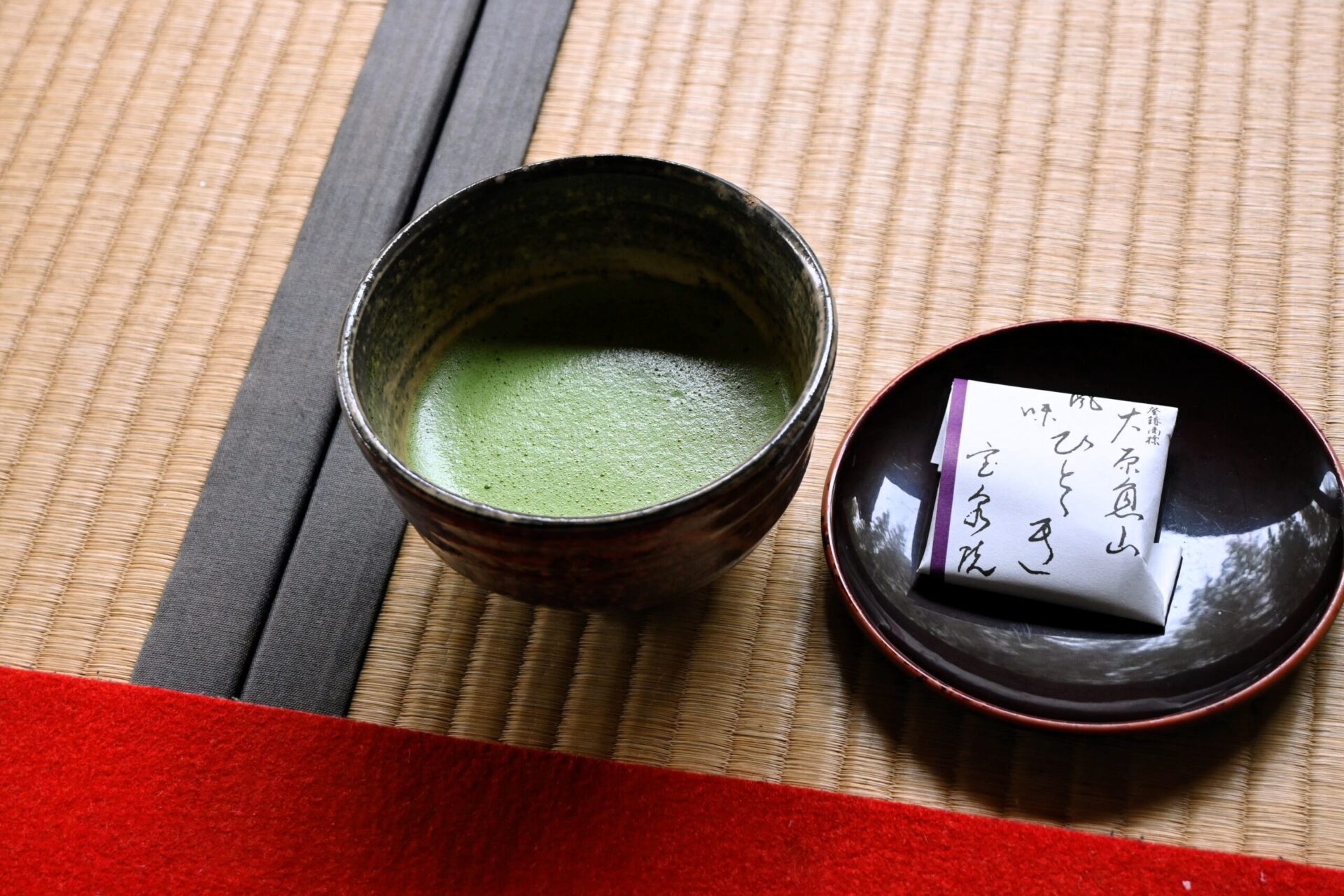
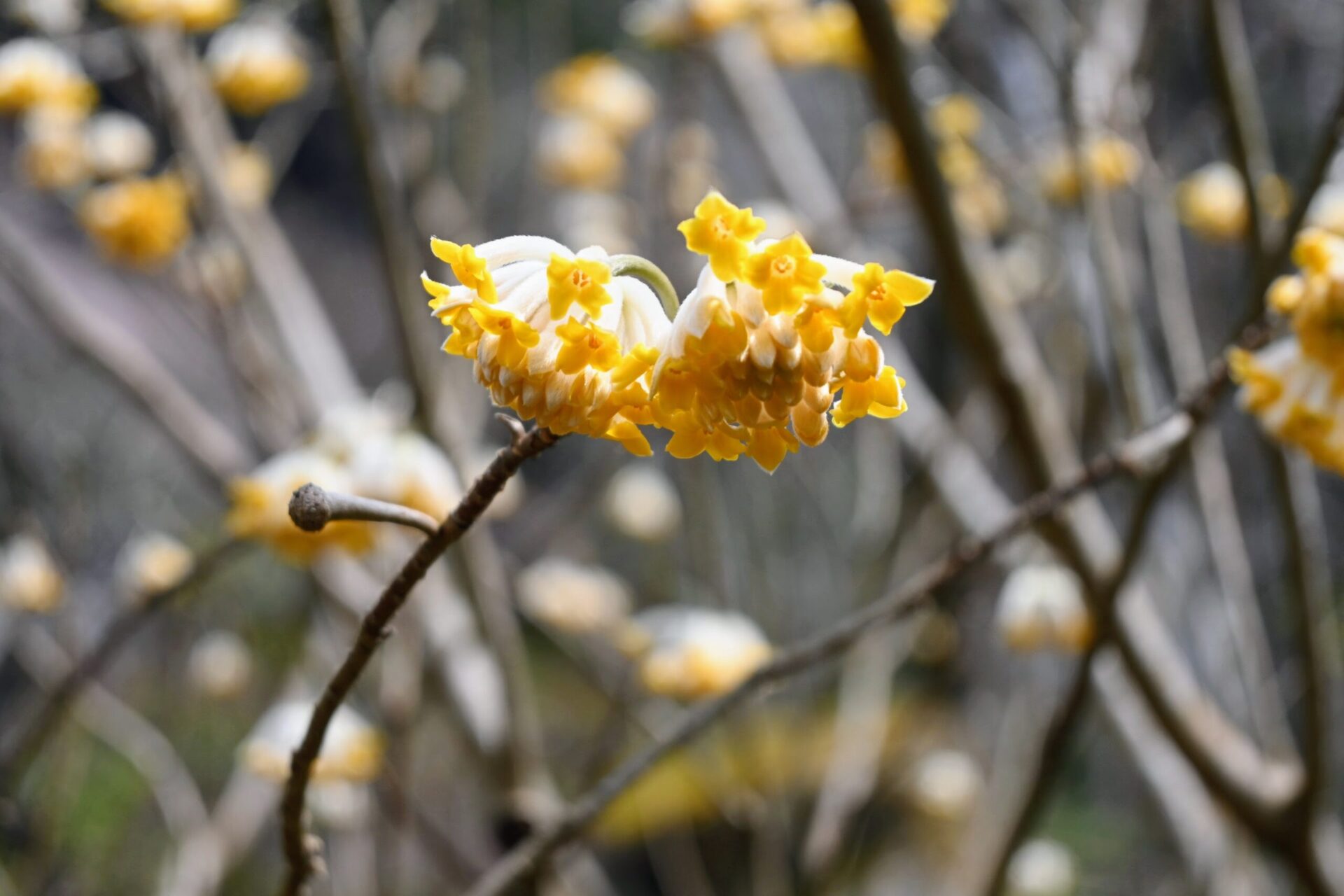
- The entrance ticket price to Hosen-in Temple is 900 yen, including one green tea.
- A garden full of original ideas is located on the low ground on the south side of the enclosure. You can walk there.
- Map
Jakko-in Temple
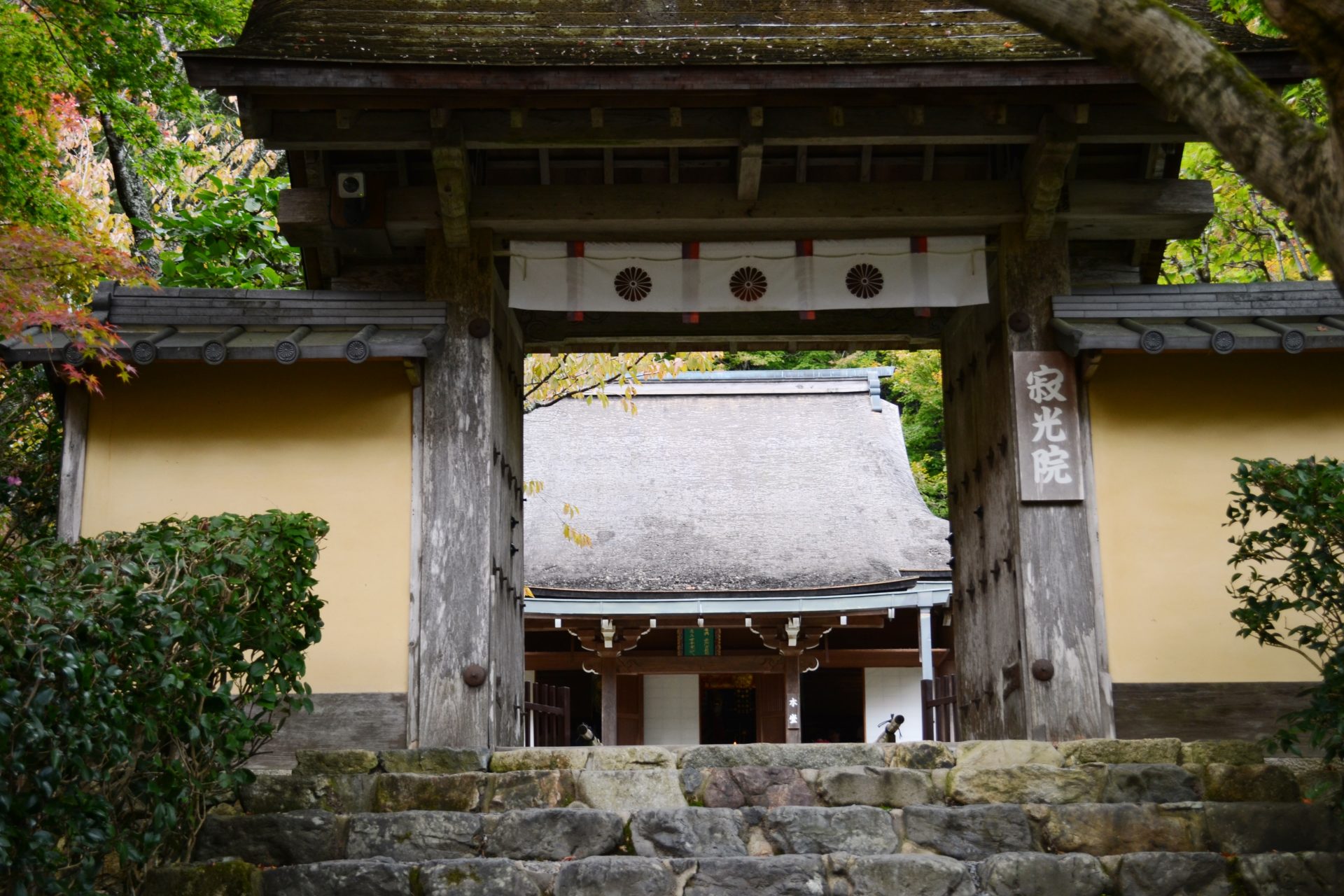
Jakko-in temple is located opposite the main district which brings together Ohara’s emblematic temples. There is silence there except for the period of red autumn leaves. This temple is known to be the hermitage of a lady who was the toy of destiny due to war in the 12th century. She lived there as a recluse as a nun. Its sad atmosphere is perhaps due to this story. It suffered an arson attack in 2000 which reduced its Buddha Hall to ashes. The current building is recent reconstruction. This is why the appreciation of this temple seems divided. Residents of the neighborhood still have fresh memories of the tragedy that befell the ancient Buddha statue created in the 13th century. Not having been spared by the fire, it was damaged to the point of being charred. But the precious objects contained inside, such as around 3,000 statuettes of the Buddha, miraculously remained almost intact. The arsonist was not detected and finally, the prescription was concluded in 2007. The ancient statue of the Buddha, perhaps the only witness to the fire, is housed in a room located at the back of the enclosure.
- The entrance ticket price for Jakko-in Temple is 600 yen.
- The ancient Buddha statue is on display to the public for about a week in spring and autumn. To see it, you have to pay an extra 300 yen.
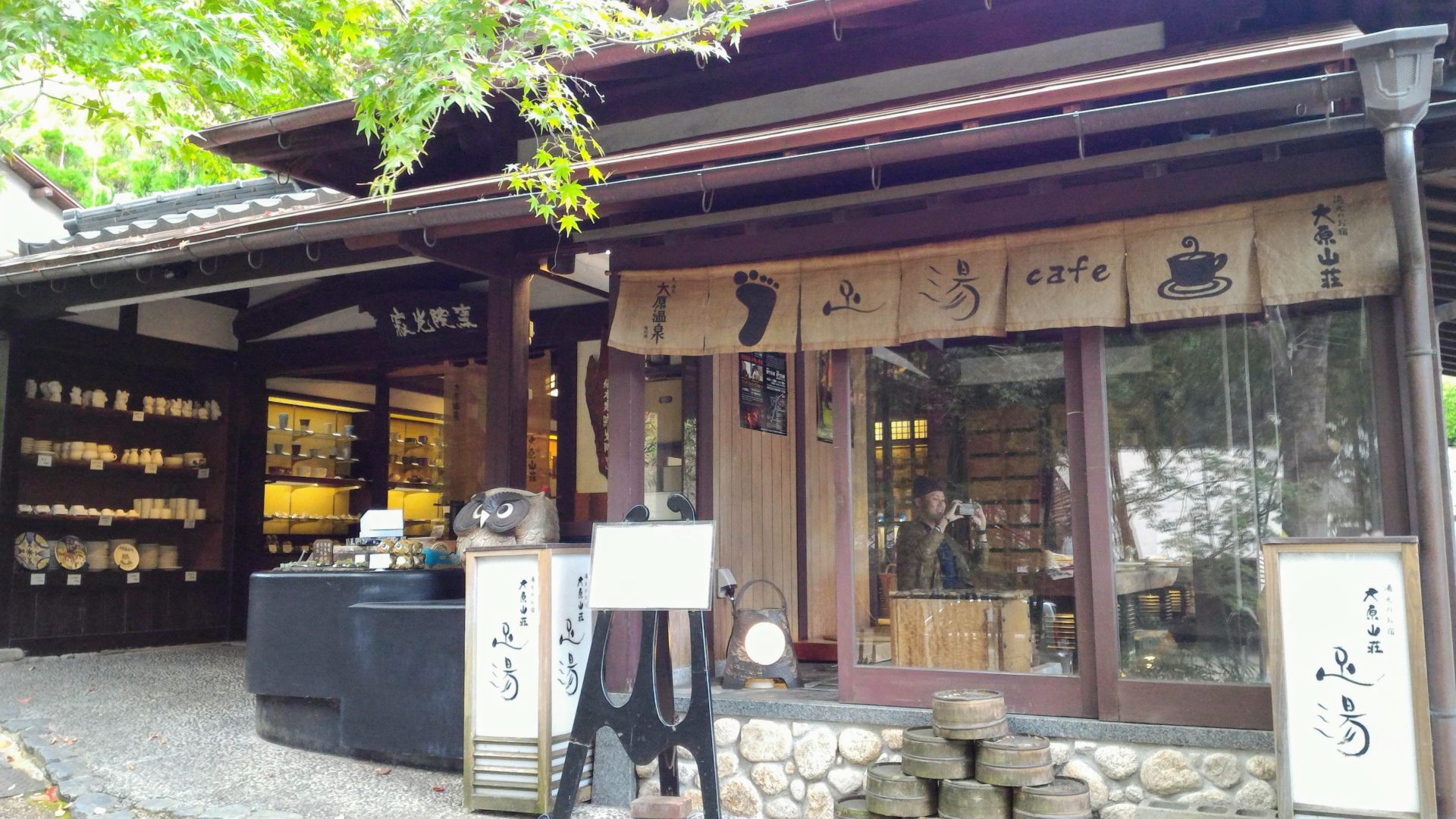
- There is a ceramics store near the temple. You will be able to paint on ceramics, which will then be glazed and fired in the store. Next door there is a cafe with foot bath. If you feel tired after the walk, how about stopping by?
- Map
Ohara’s Specialty
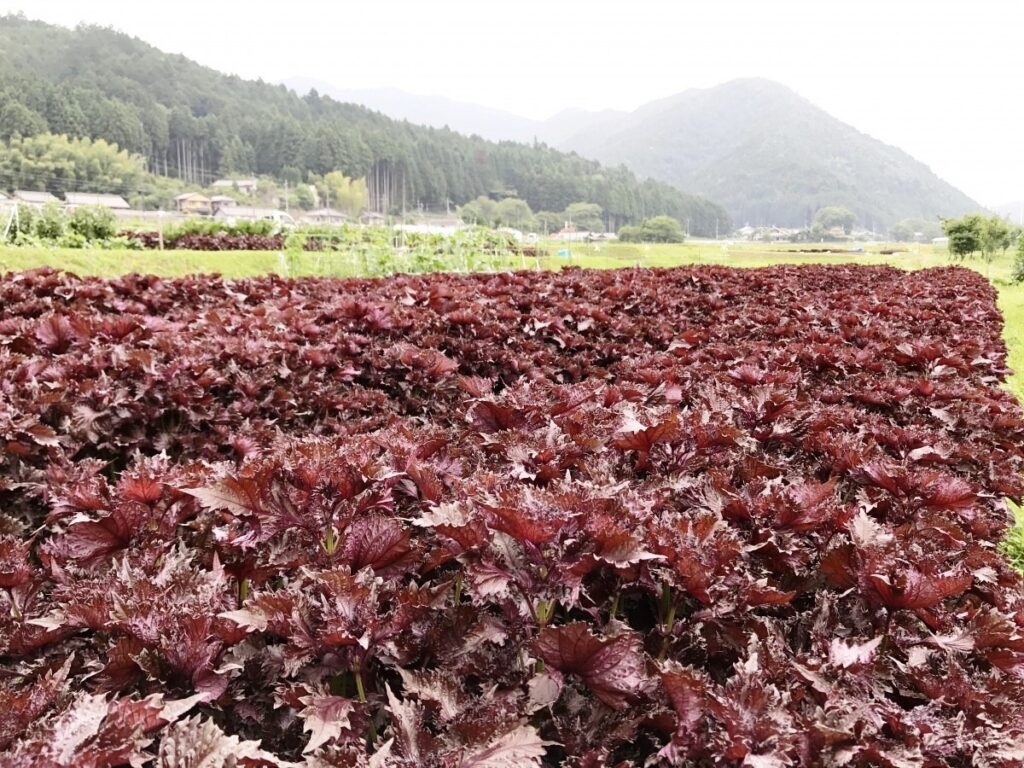
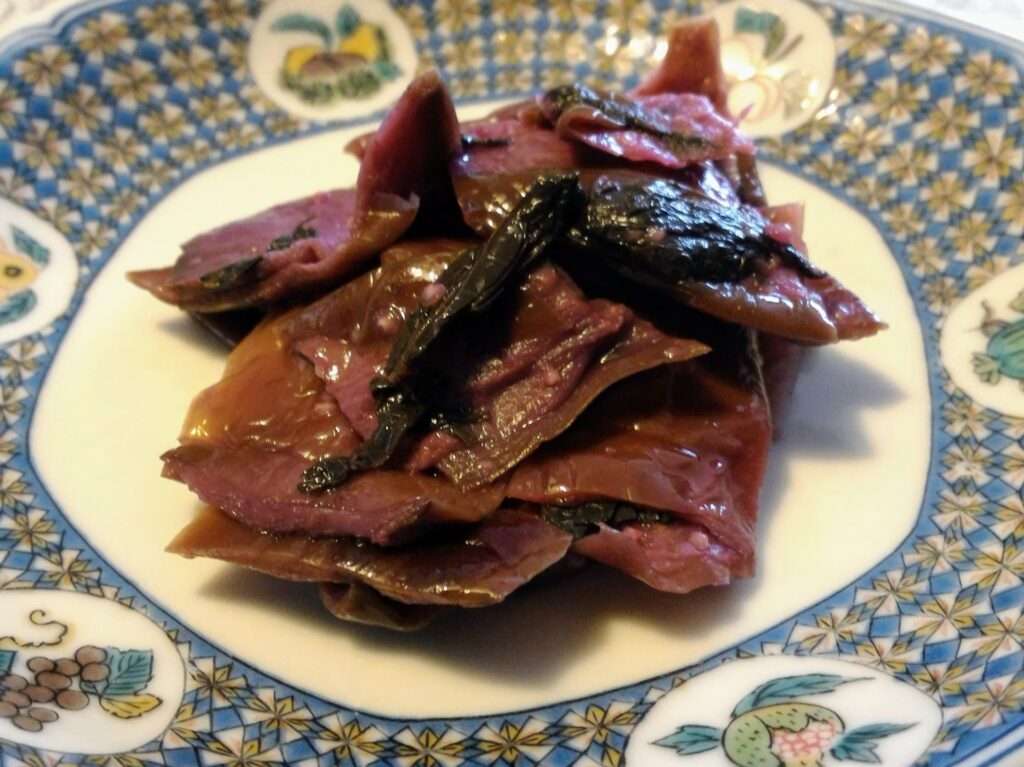
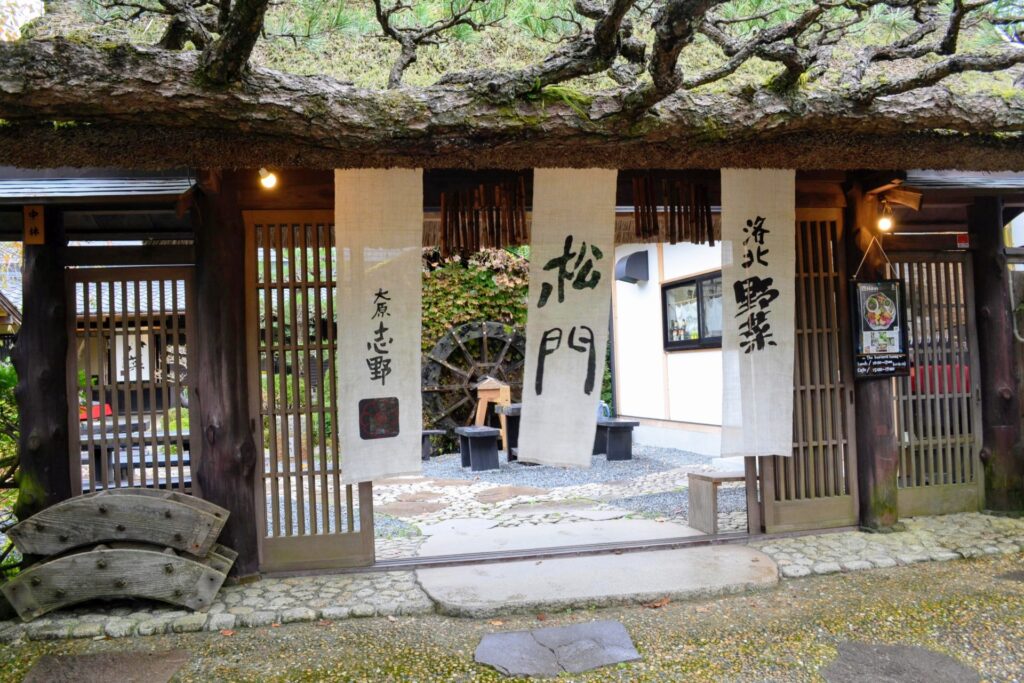
In July in Ohara, it is the peak season for red savory leaves called akashiso. The akashiso grown there are known for their fresh scent and beautiful color. Foods made with akashiso are displayed in stalls lining the alley at Sanzen-in temple. Among them, I recommend the shibaduke. It’s a kind of tsukemono, vegetables preserved in salt and often served to accompany plain rice. The shibaduke of Ohara is made with akashiso and eggplants cut into pieces and subjected to lactofermentation in brine. It’s a bit sour, but goes well with hot rice. And for lunch, how about tasting dishes prepared with local vegetables full of flavor?
- How to get to Ohara? Ohara is not served by train. Either way, take the bus and get off at the Ohara stop, the terminus. To avoid traffic jams in the city center, I advise you to take bus no. 19 from Kokusai-Kaikan station, the northern terminus of the Karasuma line metro (20 min). The bus departs from stop No. 4. One day combined pass (bus and subway) for one day (1,100 yen) is convenient.
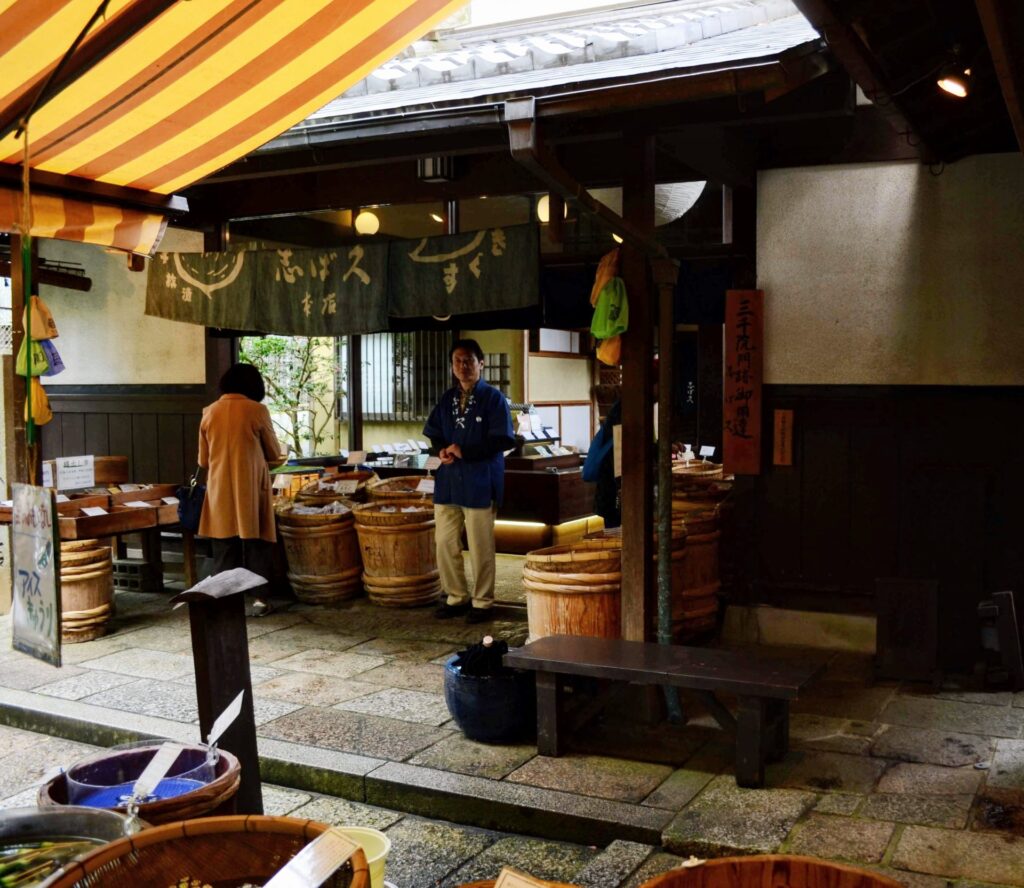
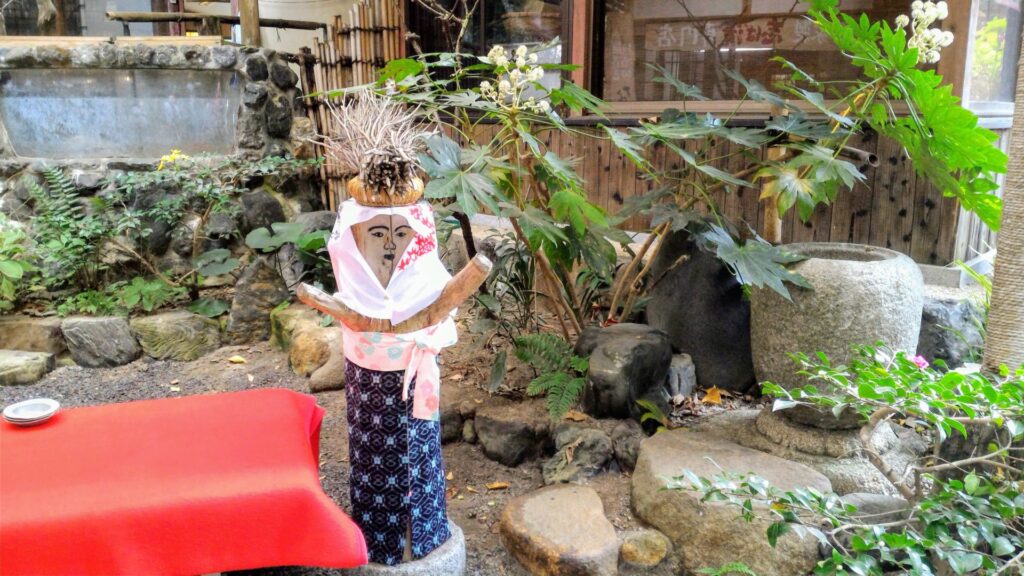
- Ohara’s iconic temples are located on the east side of Ohara Bus Stop. The main Sanzen-in temple is a 10-minute walk away. Cross the zebra crossing and follow the gently sloping driveway along the Ryosen River. There you will find a row of stalls and souvenir shops. A wooden statuette in the photo represents Oharame, a traveling merchant of yesteryear.
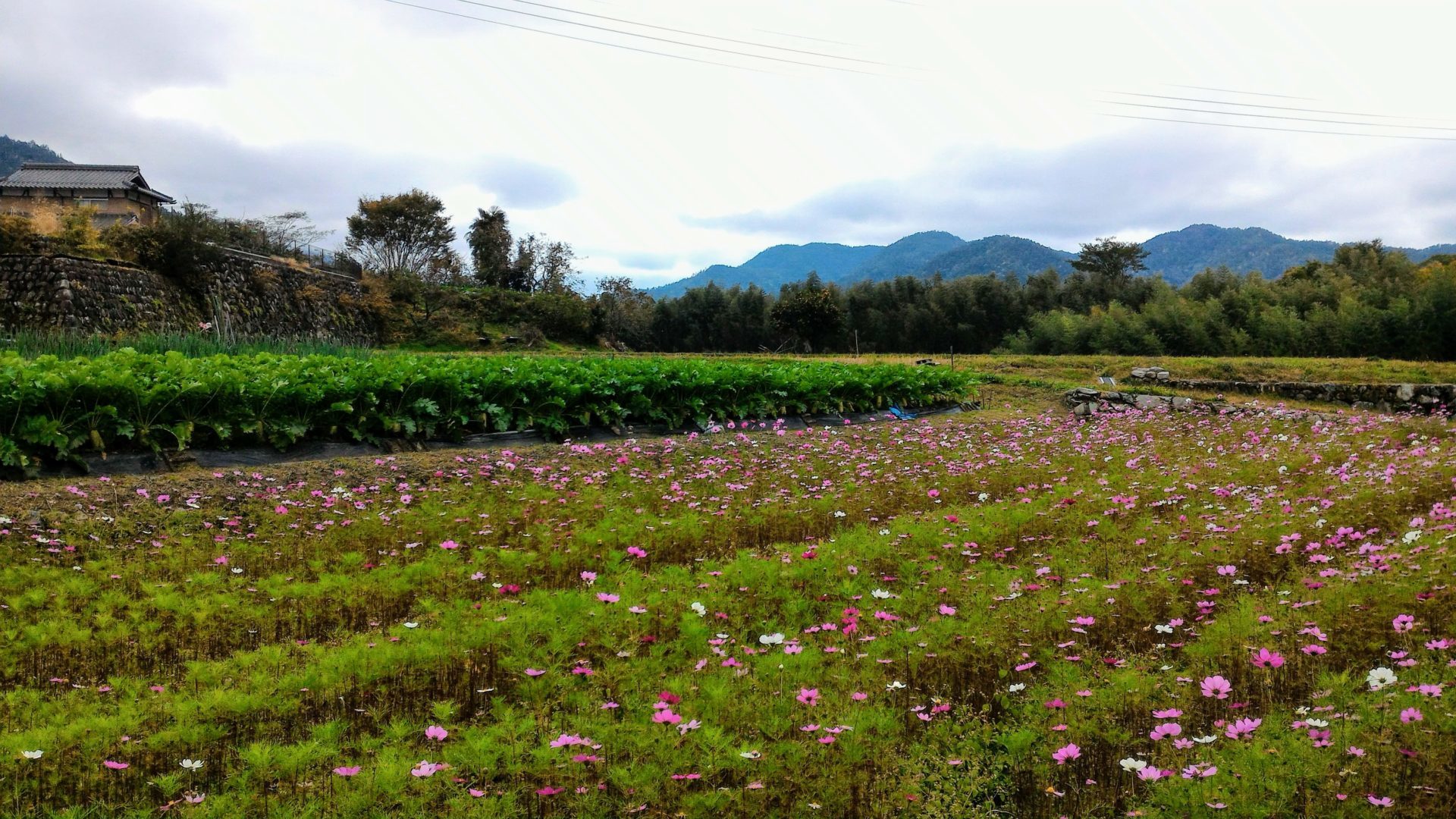
- Jakko-in Temple is located opposite Sanzen-in Temple and its surroundings. It is a 20-minute walk from Ohara bus stop. A bit far, but you can enjoy peaceful scenery along the way.
Kurama/Kibune
The city of Kyoto is home to many must-see sites to visit, but if you want to escape the hustle and bustle of the city, how about heading to Kurama and its neighboring village Kibune? You can recharge your batteries in the heart of rich nature by taking a beautiful little hike.
Kurama
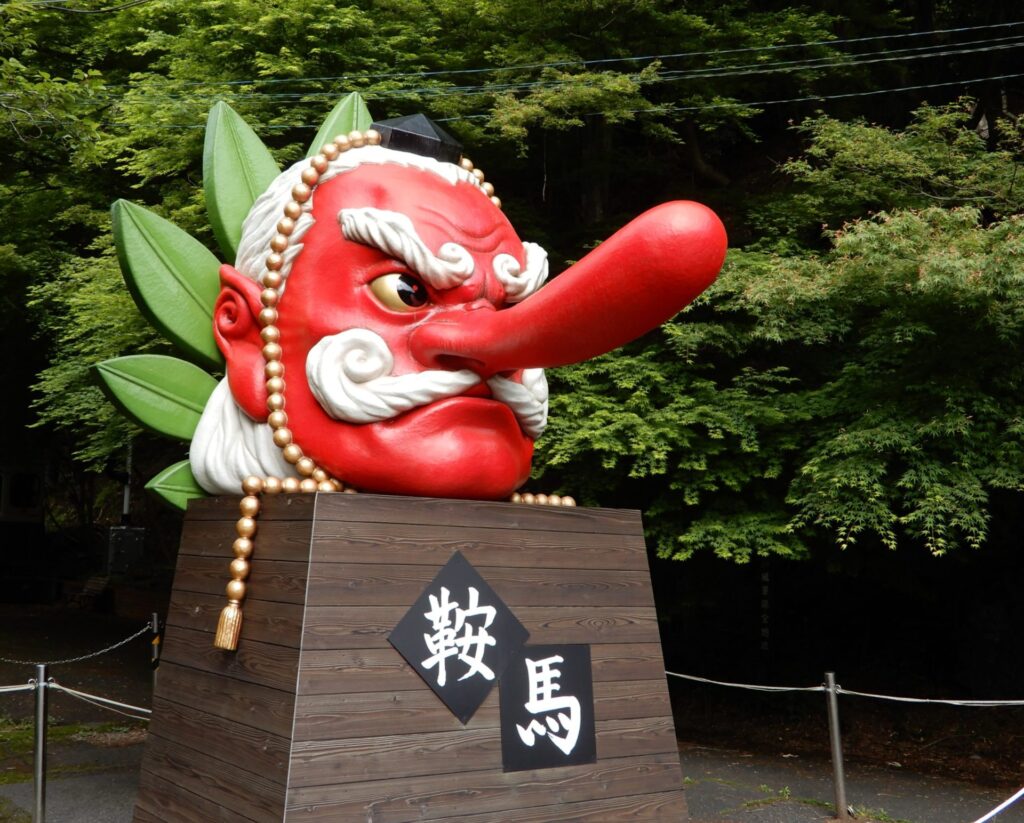
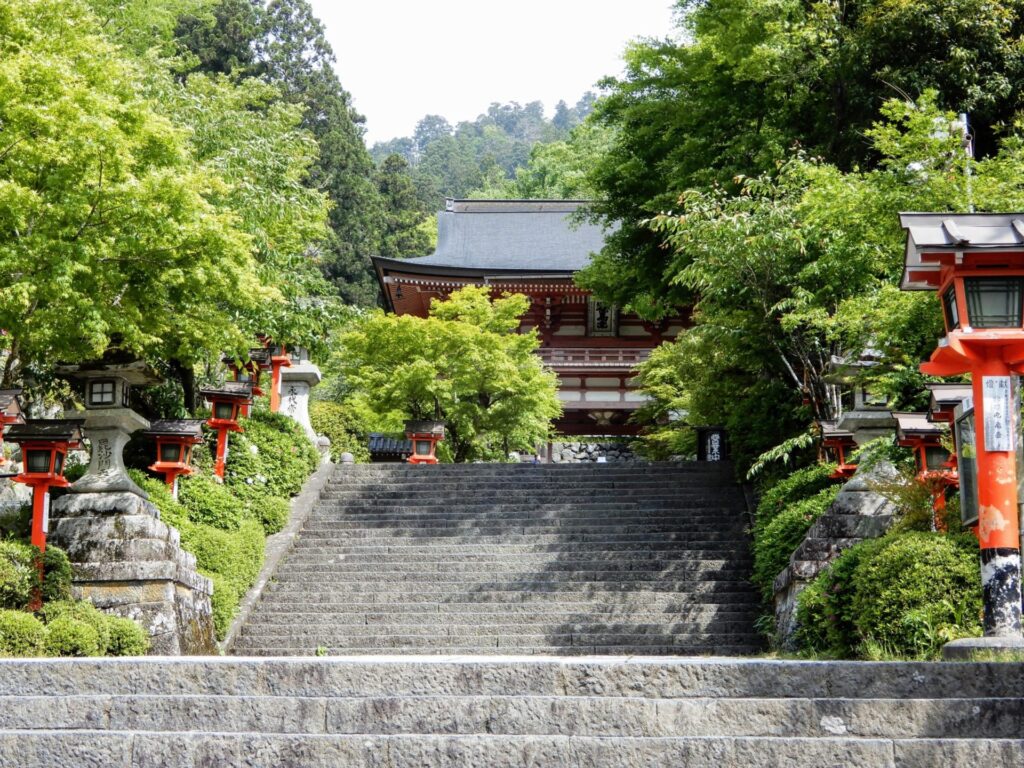
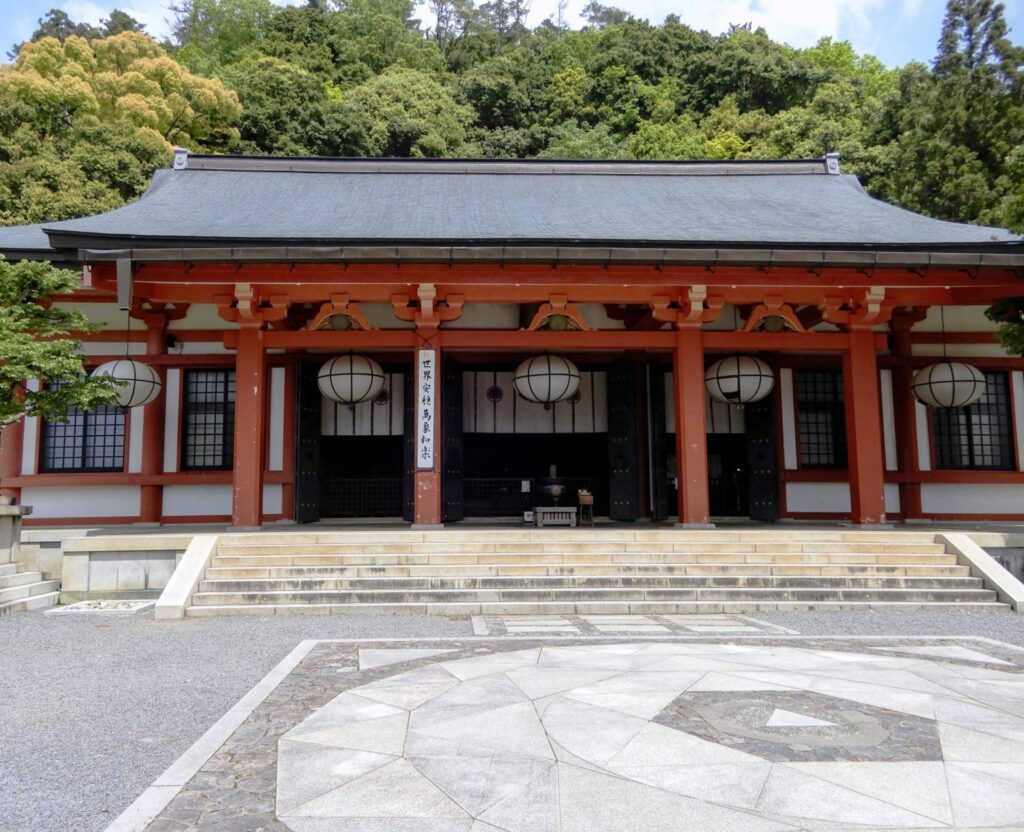
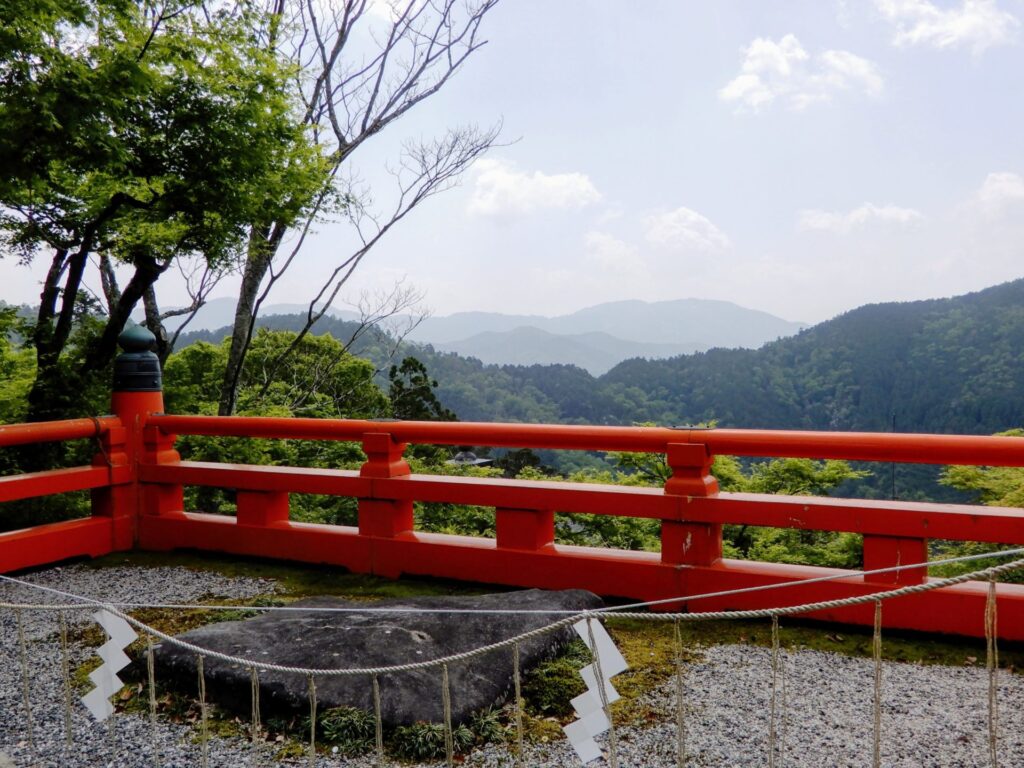
Mount Kurama imbued with a mystical ambiance is known as one of thepower spots, places where spiritual energy emanates. It is believed to be inhabited by tengu, a type of legendary creature from Japanese folklore. The tengu, which is like a bird-human hybrid, what is it? Originally considered a shooting star in China, the tengu was assimilated to a tutelary deity of the mountains in Japan where the cult of the mountain evolved by merging with Shintoism and Buddhism. Since ancient times, Mount Kurama has been considered a sacred place having spiritual power and different forms of religions such as ancient Shintoism, esoteric Buddhism, shugendo coexist there.
You will reach the main pavilion in 30 minutes on foot from the temple entrance gate. Objects of worship are venerated there. There is a hexagram sign on the ground. This is a point where you can feel the energy of the universe.
In search of a more mystical atmosphere, we continue walking in the forest and head towards Okunoin Mao-den, the holiest place of the Kurama-dera temple.
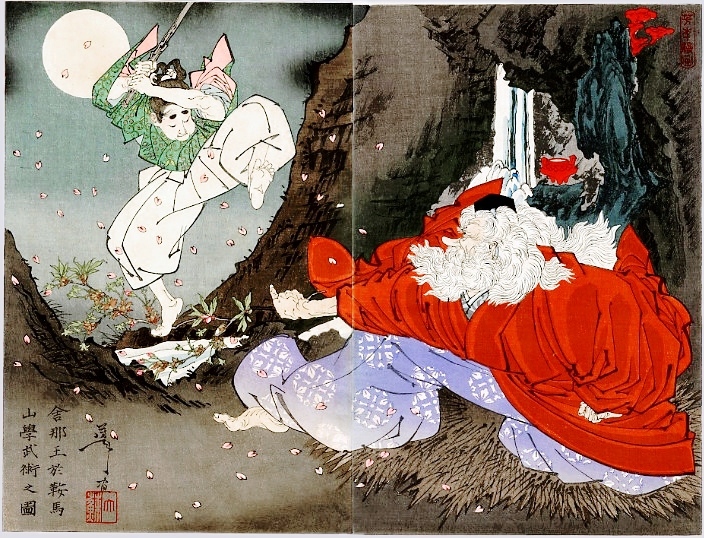
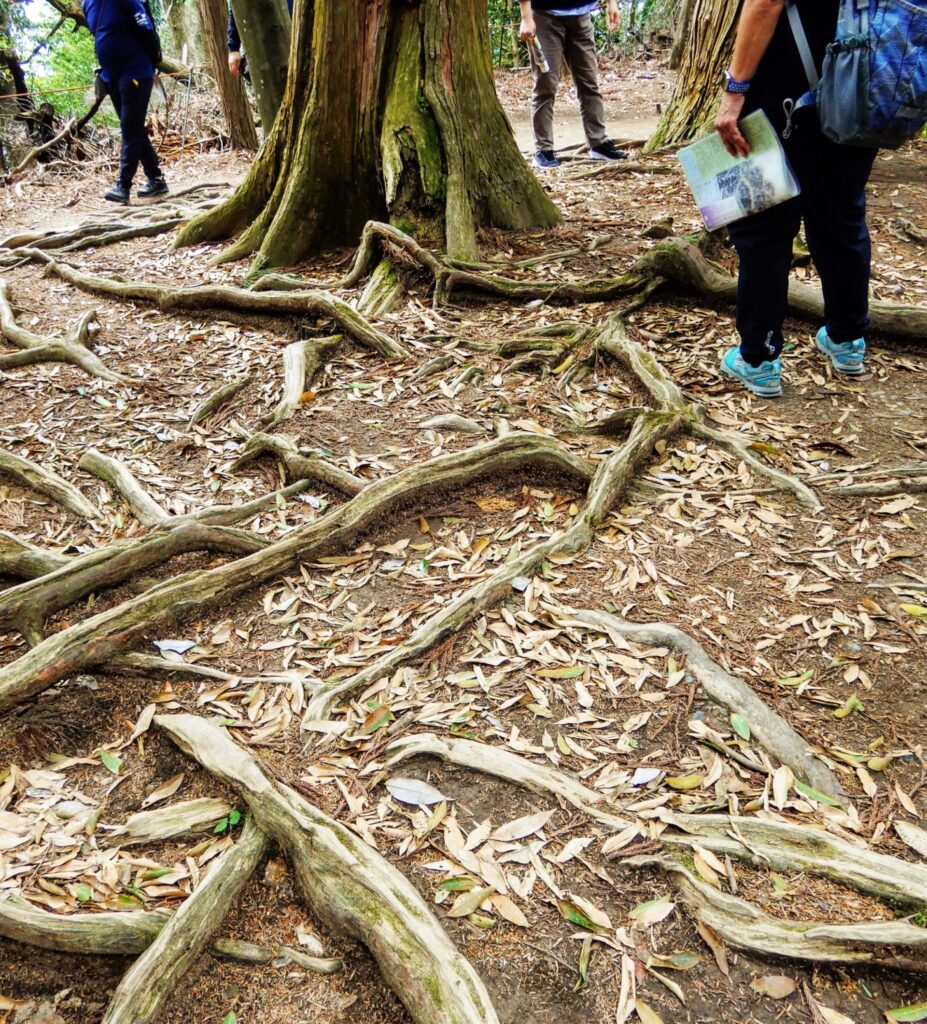
Kurama-dera Temple is also known for the myth of Minamoto no Yoshitsune, a young warrior from the 12th century. He spent his childhood here and trained in the dense forest. According to a legend, it is the tengu who taught him the art of swordsmanship. You will be impressed by a strange phenomenon: an intertwining of the roots of old cedars.
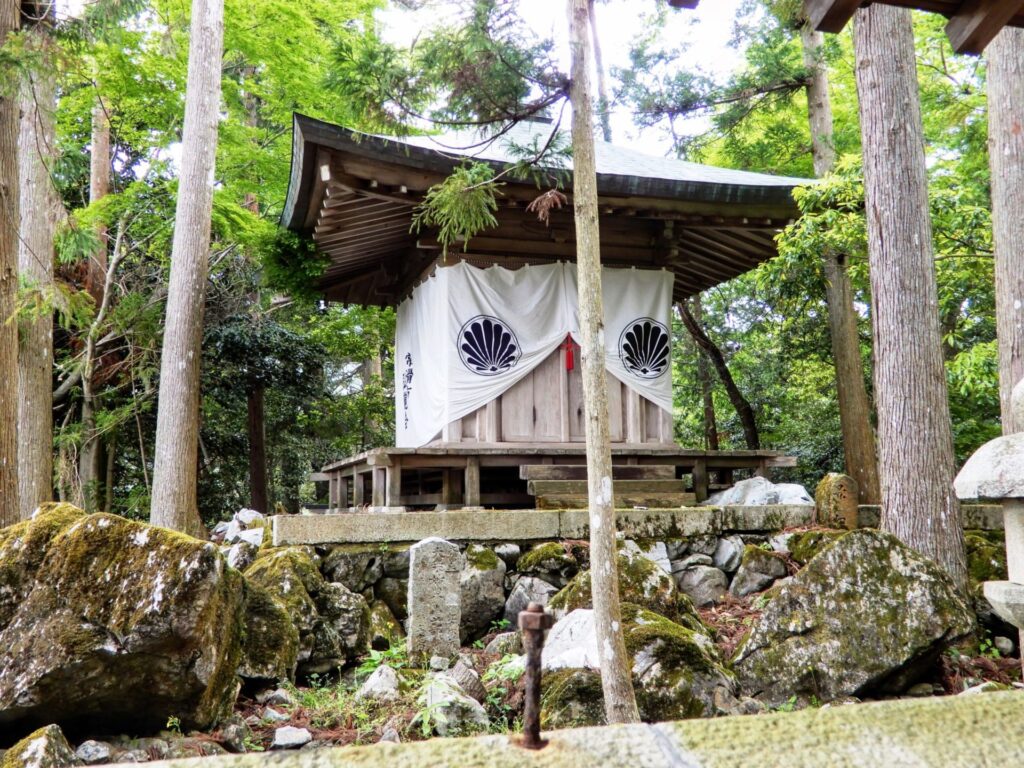
Following the winding path, you will see Okunoin Mao-den which stands quietly in the depths of the forest. It is here that themao-sonotherwise called “Sanat Kumara of Japan”, descending from Venus to help humans, landed 6.5 million years ago. Mount Kurama is believed to have been created by the uprising of an underwater volcano around 250 million years ago. The rocks surrounding the Mao-den sanctuary are limestone.
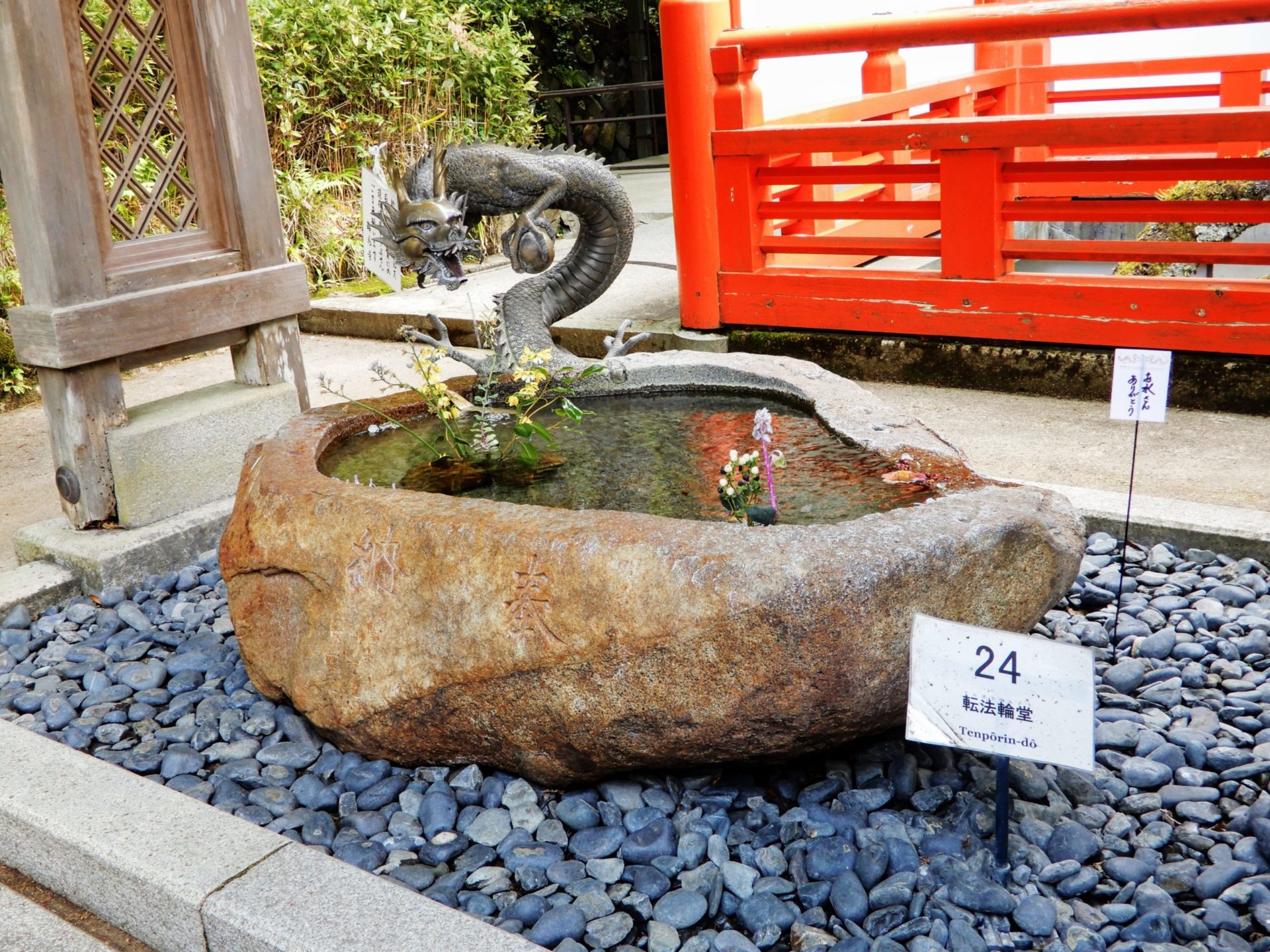
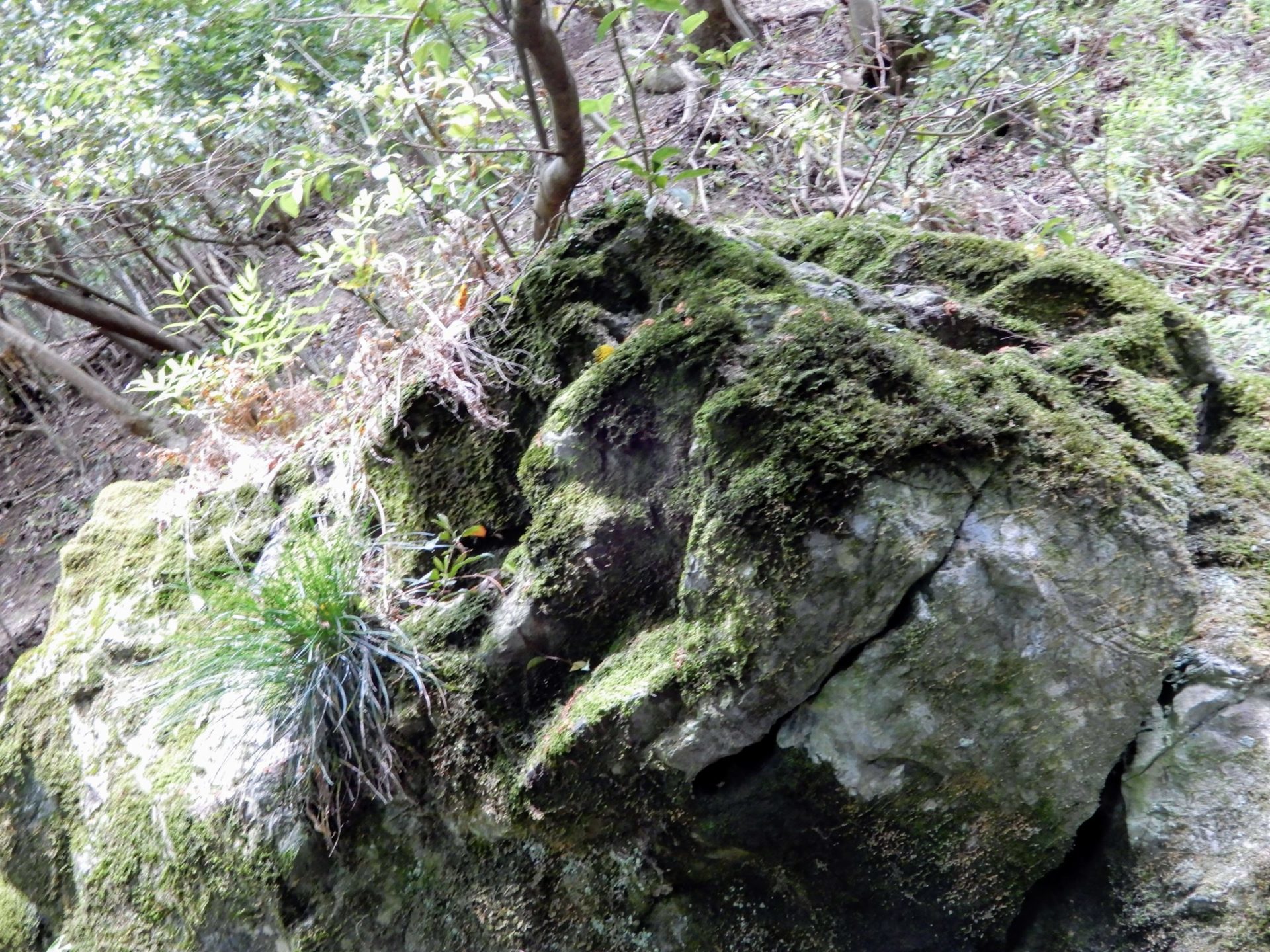
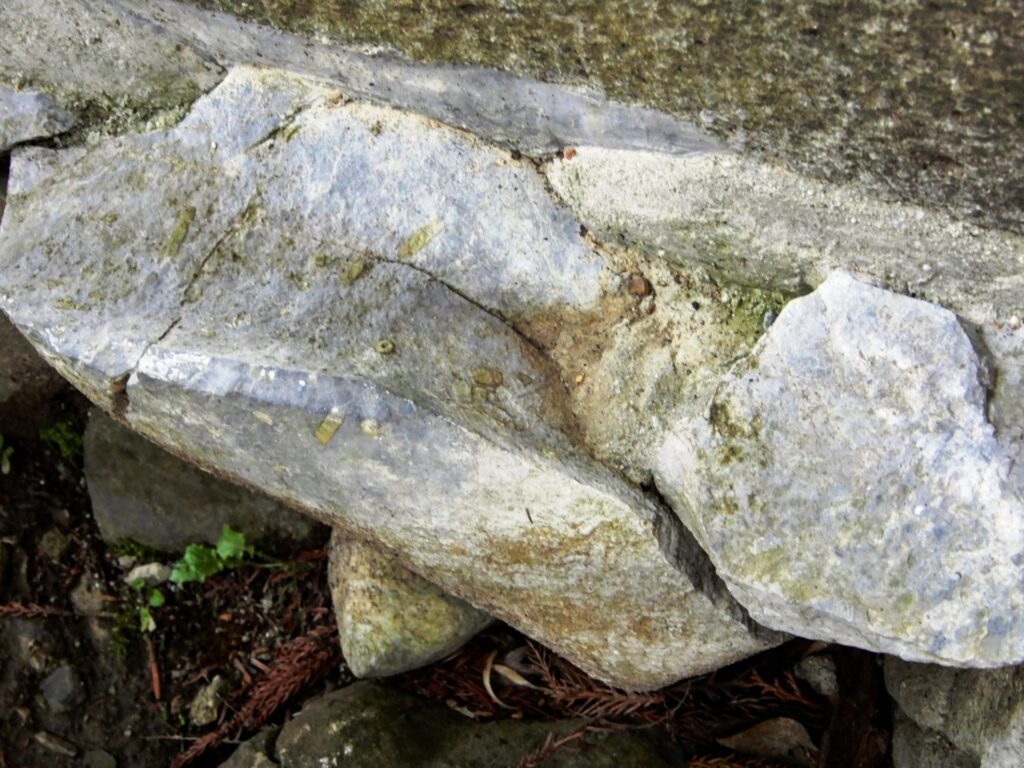
Geologically too, Kurama is an interesting site to visit. Rocks such as sandstones, shales, chailles, limestones, etc. which appear along the hiking trail bear witness to the birth story of Mount Kurama. The kurama-ishi, diorite quartz with a reddish brown hue is very popular in Japan.
After Okunoin Mao-den, the last spot on Mount Kurama, going down the mountain (15 min), you will reach Kibune, a village located on the other side of the mountain. The murmur of the Kibune River will welcome you.
- To get to Kurama, take the Eizan-Railway train line at Demachiyanagi and get off at Kurama (30 mins 470 yen) or take the bus from Kokusai-Kaikan Subway Station and get off at Kurama stop (25 mins 370 yen).
- The Kurama-dera Temple entrance ticket price is 500 yen.
- Walking shoes are recommended.
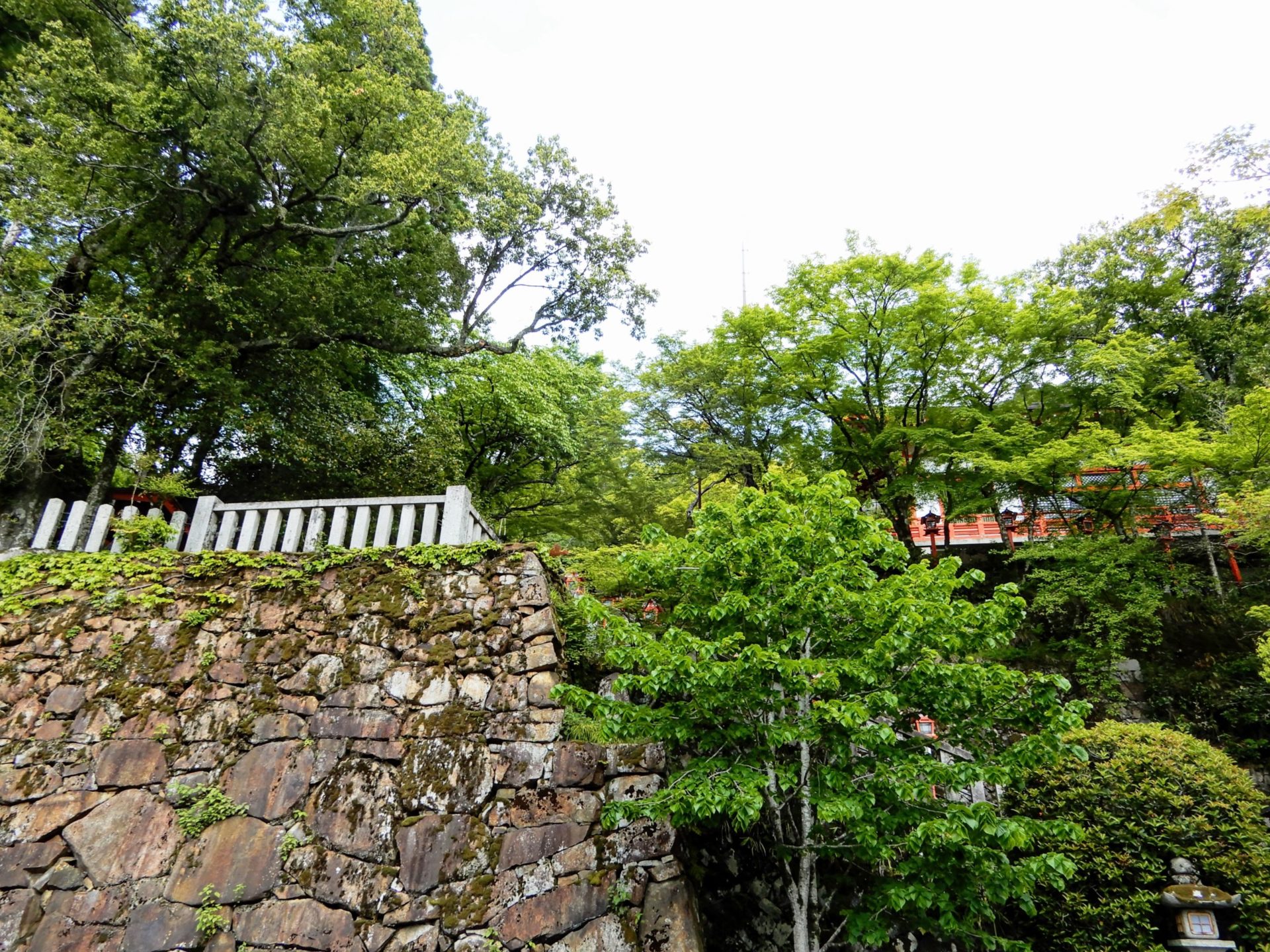
- The path winds from the front door to the main pavilion. You can take a funicular to Taho-to Pagoda located halfway for 200 yen.
- Map
Kibune
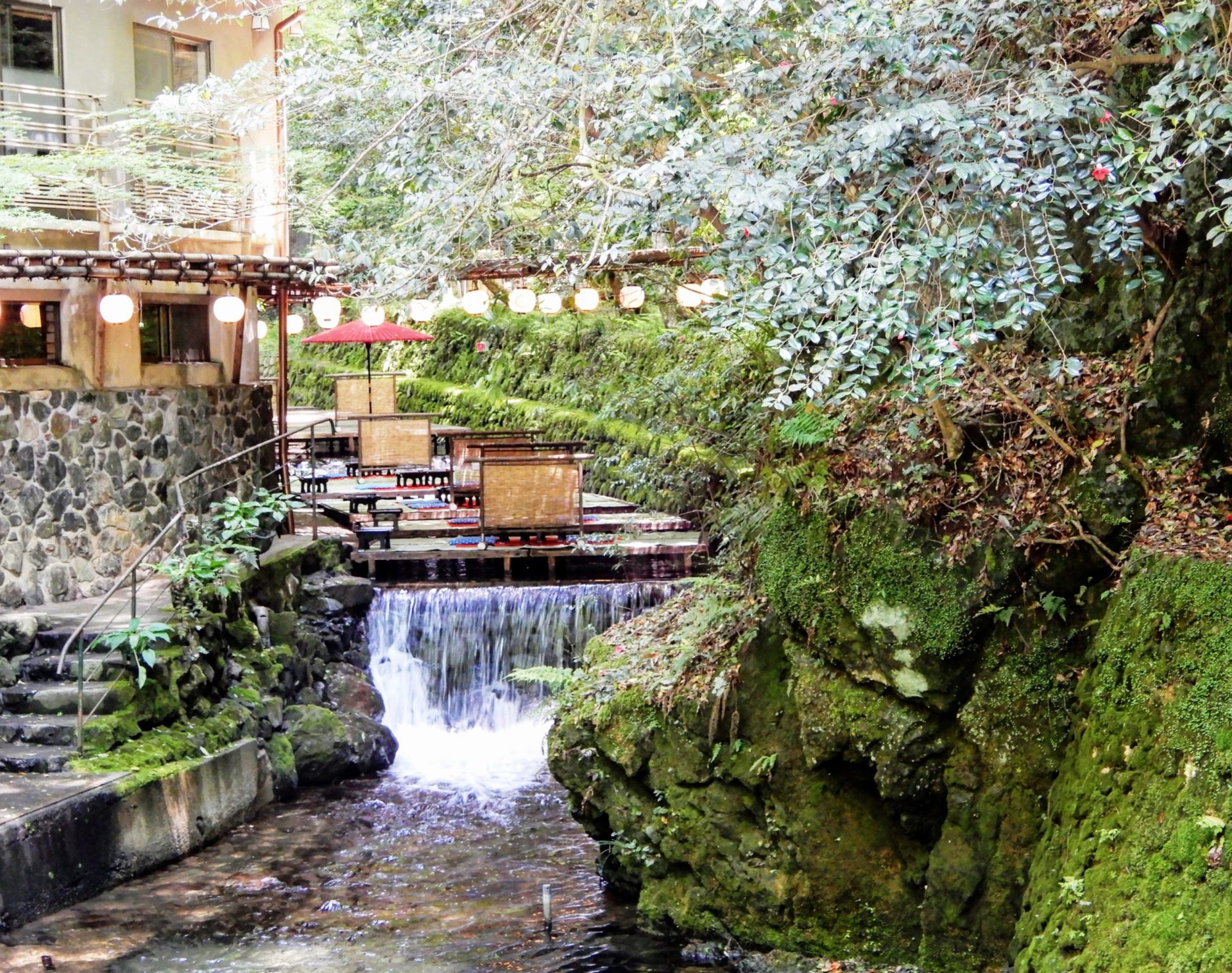
The place name Kibune means a “place of origin where the energy of creation emanates”. It’s a great place to avoid the sweltering summer heat, as it’s cooler than in the city center. Kibune restaurants install terraces called kawadoko above the river. You can taste dishes there while hearing the rustling of the river and taking in the fresh air.
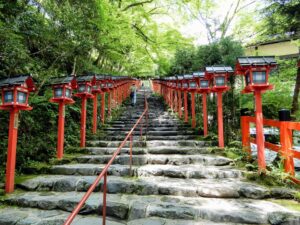
Kibune is also known for its Kifune-jinja Shinto shrine dedicated to the god of water. As you exit the west gate of Mount Kurama, near the opposite bank of the Kibune River, you will see the torii and the stone staircase leading to the sanctuary.
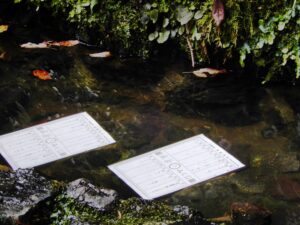
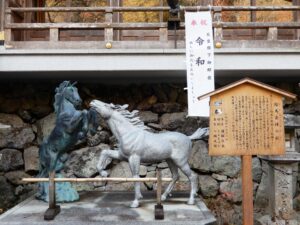
Three shrines form the Kifune-jinja. They are found along the road parallel to the Kibune River. At the first shrine, Hongu at the end of the stone staircase, try a omikuji (predictions written on a piece of paper). The omikuji of this sanctuary is a bit special. Predictions appear when you float your omikuji on the sacred water of the sanctuary. Kifune-jinja is also the birthplace of ema, votive wooden tablet on which a wish is written. When there was a great drought or a long rain in the country, the imperial envoys prayed at Kifune-jinja where the god of water is worshipped. For the rain fall, they dedicated a black horse. A white horse was responsible for driving away the rain and bringing back the sun. Over time, the offering of a votive tablet bearing the image of a horse (ema) replaced this traditional rite.
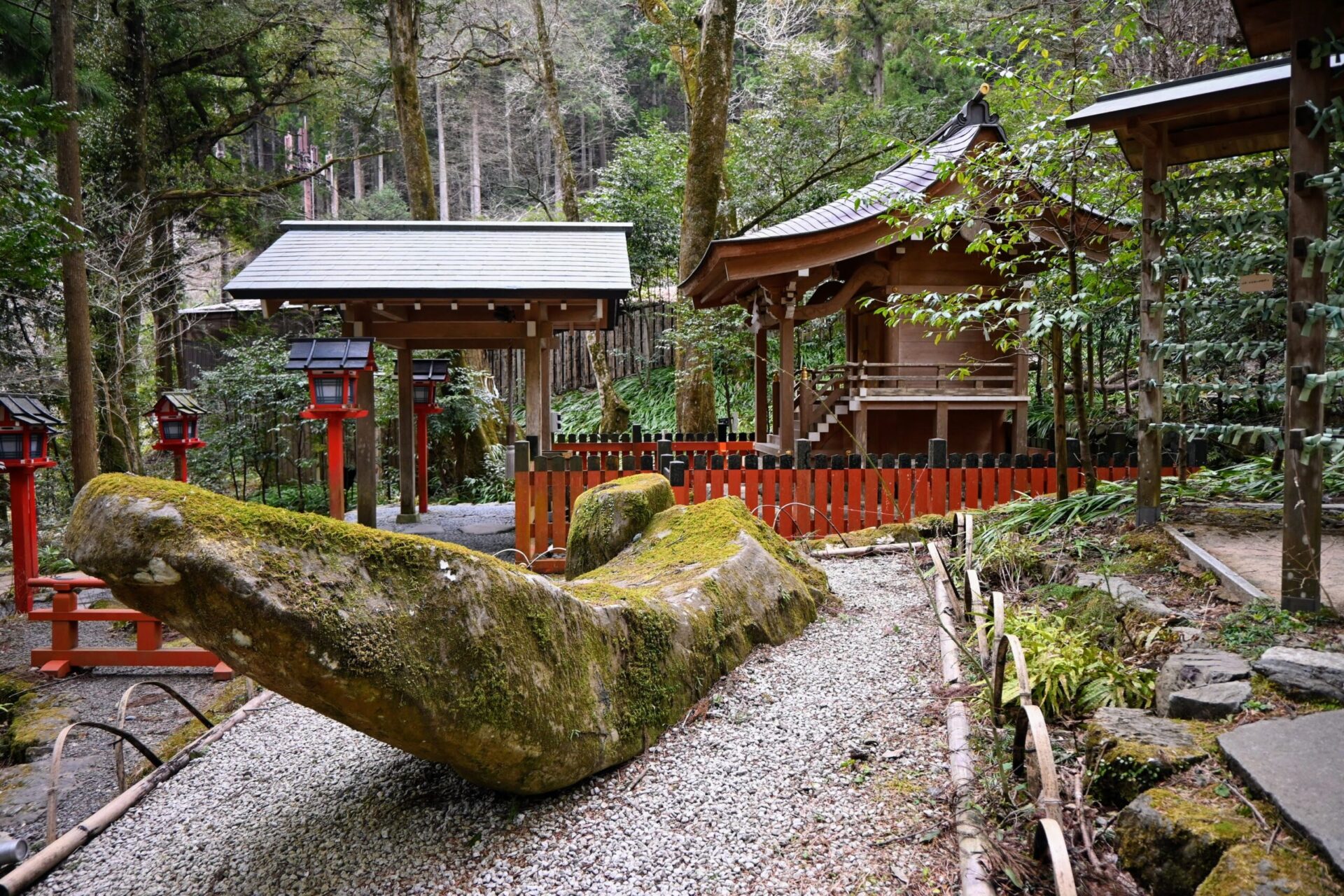
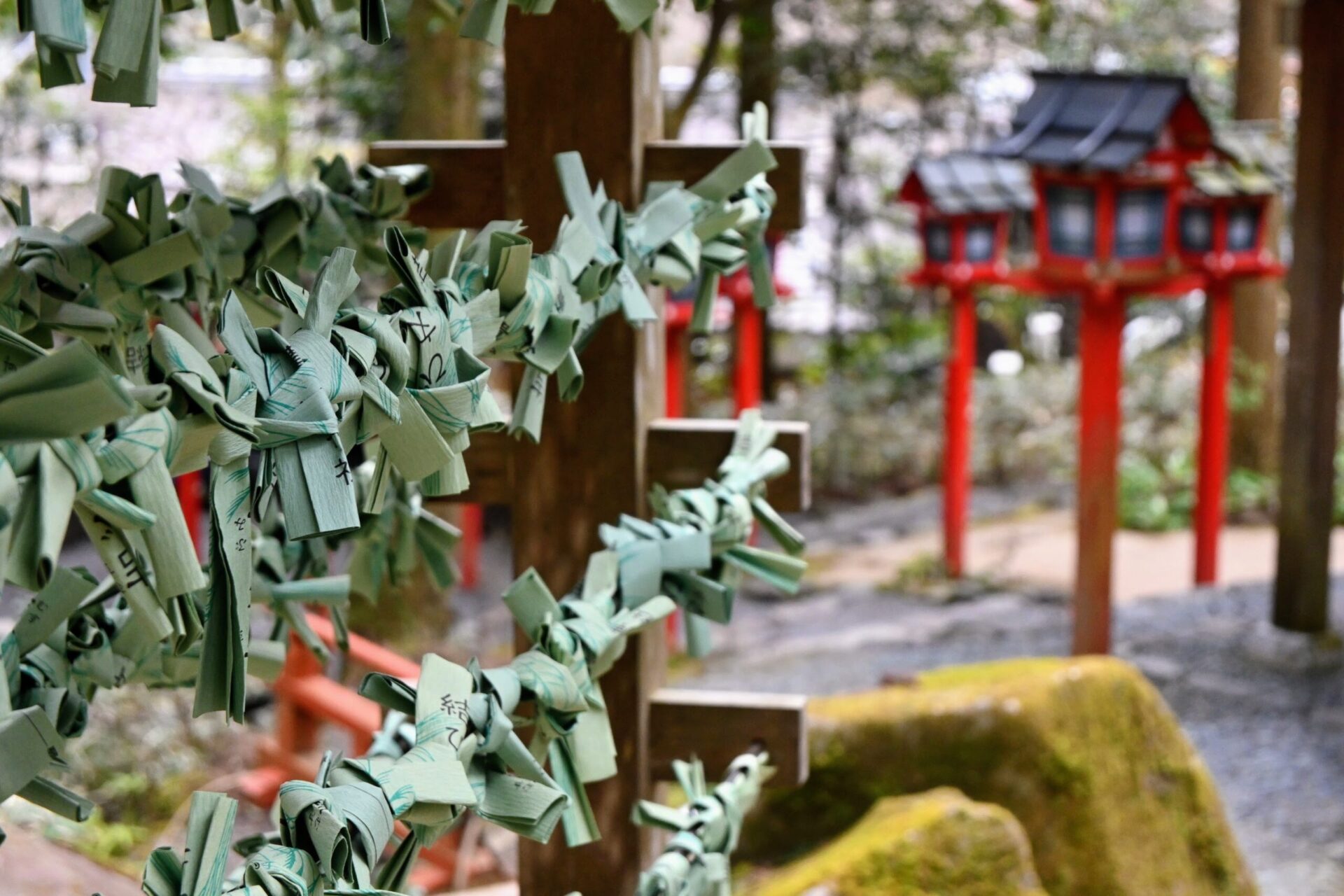
The second shrine, Yui-no-Yashiro dedicated to the goddess of love is known as a place of prayer to ensure a successful marriage. In fact, a famous woman poet from the end of the 10th century came there wishing to reconcile with her husband. (But her love for him finally cooled and she left him…)
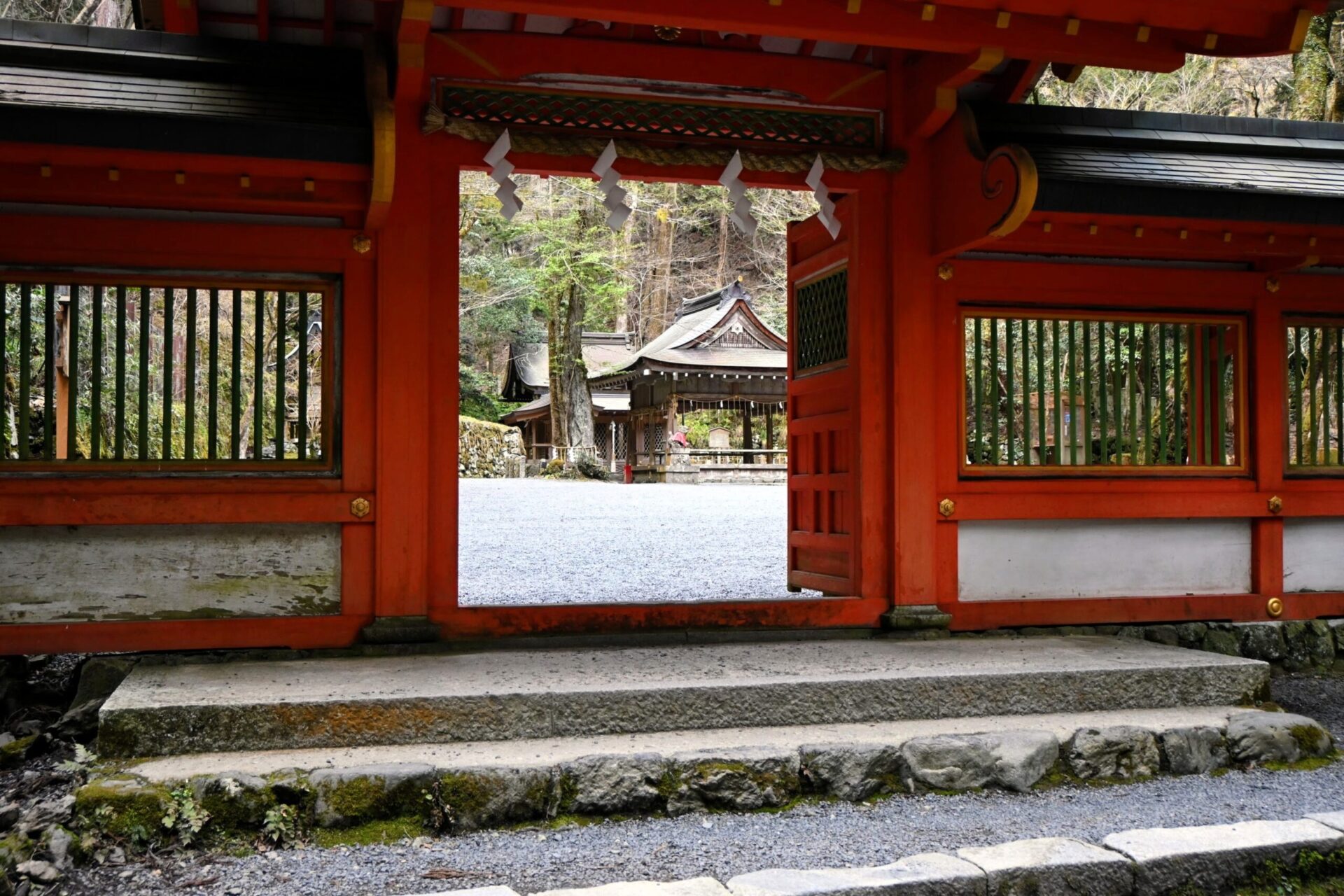
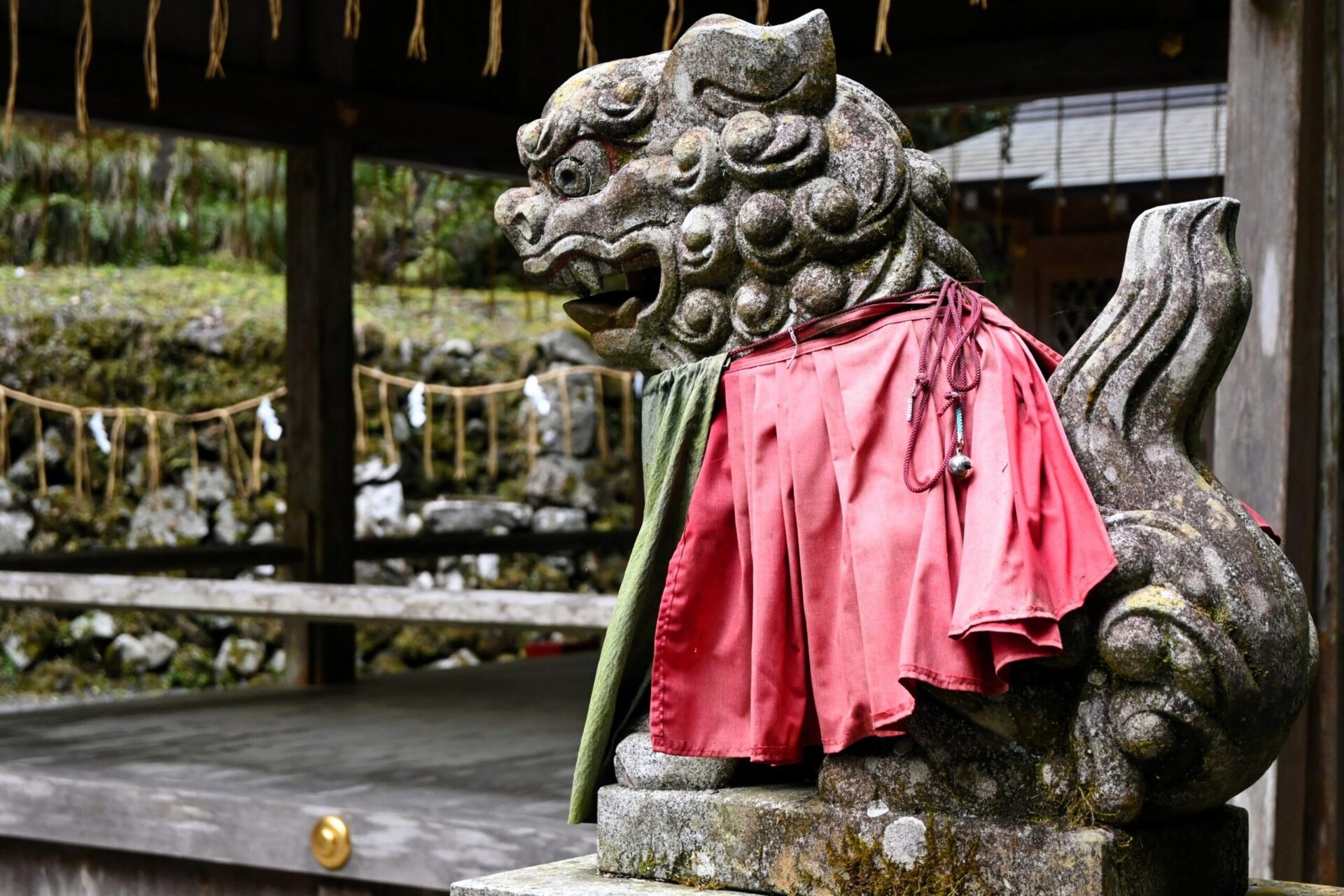
The third shrine, Okunomiya, the location of the original shrine is 700 meters upstream from the first shrine on the river. According to legend, a goddess arrived here on a yellow boat to worship the god of water. There you will see a large rock that would have covered his boat. Nestled in the heart of a green forest, this sanctuary exudes a serene atmosphere.
- It is possible to start this hike from Kibune. In summer, I recommend starting from Kurama, because there are fewer uphill paths and it is easy to walk.
- To return to the city center, take the Eizan-Railway train line to Kibuneguchi located a 30-minute walk from Kifune-jinja Shrine and get off at the Demachiyanagi terminus. (28 mins 470 yen). There is also bus service between Kibune stop and the next Kibuneguchi stop. (5 mins 200 yen).
- Map