

Shinsekai
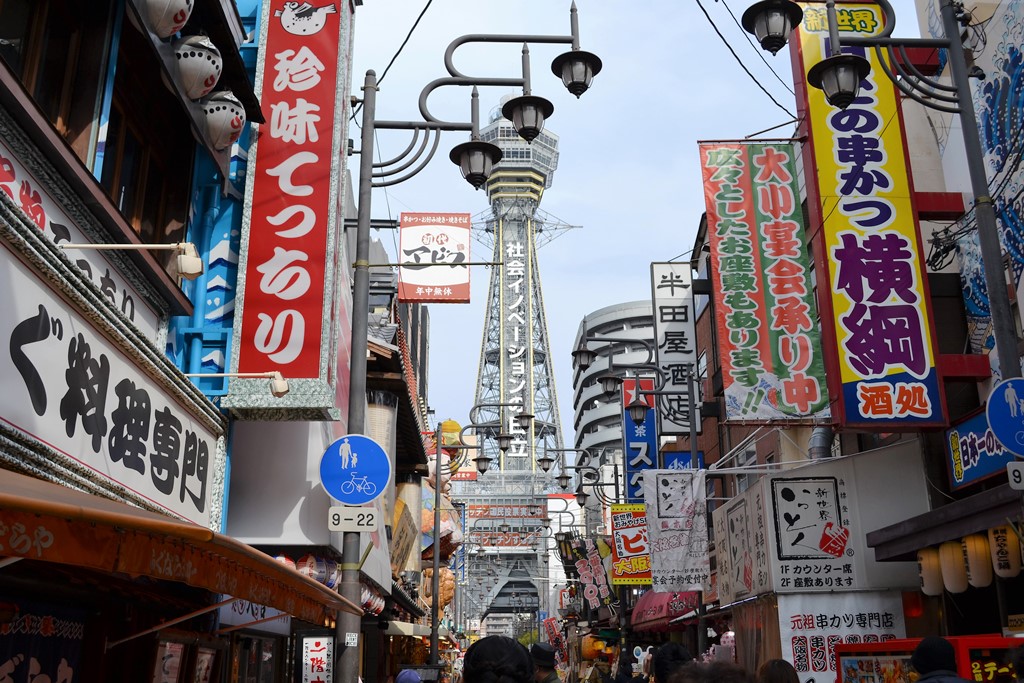
Shinsekai, which literally means “new world” in English, is a lively entertainment district that extends at the foot of Tsutenkaku Tower.
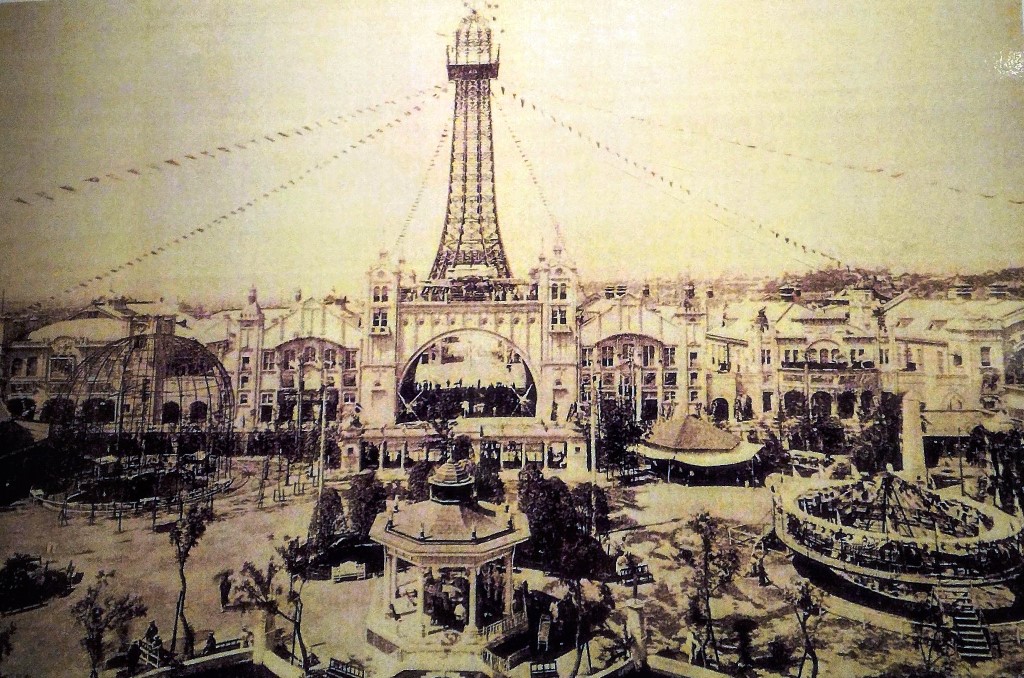
The Tsutenkaku Tower, 103 meters high, is one of the symbols of the city of Osaka. Look at these two photos. The original pictured on the left was modeled on the Eiffel Tower and Arc de Triomphe in 1912. The current model pictured on the right is a reconstruction from 1956. It is illuminated by LEDs and colors the Osaka night sky. The color combination of the device installed on its top serves as weather.
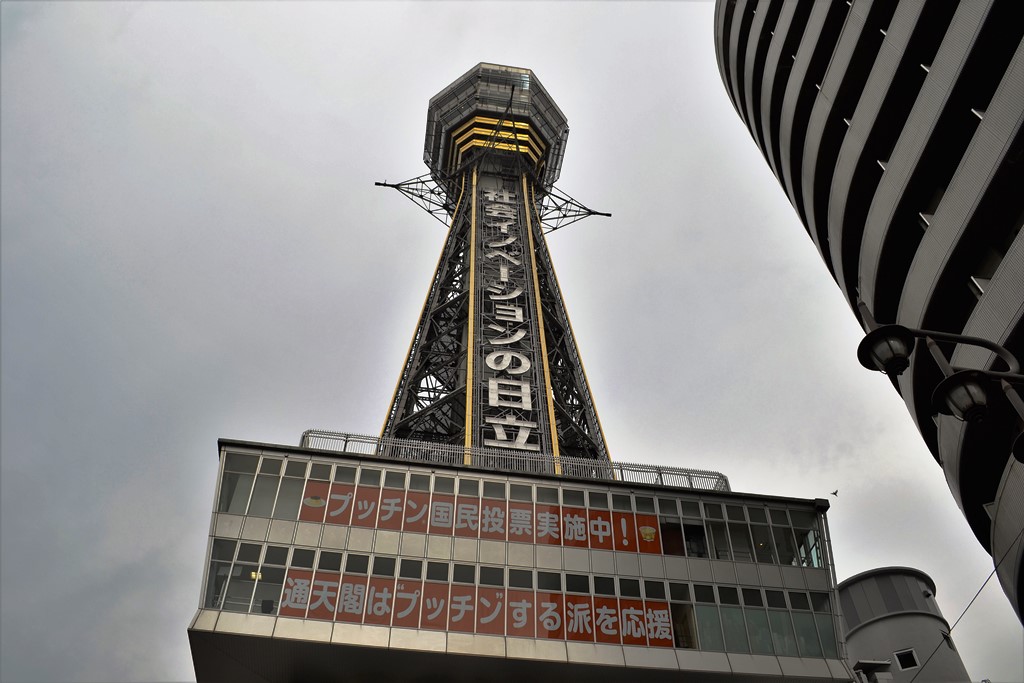
- The Tsutenkaku Tower Observatory entrance ticket price is 1,200 yen.
- Tsutenkaku Tower is open all year round.
- Map
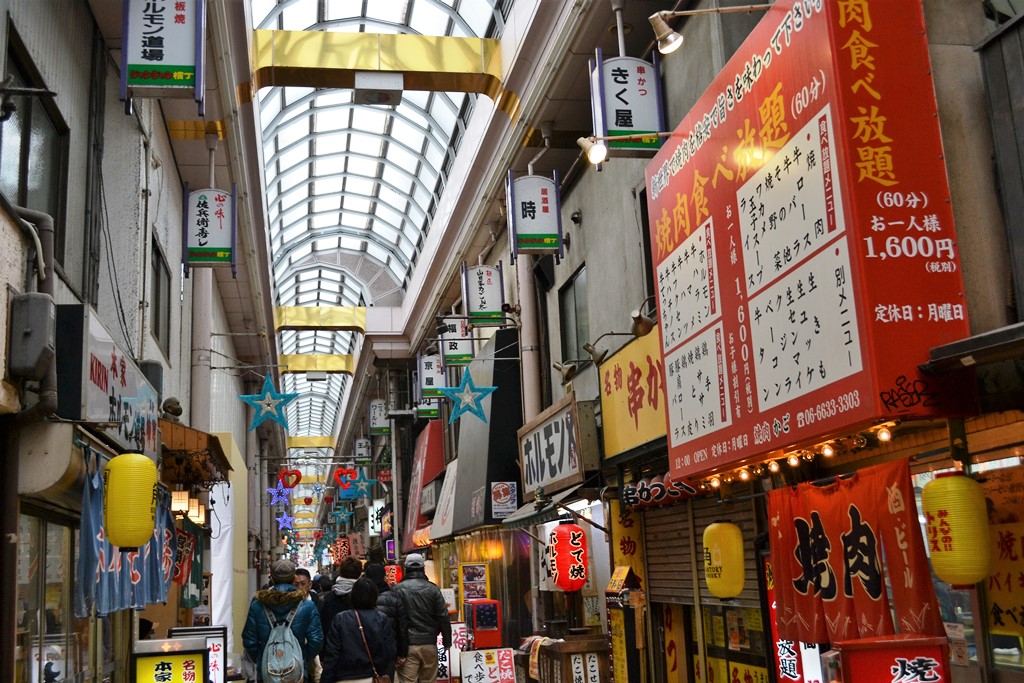
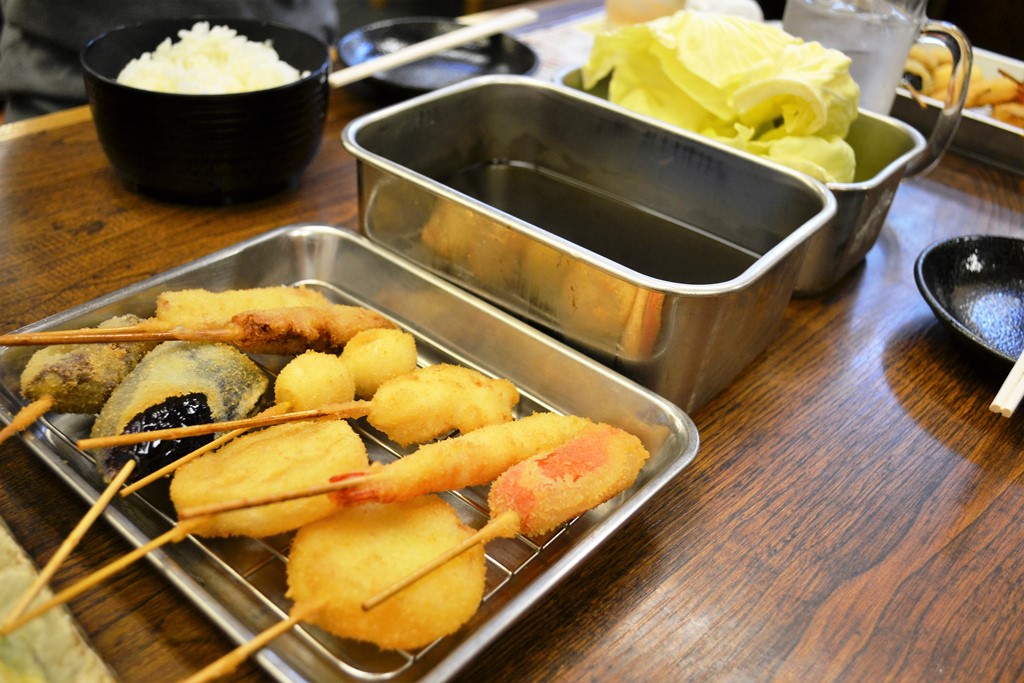
In the southeast corner of Shinsekai is the narrow Jan Jan Yokocho Alley. As we used to solicit passers-by by playing shamisen (Japanese musical instrument with a triangular plectrum calledbachi), the sound emitted by the shamisen, Jan Jan was assigned to this aisle. Today, meat and vegetable restaurants fried on skewers,kushikatsu, clubsgo, bars where you drink alcohol at the counter line both sides of the 180 meter long alley. Enjoy its lively atmosphere.
Tennoji Park
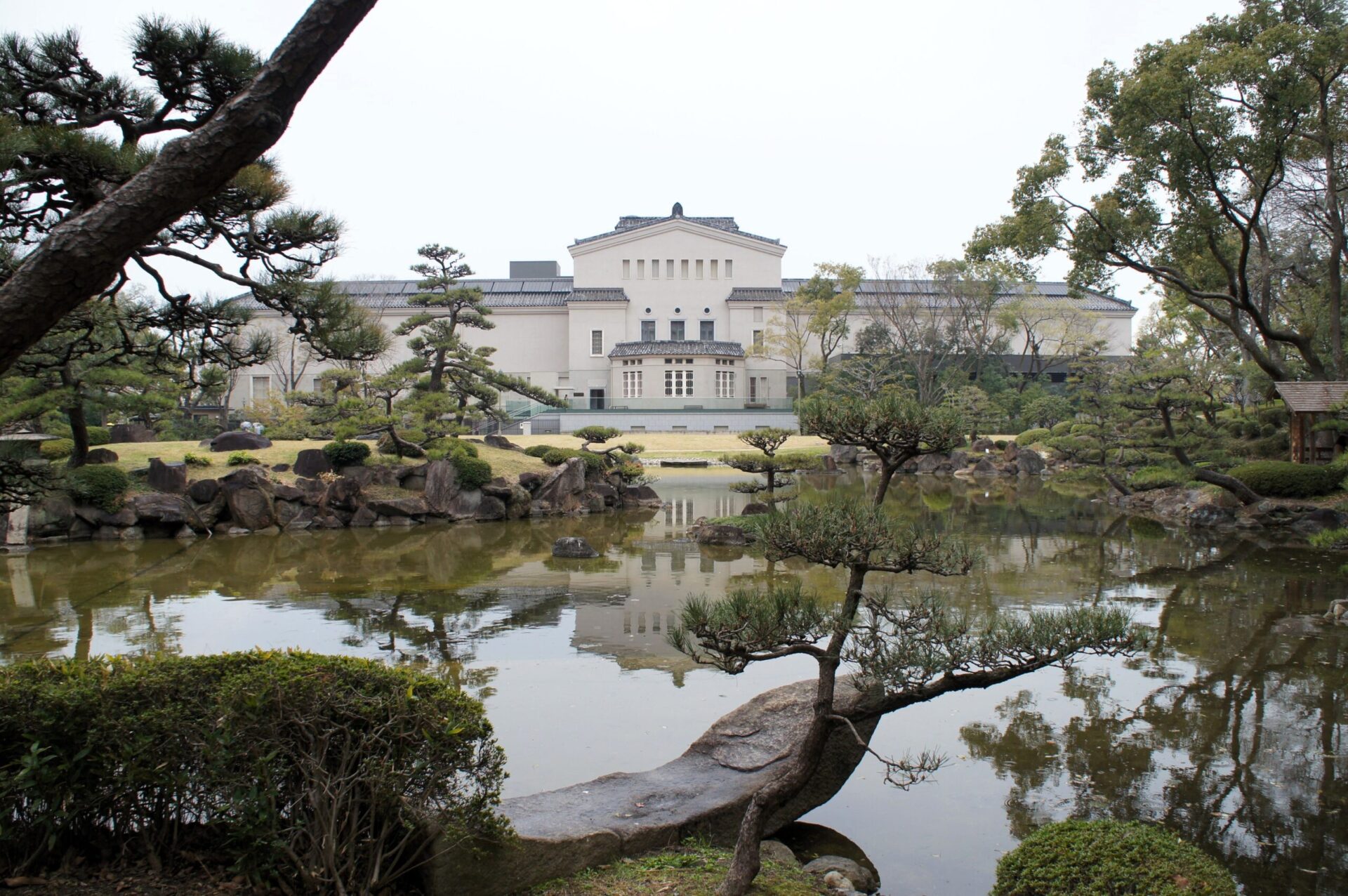
It is a municipal park with more than 100 years of history. On its grounds of approximately 28 hectares, there is a botanical garden, a municipal zoo, an art museum and a Japanese walking garden, Keitakuen. This park is the oasis for the residents of Osaka.
- The entrance ticket to each establishment in the park:
- The municipal zoo (500 yen)
- The municipal art museum (500 yen)
- The Keitakuen Japanese garden (300 yen)
- The establishments indicated above are closed every Monday.
- Map
Abeno Harukasu
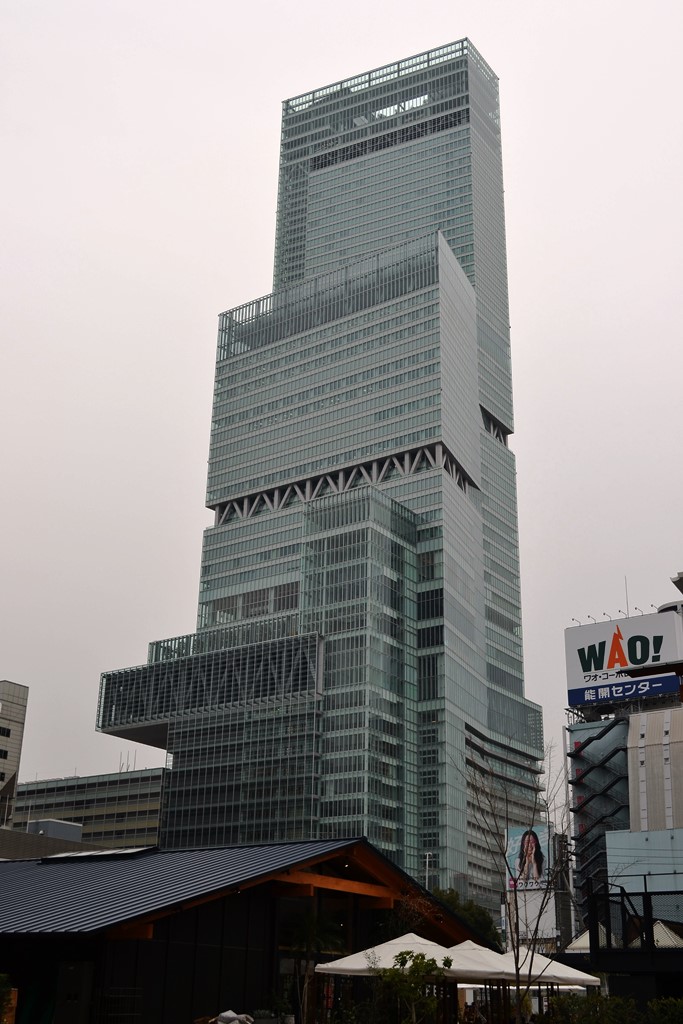
Abeno Harukasu, a 60-story skyscraper rising to 300 meters, is the second tallest in Japan. It includes a department store, a museum, a hotel, offices and restaurants. Floors 58 to 60 serve as observation points that give you a panoramic view of Osaka city. If the weather is good, it will be possible to have a beautiful view of Kyoto city, Mount Rokko, Kansai airport, etc. You will ask me the following question: “Which is more interesting for admiring the splendid view, Umeda Sky Building or Abeno Harukasu? ”» It will be difficult for me to answer this question… But Abeno Harukasu has another remarkable characteristic. Its structure takes into consideration lighting, ventilation or the reduction of carbon dioxide emissions to respect the environment.
- The entrance ticket price to Abeno Harukasu Observatory (Harukasu 300) is 2,000 yen.
- Harukasu 300 is open all year round.
- For access to Harukasu 300, take an elevator from the first floor or first basement and go up to 15th floor where there is an entrance ticket counter. Then take another rapid elevator leading to 59th floor. The illuminated interior of the elevator will seem to you to represent the universe.
- Map
Shitennoji Temple
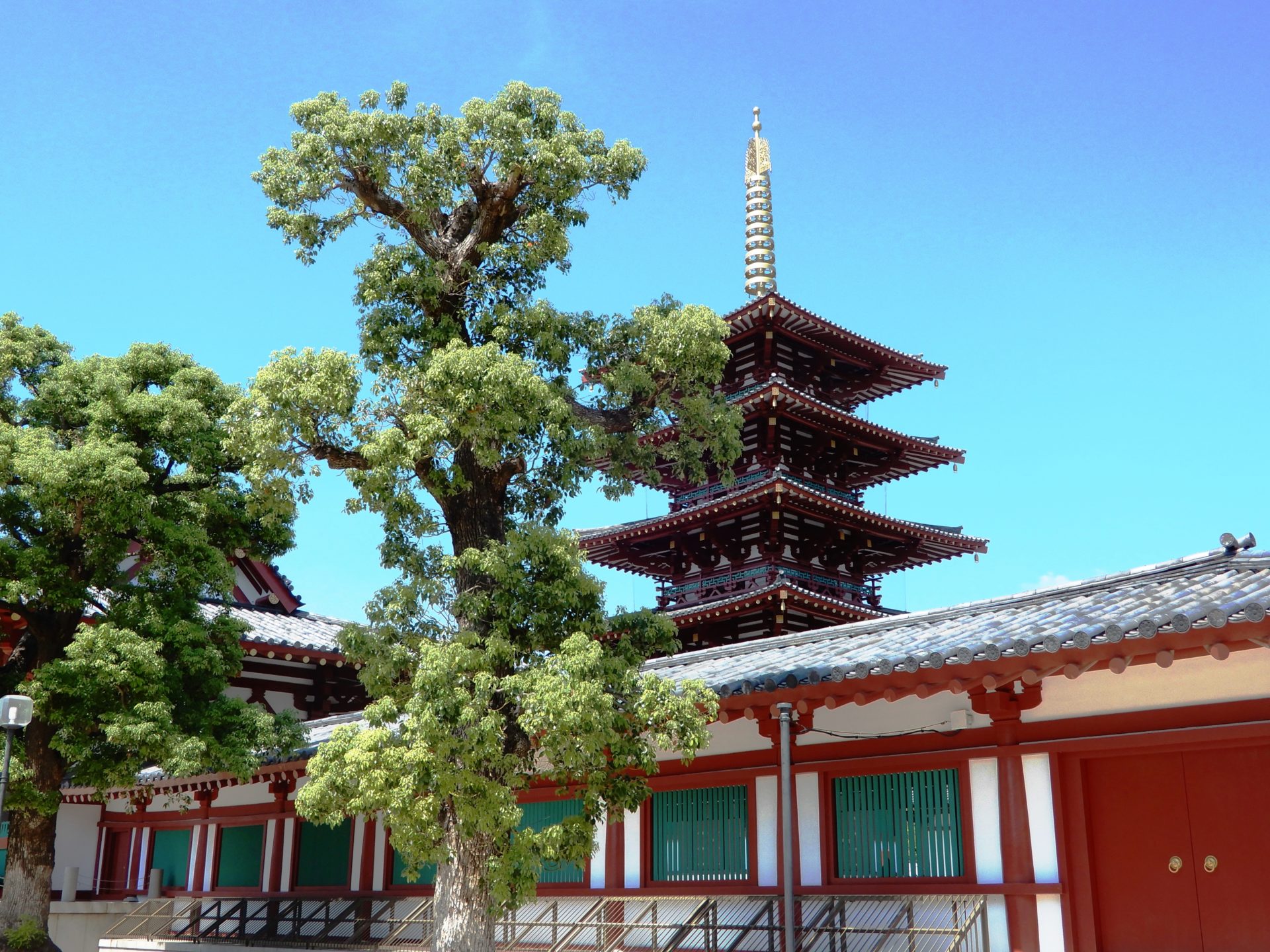
Shitenno-ji Temple is one of the oldest Japanese Buddhist temples. People ask me this question: “Is it true? It looks new, in fact the oldest Japanese temple is Horyu-ji in Nara, right?”. Horyu-ji and Shitenno-ji, both were founded by Prince Shotoku over 1,400 years ago, but they followed different histories. Unlike Horyu-ji where the world’s oldest wooden building exists, Shitenno-ji has been ravaged by wars and natural disasters several times and all the old buildings have been lost. Its history is that of reconstruction over the centuries. Its main enclosure is currently being rebuilt according to its original form dating from the end of the 6th century. This demonstrates the deep respect that local people have for Prince Shotoku who played a major role in the establishment of Buddhism in Japan.
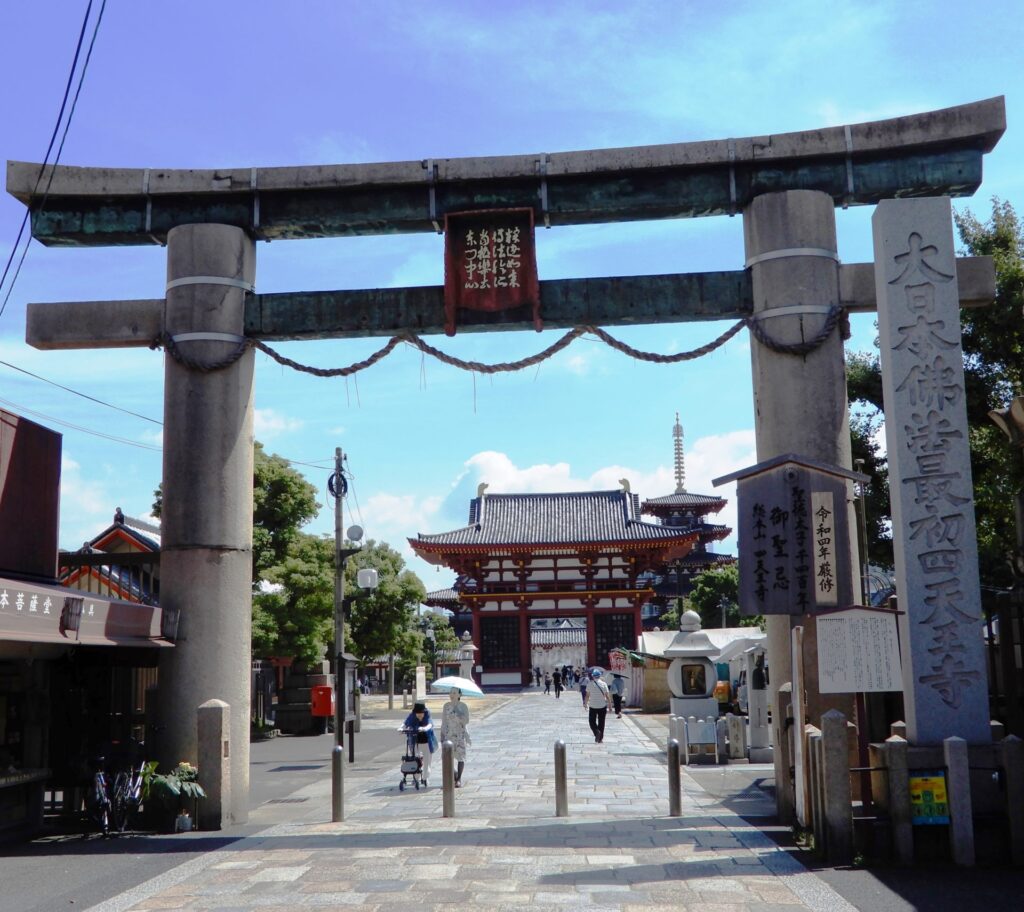
Here is the porticotoriistone which is on the west side of the enclosure. Many people come to the temple through this portico, not through the large southern gate. The Buddhist paradise is to the west. Since ancient times, it has been a holy place to worship heaven while admiring the sunset.
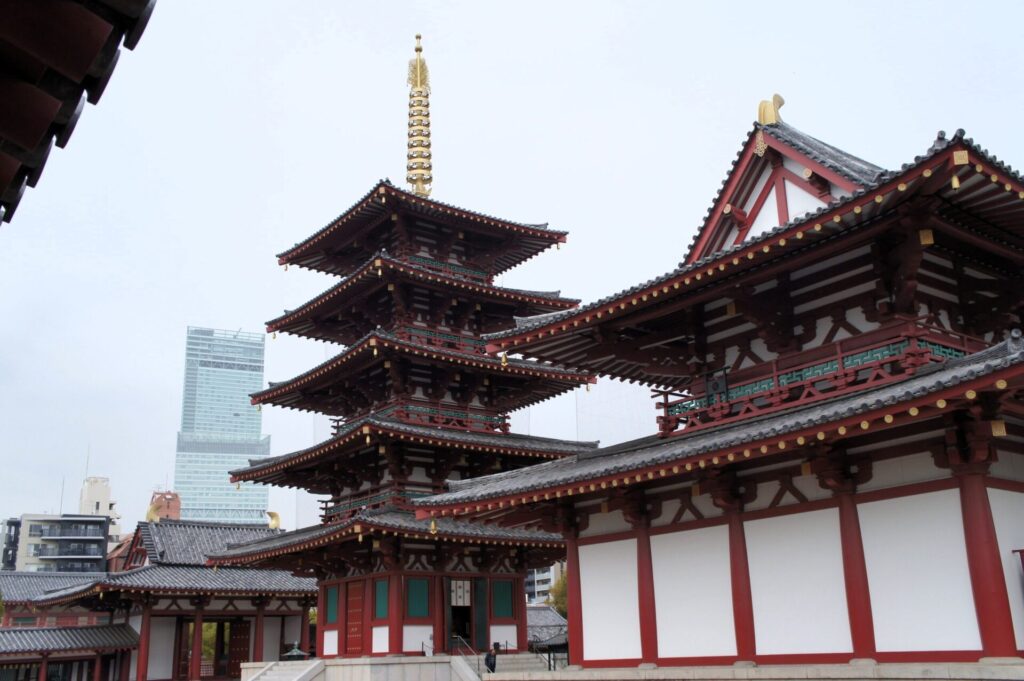
The main buildings of the compound (the inner gate, the five-story pagoda, the Buddha hall and the hall for preaching Buddhism) are aligned in a straight line from south to north. They are surrounded by corridors.
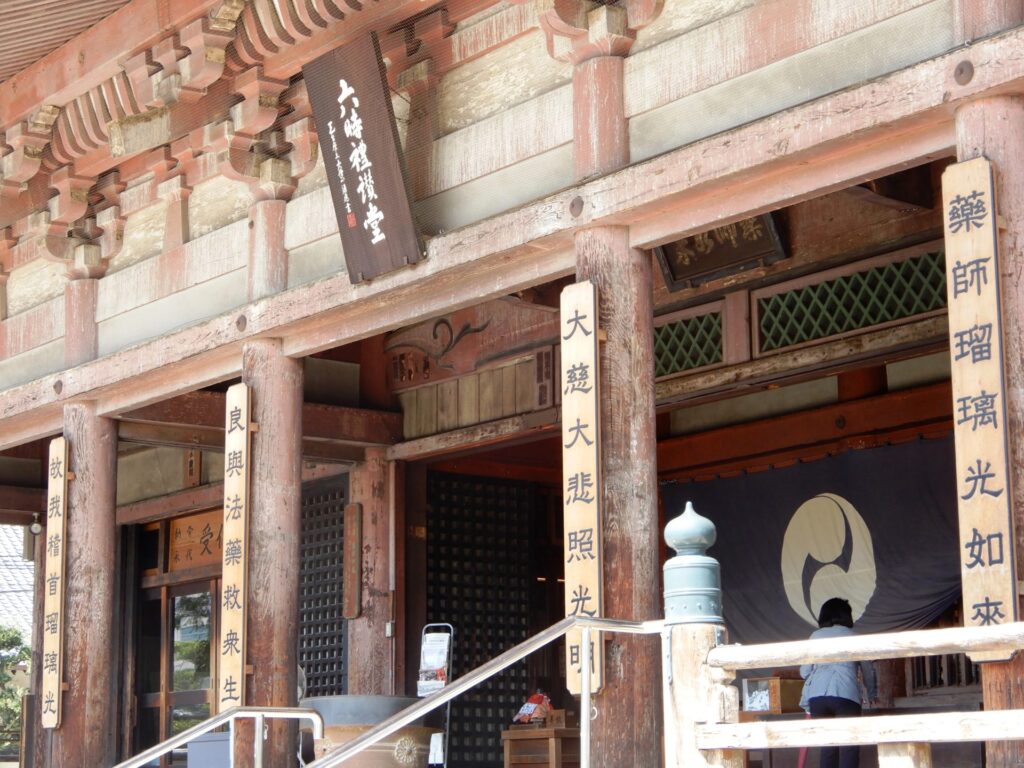
Most of the buildings were rebuilt after the Second World War, but the Rokuji-raisan-do pavilion located behind the main enclosure is one of the 17th century constructions. The Buddha prayer ceremony takes place six times a day in a solemn atmosphere.
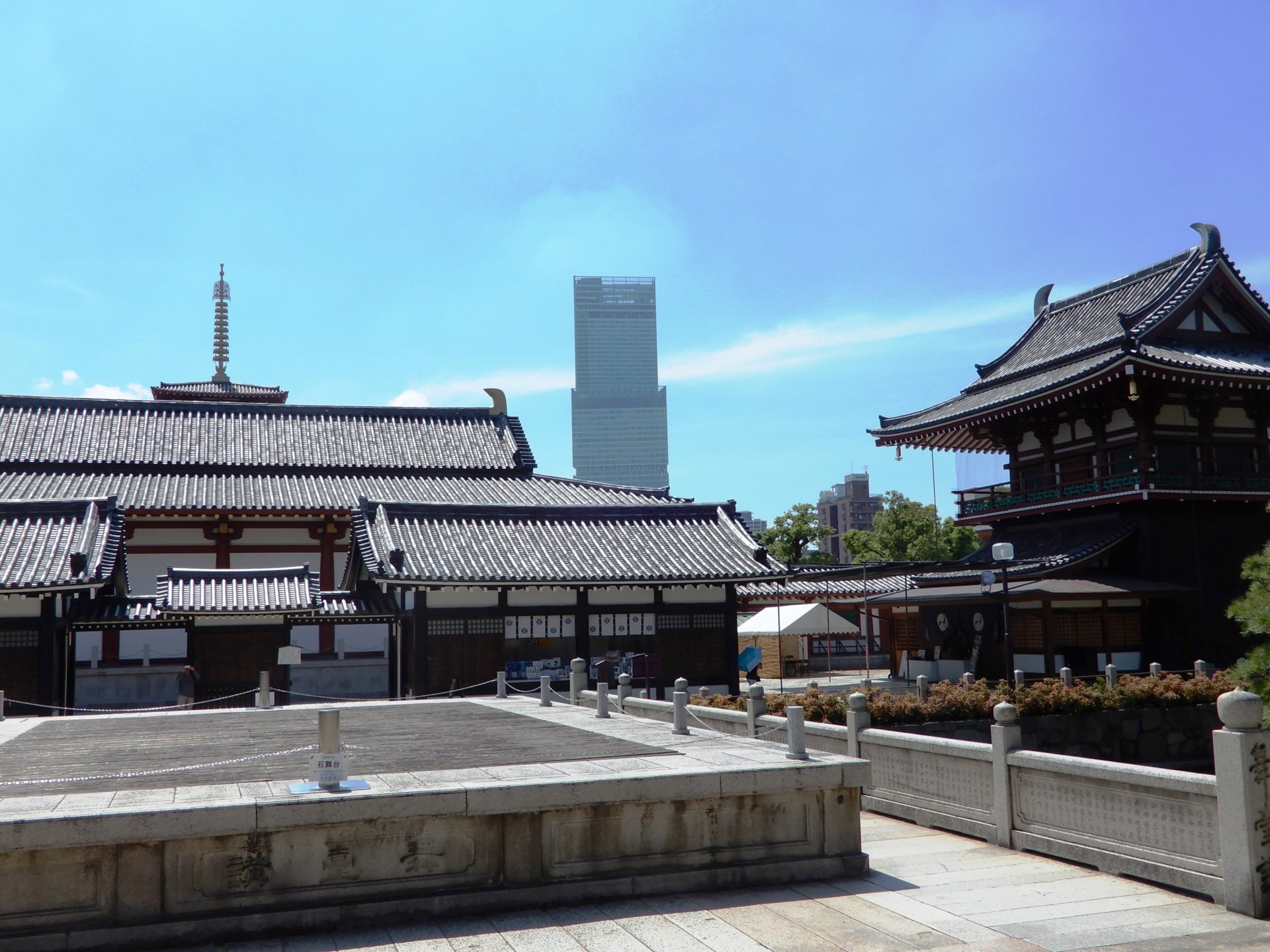
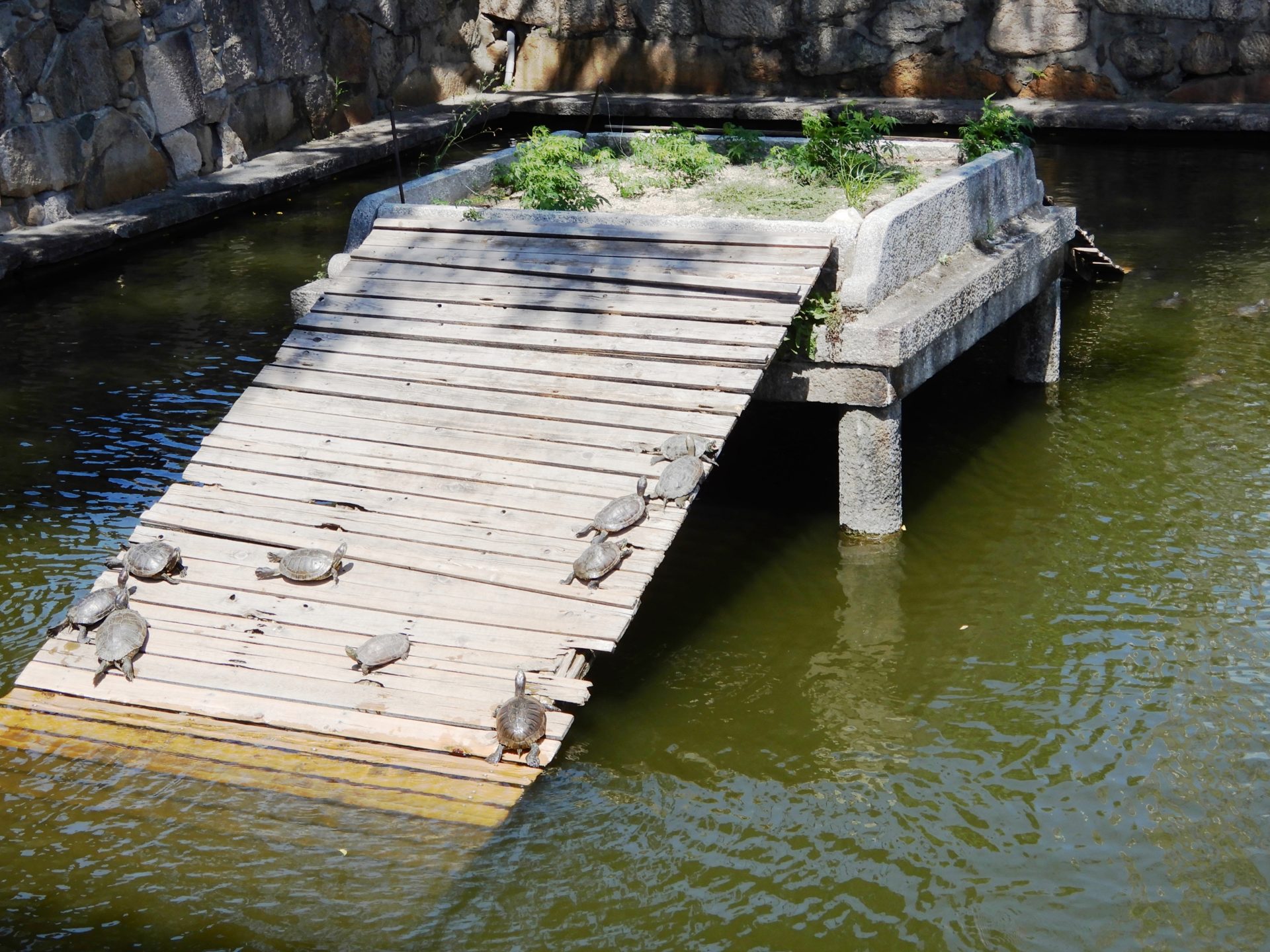
On the stone stage in front of the Rokuji-raisan-do pavilion, dance and music are performed during the ceremony to celebrate a service for the repose of the soul of Prince Shotoku. From here, you can see Abeno Harukasu in the distance, the 60-story skyscraper, the second tallest in Japan. In the ponds on either side, there are lots of turtles. They are pleasantly sunbathing.
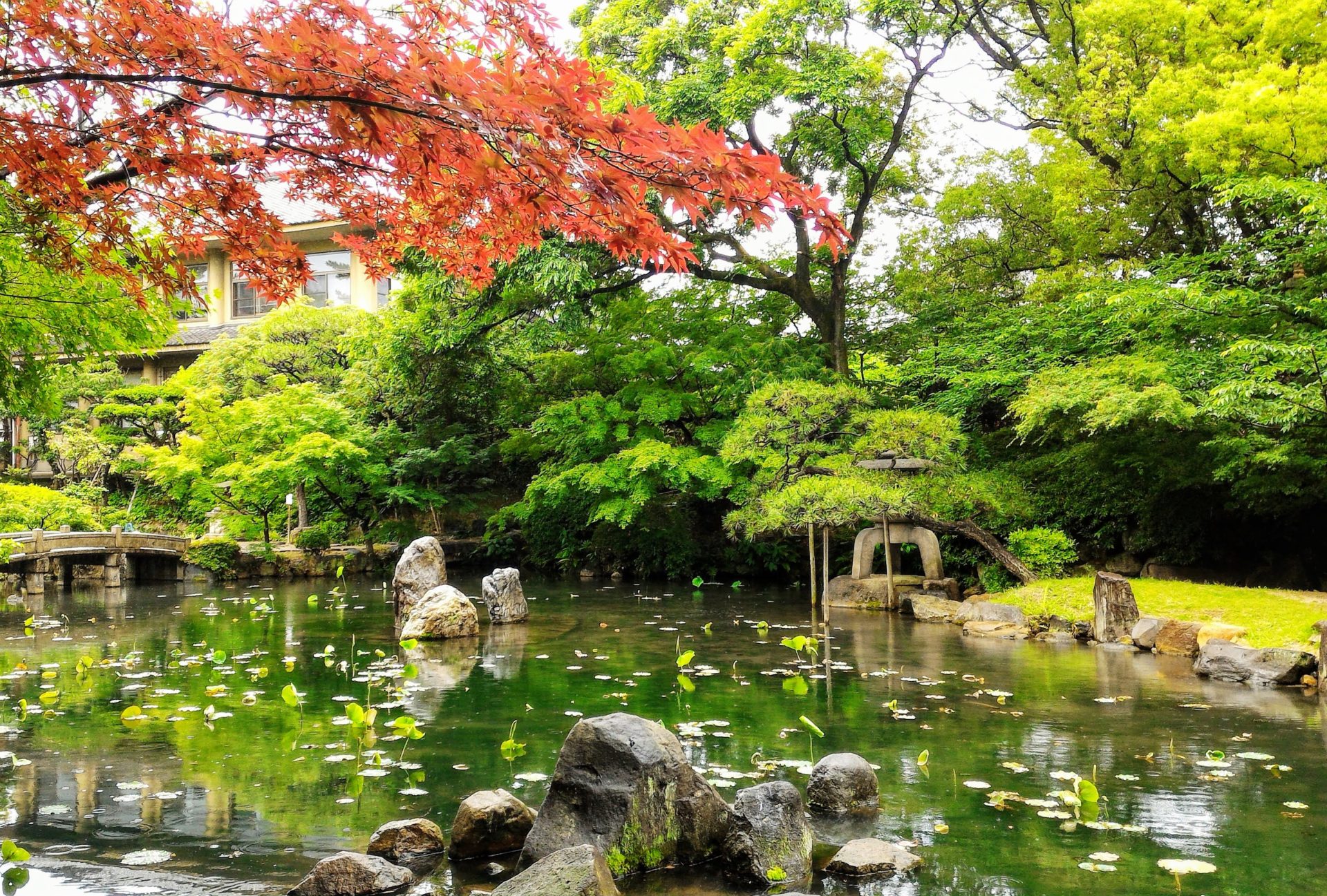
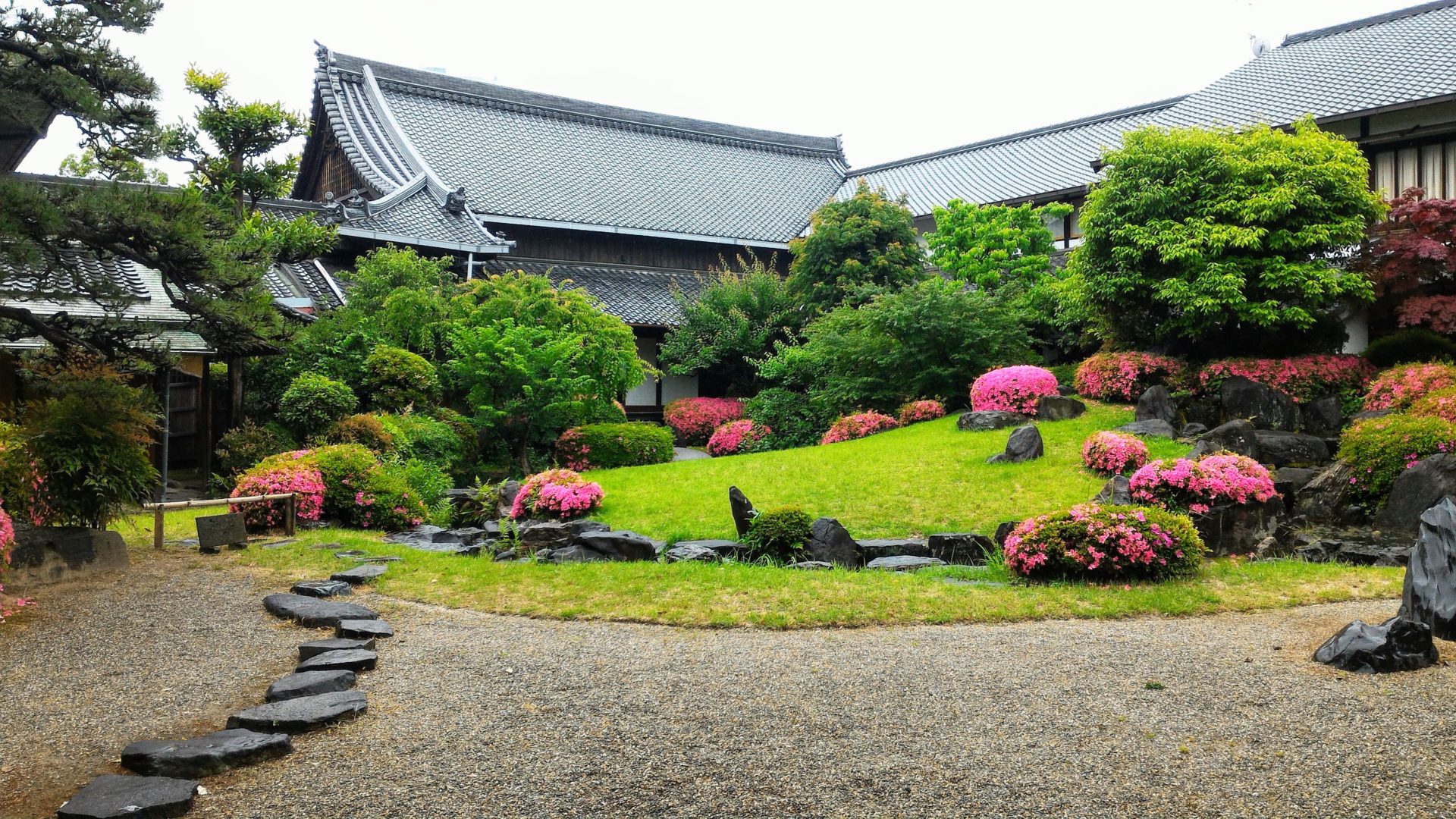
Shitenno-ji has a beautiful garden within its vast enclosure. It is based on a Buddhist legend and represents paradise. The rustling of the waterways is pleasant to the ear.
- A large part of the area is accessible free of charge. In case of visiting the places below, an entry ticket is required. Main enclosure: 500 yen Treasure museum: 500 yen Garden: 300 yen
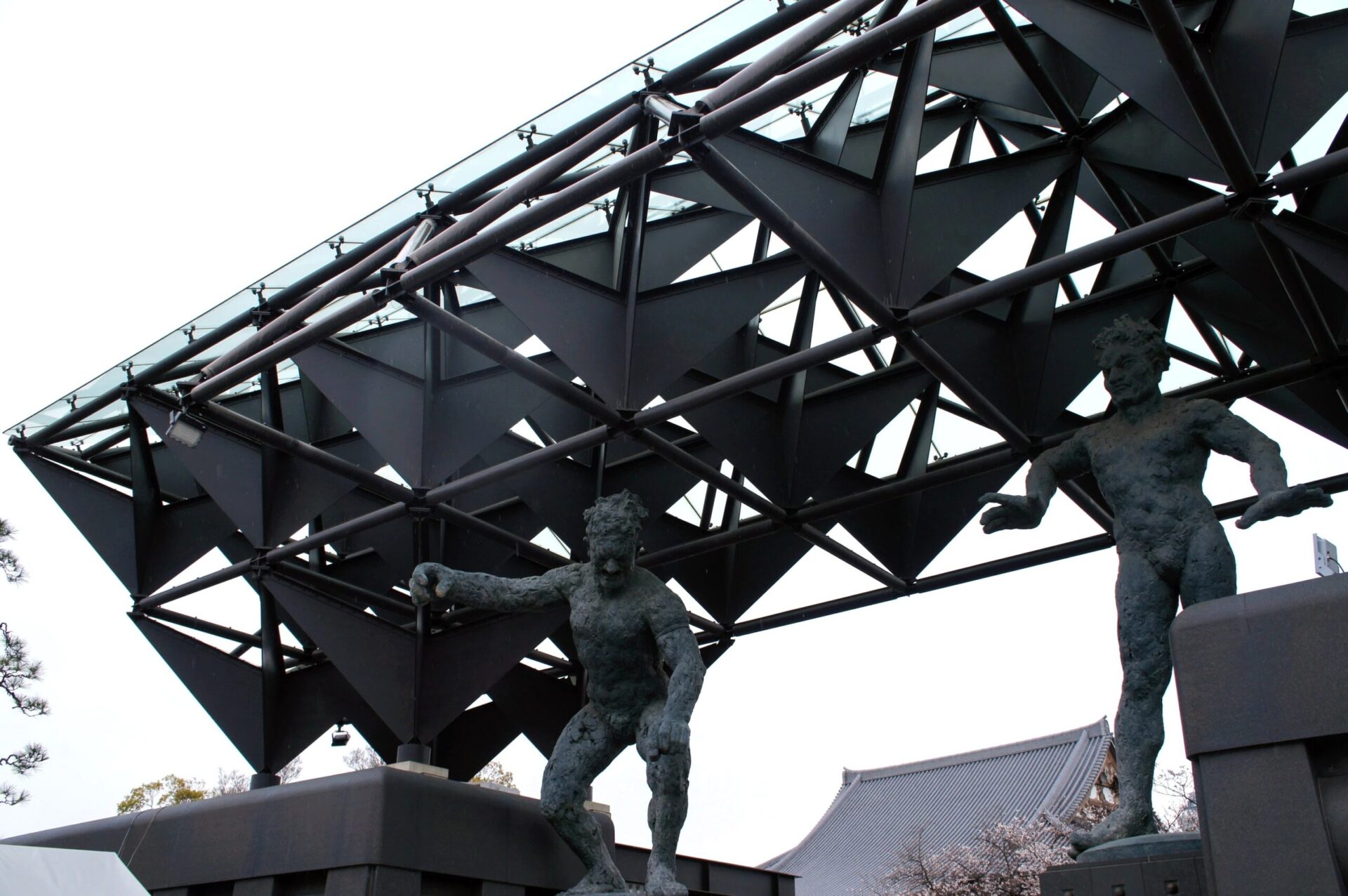
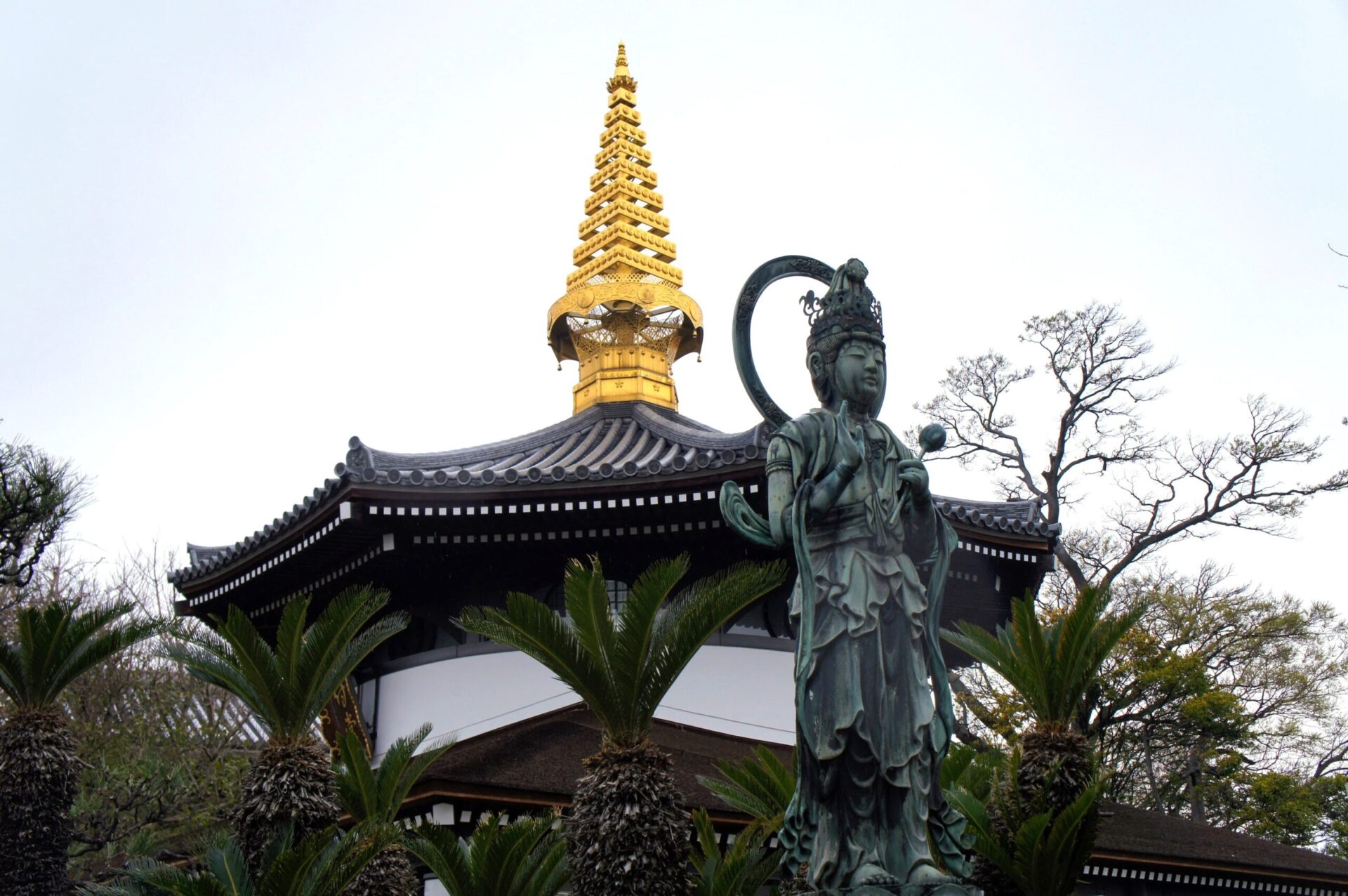
- The Shinsekai district is about a ten-minute walk west of Shitenno-ji temple. On the way, you will notice a building made of steel, concrete and glass. At first glance, it looks like a museum, but this is the main gate of Isshin-ji Temple. You will also see two bronze guardian statues. On site, you can discover the popular Japanese belief regarding Buddha statues made from bones.
- Map