

The Sanjusangen-do Temple
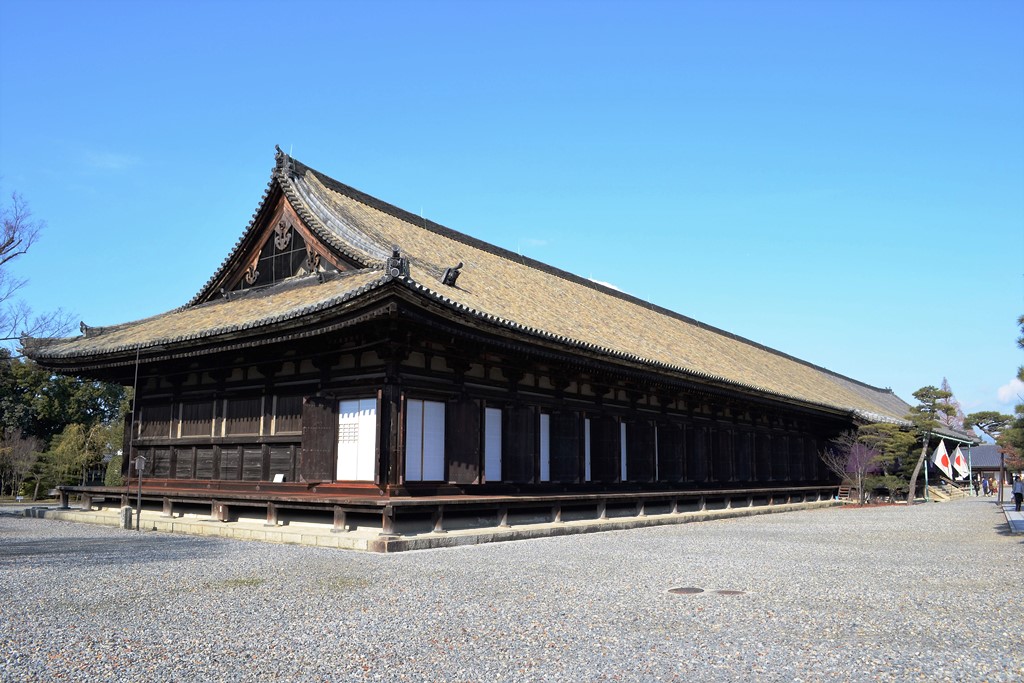
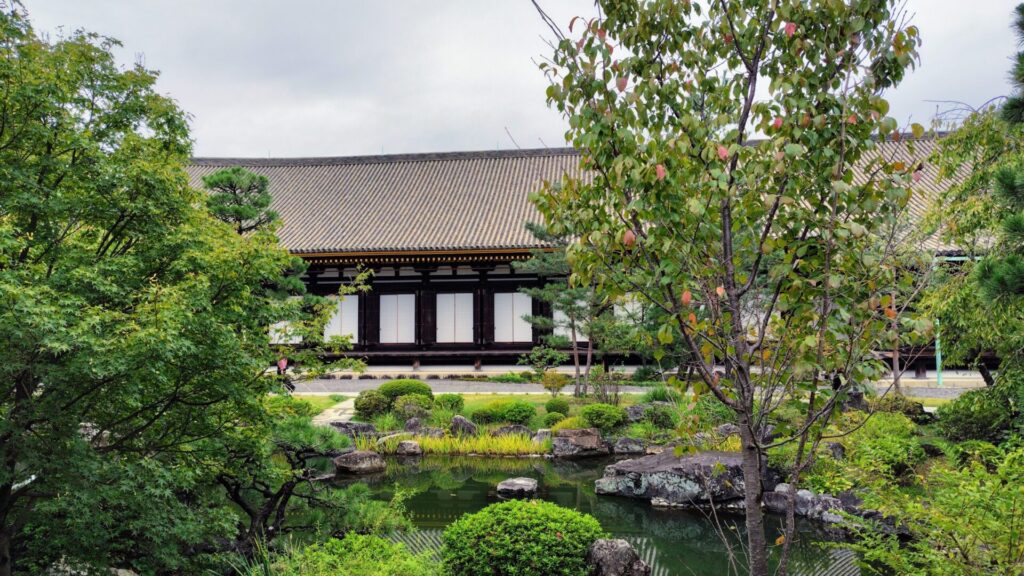
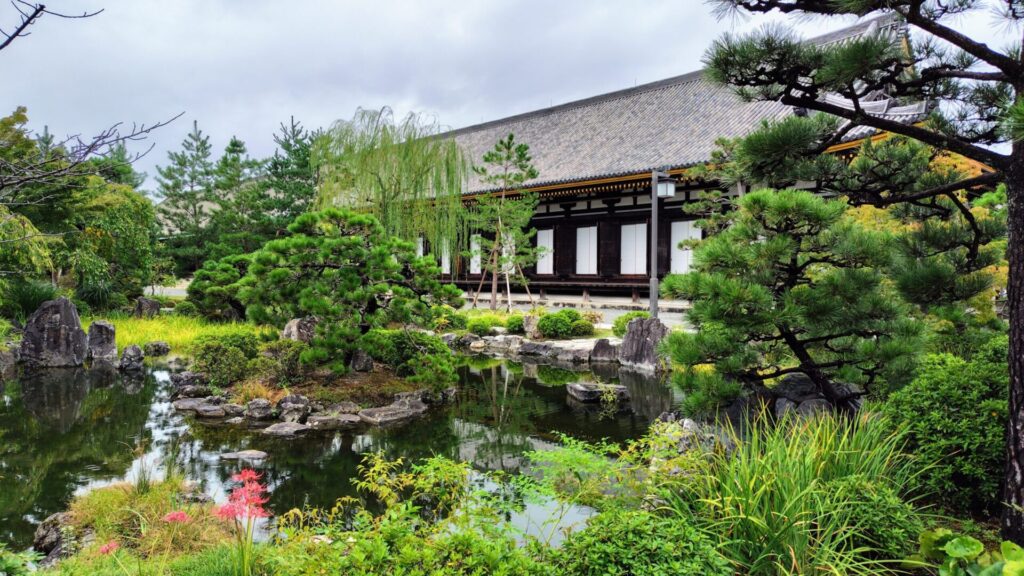
Among Kyoto’s more than 1,600 Buddhist temples, Sanjusangen-do is a truly remarkable temple. It’s incredibly impressive. The sheer size of its main building is striking. Measuring approximately 120 meters long, it boasts the longest wooden structure in the world. Why is it so long? Over a thousand statues of Kannon Bosatsu, the deity of compassion, are enshrined there, each observing us with slightly different expressions. It’s the only temple in Japan where we can see so many Buddha statues. By the way, what does the name Sanjusangen-do mean? Sanjusan is the number 33 in English. This name comes from the number of bays between the pillars that make up the temple. Count these bays during your visit. The number 33 is also related to Kannon. Why? I’ll also share some interesting facts about other numbers…
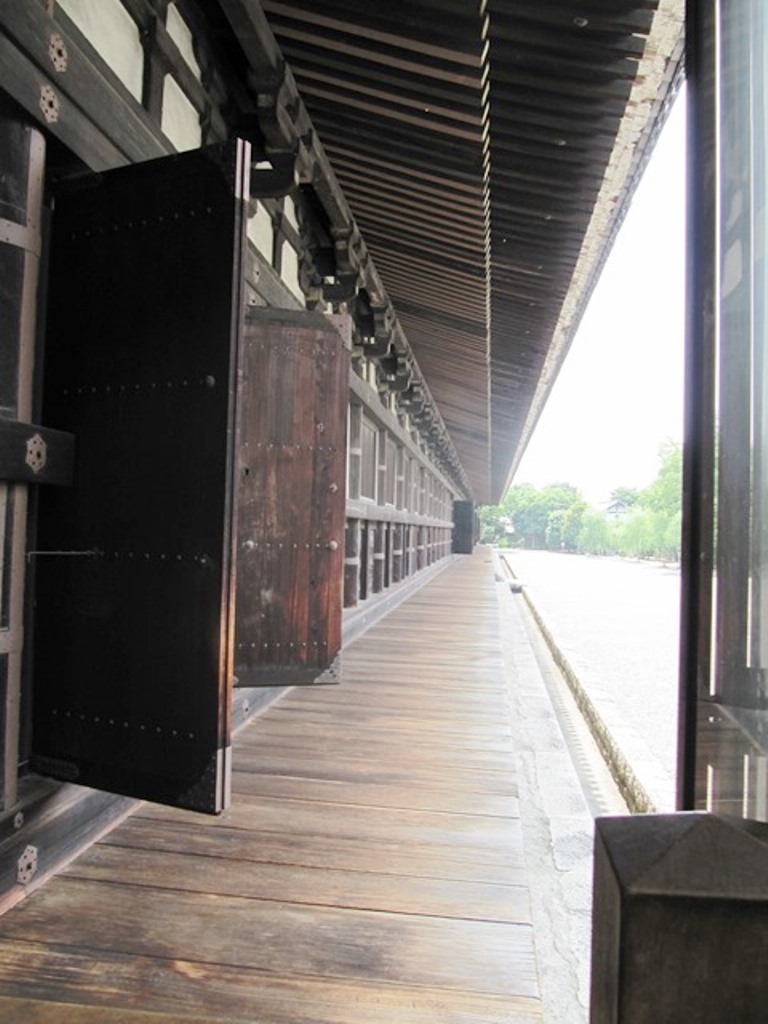
In the past, a sporting competition was held under the awning of the main building. Can you guess what sport was practiced?
- The entrance fee for Sanjusangen-do temple is 600 yen.
- Taking photos in the main building is prohibited.
- Map
The Chishaku-in Temple
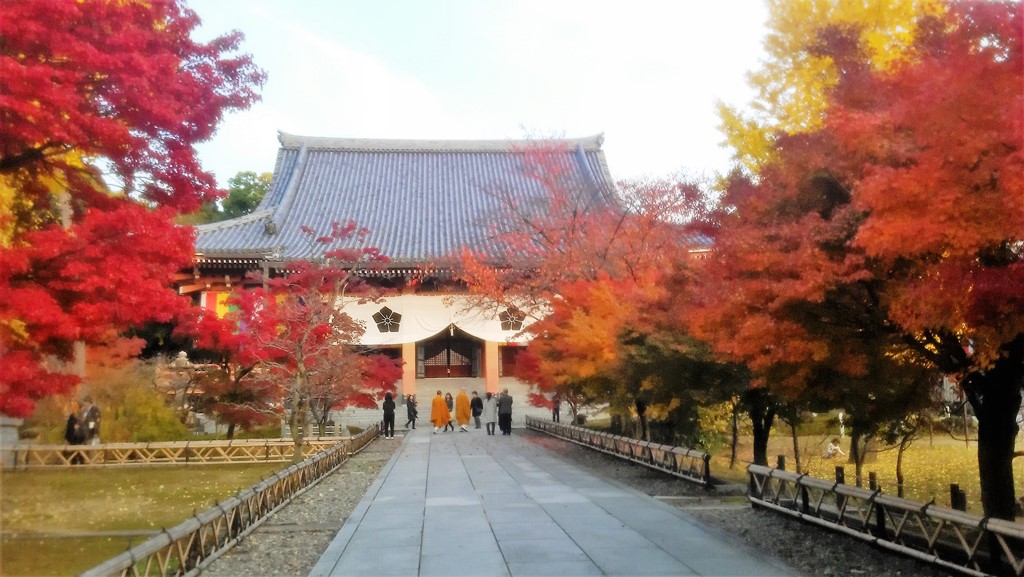
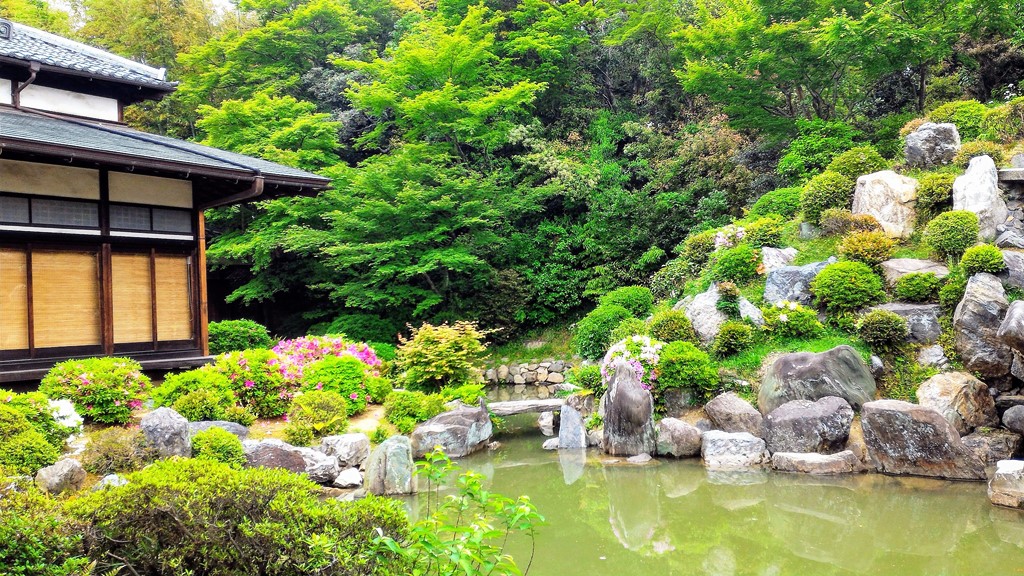
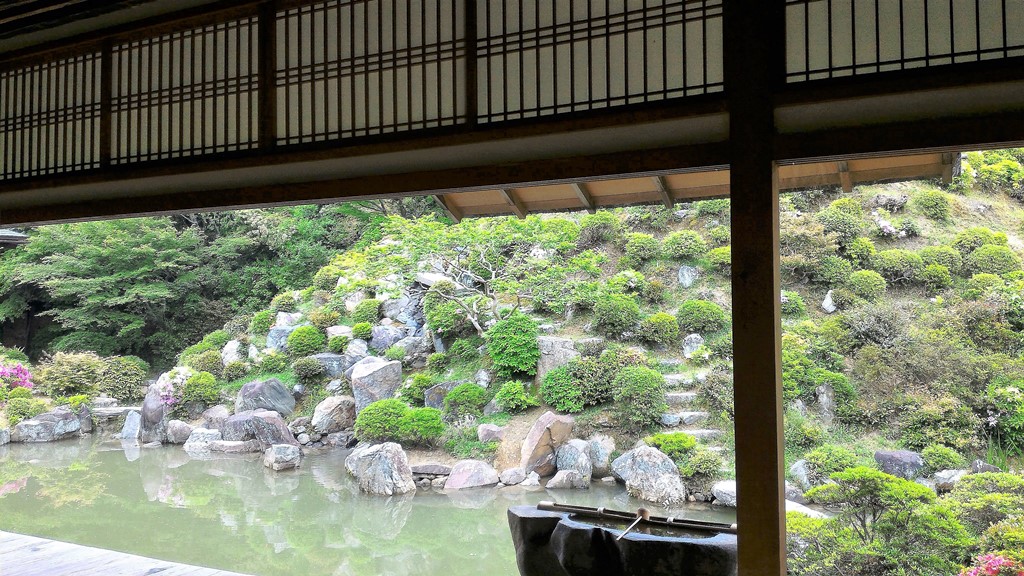
Chishaku-in Temple is one of my favorite temples. It’s not too crowded, so I can escape the city noise and relax here. This temple is located near Sanjusangen-do Temple.
The paintings by artists of the Hasegawa Tohaku school are magnificent. The garden, with its pond modeled after the Chang Jiang, a Chinese river, is peaceful.
It’s a garden where you can appreciate the beauty of nature from inside the building. You’ll feel as if you’re floating on water. You can enjoy the beauty of flowers in every season, and in particular, this garden is magnificent during the azalea blooming season (from the end of May to the end of June).
- The entrance fee for Chishaku-in temple is 500 yen.
- Map
The House of the Potter Kawai Kanjiro
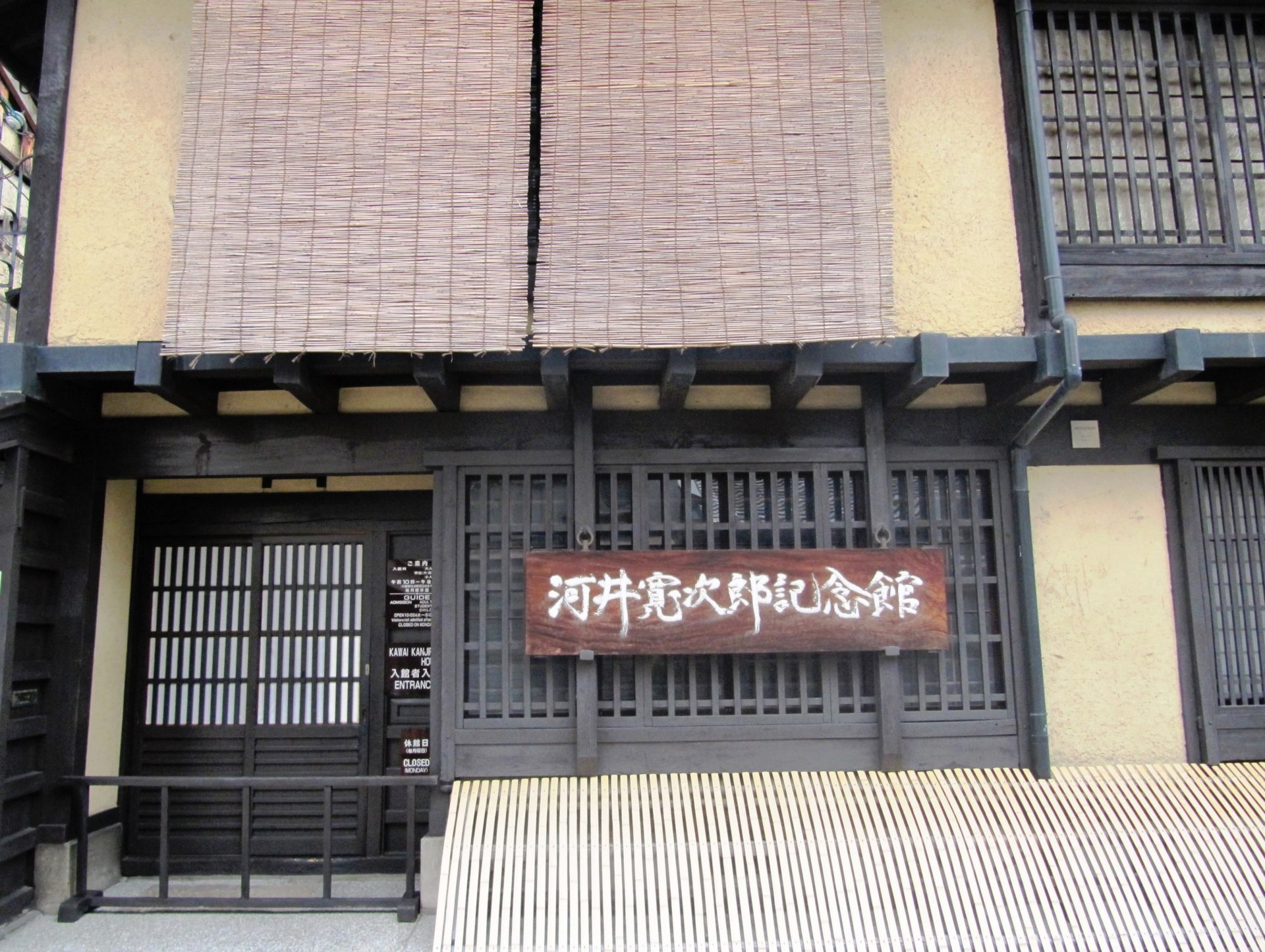
If you’d like to see something other than temples and gardens in Kyoto, how about visiting this old house located in a quiet alley near Gojozaka, the birthplace of Kiyomizu-dera pottery? Kawai Kanjiro was a quintessential 20th-century potter. He was also a poet, sculptor, and philosopher. His house, which also served as his workshop, evokes the atmosphere of a rustic old home.
In addition to his magnificent works, you can also see furniture and objects he crafted or used throughout his life. He believed that true beauty resides in everyday life. The simple beauty he sought is embodied there.
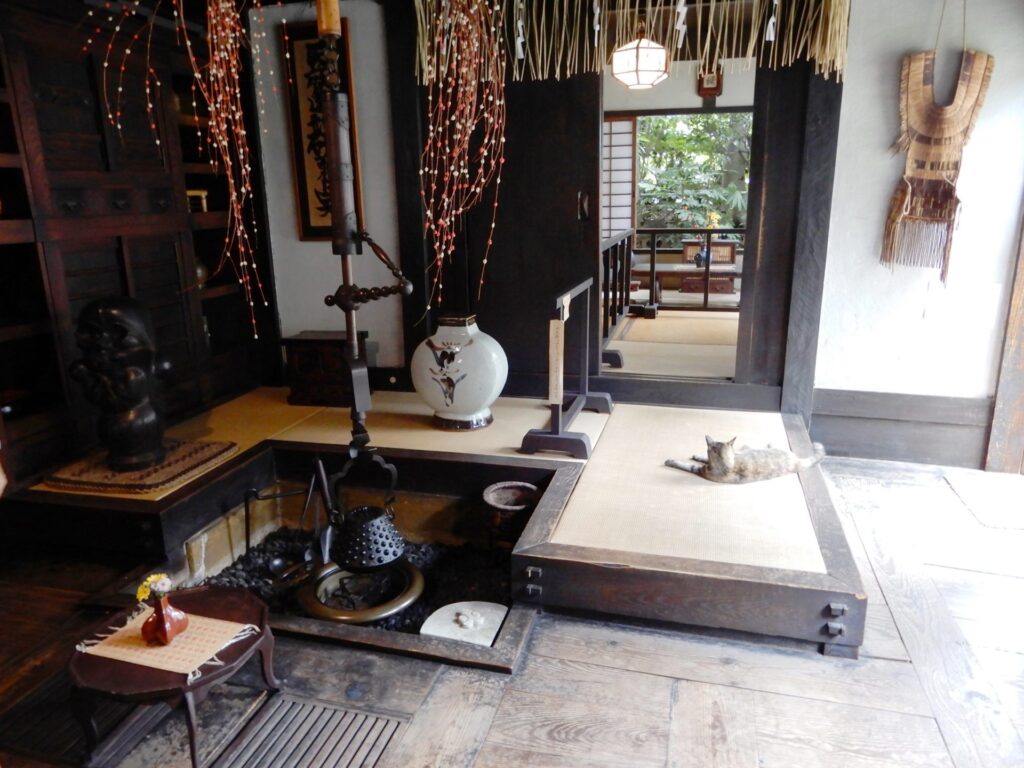
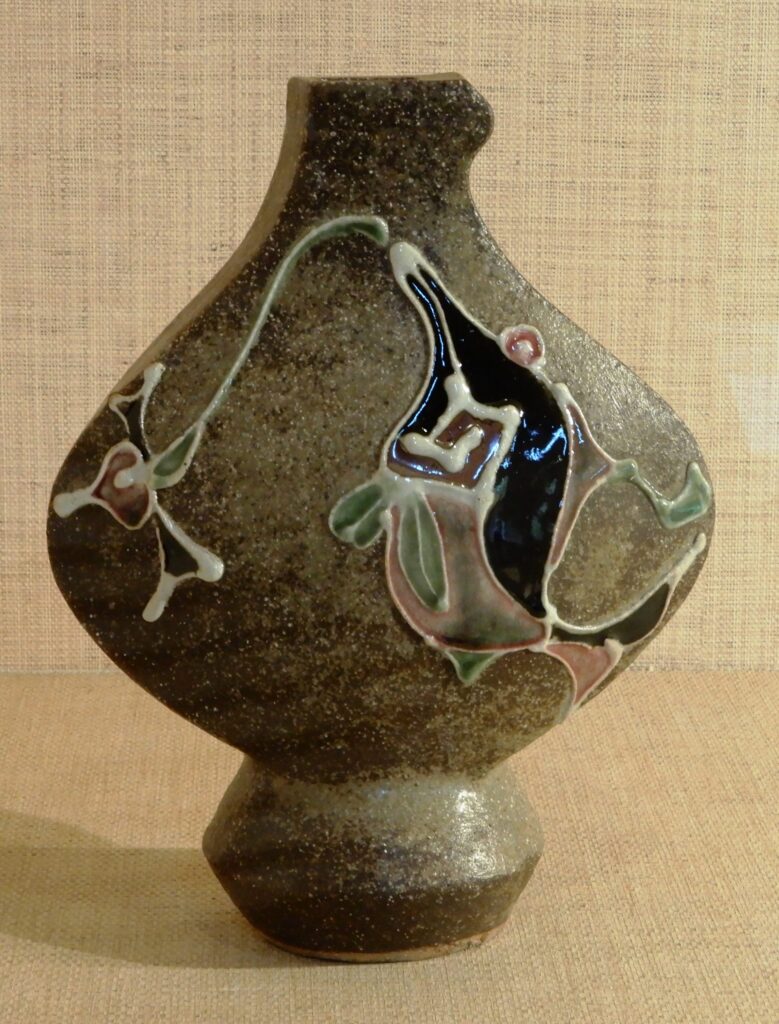
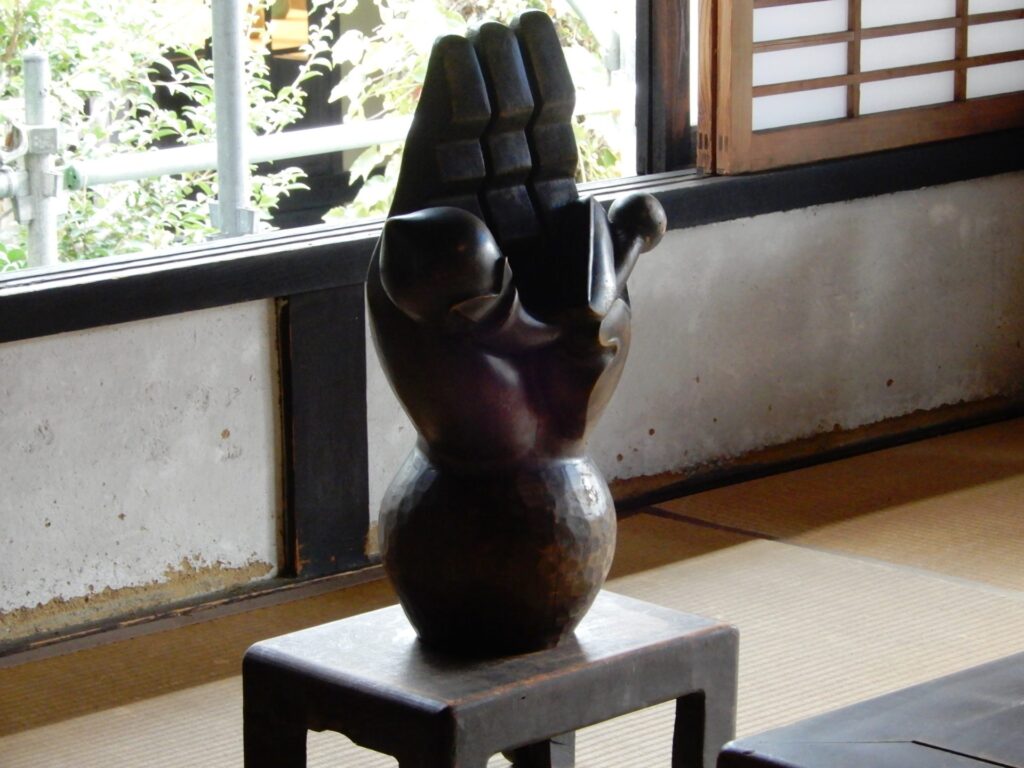
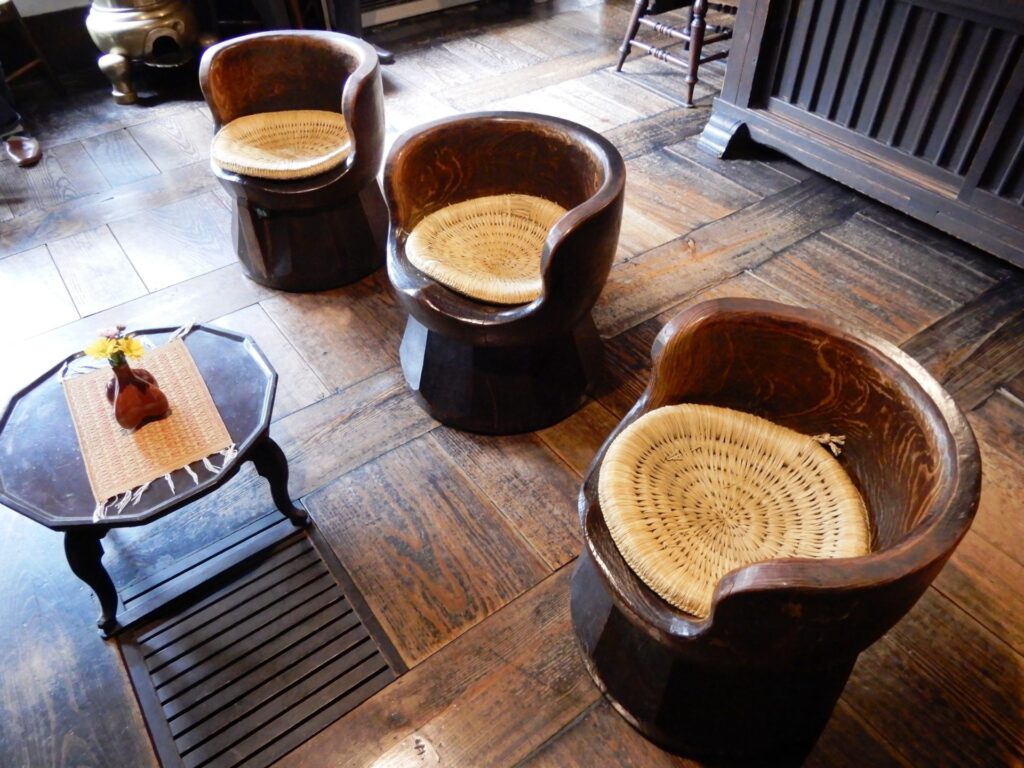
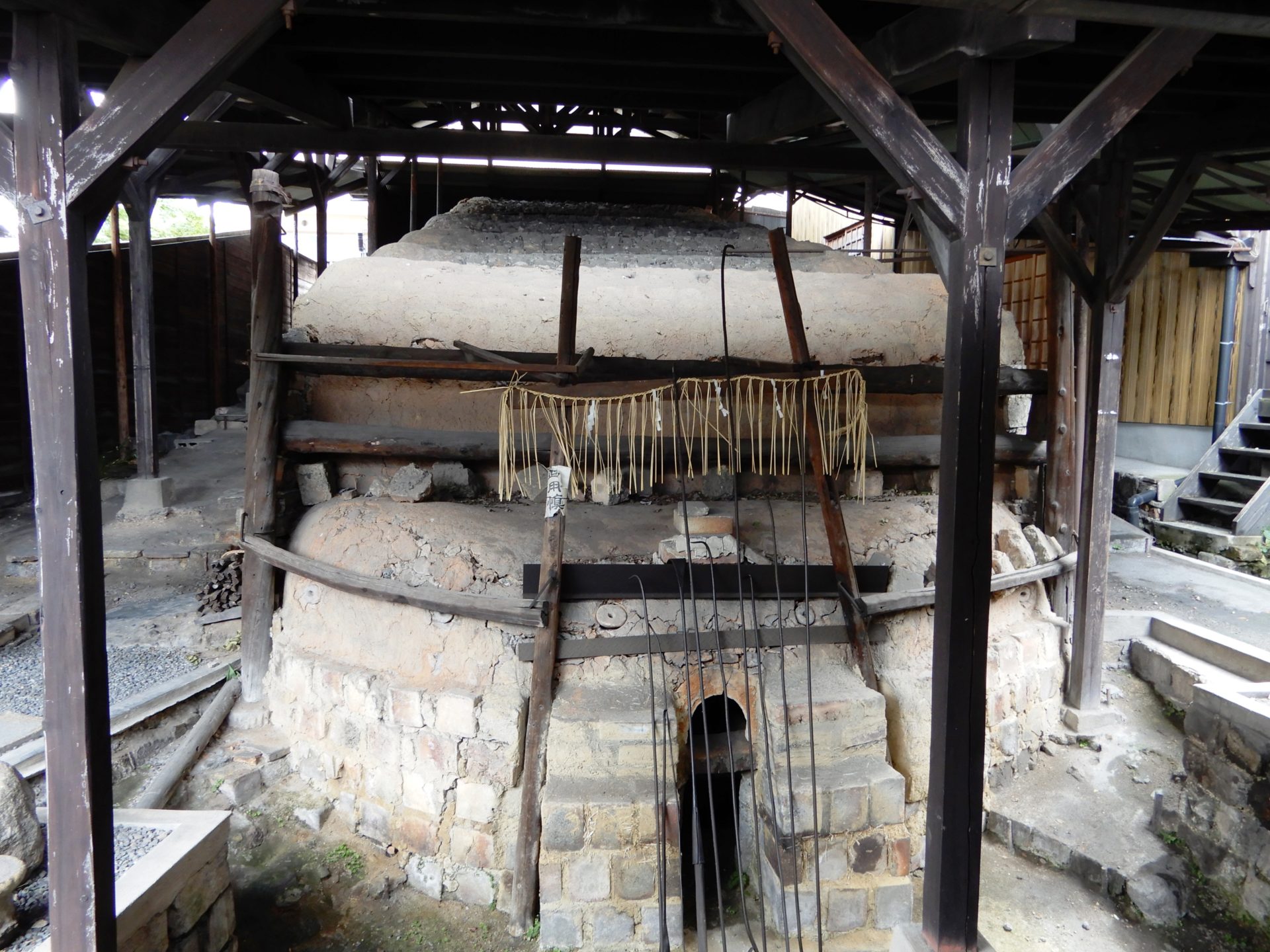
This is the enormous pottery kiln that Kawai shared with other potters in the neighborhood. It has not been used since the 1970s, but it retains its former appearance.
- The entrance fee to the Kawai Kanjiro potter’s house is 900 yen.
- It is closed on Mondays.
- You can take photos with the consent of the house.
- For a coffee break after the visit, I recommend Ichikawaya Coffee, which is very close to the house.
- Map
Kiyomizu-dera Temple
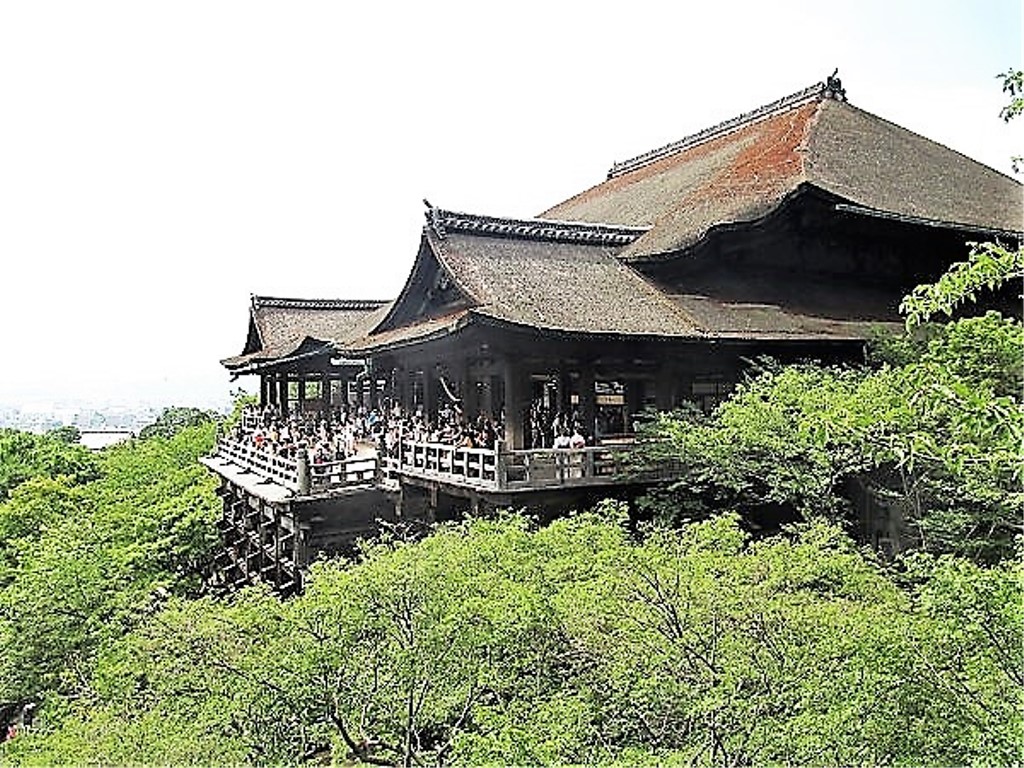
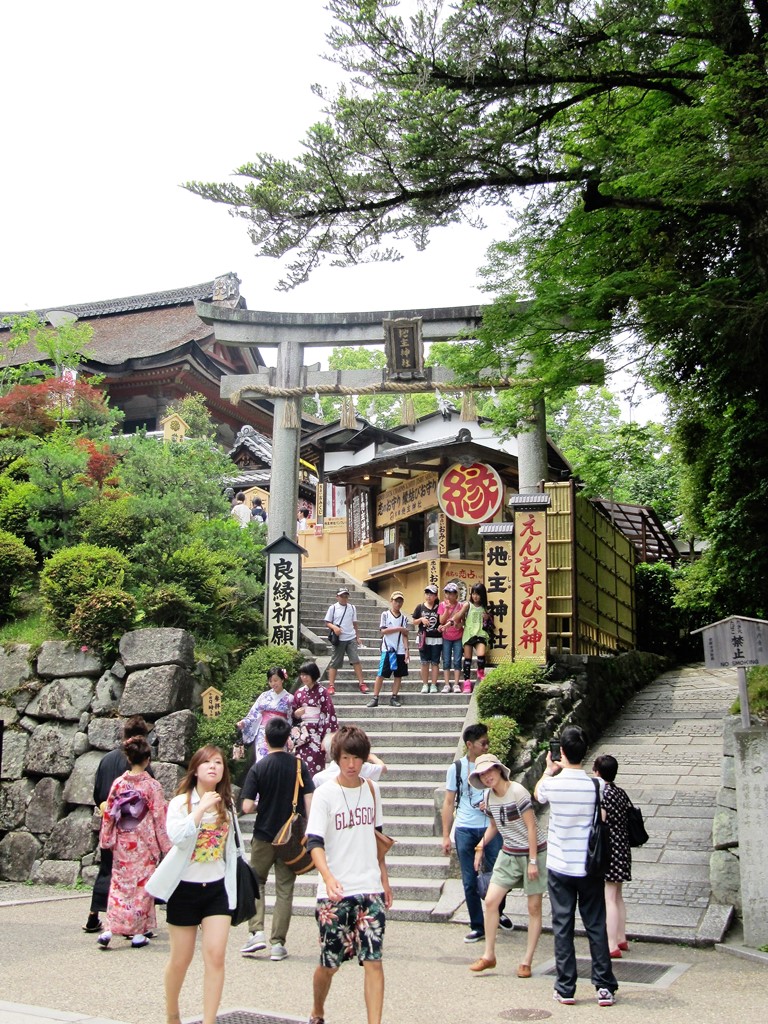
Kiyomizu-dera Temple is one of Kyoto’s oldest temples. Most of its current buildings are 17th-century reconstructions, but its history dates back to the 8th century. What does the name Kiyomizu-dera mean? It means “pure water.” This name was given to the temple because of the waterfall located within its grounds. You’ll see a long queue of people seeking the pure water. It’s similar to Lourdes. Kiyomizu-dera is known for its unique architectural style. Its main hall has a vast terrace, supported by over 130 pillars, each about 13 meters tall. The timbers are arranged in a grid pattern, and remarkably, no nails are used in this structure. Did you know there’s a very famous Japanese expression using the term “Kiyomizu Terrace”?
It means “to jump off Kiyomizu Terrace.” This means “to make a resolute decision.” And indeed, more than 230 people jumped from this terrace during the Edo period. Was it to commit suicide? No! Then why did they risk their lives? It has something to do with the statue of Kannon Bosatsu, the deity of compassion, venerated in this temple…
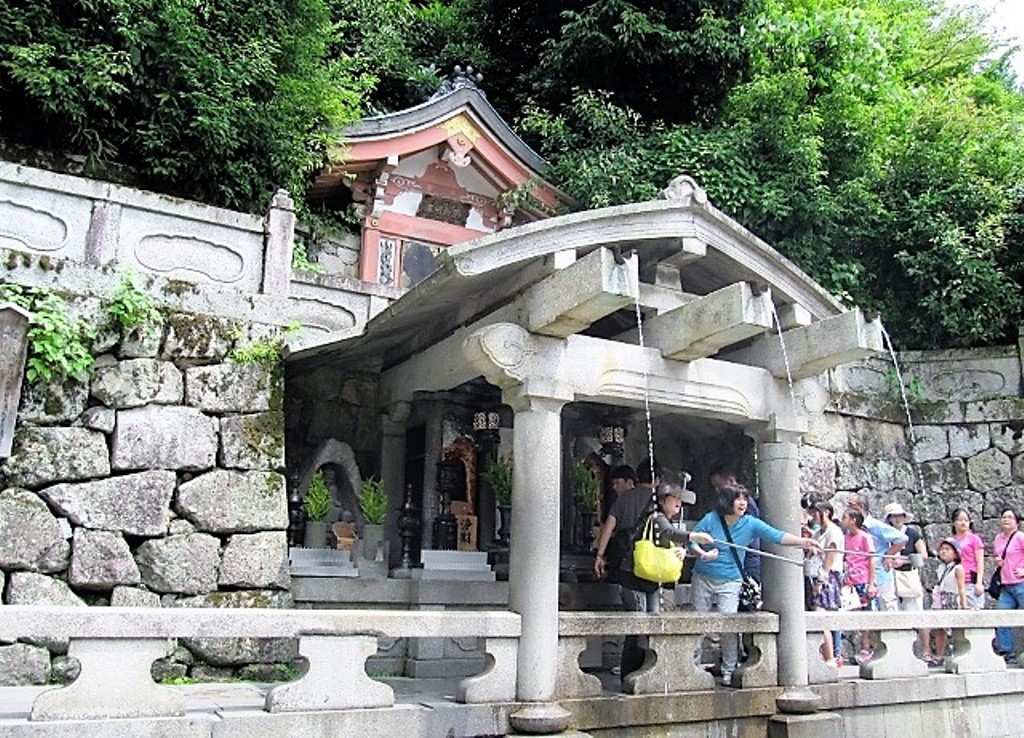
This is one of the ten most famous clear streams in Japan, Otowa-no-taki. The water divides into three streams. The benefits vary depending on the stream.
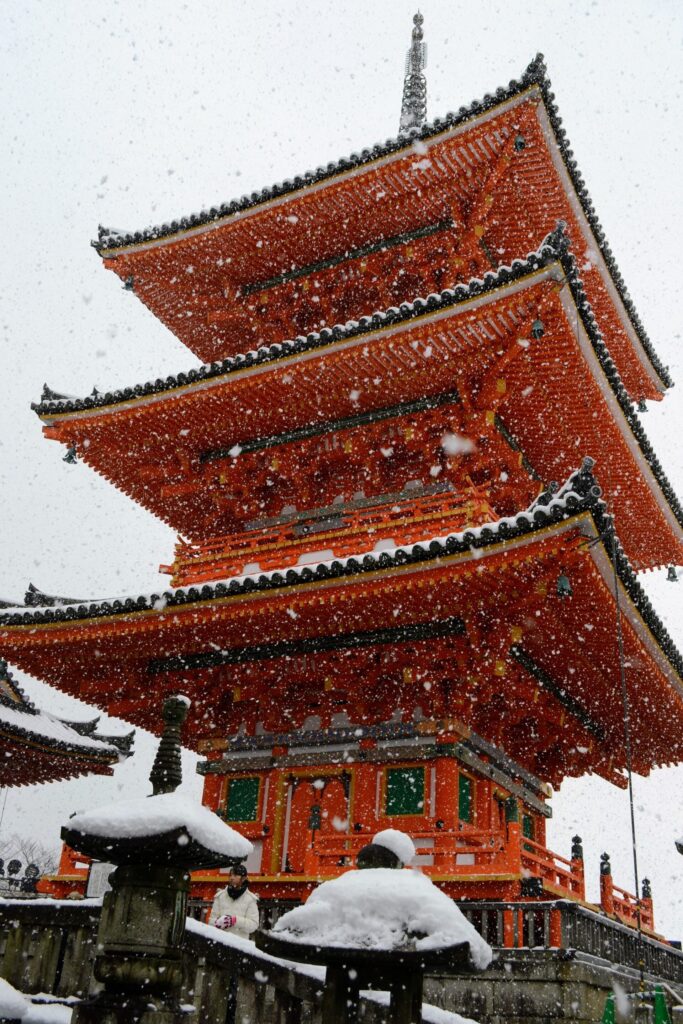
Here is the three-story orange pagoda. What is the purpose of the pagoda that can be seen within the grounds of a Buddhist temple? Look closely at its tiles. There are tiles shaped like animals.
This is the Shinto shrine that protects the grounds of Kiyomizu-dera Temple. You might find it strange to have a Shinto shrine within the grounds of a Buddhist temple. But Buddhism and Shinto are often intertwined in Japan. The two love stones are prominently displayed. What do we do with these stones?
- The entrance fee for Kiyomizu-dera Temple is 500 yen.
- Its grounds are located on the side of a hill. From the nearest bus stop, you have to go up a gentle slope.
- Its grounds are located on the side of a hill. From the nearest bus stop, you have to go up a gentle slope.
- Map
The walk Around Kiyomizu-dera
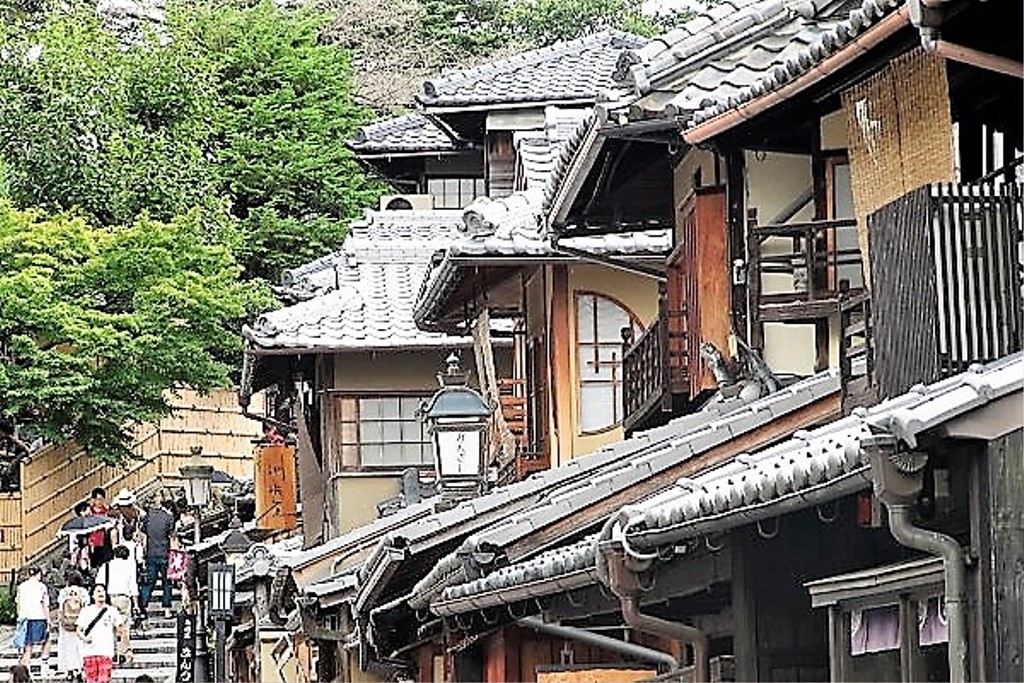
Go back down from the temple and take the stone steps to the right at the Y-junction, in front of a spice shop. What you’ll see is Sannenzaka Slope. It’s said that you’ll die within three years if you trip on this slope, but don’t worry. Something sold in a shop next to the slope protects you from all misfortune. Can you guess what it is? In the area around Sannenzaka, old wooden merchant houses line the streets. In particular, there are many porcelain shops.
After Sannenzaka, Ninenzaka Slope awaits you. It’s also a charming area. Ninenzaka then gives way to Nene Street. The electrical wires are underground, and there are no overhead power lines. This street leads to Maruyama Park, Kyoto’s first park, known for its weeping cherry tree.
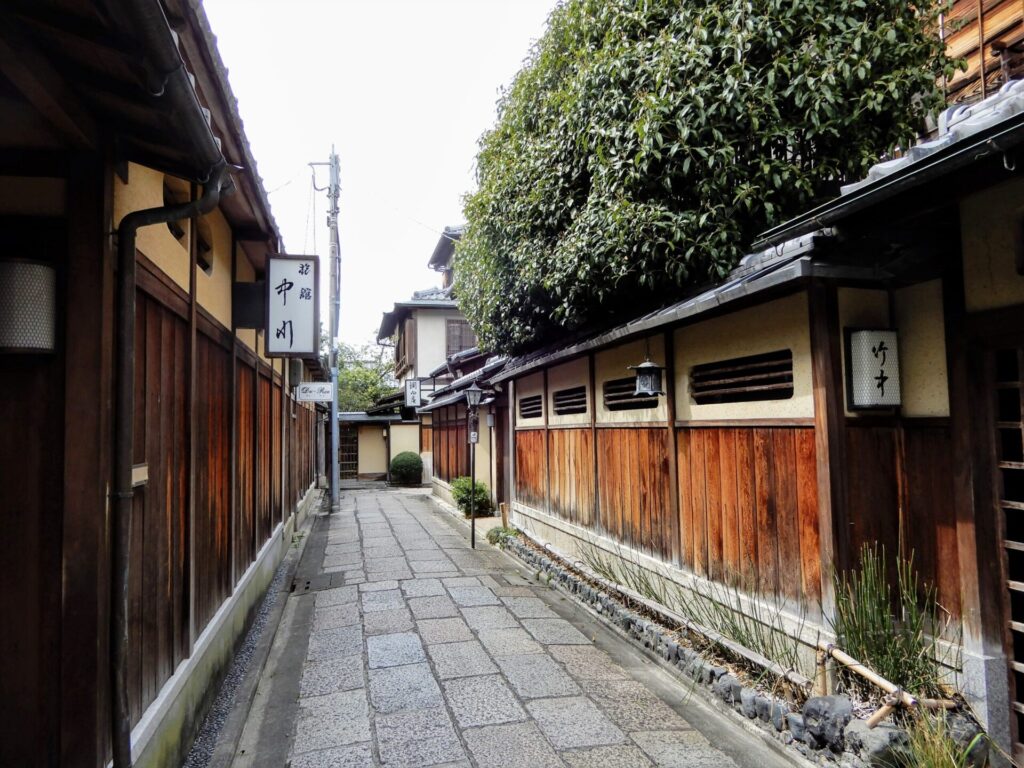
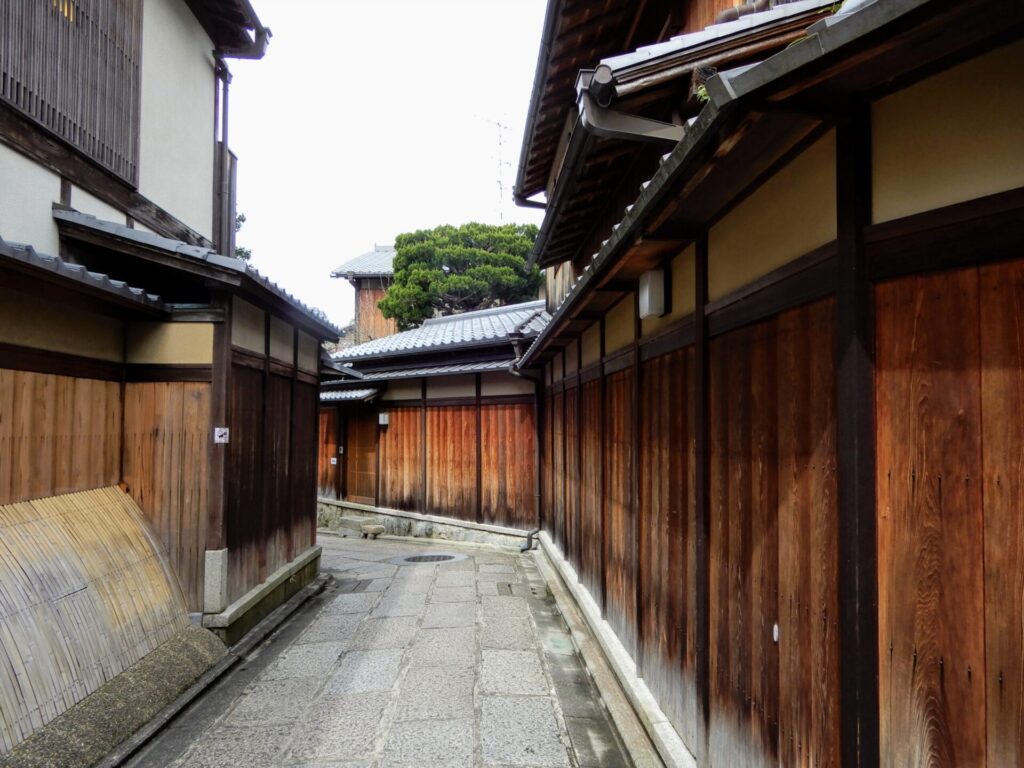
It’s also pleasant to stroll along the cobblestone alley, Ishibe-koji, halfway along the route. Enjoy the charm of a row of traditional Japanese houses.
The Yasaka-jinja Shinto Shrine
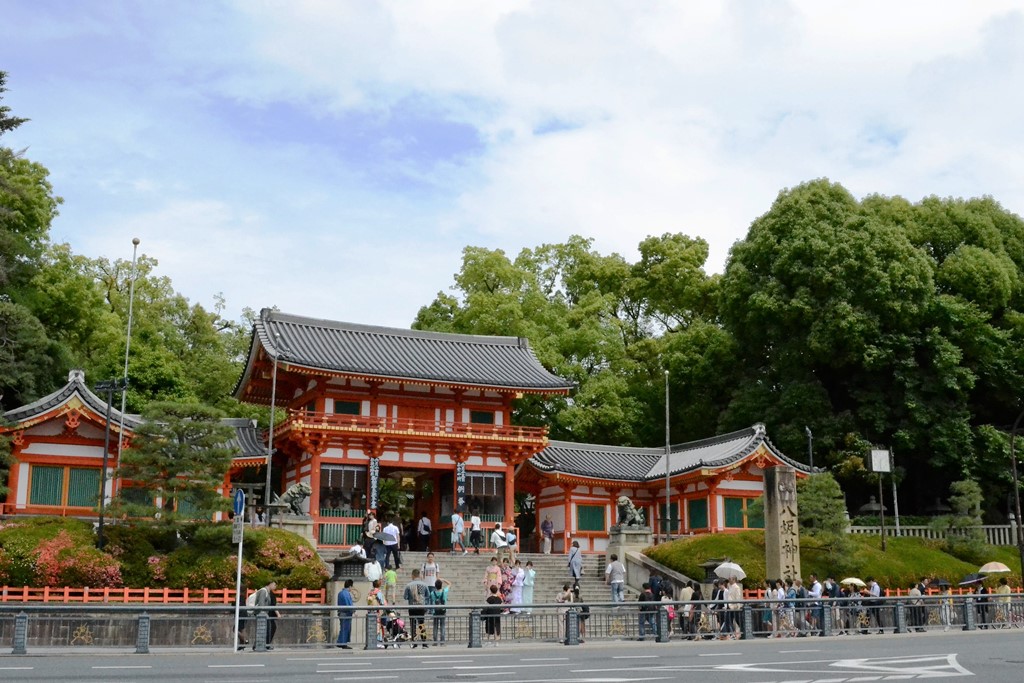
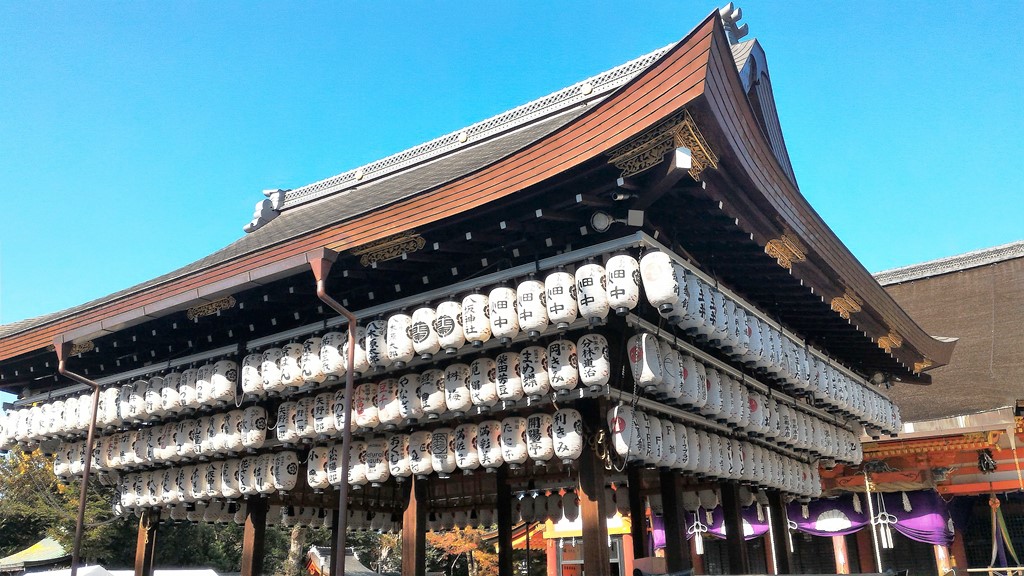
Also known as Gion Shrine, Yasaka Shrine is located at the eastern end of Shijo Avenue. You can reach it in about 15 minutes by walking from Kiyomizu-dera Temple. Its distinctive orange torii gate, which faces Shijo Avenue, is a striking feature. This shrine is famous for the Gion Festival, held in July.
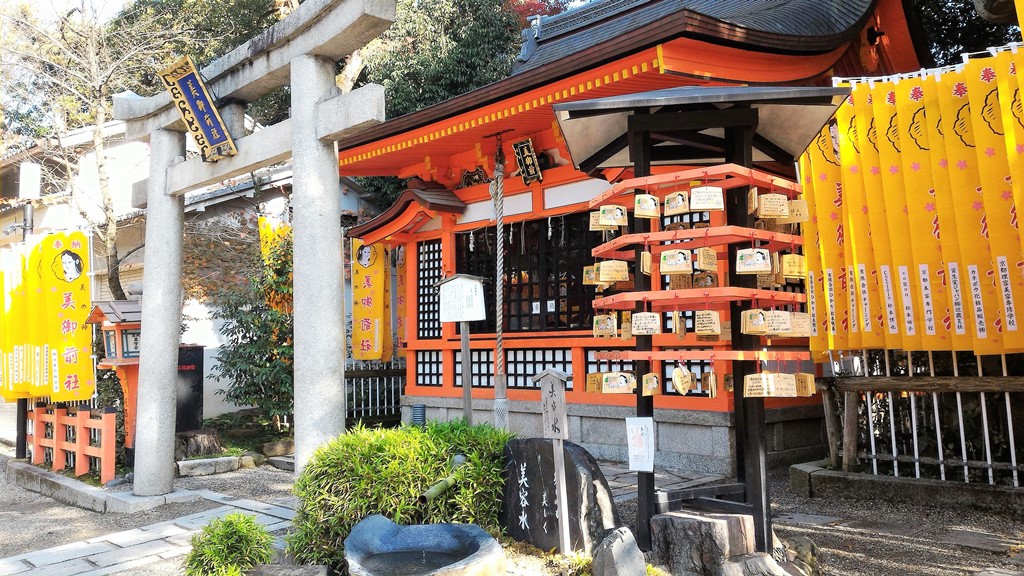
Within its grounds, there is a small sanctuary for beauty treatments.
Shoren-in Temple
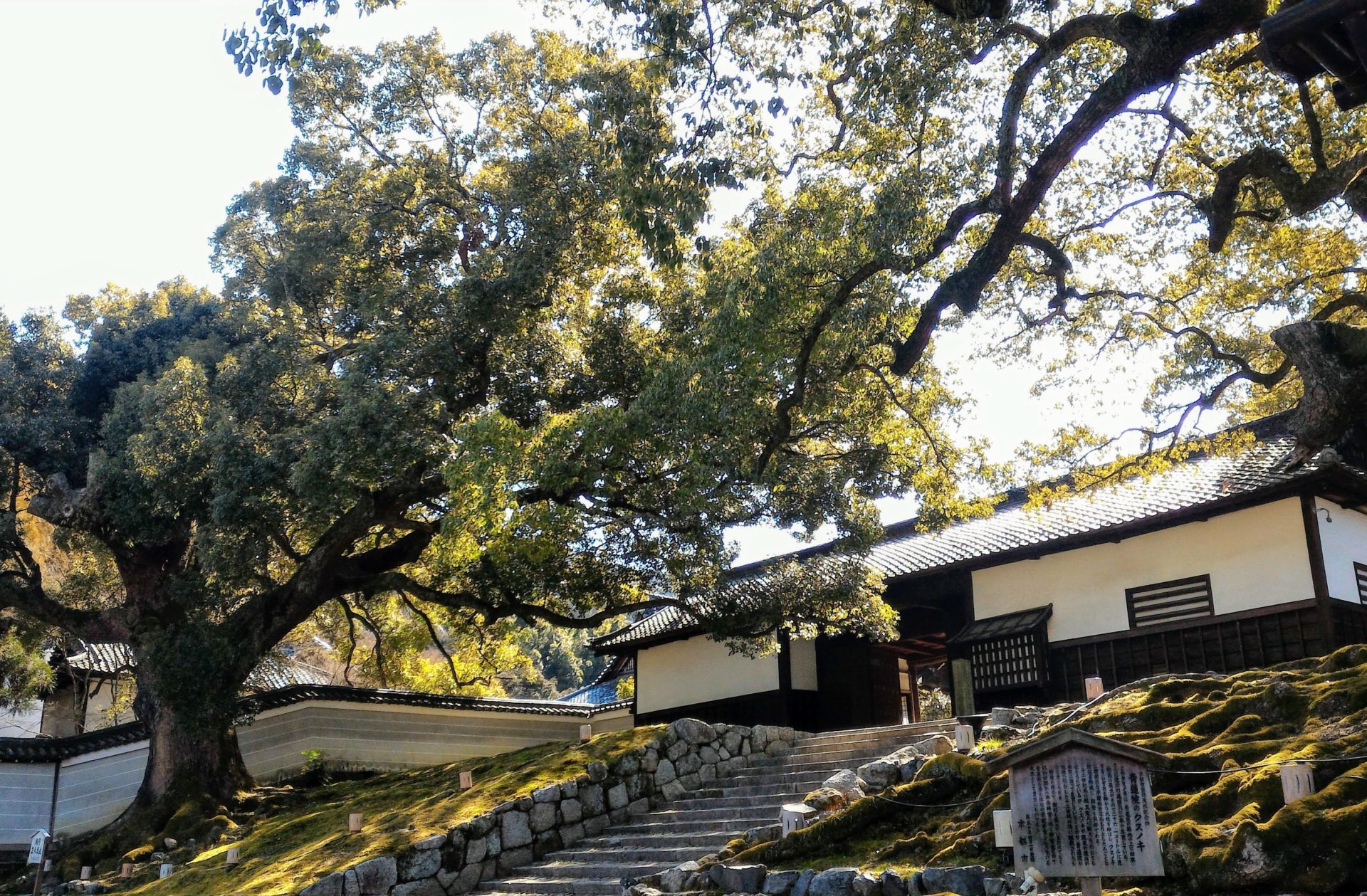
This temple is distinguished by its elegant appearance despite its vast grounds of over 3 hectares. It’s one of my favorite temples. The original monk from the imperial family has served as head of the temple for generations. Giant camphor trees, some 800 years old, stand out with their magnificent branches.
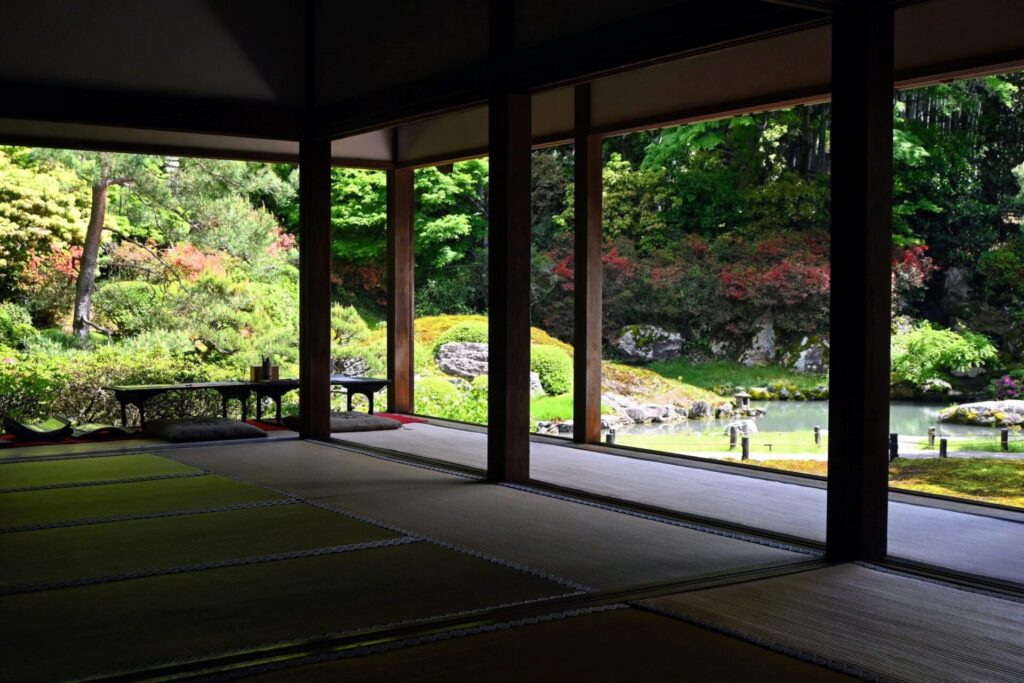
I recommend taking your time to enjoy its beautiful, tranquil gardens. With few tourists, time seems to flow slowly here. The main garden is laid out around a pond. The large stone in the center is likened to the back of a dragon bathing in it. Shoren-in is famous for its cherry trees and Japanese maples, but you can admire the scenery in every season.
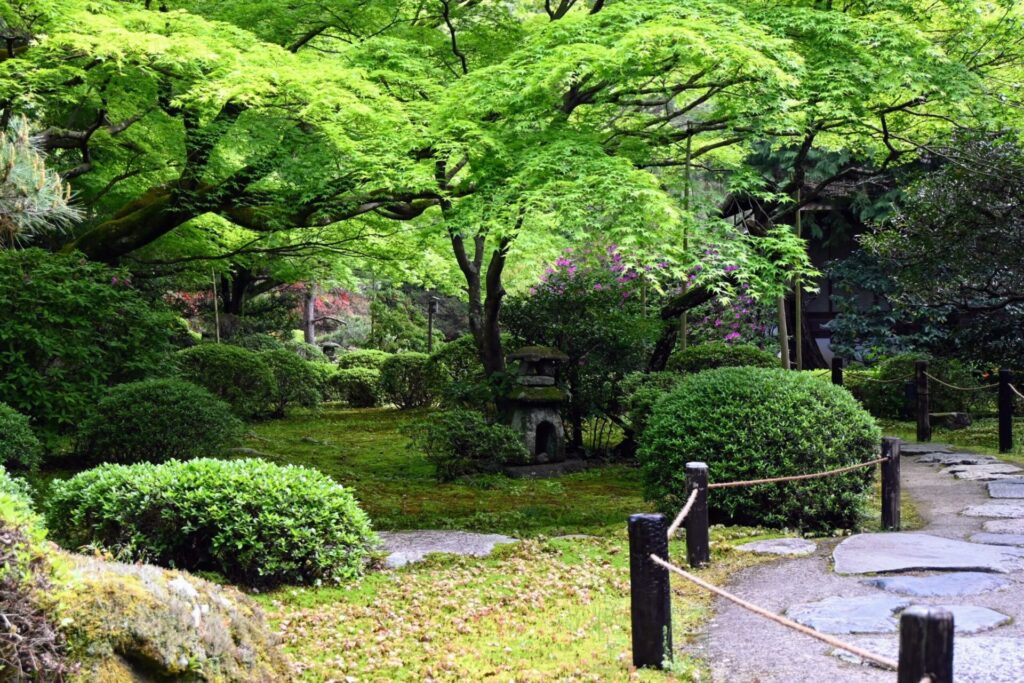
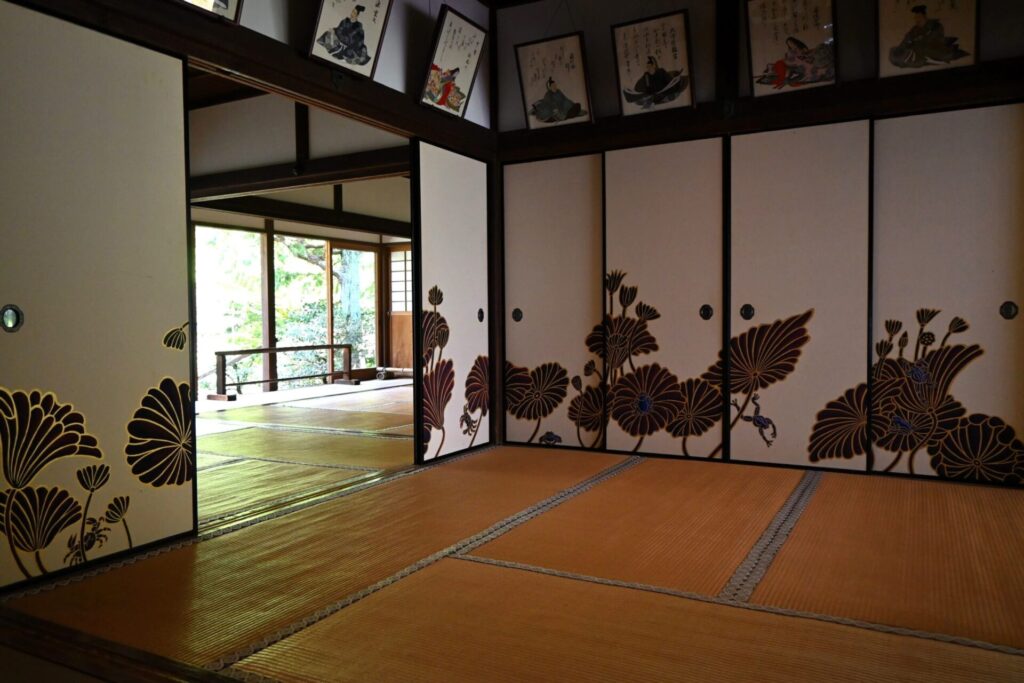
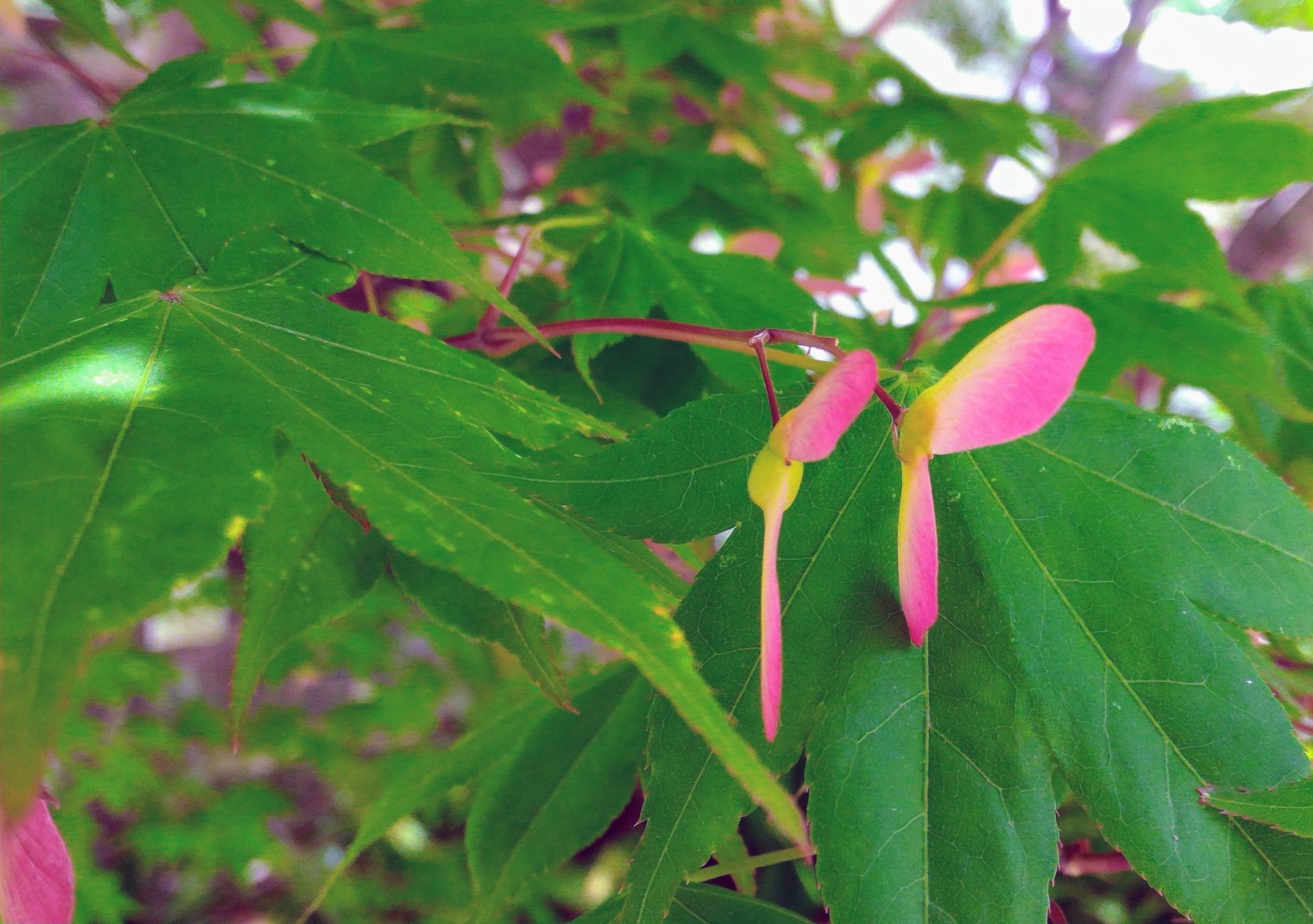
The leaves of Japanese maples, turning red in autumn, are truly magnificent. But in spring, you can enjoy the charm of fresh greenery. In May, slightly colored samaras can be seen among the leaves. The wing-like shape aids in the dispersal of the fruit.
- The entrance fee for Shoren-in Temple is 600 yen.
- After visiting the interior, we stroll through the garden. Be careful at the low entrance.
- The enclosure is illuminated at night during certain periods in spring and autumn.
- Map
The Heian-jingu Shinto Shrine
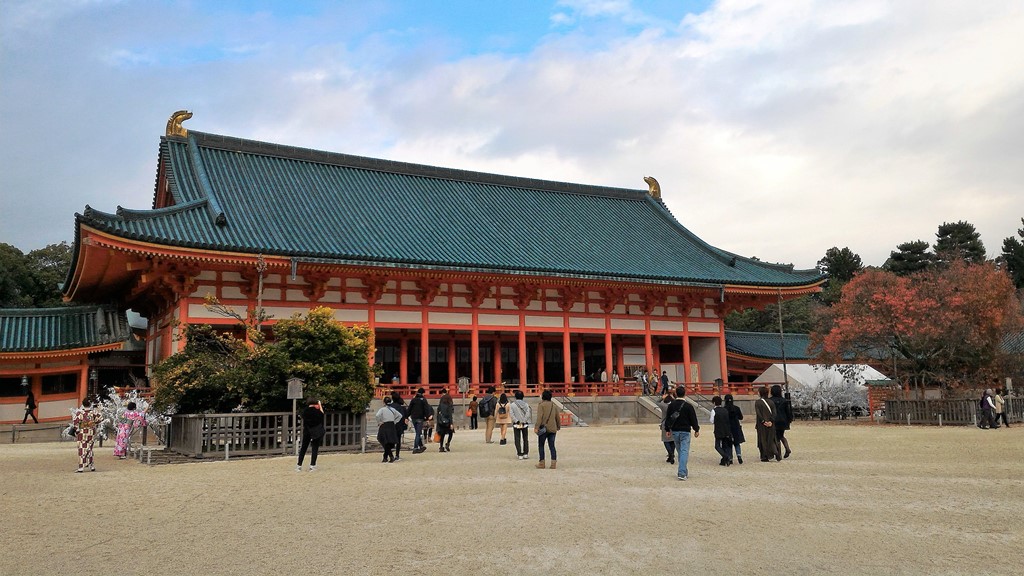
Heian-jingu is a representative shrine in Kyoto, built in 1895 to commemorate the city’s 1100th anniversary. It is dedicated to two emperors: Emperor Kanmu, the founder of Kyoto, and Emperor Komei, its last emperor.
The four Meiji-era Japanese gardens surrounding the shrine are magnificent. You can admire flowers of every season, such as cherry blossoms, irises, maples, and more. The southern part of the shrine, Okazaki, is a cultural area of Kyoto that houses a library, a zoo, and museums.
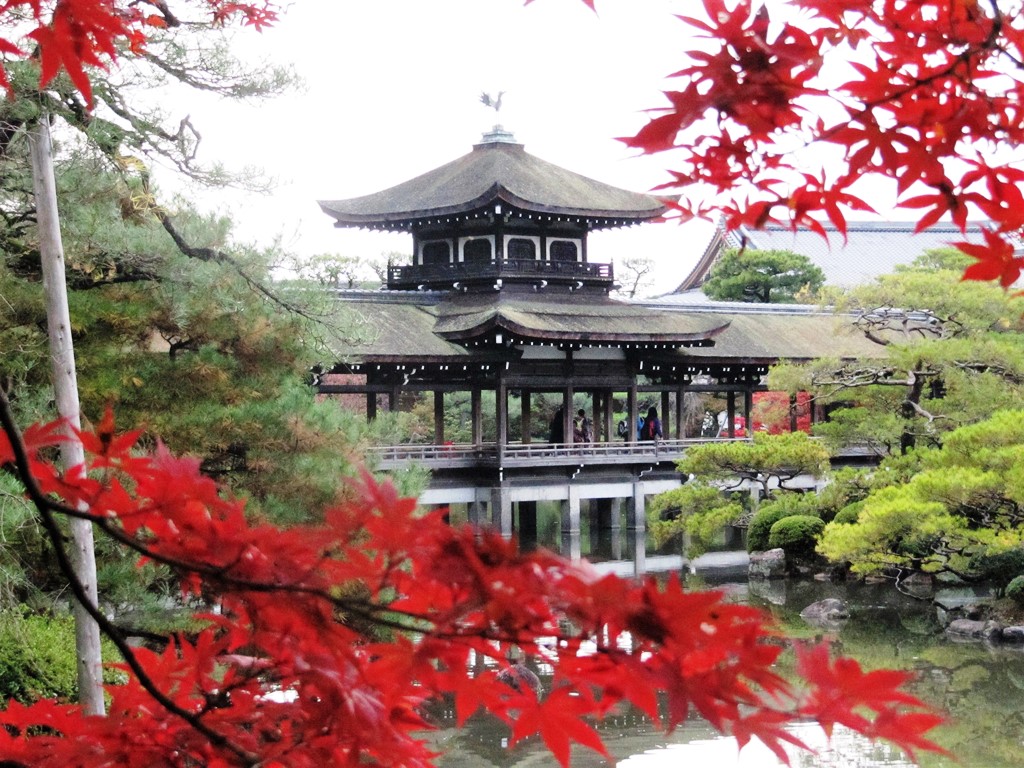
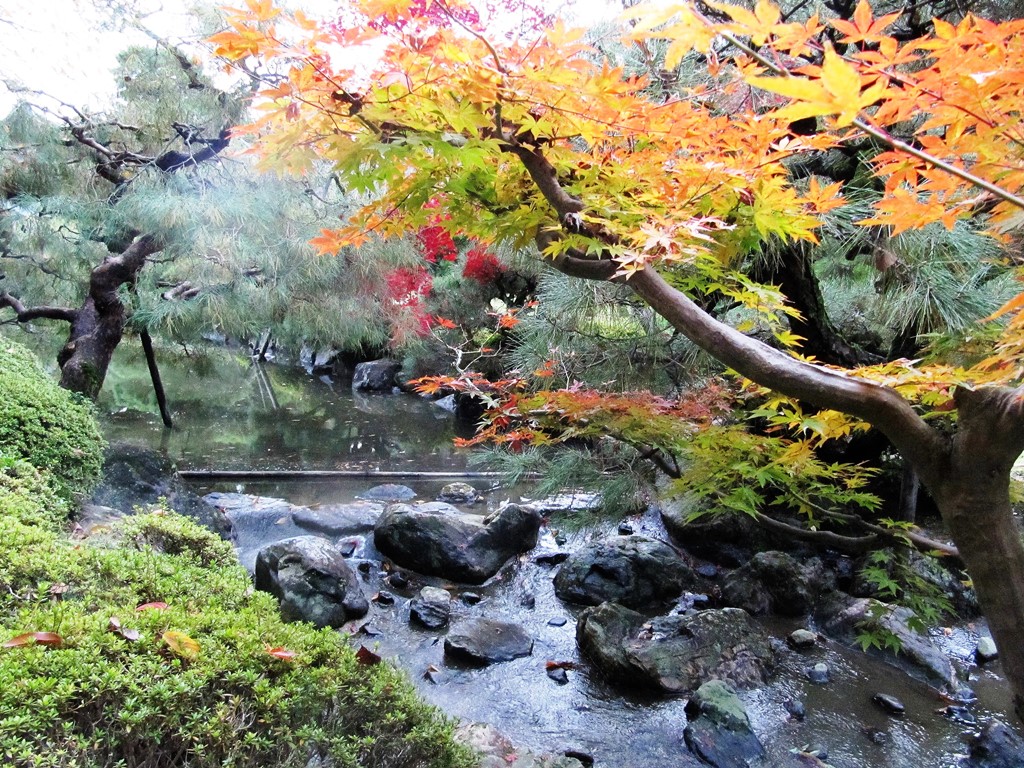
- The entrance fee for the gardens of the Heian-jingu Shinto shrine is 600 yen.
- Map
The Cloisonné Museum of Namikawa Yasuyuki
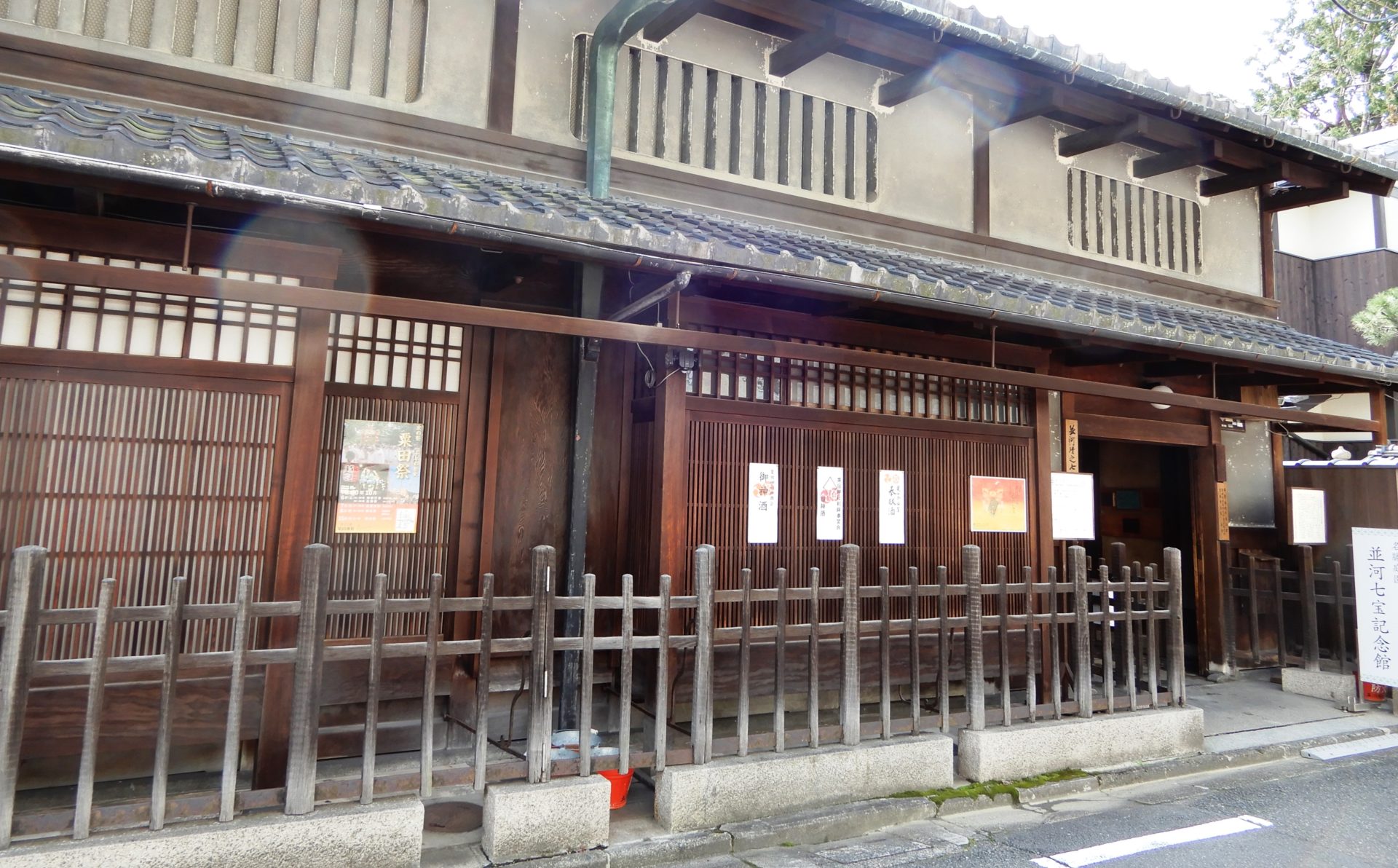
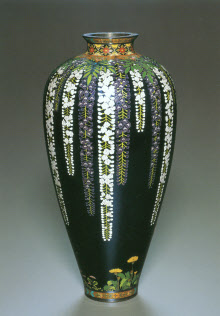
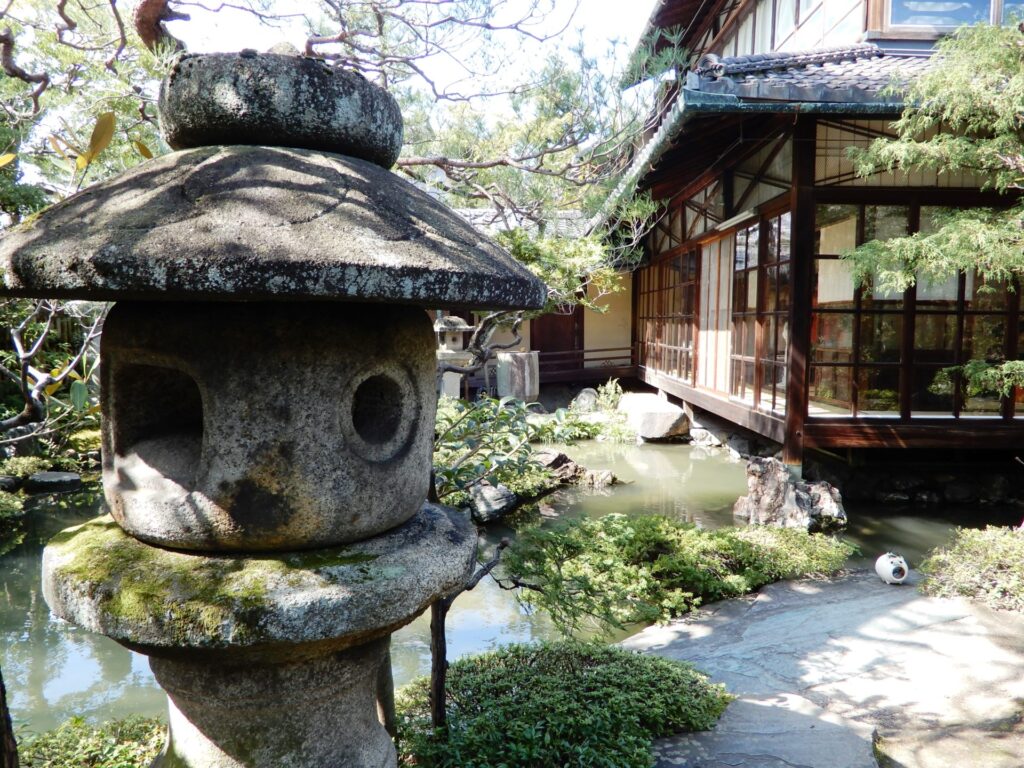
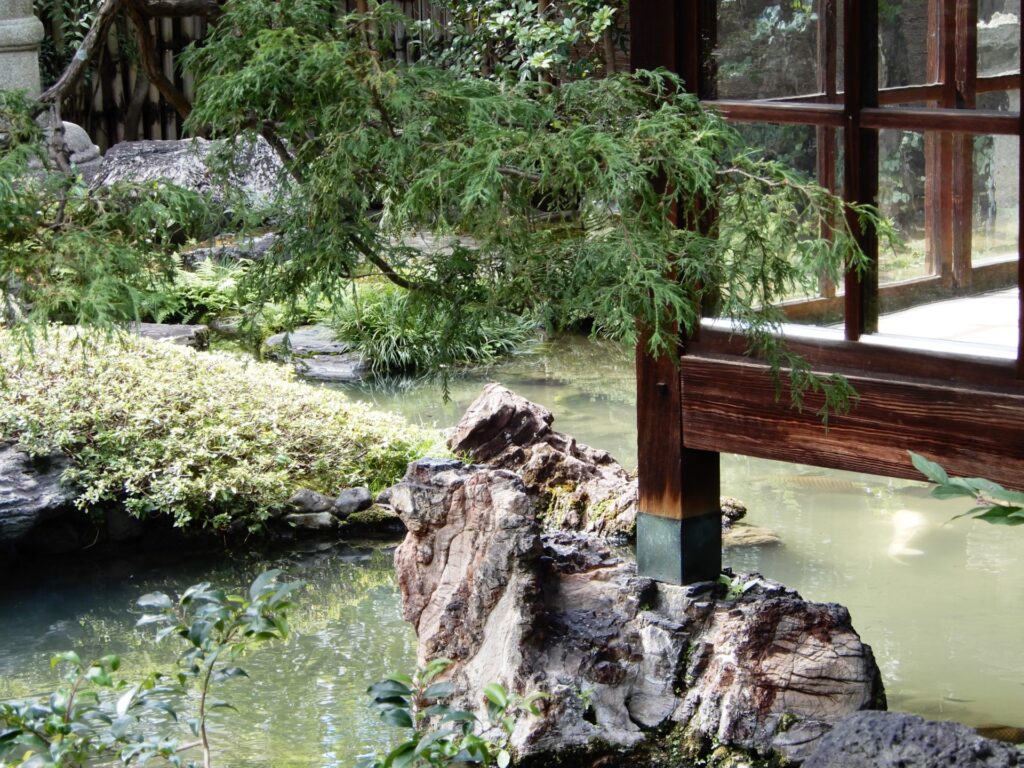
The exquisite craftsmanship of Japanese art objects was appreciated by Westerners during the Meiji era (1868-1912). Namikawa Yasuyuki is one of the most representative cloisonné artists of the Meiji period. His former residence, now a museum, is located in Kyoto, near the Heian-jingu Shinto shrine. It is well worth a visit. You will be captivated by the delicate cloisonné works of Namikawa. Each piece is small, yet its elegance is perfectly condensed. It is also pleasant to take a break on the veranda of the main building, which overlooks the garden laid out around a pond. This garden was created by Ogawa Jihei, a renowned landscape architect of the Meiji era. The pond’s water comes from the Biwa Canal. All the elements of this garden, such as stones, lanterns, and trees, are ingeniously arranged. Namikawa and Ogawa were close neighbors. You will undoubtedly be able to perceive their refined aesthetic sense there.
- The entrance fee for the Namikawa cloisonné museum is 1,000 yen.
- It is closed on Mondays and Thursdays.
- Map
The Silver Temple, Ginkaku-ji
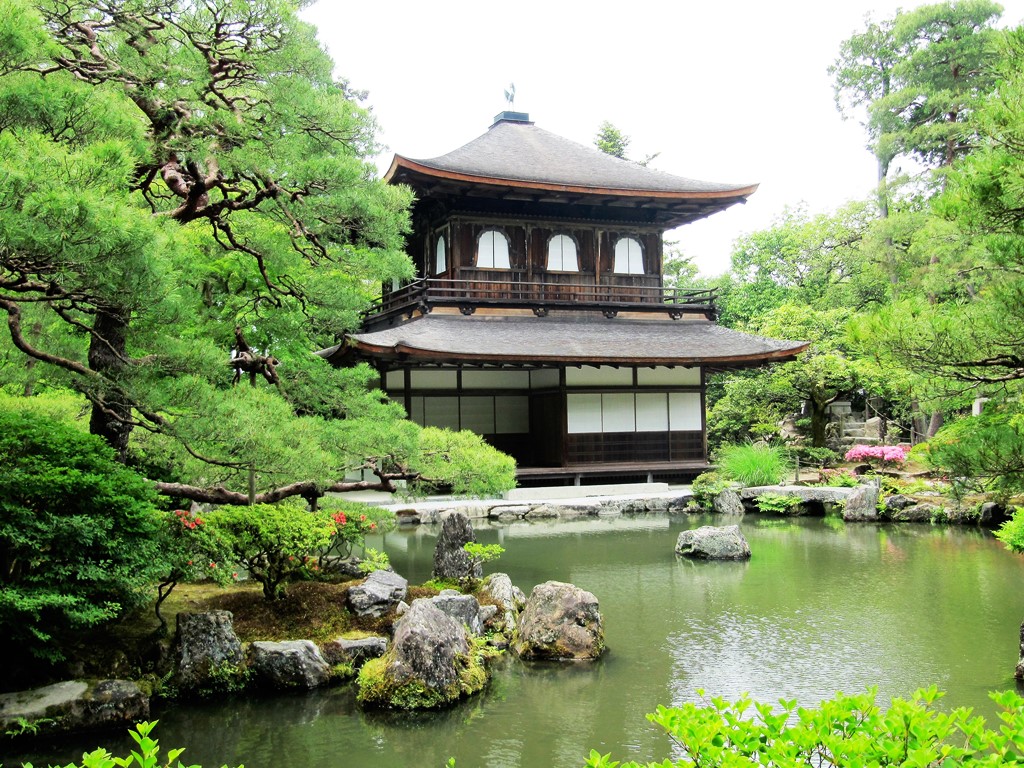
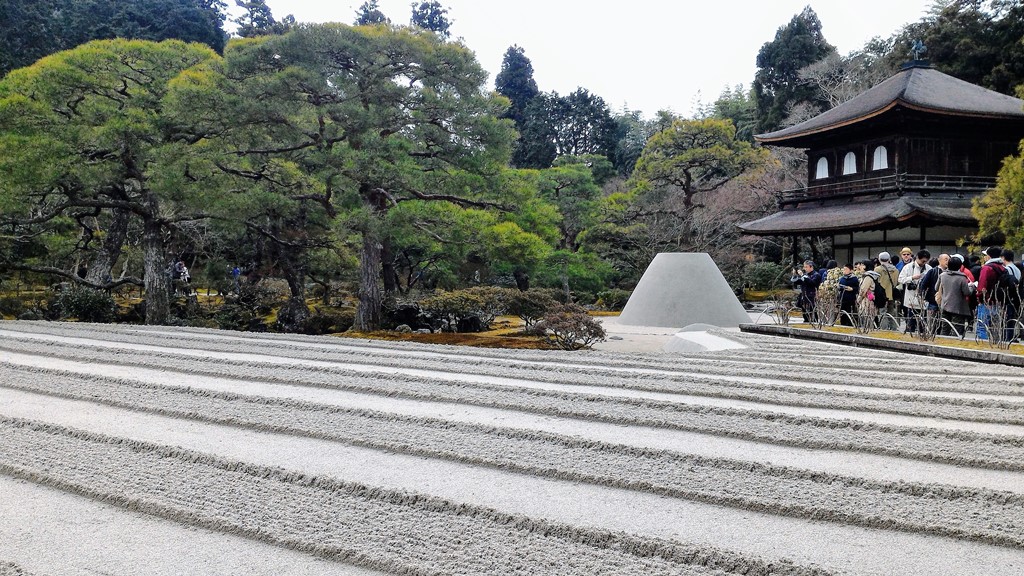
The beauty of this temple, which houses the Silver Pavilion, contrasts sharply with that of the Golden Pavilion in northwest Kyoto. It was originally built as a villa for the 8th Ashikaga shogun in the late 15th century, less than 100 years after the Golden Pavilion. Since this shogun was the grandson of the Golden Pavilion’s founder, you might imagine the Silver Pavilion to be very similar. But its style is quite different. The sight of the Silver Pavilion might be disappointing… In fact, it’s a wooden pavilion and isn’t covered in silver leaf. Even so, why is it commonly called the Silver Pavilion?
Why are we so captivated by the atmosphere created by this pavilion and its grounds? Try to guess when you stand before its garden. The key to these mysteries lies hidden within its garden.
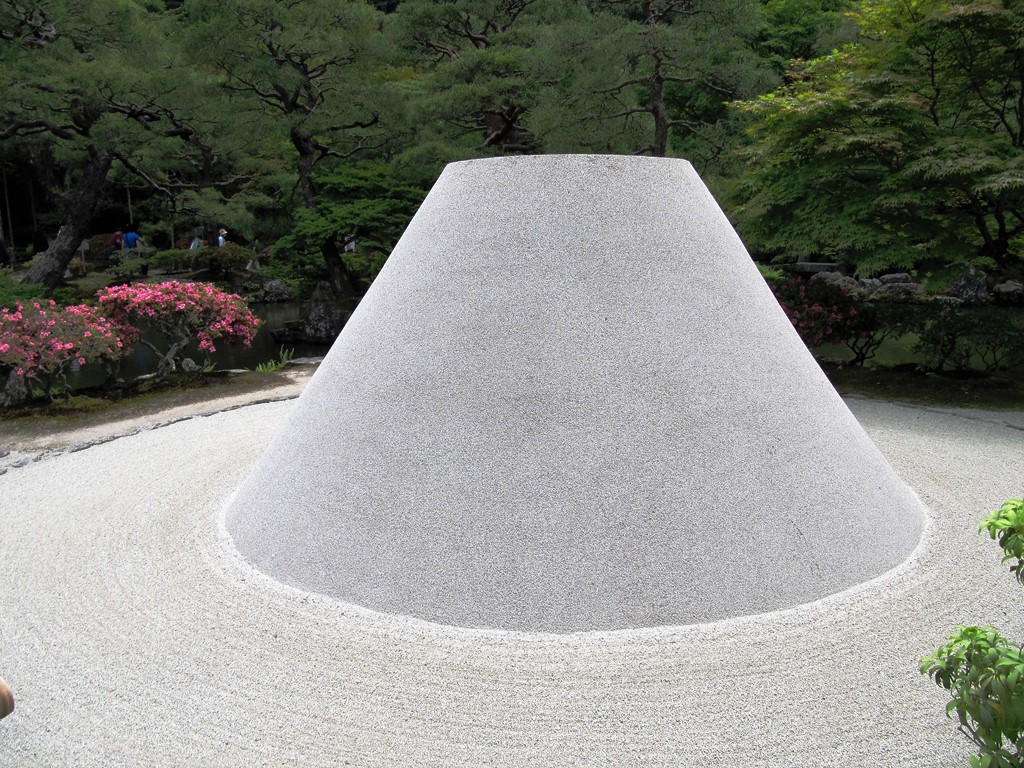
A truncated cone of sand, like a hat, stands out. What is its purpose?
Next to it, a pile of silver sand with waves spreads out. Is there a close relationship between these plastic sand objects and the silver pavilion?
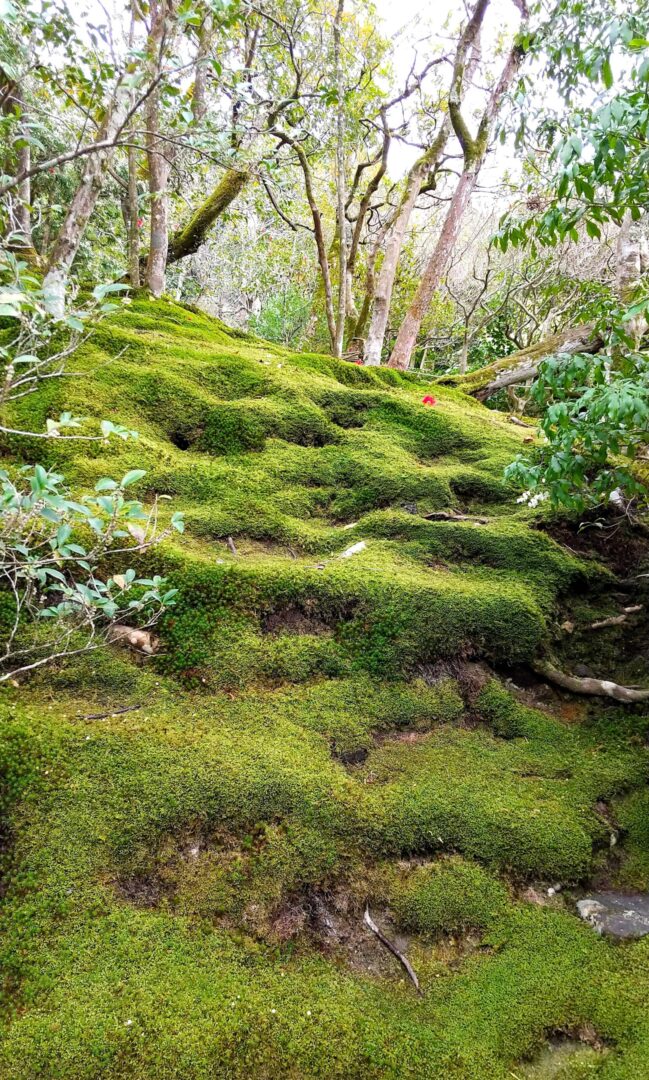
The enclosure is undoubtedly beautiful when the maple leaves turn red, but I also love the green of the carpet of mosses washed by the rain.
- The entrance fee for the Silver Temple, Ginkaku-ji, is 500 yen.
- Its grounds are located at the foot of the mountain. From the nearest bus stop, you have to go up a gentle slope.
- Map
The Philosopher’s Path
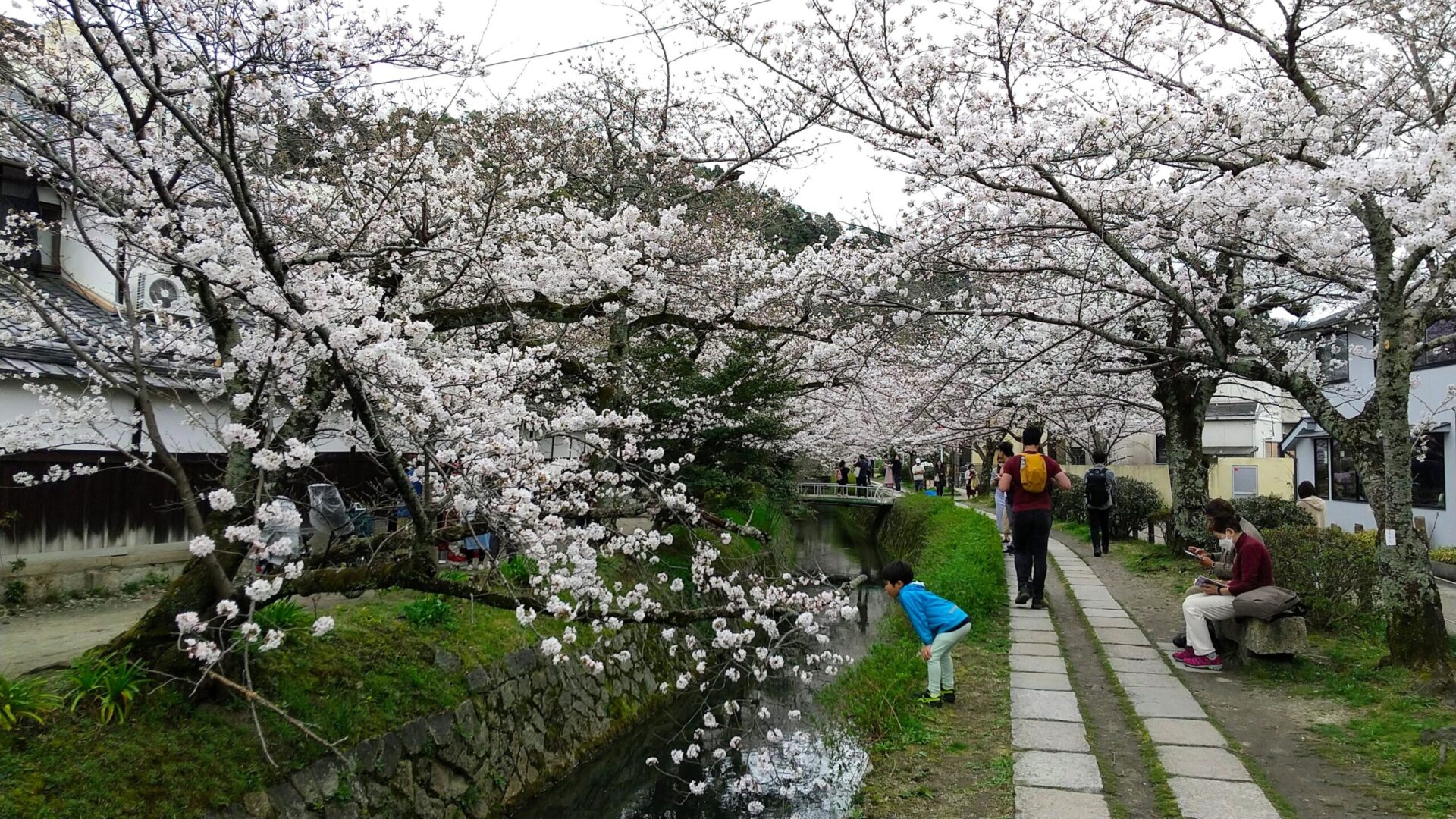
It’s a wonderful path for a stroll. Bordering the canal that flows from Lake Biwa, the largest lake in Japan, it begins at the Kumano Nyakuoji-jinja Shinto shrine in the south and ends in the north near the Silver Temple, Ginkaku-ji. In spring, this is one of the best places to photograph the rows of cherry blossoms.
- It takes approximately 30 minutes to travel this path.
- I recommend going early in the morning if you want to admire the cherry blossoms in peace and quiet. Small temples and shrines are scattered around the area. They are also worth visiting. However, some of them are closed except in exceptional circumstances. It would be best to check before visiting.
- Map
Nanzenji Temple
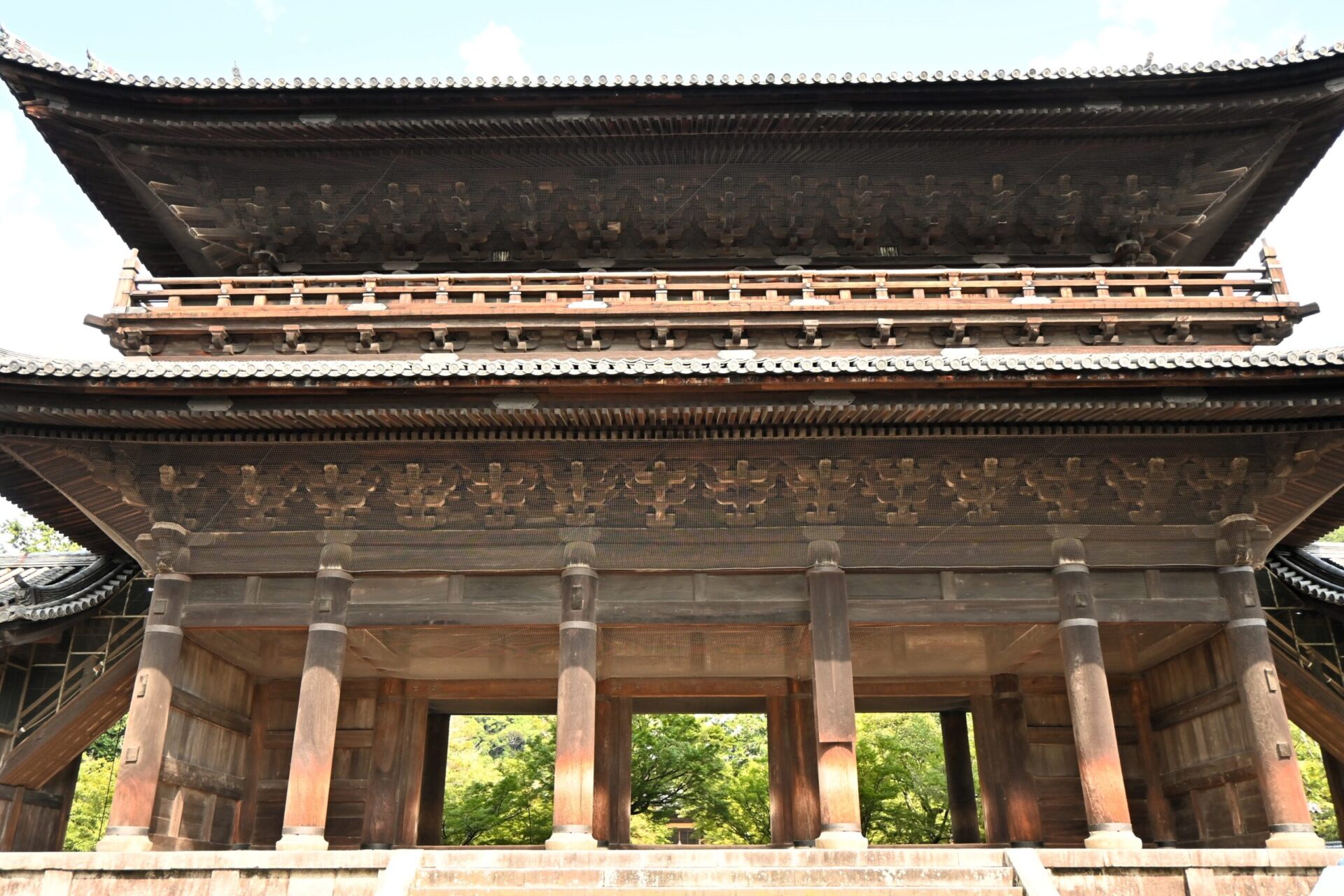
This site was originally an imperial villa built around 750 years ago. At the end of the 13th century, the villa was transformed into a Buddhist temple. You will be amazed by its grand grounds. Its name, Nanzen-ji, literally means “Southern Zen Temple.” Unfortunately, the original grounds were destroyed during civil wars, and most of the current buildings are 17th-century reconstructions. But its grand gate, sanmon, magnificent aqueduct, and Zen garden are well worth seeing. It is also pleasant to stroll around the temple grounds in the spring. A few villas with beautiful gardens, once belonging to 20th-century businessmen and politicians, still remain.
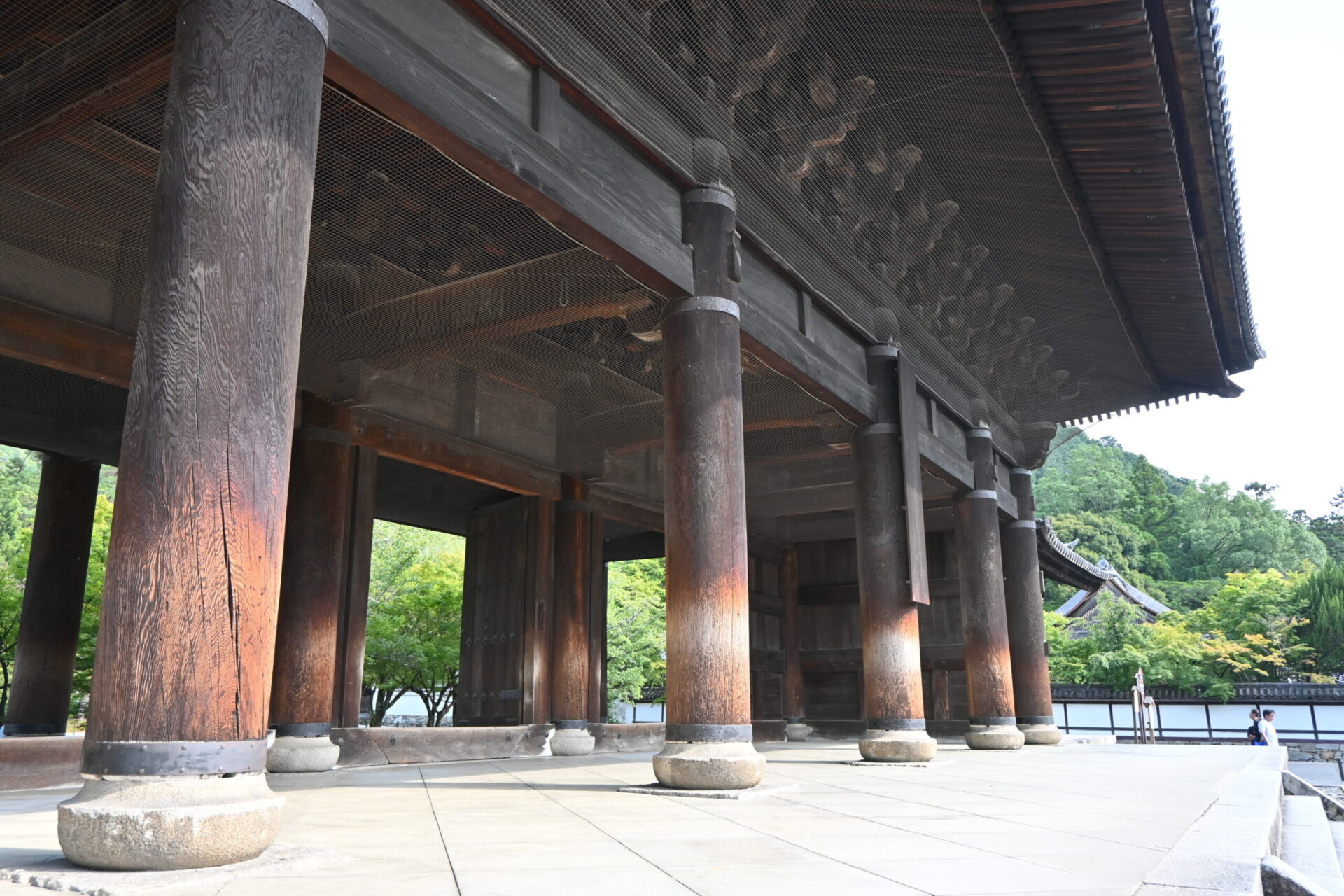
The gate of a temple complex, called a sanmon, is written 三門 in Chinese characters. It represents three gates to pass through on the path to enlightenment: the Gate of Emptiness, the Gate of Formlessness, and the Gate of Inaction. This is one of the largest temple gates in Japan. You will undoubtedly be impressed by its majestic appearance when viewed from below. It is also possible to climb onto this gate.
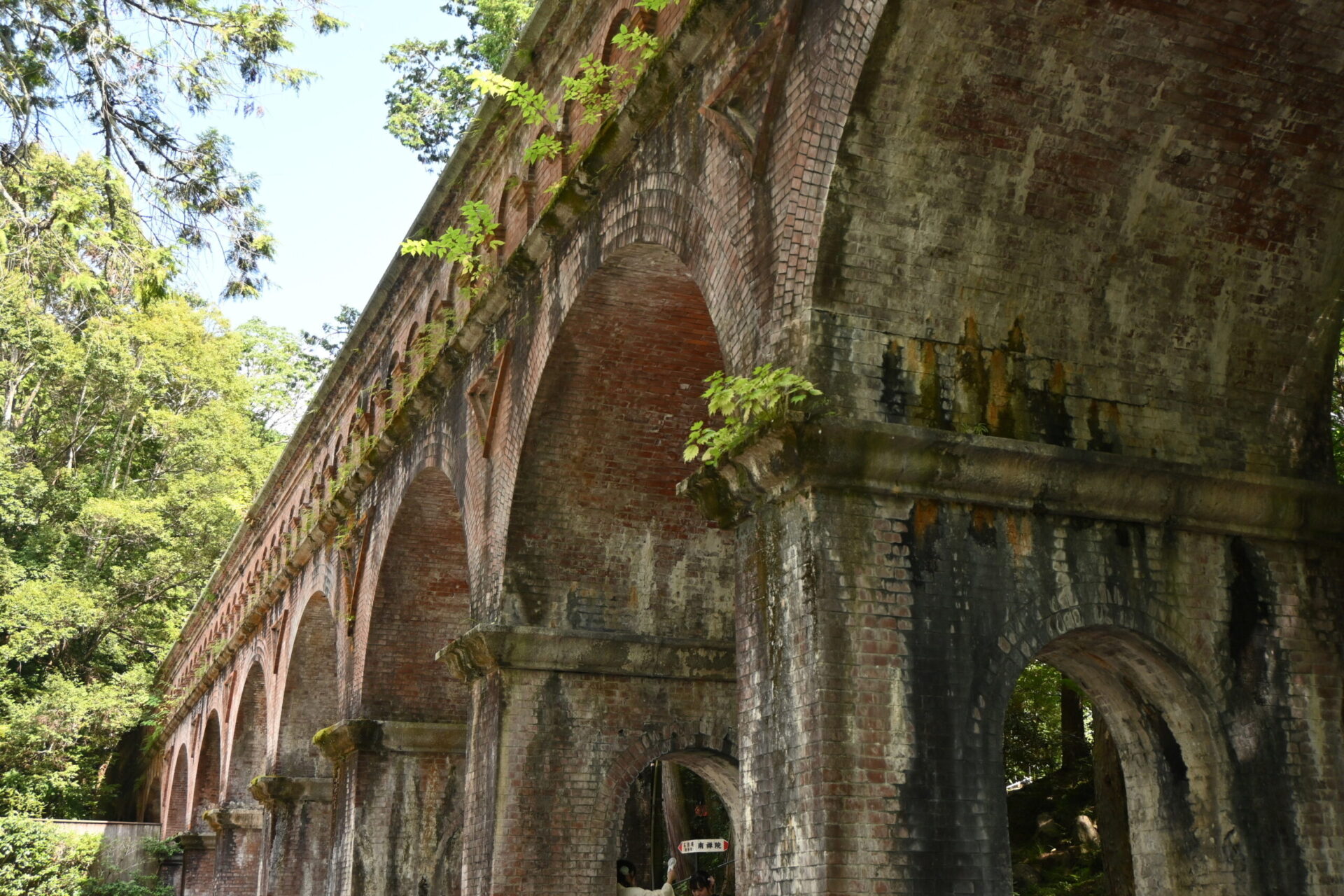
The large red-brick aqueduct, built in 1890, is located to the right at the far end of the grounds. You might think that such an aqueduct, in the style of ancient Rome, is out of place in a Buddhist temple. Why is there an aqueduct here? I’ll tell you the story of its construction.
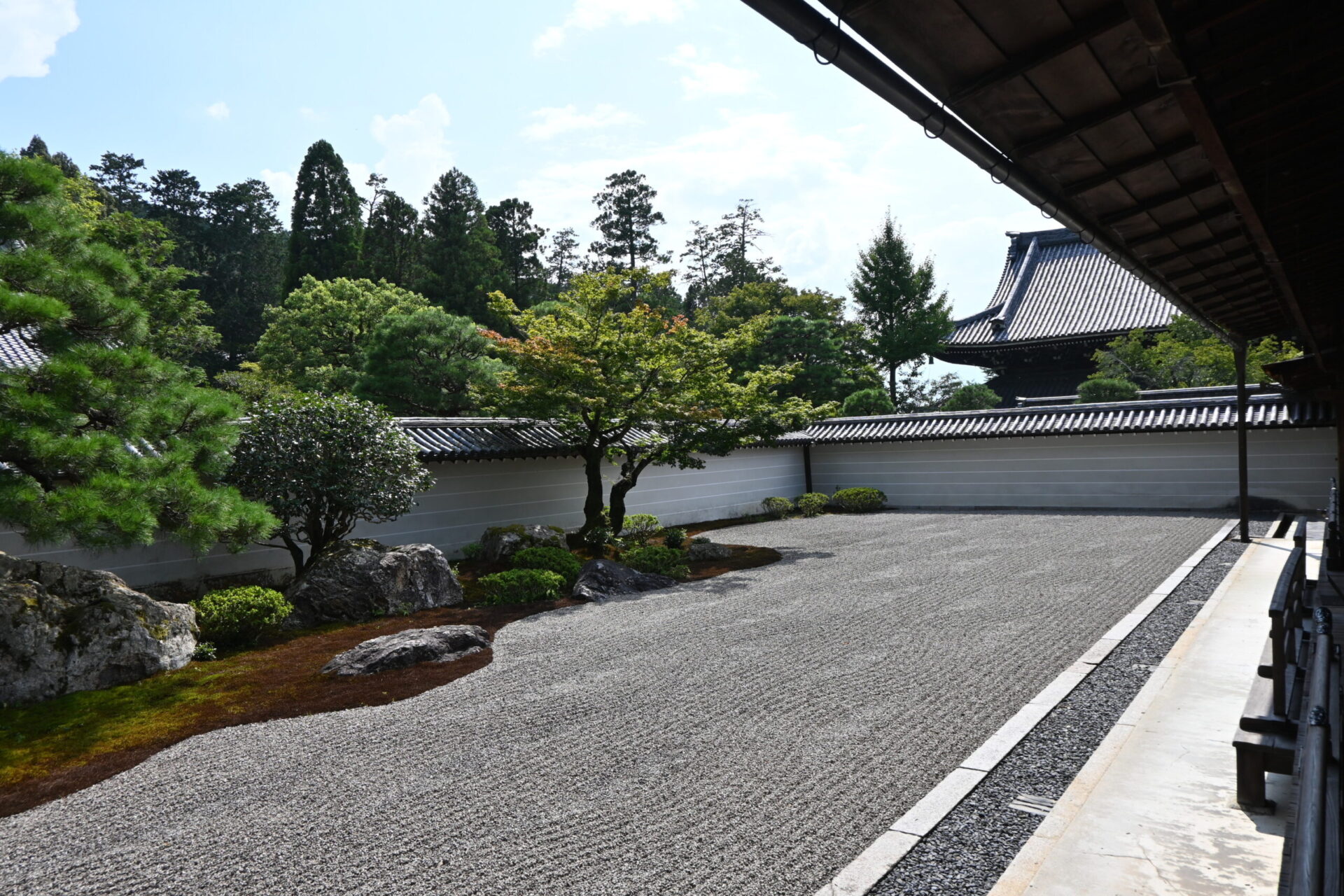
His Zen garden is a good example of a dry garden. It consists of rocks and trees grouped together on raked white sand. It is nicknamed the Leaping Tiger Garden. Do you know the legend of the tigress who crosses the river carrying her three cubs?
- Entrance fee to the Sanmon Gate of Nanzen-ji Temple: 600 yen
- Entrance fee to the garden of Nanzen-ji Temple: 600 yen
- Map
Gion District
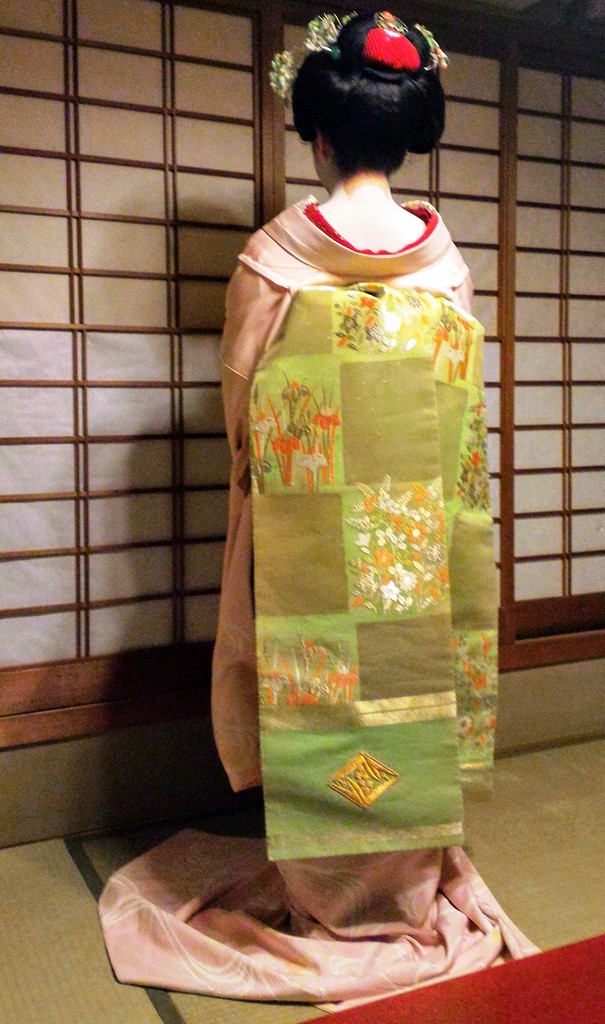
Gion is known as Kyoto’s largest and most vibrant district. It’s also a district reserved for geisha, geiko (professional entertainers), and maiko (geiko apprentices). Many tourists want to visit this renowned area at all costs when they visit Kyoto, but where exactly is Gion? It consists of streets and alleyways that extend on either side of Shijo Avenue, all the way to the Kamo River. Today, many modern buildings stand in Gion, but a row of traditional buildings still remains, serving as banquet halls for entertainment (ochaya) or as maiko residences (okiya). I’d like to show you the charming streets of Gion both south and north of Shijo Avenue.
This is Hanami-koji, the street perpendicular to Shijo Avenue. South of this street, banquet halls (ochaya) with dark-colored wooden latticework on the windows (bengara-koshi) and bamboo facades (inuyarai) line the street. The symbol of this street is the Ichiriki House, with its more than 300-year history. At Gion Corner on this street, performances of seven classical Japanese arts are presented twice daily, offering a glimpse into Japanese culture.
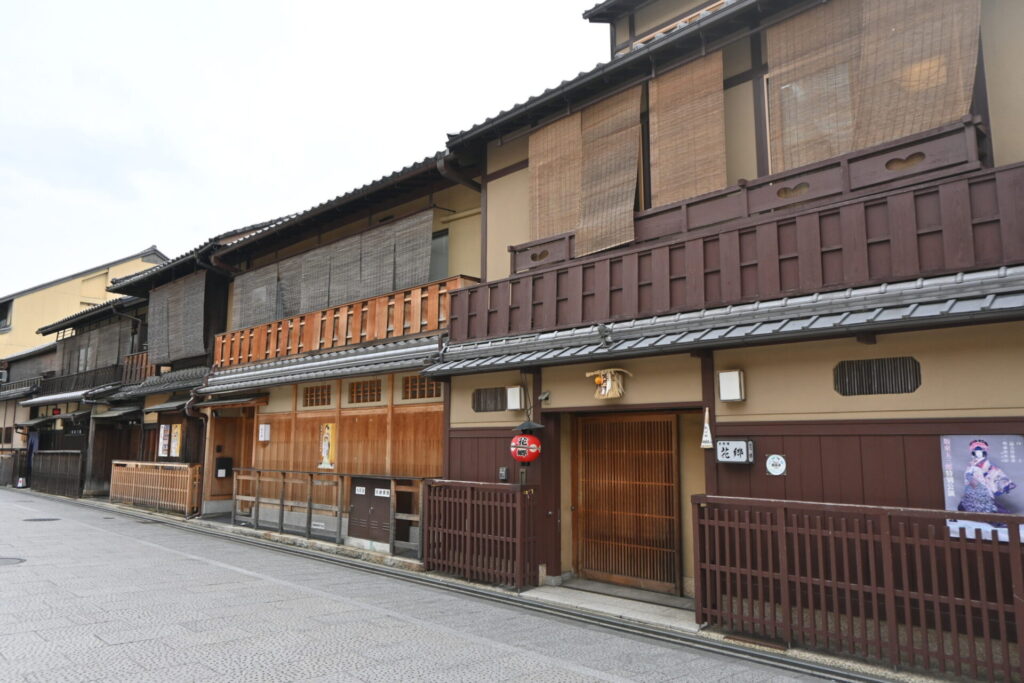
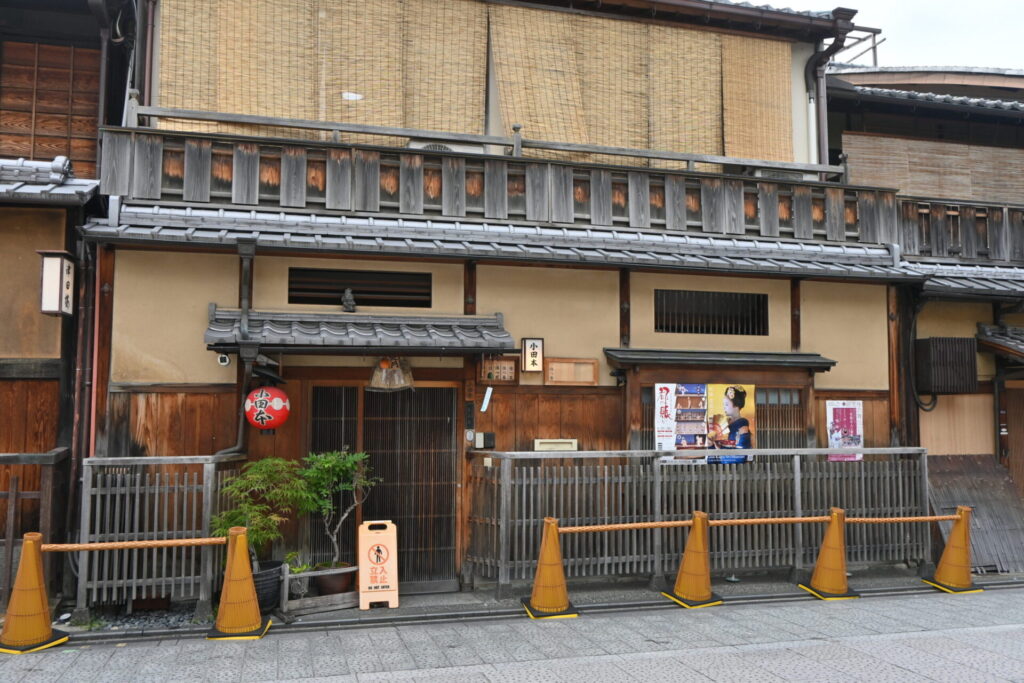
Shinbashi Street is another lovely street in Gion, extending north of Shijo Avenue. Less touristy, I recommend this street if you’re looking for the quiet charm of the geisha district. You can also enjoy picturesque scenery on Shirakawa-minami Street, a cobblestone street just below Shinbashi Street. Beautiful photos are possible with the small Shirakawa River in the background.
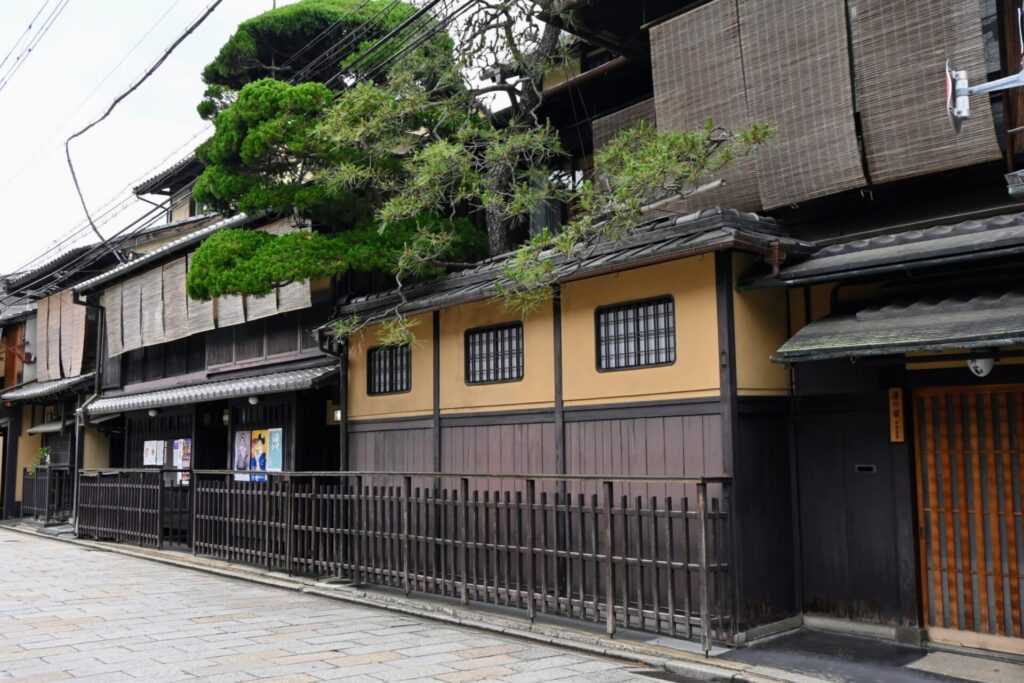
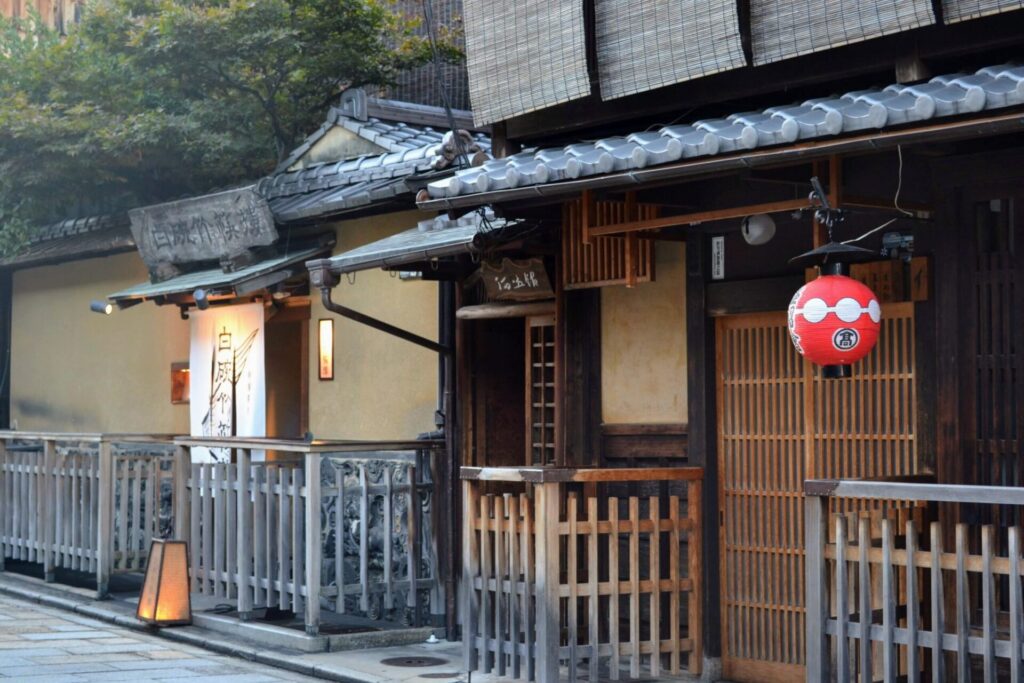
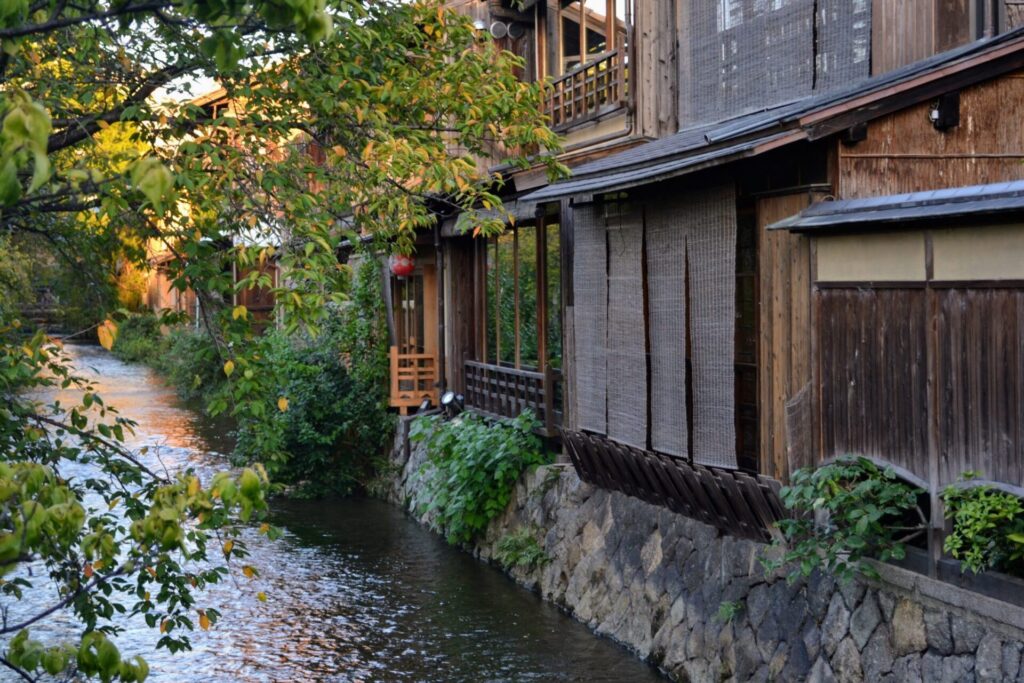
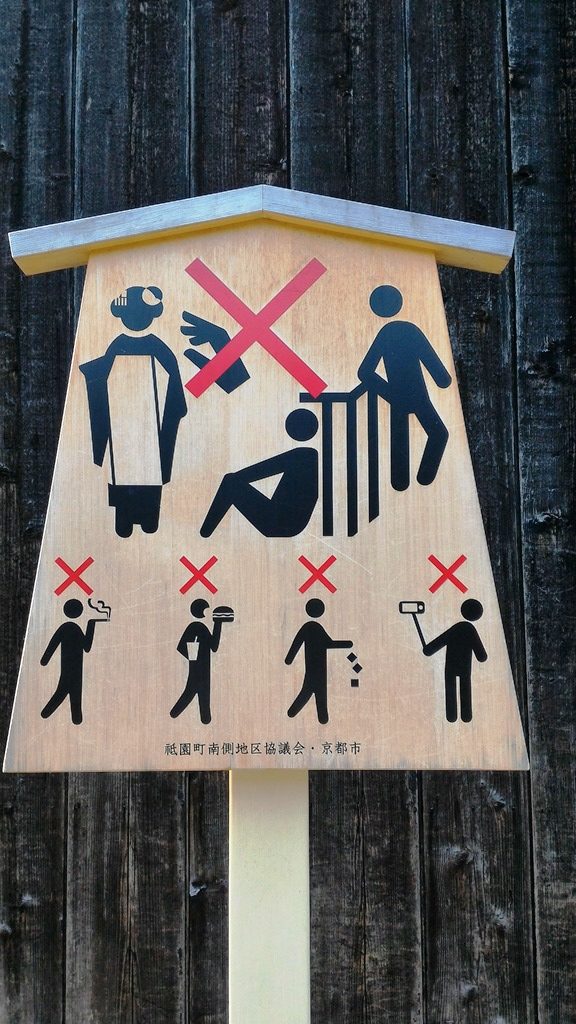
- Hanami-koji Street can sometimes get very busy with cars. It’s not a pedestrian street, so it’s always crowded. I recommend exploring the side streets that branch off from Hanami-koji Street instead.
- Lately, tourists’ lack of respect has been causing problems for maiko in geisha districts, such as being chased, demanding photos, etc. You’ll find signs reminding foreign tourists of the rules to follow. What do you think?
- Map(South)
- Map(Shin-bashi street)
Kennin-ji Temple
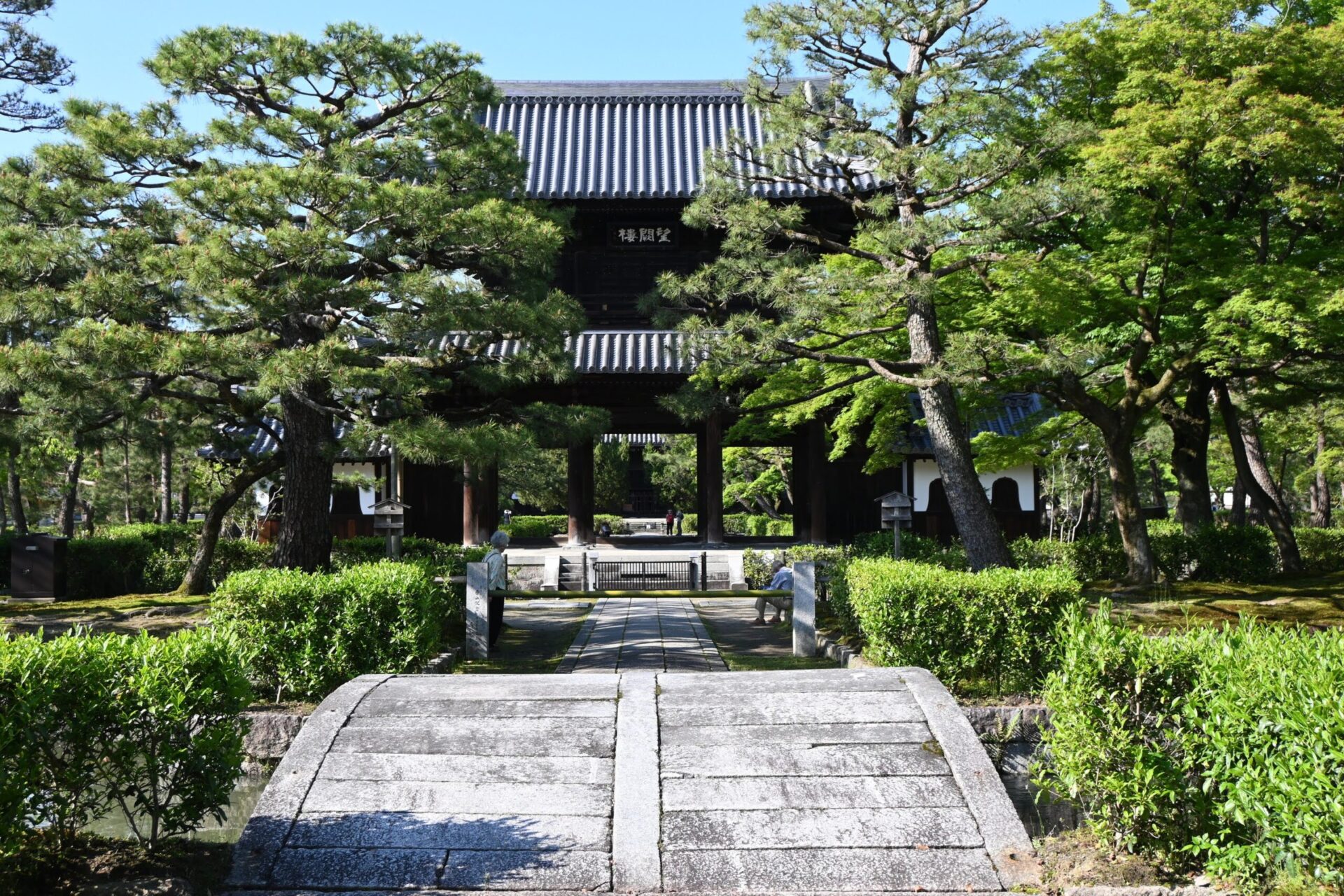
Founded in the early 13th century, Kennin-ji is the oldest Zen temple in Kyoto. Despite its location in the heart of the Gion district, it exudes a peaceful atmosphere. If the hustle and bustle of the neighborhood is getting to you, how about relaxing here? Immersed in admiring the paintings or meditating in the Zen gardens, you’re sure to have a pleasant and unforgettable experience.
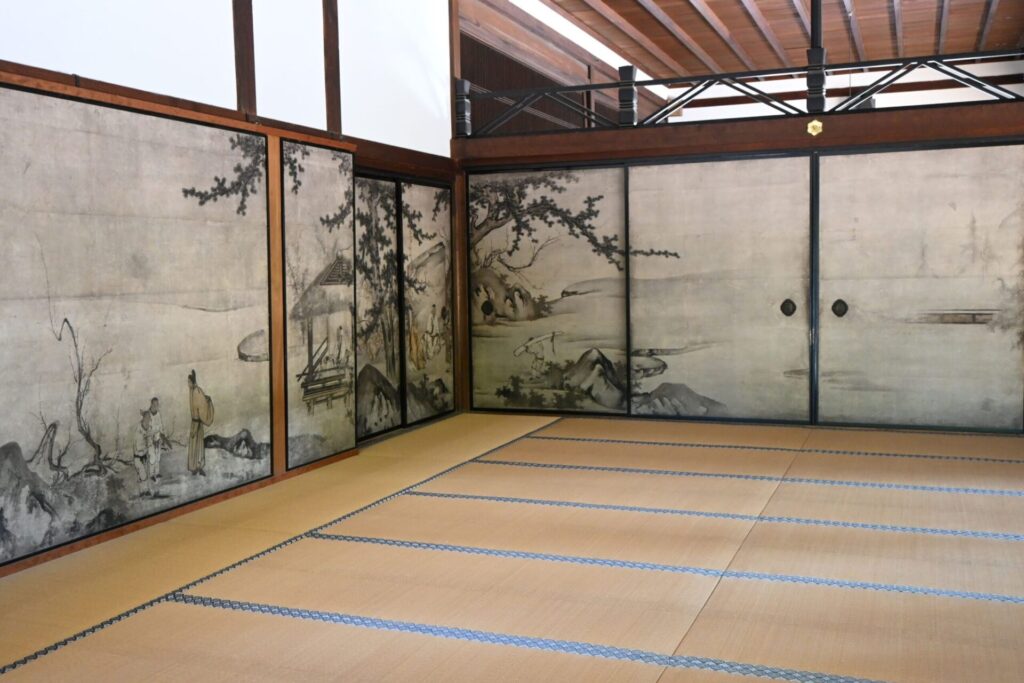
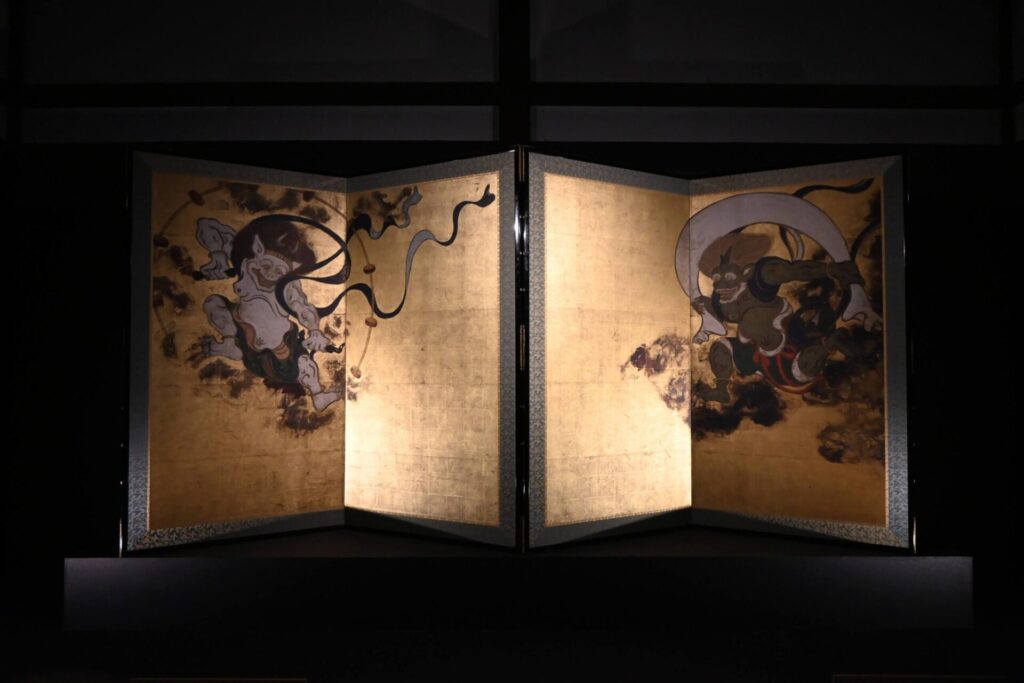
This temple houses many national treasures. You can see the folding screen depicting the god of wind and the god of thunder, or the 50 paintings decorating the sliding doors of the hojo, the monks’ quarters. You might be disappointed that the paintings on display today are high-definition digital reproductions; however, I think you can still appreciate the beauty of the paintings from bygone eras, reproduced in their original state.
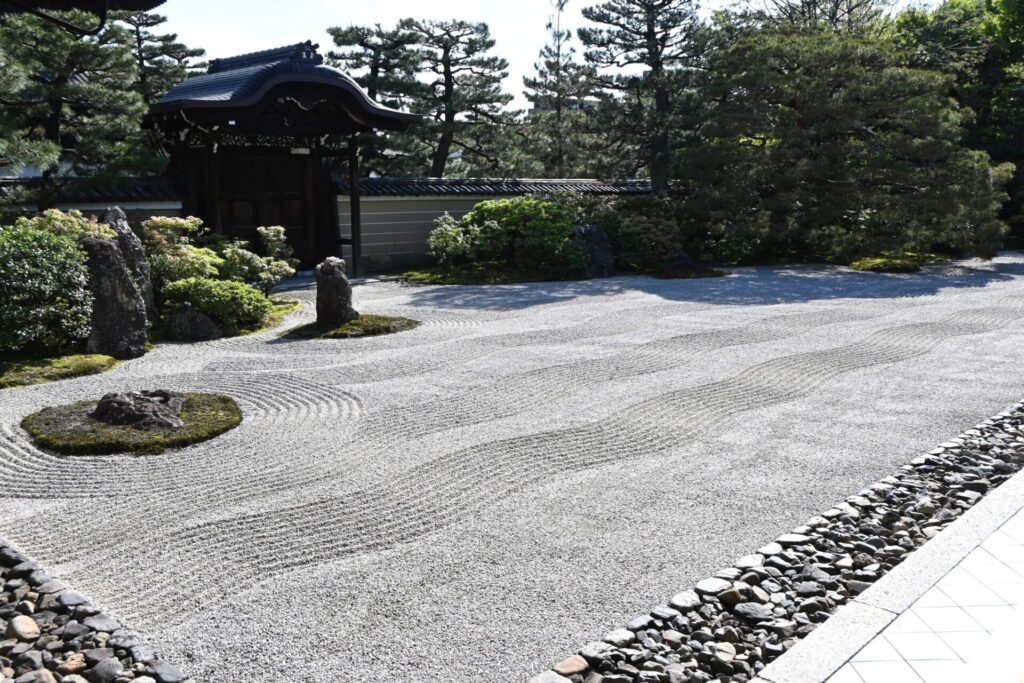
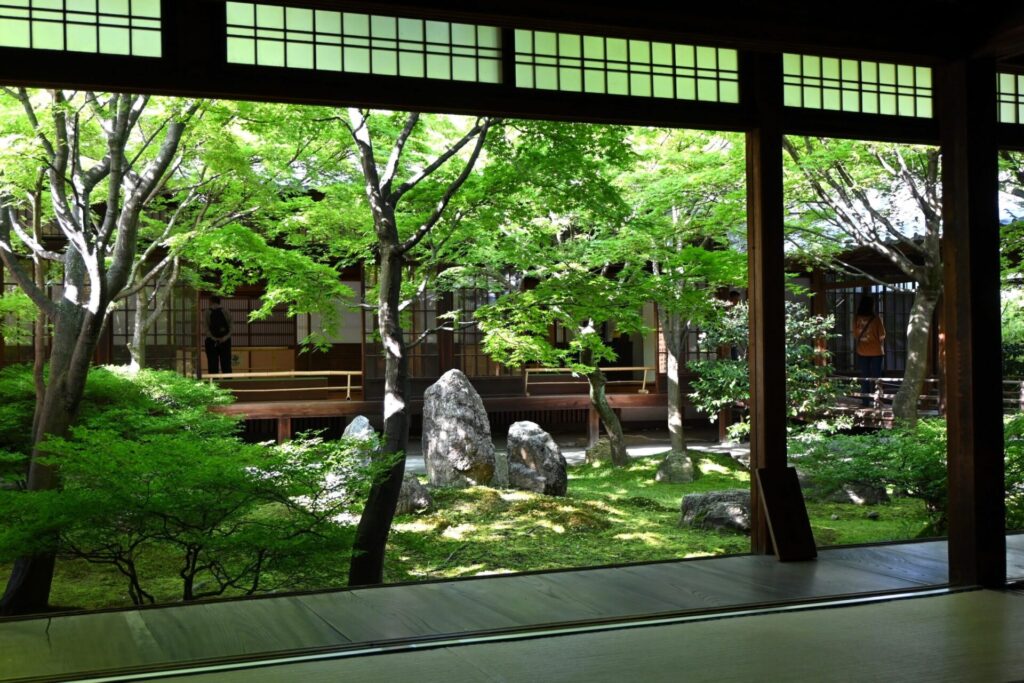
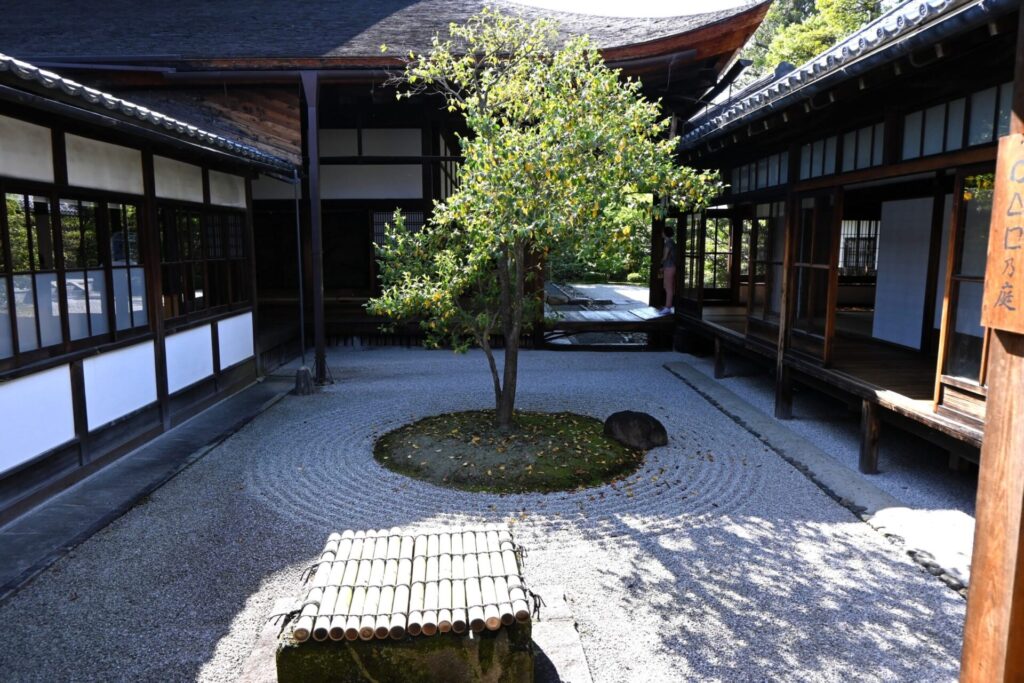
This temple is also famous for its three impressive Zen gardens. Each has a different appearance. The largest garden, composed of white sand, moss, and rocks, evokes a vast expanse of ocean. In the garden at the far end, surrounded by corridors, you can see the landscape framed like a picture in a frame from any angle. As for the third garden, you might easily miss it. Three shapes—a circle, a triangle, and a square—are hidden within it. Can you find them and understand their meaning?
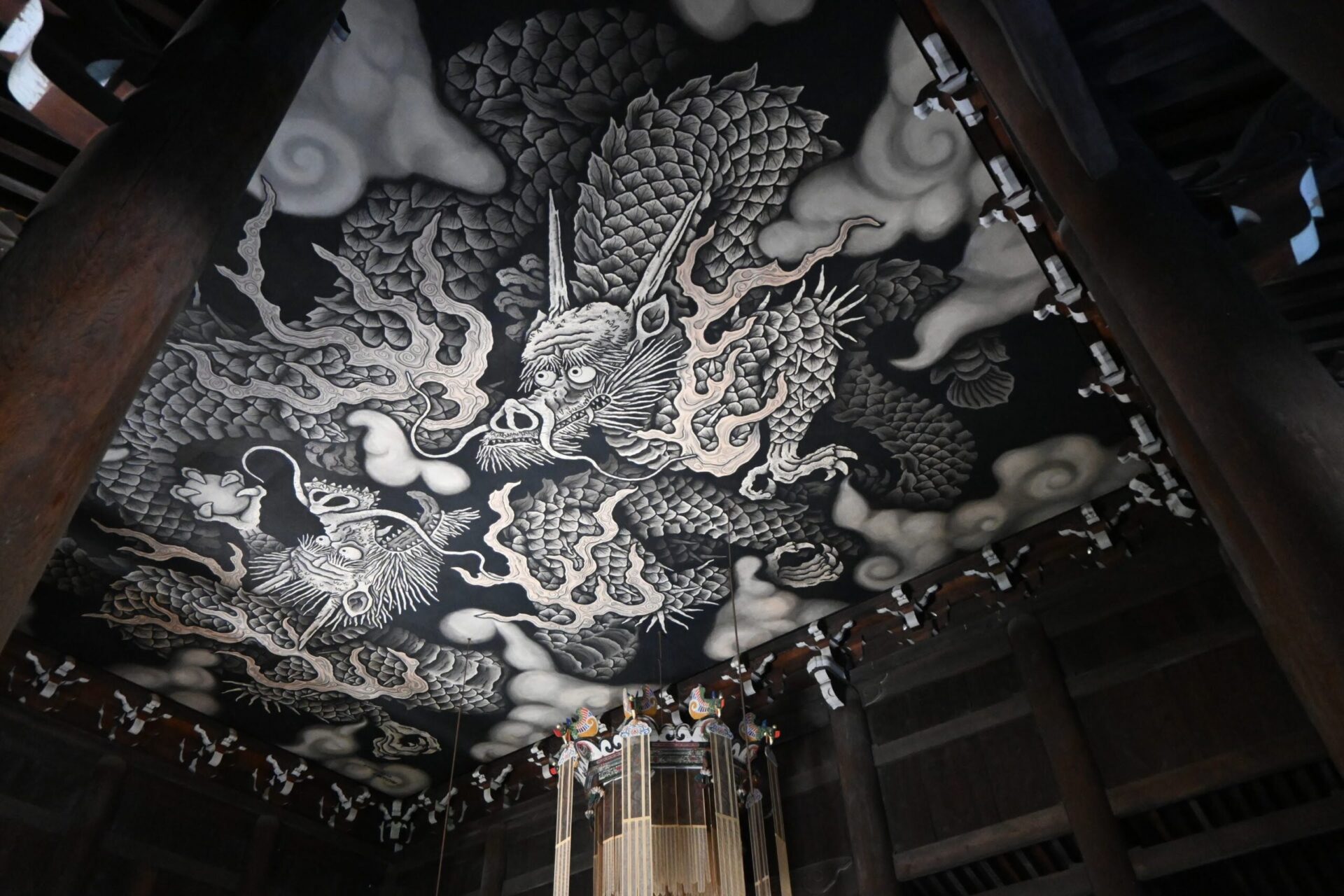
Don’t miss the twin dragons painted on the ceiling of the hatto building, the preaching hall, commemorating the 800th anniversary of the temple’s construction. These dynamic dragons will captivate you. Did you know that the dragon, often seen as malevolent in Western countries, is considered a protective deity in Buddhism and a water deity in Japan?
- The entrance fee for Kennin-ji temple is 800 yen.
- Map
Miyagawacho District
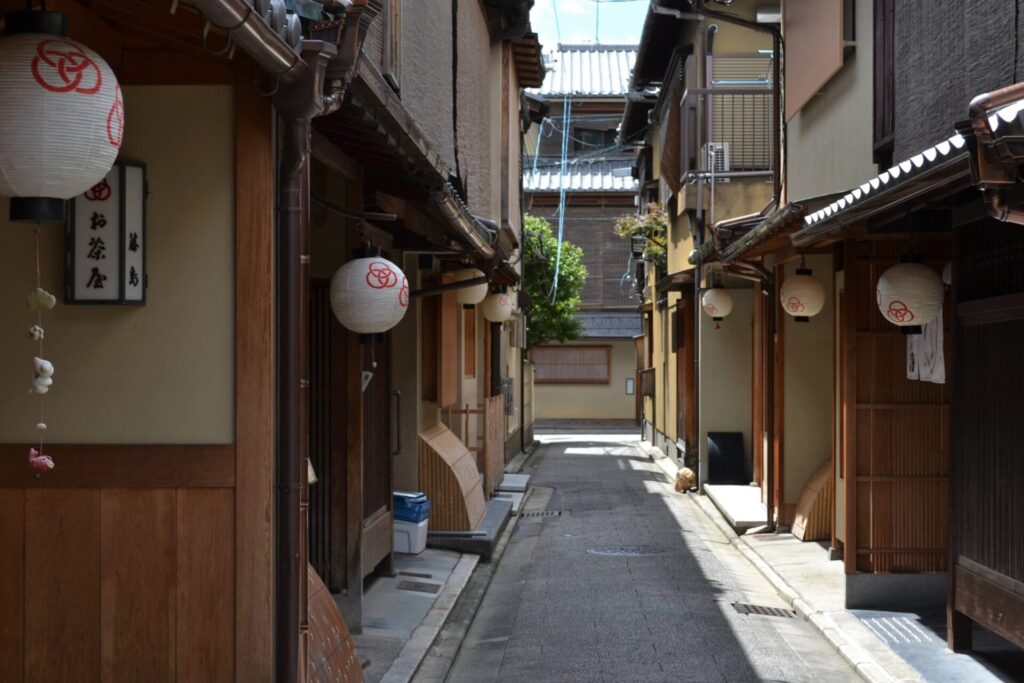
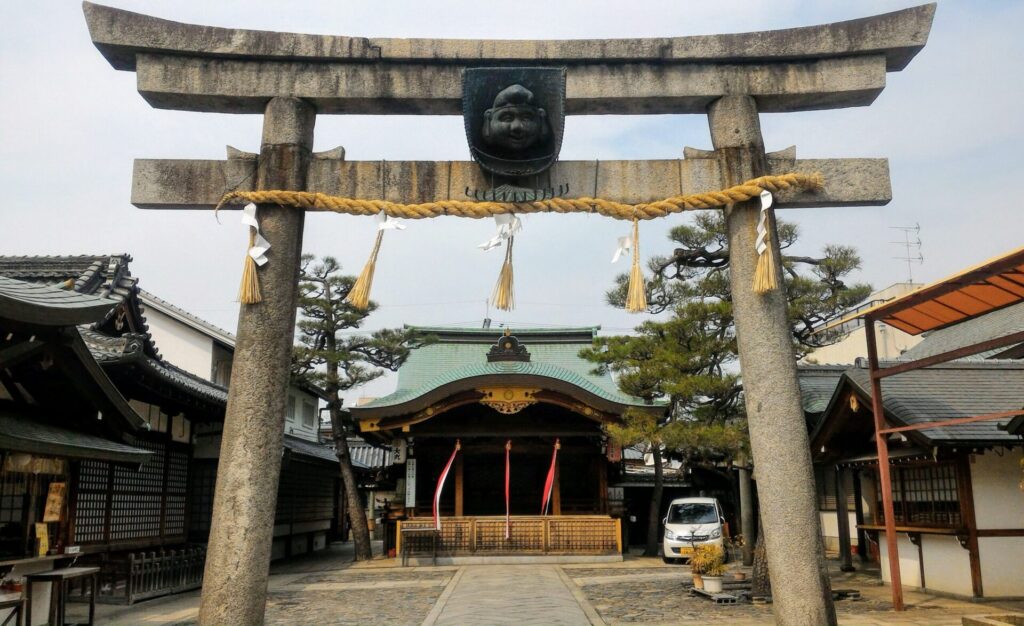
Located east of the Kamo River and stretching between Shijo and Gojo Streets, this is one of the districts reserved for geisha. Lanterns with three interlocking circles will serve as landmarks. The charming view is preserved here. Compared to the always bustling Gion district, it is rather quiet. If you are lucky, you might see geisha or maiko strolling gracefully as night falls. Near this district is the Kyoto Ebisu-jinja Shinto shrine. An offering box where worshippers place coins is located at the torii gate; can you spot it?
Antique Dealers’ Quarters
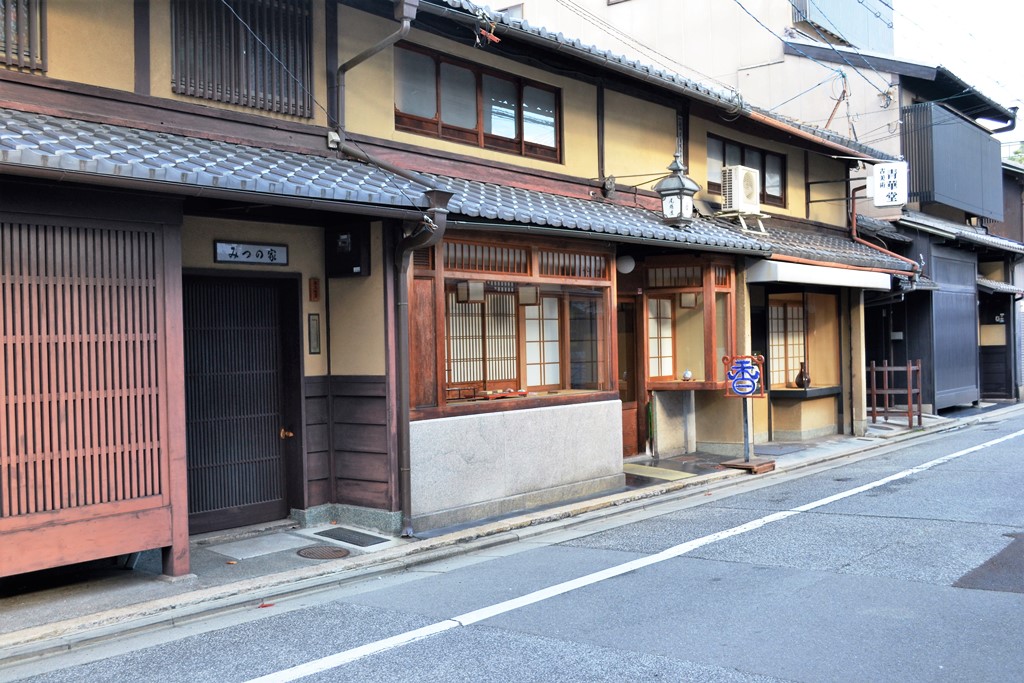
North of Shijo Avenue, along the historic prayer streets surrounding Chion-in Temple, famous for its grand gate, you’ll find a row of antique shops.
Old shops selling paintings, calligraphy, fabrics, and pottery can be found around Furumonzen Street, Shinmonzen Street, and Nawate Street. Window shopping is also worthwhile there.
Murin-an
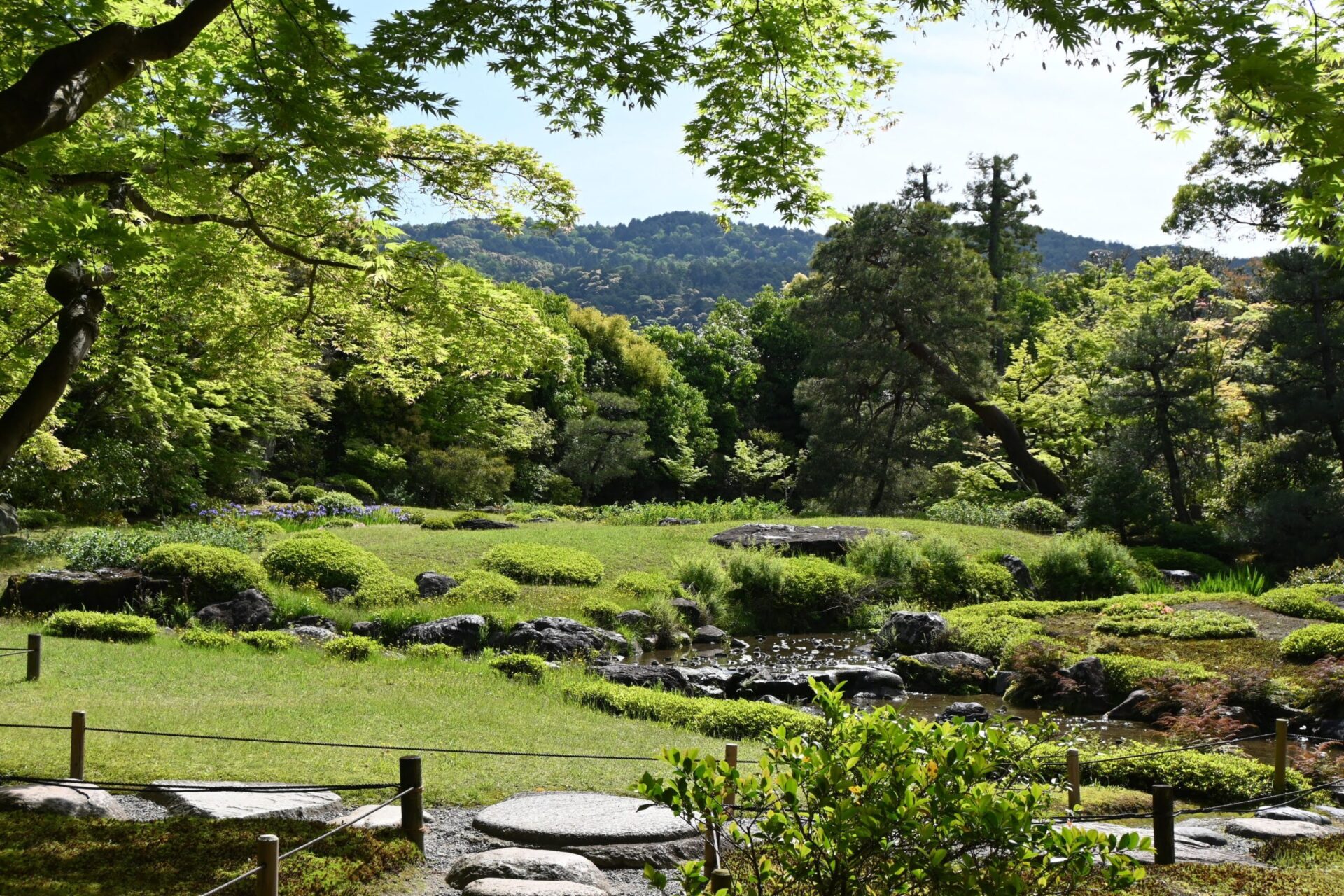
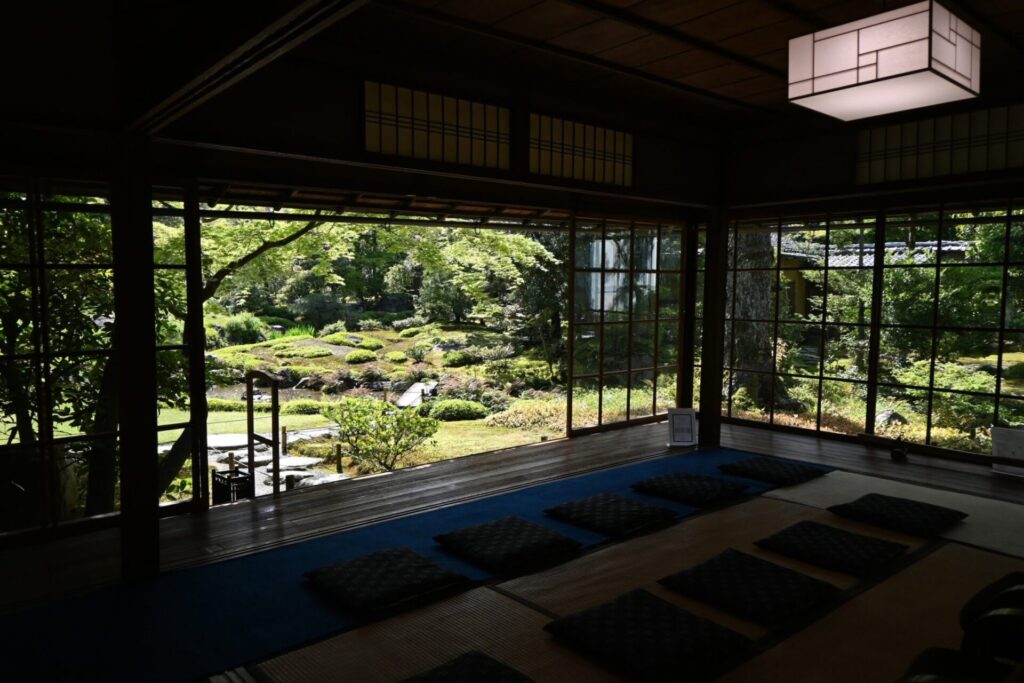
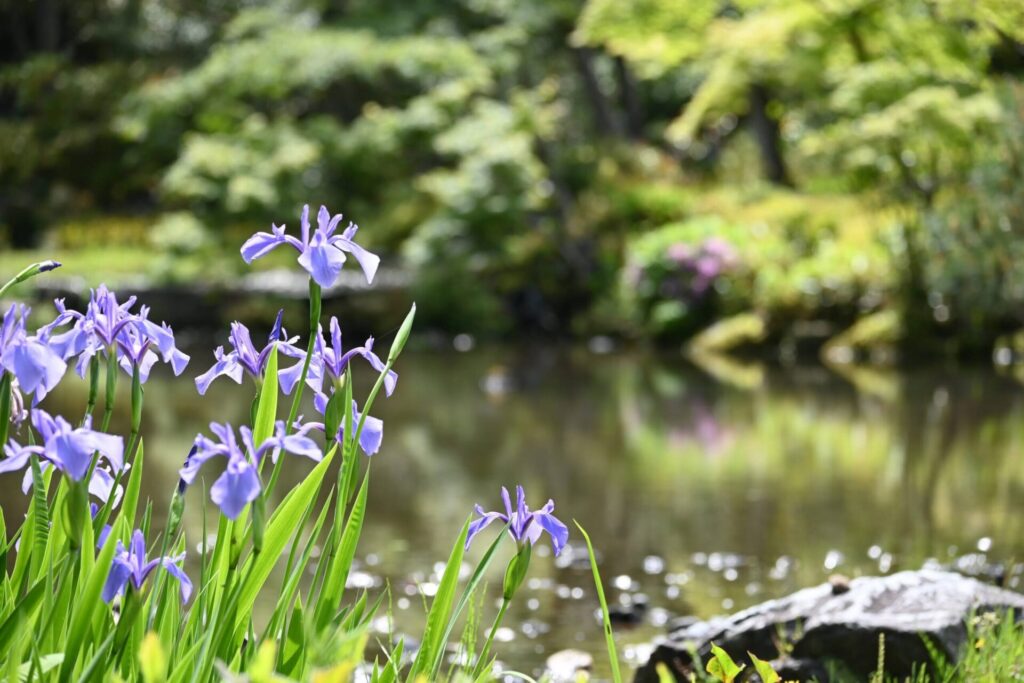
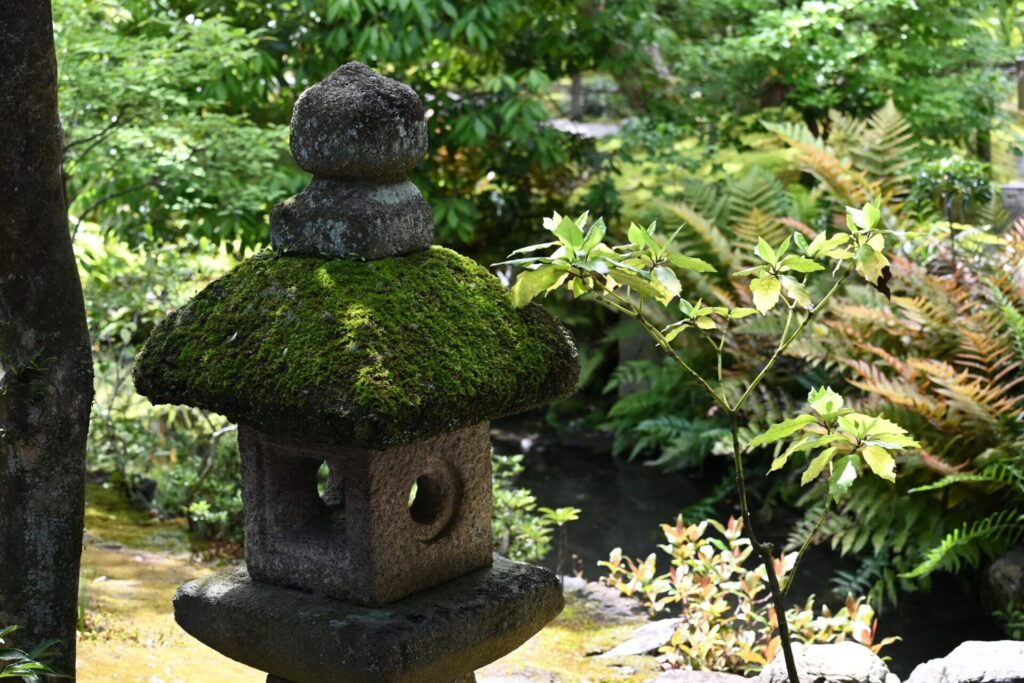
As an example of the villas built around Nanzen-ji Temple, I chose Murin-an, a villa built by a military officer and politician in the late 19th century. This villa is, in fact, the only one open to the public today. Its strolling garden, designed by a renowned landscape architect, is a must-see. It features a water source fed by a canal and a three-tiered waterfall, a pond, and a lawn. You can enjoy numerous viewpoints along the garden.
- The price of the entrance ticket to Murin-an varies depending on the period.
- It is advisable to book your visit in advance.
- Map